

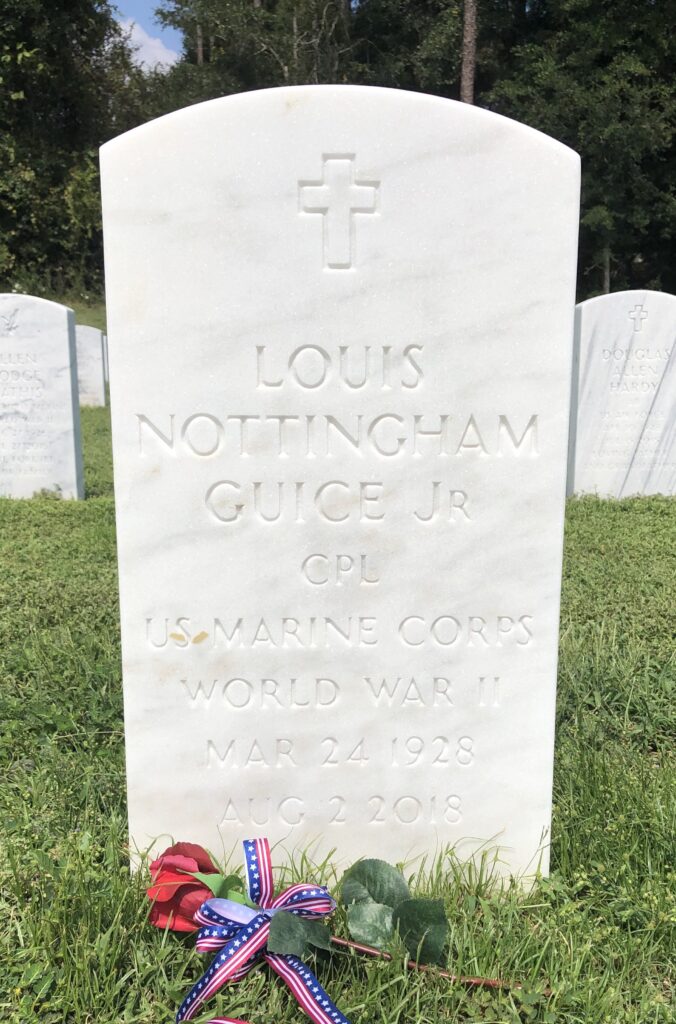
Corporal Louis Nottingham Guice, Jr.
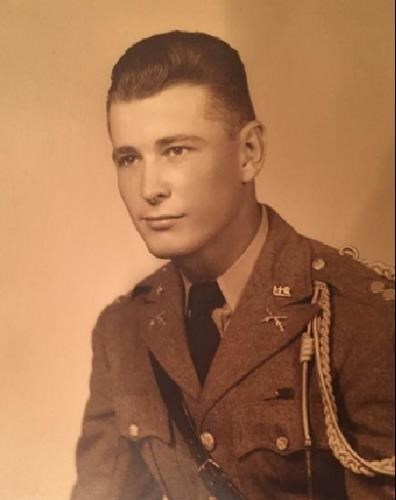
- Date of Birth: March 24, 1928
- Entered the Military: August 2, 1946
- Date of Death: August 2, 2018
- Hometown: Milledgeville, Georgia
- Place of Death: Orange Beach, Alabama
- Cemetery: Section 1, Grave 216. Alabama State Veterans Memorial Cemetery at Spanish Fort, Daphne, Alabama
2025/2026
Early Life
Impact of the Great Depression
Louis Nottingham Guice, Jr. was born on March 24, 1928, in Miami, Florida, to Louis and Lola Margaret. Being born at the onset of the Great Depression affected the world around Guice. For instance, two of Miami’s largest banks failed in 1930, sending shockwaves through the community. Only the First National Bank of Miami stayed open. It even refused to close during Franklin Roosevelt’s famous bank holiday.
Throughout Guice’s childhood, New Deal projects began to change Miami’s landscape. The Civilian Conservation Corps built the Matheson Hammock Park and Greynolds Park. The Public Works Administration (PWA) built the Miami Beach Post Office, the Coral Way and Miami Shores schools, among other prominent buildings. The PWA also built the 24,000-seat Roddy Burdine Stadium, which would become famous for hosting the Orange Bowl.
Family Life
Lola Margaret was from Indiana, and Louis, Sr., was from Alabama; it is unclear what brought the couple to Florida. Louis, Sr., was a first sergeant in the 2nd Alabama Infantry Regiment in World War I. He also worked at the Naval Air Station as a civil service employee before opening his own automotive repair business. Lola was a homemaker. Neither finished high school. In all, the couple had three children. Thomas and Charles Wood were both older than Louis, Jr. By the time of the 1940 census, Thomas had already left home.
Boarding School
Louis, Jr. attended the Georgia Military College in Milledgeville, Georgia, from the seventh grade until he finished his first year of college. While in college, Guice worked as a truck driver delivering gas for Sinclair Refilling Company. After attending one year of college, he decided to enlist in the U.S. Marine Corps.

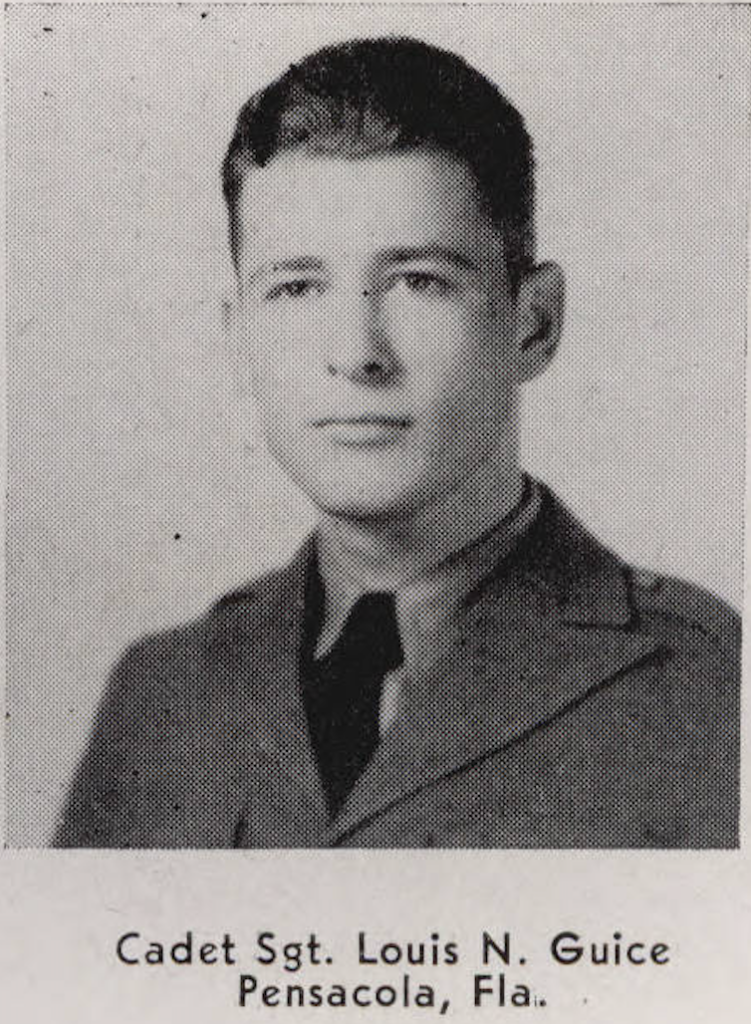
Homefront
Milledgeville, Georgia, was a small agricultural town hurt by a boll weevil infestation in the 1910s and 1920s. They destroyed over half of the state’s cotton production. And then the Great Depression hit. This triggered a massive migration of farm laborers and a shift to crop diversification.
Georgia’s Colleges
Georgia Military College, part of the Georgia College and State University system, was open only to White men. According to the 1938 enrollment report, there were 139 students, 62 of whom were foreign-born. Over 2,000 Georgia Military College alumni signed up to fight in World War II.
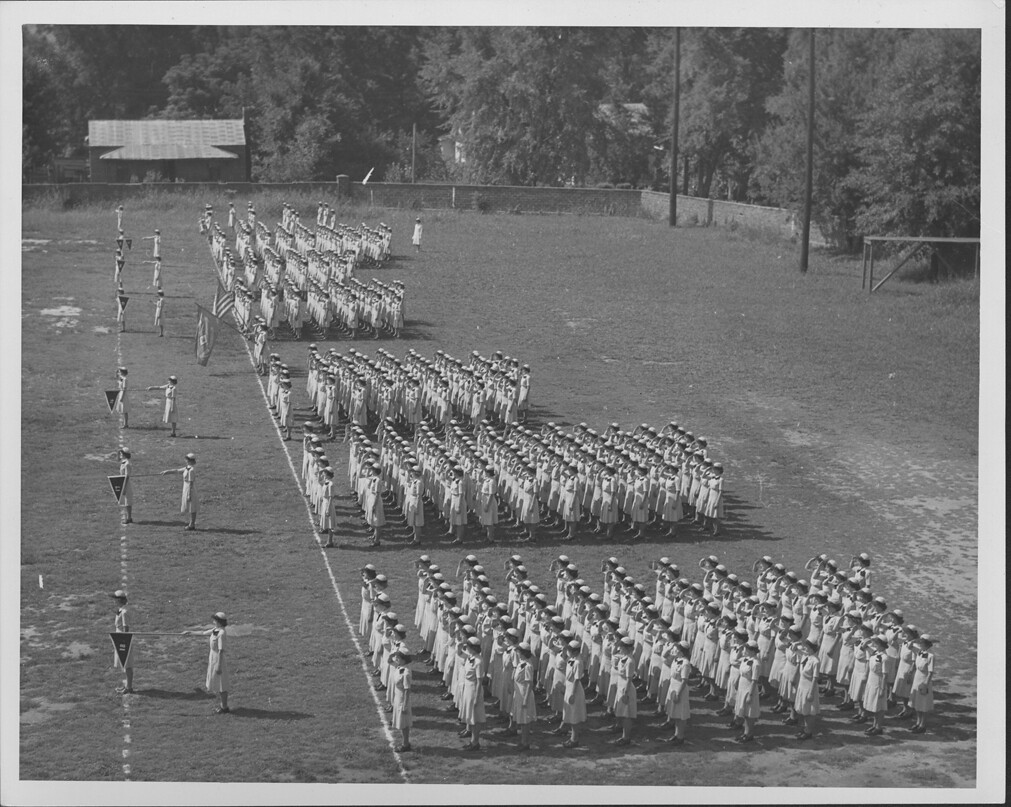
Once the war broke out, Georgia State University shifted its focus to become a training center for the Navy Women Accepted for Volunteer Emergency Service (WAVES). In two years, over 15,000 WAVES were trained there.
The Georgia State College for Women in Milledgeville began to offer training for women in industrial roles to help fill wartime vacancies.
Economic Activity
While Milledgeville’s economy was supported by its colleges, it was also sustained by large state and federal institutions such as the Milledgeville State Hospital and The Reynolds Corporation.
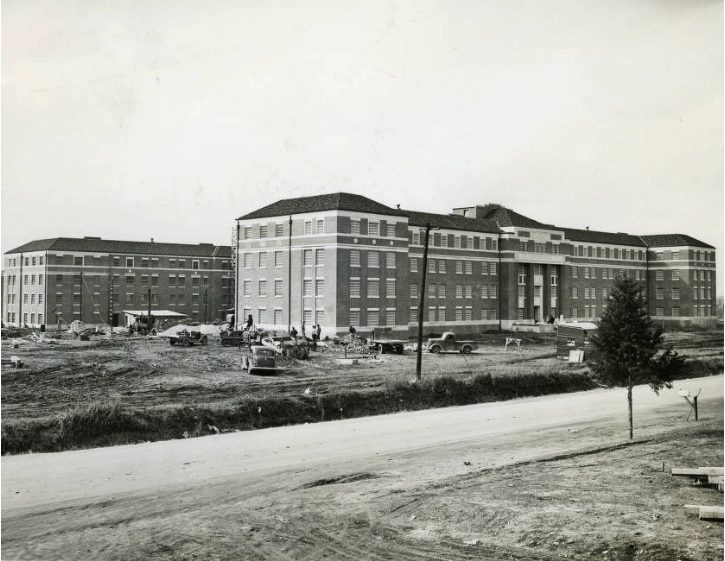
The Milledgeville State Hospital for the Insane was a sanitarium that was severely affected by wartime-era staffing shortages. During the war, more than 9,000 patients were under the care of just nine doctors. Treatments such as insulin shock and electroconvulsive therapy became common to manage the exploding patient load.
The Reynolds Corporation opened several new ordnance plants in Georgia during this time as part of a contract with the Navy. The Milledgeville plant produced explosives for the war, including flares and detonators.
Military Experience
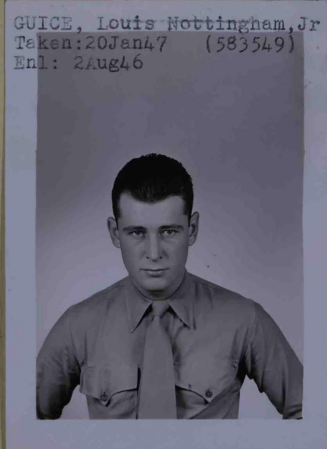
Louis Nottingham Guice, Jr., enlisted in the U.S. Marine Corps on August 2, 1946, in Macon, Georgia. From there, he was sent to boot camp at Parris Island, South Carolina.
“The Annapolis of the Air”
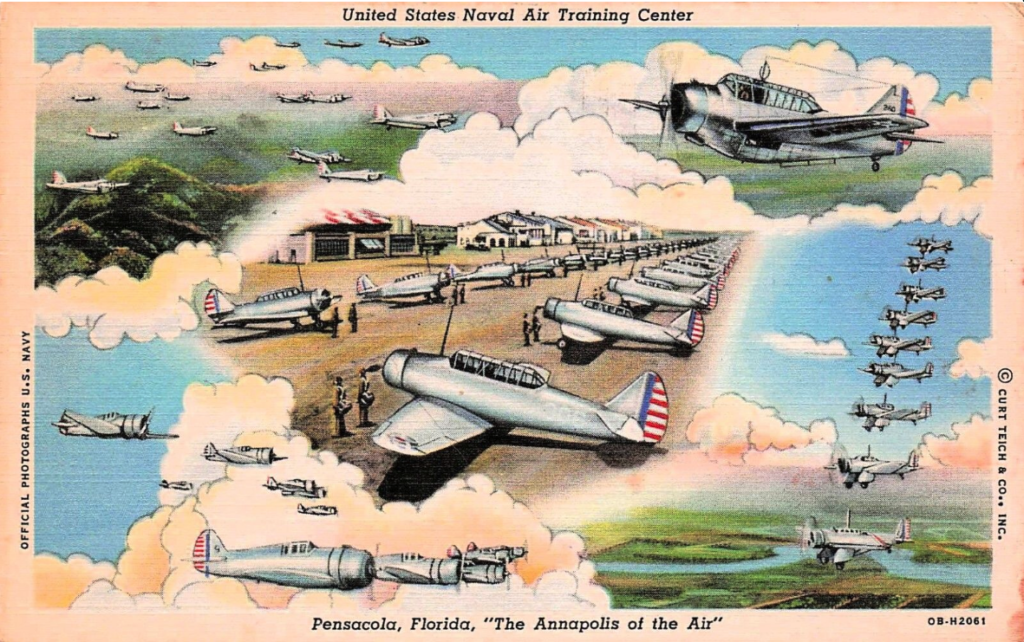
On October 30, 1946, Guice was assigned to a Guard Company at the Naval Air Training Base in Pensacola, Florida. This base was the premier training facility for enlisted aviation maintenance and technical specialists after the war. In fact, it was called “The Annapolis of the Air.”
On February 14, 1947, he was promoted to private first class, quickly followed by a promotion to corporal on April 15, 1947. As part of a Guard Company, his responsibilities most likely included gate access to the base and restricted areas, sentry duty, area patrols, and enforcement of base regulations.
Transfer and Discharge
On August 22, 1947, Guice was transferred to the Military Police Corps at the Naval Air Technical Training Center in Memphis, Tennessee. Typical duties included law enforcement, traffic control, and emergency responses.
Guice’s final duty station was back at the Naval Air Training Base in Pensacola, where he was discharged on March 23, 1948. Upon discharge, he hoped to go back to Georgia Military College to study meteorology, navigation, or flying.
Veteran Experience
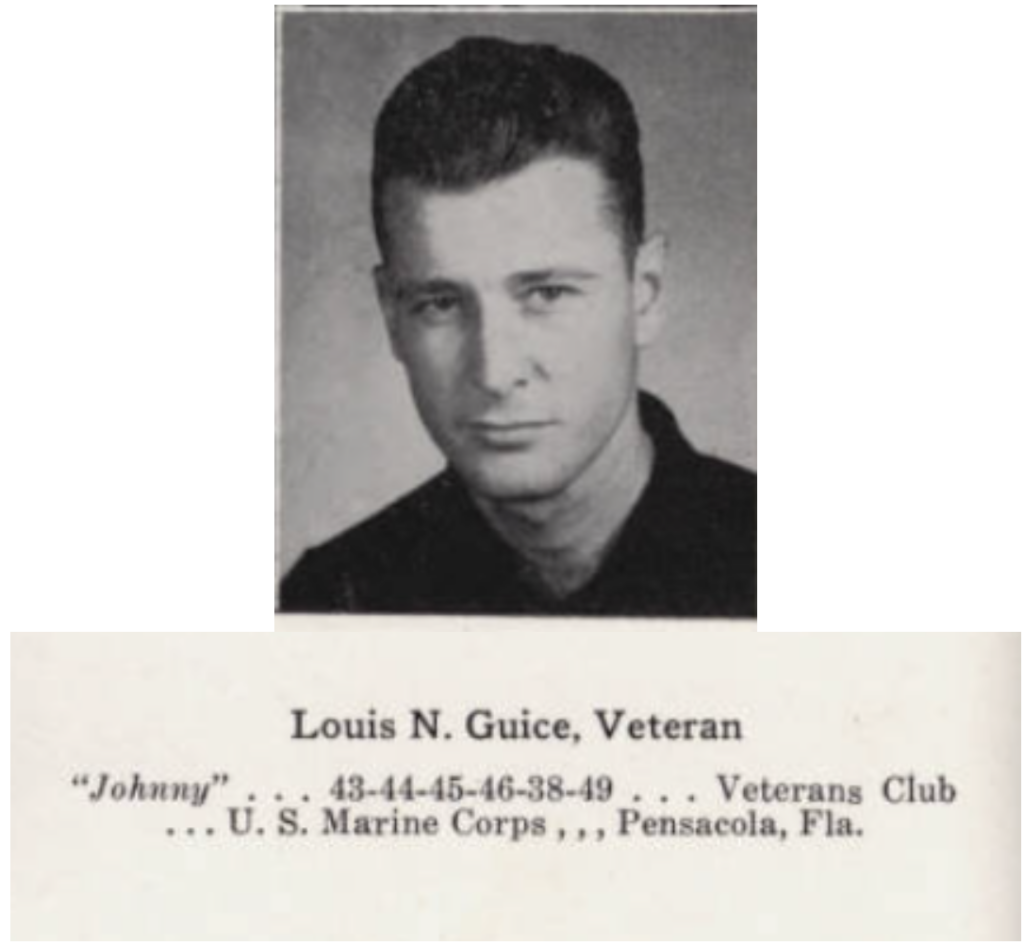
After the war, Guice attended the University of Georgia, where he became a member of the Veterans Club. He was also a member of the Sigma Nu fraternity and the economics society. This was a group that “strives to interest students in economic affairs, encourages and seeks to cultivate ideals of service and proper leadership among the college students.”
In 1953, Louis married Molly Elizabeth Lee. Before settling in Mobile, Alabama, in 1964, the couple also lived in New Orleans, Louisiana; Atlanta, Georgia; and St. Petersburg, Florida. They had four children, Ellen, Elizabeth, Matthew, and Margaret, who died on the day she was born in 1963.
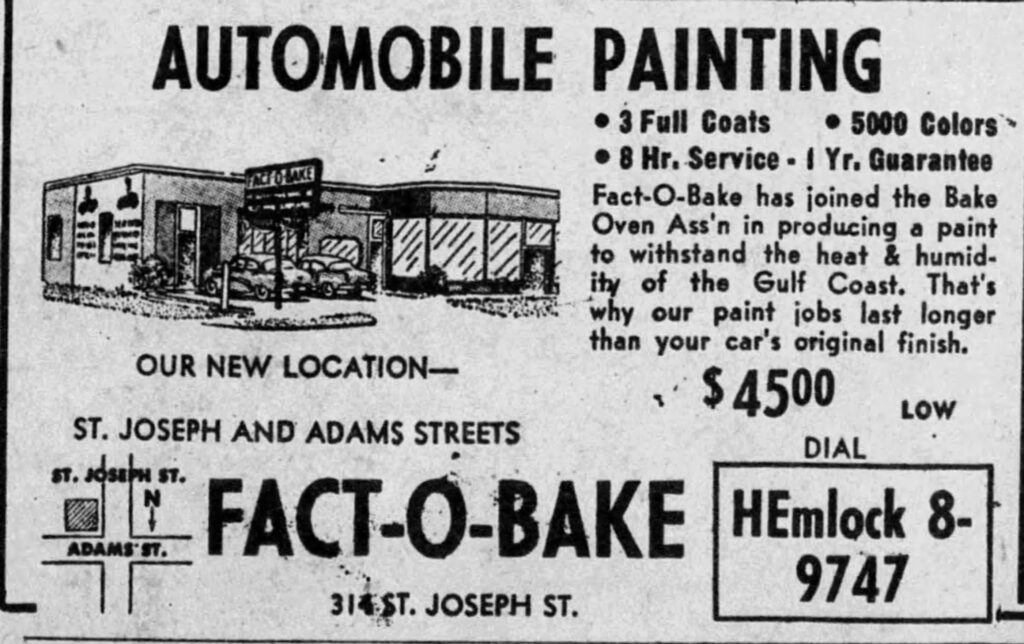
Guice served as the President of Fact-o-Bake, Inc. in St. Petersburg, Florida, and Fact-o-Bake International, based in Mobile, Alabama. Fact-o-Bake was a budget-friendly auto painting chain that operated from the late 1950s through the 1970s. Molly was the bookkeeper for her husband’s businesses.
The couple traveled in Guice’s twin-engine Aztec to Costa Rica, Panama, and the Bahamas. They were active members in the Cottage Hill Baptist Church, where Molly also taught Sunday School.
Commemoration
Louis Nottingham Guice, Jr., passed away on August 2, 2018, at the age of 90. His obituary lists “his family, friends, the sea, and his wife’s culinary brilliance as his passions in life.” Guice was also known for his generosity to everyone, and his storytelling and humor were described as “legendary.” He left behind two daughters, a son, five grandchildren, and two great-grandchildren.
Louis Nottingham Guice, Jr. is buried in section 1, grave 216, at the Alabama State Veterans Memorial Cemetery at Spanish Fort.
Bibliography
Primary Sources
Automobile Painting. Advertisement. The Mobile Journal [Mobile, Alabama], April 15, 1955. Newspapers.com (572293808).
Florida. Dade County. 1930 U.S. Census. Digital images. https://ancestryclassroom.com.
Florida. Dade County. 1940 U.S. Census. Digital images. https://ancestryclassroom.com.
“Guice.” Tampa Bay Times [Tampa Bay, FL], December 30, 1963. Newspapers.com (140029).
Louis Guice. Alabama, U.S., National Guard Card Index, 1897-1924. Digital images. https://ancestryclassroom.com.
Louis Nottingham Guice, Jr. Official Military Personnel File, Department of the Navy. National Archives and Records Administration – St. Louis.
“Louis Nottingham Guice Sr.” Pensacola News Journal [Pensacola, FL], December 26, 1970. Newspapers.com (264674204).
Louis Nottingham Guice Jr. World War II Draft Cards Young Men, 1940-1947. Digital images. https://ancestryclassroom.com.
“Miss Marjorie Cooper Becomes Bride of Charles Wood Guice.” Pensacola News Journal [Pensacola, FL], January 24, 1947. Newspapers.com (352881835).
The Recall. Milledgeville, Georgia: Georgia Military College, 1945. https://cdm16325.contentdm.oclc.org/digital/collection/p15171uw/id/254/rec/1.
The Recall. Milledgeville, Georgia: Georgia Military College, 1949. https://cdm16325.contentdm.oclc.org/digital/collection/p15171uw/id/598.
State Hospital for the Insane at Milledgeville, Georgia. Photograph. February 25, 1940. Atlanta Journal-Constitution Photographic Archive, Georgia State University Library. https://digitalcollections.library.gsu.edu/digital/collection/ajc/id/512/rec/9.
WAVES at Ceremony. Photograph. c.1944. University Archives Photograph Collection, Georgia College. https://www.flickr.com/photos/gcsuspecialcollections/3331496630/in/album-72157614730258821.
Secondary Sources
Brown, Wesley. “Georgia Military College Seeks Graduates Who Have Fought Since World War I.” Georgia Military College. Updated August 21, 2014. Accessed December 22, 2025. https://www.gmc.edu/georgia-military-college-seeks-graduates-who-have-fought-since-world-war-i.
George, Paul S. “Greater Miami and the Great Depression, Part I.” History Miami Museum. Accessed November 25, 2025. https://historymiami.org/greater-miami-depression-parti/.
Georgia Military College History Book. Georgia Military College, 2009. https://www.gmc.edu/skins/userfiles/files/303101FINAL%20PDF%20GM_HistoryBook.pdf.
“History.” NAS Pensacola. Accessed January 29, 2026. https://cnrse.cnic.navy.mil/Installations/NAS-Pensacola/About/History/.
“Louis Nottingham Guice Jr.” Find a Grave. Updated August 15, 2018. Accessed November 15, 2025. https://www.findagrave.com/memorial/192262725/louis-nottingham-guice.
“Louis Nottingham Guice Jr.” Veterans Legacy Memorial, National Cemetery Administration. Accessed January 31, 2026. https://www.vlm.cem.va.gov/LOUISNOTTINGHAMGUICEJR/94911f.
“Louis Nottingham Guice, Jr.” Wolfe Funeral Homes. Accessed November 16, 2025. https://www.wolfefuneralhomes.com/obituaries/louise-guice-jr.
“Margaret Guice.” Find a Grave. Updated October 14, 2005. Accessed November 16, 2025. https://www.findagrave.com/memorial/12009521/margaret-guice.
Mastrovita, Mandy, and Greer Martin. Georgia’s Home Front: World War II. Digital Exhibition. Digital Public Library of America. https://dp.la/exhibitions/home-front-world-war-ii.
“Molly Elizabeth Lee Guice.” Find a Grave. Updated June 12, 2015. Accessed November 15, 2025. https://www.findagrave.com/memorial/147779079/molly_elizabeth-guice.
Payne, David. “Central State Hospital.” New Georgia Encyclopedia. Last modified Oct 20, 2025. Accessed December 22, 2025. https://www.georgiaencyclopedia.org/articles/science-medicine/central-state-hospital/.
“Pensacola & Escambia County, Florida.” National Park Service. Accessed January 29, 2026. https://www.nps.gov/articles/000/pensacola-escambia-county-florida.htm.
Wilson, Robert. “Georgia College and State University.” New Georgia Encyclopedia. Updated May 1, 2019. Accessed December 22, 2025. https://www.georgiaencyclopedia.org/articles/education/georgia-college-and-state-university/.
This profile was funded by a grant from the United States Department of Veterans Affairs. The opinions, findings, and conclusions stated herein are those of the author and do not necessarily reflect those of the United States Department of Veterans Affairs.