Corporal Charles Leroy Johnson
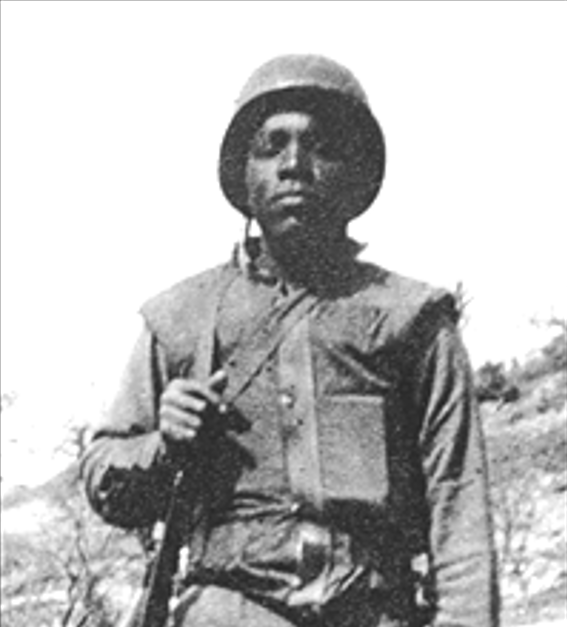
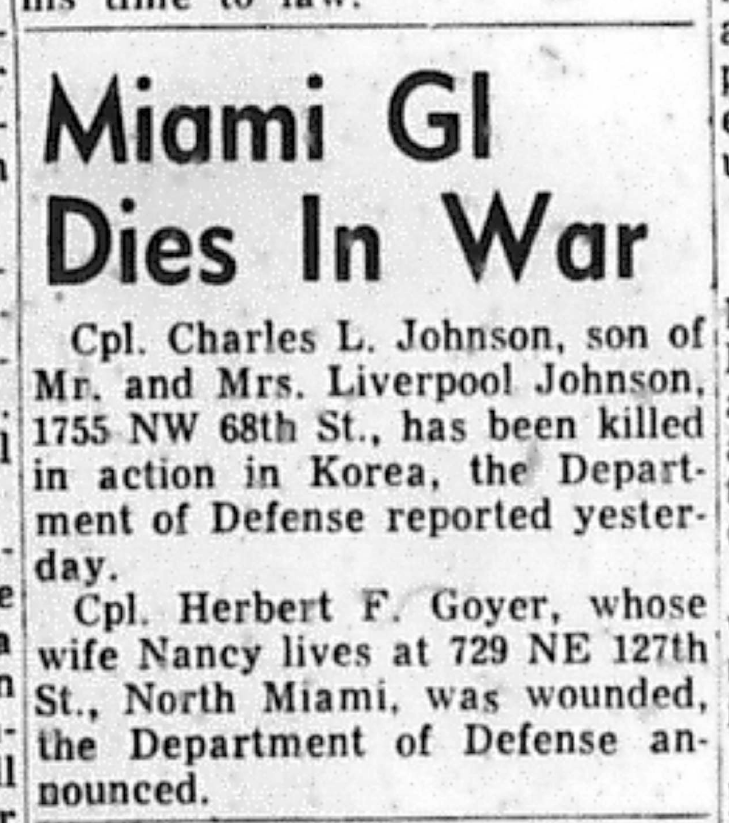
- Unit: Company B, 1st Battalion, 14th Infantry Regiment, 25th Infantry Division
- Service Number: 53064153
- Date of Birth: September 15, 1930
- Entered the Military: February 26, 1952
- Date of Death: May 29, 1953
- Hometown: Miami, Florida
- Place of Death: Near Sanae-Dong, North Korea
- Award(s): Distinguished Service Cross, Purple Heart, National Defense Service Medal, Combat Medical Badge, Korean Service Medal with One Service Star, United Nations Service Medal, Korean Presidential Unit Citation
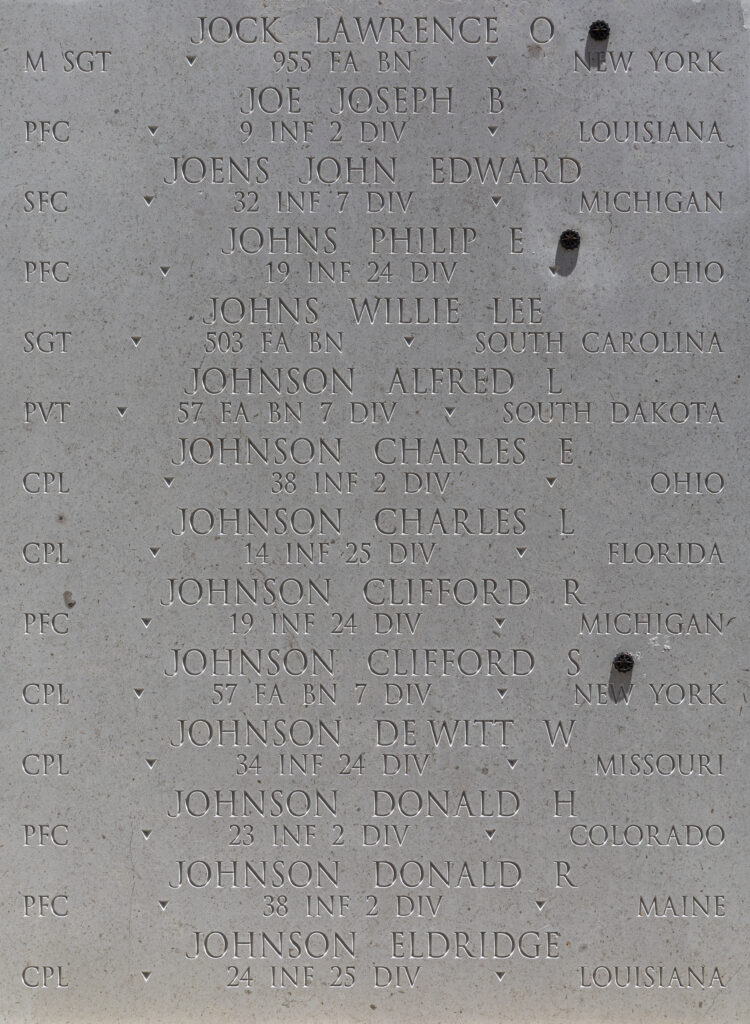
- Cemetery: Court Six, Courts of the Missing. National Memorial Cemetery of the Pacific, Honolulu, Hawaiʻi
Gulliver Preparatory School, Miami, Florida
2025/2026
Early Life
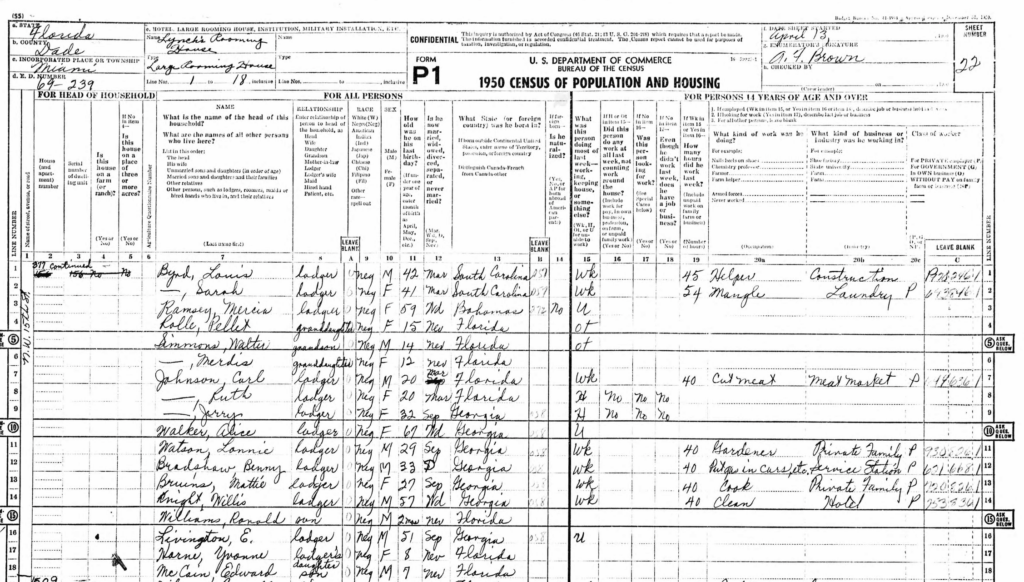
Charles Leroy Johnson was born to Liverpool and Louise Johnson in Miami, Florida, on September 15, 1930. He grew up in a family of eight children. While there is little information about Charles’ youth, as a young adult, he appears to have worked as a meat cutter in Miami, living in the modern-day Overtown area in a lodging house with 20 other people. He enlisted in the United States Army on February 26, 1952, at the age of 21.
Homefront
The Harlem of the South
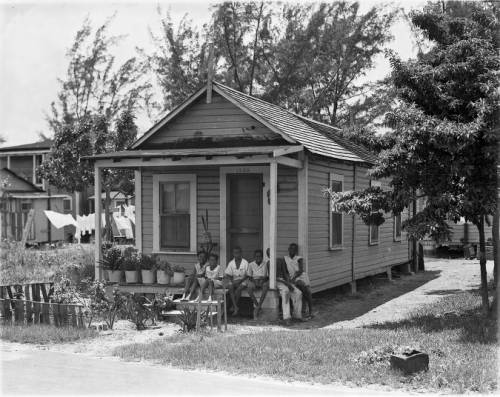
Miami during the 1930s and 1940s was a booming tourist town, attracting winter visitors for its weather. It was also a segregated town with Black residents living mostly in the Overtown and later Liberty City areas. Despite segregation, there was a thriving Black culture in these areas of the city, described as the “Harlem of the South,” a reference to the cultural renaissance in Harlem, New York, in the 1920s and 30s. Johnsons’ parents immigrated from the Bahamas, and they raised their family in this segregated but culturally rich environment.
The Bahamian Connection
Miami-Dade County was an agricultural community, and agricultural production increased during both World War II and the Korean War. In particular, the community produced and shipped citrus products to U.S. troops who deployed overseas. The need for more agricultural products led to a labor shortage, prompting workers to migrate from Jamaica, the Bahamas, and other Caribbean islands. This is likely how Johnson’s parents came to Florida.
Crash Boats
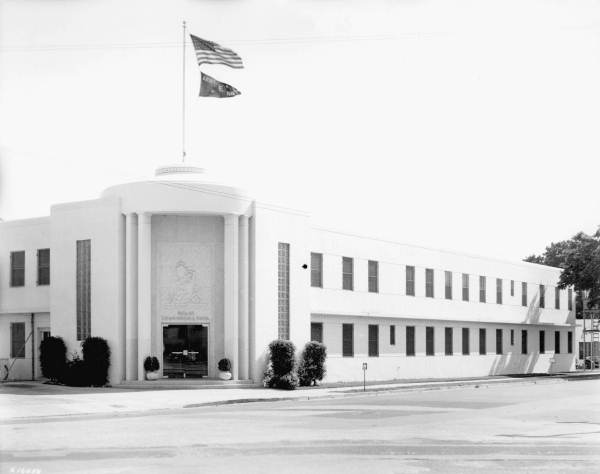
During the 1940s, the Miami-Dade area also contributed to the war effort by building sea rescue boats. The Miami Ship Building Corporation produced these boats (also called crash boats) under contract to the United States government. The U.S. Navy used them to launch rapid sea rescues, and they were also made available to our allies through the Lend-Lease Program.
Training the Troops
During World War II, Homestead Air Reserve Base was used for training military troops until it was destroyed by a hurricane in 1945. Interestingly, this devastating hurricane struck on Charles Johnson’s fifteenth birthday, September 15. The base remained in ruins during the Korean War before being reactivated a year after Johnson died in 1954.
While there does not seem to have been specific preparations for the Korean War in Miami, the surge in servicemen being trained in Miami for World War II had impacted the city. The Army Air Forces Technical Training Command had converted hotels and apartments into barracks for the servicemen, so Miami residents would have been familiar with the sight of military men in their city.
Military Experience
Medics in the Korean Conflict
During the Korean War, the U.S. military developed systems to better care for service members’ medical needs in the field. Two of these innovations were the Mobile Army Surgical Hospital (MASH) units and a relay system to stabilize and rapidly move the wounded back behind the safety lines to a medical station.
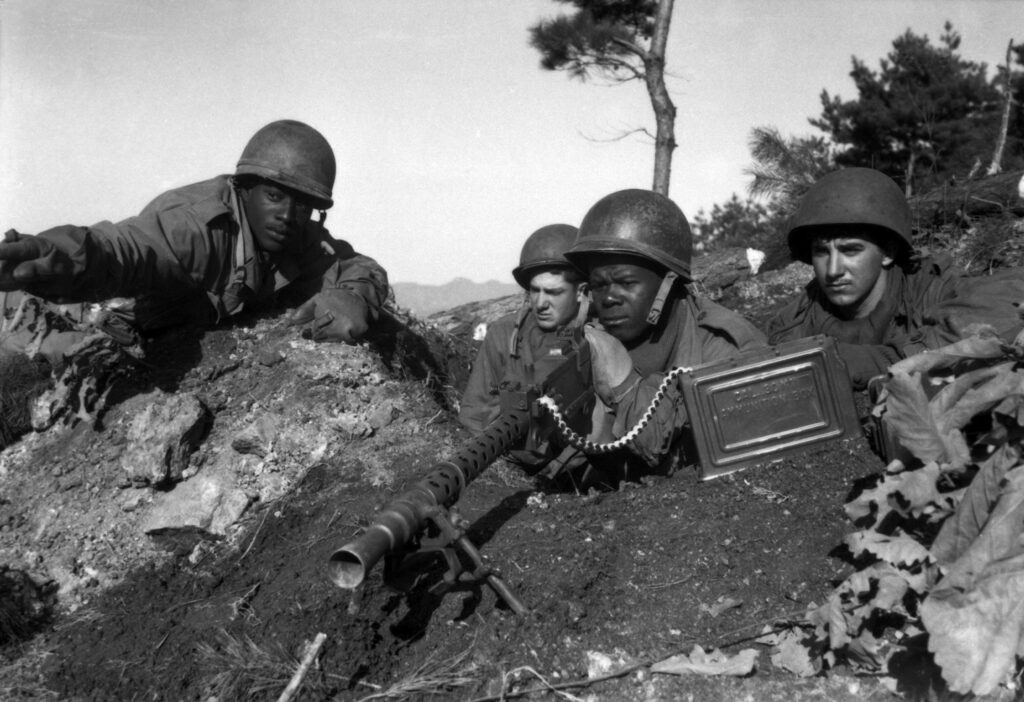
Corporal Charles Johnson was a combat medic who served as part of a ground crew in Medical Company, 14th Infantry Regiment, 25th Infantry Division. As a medic operating in the field, Johnson would have been tasked with the dangerous job of going forward of the front line to reach wounded soldiers. He would have treated bleeding wounds, applied tourniquets to stop more serious bleeding, stabilized broken limbs, and helped the stretcher bearers get the wounded to the next stage in the relay, where they could receive further treatment.
Heavy Fighting in the Field
The Infantry Division to which Johnson was assigned was engaged in almost constant combat along the 38th Parallel. Some of the fiercest fighting between the Communist and United Nations (UN) forces took place at this line. The Infantry Division defended strategically important areas, including those named the Punchbowl and Pork Chop Hill, against the Chinese Communist Forces (CCF).
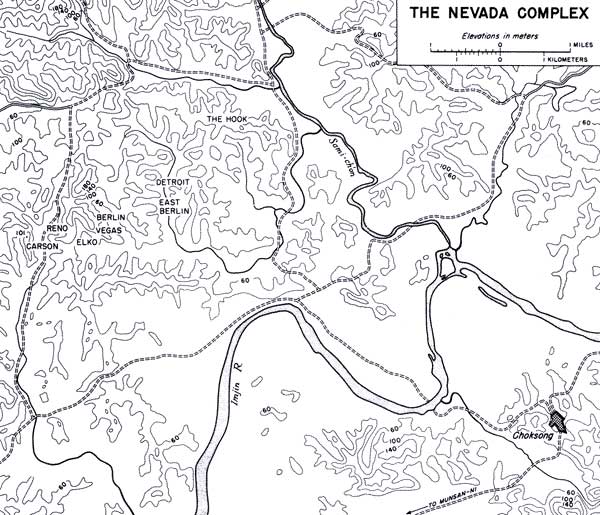
Initially, when UN forces arrived in Korea, the goal had been to retake the entire Korean peninsula, but with heavy fighting, the goal shifted towards negotiating an armistice. The UN controlled outposts in the hills above the 38th parallel, and these hills became the focus of intense fighting for control in 1953. The outposts (Vegas, Elko, and Carson) were known as the Nevada complex. They were located on highly contested high ground.
Fight for the Nevada Complex
Johnson’s division moved into place near these outposts in April 1953. When the Chinese troops launched an all-out attack towards the end of May, his regiment was deployed in an effort to retake the lost outposts. UN forces successfully defended the Vegas and Elko outposts, but CCF troops overran Carson. On May 29, the United Nations Command ordered Company B of the United States Army’s 14th Infantry Regiment to retake Outpost Carson. This was Johnson’s unit, and their first attempt almost succeeded. Ultimately, though, the Chinese troops maintained control, and Company B’s second and third attempts failed. Finally, commanders decided that the outpost was not worth the casualties required to retake it, and Company B was ordered to withdraw to friendly lines.
Commemoration
The Ultimate Sacrifice
During Company B’s desperate attempts to retake outpost Carson on May 29, Johnson faced the challenging odds to care for his fellow soldiers. Wounded himself and almost blinded by shrapnel, he continued comforting the fallen soldiers and trying to stabilize them to move them to safer ground. During the failed attempt to regain outpost Carson, he was mortally wounded near Sanae-Dong.
Because of the battlefield chaos and rapid withdrawal, his remains could not be immediately recovered. The area where he fell was never again controlled by UN forces. The Nevada Complex was very close to Panmunjom, where the armistice negotiations took place. That area is now part of the Demilitarized Zone (DMZ) and is heavily mined.
Corporal Charles Leroy Johnson is memorialized on Court Six of the Courts of the Missing at the National Memorial Cemetery of the Pacific in Honolulu, Hawai‘i. His name is also inscribed on the Korean War Veterans Memorial Wall in Washington, D.C.
Bibliography
Primary Sources
Charles Johnson. U.S. Social Security Death Index, 1935-2014. https://ancestryclassroom.com.
Charlie Johnson. Florida, U.S., Marriage Indexes, 1822-1875 and 1927-2001. Digital image. https://ancestryclassroom.com.
Cox, Private First Class. James. Fighting with the 2nd Inf. Div. north of the Chongchon River, Sfc. Major Cleveland, weapons squad leader, points out Communist-led North Korean position to his machine gun crew. Photograph. November 20, 1950. National Archives and Records Administration. https://commons.wikimedia.org/wiki/File:U.S._Army_machine_gun_team_near_the_Chongchon_River_in_North_Korea_(November_1950).jpg.
.jpg)
Florida. Duval County. 1950 U.S. Census. Digital Images. https://ancestryclassroom.com.
“Miami GI Dies in War.” The Miami News [Miami, Florida], June 27, 1953. Miami Daily News Archives.
Miami Shipbuilding Corporation. Photograph. c.1920. Florida Memory Collection, State Archives of Florida. https://www.floridamemory.com/items/show/5476.
Romer, Gleason Waite, photographer. Gulf States Finance Corp., 1980 N.W. 4th Avenue. Photograph. August 21, 1934. Helen Muir Florida Collection, Special Collections and Archives, Miami-Dade Public Library System. https://cdm17273.contentdm.oclc.org/digital/collection/p17273coll3/id/7817/rec/21.
Secondary Sources
“Battle of the Nevada Complex.” History Maps. Accessed January 26, 2026. https://history-maps.com/warmap/korean-war/event/battle-of-the-nevada-complex.
“Charles L. Johnson.” American Battle Monuments Commission. Accessed October 4, 2025. https://weremember.abmc.gov/s?q=*&criteria=unit%3DMED%20CO%2014%20Infantry&type=16&v=G.
“Charles L. Johnson.” Defense Personnel POW/MIA Accounting Agency. Accessed October 4, 2025. https://dpaa-mil.sites.crmforce.mil/dpaaProfile?id=a0Jt000000F4FHREA3.
“Charles L. Johnson.” Veterans Legacy Memorial, National Cemetery Administration. Accessed January 31, 2026. https://www.vlm.cem.va.gov/CharlesLJohnson/1F416.
“Corp. Charles Leroy Johnson.” Find a Grave. Updated February 2016. Accessed January 8, 2026. https://www.findagrave.com/memorial/124576737/charles-leroy-johnson.
“CPL Charles Leroy Johnson.” Military Wall of Honor. Accessed January 26, 2026. https://militaryhallofhonor.com/honoree-record.php?id=309956.
Data on Veterans of the Korean War. Washington, D.C.: U.S. Department of Veterans Affairs, June 2000. https://www.va.gov/vetdata/docs/specialreports/kw2000.pdf.
“The DMZ Campaigns.” Defense POW/MIA Accounting Agency. Accessed January 8, 2026. https://dpaa-mil.sites.crmforce.mil/dpaaFamWebInDMZCampaigns.
The Nevada Complex. Map. 1992. U.S. Army Center of Military History. https://commons.wikimedia.org/w/index.php?curid=78099887.
“War’s Impact on Florida: Citrus Goes to War.” Museum of Florida History, Florida Department of State. Accessed December 31, 2025. https://www.museumoffloridahistory.com/explore/exhibits/permanent-exhibits/world-war-ii/florida-remembers-world-war-ii/wars-impact-on-florida-citrus-goes-to-war/.
Zimmerman, Dwight John. “Battlefield Medicine in the Korean War.” Defense Media Network, May 14, 2021. https://www.defensemedianetwork.com/stories/battlefield-medicine-in-the-korean-war/.
This profile was researched and created through the Researching Silent Heroes program, sponsored by the American Battle Monuments Commission.