Corporal James William Corbin
- Unit: Company K, 3rd Battalion, 9th Regiment, 2nd Infantry Division
- Service Number: 14249254
- Date of Birth: January 29, 1929
- Entered the Military: February 11, 1947
- Date of Death: February 12, 1951
- Hometown: Raleigh, North Carolina
- Place of Death: Korea
- Award(s): The Combat Infantryman Badge, the Korean Service Medal, the National Defense Service Medal, the Prisoner of War Medal, the Purple Heart Medal, the Republic of Korea Presidential Unit Citation, the Republic of Korea War Service Medal, and the United Nations Service Medal.
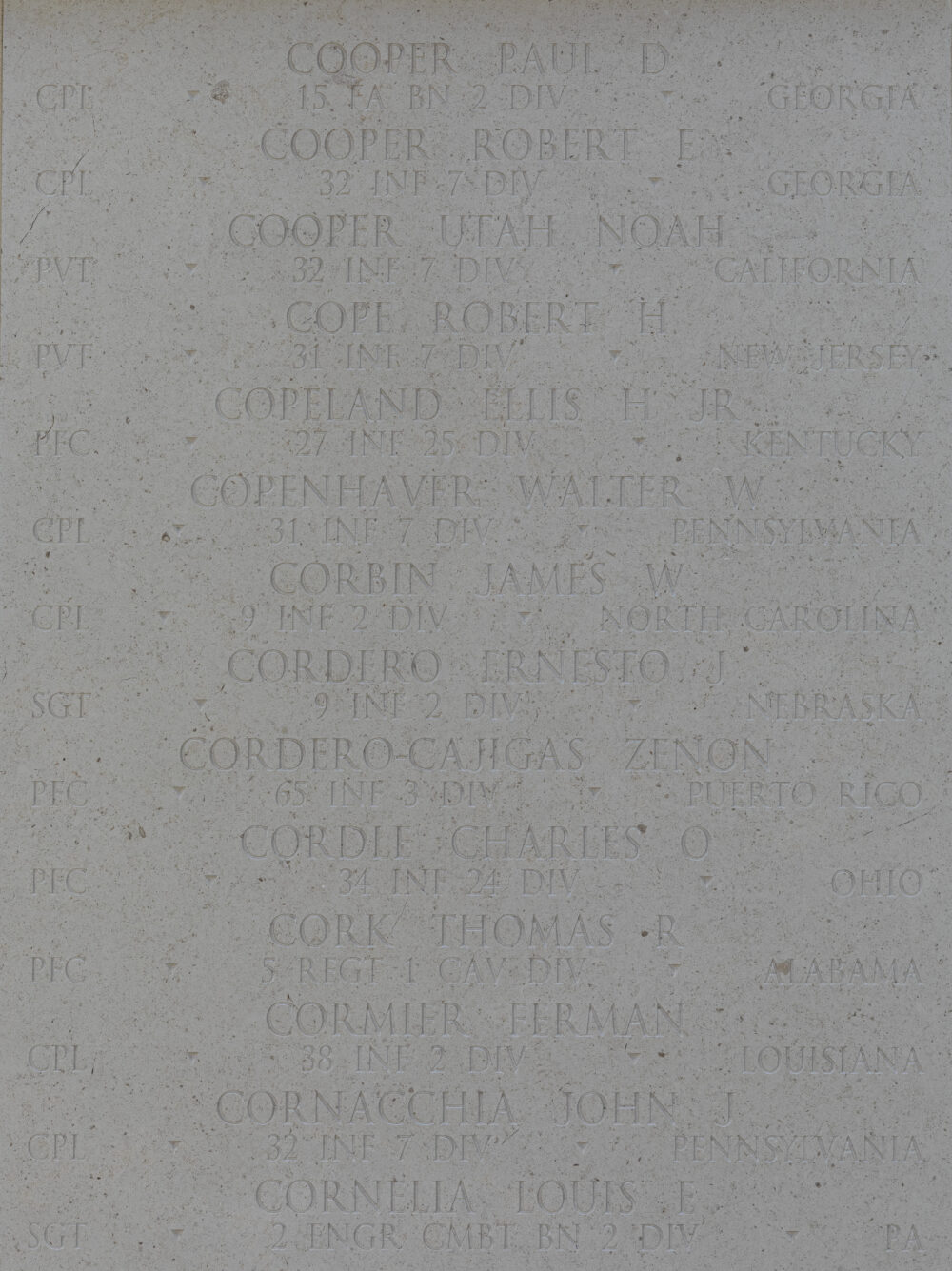
- Cemetery: Court Four, Courts of the Missing, Honolulu Memorial. National Memorial Cemetery of the Pacific, Honolulu, Hawaiʻi
Cane River Middle School, Burnsville, North Carolina
2025/2026
Early Life
Corporal James William Corbin was born on January 29, 1929. His parents were William and Eunice Turner Corbin of Raleigh, North Carolina. He was the youngest of five. His siblings were Eva, John, Dorothy, and George.
The Corbin family resided in historic Oberlin Village. Oberlin Village was established when former enslaved person Jesse Pettiford purchased 16 acres from George and Maraget Cameron Mordecai in 1858 to establish a free Black settlement. It is said to have been named for Oberlin College in Ohio, which was known for providing opportunities for African Americans, several of whom were from the Raleigh area.
As a young boy, Corbin most likely attended the Oberlin Village community school, Oberlin Graded School. It is unknown whether he attended high school, but if he did, he would have attended Washington Graded and High School, the first public African American high school in Raleigh.
Sources suggest that the Corbin family likely struggled financially with five children. William’s delivery driver income of $728 per year was just 59% of the 1939 median family income of $1,231. According to the 1940 U.S. Census, three of Corbin’s siblings held jobs alongside their mother and father. Their mother, Eunice, worked as a laundress while sisters Eva and Dorothy were maids and brother John was a janitor.
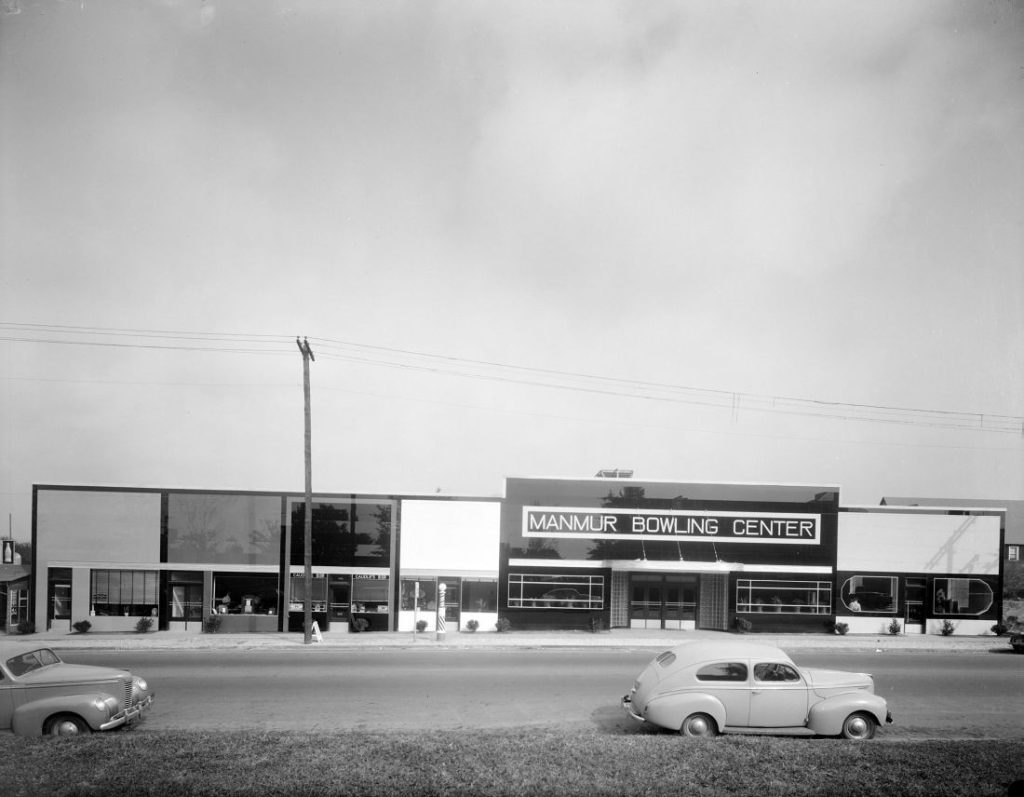
At the time of his registration for the draft on February 11, 1947, Corbin worked at the Man-Mur Bowling Center on Hillsboro Street in Raleigh.

Homefront
Raleigh Through the Years
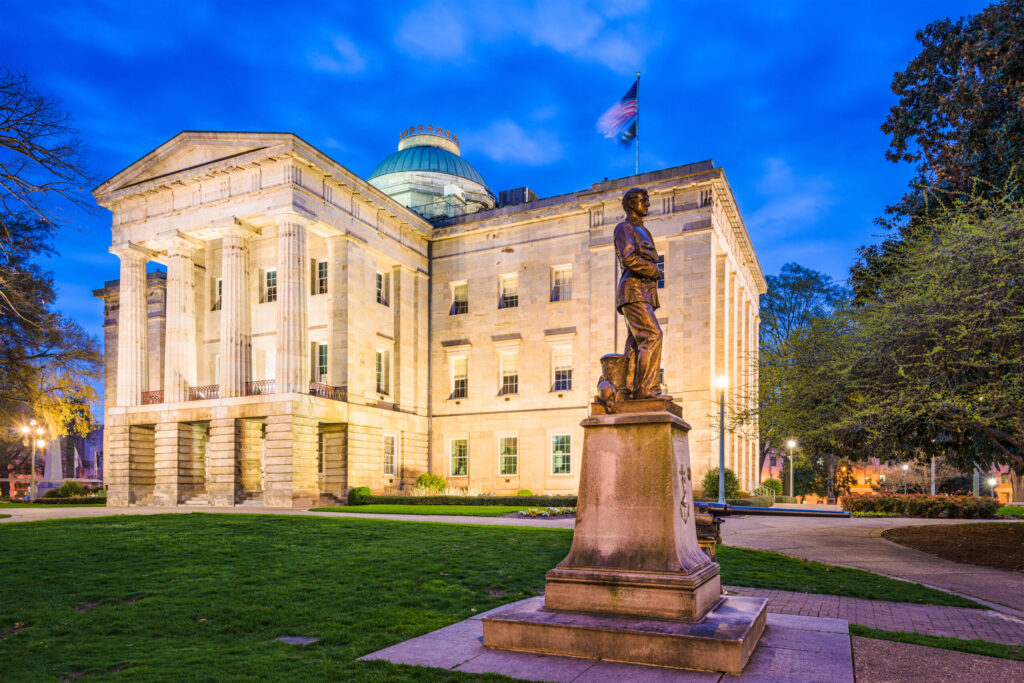
Raleigh, the capital city of North Carolina, is located in the Piedmont region in the northeast central part of the state. In addition to serving as the center of state government, Raleigh was a hub for technology and education. Raleigh’s economy has long been linked to government and education, while the surrounding region was known for tobacco production.
In 1949, the Cameron Village shopping center opened adjacent to the historic Oberlin Village community. Although some Oberlin residents worked for the company that built Cameron Village, they were not allowed to visit or spend money there because of the color of their skin. Furthermore, the Cameron name harkened to the slaveowner who had once owned some of Oberlin’s founding citizens. Further Raleigh construction projects, particularly the expansion of Wade Avenue, caused significant damage to the historic community of Oberlin, including the loss of more than 10 homes. This community destruction, alongside rampant racism, drove many residents who could not afford college to enlist in the military.
Raleigh began its transition to an urban center after World War II. The population increased, necessitating additional housing. This need was addressed with the creation of suburban developments. Industry began to grow as evidenced by the establishment of the York Industrial Center in 1951. It would go on to house a Colonial Stores grocery warehouse and distribution center, Sift & Company, the Raleigh Farmers Market, Kraft Foods, and more. With this growth and expansion came the need for roads, water, sewer services, and schools. This improved infrastructure was essential to the construction of Research Triangle Park in the late 1950s.
The Korean War Era
While Raleigh-specific figures are unavailable, across North Carolina, more than 177,000 citizens served during the Korean War. Of these citizens, 784 were killed, while 201 were categorized as Prisoners of War or Missing in Action.
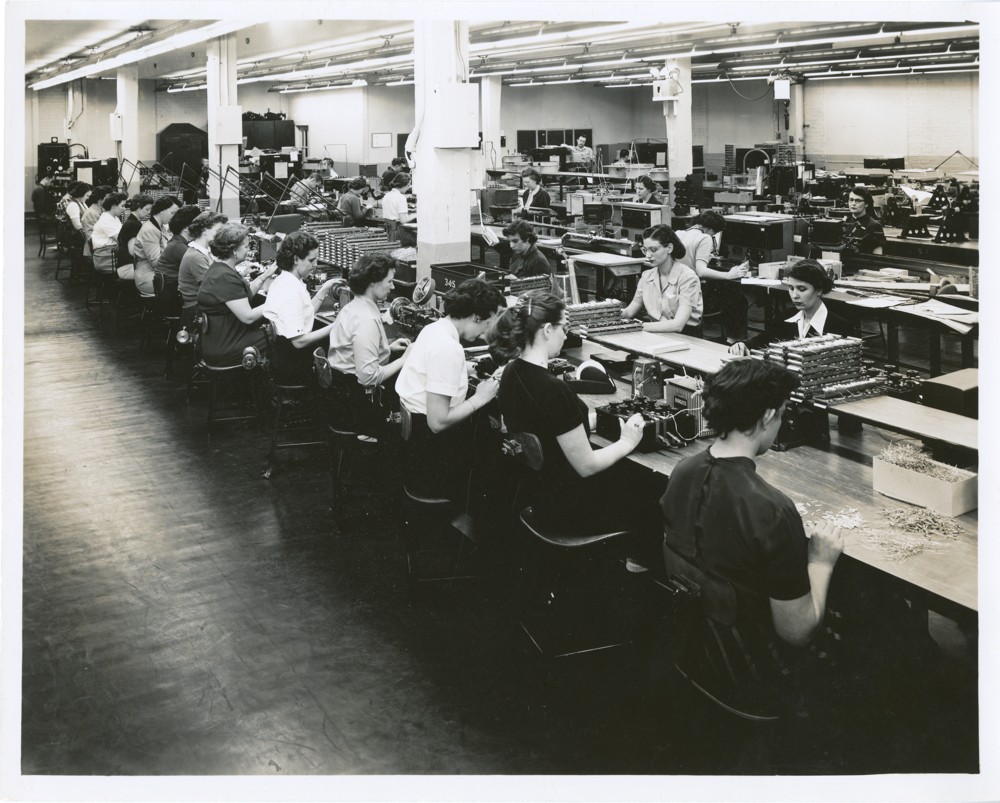
Industrial expansion in nearby Winston-Salem was hampered when materials such as steel were allocated to military support. The Western Electric Company in Burlington, about an hour outside of Raleigh, was involved in the U.S. Army’s Nike Missile Program and operated the Tarheel Army Missile Plant.
Local efforts to support service members during this period included blood drives to meet military needs in Korea, the distribution of magazines and books to soldiers, and an appeal to write to servicemen.
Cold War Tensions
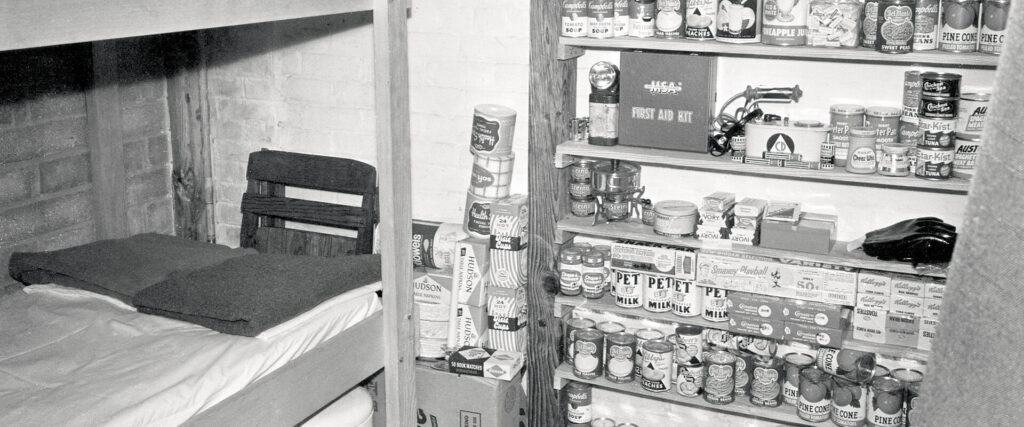
North Carolina had its own Council of Civil Defense (NCCD) months before the Federal Civil Defense Agency (FCDA) was created. While the FCDA encouraged duck-and-cover drills in schools nationwide, the NCCD focused on emergency preparedness, particularly on fallout shelters in the 1960s. Raleigh’s Executive Mansion was fitted with a fallout shelter in the basement in 1959. As of March 1960, only 25 homes in North Carolina and 2 public buildings had fallout shelters. By August 1960, the NCCD had completed and dedicated a federally designed prototype shelter in Raleigh that was stocked by the Raleigh Women’s Club. Raleigh’s First Federal Savings and Loan building was one of the first commercial buildings in the state to be built with a fallout shelter. The NCCD further pushed for a statewide network of public and private fallout shelters.
Military Experience
Corbin served in the U.S. Army. He was assigned to Company K, 3rd Battalion, 9th Regiment, 2nd Infantry Division as a light weapons infantryman. Day-to-day tasks of an infantryman included weapons maintenance, patrolling, reconnaissance, digging and maintaining protective trenches and foxholes, and preparing for offensive and defensive movements. In battle, light infantrymen were involved in close combat in a wide variety of weather and terrain.
Service in Korea
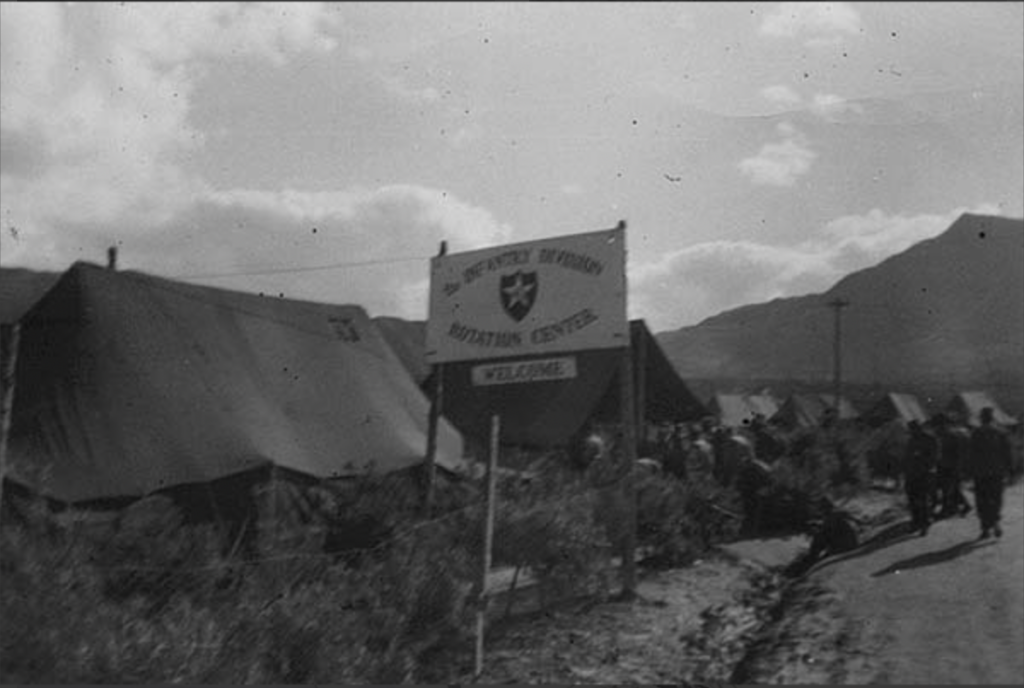
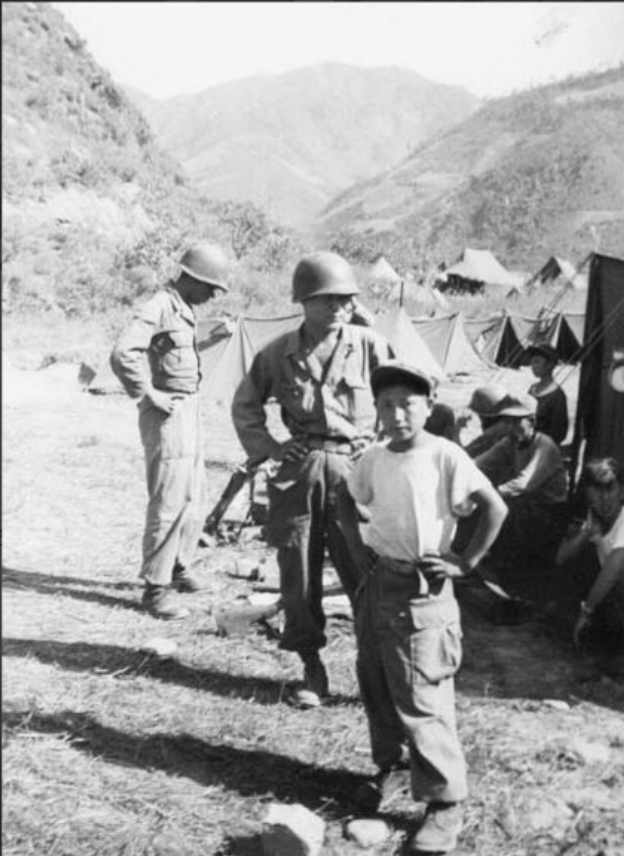
The 2nd Infantry Division arrived in Pusan, South Korea, on July 23, 1950. They were the first unit to arrive in Korea straight from the United States. This division received the Republic of Korea Presidential Unit Citation on September 29, 1950, for its defense of the Naktong River. During this operation, Private First Class Corbin was seriously wounded by a missile, but he eventually returned to duty.
In February 1951, Corbin’s unit was involved in a counteroffensive mission north of Wonju to drive back Chinese Communist Forces (CCF) that had crossed into Korea. During this period, the unit was involved in securing missions and patrolling areas where hostilities were ongoing, often under fire. These soldiers endured poor conditions, including water, mud, snow, and cold, which made sleep difficult. In the command report, it was noted that “freezing nights and thawing days were a continuous nightmare” during this time.
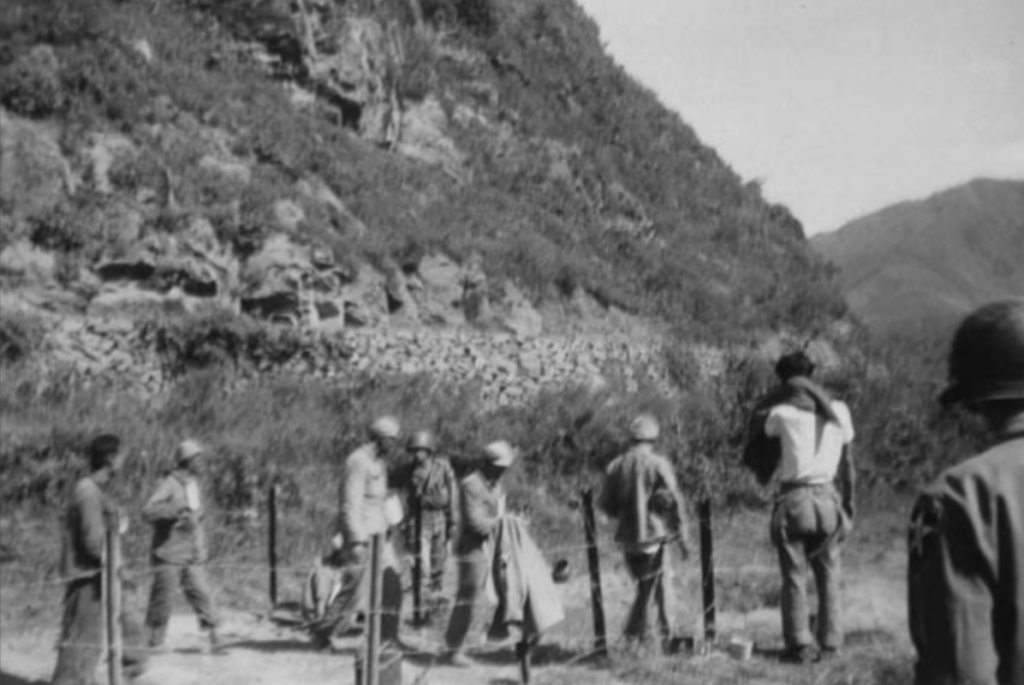
On February 11, 1951, Private First Class Corbin’s unit participated in the Battle of Chip’yong-ni, during which he was captured by the CCF. By February 18, the CCF began withdrawing after incurring at least 5,000 casualties thanks to the efforts of Corbin’s unit.
Commemoration
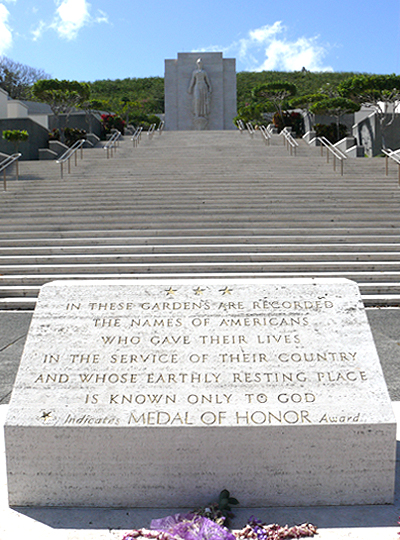
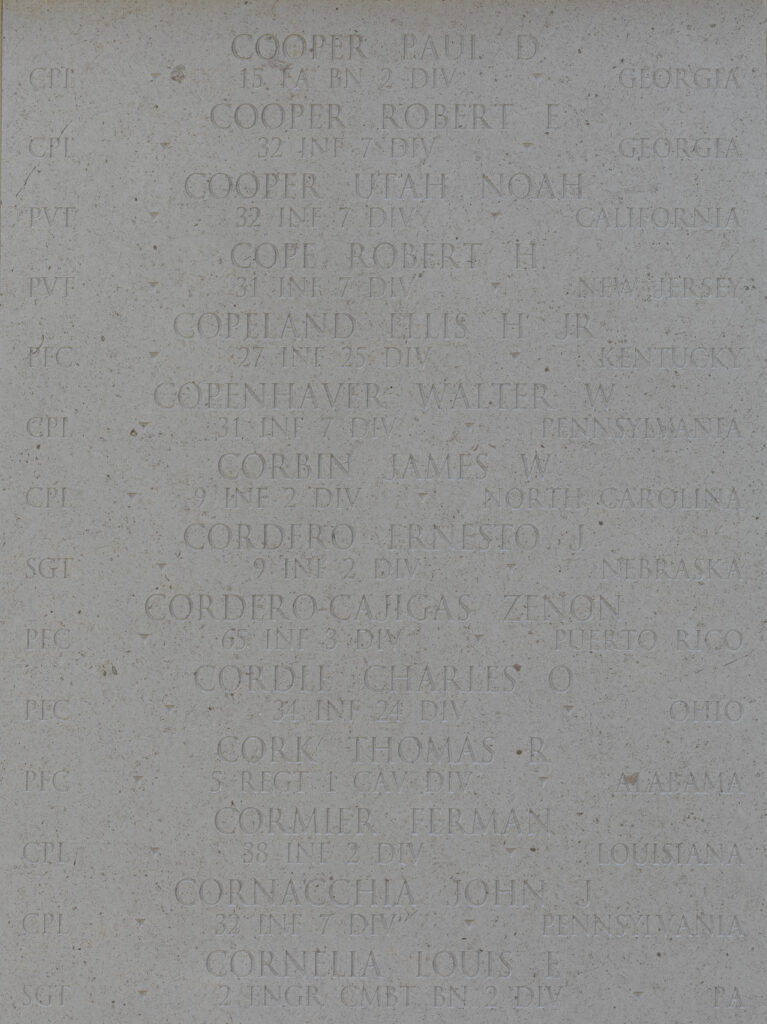
After his capture by the CCF, Private First Class Corbin was moved north to the Yalu Prisoner of War camps, where he died as a result of malnutrition and lack of medical care on June 10, 1951. Another soldier, Private First Class Mack L. Spearman, helped with his burial and later provided a statement to Army officials to ensure that his fate would be known. Corbin was promoted to corporal on May 1, 1953, upon the declaration of his death. His remains were never returned to the United States, but he is memorialized on Court Four of the Courts of the Missing at the National Memorial Cemetery of the Pacific, Honolulu, Hawaiʻi.
Much of Corporal Corbin’s military record was lost in the July 12, 1973, fire at the National Personnel Records Center. Yet what history cannot fully document, his actions make unmistakably clear. His service played a vital role in the fight that ultimately forced the Chinese Communist Forces to withdraw from Chip’yong-ni. Despite being seriously wounded in combat, he returned to the fight, endured captivity as a prisoner of war, and ultimately gave his life in service to his country.
Bibliography
Primary Sources
“9th Infantry Regiment – Command Report – February 1951: 2nd Infantry Division.” Korean War Project, Box 7, File 6, National Archives and Records Administration. https://www.koreanwar2.org/kwp2/usa/2id/002/USA_2ID_070006_0251.pdf.
“Aberdeen Notes.” The Carolinian [Raleigh, NC], March 24, 1951. https://newspapers.digitalnc.org/lccn/sn80008926/1951-03-24/ed-1/seq-24/.
Barden, Albert. Man-Mur Bowling Center, 2516 Hillsborough St, Raleigh, NC. Photograph. c. 1940. Albert Barden Photograph Collection, State Archives of North Carolina (N_53_16_2995). https://www.flickr.com/photos/north-carolina-state-archives/33466994192.
“Blood From Bragg Flows Toward Korea War Front.” The Carolinian [Raleigh, NC], April 14, 1951. https://newspapers.digitalnc.org/lccn/sn80008926/1951-04-14/ed-1/seq-11/.
“Blood Urgently Needed for Armed Services to Save Lives in Korea.” The Zebulon Record [Zebulon, NC], October 23, 1951. https://newspapers.digitalnc.org/lccn/sn92073191/1951-10-23/ed-1/seq-1/.
“Bloodmobile to Be in Raleigh Two Days Next Week.” The Zebulon Record [Zebulon, NC], August 8, 1952. https://newspapers.digitalnc.org/lccn/sn92073191/1952-08-08/ed-1/seq-1/.
Department of the Army Field Manual: Rifle Company, Infantry, Airborne Infantry, and Mechanized Infantry. Department of the Army, 1962. https://www.bits.de/NRANEU/others/amd-us-archive/FM7-11%2862%29.pdf.
Dorothy Corbin Jones. North Carolina, U.S., Death Certificates, 1909-1976. Digital images. https://ancestryclassroom.com.
Eunice Turner Corbin. North Carolina, U.S., Death Certificates, 1909-1976. Digital images. https://ancestryclassroom.com.
Eva Corbin Young. North Carolina, U.S., Death Certificates, 1909-1976. Digital images. https://ancestryclassroom.com.
“FAMILY INCOME at $1,231; This Was Median Figure in 1939, Census Bureau Says.” The New York Times [New York, NY], April 30, 1943. www.nytimes.com/1943/04/30/archives/family-income-at-1231-this-was-median-figure-in-1939-census-bureau.html.
George Heney Corbin. Wake, North Carolina, U.S. Birth Certificate Index, 1870-2005. Digital images. https://ancestryclassroom.com.
“Have You Written Your Serviceman in Korea?” The Carolinian [Raleigh, NC], April 28, 1951. https://newspapers.digitalnc.org/lccn/sn80008926/1951-04-28/ed-1/seq-19/.
James W. Corbin. Report of Death Memorandum. Department of the Army, National Archives and Records Administration – St. Louis.
James William Corbin. Defense Casualty Analysis System. National Archives and Records Administration. https://aad.archives.gov/aad/recorddetail.jspdt=3179&mtch=1&cat=GP21&tf=F&q=james+w+corbin&bc=sl&rpp=10&pg=1&rid=114178.
James William Corbin. Korean War Casualty File. National Archives and Records Administration. https://aad.archives.gov/aad/record-detail.jsp?dt=230&mtch=2&cat=GP21&tf=F&q=james+w+corbin&bc=sl&rpp=10&pg=1&rid=44042&rlst=44042,44043.
James William Corbin. Wake, North Carolina, U.S. Birth Certificate Index, 1870-2005. Digital images. https://ancestryclassroom.com.
James William Corbin. World War II Draft Cards Young Men, 1940-1947. Digital Images. https://ancestryclassroom.com.
Johnny B. Corbin. North Carolina, U.S., Death Certificates, 1909-1976. Digital images. https://ancestryclassroom.com.
Johnie B. Corbin. North Carolina, U.S., Marriage Records, 1741-2011. Digital images. https://ancestryclassroom.com.
Johnny Benton Corbin. World War II Draft Cards Young Men, 1940-1947. Digital images. https://ancestryclassroom.com.
“Legion Endorses Bloodmobile Visit.” The Zebulon Record [Zebulon, NC], August 8, 1952. https://newspapers.digitalnc.org/lccn/sn92073191/1952-08-08/ed-1/seq-1/.
“Local Red Cross to Take Part in Blood Program.” The Carolinian [Raleigh, NC], January 27, 1951. https://newspapers.digitalnc.org/lccn/sn80008926/1951-01-27/ed-1/seq-22/.
Mattie Corbin. North Carolina, U.S., Death Certificates, 1909-1976. Digital images. https://ancestryclassroom.com.
North Carolina State Historic Preservation Office. Registration form for the National Register of Historic Places: Chatham Manufacturing Company-Western Electric Company. Winston-Salem, North Carolina, 2010. https://files.nc.gov/ncdcr/nr/FY0781.pdf.
North Carolina. Wake County. 1940 U.S. Census. Digital Images. https://ancestryclassroom.com.
North Carolina. Wake County. 1950 U.S. Census. Digital Images. https://ancestryclassroom.com.
Stone, Walter T. 9th Regiment Korea 50-57. Photographs. 1950-1957.https://manchu.org/linage/korea/.
U.S. War Department Infantry Field Manual: Rifle Company, Rifle Regiment. Government Printing Office, 1942. https://ia600207.us.archive.org/1/items/Fm7-10/Fm7-10.pdf.
William Corbin. North Carolina, U.S., Death Certificates, 1909-1976. Digital images. https://ancestryclassroom.com.
Working at Sub-Assembly Stations. Photograph. 1953. Alamance County Public Libraries, Digital NC. https://lib.digitalnc.org/record/100542?v=uv#.
“Zebulon Residents Asked to Give Blood for Use of Men in Korea; Facilities to Be at State Hospital.” The Zebulon Record [Zebulon, NC], June 15, 1951. https://newspapers.digitalnc.org/lccn/sn92073191/1951-06-15/ed-1/seq-1/.
Secondary Sources
“The Battle of Chip’yong-ni.” The Army Heritage Center Foundation. Accessed January 8, 2026. https://www.armyheritage.org/soldier-stories-information/the-battle-of-chipyong-ni/.
“City of Raleigh.” North Carolina History Project. Accessed December 1, 2025. https://northcarolinahistory.org/encyclopedia/city-of-raleigh/.
“Cpl. James William Corbin.” Defense POW/MIA Accounting Agency. Accessed December 30, 2025. https://dpaa-mil.sites.crmforce.mil/dpaaProfile?id=a0Jt00000004mOgEAI.
“Cpl. James William Corbin.” Find a Grave. Accessed October 28, 2925. https://www.findagrave.com/memorial/159968093/james-william-corbin.
“Friends of Oberlin Village.” Friends of Oberlin Village. Accessed October 28, 2025. https://friendsofoberlinvillage.org/.
“History” 2nd Infantry Division-Korea. Accessed January 28, 2026. https://www.2id.korea.army.mil/About-Us/History/.
“James W. Corbin.” American Battle Monuments Commission. Accessed October 28, 2025. https://weremember.abmc.gov/sq=*&criteria=title%3DCorbin~first_name%3DJames~middle_name%3DW.&type=16&v=G.
“James W. Corbin.” Veterans Legacy Memorial, National Cemetery Administration. Accessed Februry 12, 2026. https://www.vlm.cem.va.gov/JamesWCorbin/1A8C4.
“Oberlin Village.” American Battlefield Trust. Accessed October 30, 2025. https://www.battlefields.org/visit/heritage-sites/oberlin-village.
Blazich Jr., Frank Arthur. 2008. Alert Today, Alive Tomorrow: The North Carolina Civil Defense Agency and Fallout Shelters, 1961-1963. North Carolina State University, 2008. https://repository.lib.ncsu.edu/server/api/core/bitstreams/4c454d73-81da-40f9-9440-e4109b71bf6c/content.
Byers, Neil. “Nike Missile Program materials from Alamance County Public Libraries Now Available Online at DigitalNC.” DigitalNC Blog. February 26, 2019. https://www.digitalnc.org/blog/nike-missile-program-materials-from-alamance-county-public-libraries-now-available-online-at-digitalnc/.
Cockrell, David L. “Korean War.” NCpedia. State Library of NC. 2006. https://www.ncpedia.org/korean-war.
Gugeler, Russell A. Combat Actions in Korea. Office of the Chief of Military History, 1970. https://apps.dtic.mil/sti/pdfs/AD1134169.pdf.
Little, M. Ruth. “Rooted in Freedom: Raleigh, North Carolina’s Freedmen’s Village of Oberlin, an Antebellum Free Black Enclave.”North Carolina Historical Review 97 (no. 4), (October 2020): 425–50. https://openurl.ebsco.com/.
Little, Ruth. 2006. The Development of Modernism in Raleigh, 1945-1965. Raleigh Historic Districts Commission, 2006. https://www.hpo.nc.gov/media/598/open.
Marshall, S. L. A. Infantry Operations and Weapons Usage in Korea. Operations Research Office, Johns Hopkins University, 1953. https://thekwe.org/topics/reports/after_action/commentary_on_infantry_weapons_korea_1950_51.pdf.
Napier, Courtney. “Oberlin’s Persistence.” The Assembly. Updated February 16, 2021. Accessed December 30, 2025. https://www.theassemblync.com/place/the-persistence-of-oberlin.
Tomlin, Jimmy. “Back in the Day: An Atomic Honeymoon.” Our State. Updated April 27, 2021. Accessed December 30, 2025. https://www.ourstate.com/back-in-the-day-an-atomic-honeymoon/.
“Washington Graded and High School,” Raleigh Historic. Accessed January 29, 2026. https://raleighhistoric.org/items/show/93.
Williams, Shane. “North Carolina State Capitol.” North Carolina History Project. https://northcarolinahistory.org/encyclopedia/north-carolina-state-capitol/.
This profile was researched and created through the Researching Silent Heroes program, sponsored by the American Battle Monuments Commission.