

Captain William “Bill” Robert Bennewitz
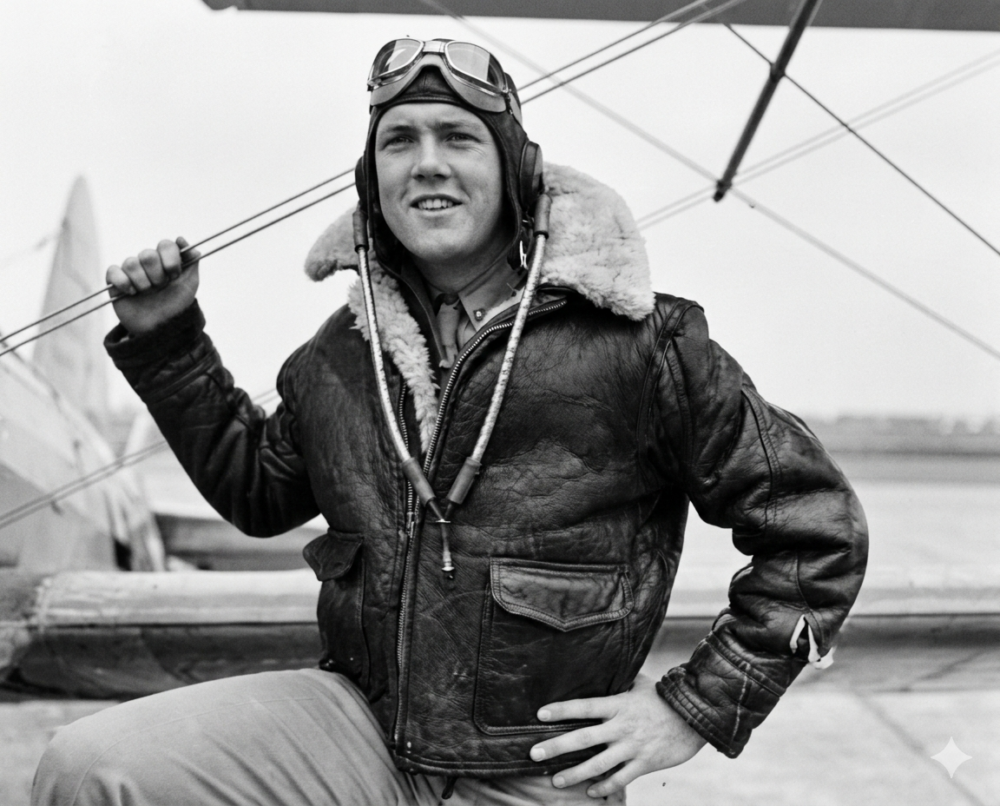
- Unit: Marine Fighter Attack Squadron VMF-124
- Date of Birth: November 27, 1922
- Entered the Military: June 30, 1942
- Date of Death: July 1, 2019
- Hometown: Saint Cloud, Minnesota
- Place of Death: Burnsville, Minnesota
- Award(s): Five Air Medals, Distinguished Flying Cross
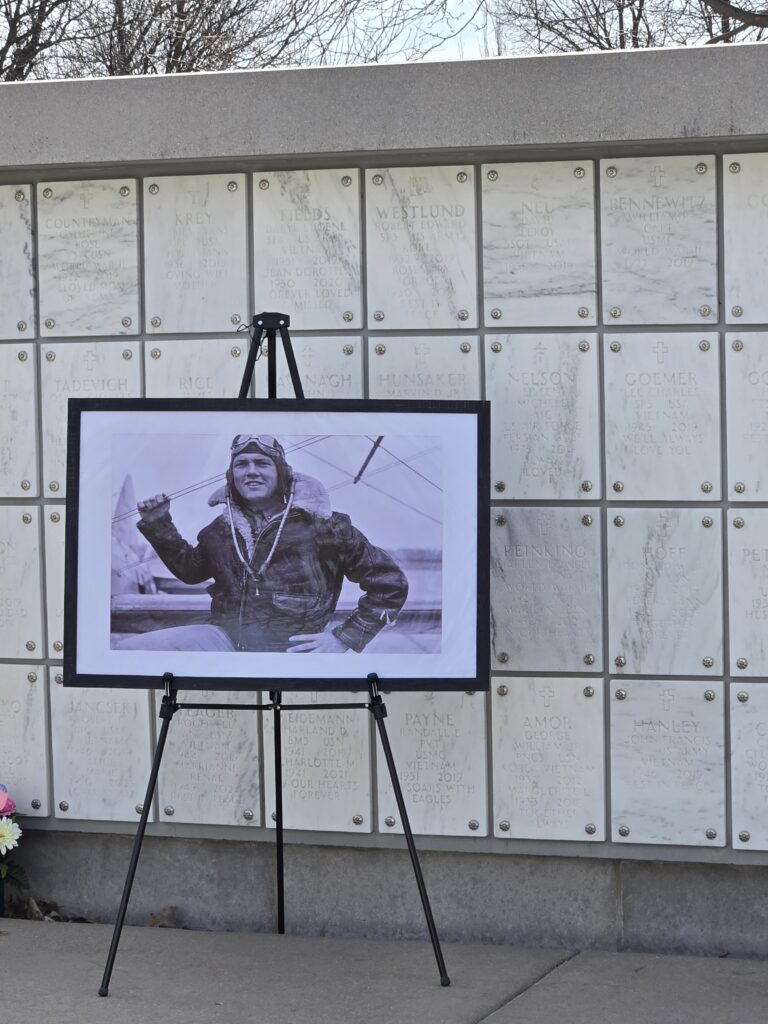
- Cemetery: Section CC3, Row 8, Site 43A. Fort Snelling National Cemetery- Minneapolis, Minnesota
Mentored by Mrs. Marley Hoefs
St. Croix Falls High School, St. Croix Falls, Wisconsin
2025/2026
Early Life
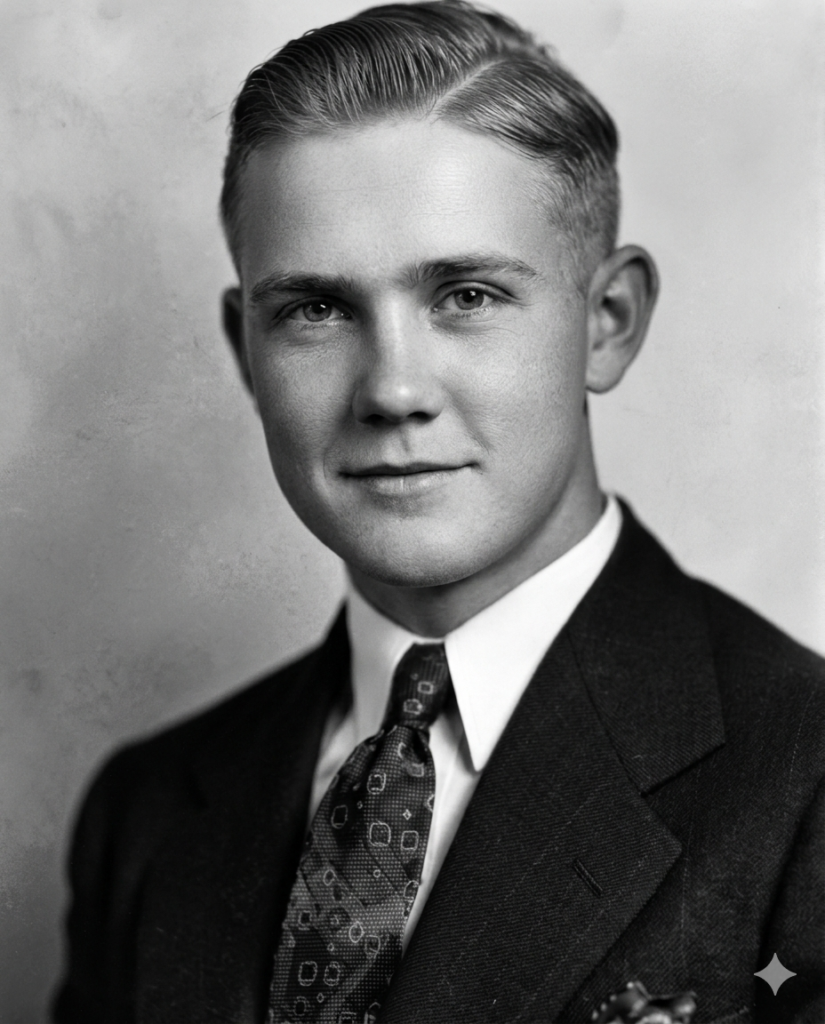
William “Bill” Bennewitz was born on November 27, 1922, in Saint Cloud, Minnesota. He was the son of Leo and Anna (Mattiasen) Bennewitz. His father was employed by the Great Northern Railroad, while his mother worked as a homemaker.
Bill was the eldest of four children, growing up with his sister Jeanne, who was 18 months younger, his sister Audrey, and his youngest brother, Keith. He was their playmate and protector, qualities that would serve him well when he joined the Marines. As a child, he was fascinated by airplanes and flying. Bill attended Technical High School in Saint Cloud, where he graduated in 1940. After graduation, he got his pilot’s license in hopes of flying in the military. When Bennewitz joined the military, he was attending Saint Cloud Teachers’ College. He did this to set himself apart from other potential military pilots. The military wanted college-educated men to fly.

Homefront
Industrial Mobilization
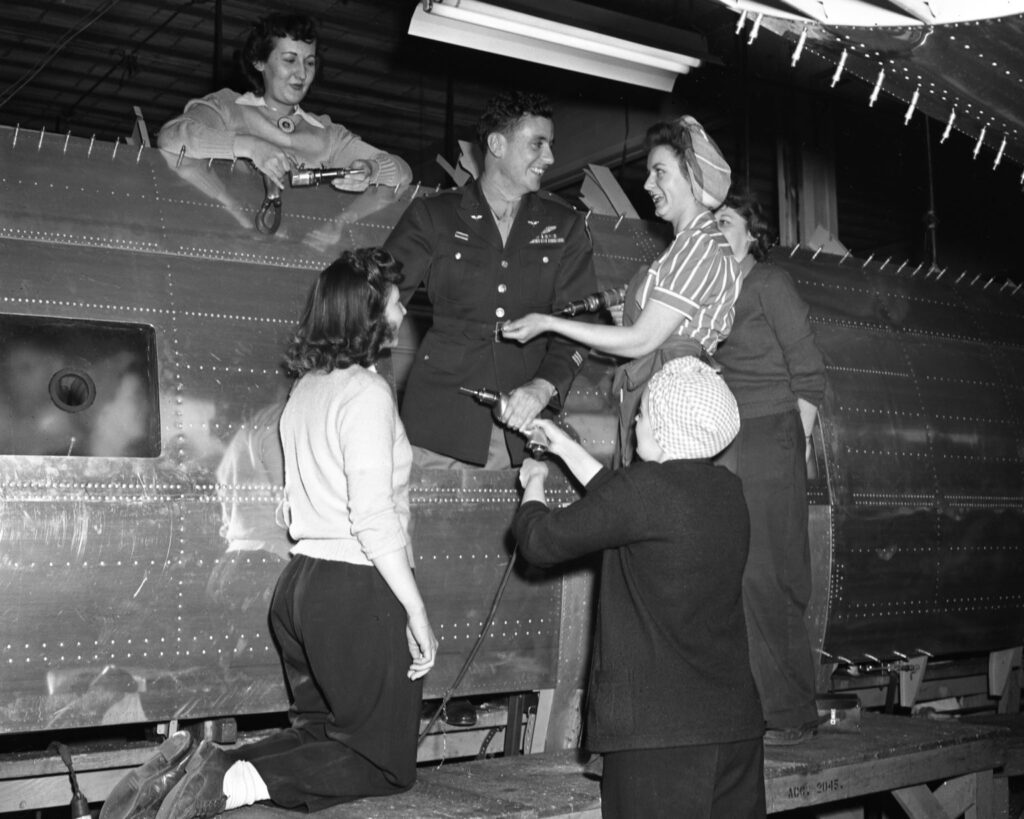
Located north of the Twin Cities at the point where the Sauk and Mississippi Rivers meet, St. Cloud, Minnesota, became a vital part of the home front effort during World War II, largely driven by Char-Gale Manufacturing Company. Originally a sheet metal and furnace company, the plant opened just eight days before the attack on Pearl Harbor and quickly pivoted to wartime production.
In 1943, the St. Cloud plant was awarded a $10 million contract to manufacture fuselages and elevator sections for the Curtiss Commando (C-46) cargo plane. To meet this demand, employees were paid $0.50 an hour to train at St. Cloud Technical High School (the same school Bennewitz graduated from in 1940). At its peak, the company employed 1,400 workers; however, when the war in Europe ended in May 1945, the demand for supplies dwindled. The plant eventually closed its St. Cloud location, cutting its workforce nearly in half to 850 workers.
Shifting Labor Demographics and Unrest
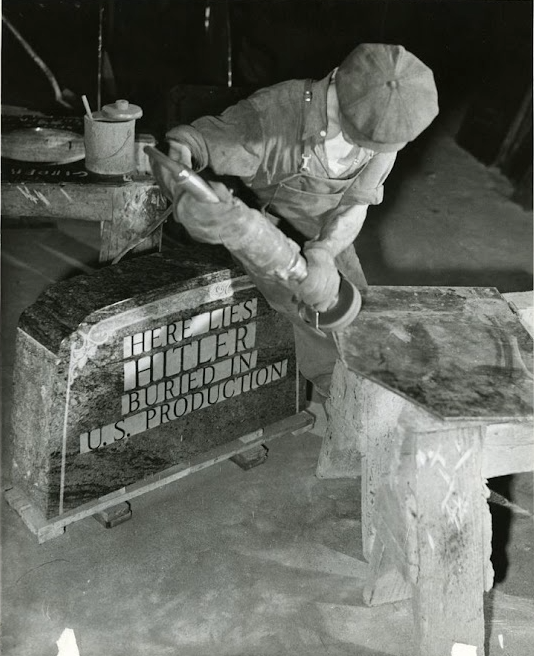
The war significantly altered the local workforce. By 1943, four out of every ten workers in Minnesota were women. Char-Gale actively hired women to fill positions during the height of production, though they were the first to be laid off when government funding ended. The era also saw labor disputes. In 1943, 350 granite workers at St. Cloud went on strike. The situation escalated to the point that the governor had to intervene to negotiate a settlement, which ultimately included a 2 ½-cent-per-hour pay increase.
Rationing and the Victory Garden Program
Life for residents in Stearns County was heavily defined by conservation and self-sufficiency. By 1942, essential goods like sugar and coffee were being rationed. To supplement the food supply, the government encouraged residents to plant victory gardens. This program was immensely successful, peaking in 1943 when these gardens accounted for 40% of the nation’s vegetable crop. Homeowners, Girl Scouts, and various community groups all participated, and the city even hosted youth competitions to see who could grow the healthiest and largest crops.
Beyond industry and agriculture, the social fabric of St. Cloud was supported by charitable organizations. The Stearns County Red Cross was active throughout the war, focusing on raising funds and increasing membership in its local chapter to support the broader war effort.
Although not in his hometown of St. Cloud, Bennewitz actively participated in efforts to raise funds for the war through war bonds. Bennewitz and a few other Marines flew their Corsairs in formation from California to Montana to show off their planes to attract sales of war bonds. They went to different cities in Montana, including Helena, Butte, and Bozeman.
In an interview with his sister Audrey, Bennewitz expressed the importance of the support from home for the war effort and the soldiers who fought, “It was so nice, the entire country was behind this war. When we were out in public, in our uniform, we were treated beautifully.”

Military Experience
Enlistment and Pre-Flight Intensity
Bill Bennewitz’s military journey began on June 30, 1942, when he enlisted in the U.S. Navy at eighteen in Minneapolis, Minnesota. His service started with a six-week pre-flight training course in Iowa City, Iowa. The daily schedule was rigorous, split evenly between academics focused on mathematics and celestial navigation and intense physical training.
Because he was stationed in Iowa during the winter, Bennewitz vividly remembered doing push-ups in the snow and the freezing cold; even for the Minnesota boy used to cold winters, this was extreme. The program also featured a grueling boxing regimen in which cadets fought one another; if a cadet lost a match, they were forced to immediately fight the next losing opponent until they either won, were knocked out, or ran out of opponents.
Flight Training and Commission
The flight training process lasted approximately 12 months and required Bennewitz to jump from base to base, always under the threat of a “Down-check.” One failing grade meant being kicked out of the program and wasting months of effort. During this time, he returned to Minneapolis in January to learn to fly Stearmans, which were open-cockpit biplanes that offered no protection from the bitter winter air. Bennewitz eventually received his commission in Corpus Christi, Texas, where he initially chose to specialize in torpedo bombers.
Aircraft Specialization and Transition
Following his commission, Bennewitz traveled to Jacksonville, Florida, to fly the Grumman TBM Avenger, a torpedo bomber that pilots nicknamed “turkeys.” It was during this phase that he met his lifelong friend, Gilroy. However, when he was later based in Santa Barbara, California, the Navy found itself with a surplus of “turkey” pilots. When a sign-up sheet circulated for pilots willing to switch to fighter planes, Bennewitz volunteered; this is when he became a Marine.
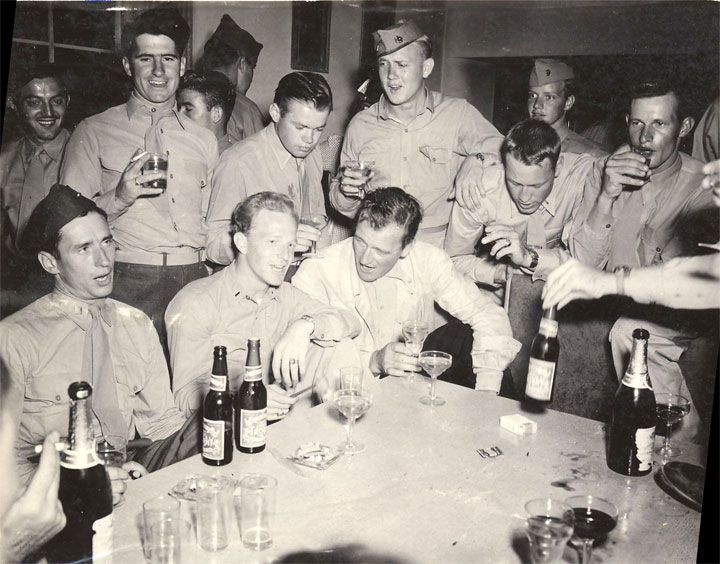
Bennewitz was sent to the Mojave Desert to train on Corsairs, which could serve as both fighters and bombers. It was during this stint in the desert that Bennewitz and his friends famously met actor John Wayne while out at a restaurant. Bennewitz’s training extended beyond standard flight operations into specialized and experimental territory. He participated in pressure training designed to test reactions to high altitudes. Trainees were placed in a tent where oxygen levels were slowly lowered until they passed out.
Deployment to the Marshall Islands
Bennewitz’s journey into the Pacific theater took him to the Marshall Islands, specifically the Isle of Mog Mog. He arrived in time for the holidays, spending December 25, 1944, on the island. He celebrated Christmas in a hut designated as the “officers’ club,” where the men enjoyed beers and a brief respite before the intensity of carrier operations began.
History in the Making Aboard USS Essex
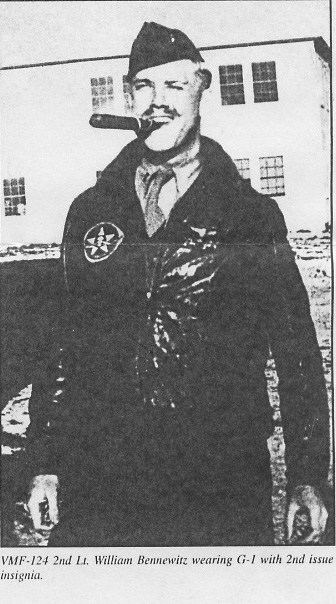
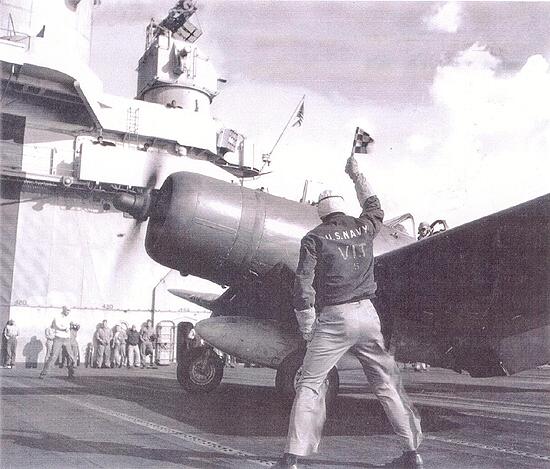
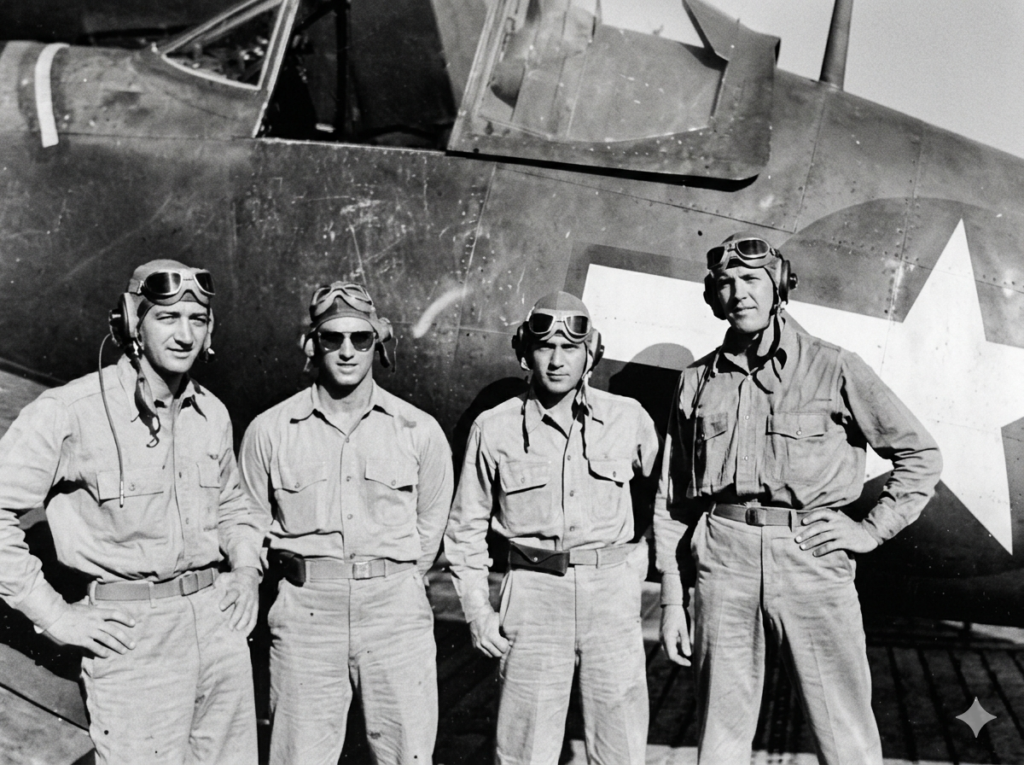
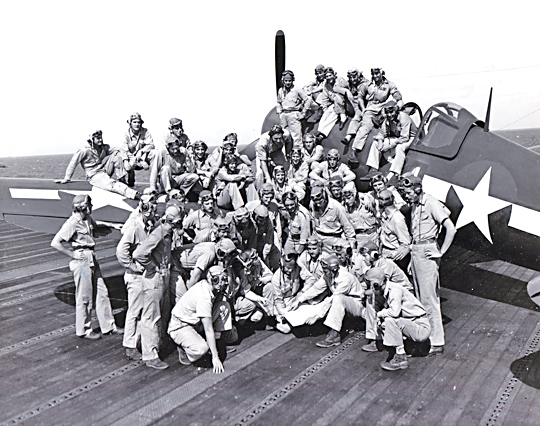
Shortly after Christmas 1944, Bennewitz boarded USS Essex. He was part of a significant moment in naval history, serving in the first Marine Squadron to operate off an aircraft carrier. His unit, Marine Fighting Squadron (VMF-124), along with VMF-213, was selected for this task because they had logged more flight hours than any other group. The squadrons boarded the carrier on December 28, 1944, at Ulithi Lagoon, replacing a Dive Bomber Squadron to prepare for upcoming operations.
Combat Operations and the Kamikaze Threat
Life aboard the Essex was defined by the constant threat of enemy attacks and the uncertainty of missions. When flying strikes occurred, pilots often had little notice of the level of Japanese resistance they would encounter. When not on a strike, Bennewitz flew Combat Air Patrol (CAP), which involved four planes circling the fleet to intercept unidentified aircraft, otherwise known as “bogeys,” before they could threaten the ships. The Navy’s primary concern was kamikaze pilots who specifically targeted carriers. If a threat was imminent, the men were ordered to hunker down in their quarters. While Bennewitz considered himself lucky that the Essex was never hit while he was aboard, he vividly remembered watching USS Ticonderoga get struck by a kamikaze just two miles away.
Battle of Formosa
Combat operations began in earnest on January 3, 1945, with the Battle of Formosa. His initiation into combat proved to be difficult. It involved two separate strikes against the airfields on the island. The weather was overcast, forcing the fighter planes to hide behind a front before diving below the clouds to hit their targets. As they descended, Bennewitz recalled, “There was a hail of lead and tracers coming at us.”
The anti-aircraft fire was so intense that Bennewitz suspected he and his fellow pilots had released their bombs earlier than intended just to escape the barrage. As they pulled up and climbed back through the clouds, he vividly remembered seeing explosions from anti-aircraft shells bursting to his left and right. Despite the danger and the loss of two pilots, Bennewitz and VMF-124 successfully bombed and strafed the airfields on Formosa.
Battle of Luzon
Following Formosa, the squadron moved to support the Luzon campaign. Bombing runs here were relatively uneventful and met with little enemy opposition, though some pilots struggled with weather conditions. VMF-124 and VMF-213 successfully strafed a beached freighter, a small cargo vessel, and a warehouse. These strikes were part of a larger strategy to “soften up” the area for the Allied landings in the Lingayen Gulf scheduled for January 9, 1945.
French Indochina
On January 12, 1945, VMF-124 was stationed 25 miles off the coast of French Indochina (modern-day Vietnam) to strike airfields near Saigon. During this mission, Bennewitz participated in a formation of four Corsairs flying at full speed while “hedge-hopping”—flying dangerously low just above the treeline to locate targets. He vividly remembered this run as he spotted a building and released his bomb at the correct moment; his Skipper later confirmed that the hit blew the structure “sky-high.”
Iwo Jima
The invasion of Iwo Jima, one of the most famous battles in the Pacific Theater, was a critical campaign designed to capture airfields for B-29 raids and protect the flank for the future invasion of Okinawa. Bennewitz supported his fellow Marines by strafing the beaches ahead of their arrival. He flew his Corsair so low that rocks from the beach actually lodged into his wings. Armed with six .50 caliber machine guns, the goal was to eliminate any Japanese forces hiding before the Marines landed. During one run, he attempted to throw a napalm bomb into a cave but was unsuccessful. Bennewitz recalled misunderstanding how well-defended the island actually was, as he did not remember being shot at during any of his runs.
Hainan Island
During operations over Hainan Island, the pilots were given free-fire instructions: anything they saw was considered an enemy. When Bennewitz and his group spotted a ship without markings, they initiated a bombing run. As he dropped his bomb, his plane was violently struck, and the force of the blow kicked the aircraft over. Despite the shock, the plane remained flyable. It was later discovered that a piece of shrapnel the size of a pie tin had entered directly behind him and exited through the top of the plane, miraculously missing Bennewitz and critical mechanical systems. The mission concluded with a harrowing first-time experience for the group: a nighttime carrier landing which they had never practiced, but successfully completed.
Okinawa
The Battle of Okinawa was the final stop in the Allied “island-hopping” strategy and the last combat mission of the war for Bennewitz and VMF-124. It was a massive and bloody engagement, resulting in over 49,000 American casualties and the death of over 90,000 Japanese combatants and 150,000 civilians. Kamikaze attacks on the fleet surged, sinking 36 Allied ships.
Bennewitz’s mission involved strafing the Naha Air Field before American troops landed. He and four other Corsairs destroyed five enemy airplanes. Bennewitz attributed their survival to their immense speed, noting that the Japanese anti-aircraft fire usually trailed behind them. However, the squadron did suffer a tragic loss; Lieutenant Scott Vogt was shot down, and his body was never recovered.
Teaching Others
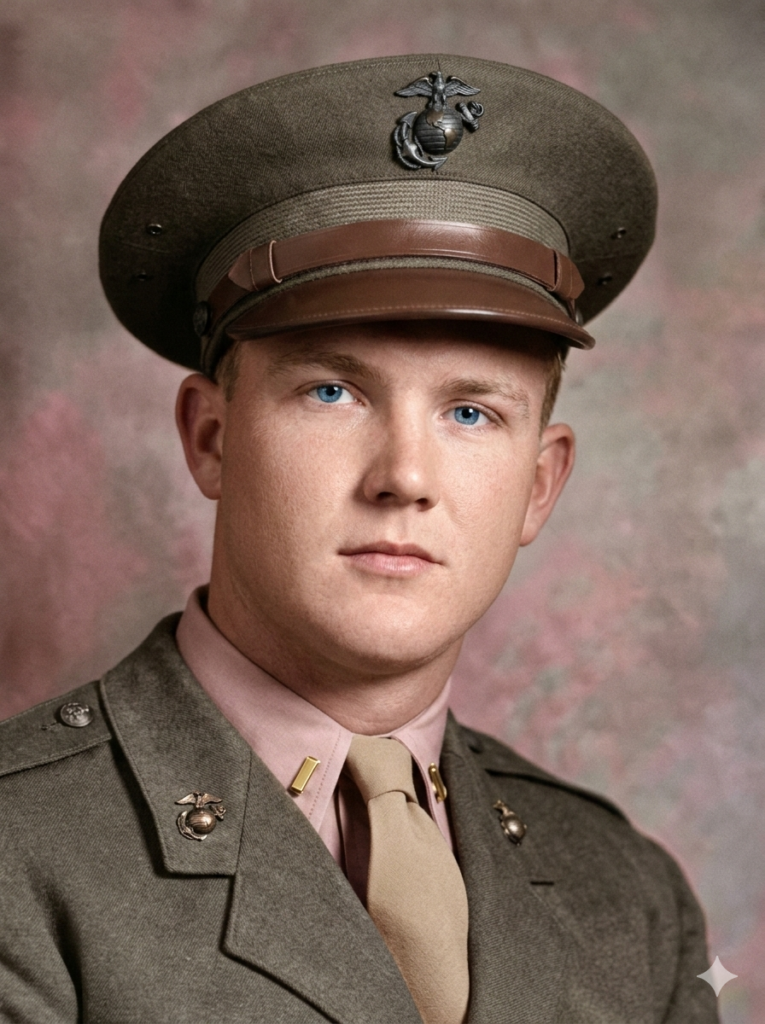
Toward the end of his active service, Bennewitz was stationed at Cherry Point, North Carolina, where he taught new recruits how to fly. This role was a natural fit for his character; having spent his youth protecting his much younger siblings, he transitioned seamlessly into teaching and protecting his fellow Marines. Bennewitz was mustered out of active service in 1945. Although he remained in the reserves until 1947, he was never called back up. For his bravery and skill in the Pacific Theater, he was awarded Five Air Medals and the Distinguished Flying Cross.
Veteran Experience
Upon returning to St. Cloud, Minnesota, after the war, Bennewitz utilized the G.I. Bill to attend and graduate from the University of Minnesota. He became a salesman for the A.B. Dick Duplicating Products Company out of Chicago. He dedicated his career to this field until he retired at 62.
Family Life
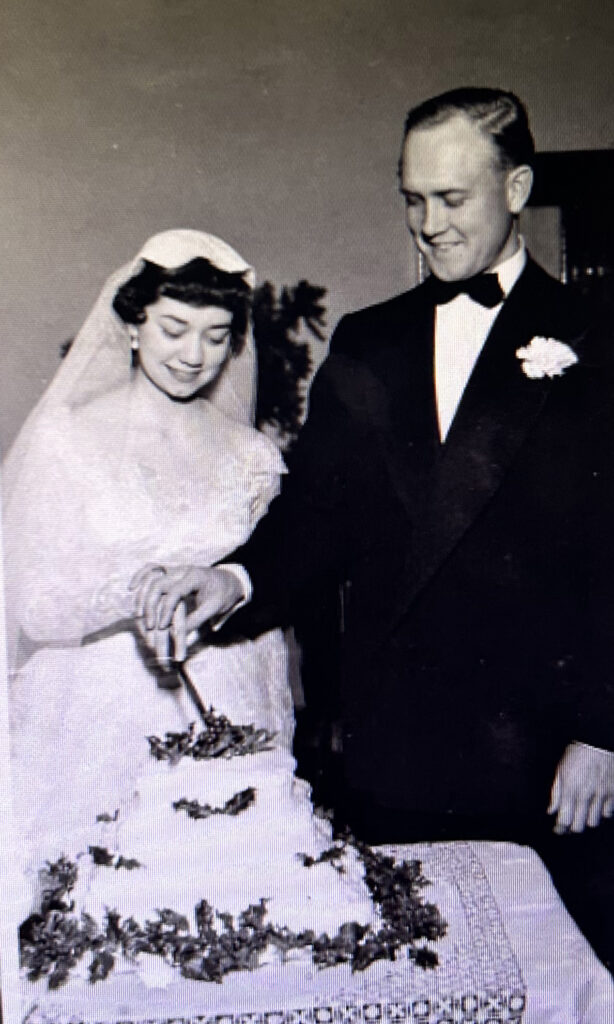
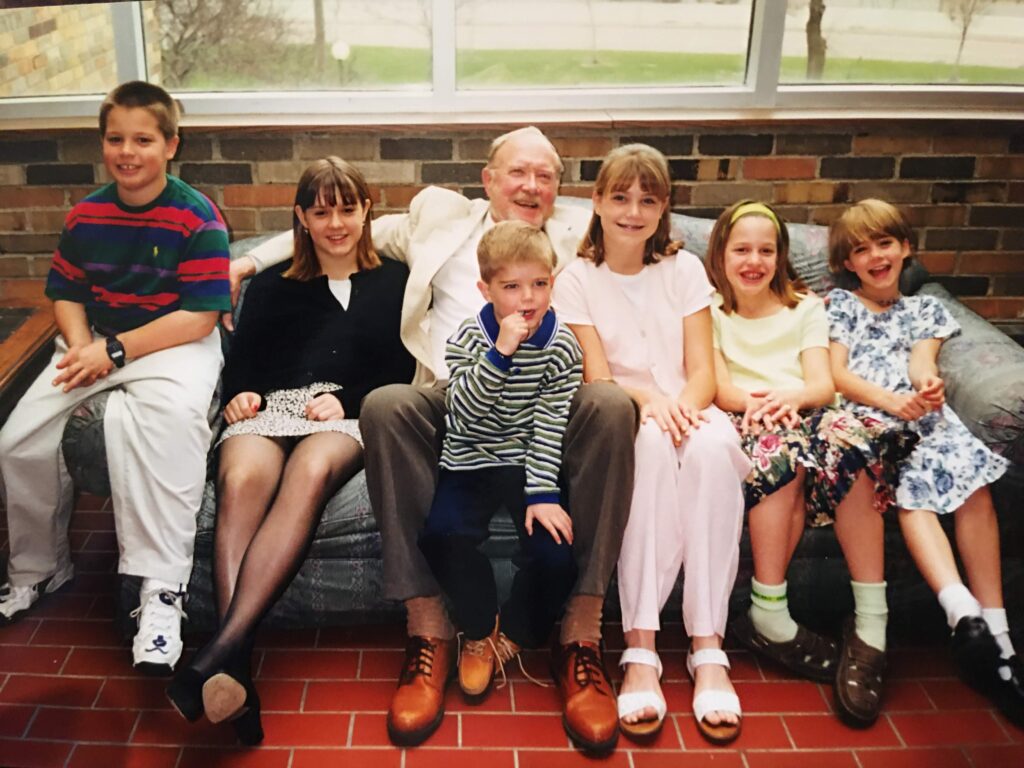
On December 26, 1953, he married Norma Jean Morben; the couple met because both of their fathers worked for the Great Northern Railroad. Together they raised three sons—Bob, Hugh, and Kelly. The family settled in the North River Hills neighborhood of Burnsville, Minnesota, where Bennewitz lived in the same home for over 50 years. He took immense pride in the growing Bennewitz clan and cherished his six grandchildren.
Community Dedication and Quiet Leadership
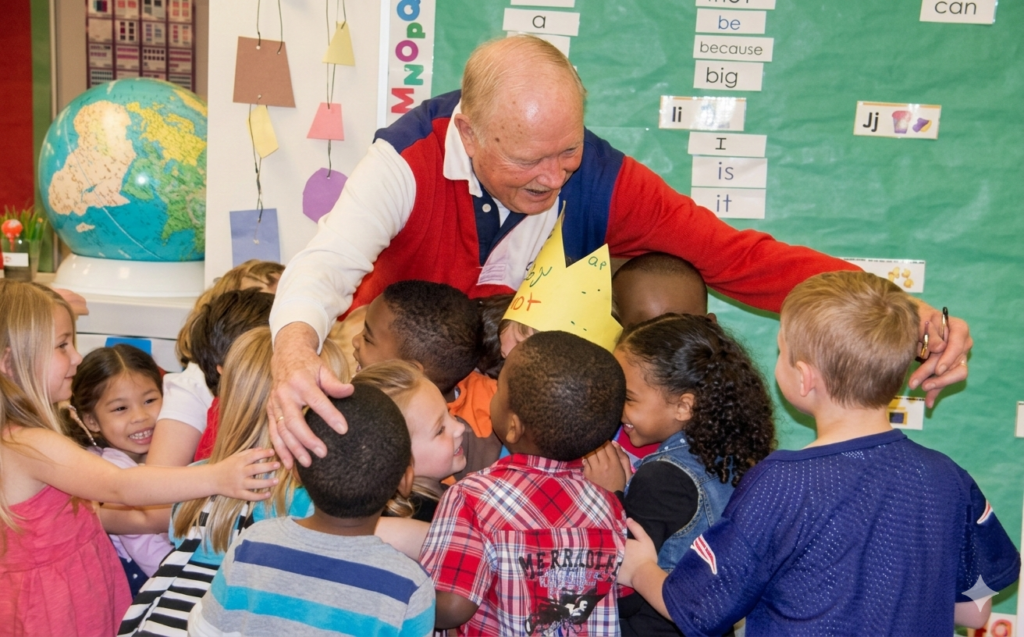
Bill Bennewitz was a staple in his community; he was highly active in his church and could be seen at local ballfields and gymnasiums volunteering as a coach for multiple sports. During his retirement, he became a consistent presence at the elementary school near his home, where he read to kindergarten students. These years of service were evidence of his kindness, compassion, and quiet leadership style.
Commemoration
“Brahma Bill”: The Gentle Protector
Tall in stature, Bennewitz earned the nickname “Brahma Bill” from his fellow Marines. Despite his imposing height and rugged nickname, he was known as a kind soul, soft-spoken, and a lover of laughter. Above all, he was a man who answered the call of duty and returned home without the expectation of accolades. While he did not seek glory, he remained deeply proud of his service, especially of being a Marine.
A Humble Legacy
When asked in an interview about being viewed as a hero, Bennewitz’s response was characteristically humble: “I don’t feel like a hero; that is the poor guys that didn’t make it.” Despite his deflection, his willingness to defend his country defined him as a hero to those he left behind.
William “Bill” Bennewitz passed away on July 1, 2019. He is buried among his fellow service members at Fort Snelling National Cemetery in Minneapolis, Minnesota.

Bibliography
Primary Sources
Bennewitz Family Records. Courtesy of Bennewitz Family.
Bennewitz, Hugh. “Bill Bennewitz WW2 Interview.” Interview by Hugh Bennewitz. 2017. https://www.youtube.com/watch?v=y3vCK2LhvU4.
Bennewicz, William Robert. Birth Record. Minnesota Historical Society. https://www.mnhs.org/search/people/record/57e1b6a1-4415-4049-ad7e-2036a5375ab9?recordType=birth-records.
Carrier Strikes on the China Coast. Report. July 1945. Naval History and Heritage Command. https://www.history.navy.mil/research/library/online-reading-room/title-list-alphabetically/c/carrier-strikes-on-the-china-coast.html.
Hitler headstone at Cold Spring Granite Company, Cold Spring, Minnesota. Photograph. c.1942-1945. Stearns History Museum (10.140). https://collection.mndigital.org/catalog/stearns:699.
Japanese submarine on parade, St. Cloud, Minnesota. Photograph. September 9, 1943. Stearns History Museum (shm.mh.121). https://collection.mndigital.org/catalog/stearns:1575.
Minnesota. Stearns County. 1930 U.S. Census. Digital Images. http://ancestryclassroom.com.
Minnesota. Stearns County. 1940 U.S. Census. Digital Images. http://ancestryclassroom.com.
“Plane Order to Char-Gale.” The Minneapolis Star [Minneapolis, Minnesota], August 7, 1943. Newspapers.com (187278065).
“Sees No Cutback in Char-Gale Program.” The Minneapolis Star [Minneapolis, Minnesota], August 16, 1944. Newspapers.com (187517153).
“Sign Up for 25 at Air Craft Jobs.” Brainard Dispatch [Brainard, Minnesota], September 2, 1944. Newspapers.com (1221031679).
St. Cloud Tech High School Yearbook. St. Cloud Public Schools, 1941.
“Stassen Acts to End Strike.” The Minneapolis Star [Minneapolis, Minnesota], July 20, 1942. Newspapers.com (187772221).
“William Bennewitz.” Star Tribune [Minneapolis, Minnesota], July 21, 2019.
William Robert Bennewitz Collection. Personal Narrative. 2007-2008. Veterans History Project, Library of Congress (AFC/2001/001/58633). https://www.loc.gov/item/afc2001001.58633/.
William Robert Bennewicz, Official Military Personnel File (partial), Department of the Navy, National Archives and Records Administration – St. Louis.
William Robert Bennewitz. U.S. Marine Corps Muster Rolls, 1798-1958. Digital Images. https://ancestryclassroom.com.
William Robert Bennewitz. World War II Draft Cards Young Men, 1940-1947. Digital Images. https://ancestryclassroom.com.
Secondary Sources
“Battle of Iwo Jima.” The National WWII Museum. Accessed December 22, 2025. https://www.nationalww2museum.org/war/topics/battle-iwo-jima.
“Battle of Okinawa.” The National WWII Museum. Accessed March 11, 2026. https://www.nationalww2museum.org/war/topics/battle-of-okinawa.
A Brief History of the Victory Garden. Video [7:49]. July 22, 2020. Stearns History Museum. https://www.youtube.com/watch?v=NEfGVzTEV04&t=322s.
Cheever, Eric. “Rosie the Riveter in St. Cloud?” Sterns County History Museum Magazine, September 2025.
Dalman, Dennis. “Museum exhibits feature cars, freezers, the big war.” News Leaders [Sartell-St. Stephen-St. Joseph, Minnesota], October 15, 2021. https://thenewsleaders.com/museum-exhibits-feature-cars-freezers-the-big-war/
“St. Cloud, Minnesota.” Advisory Council on Historic Preservation. Last modified April 2005. Accessed November 4, 2025. https://www.achp.gov/preserve-america/community/st-cloud-minnesota.
Thomas, Gerald W. “War Diary of Two Marine Squadrons — VMF-124 and VMF-213 Aboard the USS Essex.” Updated 2023. Accessed March 11, 2026. Air Group 4. https://airgroup4.com/marines.htm.
“William Robert Bennewitz.” Veterans Legacy Memorial. Accessed November 4, 2025. https://www.vlm.cem.va.gov/WILLIAMROBERTBENNEWITZ/9737f9.
“William Robert ‘Bill’ Bennewitz.” Find a Grave. Accessed November 4, 2025. https://www.findagrave.com/memorial/201743164/william-robert-bennewitz.
“William Robert Bennewitz.” Veterans Legacy Memorial, National Cemetery Administration. Accessed April 14, 2026. https://www.vlm.cem.va.gov/WILLIAMROBERTBENNEWITZ/9737f9.
This profile was funded by a grant from the United States Department of Veterans Affairs. The opinions, findings, and conclusions stated herein are those of the author and do not necessarily reflect those of the United States Department of Veterans Affairs.