
Private First Class Lloyd Charles Schneider
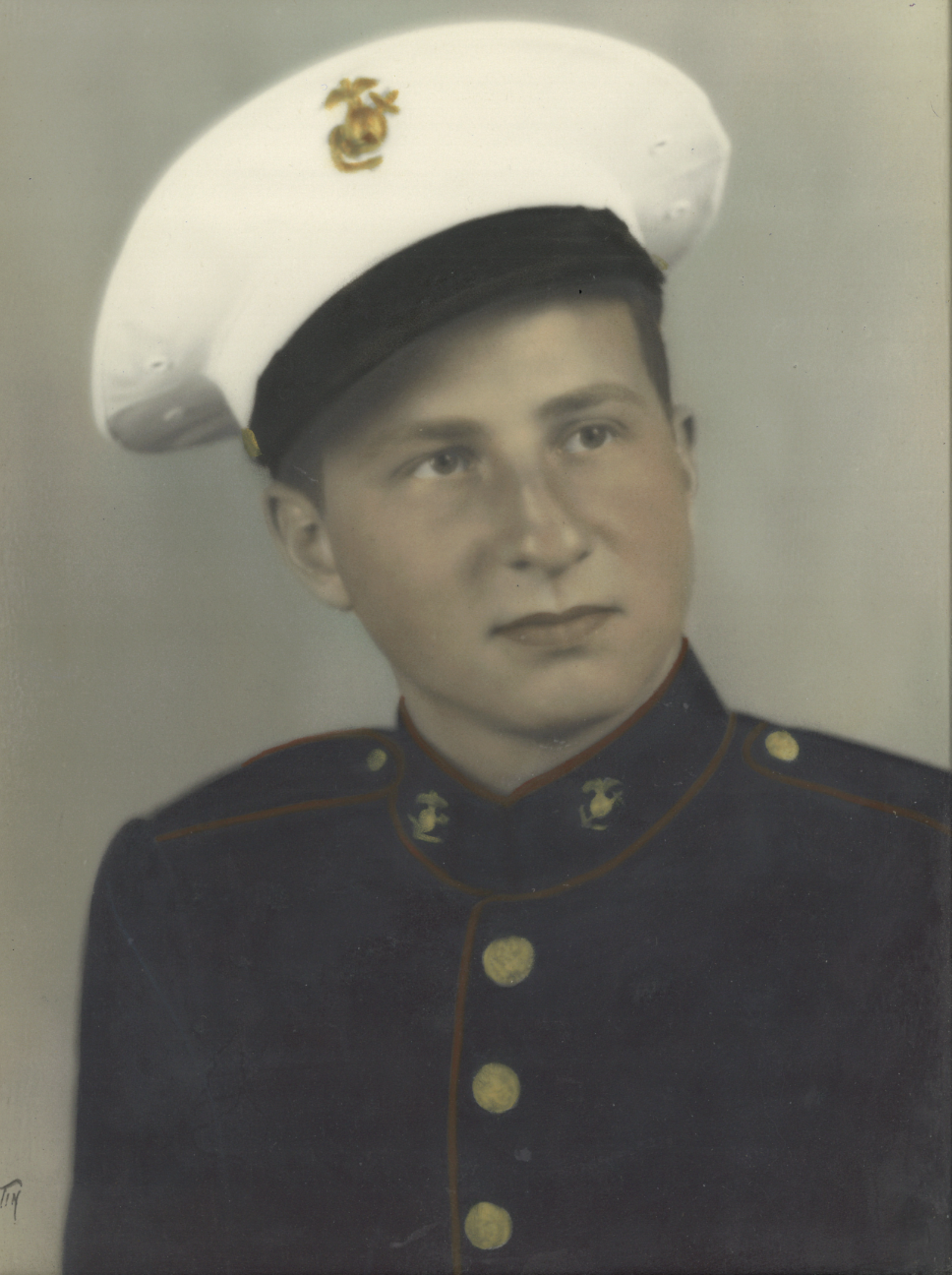
- Unit: 2nd Marine Division, 8th Marines, 1st Battalion
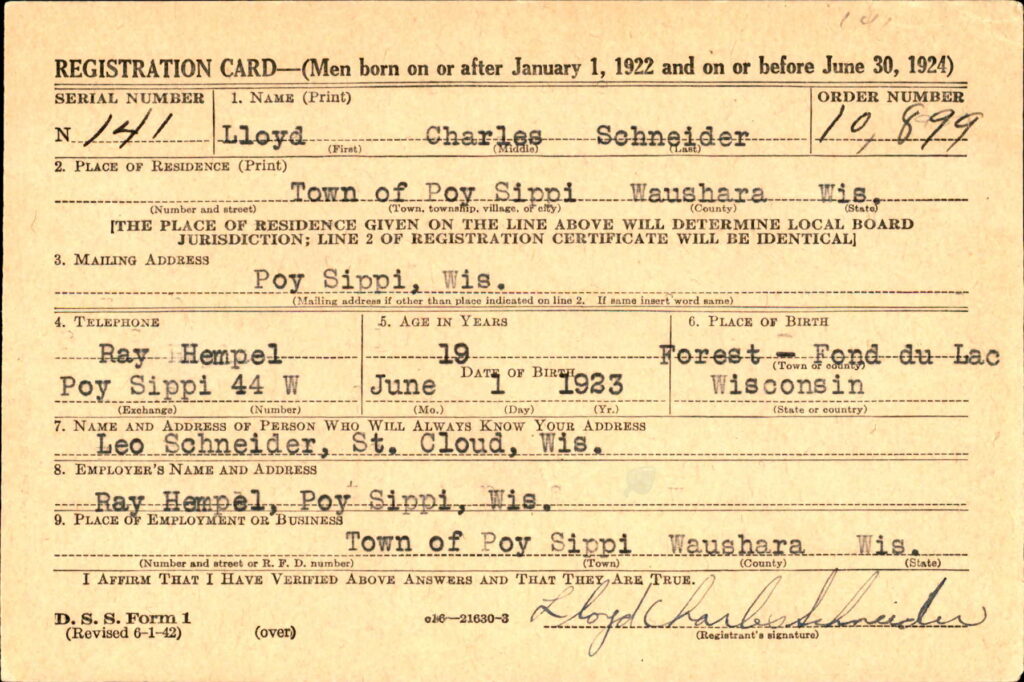
- Date of Birth: June 1, 1923
- Entered the Military: July 18, 1942
- Date of Death: September 12, 2004
- Hometown: Greenbush, Wisconsin
- Place of Death: Fond du Lac, Wisconsin
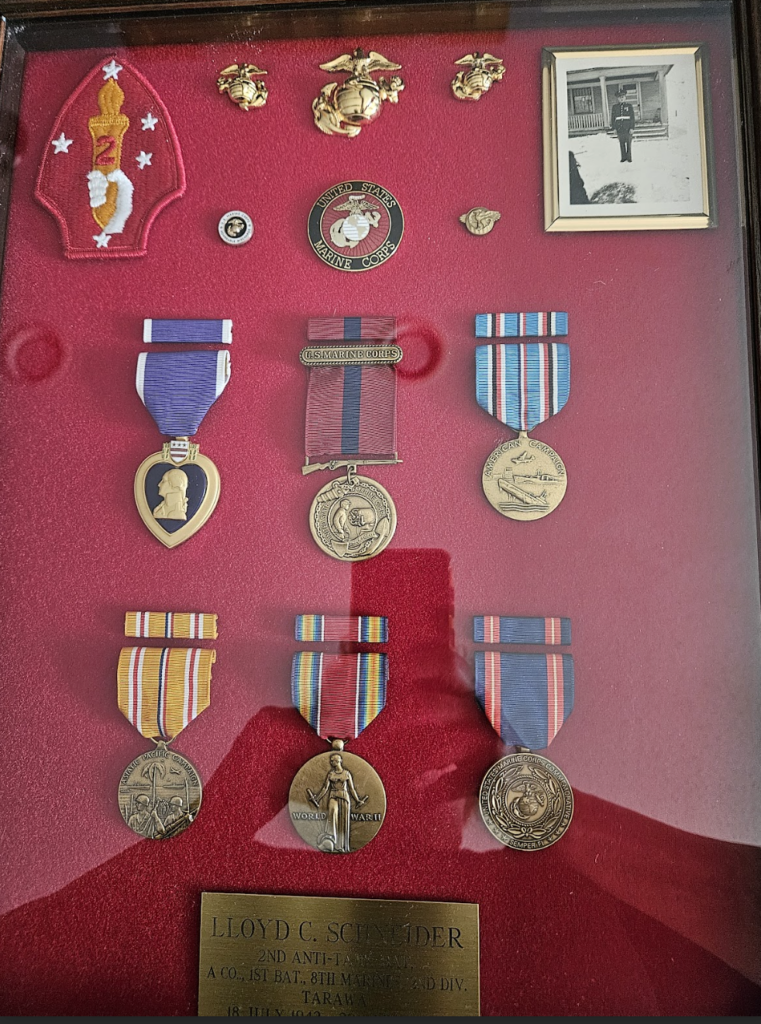
- Award(s): Purple Heart, Presidential Unit Citation, the Asiatic-Pacific Campaign Medal with one bronze star
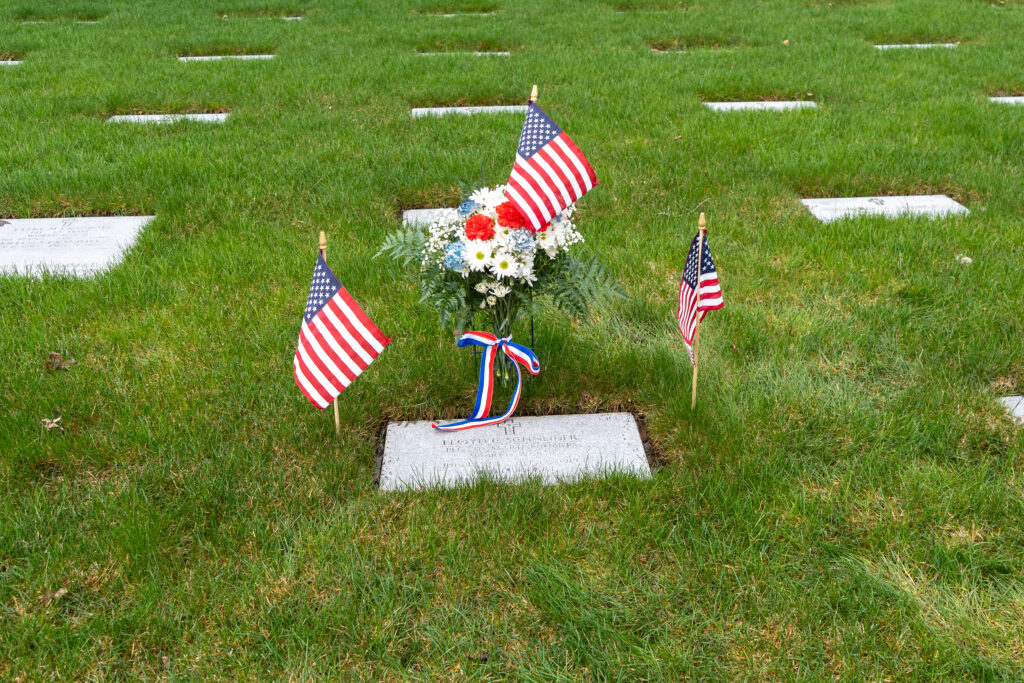
- Cemetery: Section I, Site 109 . Wood National Cemetery, Milwaukee, Wisconsin
Mentored by Mr. Chuck Taft
University School of Milwaukee, Milwaukee, Wisconsin
2025/2026
Early Life
Lloyd Schneider was one of thousands of young Americans who left small towns and farms to serve their country during World War II. A Marine from rural Wisconsin, he endured the brutal fighting at Tarawa, survived a devastating wound, and returned home to build a life marked by dedication to his profession, service to his community, and love of family.
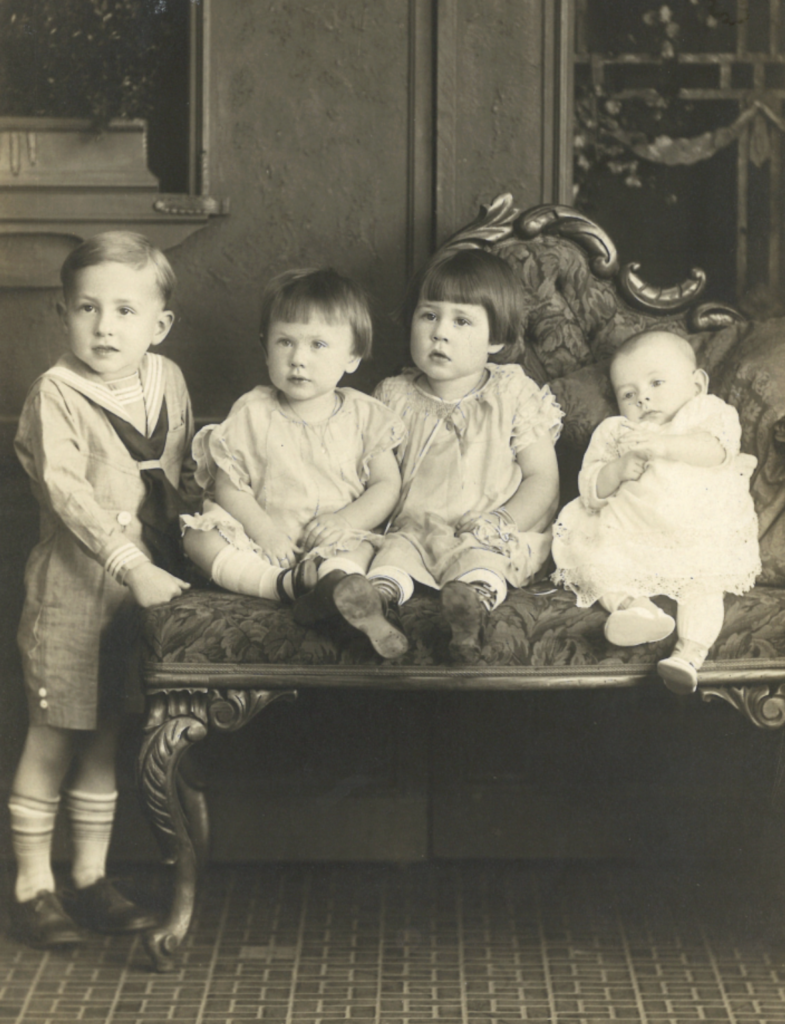
Lloyd Charles Schneider was born on June 1, 1923, in St. Cloud, Wisconsin, a small rural community in Fond du Lac County. He was the oldest of seven children born to Leo and Bertha Webb Schneider. His father was a cheesemaker, and many extended family members worked in local cheese factories. Growing up in central Wisconsin’s dairy country, Lloyd developed a lifelong appreciation for hard work and for cheese.
Lloyd’s childhood was shaped by both responsibility and resilience. One of his sisters suffered from polio, and Lloyd often worked on family farms to help support the household. He was partially raised by aunts and uncles, strengthening his ties to the extended Schneider family and the tight-knit rural community around him.
Schneider attended and graduated from Fond du Lac High School, where he was remembered as a good student and a cast member in a senior class play. After graduation, Schneider did not attend college immediately. In 1940, he worked as a student farm laborer. When the United States entered World War II, Schneider was working as an apprentice mortician for Ray Hempel in Poy Sippi, Wisconsin.
His employer and community members described him as dependable, trustworthy, and of sound character. The county sheriff reported that Schneider had no juvenile record and was considered a desirable citizen. Letters of recommendation described him as a model young man. His parents provided written consent for his enlistment.
Homefront
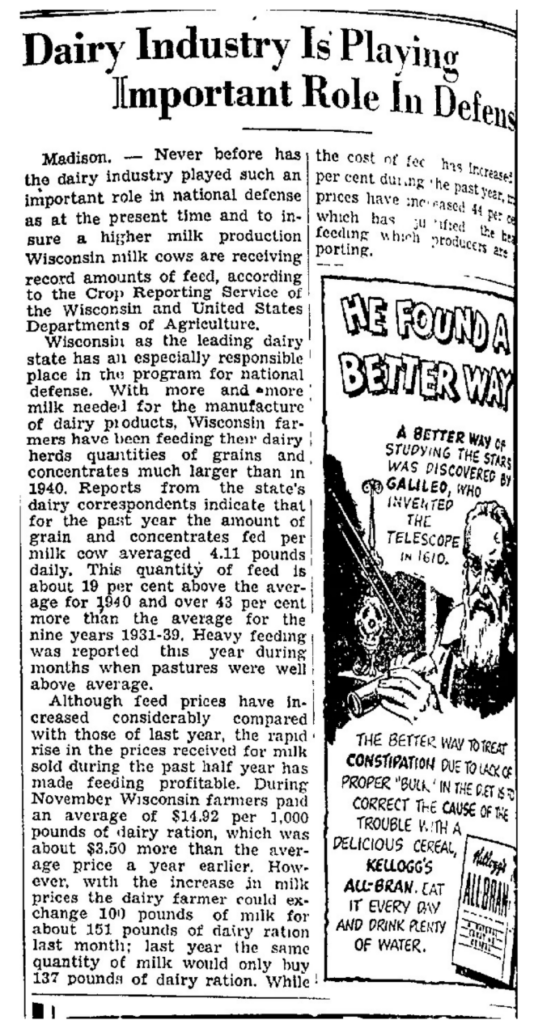
Schneider grew up between St. Cloud and Forest, Wisconsin, near the Sheboygan County line. The area was overwhelmingly agricultural, and dairy production was central to daily life. During World War II, Wisconsin agriculture expanded dramatically to meet the needs of Allied forces. Milk production alone increased by 20 percent between 1939 and 1943. Newspapers urged farmers to keep equipment in “fighting condition,” and families planted victory gardens filled with peas and beans to supplement rations and support national food conservation efforts.
Rationing affected daily life, especially in a state known for meat and dairy consumption. Residents adjusted to shortages of staples such as meat, sugar, and gasoline. War bond drives became common across the region. In nearby Sheboygan, stores such as Prange’s department store set up bond booths, and rallies featuring Hollywood stars raised hundreds of thousands of dollars. Movie theaters admitted patrons who purchased war bonds, and local newspapers strongly encouraged citizens to participate.
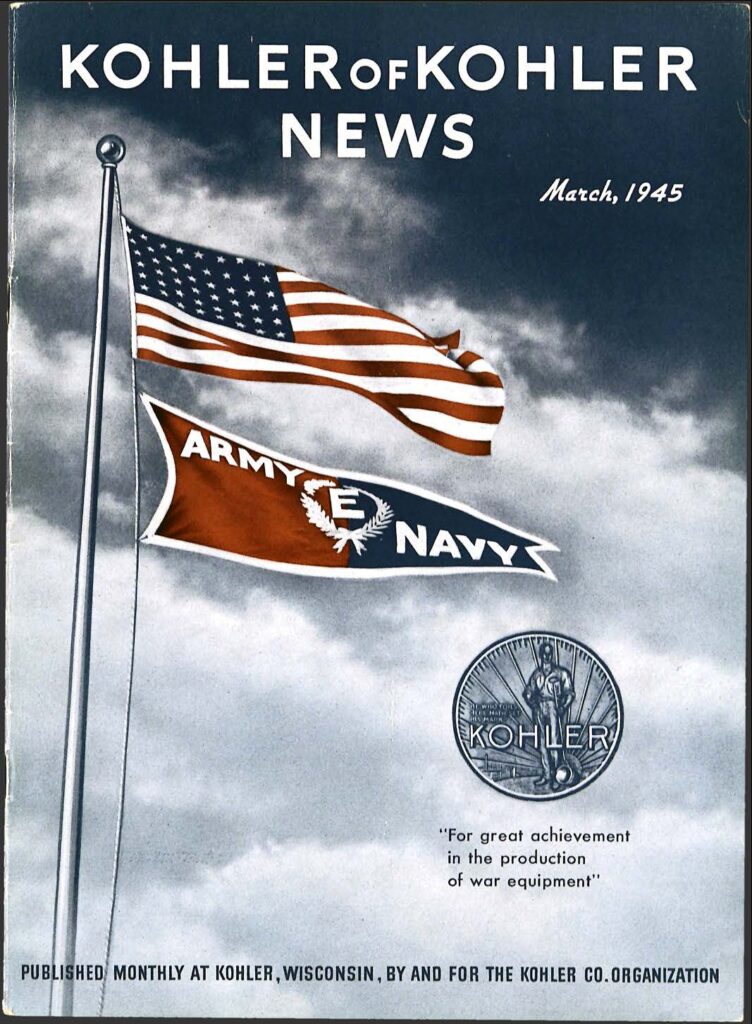
Local manufacturing also supported the war effort. The Kohler Company, based in Sheboygan, converted its brass operations within six months of Pearl Harbor to produce millions of wartime materials. Communities across the area mobilized both financially and socially to support soldiers overseas.
Unlike larger industrial centers, rural Fond du Lac and Sheboygan counties experienced little labor unrest. The war unified much of the community around a shared purpose. German prisoners of war were housed in Wisconsin camps during and after the conflict, and local residents often treated them with fairness and even kindness.
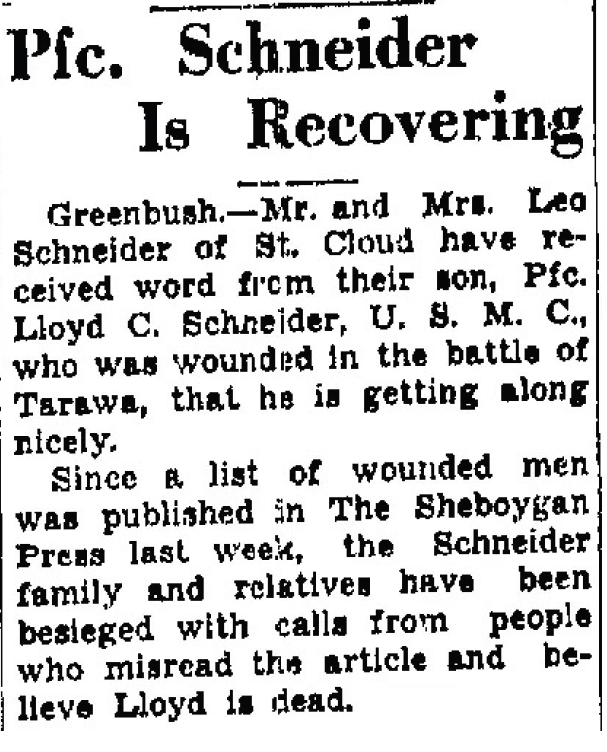
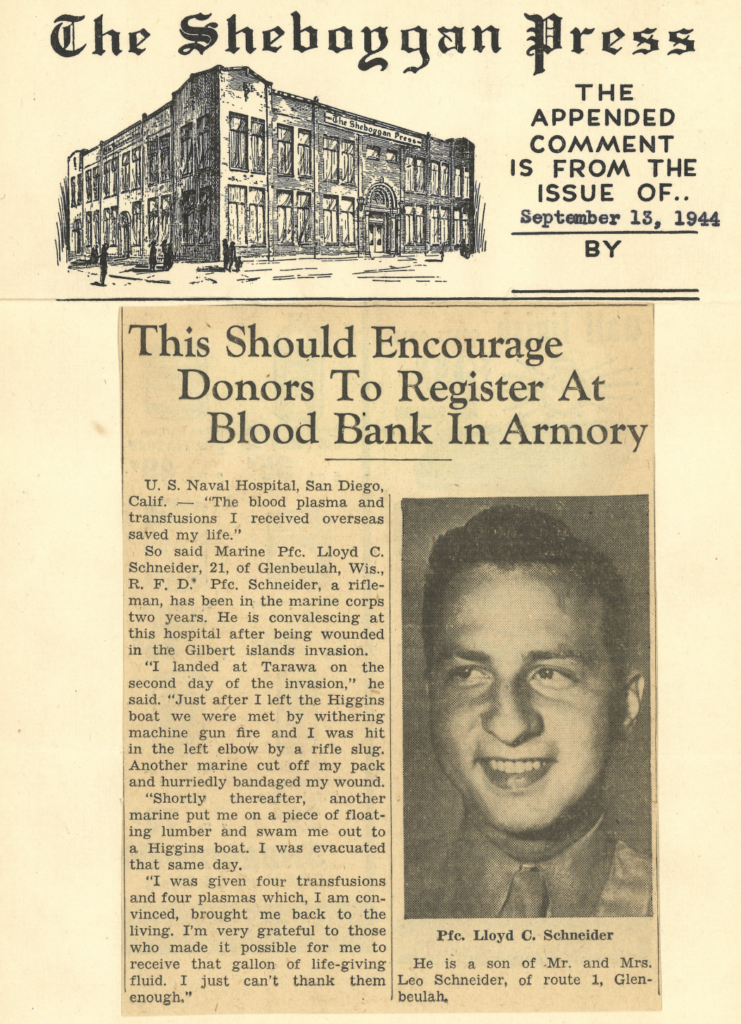
Across the United States, the war made headlines every day. Small-town newspapers reported on the war’s impact in their communities and kept citizens updated on the casualties of local soldiers. Schnrider’s injuries were frequently covered in his local paper.
Military Experience
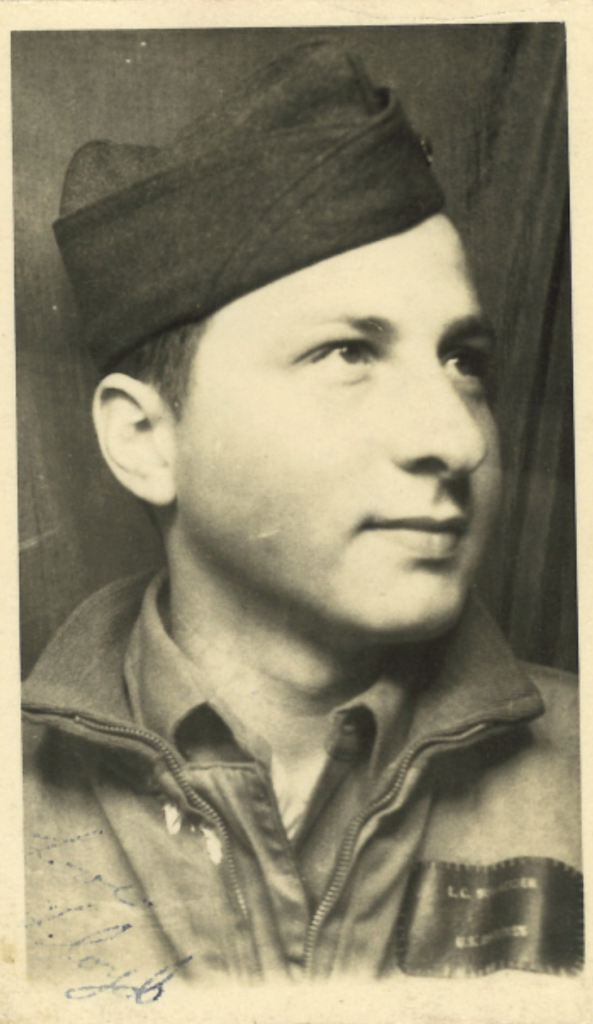
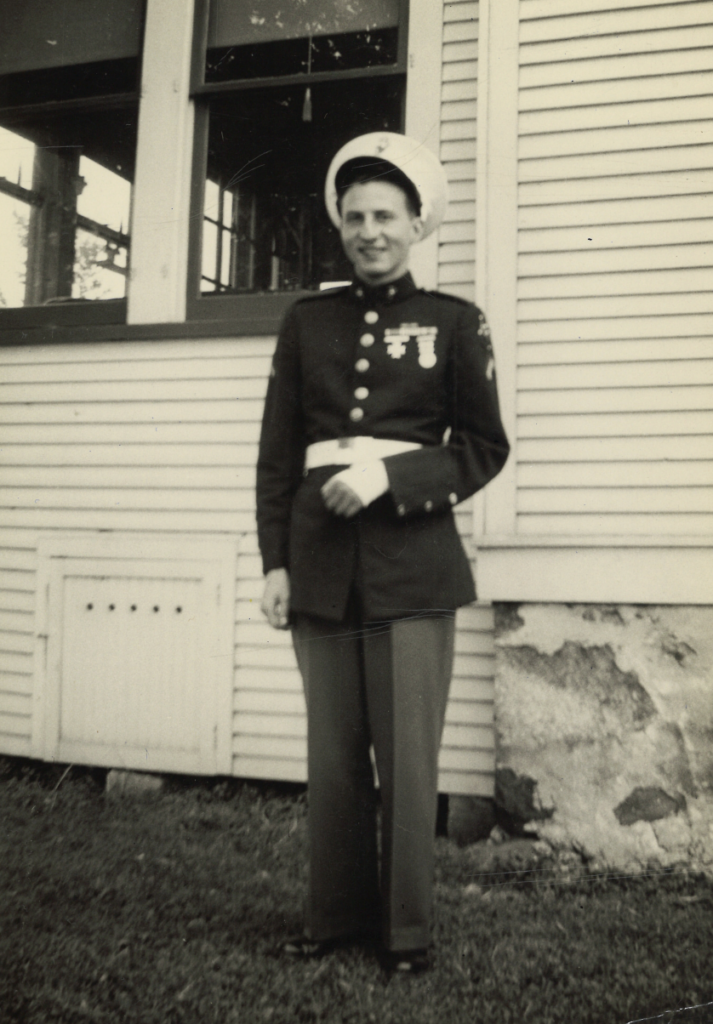
Lloyd Schneider enlisted in the United States Marine Corps on July 18, 1942, entering active service through Milwaukee, Wisconsin. At the time, he had completed eight years of grammar school and four years of high school and was employed as an apprentice embalmer.
He trained at Camp Buena Vista and then Camp Elliott in San Diego, a 13,000-acre Marine Corps training facility that prepared tens of thousands of Marines for combat. Schneider completed rifleman training and qualified as a light truck driver. As a rifleman, his responsibilities included loading, aiming, and firing his weapon; using grenades and bayonets; maintaining equipment; and participating in coordinated infantry tactics. He also completed the Army Antitank Mine Course during his training.
Schneider was promoted to private first class on August 19, 1943, reflecting satisfactory conduct and performance.
He deployed overseas, traveling through Hawaii, and eventually arrived in Masterons, New Zealand, a location that he described as “a great place!” He had a short stay before loading the ship again and heading to the atoll of Tarawa. Schneider later remarked that, “No one seemed to have ever heard of Tarawa, much less know where it was. Everyone knew that with all of the bombing and shelling prior to the landing, it would be a ‘Sunday school picnic.’ ” Unfortunately, the conflict would be the complete opposite and would change the course of Schnieder’s life.
Located in the Gilbert Islands, Tarawa was heavily fortified by nearly 5,000 Japanese forces. Betio Island, the main battle site, was protected by coral reefs, concrete bunkers, pillboxes, and entrenched artillery positions. Military historians later described it as one of the most heavily defended small islands ever attacked.
The Marines landed on November 20, 1943, at low tide, which stranded landing craft on coral reefs and forced many Marines to wade hundreds of yards through chest-deep water under intense machine gun and artillery fire. On November 21, as Schneider’s landing craft headed into the fray, the rolling seas led to a grenade exploding under the soldiers’ packs. He noted that they somehow managed to keep the boat afloat and neared the shore.
As bullets passed overhead, Schneider jumped from the Higgins boat into the water and entered combat. He later remarked that “it seemed like there was total silence until the boat ramp went down. The lead was so thick that you could see it entering the boat. The water was deep enough to drink, but it was the color of blood. I said, “Lord, without your help, I’ll never make it to shore.”
As he stepped onto dry land, he was shot in the left elbow. While struggling to stop the bleeding, another Marine cut off his pack and quickly bandaged the wound. A fellow Marine then placed him on floating lumber and swam him back to a landing craft for evacuation. Schneider later referred to this Marine as his “guardian angel” and hoped to meet him again, but never had the opportunity.
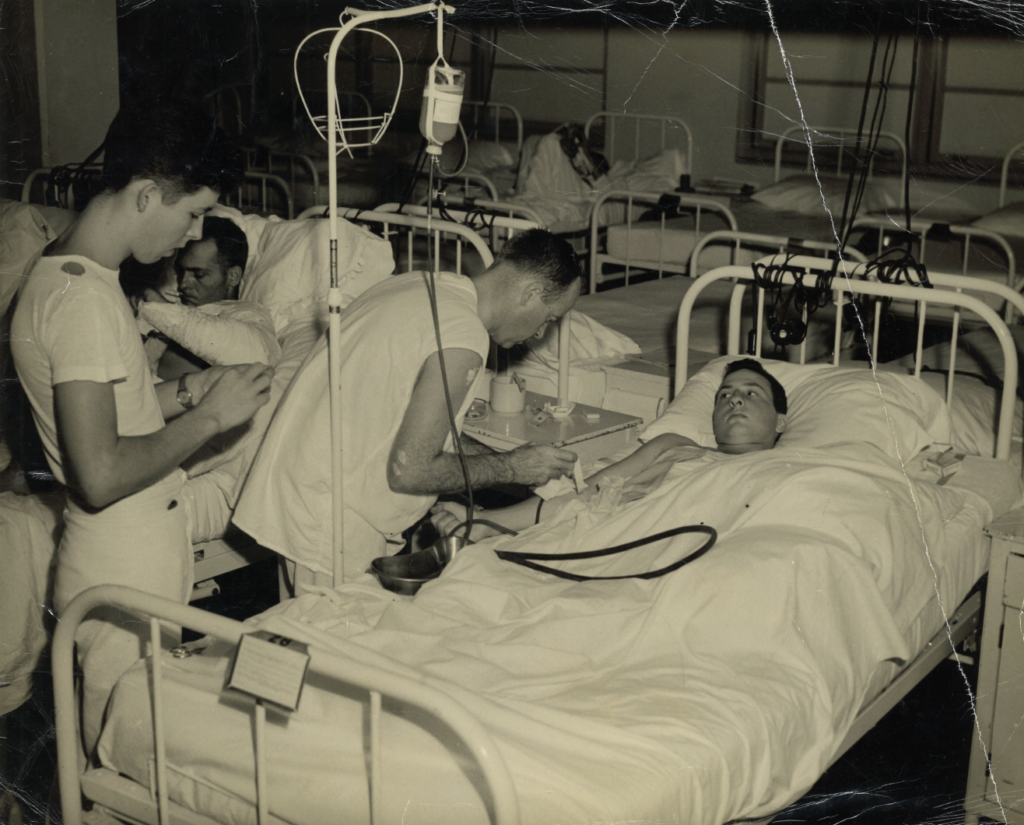
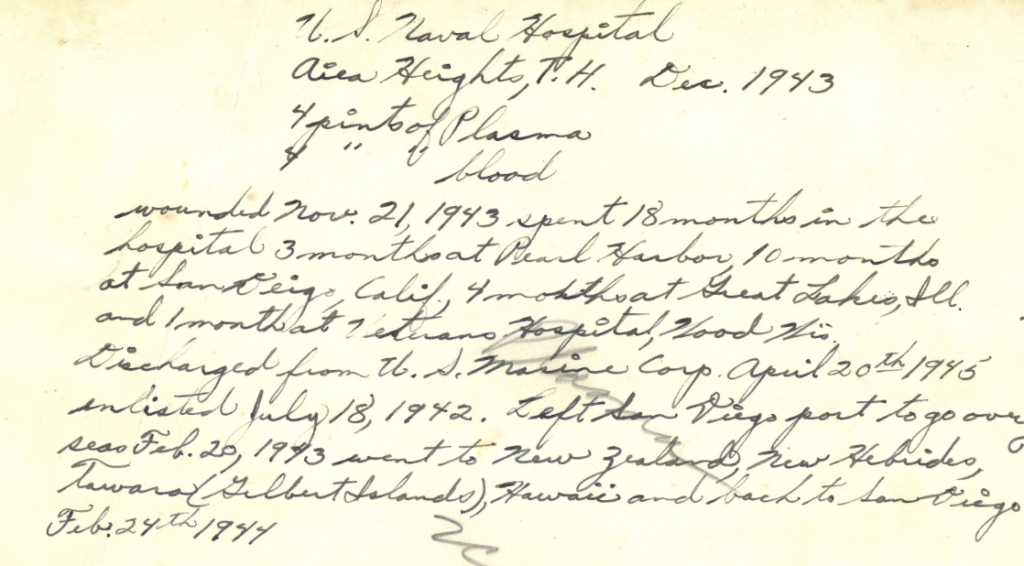
His injuries were severe. Initial treatment was provided in the field by Company C of the 2nd Medical Battalion before he was evacuated to the U.S. Naval Hospital in San Diego. Physicians documented a large wound over his left elbow. He lost movement in his wrist and fingers and had no sensation below the mid-forearm. Over months of treatment, his condition did not improve. He developed permanent paralysis below the left elbow.
At one point during evacuation, he was placed in the hull of a ship among deceased Marines. A corpsman later noticed him move, confirming he was still alive. He required blood transfusions and later publicly thanked blood donors during an Associated Press interview, crediting them with saving his life.
A War Department telegram dated January 10, 1944, informed his father of his combat wounds. Local newspapers reported on his injury, and community members followed his recovery closely.
For his service and sacrifice, Schneider received the Purple Heart, the Presidential Unit Citation, and the Asiatic-Pacific Campaign Medal with one bronze star.
After approximately 18 months of hospitalization, multiple operations, and rehabilitation in San Diego and at Great Lakes Naval Hospital in Illinois, Schneider was declared unfit for further service. He was honorably discharged on April 20, 1945.
Veteran Experience
Schneider returned to Wisconsin permanently changed by his injury. Though he lost the full use of his left hand, he refused to let the disability define him. He chose to have his paralyzed arm permanently bent at the elbow in order to help with mobility and hold instruments and tools.
He initially considered becoming a mortician, but the physical demands made that career impractical. Instead, he attended the Milwaukee Business Institute and eventually became a milkhouse inspector for the Kewaskum Associated Milk Producers. The job suited his meticulous nature and strong work ethic. He often told his children, “You gotta keep your milk house clean.” He retired in 1979.
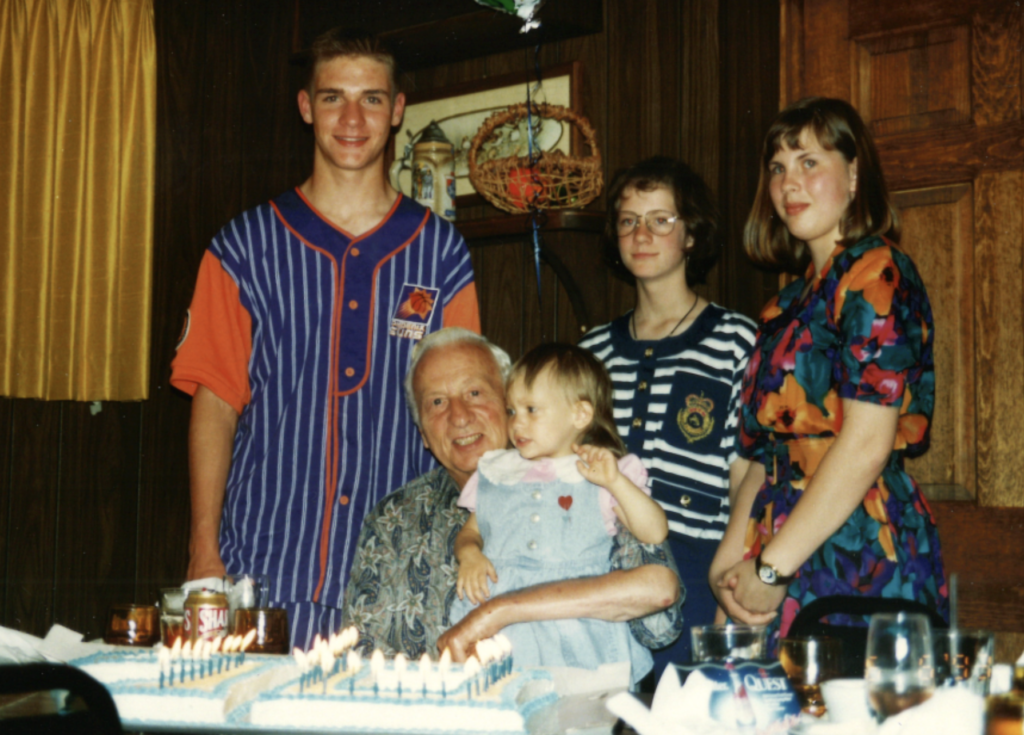
In 1948, Schnieder married Maxine Funk at St. Louis Catholic Church in Fond du Lac, Wisconsin. Together, they had four children: Linda, Lisa, Michael, and Roger. The family lived in Milwaukee for two years before settling in Greenbush, Wisconsin. At the time of his death, Lloyd had four grandchildren and one great-grandchild. He loved spending time with his grandchildren, who remarked on how much they loved and admired him.
Schnieder was deeply involved in his community. The Schneider family consistently impressed the community in patriotic parades, symbolizing their love of country and their desire to instill that love in their children.
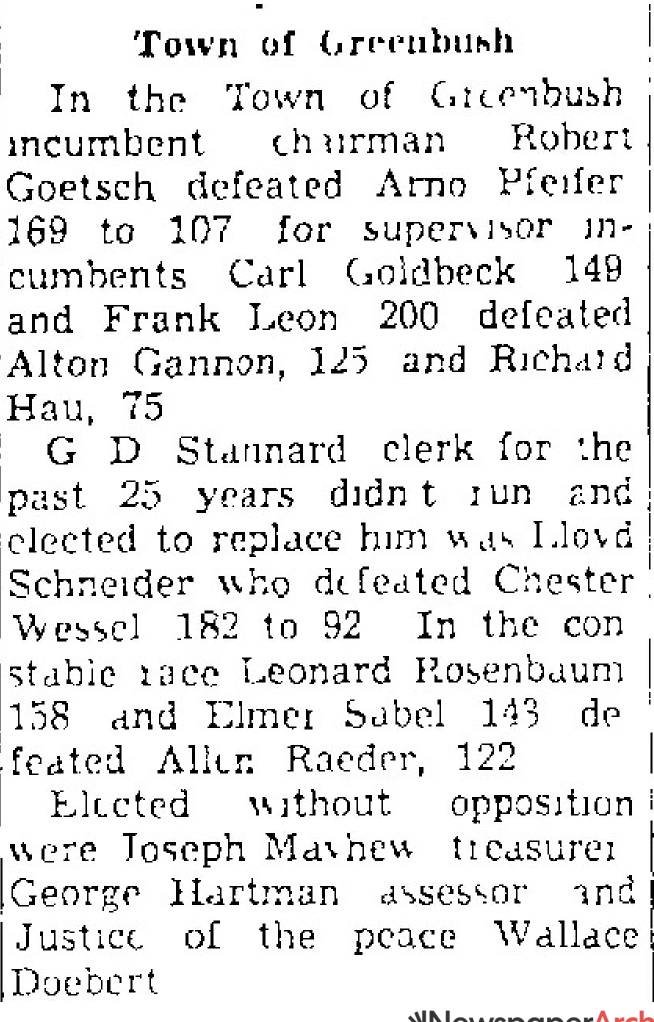
Schneider was elected to the office of town clerk in 1959. Serving for nearly a decade, he maintained municipal ledgers, oversaw tax reporting, counted ballots on election days, and reported on town meetings. He was also a volunteer firefighter in Greenbush from 1954 to 1965 and organized fundraisers, including support for a fellow firefighter recovering from a heart attack.
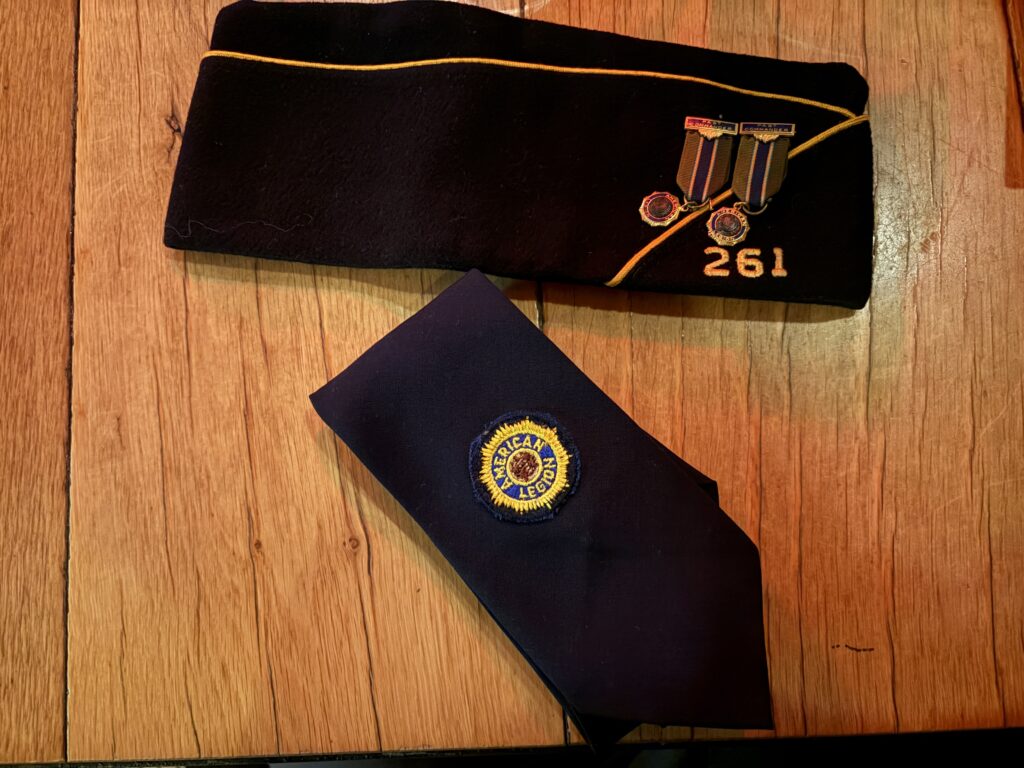
Proving his commitment to serving others as a Veteran, Schneider was a proud member of American Legion Post 261. He served as commander for a time, as adjutant, and in the color guard at military funerals. His wife, Maxine, was also active in the Legion Auxiliary. His children remembered that he involved the whole family in operating a food stand at Road America in Elkhart Lake and that he insisted everything be kept clean and orderly. He even mowed the Legion baseball field during the summer. Despite his permanent injury, he remained active, disciplined, and engaged.
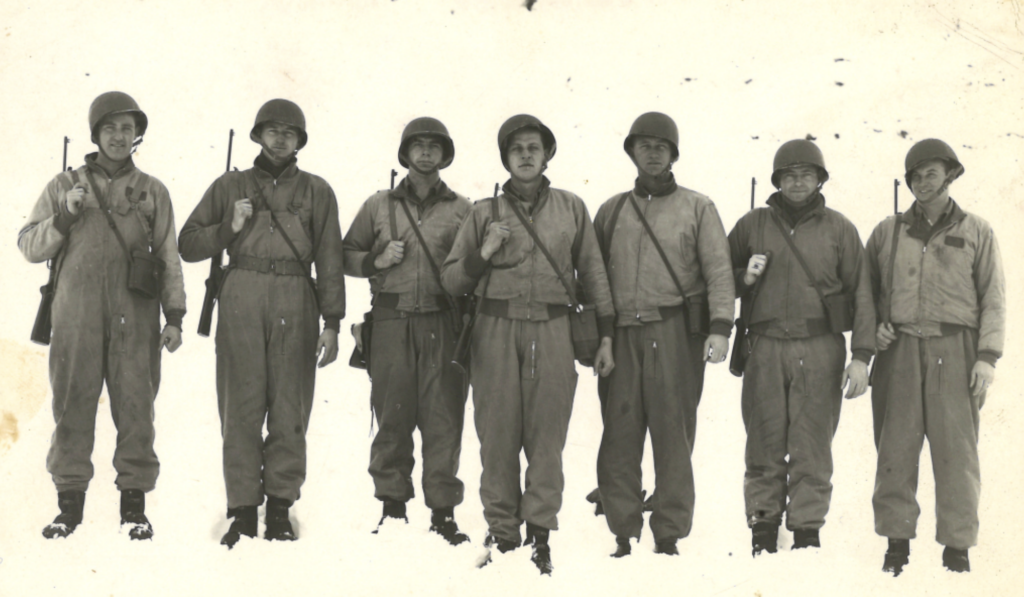
Schneider’s children recalled that he rarely spoke about his military service or his near-death experience on a small atoll in the middle of the Pacific. On one occasion, during a hunting trip, he shared part of his story with his son, showing him a photograph of his company. In 1997, more than 50 years after the battle, Schneider returned to Tarawa and visited the very beach where he had been wounded. He certainly reflected on his life and his “guardian angel” as he stood on Red Beach.
Commemoration
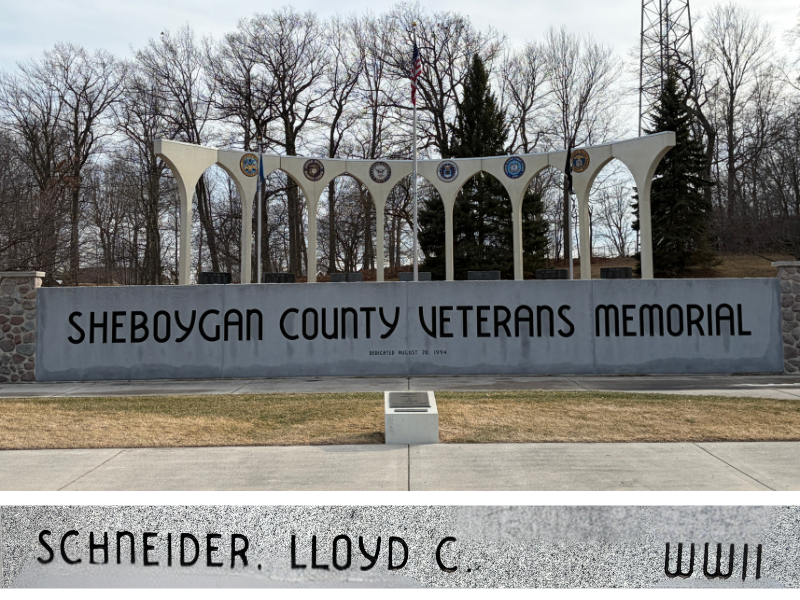
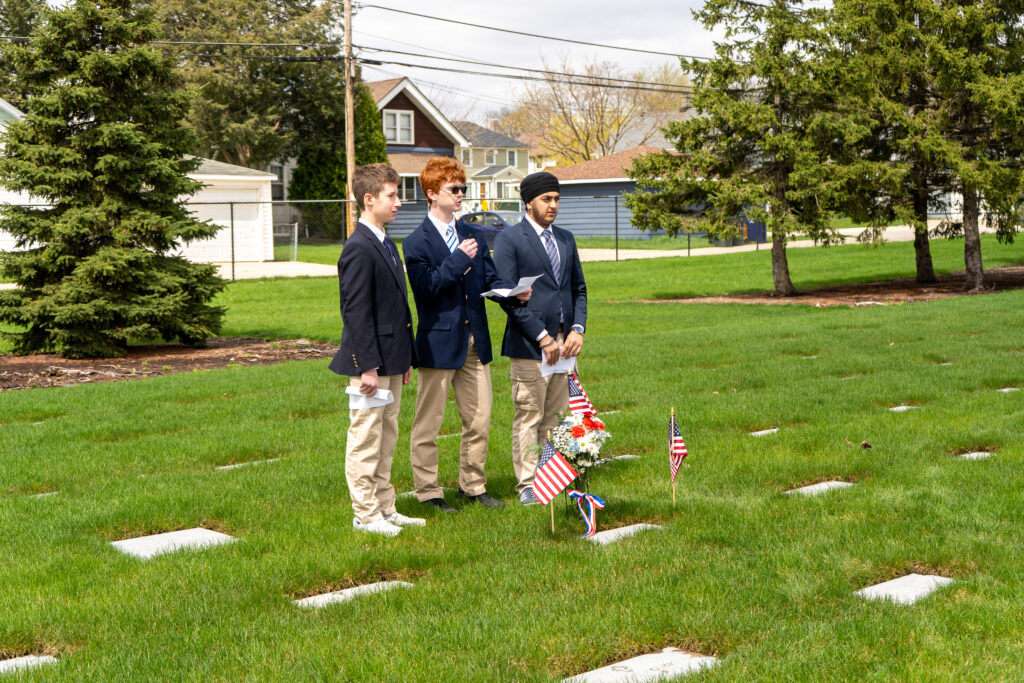
Lloyd Schneider passed away on September 12, 2004, after a week-long stay at St. Agnes Hospital in Fond du Lac. After his passing, his family held a memorial service at St. Thomas Aquinas Chapel in Glenbeulah, Wisconsin. His ashes were eventually interred at Wood National Cemetery in Milwaukee, Wisconsin. His children commented that he would not be buried in the national cemetery due to space limitations, but a plot became available when another person chose to be buried elsewhere. He is honored on the Sheboygan County Veterans Memorial, where his name is inscribed in recognition of his World War II service.
Lloyd Schneider’s life reflects courage, resilience, and devotion to his community. A farm boy from rural Wisconsin, he stormed the beaches at Tarawa, survived a devastating wound, and returned home to serve his community with the same determination that defined his military service. Though permanently injured in combat, he built a life centered on family, public service, and quiet strength—leaving behind a legacy that endures in Greenbush and beyond.
Bibliography
Advertisements. Sheboygan Press [Sheboygan, Wisconsin], August 27, 1943. https://newspaperarchive.com/.
“Beans, Peas, Victory Gardens.” Sheboygan Press [Sheboygan, Wisconsin], February 18, 1942. https://newspaperarchive.com/.
“Dairy Industry Is Playing Important Role in Defense.” Sheboygan Press [Sheboygan, Wisconsin], December 16, 1941. https://newspaperarchive.com/.
“Greenbush Legion Auxiliary Wins Membership Prize.” Sheboygan Press [Sheboygan, Wisconsin], April 26, 1956. https://newspaperarchive.com/.
“Greenbush to Have Races for Public Offices.” Sheboygan Press [Sheboygan, Wisconsin], March 15, 1961. https://newspaperarchive.com/.
“Hold Final Rites at Poy Sippi Church.” The Oshkosh Northwestern [Oshkosh, Wisconsin], June 13, 1944. Newspapers.com (476755924).
“Japan Attacks U.S.” Sheboygan Press [Sheboygan, Wisconsin], December 8, 1941. https://newspaperarchive.com/.
“Let’s Go… But a Willing Spirit Isn’t Enough.” Sheboygan Press [Sheboygan, Wisconsin], April 8, 1942. https://newspaperarchive.com/.
“Liquor Licenses.” Sheboygan Press [Sheboygan, Wisconsin], May 20, 1961. https://newspaperarchive.com/.
Lloyd C. Schneider. U.S., Marine Corps Muster Rolls, 1798–1958. Digital Images. https://ancestryclassroom.com.
Lloyd C. Schneider. U.S., Navy Casualties Books. Digital Images. https://ancestryclassroom.com.
Lloyd Charles Schneider. Wisconsin, U.S., Birth records, 1812-1924. https://ancestryclassroom.com.
Lloyd Charles Schneider. U.S., World War II Draft Cards Young Men, 1940-1947. Digital Images. https://ancestryclassroom.com.
“NOTICE! Town of Greenbush Annual Meeting.” Sheboygan Press [Sheboygan, Wisconsin], April 1, 1967. https://newspaperarchive.com/.
“NOTICE Town of Greenbush Caucus.” Sheboygan Press [Sheboygan, Wisconsin], March 2, 1963. https://newspaperarchive.com/.
“Passenger Car Regulations Will Go Into Effect Monday.” Sheboygan Press [Sheboygan, Wisconsin], February 28, 1942. https://newspaperarchive.com/.
“Pfc Schneider Is Recovering.” Sheboygan Press [Sheboygan, Wisconsin], February 2, 1944. https://newspaperarchive.com/.
“Poy Sippi Marine Wounded on Tarawa.” The Oshkosh Northwestern [Oshkosh, Wisconsin], December 28, 1943. Newspapers.com (476748930).
Schneider Family (Michael Schneider, Linda Schneider Jens, Lisa Schneider Grimes). Video interview. November 7, 2025.
Schneider Family Photograph Collection. Courtesy of the Schnieder Family.
Schneider, Lloyd C. Official Military Personnel File. Department of the Navy. National Archives and Records Administration – St. Louis.
Schneider, Lloyd C. Report of Separation. Department of the Navy. National Archives and Records Administration – St. Louis.
“State Boy Thanks Blood Donors for Saving His Life.” The Daily Tribune [Wisconsin Rapids, Wisconsin], September 15, 1944. Newspapers.com (243396537).
“Town of Greenbush.” Sheboygan Press [Sheboygan, Wisconsin], April 8, 1959. https://newspaperarchive.com/.
“Town of Greenbush NOTICE.” Sheboygan Press [Sheboygan, Wisconsin], March 3, 1967. https://newspaperarchive.com/.
Wisconsin. Fond du Lac County. 1930 U.S. Federal Census. Digital Images. https://ancestryclassroom.com.
Wisconsin. Fond du Lac County. 1940 U.S. Federal Census. Digital Images. https://ancestryclassroom.com.
Wisconsin. Sheboygan County. 1950 U.S. Federal Census. Digital Images. https://ancestryclassroom.com.
“Write Your Name on a Bomb for Japan.” Sheboygan Press [Sheboygan, Wisconsin], April 28, 1943. https://newspaperarchive.com/.
Zaporski, Erwin F., Editor. Able Eight. Action Press: 1991.
Secondary Sources
“745 – Rifleman.” The Military Yearbook Project. Last modified 2011. Accessed January 3, 2026. https://militaryyearbookproject.org.
“Earning the Army-Navy E-Award.” Kohler Archives. Accessed November 12, 2025. https://kohlerarchives.com/products/earning-the-army-navy-e-award/.
“History of the American Legion.” The American Legion. Last modified 2025. Accessed December 8, 2025. https://www.legion.org/about/organization/history.
Cowley, Betty. Stalag Wisconsin: Inside WWII Prisoner-of-War Camps. Badger Books, Inc., 2002.
Gonzalez, Sergio M. Mexicans in Wisconsin. Wisconsin Historical Society Press, 2017.
Graham, Michael B. Mantle of Heroism: Tarawa and the Struggle for the Gilberts, November 1943. Presidio Press, 1995.
The Historical Marker Database. “Tierrasanta – Formerly Camp Elliott.” Last updated 2026. Accessed December 30, 2025. https://www.hmdb.org/m.asp?m=220044.
Janik, Erika. A Short History of Wisconsin. Wisconsin Historical Society Press, 2010.
Klein, Gary C. “Throwback Thursday: Sheboygan Embraced War Bonds during World War II.” Sheboygan Press, December 9, 2021. https://www.sheboyganpress.com.
“Lloyd C. Schneider.” Find a Grave. Updated September 7, 2012. Accessed March 4, 2026. https://www.findagrave.com/memorial/96648381/lloyd-c-schneider.
“Lloyd C. Schneider.” Veterans Legacy Memorial, National Cemetery Administration. Accessed March 4, 2026. https://www.vlm.cem.va.gov/LLOYDCSCHNEIDER/39E80A8.
Russ, Martin. Line of Departure: Tarawa. McMillan and Co., 1975.
Sherrod, Robert. Tarawa: The Incredible Story of One of World War II’s Bloodiest Battles. Skyhorse, 2013.
Sheboygan County War Memorial. Last modified 2026. Accessed December 30, 2025. https://scvmemorial.org/.
Thompson, William F. The History of Wisconsin. Volume VI: Continuity and Change, 1940–1965. State Historical Society of Wisconsin, 1998.Wukovits, John. One Square Mile of Hell. NAL Caliber, 2006.
This profile was funded by a grant from the United States Department of Veterans Affairs. The opinions, findings, and conclusions stated herein are those of the author and do not necessarily reflect those of the United States Department of Veterans Affairs.