

Merchant Seaman James Linton “Linty” Robison
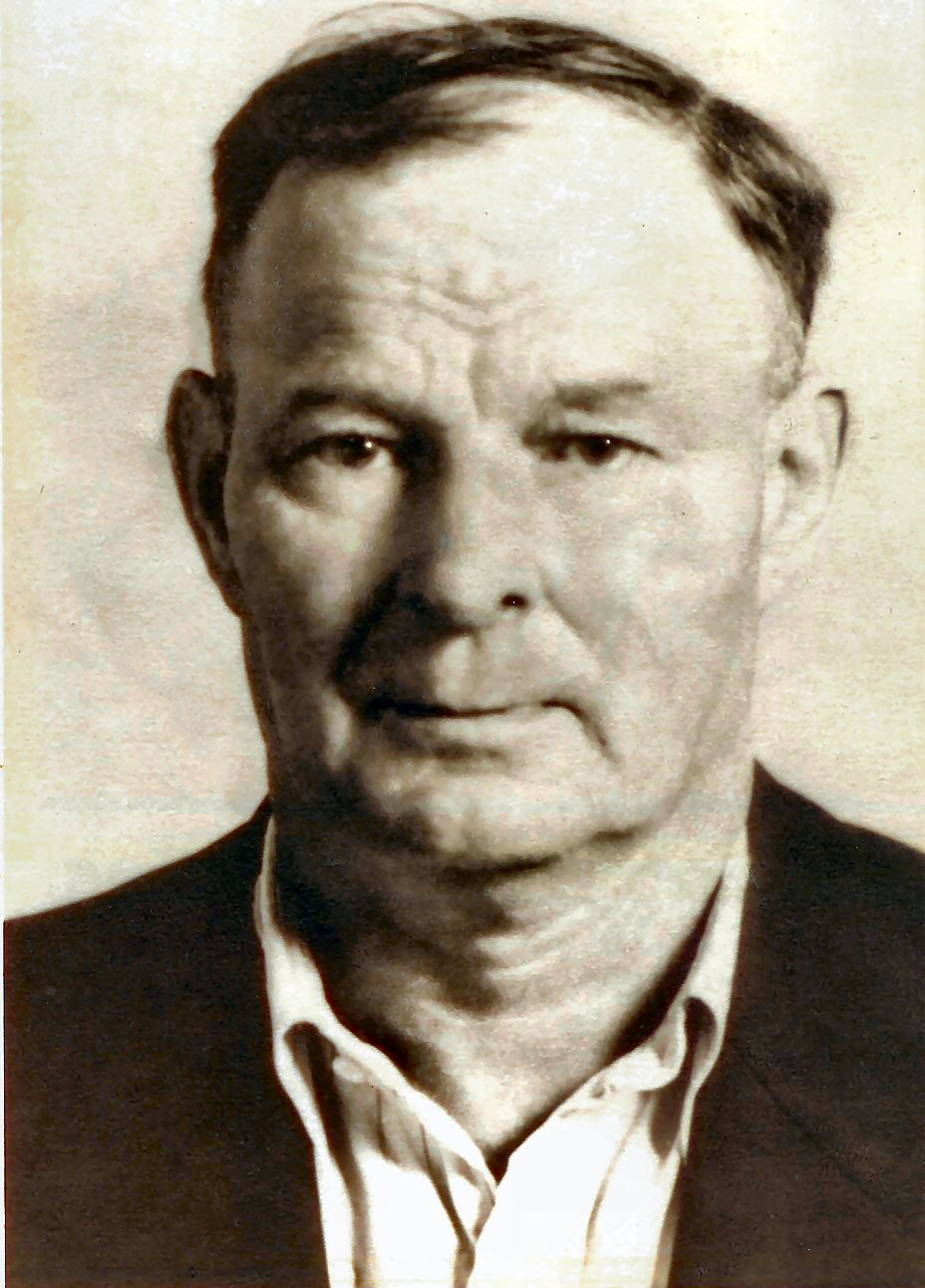
- Unit: SS Elijah White
- Service Number: Z-669671
- Date of Birth: October 3, 1885
- Entered the Military: June 19, 1945
- Date of Death: January 28, 1946
- Hometown: River John, Pictou County, Nova Scotia, Canada
- Place of Death: Manila, Philippines
- Cemetery: Plot D, Row 5, Grave 40. Manila American Cemetery, Philippines
Chiang Mai International School, Chiang Mai, Thailand
2025/2026
Early Life
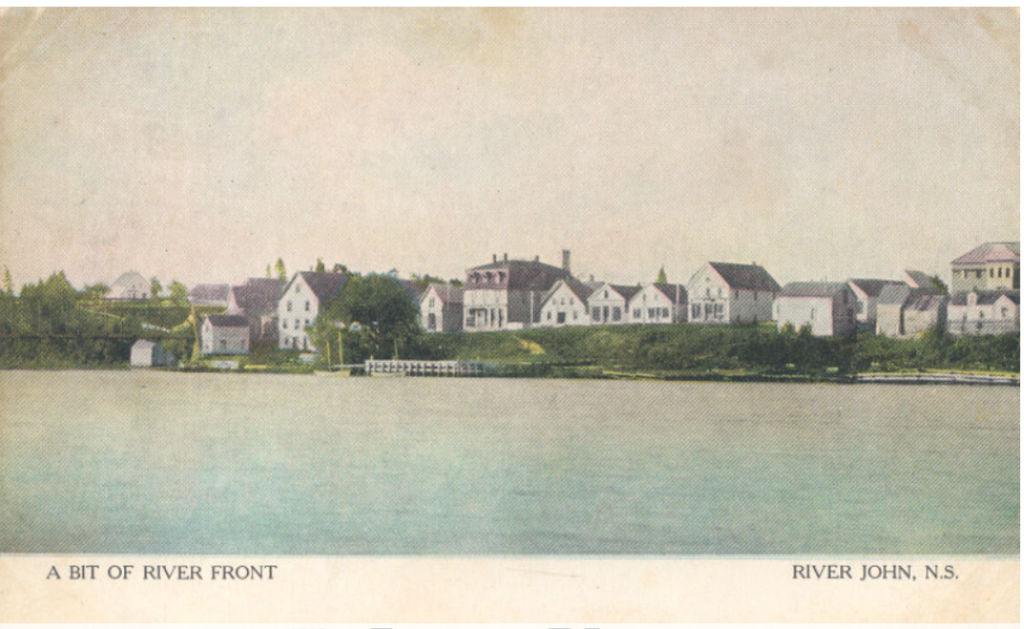
James Linton Robison was born on October 3, 1885, in River John, Pictou County, Nova Scotia, Canada. He was one of seven children born to his parents, Thomas, Jr., and Ellen (Murphy) Robison. Following in his father’s footsteps, Robison became a farmer.
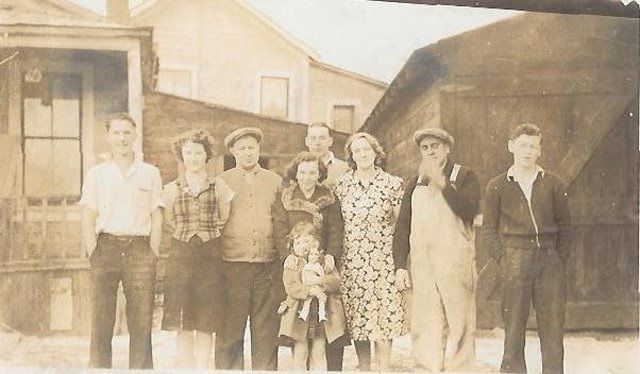
On October 27, 1915, Robison married Sarah McRae, originally of Belfast, Prince Edward Island. Together, they had seven children: Donald, Dorothy, twins Ernest and Elsie, Irvin, Norman, and Lois. Robison’s farm covered about 70 acres, where they raised chickens, cows, horses, and pigs. The family also sold eggs, milk, wheat, and hay from their farm. In the winter, Robison worked for the government, clearing snow off the roads using his own team of horses. In the summer, he made the long journey to the prairie provinces of Saskatchewan and Alberta to harvest wheat.
In 1926, Robison decided to make a change, selling his farm and moving his family out west to seek their fortune.
Homefront
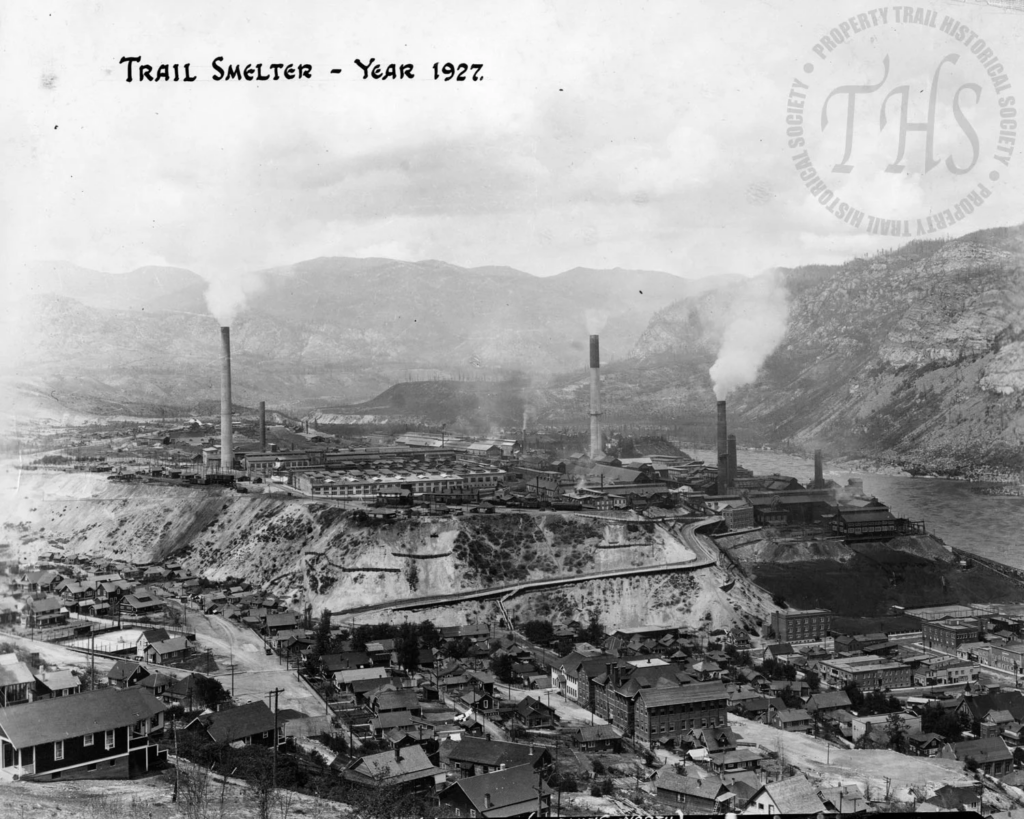
After stops in the Prairies and Rossland, British Columbia, Robison and his family eventually settled in Trail, British Columbia, in 1928.
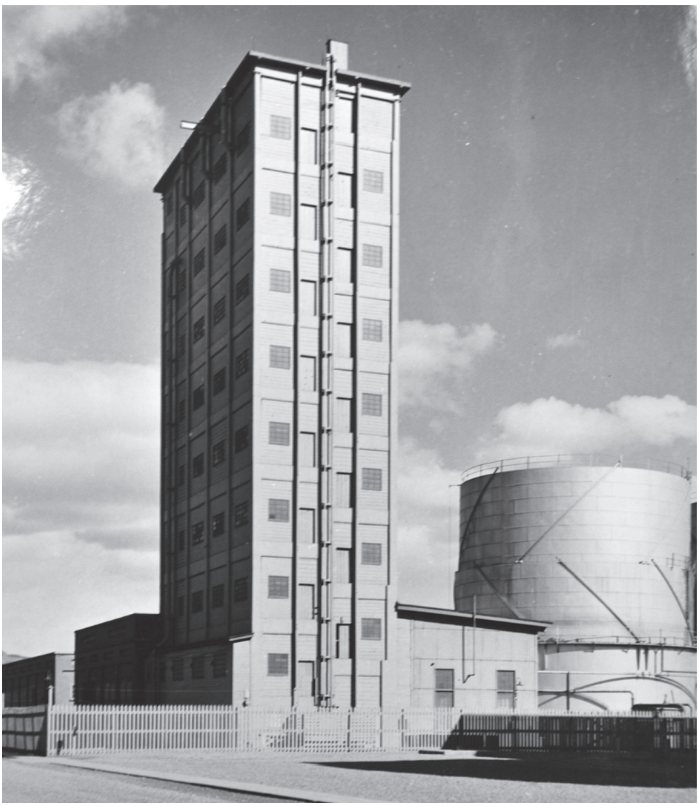
Located in the southern West Kootenay area, Trail stretches across both banks of the Columbia River and lies roughly 10 km north of the Washington State border. In the time between World War I and World War II, Trail saw a drastic increase in population, especially those moving from other parts of Canada seeking employment at the Consolidated Mining and Smelting (CM&S) Company of Canada. This company produced lead, zinc, and fertilizers, among other products.
When World War II broke out, CM&S promised employees that if they signed up for active service, their jobs would be waiting for them upon their return, leading nearly half of the workforce to enlist. With the company severely shorthanded, they turned to women in the community, filling posts and paying them 80% of the men’s wages.
In 1941, the smelting company expanded its fertilizer production. In 1942, they agreed to produce heavy water for the Manhattan Project, under the code name P-9 Project. Although their heavy water was never used in the production of atomic bombs, it marked a significant moment in the town’s history.
Although the war brought positive changes to Trail, it also brought challenges to the local community and Canada as a whole.
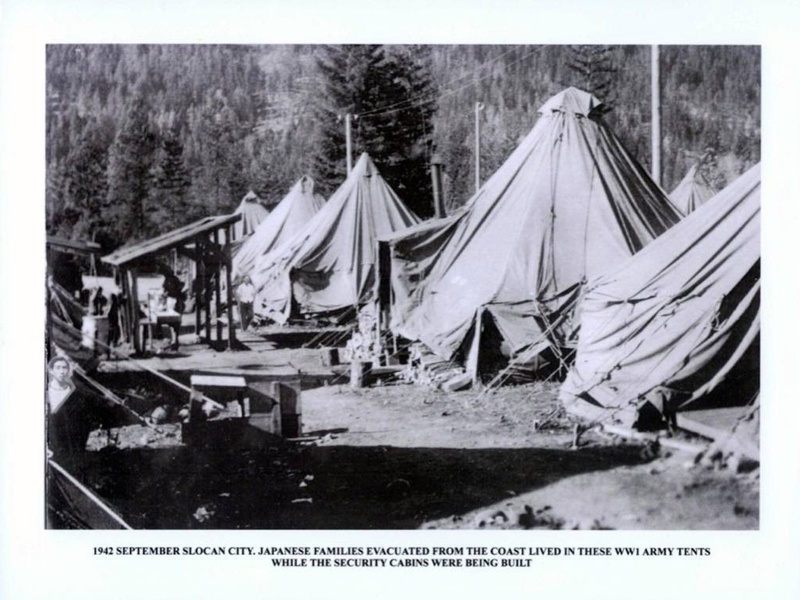
Following the attack on Pearl Harbor and fearing a Japanese invasion, the Canadian government ordered that all Japanese-Canadians living within 160 kilometers of the Pacific Coast be dispossessed, relocated, and interned. 12,000 Japanese-Canadians were sent to the Slocan Valley, less than 100 kilometers north of Trail. Conditions in the camps were poor. Inmates were housed in old, run-down homes and newly built but poorly constructed shacks that could not withstand the harsh winter weather. They received no support – no food, no clothing, and no resources to help them survive.
While many in Canada supported the war effort, pockets of resistance persisted across the country. In 1944, after Prime Minister William Lyon Mackenzie King announced plans to send 16,000 men originally conscripted to defend the home front to the front lines in Europe, protests erupted across the country. In Terrace, British Columbia, while their superior officers were away at a conference, 1,500 men staged a mutiny, protesting this decision by marching through town carrying banners that read “Down with Conscription.” Eventually, under threat of force, the soldiers backed down. In the end, 13,000 conscripted men were shipped overseas for duty, with only 2,500 reaching the front lines before the war ended.
Military Experience
Many men joined the Merchant Marines during World War II, all for different reasons. Some were too old or unable to join the Army or Navy due to medical issues, but still wanted to do their part in the war effort. Others chose the Merchant Marines because they thought it would be safer or give them more freedom, not realizing how dangerous the work could be. Although merchant mariners often earned more money than other soldiers, the job was still fraught with risk.
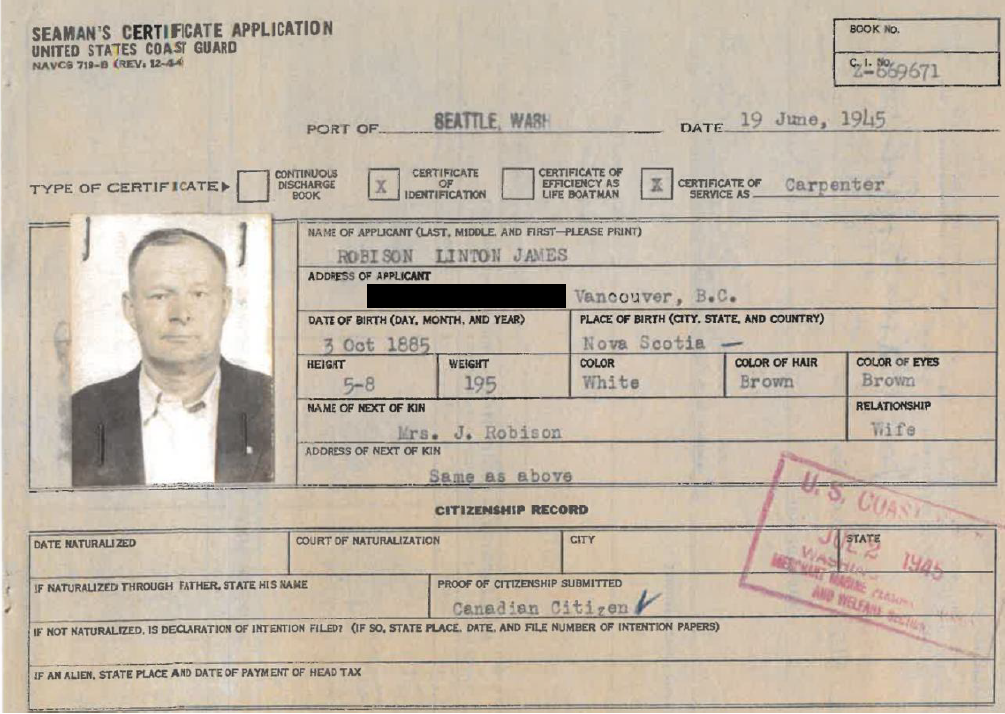
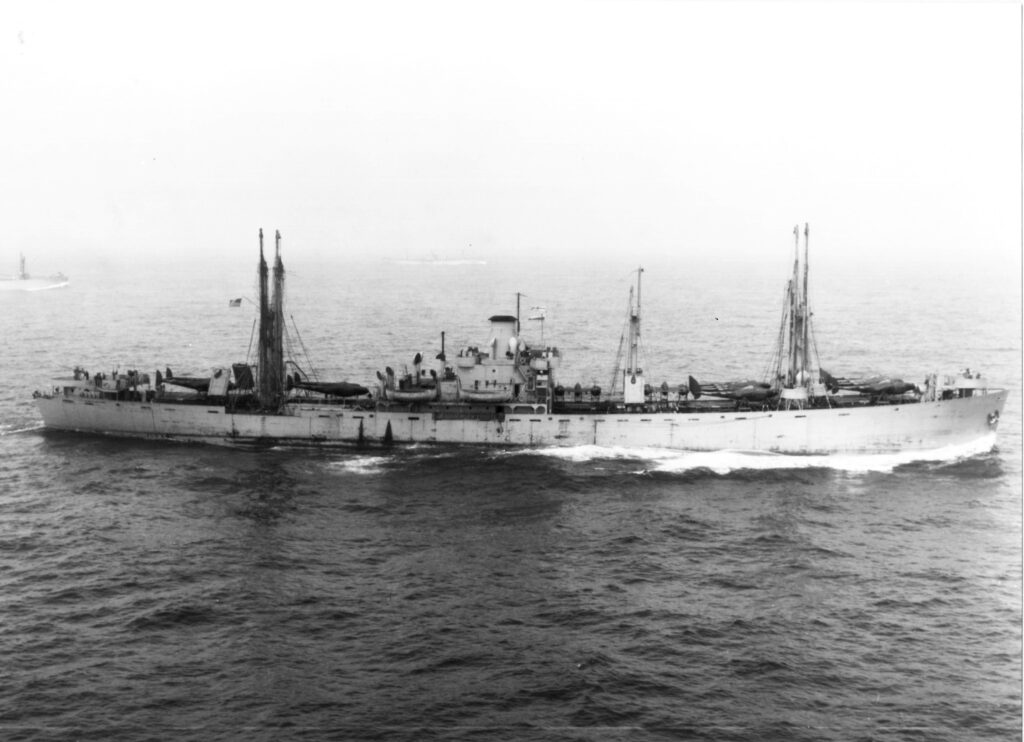
On June 19, 1945, Robison joined the crew of the Liberty ship SS Elijah White as a merchant mariner, working as a carpenter. During his time as a merchant mariner, Robison spent a total of 224 days at sea, with his first trip lasting 58 days and his second 166 days. Carpenters were part of the deck crew and had many responsibilities on board, including tasks they would not usually perform on land. His responsibilities on the ship included building and repairing wooden structures, operating the anchor, maintaining lifeboats, and assisting with emergency repairs in the event of a collision.
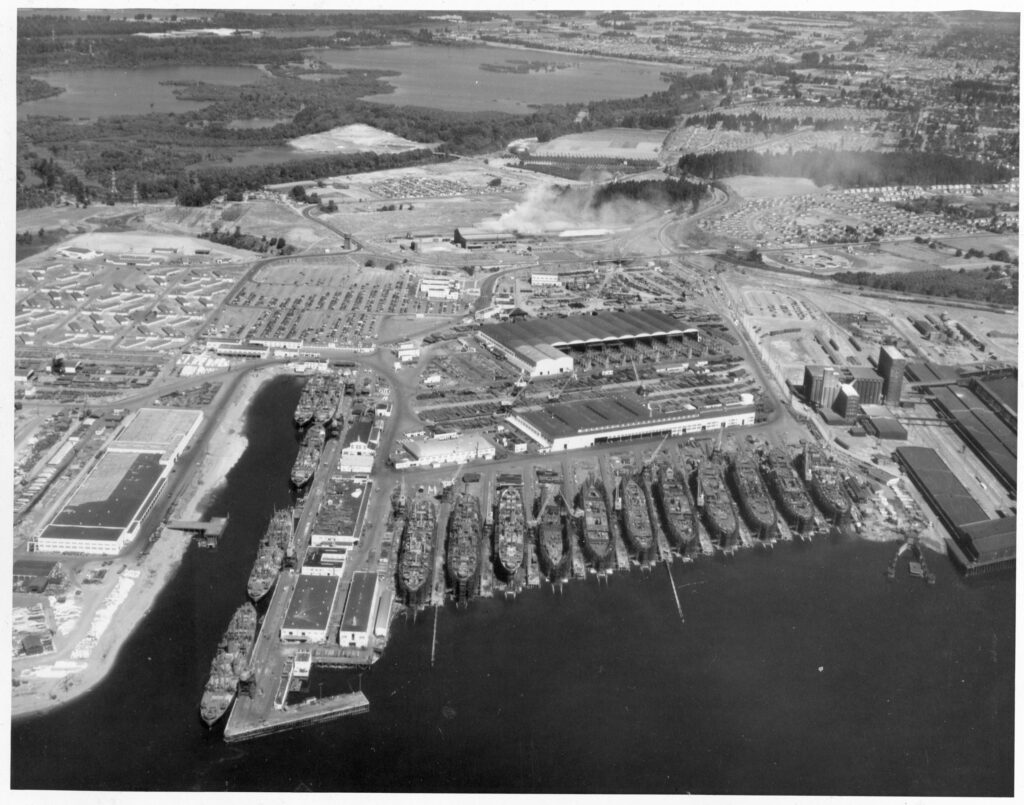
Liberty ships, like SS Elijah White, were designed to be mass-produced, using a standardized, prefabricated design that allowed thousands of identical cargo vessels to be built quickly; typically, 70 days or fewer. President Franklin Delano Roosevelt, a former Assistant Secretary of the Navy, nicknamed them “Ugly Ducklings” for their boxy shape and design.
Operating from 1941 to 1945, the Oregon Shipbuilding Corporation in Portland, Oregon, built over 300 Liberty ships, including SS Elijah White. Groups that raised $2 million could suggest names for the ships. Elijah White played a key role in Oregon’s development as a doctor, missionary, and political leader.
The role of Liberty ships during the war was vital, as they transported troops, food, supplies, and weapons across the oceans to support Allied forces. The Merchant Marines helped keep armies equipped and ready to fight while facing enemy attacks. Without the Merchant Marines, it would have been much harder for the United States and its allies to fight and win the war.
Commemoration
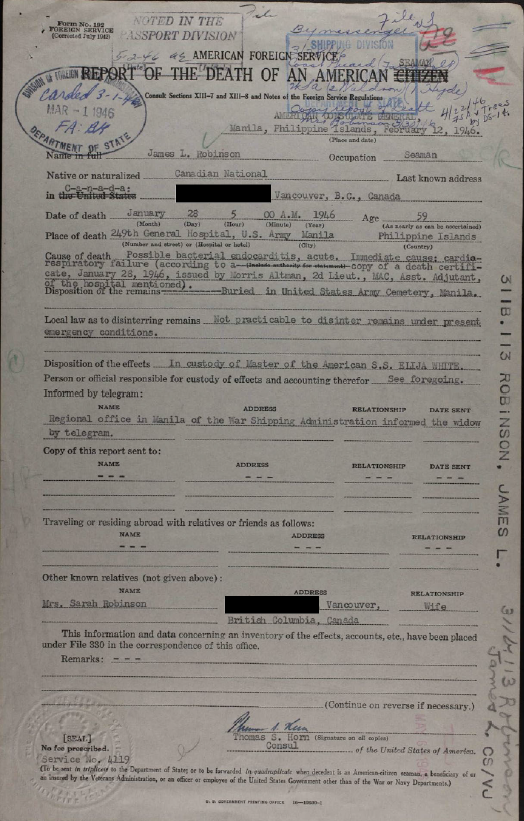
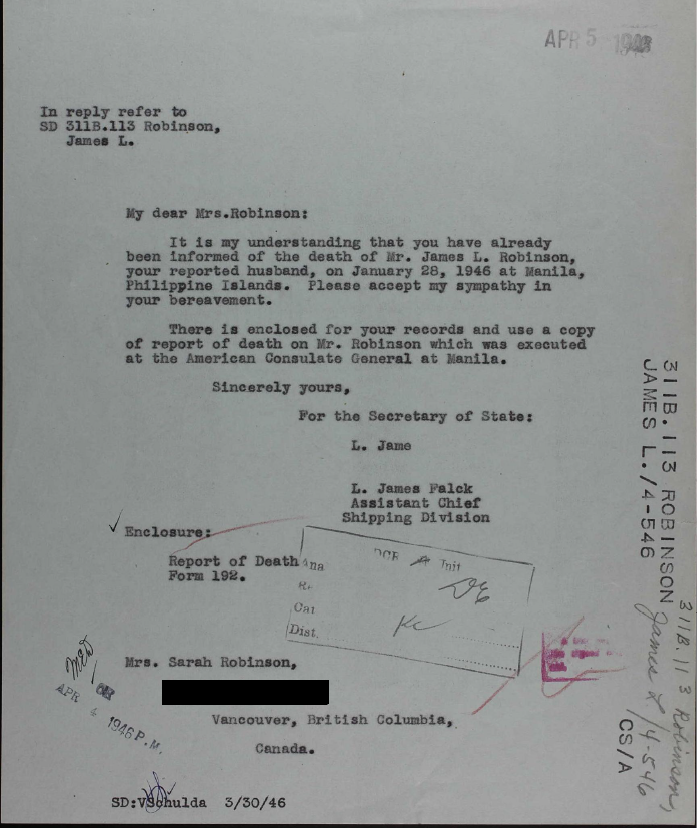
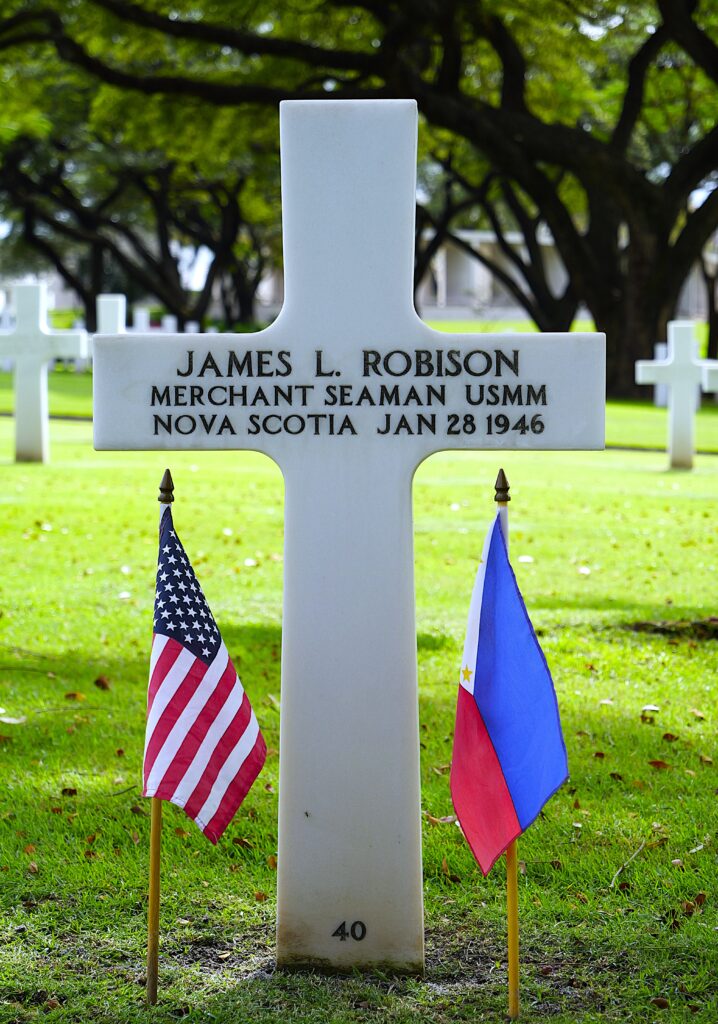
On January 28, 1946, Robison died of cardio-respiratory failure at the 249th General Hospital in Manila, Philippines. He was 59 years old. He was buried in the Army Cemetery at Fort William McKinley in Manila, which later became Manila American Cemetery.
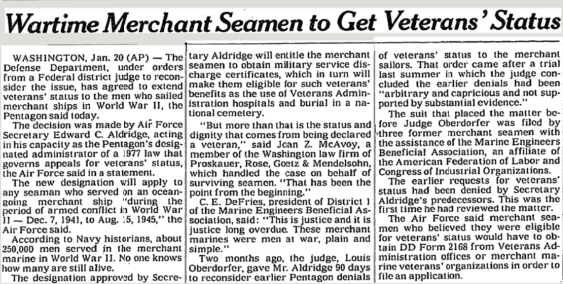
After many years of fighting for recognition and challenging unfair stereotypes, members of the United States Merchant Marines were officially granted veteran status in 1988. This decision finally recognized the important role they played and the sacrifices they made during World War II, and granted them important benefits that they rightly deserved.
Bibliography
Primary Sources
1879 Cape John Map (Section 3). Map. 1879. Pictou County. https://pictoucounty.net/1879-cape-john-map.php.
“B.C. Demonstrations: Anti-Conscription Protests Continue.” Trail Daily Times [Trail, British Columbia], November 27, 1944. https://arcabc.ca/islandora/object/news%3A630700solr_nav%5Bid%5D=bd11db9dc030f778c863&solr_nav%5Bpage%5D=4801&solr_nav%5Boffset%5D=3#page/1/mode/1up.
Doi, George. “Part 3: Train ride into the unknown — a child’s life in the Slocan internment camp.” Discover Nikkei. Updated December 6, 2020. Accessed February 7, 2026. https://discovernikkei.org/en/journal/2020/12/6/slocan/.
James L. Robison. Merchant Mariner Service Record. Department of the Coast Guard.
James L. Robison. U.S., Headstone and Interment Records for U.S., Military Cemeteries on Foreign Soil, 1942-1949. Digital Images. https://ancestryclassroom.com.
James L. Robinson [sic]. U.S., Reports of Deaths of American Citizens Abroad, 1835-1974. Digital Images. https://ancestryclassroom.com.
James Linton Robison. Nova Scotia, Canada, Marriage Registrations: 1763-1945. Digital Images. https://ancestryclassroom.com.
Lichtblau, Eric. “After 40 Years, Merchant Marines Win Veteran Status: Finally–a ‘Flag and a Headstone.’” Los Angeles Times [Los Angeles, California], January 30, 1988. https://www.latimes.com/archives/la-xpm-1988-01-30-mn-10163-story.html.
Linton J. Robison [sic]. Washington, U.S., Arriving and Departing Passenger and Crew Lists, 1882-1965. Digital Images. https://ancestryclassroom.com.
Nova Scotia. 1911 Census for Canada. Digital Images. https://ancestryclassroom.com.
Robison, Chris. Email interview with the author. December 30, 2025.
Robison, Rosalie. Email Interview with the author. October 22, 2025.
“Wartime Merchant Seamen to Get Veterans’ Status.” The New York Times [New York, New York], January 21, 1988. https://timesmachine.nytimes.com/timesmachine/1988/01/21/587988.html?pageNumber=16.
Secondary Sources
Brannen, John. “River John Reinventing Itself While Holding Fast to the Past.” PNI Atlantic News, September 17, 2013. https://www.saltwire.com/atlantic-canada/federal-election/river-john-reinventing-itself-while-holding-fast-to-the-past-76973/.
Brilliant Dam. Fact Sheet. Columbia Power. Accessed November 30, 2025. https://columbiapower.org/wp-content/uploads/2013/10/2013-09-23_BRD_FactSheet_Web.pdf.
Brown, Thomas J. Place Names of the Province of Nova Scotia. Royal Print & Litho, 1922. https://archive.org/details/placenamesofprov00browrich/page/124/mode/2up
“Bureau of Ships, Aerial Photographs of U.S. Shipyards, 1943-1945 (Cochrane Collection).” Ship Scribe. Updated May 29, 2021. Accessed March 25, 2026. https://www.shipscribe.com/cochrane/shipyards/13th-ND.htm.
Cameron, James M. The Ships, Shipbuilders, and Seamen of Pictou County. Pictou County Historical Society, 1990.
“Canada and the Second World War.” Canadian War Museum. Accessed November 30, 2025. https://www.warmuseum.ca/cwm/exhibitions/chrono/1931comes_to_canada_e.html.
“The City of Trail.” Trail and District Chamber of Commerce. Updated September 22, 2020. Accessed March 25, 2026. https://www.trailchamber.bc.ca/area-info/the-greater-trail-area/the-city-of-trail/.
“Dorothy Pearl Robinson McDicken.” Find a Grave. Updated July 28, 2012. Accessed October 14, 2025. https://www.findagrave.com/memorial/94343259/.
Gerhardt, Frank A. “Ships Build [sic] under the Merchant Marine Act of 1936.” United States Maritime Commission. Accessed November 30, 2025. https://usmaritimecommission.de/pictures.php?code=B0558a.
Gervais, Brittany. “Zombies in Terrace: Uncovering Canada’s most significant mutiny.” Terrace Standard, February 26, 2019. https://terracestandard.com/2019/02/26/zombies-in-terrace-uncovering-canadas-most-significant-mutiny/.
Hinnershitz, Stephanie. “Supplying Victory: The History of Merchant Marine in World War II.” The National WWII Museum. Updated February 7, 2022. Accessed March 25, 2026. https://www.nationalww2museum.org/war/articles/merchant-marine-world-war-ii.
Hughes & Carpenter Exhibit Photograph Gallery. Online Exhibition. Trail Historical Society. https://exhibits.trailhistory.com/chapter-2-gallery-04/.
“James Linton Robison.” American Battle Monuments Commission. Accessed October 14, 2025. https://weremember.abmc.gov/s?q=robison&v=G&type=16&sort=title:ASC.
“James Linton Robison.” Find a Grave. Updated July 28, 2012. Accessed October 14, 2025. https://www.findagrave.com/memorial/94334322/james-linton-robison.
“James L. Robison.” Veterans Legacy Memorial, National Cemetery Administration. Accessed March 25, 2026. https://www.vlm.cem.va.gov/JamesLRobison/48E3E.
“Japanese-Canadian Internment.” Project ’44. Accessed November 30, 2025. https://www.project44.ca/japanese-canadian-internment.
Mackie, Richard. “#429 Trail, the Bomb, and Blaylock.” The British Columbia Review, December 11, 2018. https://thebcreview.ca/2018/12/11/429-trail-the-bomb-and-blaylock/.
Similar Journeys, Different Trails: One Destination. Trail Museum. Accessed November 30, 2025. https://www.communitystories.ca/v1/pm_v2.php?id=exhibit_home&fl=0&lg=English&ex=00000402.
“Teck on the Home Front: Commodities and Community.” The Trail Champion [Trail, British Columbia], August 19, 2023. https://trailchampion.com/2021/11/teck-home-front-commodities-and-community/.
“The Terrace Mutiny.” British Columbia: An Untold Story. Accessed February 6, 2026. https://bcanuntoldhistory.knowledge.ca/1940/the-terrace-mutiny.
“Transportation.” City of Trail. Accessed November 30, 2025. https://trail.ca/en/live/transportation.aspx?_mid_=14615.
Verzuh, Ron. “Blaylock’s Bomb: How a Small BC City Helped Create the World’s First Weapon of Mass Destruction.” BC Studies: The British Columbian Quarterly, summer 2015. https://ojs.library.ubc.ca/index.php/bcstudies/article/view/184448/185540.
Verzuh, Ron. “Canada’s A-Bomb Secret.” Canada’s History. Accessed November 30, 2025. https://www.canadashistory.ca/explore/science-technology/canada-s-a-bomb-secret.
“We Can Do It: Teck Women Make History.” Trail Champion [Treck, British Columbia], November 25, 2021. https://trailchampion.com/2021/11/we-can-do-it-teck-women-make-history/.
This profile was researched and created through the Researching Silent Heroes program, sponsored by the American Battle Monuments Commission.