Major Jay Leonard Anthony Lembeck
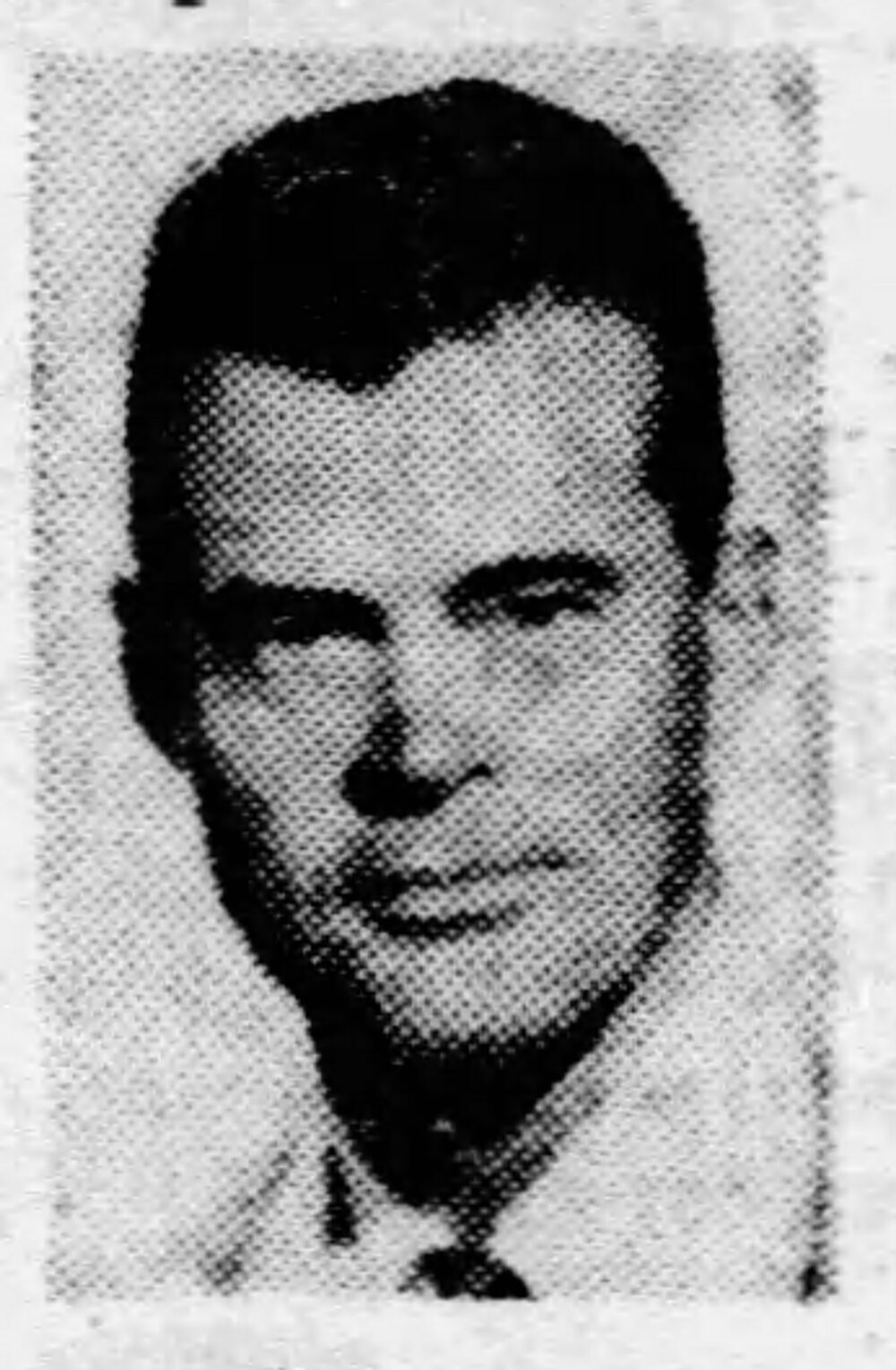
- Unit: Fleet Marine Force, Atlantic, Eighth Communication Battalion, Headquarters Company
- Date of Birth: January 9, 1920
- Entered the Military: March 31, 1943
- Date of Death: November 26, 2017
- Hometown: Chicago, Illinois
- Place of Death: San Luis Obispo, California
- Award(s): Purple Heart, Presidential Unit Citation with one star, Navy Unit Citation, Korean Presidential Unit Citation, China Service Medal, Asiatic-Pacific Campaign Medal with three stars, American Campaign Medal, World War II Victory Medal, Navy Occupation Service Medal, National Defense Service Medal, Korean Service Medal, United Nations Service Medal, Philippine Independence Ribbon, South Korea Chung Mu Medal
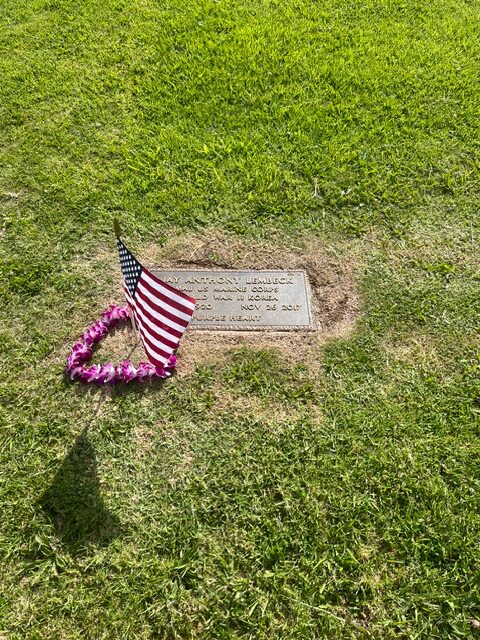
- Cemetery: Section 2, Grave 359. Maui Veterans Cemetery, Makawao, Hawaiʻi
Mentored by Ms. Janyce Omura
Maui High School
2025/2026
Early Life
Jay Leonard Anthony Lembeck was born on January 9, 1920, in Chicago, Illinois, to Edward John Lembeck and Emilia (Emily) Mildred Kopaniekci. Two years later, on March 11, 1922, Jay’s brother Edward was born.
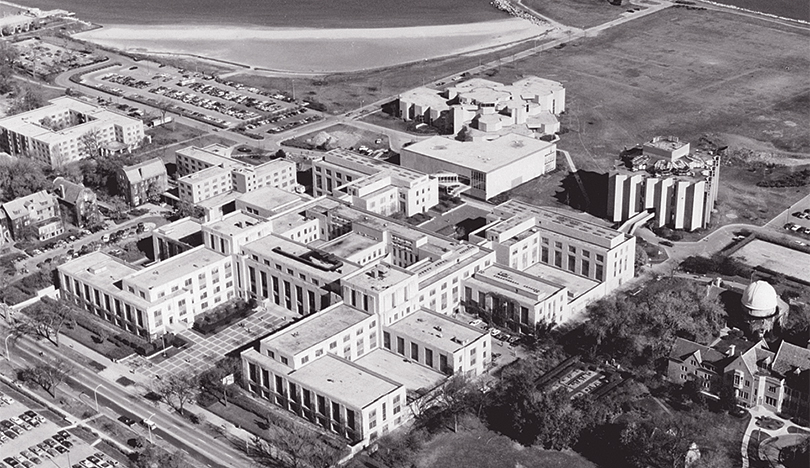
Jay grew up in Chicago and attended local schools. His father owned an auto parts store. He was active in athletics during his high school years and graduated in 1938. He attended Northwestern University, where he studied engineering and earned his degree in 1942. His military records note that he was a Varsity athlete in football, basketball, and baseball.
In March 1943, Jay Lembeck enlisted in the United States Marine Corps.


Homefront
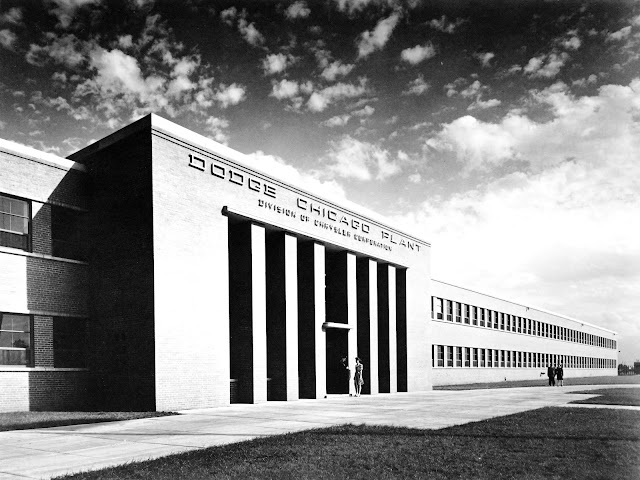
The Dodge Chicago Aircraft Engine Plant
One of Chicago’s most vital contributions to the war effort was the Dodge Chicago Aircraft Engine Plant, a massive manufacturing facility that produced engines for military aircraft. The plant represented the full mobilization of American industrial power, transforming the city into a key player in keeping Allied air forces operational. Workers labored around the clock in shifts to meet the relentless demand for engines, and the plant became a symbol of Chicago’s commitment to the war effort on the home front.
Mass Migration and Labor in Chicago’s Factories
The war brought dramatic change to Chicago’s workforce. African Americans migrated from the South in large numbers seeking factory jobs, while women entered industrial roles in unprecedented numbers, filling positions left vacant by men who had gone to serve. This surge of new workers transformed Chicago’s social fabric, though not without tension. Labor strikes broke out as workers pushed back against poor conditions and unequal treatment, reflecting the complex pressures of a city straining to meet wartime demands while grappling with questions of fairness and equality.
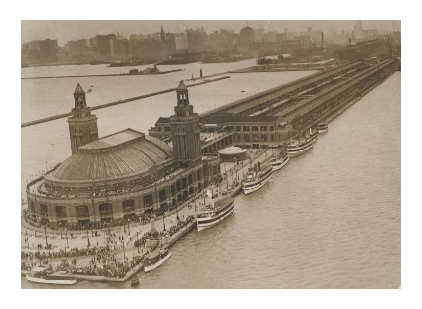
Navy Pier
Navy Pier, already a Chicago landmark, took on a crucial military role during World War II. The U.S. Navy used it as a training facility, where thousands of naval aviators learned to operate aircraft using the pier’s flight training programs and equipment. What had once been a place of public recreation became a hub of military preparation, quietly shaping the men who would go on to serve in the Pacific and beyond—including, perhaps, those whose paths crossed with officers like Lembeck himself.
Military Experience
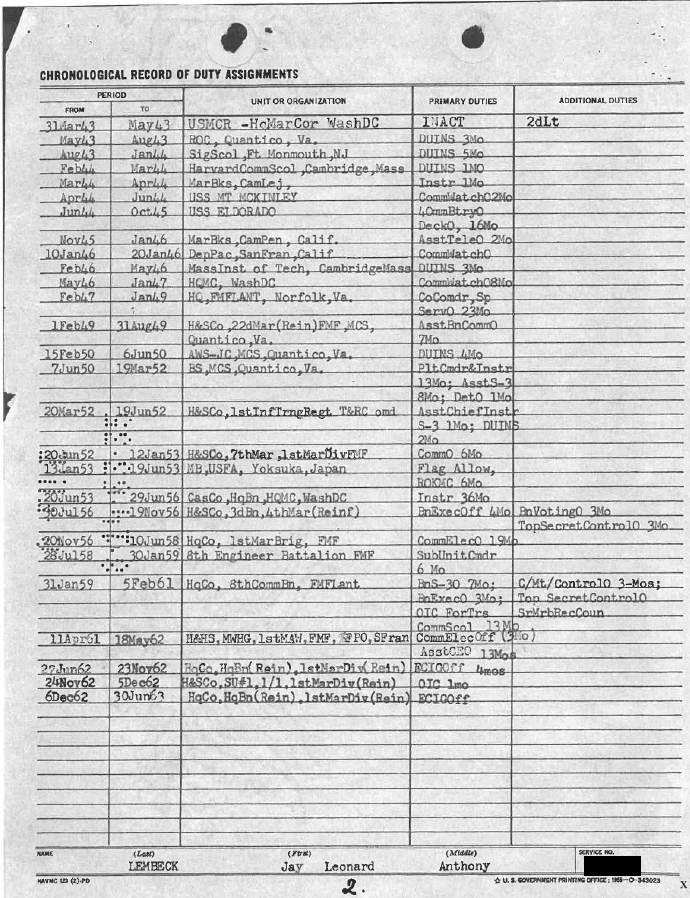
Jay Leonard Anthony Lembeck began his journey in the United States Marine Corps on March 31, 1943, when he enlisted as an officer candidate during the height of World War II. He trained at the Basic School and Junior School in Quantico, where he learned the fundamentals of command and the integration of infantry and communications operations. His growing aptitude for technical work sent him to the U.S. Army Signal School at Fort Monmouth, the Navy Communications School at Harvard University, and, finally, to the Massachusetts Institute of Technology, where he completed specialized studies in electrical engineering. These courses prepared him to design, supervise, and maintain the complex networks that kept Marine units connected during training and combat.
When the war carried him into active service, Lembeck applied this knowledge across sea and land. Aboard the amphibious command ships USS Mount McKinley and USS Eldorado, he handled communications as well as deck and battery duties. Ashore, he served in a variety of roles—from platoon commander to assistant operations officer—at posts that included Camp Lejeune, Camp Pendleton, and Headquarters Marine Corps in Washington, D.C. Within the Fleet Marine Force, his assignments with units such as Headquarters and Service Company, Twenty-Second Marines, and later the Seventh Marines of the First Marine Division, deepened his experience in coordinating infantry movements with emerging communications technology.
During the Korean War, Lembeck deployed with the Seventh Marines in 1952. He entered the brutal landscape of western Korea, where trench warfare and night fighting tested every Marine’s resolve. In October, during the First Battle of the Hook—a desperate struggle for control of a critical ridge—he was wounded in action and later awarded the Purple Heart.
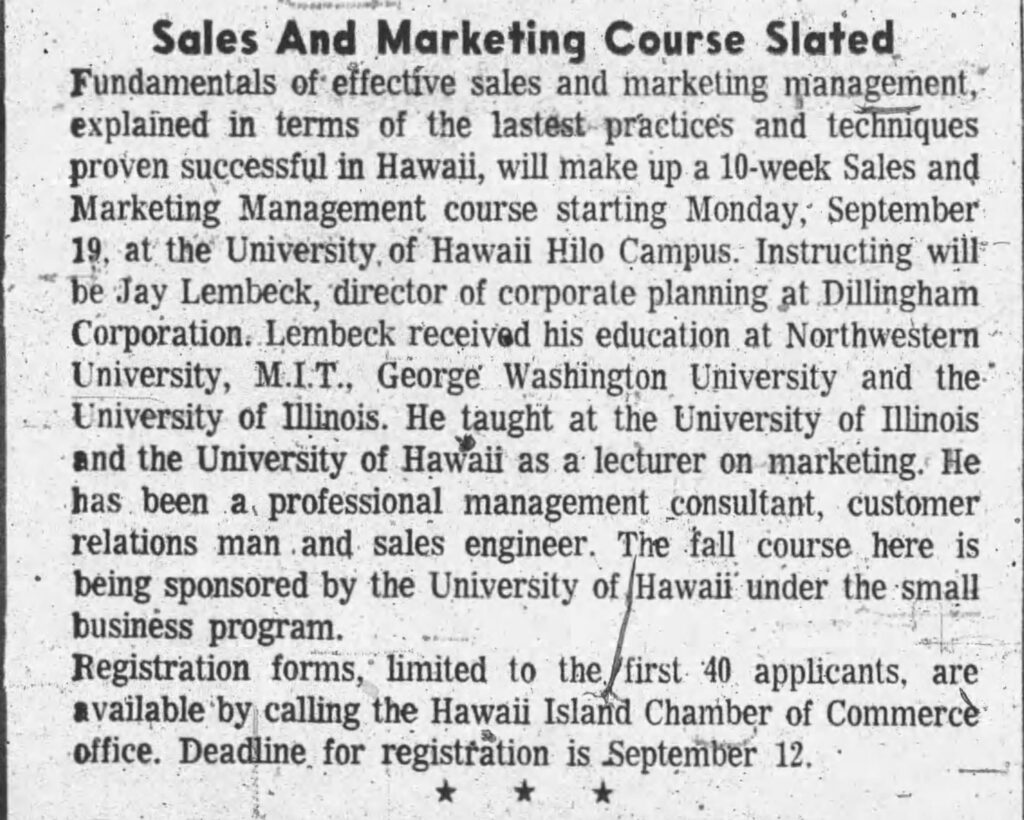
The years that followed carried him into the long vigilance of the Cold War. From 1956 to 1958, he served in Japan and throughout the Western Pacific, assigned to Marine Barracks at Yokosuka, Japan. There, and later in posts with the Eighth Engineer Battalion, Eighth Communication Battalion, and Marine Wing Headquarters Group, he supported Fleet Marine Force readiness. He strengthened the global network that linked American forces in an era defined by tension and technology. He also earned a Master’s of Business Administration from the University of Hawaiʻi in 1952 and a law degree from the University of Illinois in 1956, where he served as an instructor in the ROTC program.
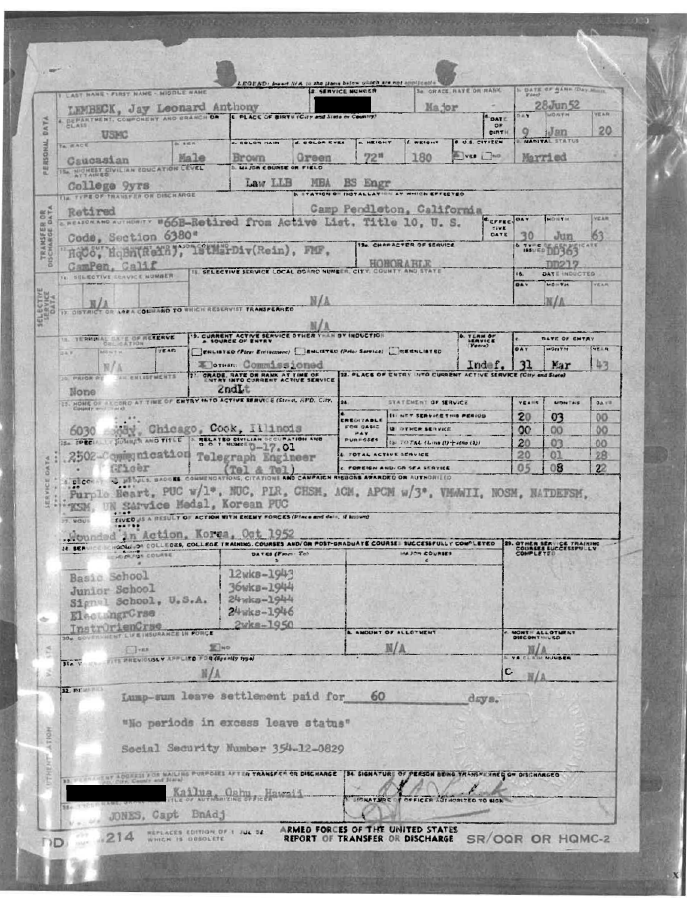
After 20 years of service, Major Lembeck concluded his active-duty career and was honorably discharged from the United States Marine Corps. His years in uniform—spanning three wars and countless posts at home and abroad—stood as the measure of a professional whose life had been shaped by duty, discipline, and the enduring spirit of the Corps.
Veteran Experience
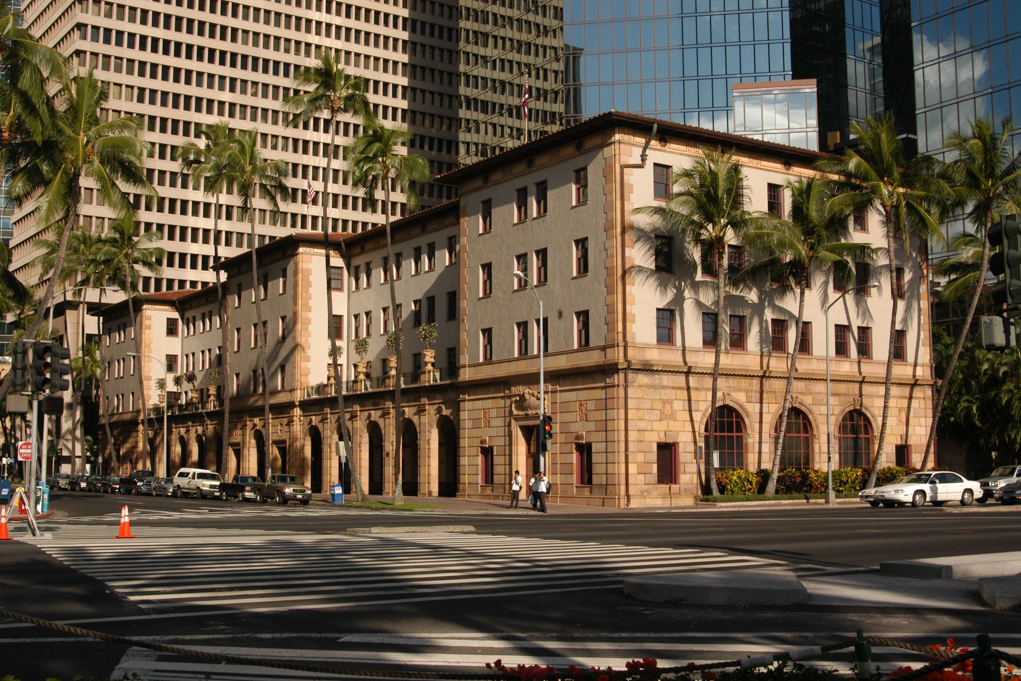
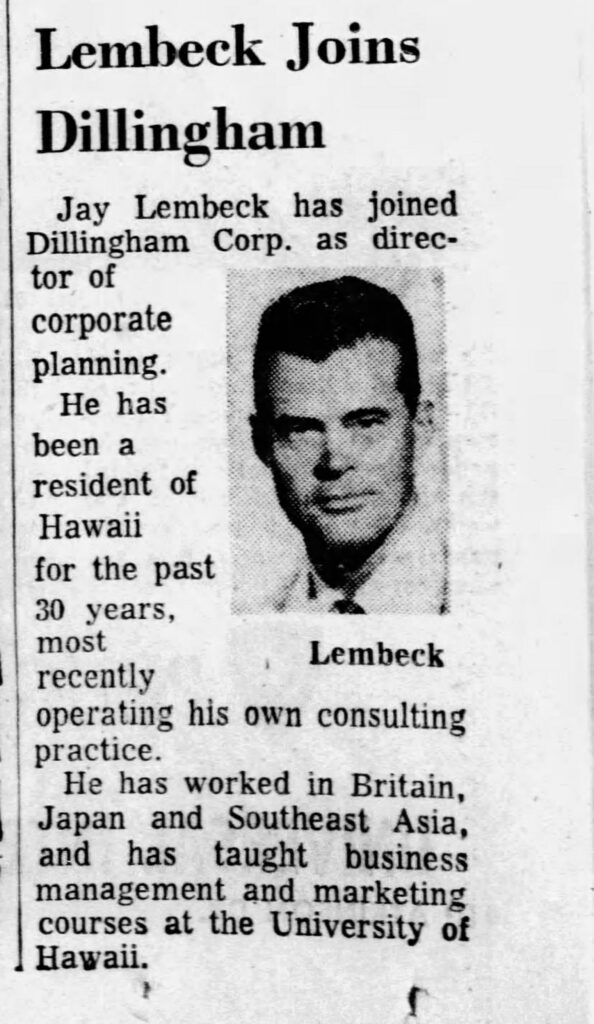
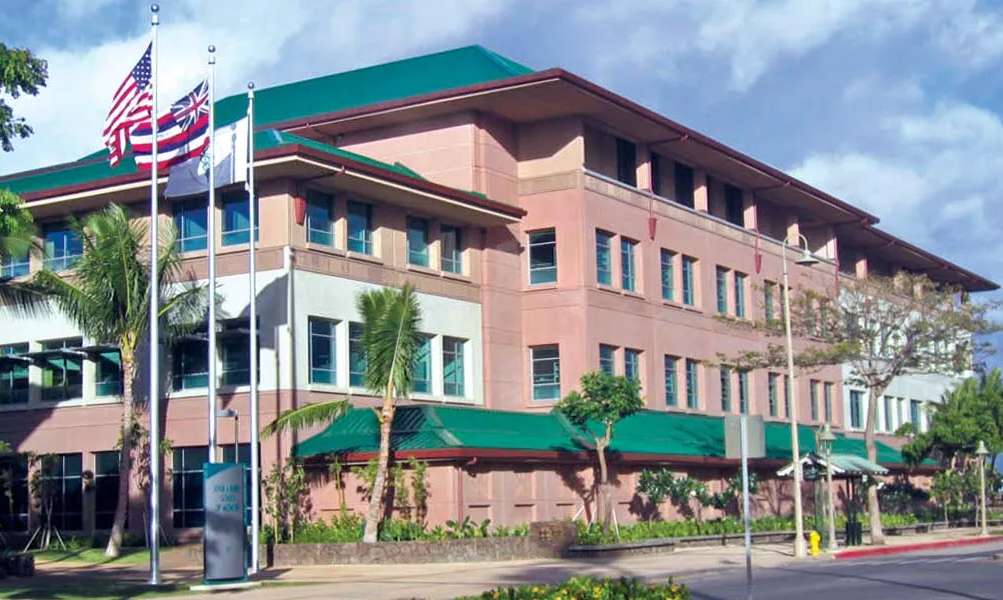
When Jay Leonard Anthony Lembeck retired from active duty as a major in July 1963 at Camp Pendleton, California, he did not stop serving—he simply changed uniforms. He moved to Hawaiʻi and started a consulting practice. In 1965, he joined the Dillingham Corporation in Honolulu. He trained and developed business leaders across the islands, drawing on 20 years of military experience to teach others what he had learned the hard way: that leadership is not a title but a practice, and that communication is the foundation on which everything else stands. He extended that reach further by teaching at the University of Hawaiʻi.
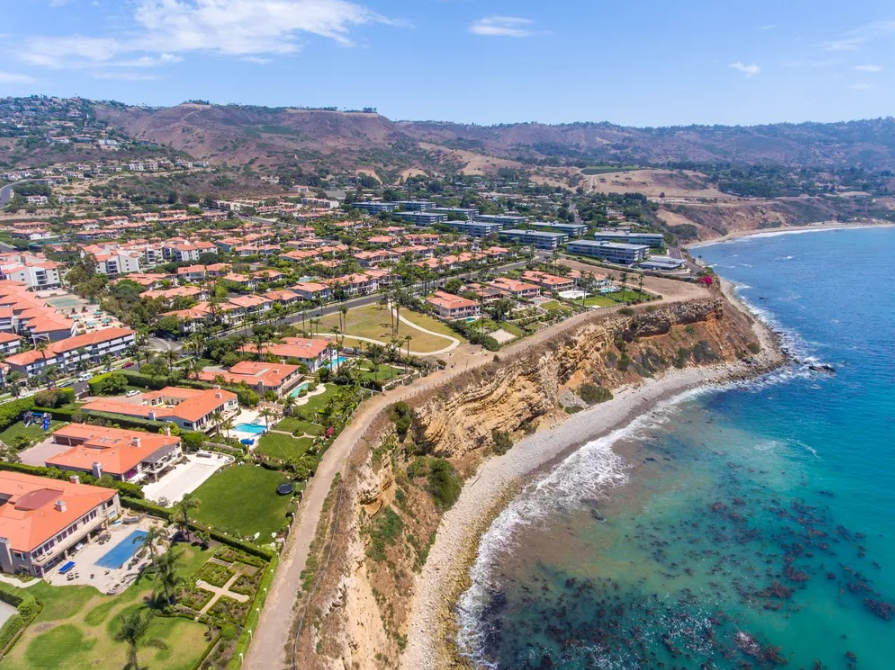
At home, he raised two children—his son Jay and his daughter Linda Ann—and lived with the same quiet energy that had carried him through Korea and the Cold War, playing squash well into his eighties. In 1990, he moved to the Palos Verdes Peninsula in California, where he joined corporate boards in the oil industry and continued mentoring and contributing to business and civic life.
He died in 2017, leaving behind not monuments, but people — shaped, challenged, and better for having known him. That is the legacy of the silent hero: not the noise he made, but the difference he left.
Commemoration
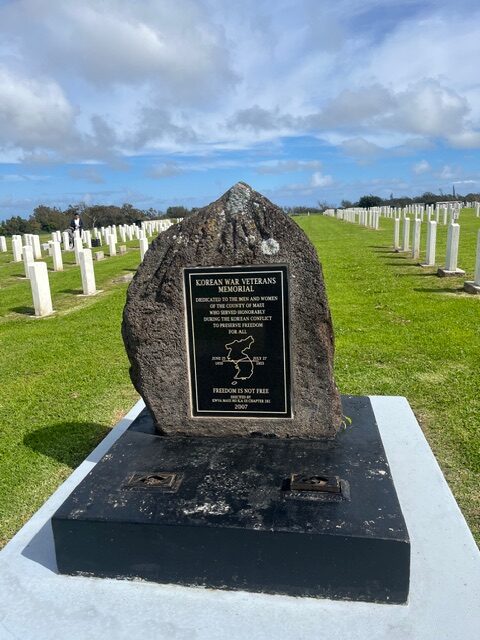
Major Jay Leonard Anthony Lembeck died on November 26, 2017, in San Luis Obispo, California, and was buried on December 12, 2017, at Maui Veterans Cemetery in Makawao, Hawaiʻi. He was laid to rest in the islands he had made his home, among the people he had served long after his uniform was folded away.
His awards told the story of a career lived in full: the Purple Heart for wounds received in Korea, multiple unit citations, campaign and service medals spanning World War II and the Korean War, and foreign decorations including the South Korean Chung Mu Medal, each one a quiet record of sacrifice and duty that he never made a point of advertising.
Those who knew him remember not the medals but the man—the Marine Corps officer who led with steadiness rather than spectacle, the Dillingham Corporation mentor who shaped a generation of Hawaiʻi’s business leaders, the University of Hawaiʻi instructor who gave his knowledge freely, and the California board member who brought integrity to the boardroom. His grave in Makawao and the obituaries that marked his passing are the public record. But the truer monument is the one he built over a lifetime without ever intending to—in the careers of the leaders he developed, the students he taught, and the community he quietly refused to stop serving. The silent hero leaves no statue. He leaves people.
Bibliography
Primary Sources
“16 at U. of I. to Get R.O.T.C. Commissions.” Chicago Tribune [Chicago, Illinois], June 20, 1954. Newspapers.com (372647741).
Aerial View of Navy Pier. Photograph. c. 1920–1921. Chicago Historical Society (ICHi-14115). http://www.encyclopedia.chicagohistory.org/pages/3784.html.
The Chicago Plant Office Building. Photograph. 1942. Digital Research Library of Illinois History. https://drloihjournal.blogspot.com/2023/06/ford-city-center-chicago-illinois.html.
Illinois. Cook County. 1930 U.S. Federal Census. Digital Images. https://ancestryclassroom.com.
Illinois. Cook County. 1940 U.S. Federal Census. Digital Images. https://ancestryclassroom.com.
Lembeck, Jay Leonard. DD-214. Department of the Navy. National Archives and Records Administration—St. Louis.
Lembeck, Jay Leonard. Official Military Personnel File. Department of the Navy. National Archives and Records Administration—St. Louis.
Lembeck, Leonard. Cook County, Illinois, U.S., Birth Certificates Index, 1871–1922. Digital Images. https://ancestryclassroom.com.
“Jay Leonard Anthony Lembeck.” Honolulu Star-Advertiser [Honolulu, Hawai’i], December 7, 2017. Newspapers.com (363802725).
“Lembeck Joins Dillingham.” Honolulu Star-Advertiser [Honolulu, Hawai’i], March 24, 1965. Newspapers.com (260270699).
Map of Cook County, Illinois. Map. 1861. Library of Congress (2013593074). https://www.loc.gov/item/2013593074/.
“Marine Major Guest Speaker for Seminar.” The Daily Chronicle [De Kalb, Illinois], October 27, 1955. Newspapers.com (126652442).
“Marine Major Leaves Post.” The Daily Illini [Urbana, Illinois], June 6, 1956. Newspapers.com (757129836).
“Sales and Marketing Course Slated.” Hawaii Tribune-Herald [Hilo, Hawai’i], July 25, 1966. Newspapers.com (556264044).
“Seminar on Marketing, Sales at UH This Week.” Honolulu Star-Advertiser [Honolulu, Hawai’i], March 26, 1967. Newspapers.com (260404854).
USS Mount McKinley (AGC-7) Underway in the Early 1960s. Photograph. c. 1960s. Wikimedia Commons. Accessed March 11, 2026. https://en.wikipedia.org/wiki/USS_Mount_McKinley#/media/File:USS_Mount_McKinley_(AGC-7)_underway_in_early_1960s.jpg.
_underway_in_early_1960s.jpg)
Secondary Sources
“Celebrating Campus Landmarks.” Northwestern Magazine, Fall 2022. https://magazine.northwestern.edu/impact/deering-library-technological-institute-norris-university-center-ryan-hall-campus-landmark-anniversaries/.
“Discovering the Gems of Rancho Palos Verdes: A Guide to California.” California.com. Accessed April 28, 2026. https://www.california.com/discovering-the-gems-of-rancho-palos-verdes-a-guide-to-californias-hidden-gem/.
Garner, Tom. “An Artilleryman at the Hook: Korean War Veteran Brian Parritt Tells His Story.” History of War, May 9, 2018. https://www.historyanswers.co.uk/history-of-war/an-artilleryman-at-the-hook-korean-war-veteran-brian-parritt-tells-his-story/.
Hibbard, Don J. “The Dillingham Transportation Building.” Society of Architectural Historians. Accessed April 28, 2026. https://sah-archipedia.org/buildings/HI-01-OA35.
“History of Municipal Incorporation in Cook County.” Cook County, Illinois. Accessed March 11, 2026. https://maps.cookcountyil.gov/muniincorp/.
“Jay Anthony Lembeck.” Veterans Legacy Memorial, National Cemetery Administration. Accessed April 28, 2026. https://www.vlm.cem.va.gov/JAYANTHONYLEMBECK/47843D.
“Jay Leonard Anthony ‘Jason’ Lembeck.” Find a Grave. Accessed April 28, 2026. https://www.findagrave.com/memorial/185754647/jay_leonard_anthony-lembeck.
“University of Hawaii.” Encyclopædia Britannica. Accessed March 11, 2026. https://www.britannica.com/topic/University-of-Hawaii.
“World War II Homefront Scene.” Library of Congress. Accessed March 11, 2026. https://www.loc.gov/item/2013593074/.
This profile was funded by a grant from the United States Department of Veterans Affairs. The opinions, findings, and conclusions stated herein are those of the author and do not necessarily reflect those of the United States Department of Veterans Affairs.