

Platoon Sergeant Laurence Edward Morvan
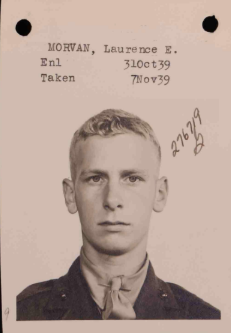
- Unit: 4th Marine Regiment, 2nd Battalion, Headquarters Company
- Date of Birth: October 24, 1921
- Entered the Military: October 31, 1939
- Date of Death: January 9, 1990
- Hometown: Huntington, New York
- Place of Death: Huntington Station, New York
- Award(s): Prisoner of War Medal, Good Conduct Medal with bronze star, American Defense Service Medal, Asiatic-Pacific Campaign Medal with one bronze star, World War II Victory Medal, Philippine Defense Ribbon with one bronze star, and Philippine Republic Presidential Unit Citation Badge
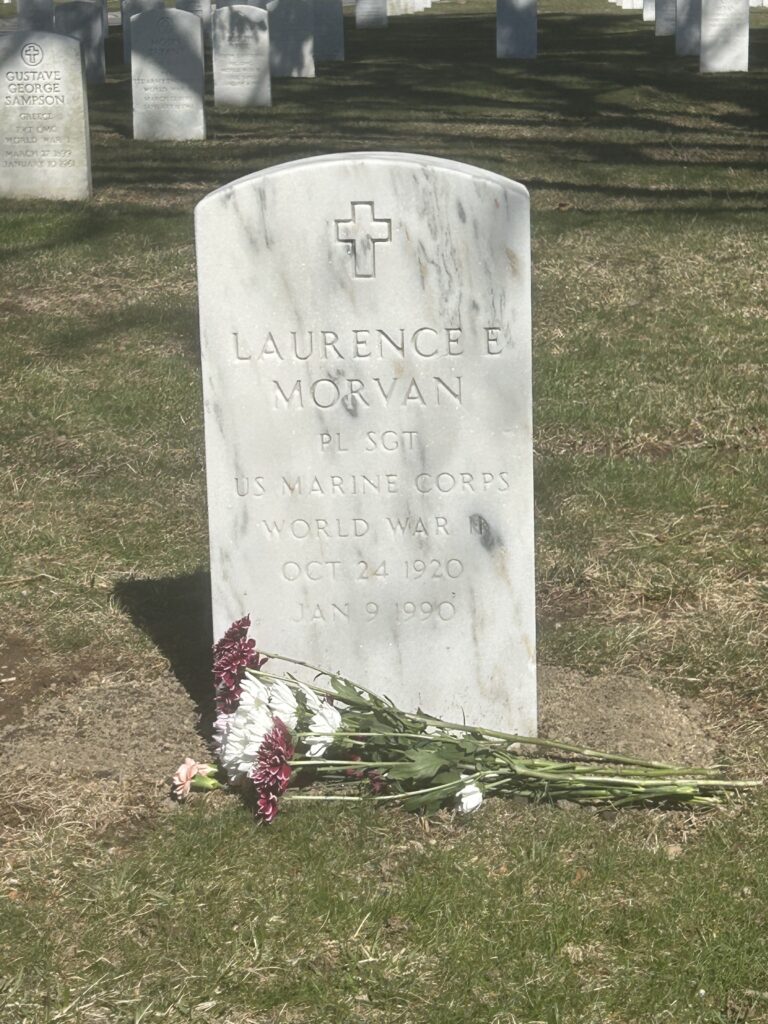
- Cemetery: Section H, Grave 132. Long Island National Cemetery, Long Island, New York
Mentored by Mrs. Karen Schmitt
Henry L. Stimson Middle School, West Hills, New York
2025/2026
Early Life
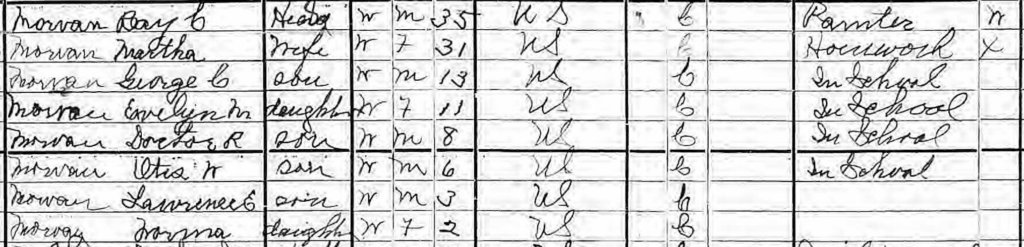
Laurence Edward Morvan was born on October 24, 1921, in Kings Park, New York. His mother’s name was Elsie Morvan, and his father’s name was Raymond C. Morvan. Growing up, Morvan had four brothers and three sisters. The Morvans were also members of the Bethany Presbyterian Church, where the children attended Sunday School.
Morvan attended South Huntington High School for one year before he left to work as a painter’s helper for Mr. William Grossam in New York City.
Homefront
Huntington, New York, a town on the North Shore of Long Island, was at the heart of one of the nation’s most important wartime industry areas. By 1945, over 100,000 people worked in Long Island’s aircraft industry. The Grumman Aircraft Engineering Corporation in Bethpage and the Republic Aviation Corporation in Farmingdale produced some of the most valuable military aircraft, including Grumman’s F6F Hellcat and Republic’s P-47 Thunderbolt. Overall, Long Island companies built 46 percent of American fighter planes during the war.
Less than an hour east of Huntington, the FBI established a shortwave radio station called the Wading River Radio Station from inside Benson House, a three-story home in Wading River. Between 1942 and 1945, the FBI used this innocent-looking country house to conduct several counterintelligence operations, including Operation Bodyguard and Operation Bluebird. The purpose of Operation Bodyguard was to use counterintelligence to confuse and mislead the Nazi government about the Allied invasion of Europe. Operation Bluebird’s goal was to convince the Japanese that American forces planned to invade Formosa and the southern coast of China. The FBI moved a special agent and his family into the house with a cover story that the agent suffered from tuberculosis and needed quiet and fresh air. Other agents came and went after dark to hide their movements from the neighborhood.


Military Experience
Enlistment and Training
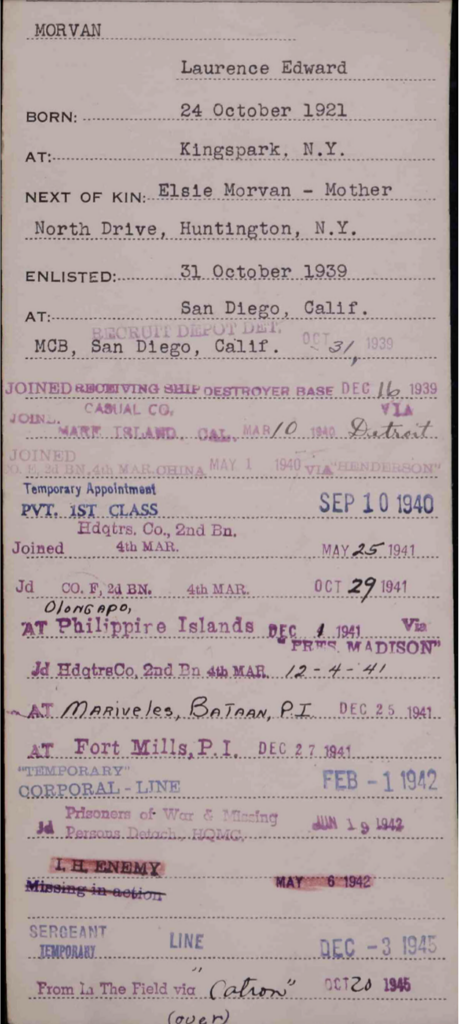
Laurence Morvan enlisted in the United States Marine Corps on October 31, 1939, at the Marine Corps Base Recruit Depot in San Diego, California. After his initial training, Morvan joined the Receiving Ship at the Destroyer Base, San Diego.
The “China Marines”
Morvan joined the 4th Marine Regiment in Shanghai, China, on May 1, 1940, aboard USS Henderson. The 4th Marines, known as the “China Marines,” had been stationed in Shanghai since 1927, protecting American interests there. On September 10, 1940, Morvan was promoted to private first class.
By mid-1941, the United States began to consider a complete withdrawal from Shanghai, believing war was inevitable. In late November 1941, Morvan and his unit evacuated Shanghai aboard USS President Madison and arrived in the Philippine Islands on December 1.
The Philippines
Morvan was stationed in Olongapo, Philippines, until Japan attacked on December 8, 1941. As the Japanese bore down on Manila and defeat seemed likely, the 4th Marines in Olongapo evacuated to Mariveles, and then to Corregidor, the fortified island off the southern coast of the Bataan Peninsula.
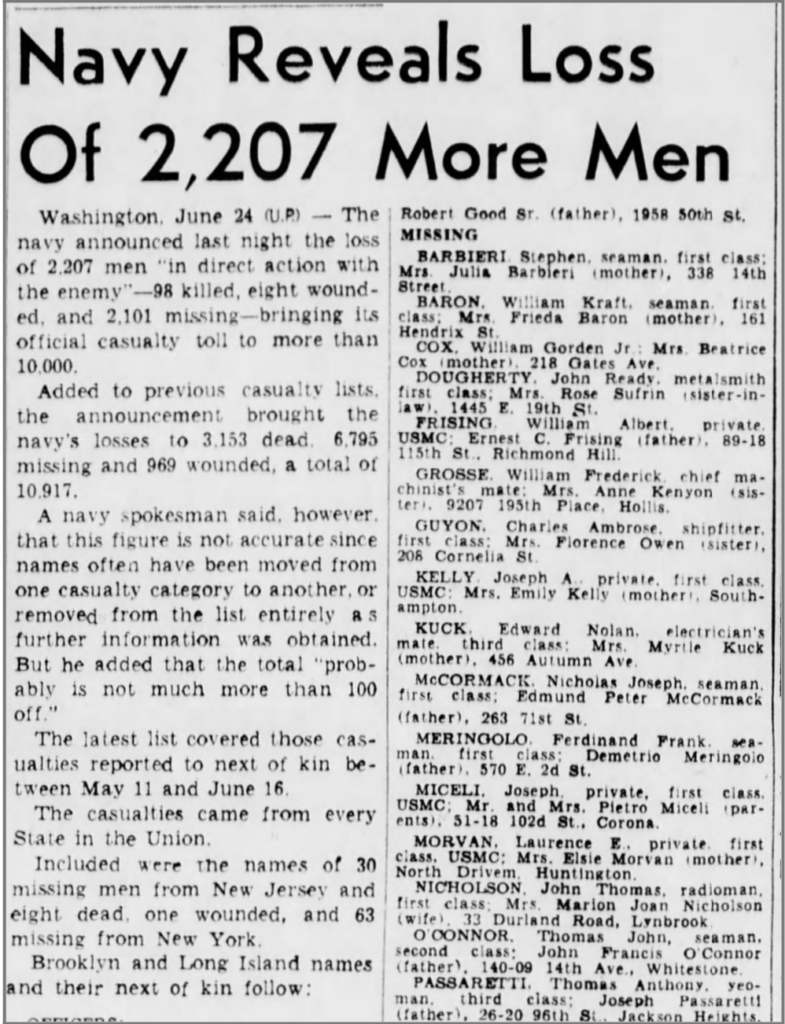
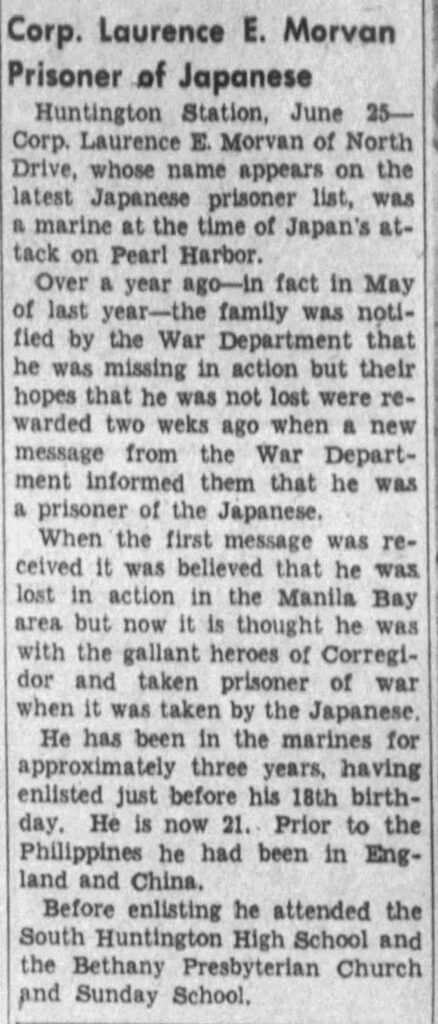
The 4th Marines defended Corregidor from late December to May 1942. On February 1, 1942, during the defense of Corregidor, Morvan was promoted to corporal. On May 6, 1942, the day Corregidor fell to the Japanese, Morvan was taken as a Prisoner of War (POW).
Prisoner of War
The Japanese transferred Morvan to the Osaka POW Camp in Japan, where he was held for more than three years. The Osaka camp network held hundreds of American POWs, many of whom were used as forced laborers in factories, shipyards, and rail yards. Historians and survivors have widely documented the brutal conditions of Japanese captivity, including starvation, forced labor, and physical abuse.
Liberation and Repatriation
Morvan was liberated from Japanese custody in September 1945. He arrived in Guam on September 15, 1945, en route to the United States, and was formally returned there in October. On December 3, 1945, Morvan was promoted to the rank of sergeant.
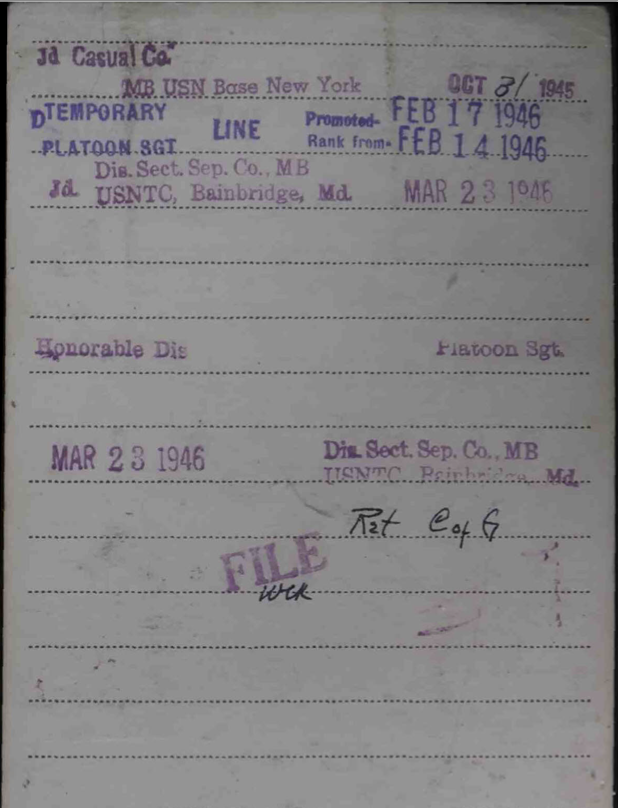
On February 14, 1946, Morvan was promoted to the rank of platoon sergeant. He was honorably discharged on March 23, 1946. In honor of his service to his country, he was awarded the Good Conduct Medal with bronze star, American Defense Service Medal, Asiatic-Pacific Campaign Medal with bronze star, the World War II Victory Medal, and the Philippine Defense Ribbon with one bronze star, and the Philippine Republic Presidential Unit Citation Badge. After its inception in 1985, Morvan also received the Prisoner of War Medal.
Veteran Experience
After the war, Laurence Morvan married Marie D. Ames on January 7, 1950. They had three children, Valerie, Sandra, and Larry Jr., and lived in Huntington.
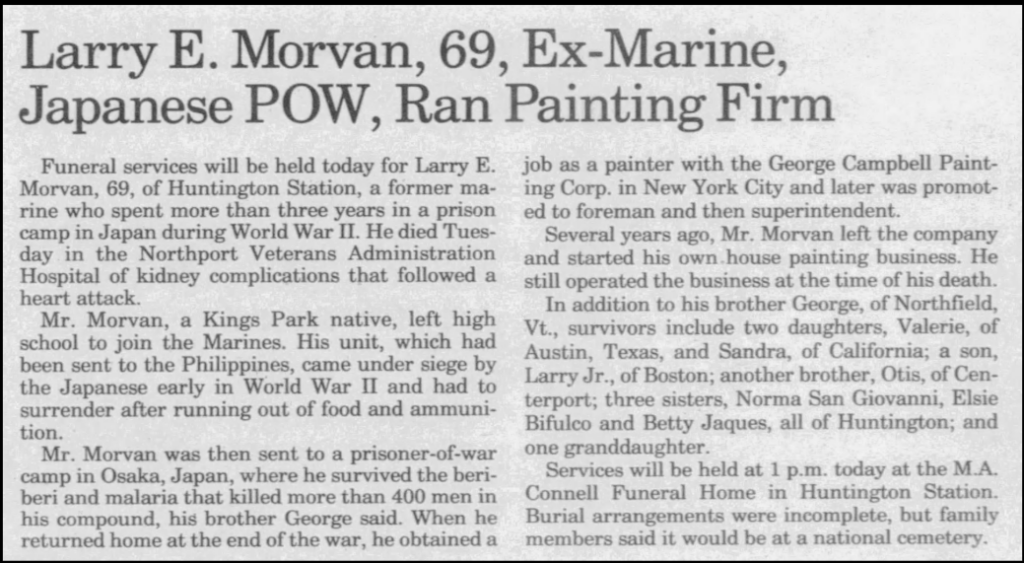
Morvan’s first job after the service was as a painter at George Campbell Painting Corporation in New York City. There, he was promoted to foreman, then to superintendent. After several years, he created his own house-painting company, which he operated until his death.

Commemoration
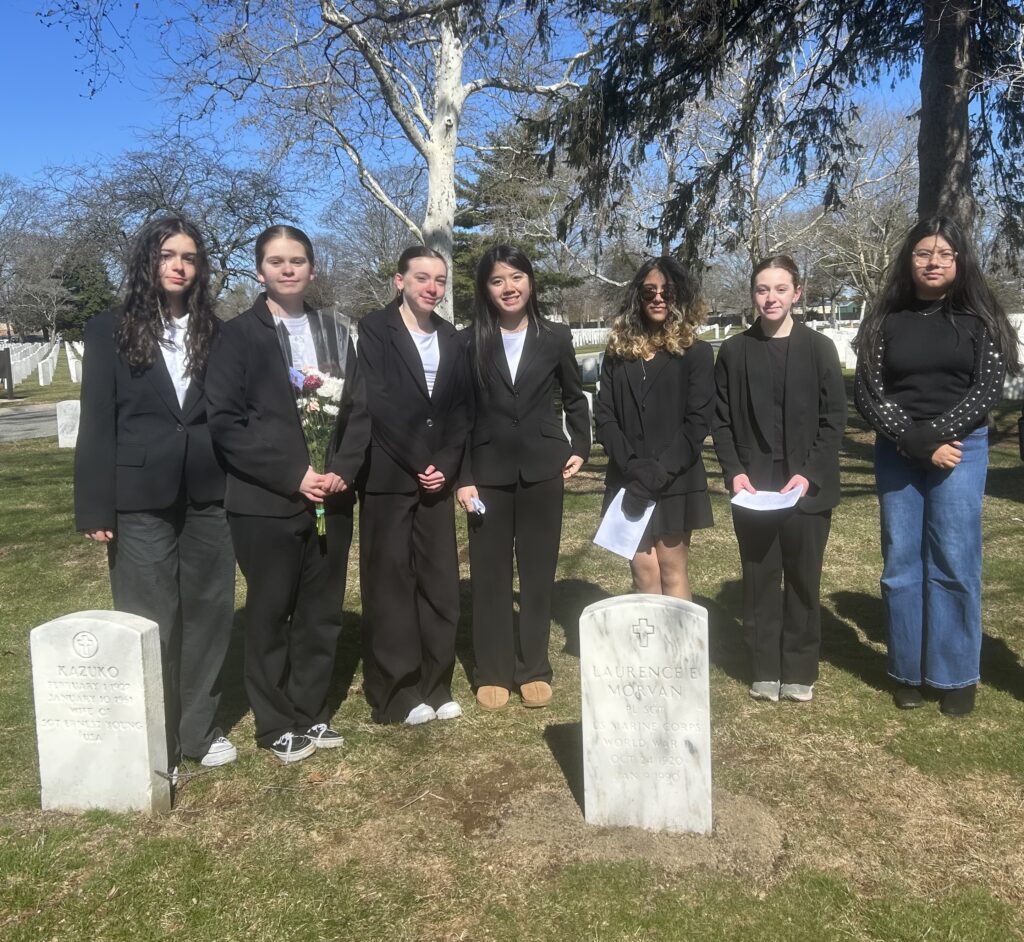
Laurence Morvan passed away on January 9, 1990, at the age of 69. He was buried at the Long Island National Cemetery.
Bibliography
Primary Sources
“Corporal Laurence E. Morvan Prisoner of Japanese.” Brooklyn Eagle [Brooklyn, New York], June 25, 1943. Newspapers.com (686199436).
Grumman Aircraft Engineering Corp., Bethpage, Long Island. Interior II. Photograph. 1940. Library of Congress Public Domain Archive, Library of Congress. https://loc.getarchive.net/media/grumman-aircraft-engineering-corp-bethpage-long-island-interior-ii.
“Larry E. Morvan, 69, Ex-Marine, Japanese POW, Ran Painting Firm.” Newsday Suffolk Edition [Suffolk, New York], January 12, 1990.
Laurence E. Morvan. New York, U.S., State Census, 1925. Digital Images. https://ancestryclassroom.com/.
Laurence E. Morvan. U.S. Presbyterian Church Records, 1701-1970. Digital Images. https://ancestryclassroom.com/.
Laurence Edward Morvan, Official Military Personnel File, Department of the Navy, National Archives and Records Administration – St. Louis.
Laurence Edward Morvan. U.K., World War II Allied Prisoners of War, 1939-1945. Digital Images. https://ancestryclassroom.com/.
Laurence Edward Morvan. U.S., Marine Corps Muster Rolls, 1798-1958. Digital Images. https://ancestryclassroom.com/.
Laurence Edward Morvan. U.S., Navy Casualties Books, 1776-1941. Digital Images. https://ancestryclassroom.com/.
Laurence Edward Morvan. U.S., Social Security Death Index, 1935-2014. https://ancestryclassroom.com.
Laurence Edward Morvan. U.S., World War II Navy, Marine Corps, and Coast Guard Casualties, 1941-1945. Digital Images. https://www.ancestryclassroom.com/.
Marie D. Ames. U.S., Presbyterian Church Records, 1701-1970. Digital Images. https://ancestryclassroom.com/.
“Navy Reveals Loss of 2,207 More Men.” Brooklyn Eagle [Brooklyn, New York], June 24, 1942. Newspapers.com (52663358).
New York. Suffolk County. 1925 New York State Census. Digital Images. https://ancestryclassroom.com/.
New York. Suffolk County. 1930 U.S. Census. Digital Images. https://ancestryclassroom.com/.
Secondary Sources
“Celebrating the 80th Anniversary of the End of WWII.” Cradle of Aviation Museum. Accessed November 1, 2025. https://www.cradleofaviation.org/history/history/world-war-two/home.html.
“The China Marines.” PBS. Accessed April 28, 2026. https://www.pbs.org/opb/historydetectives/feature/the-china-marines/.
“Laurence E. Morvan.” Veterans Legacy Memorial, National Cemetery Administration. Accessed December 8, 2025. https://www.vlm.cem.va.gov/LAURENCEEMORVAN/50CDEB5.
“Laurence Edward Morvan.” Find a Grave. Updated March 3, 2000. Accessed December 8, 2025. https://www.findagrave.com/memorial/2764563/laurence-edward-morvan.
“ND-98: Case of the Long Island Double Agent.” FBI. Accessed May 6, 2026. https://www.fbi.gov/history/cases-and-criminals/nd-98-case-of-the-long-island-double-agent.
“Radio Cloak and Dagger.” FBI Studies. July 10, 2023. Accessed May 6, 2026. https://fbistudies.com/2023/07/10/radio-cloak-and-dagger/.
“A Riveting History.” Northrop Grumman. Accessed May 6, 2026. https://www.northropgrumman.com/life-at-northrop-grumman/a-riveting-history.
Valiquette, Joe. “Long Island Home’s Secret Role in WWII Espionage Revealed.” NBC New York. June 6, 2014. https://www.nbcnewyork.com/news/local/benson-house-long-island-fbi-wwii-intelligence-spying/2002799/.
“Wading River Radio Station.” National Park Service. Accessed May 6, 2026. https://www.nps.gov/places/wading-river-radio-station.htm.
This profile was funded by a grant from the United States Department of Veterans Affairs. The opinions, findings, and conclusions stated herein are those of the author and do not necessarily reflect those of the United States Department of Veterans Affairs.