

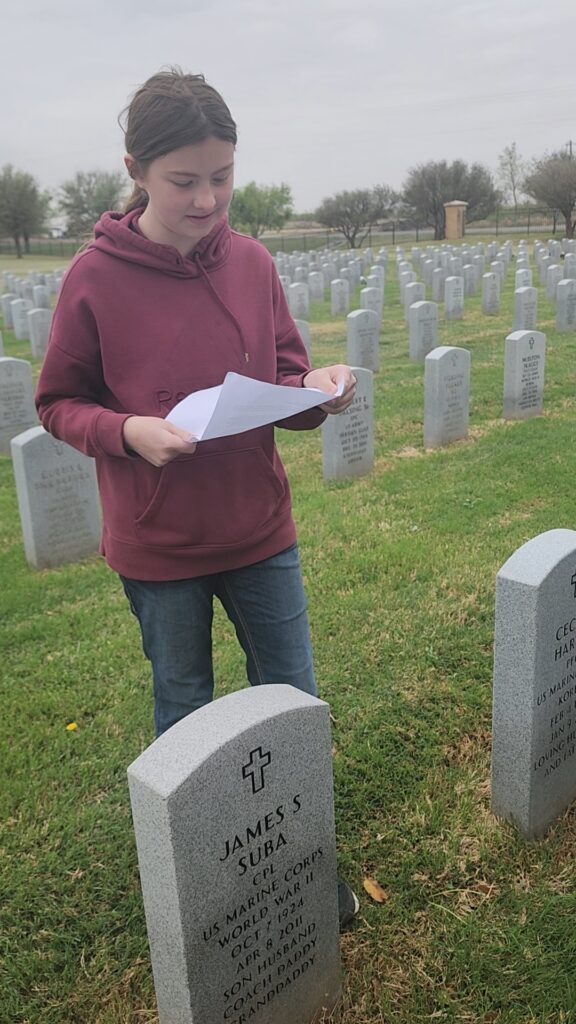
Corporal James Stanley Suba
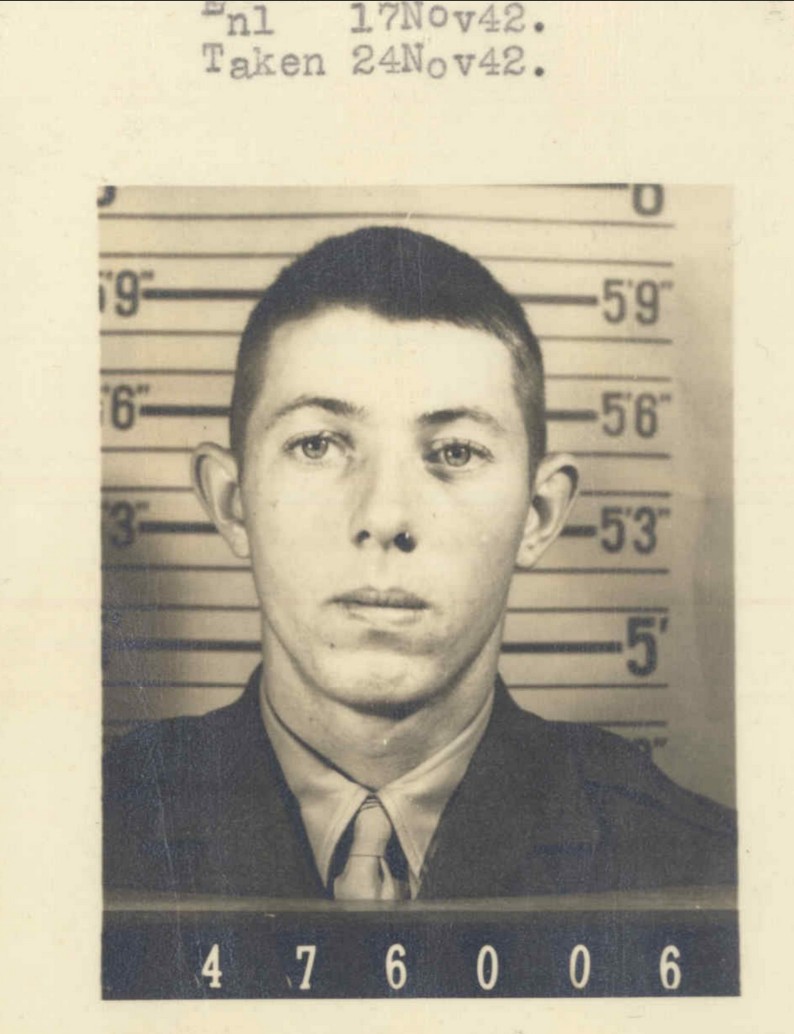
- Unit: 21st Marines, 3rd Battalion
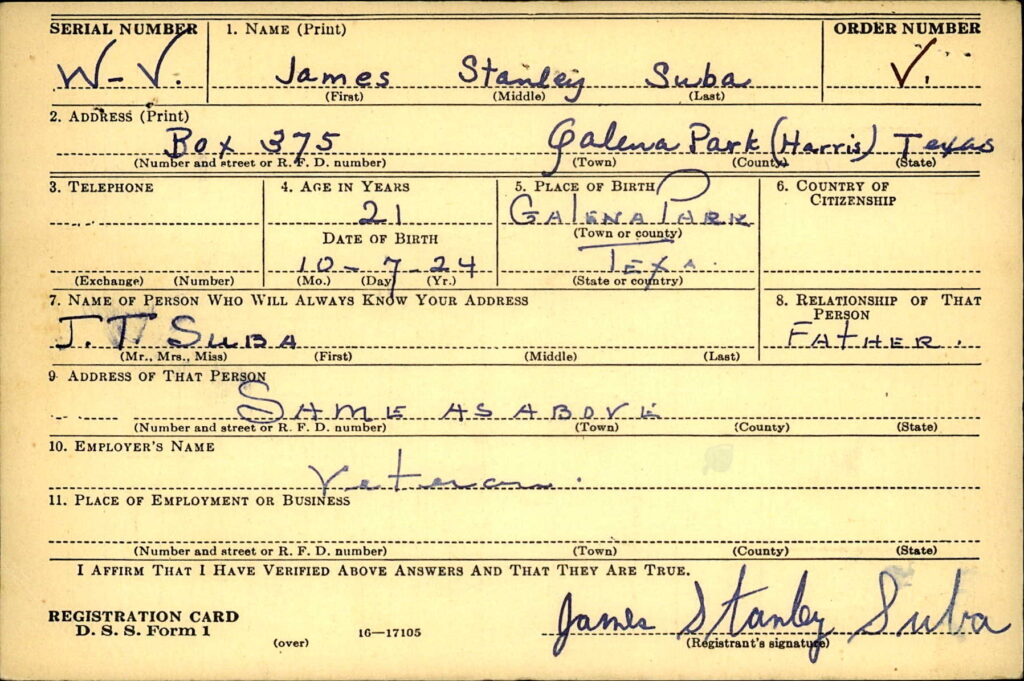
- Date of Birth: October 7, 1924
- Entered the Military: November 17, 1942
- Date of Death: April 8, 2011
- Hometown: Galena Park, Texas
- Place of Death: Abilene, Texas
- Award(s): Asiatic-Pacific Campaign Medal, World War II Victory Medal
- Cemetery: Section 1, row C, site 114. Texas State Veterans Cemetery, Abilene, Texas
Mentored by Mrs. Heather McCormick, Mr. Kelly Moore, Ms. Judy Garza
Snyder Junior High School, Snyder, Texas
2025/2026
Early Life
James Stanley Suba was born on October 7, 1924, in Galena Park, Harris County, Texas, to Joseph T. Suba and Laura Mae (Young) Suba. His father was born in Austria and immigrated in 1902. He served in the United States Army during World War I.
Suba grew up alongside his sisters, Mary Daphne and Gloria, and spent his formative years in Galena Park, a small but rapidly growing industrial community just east of Houston. He attended Galena Park High School, where he took machine shop in addition to academic classes. He was a member of baseball, football, basketball, tennis, and swimming teams. His hobbies outside of school included hunting and fishing.

Homefront
Life in Galena Park during the 1920s and 1930s was influenced by the expansion of local refineries and the Houston Ship Channel. The community was predominantly white, but demographic shifts and industrial growth brought new residents and changes to local schools and neighborhoods.
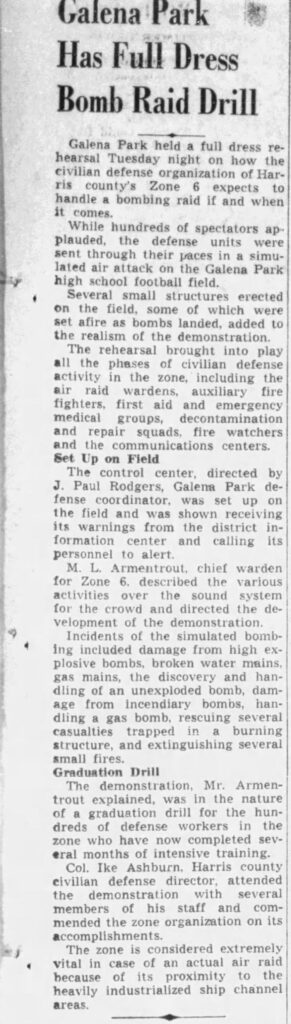
During World War II, Galena Park, Texas, underwent dramatic changes that shaped its residents’ lives. Located along the Houston Ship Channel, Galena Park became a hub for wartime industry. The area’s oil refineries, steel mills, and shipyards operated around the clock to support the Allied war effort. These industries produced fuel, steel, and ships vital to military operations overseas.
Residents—including women and minorities—found new jobs in factories and plants, filling roles that had previously been unavailable to them. Many women worked as welders, clerks, and machine operators, helping to build Liberty ships and manufacture war materials. African American and Mexican American workers gained access to better employment, though they still faced discrimination and segregation in the workplace and community.
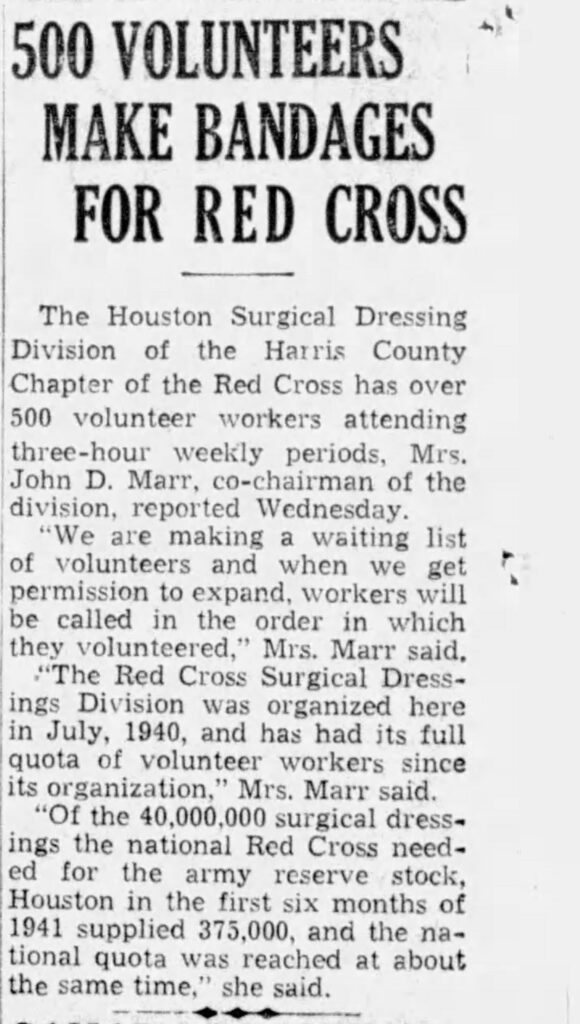
Life on the home front was defined by shared sacrifice and patriotic duty. Families participated in the rationing of food, gasoline, and rubber, and supported war bond drives and scrap metal collections. Community organizations such as the Red Cross were active, organizing blood drives, first aid classes, and care package assemblies for soldiers overseas. Schools held air-raid drills, and local newspapers published articles on how to support the war effort and maintain morale.

Military Experience
James Stanley Suba enlisted in the U.S. Marine Corps in November 1942, just as the United States was mobilizing for war in the Pacific. He trained and served as a Navy antiaircraft gun crewman, a role that placed him in units responsible for defending vital naval bases and supporting amphibious operations. This work was part of a broader Marine Corps strategy to protect U.S. installations like Pearl Harbor and Midway, which were essential hubs for launching and sustaining American operations across the Pacific.
Suba’s assignments took him to several defensive and antiaircraft battalions, including the 6th and 3rd Defense Battalions and the 3rd Defense Antiaircraft Group. These units were on constant alert to repel enemy aircraft and ships, maintain base security, and ensure the safety of troops and resources moving through these critical locations. He participated in the defense of the Midway Islands as part of the three-inch anti-aircraft group.
Suba earned promotions up to the rank of Corporal and spent almost two years of his enlistment overseas. He was awarded the Asiatic-Pacific Campaign Medal and the Victory Medal before being discharged in January 1946 at Camp Pendleton, California.
Veteran Experience
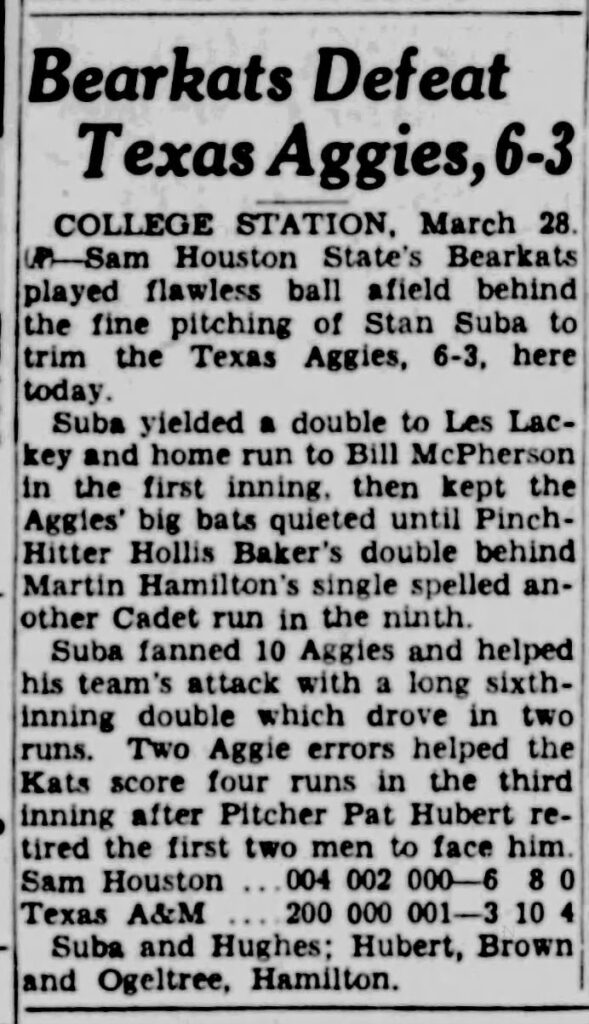
After leaving the Marine Corps in January 1946, James Stanley Suba returned to Texas and began building a life rooted in service and community. He married Patricia Ann Reese on September 13, 1950, in Fort Bend, Texas. In May 1951, he completed his master’s degree at Sam Houston State University, further preparing himself for a career in education. He played semi-professional baseball as a pitcher in 1954 for the Bryan/Del Rio Indians and Port Arthur Sea Hawks. Together, he and Pat raised four children: Lea, Tricia, Joseph “Strech,” and Logan.
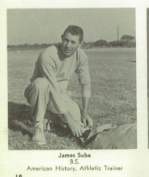
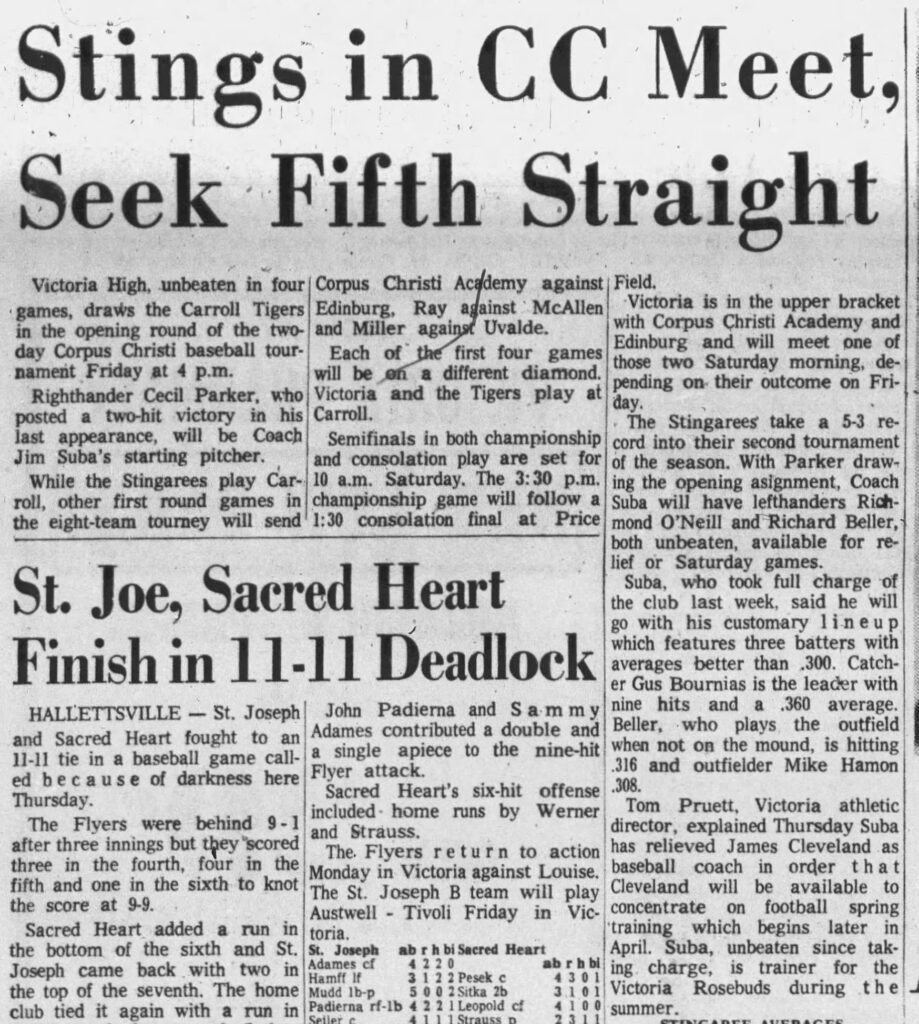
Suba worked as a teacher and coach in several Texas school districts, ultimately retiring from Sheldon ISD in 1985. Throughout his decades in education, “Coach Suba” became known for his dedication to students and athletes. His influence extended beyond the classroom and playing field—he was described as a mentor who inspired many young people.
His passion for baseball made him a beloved figure in Houston’s professional baseball scene. For 13 years, he pitched batting practice for the Houston Colt .45s and Astros. His commitment to the sport and the local teams made him well-known among both players and fans.
Commemoration
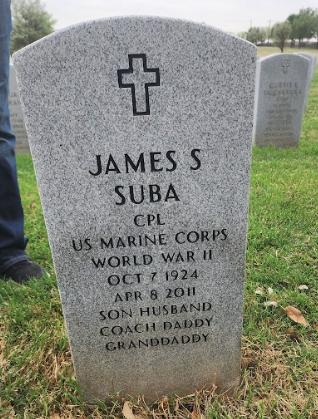
James Stanley Suba passed away on April 8, 2011, in Abilene, Texas. He was laid to rest at the Texas State Veterans Cemetery. His legacy is evident in his family, as well as the many students, athletes, and community members whose lives he touched. Known for his kindness, dedication, and generosity, he is remembered not only as a Marine veteran but as a leader and role model in his community.
Bibliography
Primary Sources
“500 Volunteers Make Bandages For Red Cross.” The Houston Chronicle [Houston, Texas], January 7, 1942. Newspapers.com (1198401602).
“Bearkats Defeat Texas Aggies, 6-3.” The Beaumont Enterprise [Beaumont, Texas], March 29, 1950. Newspapers.com (196997344).
“BF Goodrich Silvertown Stores.” Advertisement. The Houston Chronicle [Houston, Texas], January 7, 1942. Newspapers.com (1194109704).
Deutsch, D. H. “Heard in the Lobbies.” Jewish Herald-Voice [Houston, Texas], July 22, 1943. https://texashistory.unt.edu/ark:/67531/metapth1102867/m1/6/?q=%22Galena%20Park%22.
“Galena Park Has Full Dress Bomb Raid Drill.” The Houston Post [Houston, Texas], June 10, 1942. Newspapers.com (1194130914).
“Good Neighbor Group.” The Houston Post [Houston, Texas], December 1, 1943. Newspapers.com (1194366101).
“Here Are the Forms Used in Defense Bond Club Setup.” The Houston Chronicle [Houston, Texas], January 19, 1942. Newspapers.com (1198402699).
“James Stanley ‘Coach’ Suba.” The Houston Chronicle [Houston, Texas], April 17, 2011. Newspapers.com (1198095601).
James Stanley Suba, Official Military Personnel File, Department of the Navy, National Archives and Records Administration – St. Louis.
James Stanley Suba, Report of Separation, Department of the Navy, National Archives and Records Administration – St. Louis.
James Stanley Suba. World War II Draft Cards Young Men, 1940-1947. Digital Images. https://ancestryclassroom.com.
Joseph Suba. Texas, U.S., Birth Certificates, 1903-1932. Digital Images. https://ancestryclassroom.com.
“L.M. Robertson Heads Red Cross Transportation Drive.” The Houston Post [Houston, Texas], April 7, 1943. Newspapers.com (1194634239).
“NE School to Share Costs of Extending Sterlingshire.” Houston Post [Houston, Texas], November 20, 1969. Newspapers.com (1196503374).
“Officer Assigned to Camp at Huntsville.” The Houston Chronicle [Houston, Texas], July 14, 1943. Newspapers.com (1199180087).
Rivers, Ed. “Rate Your Date.” Houston Post [Houston, Texas], November 6, 1966. Newspapers.com (1196532631).
“Sam Houston State Gives Degrees to 388 Tonight.” The Houston Chronicle [Houston, Texas], May 25, 1951. Newspapers.com (1199450594).
“Stevenson Says Gas Rationing in Texas To Cause Bootlegging, Loss of Revenue.” The Houston Post [Houston, Texas], September 11, 1942. Newspapers.com (1194227505).
“Stings in CC Meet, Seek Fifth Straight.” Victoria Advocate [Victoria, Texas], April 1, 1960. Newspapers.com (196996257).
“Sweeny Oil Keeps War Engines Going.” The Houston Post [Houston, Texas], March 31, 1943. Newspapers.com (1194632535).
Texas. Harris County. 1930 U.S. Census. Digital Images. http://ancestryclassroom.com.
Texas. Harris County. 1940 U.S. Census. Digital Images. http://ancestryclassroom.com.
“This Time Tradition is No Bar, and Thousands of Women are Flocking to Defense Services.” The Houston Chronicle [Houston, Texas], June 7, 1942. Newspapers.com (1198374922).
“War Effort Served by Texas Consolidated Line.” The Houston Post [Houston, Texas], April 7, 1943. Newspapers.com (1194634239).
“Wear a Star for Men at War.” The Houston Post [Houston, Texas], November 22, 1942. Newspapers.com (1194618338).
“We’re Brothers In Arms Now.” The Houston Chronicle [Houston, Texas], October 14, 1943. Newspapers.com (1198836907).
“Women at Work.” The Houston Post [Houston, Texas], June 26, 1943. Newspapers.com (1194260608).
Women With Plane in Love Field. Photograph. April 1943. Dorothy Christenson Collection, Portal to Texas History, University of North Texas Libraries. https://texashistory.unt.edu/ark:/67531/metapth102959.
Secondary Sources
“History.” City of Galena Park. Accessed November 16, 2025. https://www.cityofgalenapark-tx.gov/2167/History.
Hulse, James. “Fidelity Schools.” Historical Marker Database. Last modified May 27, 2024. Accessed November 25, 2025. https://www.hmdb.org/m.asp?m=247360.
“James Stanely ‘Coach’ Suba.” Find A Grave. Accessed March 9, 2026. https://www.findagrave.com/memorial/68184388/james-stanley-suba.
“James Stanley Suba.” Veterans Legacy Memorial, National Cemetery Administration. Accessed May 13, 2026. https://www.vlm.cem.va.gov/JAMESSTANLEYSUBA/8064ed.
McCroskey, Vista K. “Galena, TX.” Handbook of Texas Online. Accessed November 26, 2025. https://www.tshaonline.org/handbook/entries/galena-tx.
Ramirez, Mary. “Galena Park, TX.” Handbook of Texas Online. Accessed November 16, 2025. https://www.tshaonline.org/handbook/entries/galena-park-tx.
Simon, Pat. “Hispanic troops struggled on two fronts: combat and discrimination.” Kris News 6 Corpus Christi. Last modified September 27, 2022. Accessed November 25, 2025. https://www.kristv.com/veteransinfocus/hispanic-troops-struggled-on-two-fronts-combat-and-discrimination.
Stingaree. Victoria, Texas: Victoria High School, 1960. https://www.classmates.com/siteui/yearbooks/239555?page=22.
“A Tour of Houston’s Water and Oil.” The Center for Land Use Interpretation. Last modified Spring 2009. Accessed November 25, 2025. https://clui.org/newsletter/spring-2009/tour-houstons-water-and-oil.
Vickery, Bob. “A Life Shaped by the Great Suburban Experiment.” Circling the News. Last modified July 15, 2020. Accessed November 25, 2025. https://www.circlingthenews.com/a-life-shaped-by-the-great-suburban-experiment/.
This profile was funded by a grant from the United States Department of Veterans Affairs. The opinions, findings, and conclusions stated herein are those of the author and do not necessarily reflect those of the United States Department of Veterans Affairs.