

Corporal August Joseph Tramonte
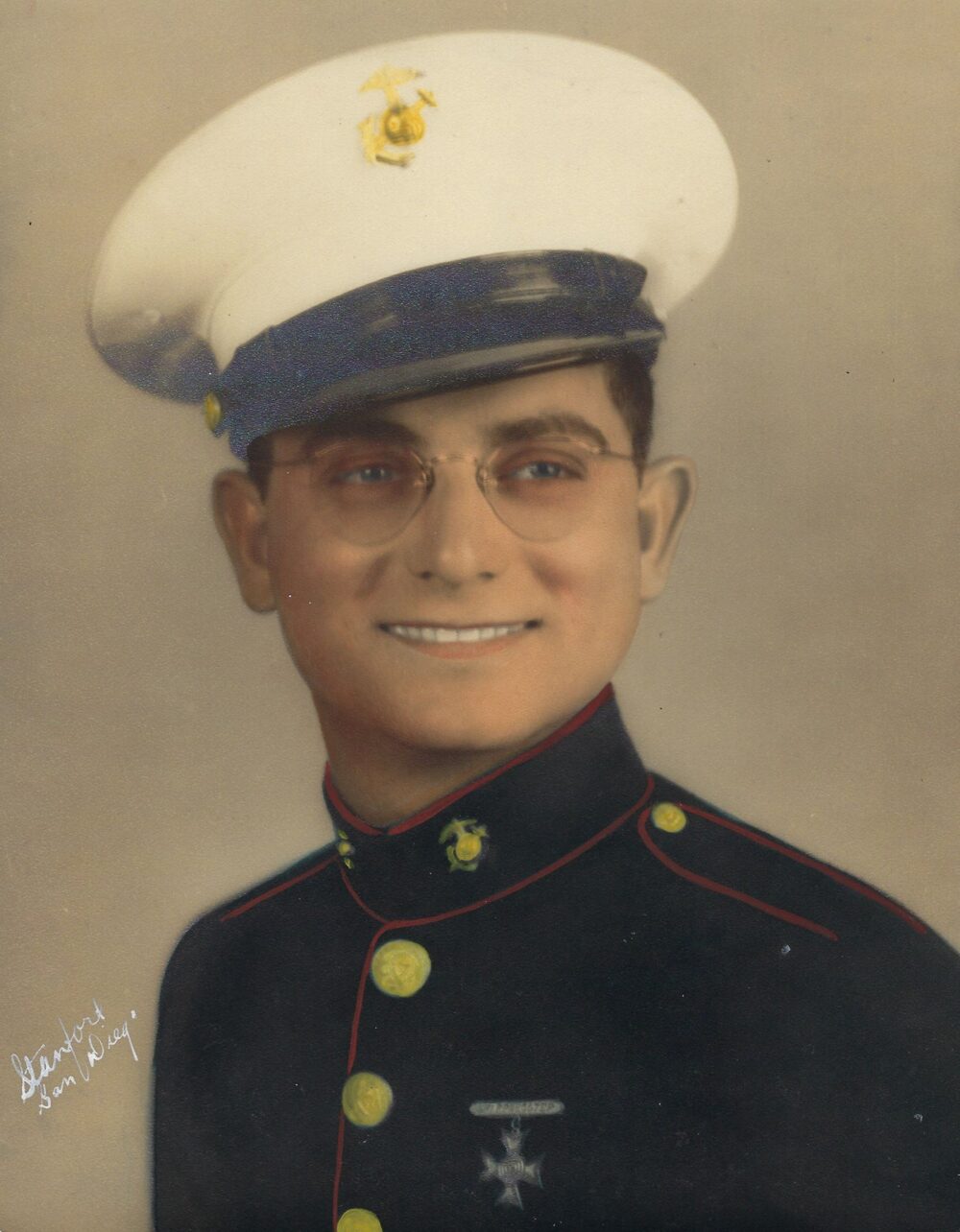
- Unit: First Marine Air Wing
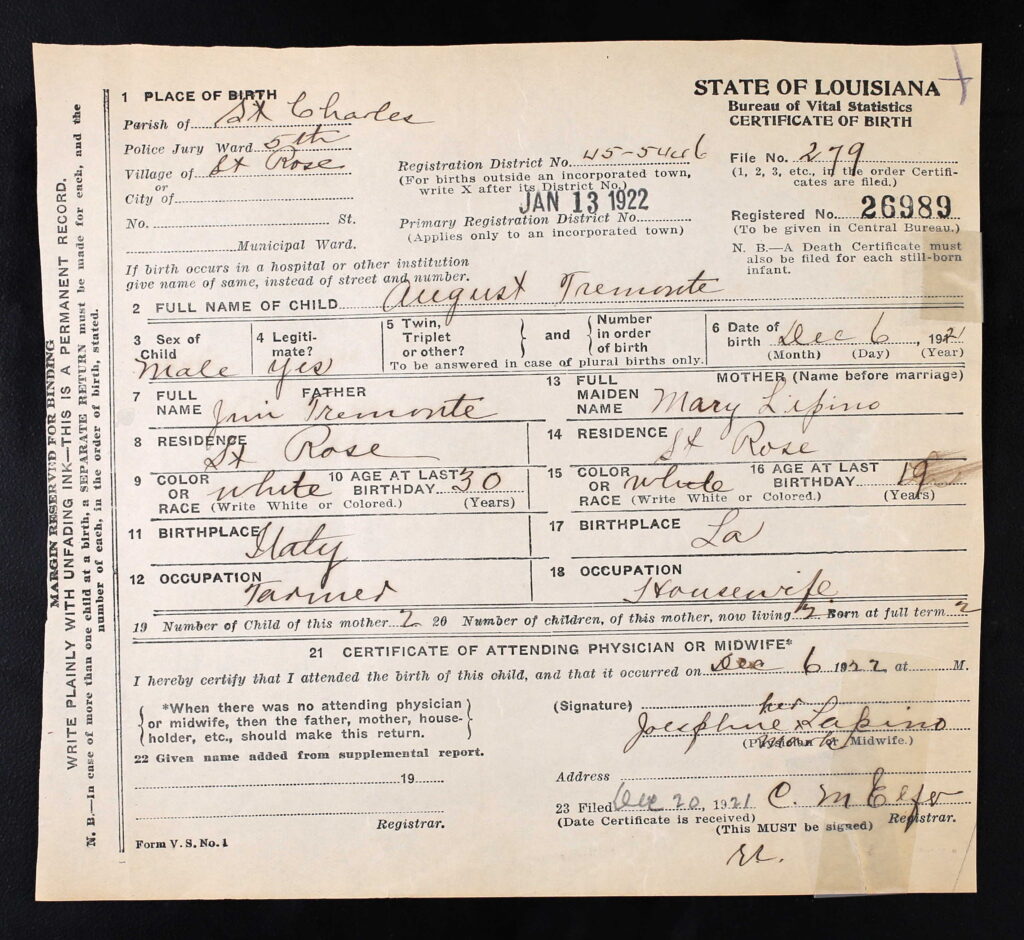
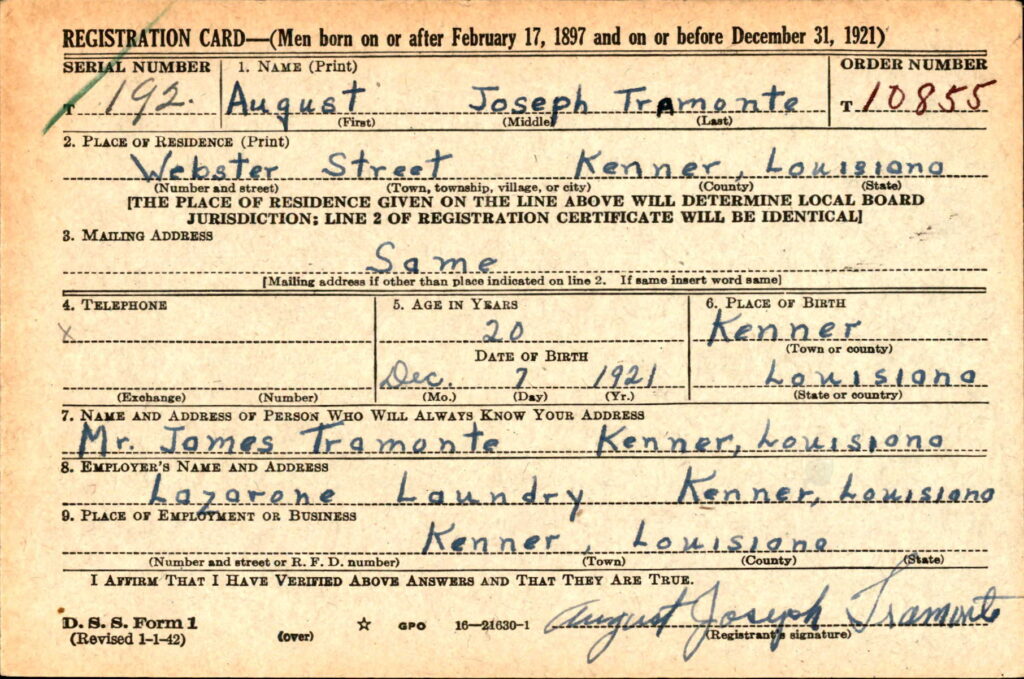
- Date of Birth: December 7, 1921
- Entered the Military: November 9, 1942
- Date of Death: March 5, 2018
- Hometown: Kenner, Louisiana
- Place of Death: Canton, Georgia
- Cemetery: Section 11, Grave 529. Georgia National Cemetery, Canton, Georgia
Mentored by Mrs. April Balenger
Arts Innovation Magnet Program, Winder, Georgia
2025/2026
Early Life
August Joseph Tramonte was born on December 7, 1921, to James G. Tramonte and Mary (Lapino) Tramonte. His father and his mother’s parents were all born in Italy. Tramonte had an older sister, Marie, and a younger brother, Anthony. Mary Tramonte died in October 1931, when Tramonte was only nine years old.
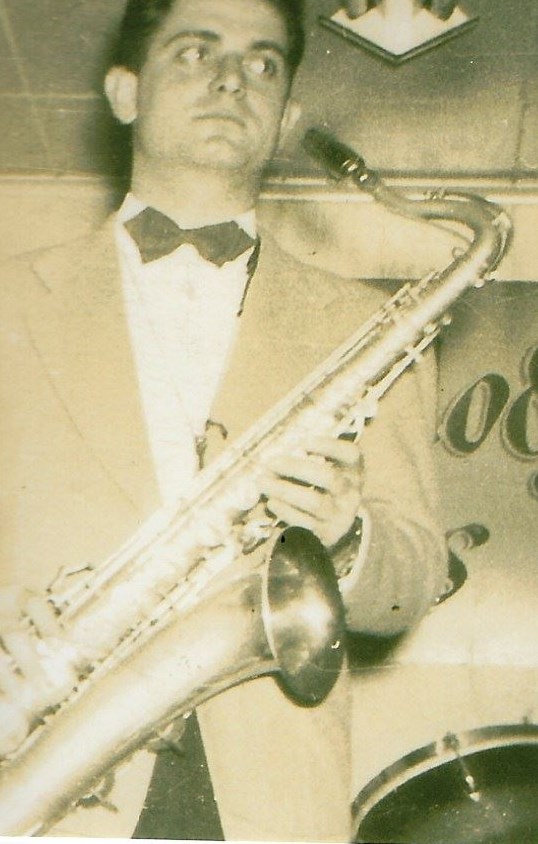
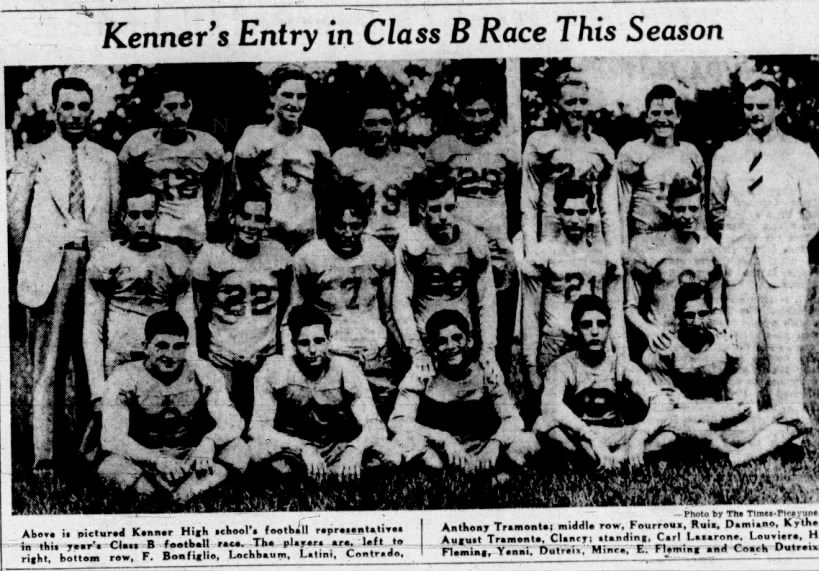
Tramonte attended Kenner High School, where he played football and earned a letter in 1937. He also played the tenor saxophone and performed a solo at his graduation ceremony in 1938. According to a 2018 interview, Tramonte also belonged to a band that played in restaurants and dance halls in Westwego on the weekends.
After graduating from high school, Tramonte worked at the Lazerene Laundry in Kenner. He also worked at a metal drum plant making barrels for the U.S. Army.
Homefront
Tramonte grew up in the small agricultural town of Kenner, Louisiana, located between the Mississippi River and Lake Pontchartrain, just outside New Orleans. In 1940, it had a population of 2,375 residents. That year, it was selected as the site for Moisant Field, a new municipal airport. The airport was built during the war years and opened in 1946. In 1960, it was renamed the New Orleans International Airport.
One major contribution the New Orleans area made to the war effort was the construction of Higgins Boats. Originally built to navigate the Louisiana bayous, Higgins Industries modified the design of its shallow-draft boats and won a U.S. Navy contract. By the end of the war, they had manufactured more than 20,000 boats at seven plants in the New Orleans area. This added over 20,000 jobs to the region. The boats were famously used in the D-Day Invasion of Normandy in June 1944.

Military Experience
Tramonte voluntarily enlisted in the United States Marine Corps in 1942. He was assigned to San Diego for boot camp. It was his first train ride. After eight tough weeks in boot camp, Tramonte felt there was nothing he could not do physically. He later attended marksmanship training at Camp Matthews in La Jolla, California.
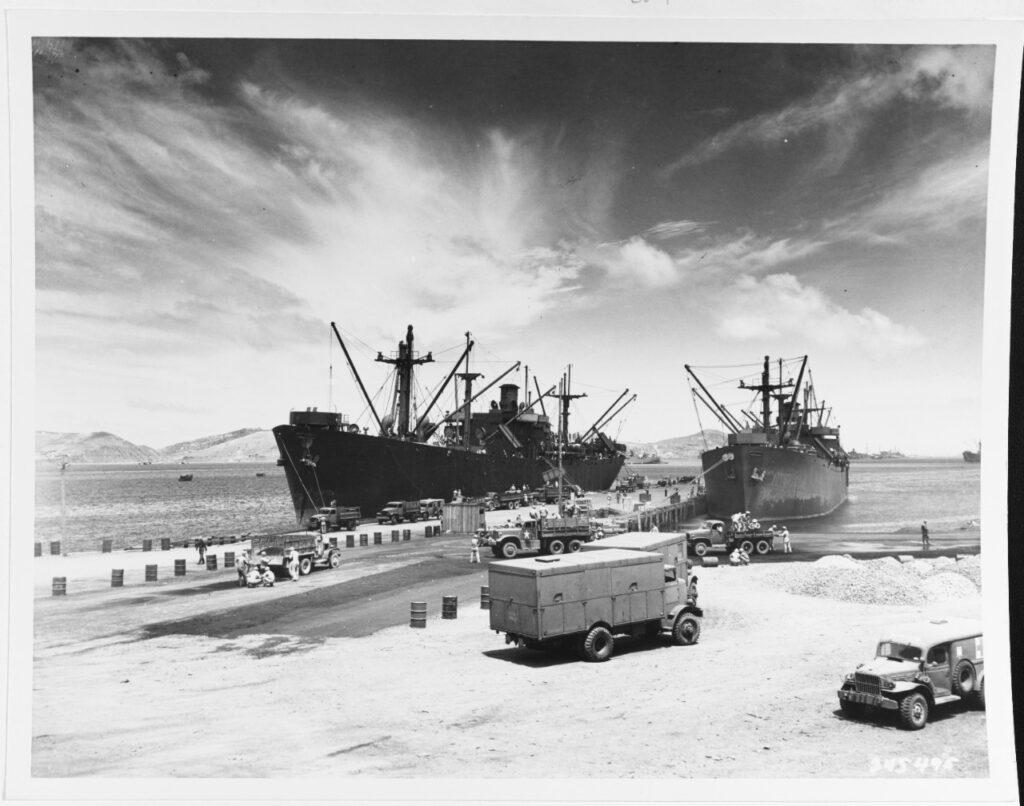
Following boot camp, Tramonte shipped out to New Caledonia aboard a converted freighter. During the 14-day voyage, Marines and Navy sailors had to share bunks. Many of the men experienced severe seasickness on the journey. In New Caledonia, the Marines faced heat and mosquitoes. At first, rations were scarce, but they began getting mutton from Australia.
Tramonte served with the 1st Marine Aircraft Wing during the Bougainville campaign. He recalled working with Corsairs and DC-3s (known in Marine Corps service as the RFD) during his two years in the South Pacific. In addition to his other duties, Tramonte utilized his musical skills serving as a bandsman. Tramonte was promoted to his final rank of corporal before his return to civilian life.
Veteran Experience
After the war, Tramonte returned to Kenner. Because jobs were scarce, he considered joining the Marine Corps Reserves. Tramonte even went with a friend to the recruiting office. However, when his friend was rejected for being too short, Tramonte said, “Well, if you don’t take him, I’m not signing up.” Instead, he enrolled at Soule Business College and began a career in banking.
Tramonte also continued playing his saxophone with the Melody Lads. It was during one of his gigs that he met the love of his life, Genevieve Jean Tardiff. They were married in 1949 and enjoyed sixty-seven years together until her death in 2017. The couple had one child, James, in 1951.
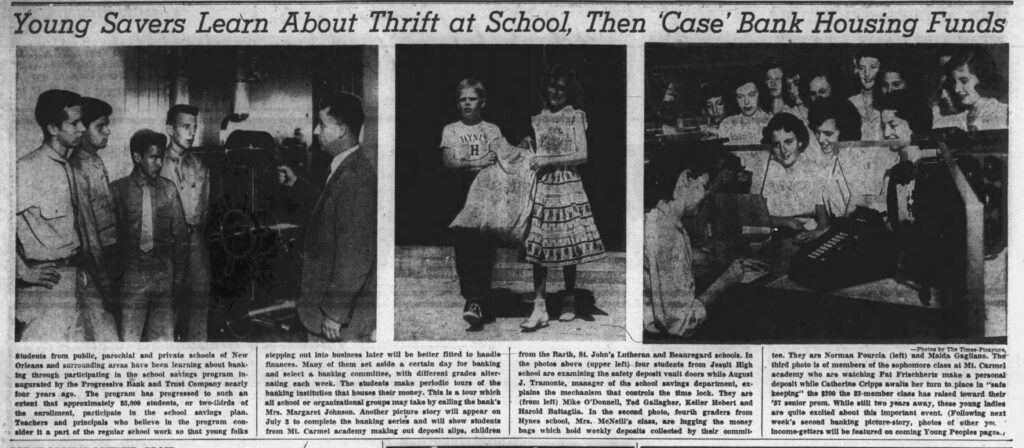
Tramonte contributed to his community in many ways. He brought bank programs promoting saving into local schools and was a founding parishioner of St. Matthew the Apostle Catholic Church in River Ridge, Louisiana, in 1959. For his service, the Archdiocese of New Orleans awarded him the Order of St. Louis IX.
In 1990, the Tramontes moved to Atlanta, Georgia, to be closer to their extended family, which would grow to include five grandchildren and sixteen great-grandchildren. Tramonte joined St. Ann’s Parish in Marietta and served as a lector, sacristan, and member of the Knights of Columbus. He also volunteered with Meals on Wheels.

Commemoration
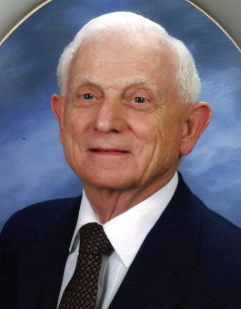
August Joseph Tramonte passed away on March 5, 2018. He was laid to rest with his wife at the Georgia National Cemetery. He left behind a legacy of service to his country and community as well as love for his large family. His oral history was recorded by Susan Caolo of the Kennesaw Mountain National Battlefield Park and is memorialized in the Veterans History Project at the Library of Congress.


Bibliography
Primary Sources
“August Joseph Tramonte.” Dignity Memorial. Accessed October 30, 2025. https://www.dignitymemorial.com/obituaries/marietta-ga/august-tramonte-7782360.
August Joseph Tramonte. World War II Draft Cards Young Men, 1940-1947. Digital Images. https://ancestryclasroom.com.
August Tremonte. Louisiana, U.S., State Birth Records, 1911-1923. Digital Images. https://ancestryclasroom.com.
Corson. SCC 245495 Noumea, New Caledonia. New dock built near the nickel docks, with two “Liberty” ships and trucks. Photograph. February 12, 1943. NH Series Collection, Naval History and Heritage Command (SC 245495). https://www.history.navy.mil/content/history/nhhc/our-collections/photography/numerical-list-of-images/nhhc-series/nh-series/SC-245000/SC-245495.html.
“How Well Do You Know Your War Bonds? First National Bank of Crowley Advertisement.” The Crowley Post-Signal [Crowley, Louisiana], May 24, 1943. Newspapers.com (448465289).
“Kenner’s Entry in Class B Race This Season.” The Times-Picayune [New Orleans, Louisiana], Oct 24, 1937. Newspapers.com (196615019).
Louisiana. Jefferson Parish. 1930 U.S. Census. Digital Images. https://ancestry.com.
Louisiana. Jefferson Parish. 1940 U.S. Census. Digital Images. https://ancestry.com.
Louisiana. Jefferson Parish. 1950 U.S. Census. Digital Images. https://ancestry.com.
“Over the River.” The Times-Picayune [New Orleans, Louisiana], May 29, 1938. Newspapers.com (1250652685).
“Rules and Regulations to Govern During Blackouts and When Air Raid Alarms are Sounded.” The Times [Shreveport, Louisiana], June 29, 1943. Newspapers.com (209215960).
Tramonte, Joseph August. “August Joseph Tramonte Collection.” Interview by Susan Caolo, Veterans History Project, Library of Congress. https://www.loc.gov/item/afc2001001.112346/.
“Young Savers learn about thrift at School, then ‘Case’ Bank Housing Funds.” The Times-Picayune
[New Orleans, Louisiana], June 26, 1955. Newspapers.com (1250448358).
Secondary Sources
“August Joseph Tramonte.” Find a Grave. Accessed November 1, 2025. https://www.findagrave.com/memorial/187828425/august-joseph-tramonte.
“August Joseph Tramonte.” Veterans Legacy Memorial, National Cemetery Administration. Accessed November 1, 2025. https://www.vlm.cem.va.gov/AUGUSTJOSEPHTRAMONTE/DE08692.
Bauer, Craig A. “From Burnt Canes to Budding City: A History of the City of Kenner, Louisiana.” Louisiana History: The Journal of the Louisiana Historical Association. Volume 23, Number 4 (1982): pp. 353-381. https://www.jstor.org/stable/4232211?read-now=1&seq=7#page_scan_tab_contents.
“History.” City of Kenner, Louisiana. Accessed December 7, 2025. https://www.kenner.la.us/252/History.
Kim Guise. “When Higgins Boats Invaded New Orleans’ Lakefront.” Published August 1, 2024. Accessed April 30, 2026. https://www.nationalww2museum.org/war/articles/when-higgins-boats-invaded-new-orleans-lakefront.
“New Orleans in the Second World War.” The National WWII Museum. Published July 12, 2017. Accessed December 7, 2025. https://www.nationalww2museum.org/war/articles/new-orleans-second-world-war.
Raskow, Steven W. U.S. Fights Japanese for Bougainville Island.” OC Today-Dispatch. Updated November 9, 2003. Accessed January 23, 2026. https://www.octodaydispatch.com/column_posts/world_war_ii/u-s-fights-japanese-for-bougainville-island/article_91bb09b6-7f3d-11ee-9d63-8bc383e4d63c.html.
Sanson, Jerry P. “World War II.” 64 Parishes. Accessed December 7, 2025. https://64parishes.org/entry/world-war-ii-adaptation.
This profile was funded by a grant from the United States Department of Veterans Affairs. The opinions, findings, and conclusions stated herein are those of the author and do not necessarily reflect those of the United States Department of Veterans Affairs.