

Private Anthony Peter Testa
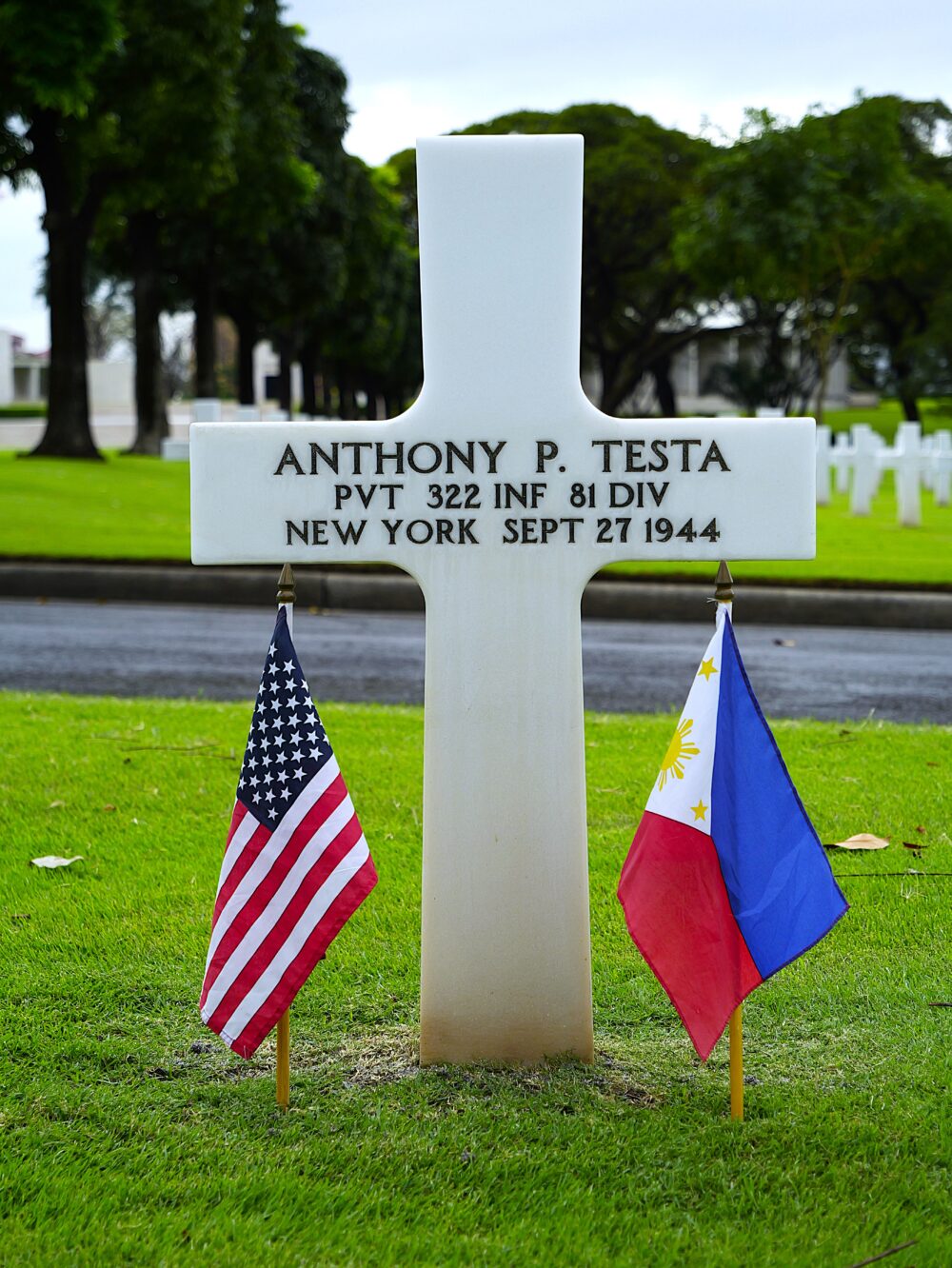
- Unit: Company K, 322nd Infantry Regiment, 81st Infantry Division
- Service Number: 32987365
- Date of Birth: February 23, 1918
- Entered the Military: July 20, 1943
- Date of Death: September 27, 1944
- Hometown: Brooklyn, New York
- Place of Death: Angaur Island, Palau Islands
- Award(s): Purple Heart
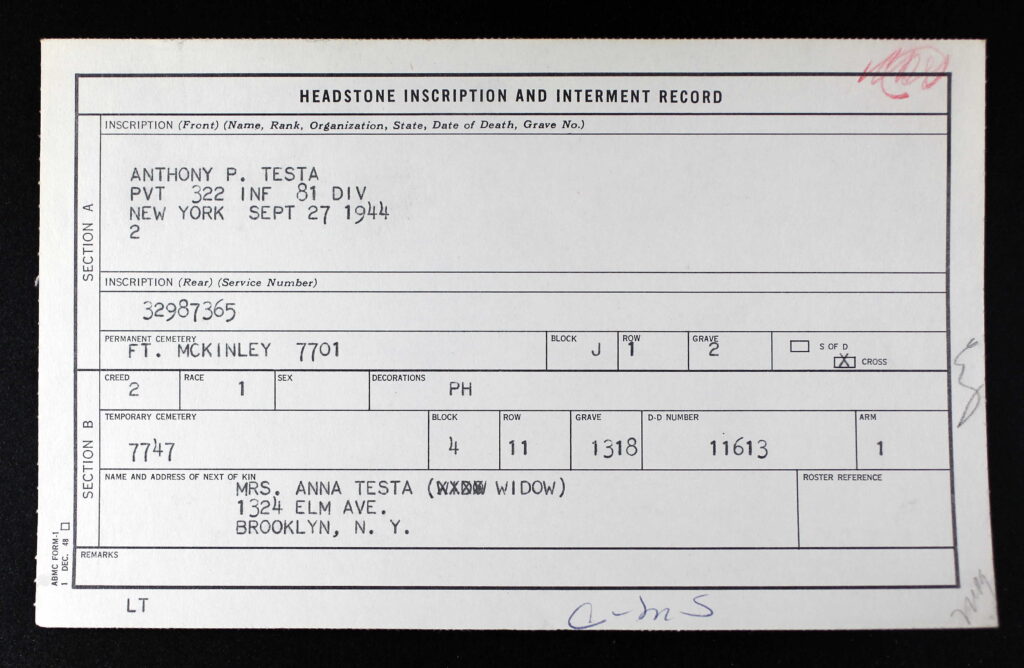
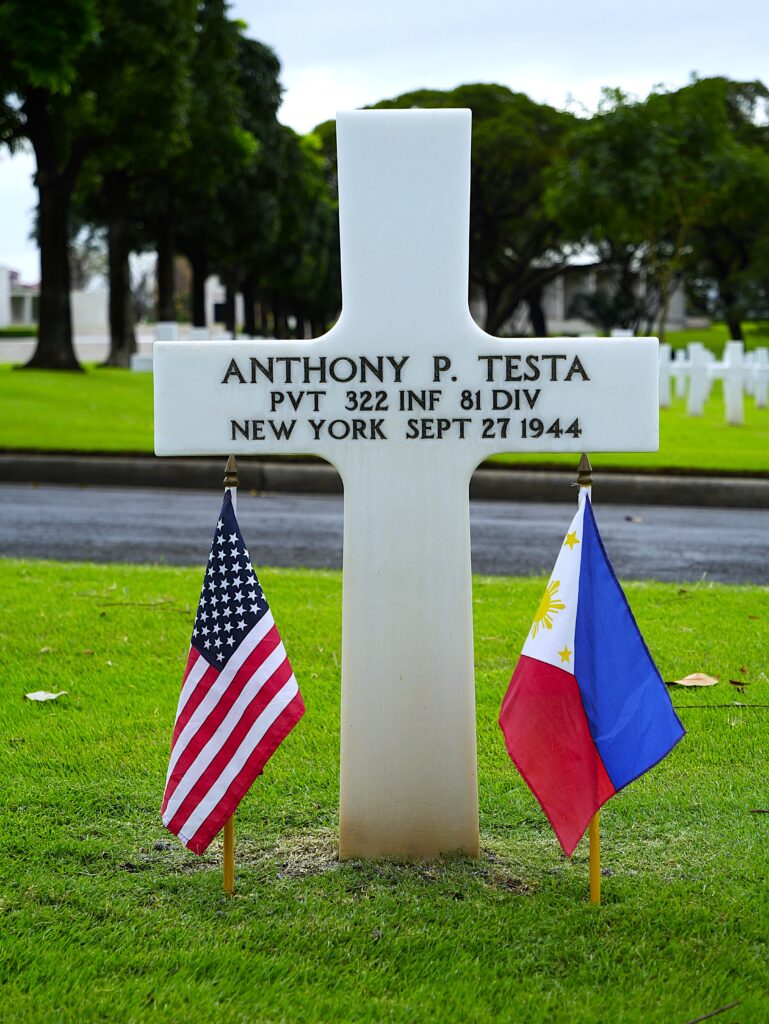
- Cemetery: Plot J, Row 1, Grave 2. Manila American Cemetery, Manila, Philippines
Jefferson Middle School, Albuquerque, New Mexico
2025/2026
Early Life
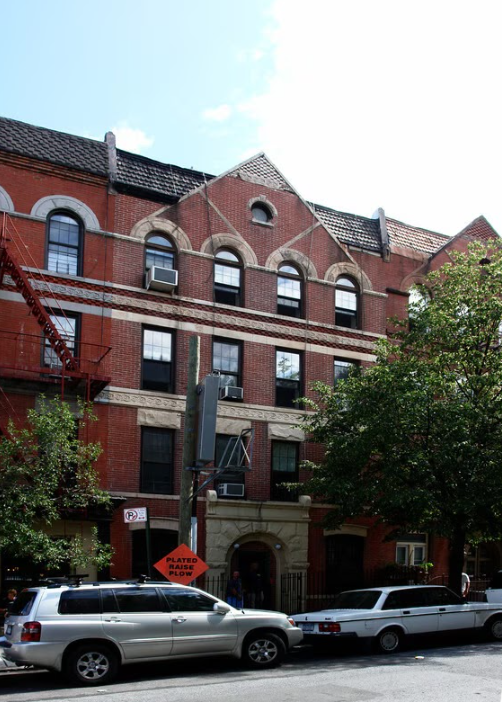
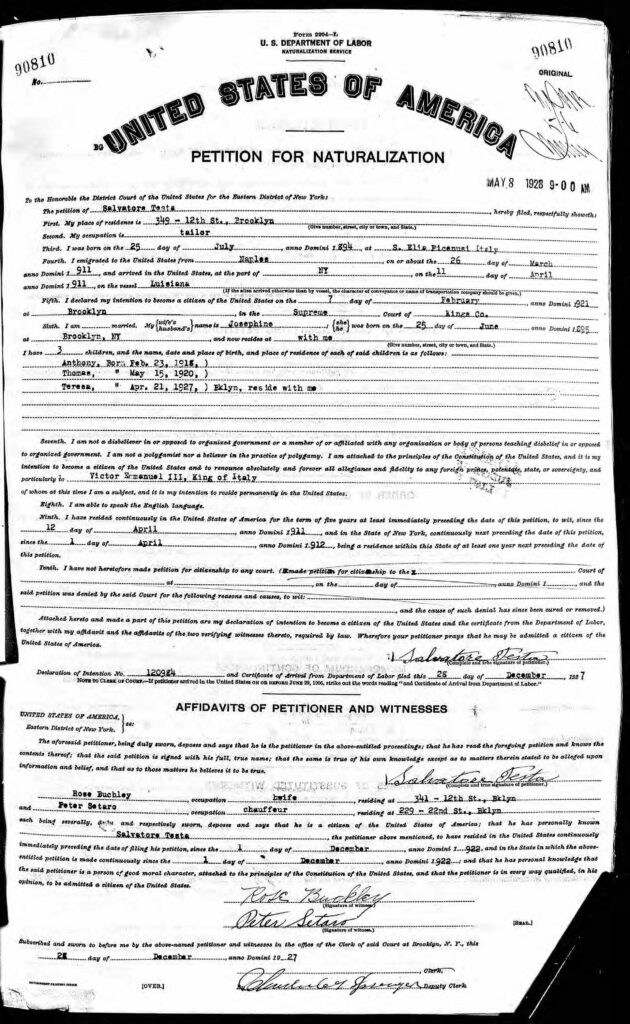
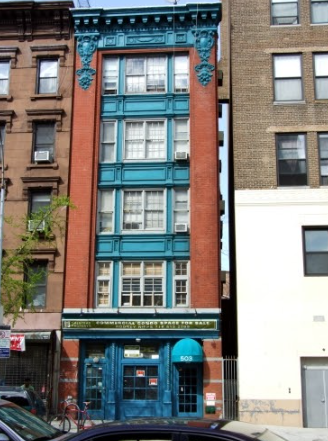
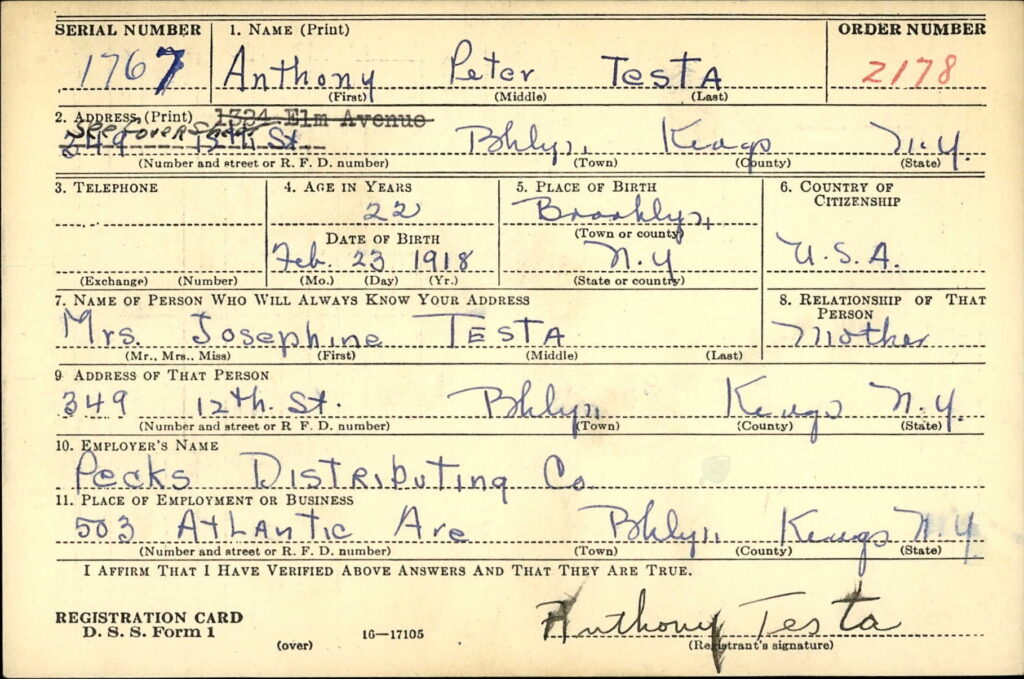
Anthony Peter Testa was born on February 23, 1918, in Brooklyn, New York. His father, Salvatore, was an Italian immigrant and a tailor of “gent’s clothing.” His mother, Josephine (Setaro), was a homemaker and first-generation American born in New York. Anthony was the oldest of three children born to Salvatore and Josephine. His brother, Thomas, was four years younger, and his sister, Teresa, ten years his junior. The family lived in an apartment at 349 12th Street in Brooklyn.
After completing four years of high school (around 1936), Anthony began working for Peck Advertising Distribution in Brooklyn. He registered for the draft on October 16, 1940, before the war began. Later, in 1943, Anthony is noted as being a semi-skilled foundry worker on his July 20, 1943, enlistment record. Anthony married Anna Elizabeth DiMelfi in 1941, with records showing them acquiring their marriage license on August 18, 1941.

Homefront
During World War II, Brooklyn and New York City as a whole were epicenters of patriotic activity. Additionally, the entire area was at the forefront of military and industrial support of the war efforts. Brooklyn’s population in 1940 was approximately 2.7 million people.
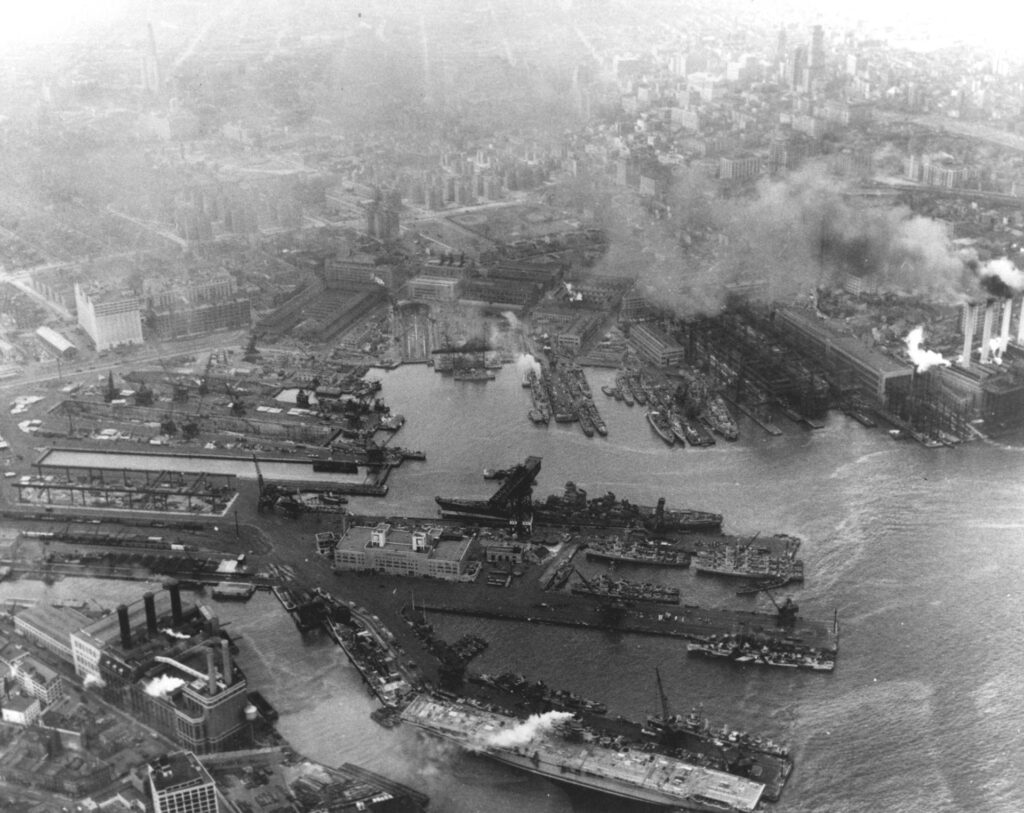
The Brooklyn Navy Yard began supporting United States naval operations in 1801 under President John Adams. The Navy Yard doubled in size from 1939 to 1945 in response to the increased demands of World War II. Known as the “Can Do Shipyard,” it built battleships such as USS Missouri and aircraft carriers while repairing over 5,000 ships. The yard operated 24 hours a day, seven days a week, with women and minority workers playing key roles. By the end of the war, the Brooklyn Navy Yard employed over 70,000 people.
The Brooklyn Army Terminal began operations in 1918, supplying troops. Originally known as the U.S. Army Military Ocean Terminal, it employed more than 25,000 military and civilian personnel during World War II. The base was closed in 1966 and purchased by the city in 1981.
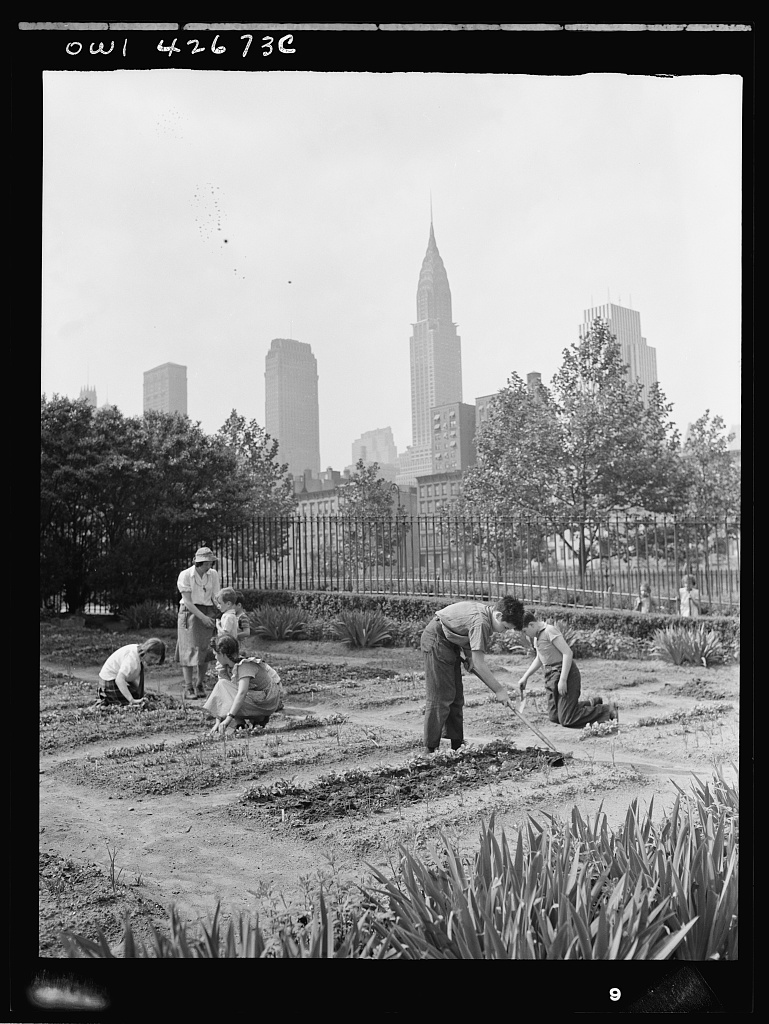
In addition to its government war efforts, Brooklyn was fully committed to setting the highest example for patriotism and support for the country and troops through civilian programs. The people of Brooklyn began Relief or Subsistence gardens as part of the Works Progress Administration during the 1930s. These efforts transitioned and grew in response to the war. The Civilian Defense Volunteer Office (CDVO) urged people to use all of the available vacant space. They provided education in crop rotation, companion planting, and canning and preserving. By 1945, 50,000 gardeners were supplying Brooklyn with food from over 17,000 victory gardens.
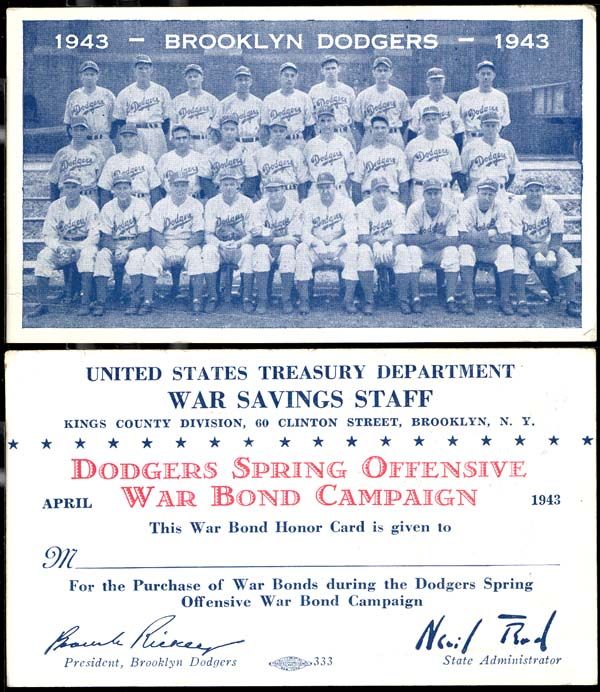
New York’s residents held innumerable events and activities to raise money through war bond drives, including one in Times Square and a 1943 effort by the Brooklyn Dodgers. In Brooklyn itself, the United Service Organization (USO) held weekly events, including dances, to provide a “taste of home” to the troops and Navy Yard workers. Scrap metal drives were an ongoing part of the war effort. Brooklyn had continual drives, and in support of the collection of scrap metal, the Brooklyn Dodgers accepted scrap metal in exchange for game admission to Ebbets Field.
Military Experience
After enlisting in July 1943, Testa was added to the roster of the 322nd Infantry Regiment, 81st Infantry Division, Company K, and completed Pacific Jungle Combat Training on the island of Oahu, Hawai’i. The unit shipped out of Hawai’i on August 12, 1944, bound for the Palau Islands.
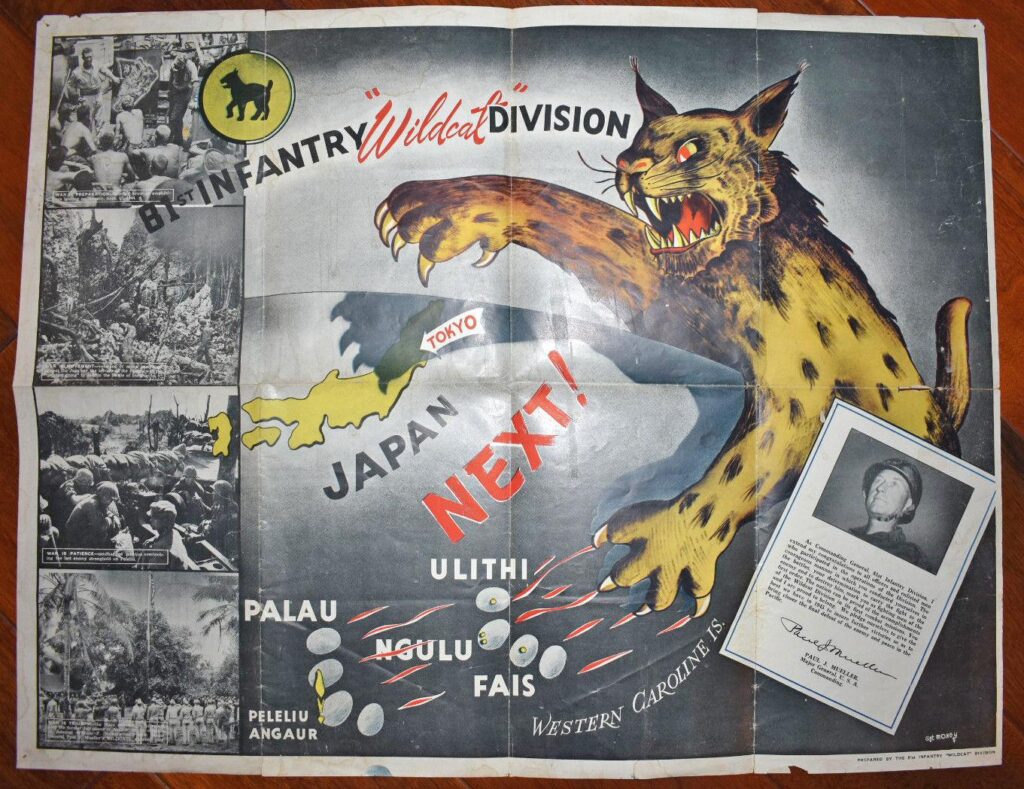
By 1944, the United States’ island-hopping campaign was moving ever closer to the Japanese home islands. The next step, commanders decided, would be the Palau Island Group. In October 1942, the 81st Infantry Division (nicknamed the Wildcats), including the 321st, 322nd, and 323rd Infantry Regiments, began training for deployment to the Pacific and would eventually be tasked with landing on the islands and retaking them from the Japanese.
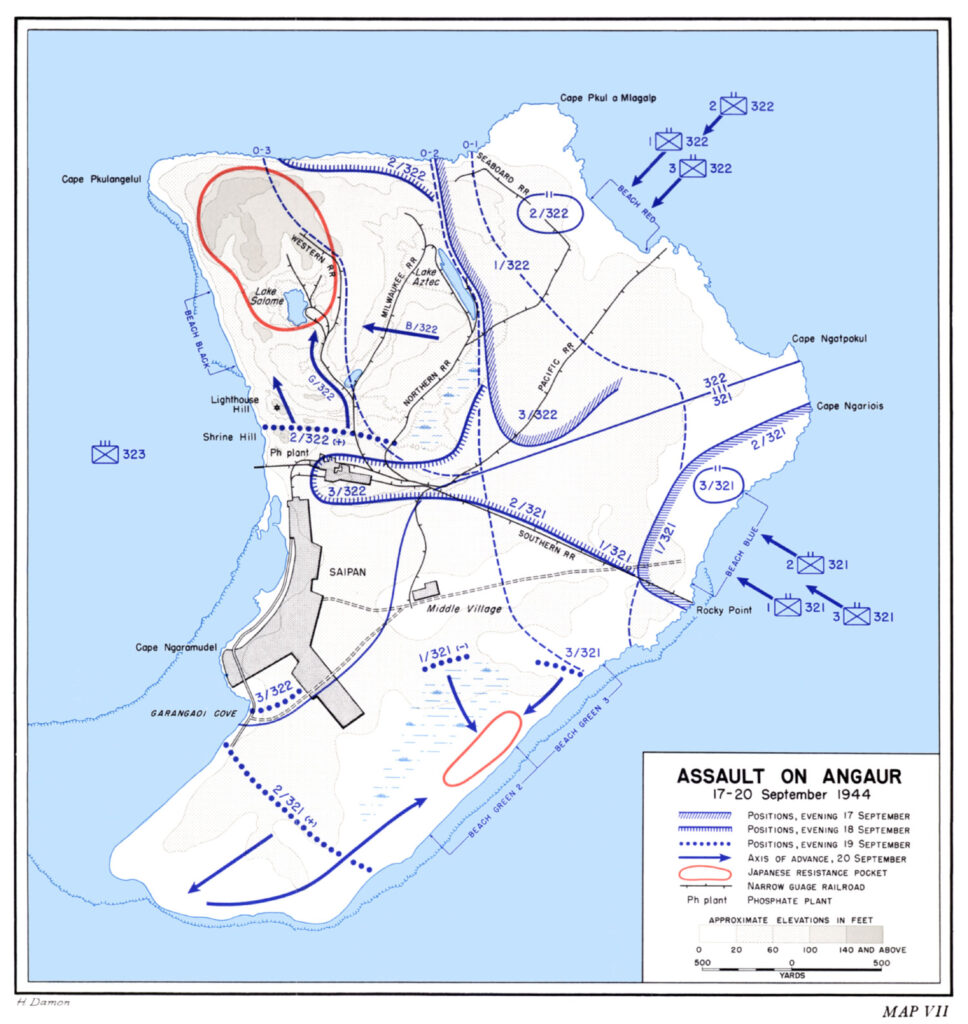
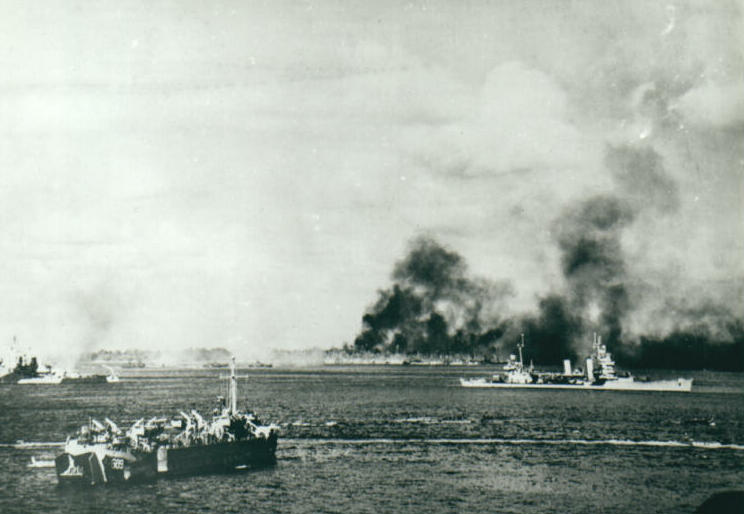
After an initial naval bombardment of the islands, the 322nd Infantry Regiment was tasked with a shore landing at Red Beach on the northeast end of the island of Angaur on September 17, 1944. The battle for Angaur is known for its ferocity. The fighting was close, the climate unforgiving, and losses were tragically high.
Commemoration
Private Anthony Peter Testa was injured during the fight for Angaur, and on September 27, 1944, he succumbed to those wounds and passed from this Earth.
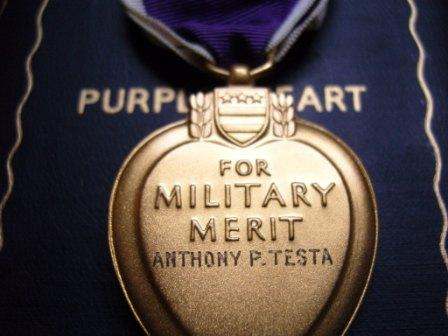
After his death, Anthony’s family chose to have his remains interred in the Manila American Cemetery in Manila, Philippines. His family received his posthumous Purple Heart in recognition of his service and sacrifice.
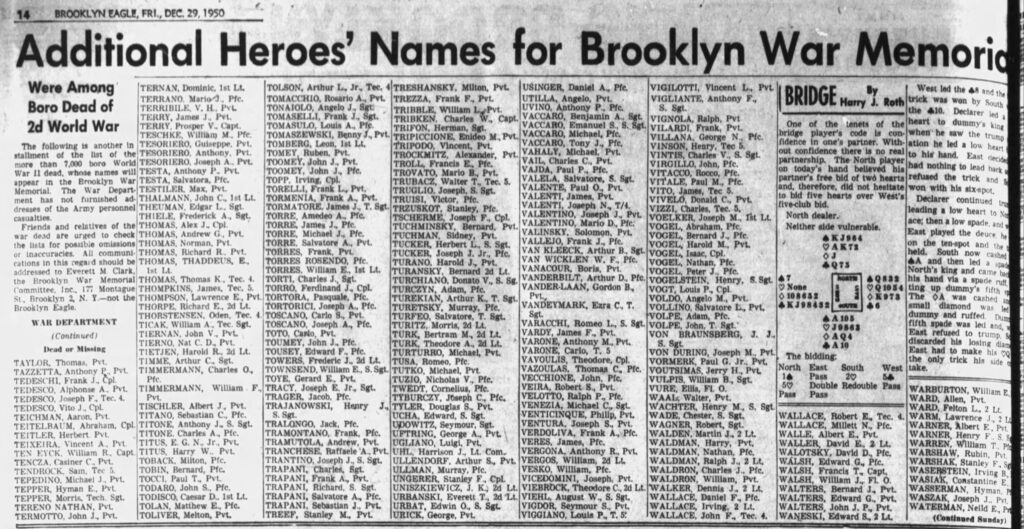
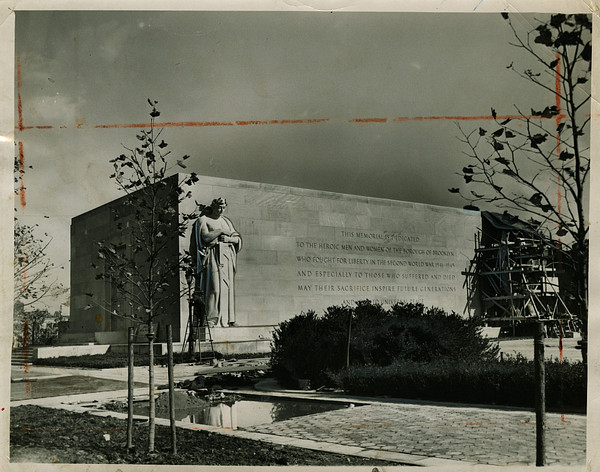
Anthony was memorialized in his hometown of Brooklyn, New York. He is remembered forever as a hero on the Brooklyn War Memorial in Cadman Plaza Park, Brooklyn, New York.
Bibliography
81st Infantry “Wildcat” Division – Japan Next! Poster. 1944. Worth Point. https://www.worthpoint.com/worthopedia/original-1944-wwii-81st-infantry-1909388546.
“Additional Heroes’ Names for Brooklyn War Memorial.” Brooklyn Eagle [Brooklyn, New York], December 29, 1950. Newspapers.com (53711063).
Anthony P. Testa. U.S., Headstone and Interment Records for U.S. Military Cemeteries on Foreign Soil, 1948-1949. Digital Images. https://ancestry.com.
Anthony P. Testa. U.S., World War II Army Enlistment Records, 1938-1946. Digital Images. https://ancestry.com.
Anthony P. Testa and Anna E. Di Melfi. New York, New York, U.S., Marriage License Index, 1907-2018. Digital Images. https://ancestry.com.
Anthony Peter Testa. U.S., World War II Draft Cards Young Men, 1940-1947. Digital Images. https://ancestry.com.
Bombardment of Anguar. Photograph. September 1944. Wikimedia Commons. https://commons.wikimedia.org/wiki/File:Bombardment_of_Anguar.jpg.

Brooklyn War Memorial. Photograph. 1951, 1953. Brooklyn Public Library (MEMO_0017). https://www.bklynlibrary.org/digitalcollections/item/954b38df-0bf2-4389-b460-a74dfcc793ce.
“Five Negros Killed, More Than 500 Arrested in Harlem Riot.” The Troy Record [Troy, New York], August 3, 1943. Newspapers.com (58972007).
New York. Kings County. 1930 U.S. Federal Census. Digital Images. https://ancestry.com.
New York. Kings County. 1940 U.S. Federal Census. Digital Images. https://ancestry.com.
New York Navy Yard, Brooklyn, New York. Photograph. March 9, 1944. Naval History and Heritage Command (NH 93234). https://www.history.navy.mil/content/history/nhhc/our-collections/photography/us-navy-ships/battleships/missouri-bb-63/NH-93234.html.
New York, New York. Children’s school victory gardens on First Avenue between Thirty-fifth and Thirty-sixth Streets. Photograph. June 1944. Library of Congress (2017865760). https://www.loc.gov/item/2017865760.
Salvatore Testa. New York, U.S., State and Federal Naturalization Records, 1794-1943. Digital Images. https://ancestry.com.
Trumbullby, Robert. “Anguar is Invaded.” The New York Times [New York, New York], September 18, 1944. https://www.nytimes.com/1944/09/18/archives/angaur-is-invaded-wildcat-army-division-quickly-wins-third-of.html.
“Victory Garden and Flowers.” Brooklyn Eagle [Brooklyn, New York], April 4, 1943. Newspapers.com (52692411).
Secondary Sources
“349 12th Street.” Apartments.com. Accessed March 13, 2026. https://www.apartments.com/349-12th-st-brooklyn-ny/lmm96jd/.
Action at Angaur the 81st Wildcat Division’s Baptism of Fire Restored 1944. Video [28:35]. YouTube. May 31, 2014. https://www.youtube.com/watch?v=y_UPRGv7CUI.
“Anthony P. Testa.” Veterans Legacy Memorial, National Cemetery Administration. Accessed March 13, 2026. https://www.vlm.cem.va.gov/AnthonyPTesta/3F609.
Battle of Anguar Map. Map. 1953. Wikimedia Commons. https://commons.wikimedia.org/wiki/File:Battle_of_Angaur_map.jpg.

Fons, Hannah. “Back to Brooklyn.” CooperatorNews, August 2005. https://cooperatornews.com/article/back-to-brooklyn.
“Gardens of Brooklyn Part II: Victory Gardens.” Blog. July 19, 2011. Brooklyn Public Library. https://www.bklynlibrary.org/blog/2011/07/19/gardens-brooklyn-part-ii.
“The Harlem Riot of 1943 Begins.” HISTORY. Updated March 2, 2025. Accessed March 13, 2026. https://www.history.com/this-day-in-history/august-1/harlem-riot-of-1943-begins.
“History of the Yard.” Brooklyn Navy Yard. Accessed March 13, 2026. https://www.brooklynnavyyard.org/history/.
Kaufman, Phil. “Kaufman’s Brooklyn: Six photos of ‘World War II: On the home front.’” Brooklyn Eagle [Brooklyn, New York]. September 10, 2020. https://brooklyneagle.com/102778/kaufmans-brooklyn-six-photos-of-world-war-ii-on-the-home-front-2/.
“Operation Battle of Angaur.” Codenames: Operations of World War II. Accessed March 13, 2026. https://codenames.info/operation/battle-of-angaur/.
“Our Story.” Brooklyn Army Terminal. Accessed November 20, 2025. https://brooklynarmyterminal.com/about.
Prefer, Nathan N. “Wildcats Ashore!” Warfare History Network, Winter 2014. https://warfarehistorynetwork.com/article/wildcats-ashore/.
“Pvt. Anthony P. Testa.” Find a Grave. Updated August 8, 2010. Accessed October 24, 2025. https://www.findagrave.com/memorial/56753796/anthony-p-testa.
Smith, Keith. “Forgotten Heroes.” The Smith Papers Blog. July 29, 2023. https://smithpapers.substack.com/p/forgotten-heroes.
US 81st Infantry Division Troops Supported by 710th Tank Battalion Operating in …HD Stock Footage. Video [1:09]. YouTube. March 3, 2014. https://www.youtube.com/watch?v=7LhzzBZi_bA.
“‘Victory Gardens’ Bloom Across the 1940s City.” Blog. March 14, 2016. Ephemeral New York. https://ephemeralnewyork.wordpress.com/2016/03/14/victory-gardens-bloom-across-the-1940s-city/.
Wallenfeldt, Jeff. “Brooklyn.” Encyclopedia Britannica, December 14, 2025. https://www.britannica.com/place/Brooklyn-borough-New-York-City.
This profile was researched and created through the Researching Silent Heroes program, sponsored by the American Battle Monuments Commission.