

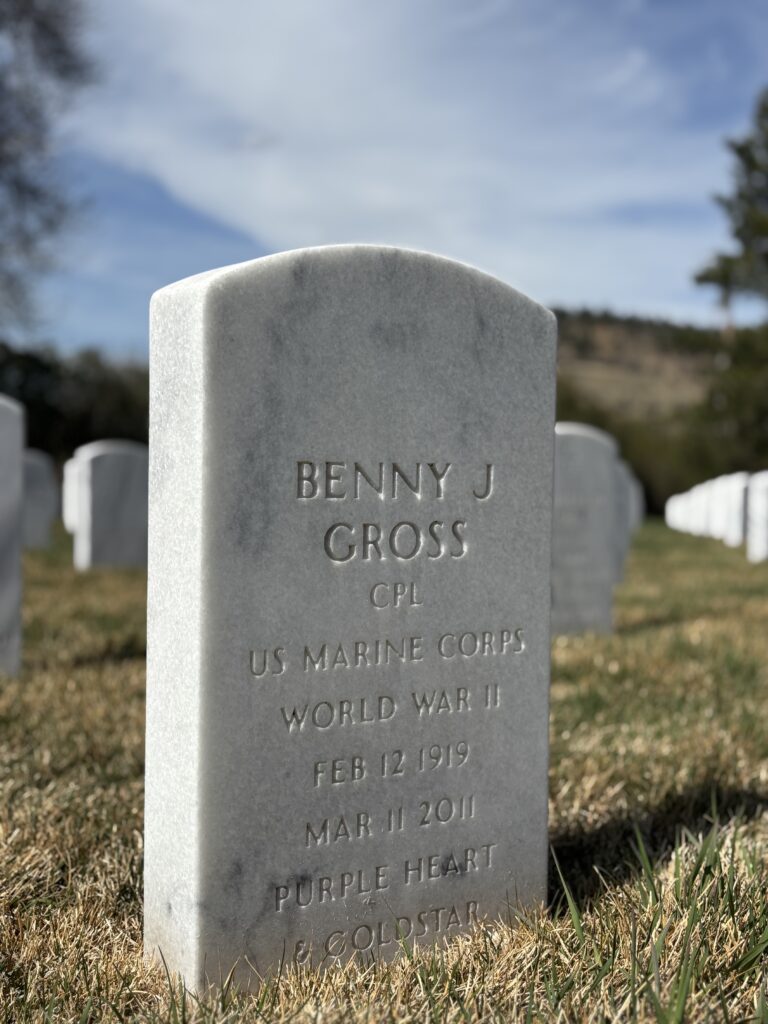
Corporal Benny Jerome Gross
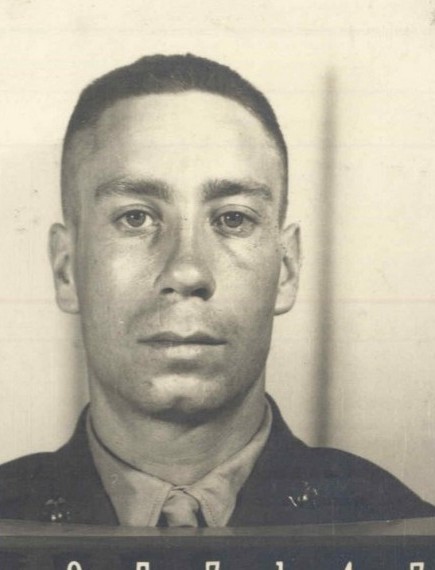
- Unit: 5th Marine Division Fleet Marine Force, 27th Replacement Draft
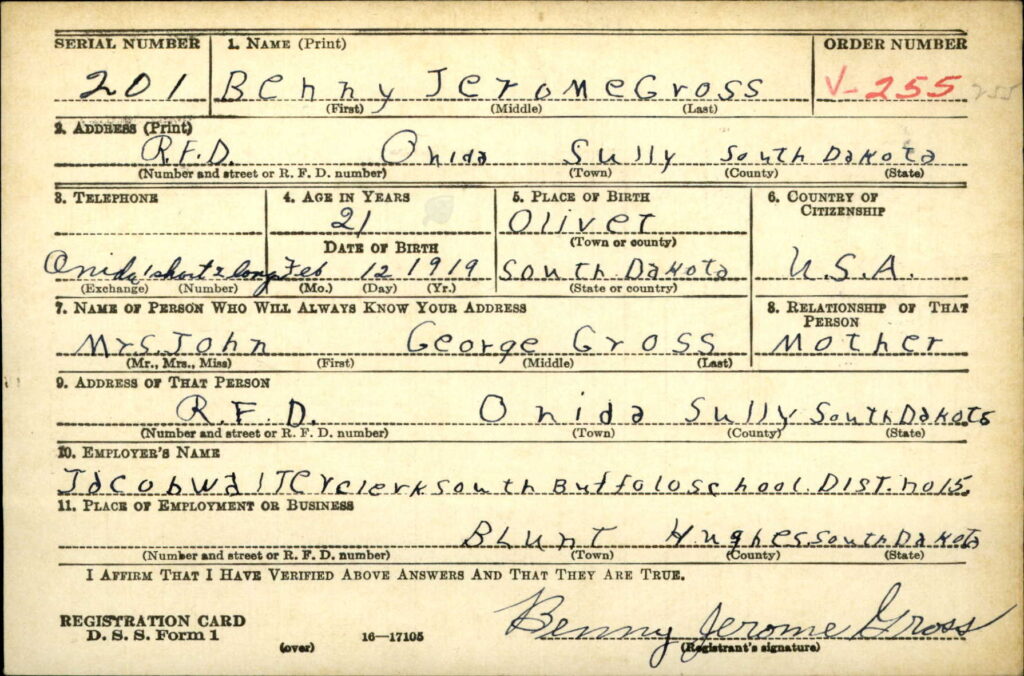
- Date of Birth: February 12, 1919
- Entered the Military: June 27, 1944
- Date of Death: March 11, 2011
- Hometown: Onida, South Dakota
- Place of Death: Pierre, South Dakota
- Award(s): Purple Heart with Gold Star in lieu of a Second Purple Heart, Navy Unit Commendation, and the Good Conduct Medal
- Cemetery: Section P, Grave 25. Black Hills National Cemetery, Sturgis, South Dakota
Mentored by Mrs. Sue Larson
Rapid City Christian School, Rapid City, South Dakota
2025/2026
Early Life
Benny Jerome Gross was born on February 12, 1919, in Olivet, South Dakota, to John G. and Anna (Pollman) Gross. In May 1919, the family bought a farm in Blaine Township, a few miles from Onida, South Dakota. Benny had an older sister, Elizabeth, two younger sisters, Katherine and Mary, and two brothers, John and Danny.
After attending Blaine Grade School in Sully County through eighth grade, Benny attended Onida High School and graduated in 1937. He continued his education in the teacher program at Freeman Academy, a junior college in Freeman, South Dakota.
From 1938 to 1941, he taught 12 students in first through eighth grades in all subjects at South Buffalo School, a rural school near Onida, South Dakota. He recorded his earnings as a teacher as $18 per week.
In 1942, he moved from South Dakota to Burbank, California, to work as a machinist at Lockheed Aircraft Corporation. While there, he completed aviation ground school by taking night classes at the University of California, Los Angeles. Gross worked at Lockheed for over two years before enlisting in the military in June 1944.

Homefront
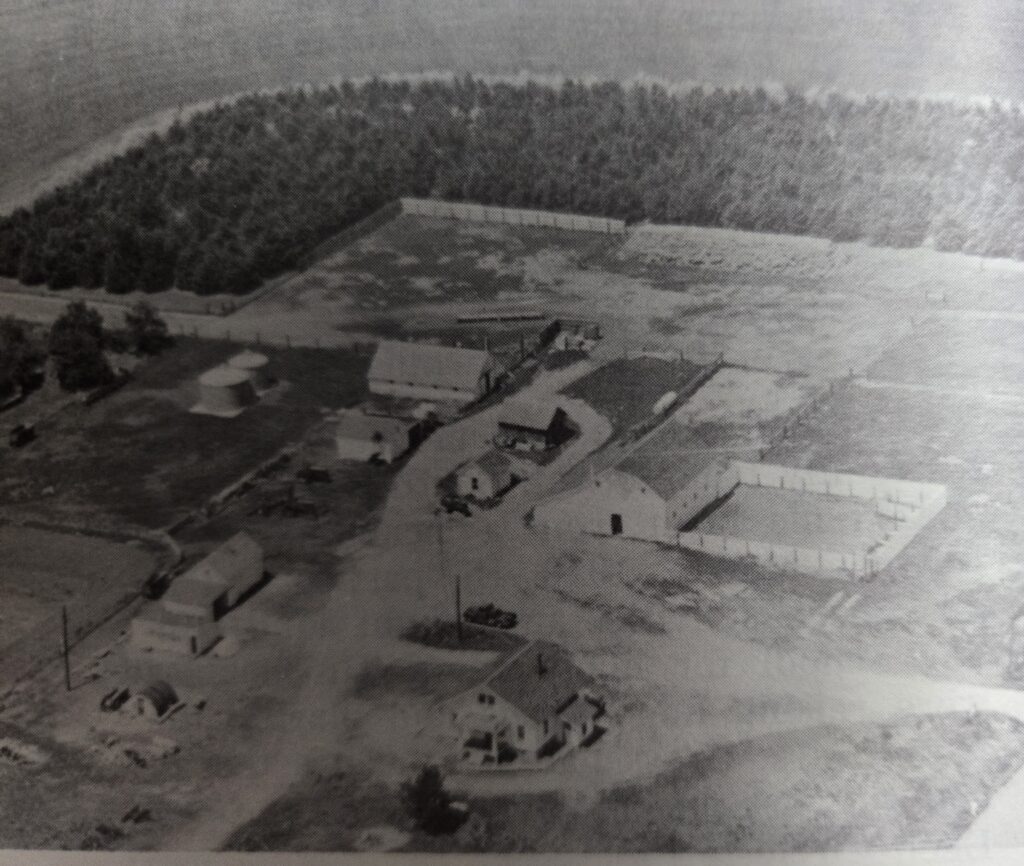
Located on the fertile flat land of central South Dakota, Onida became the county seat of Sully County. The town nearest to the farm where Benny Gross spent almost his entire life, Onida, was primarily an agricultural town. Like many rural communities, the people of Sully County threw themselves wholeheartedly into the war effort.
Community Efforts
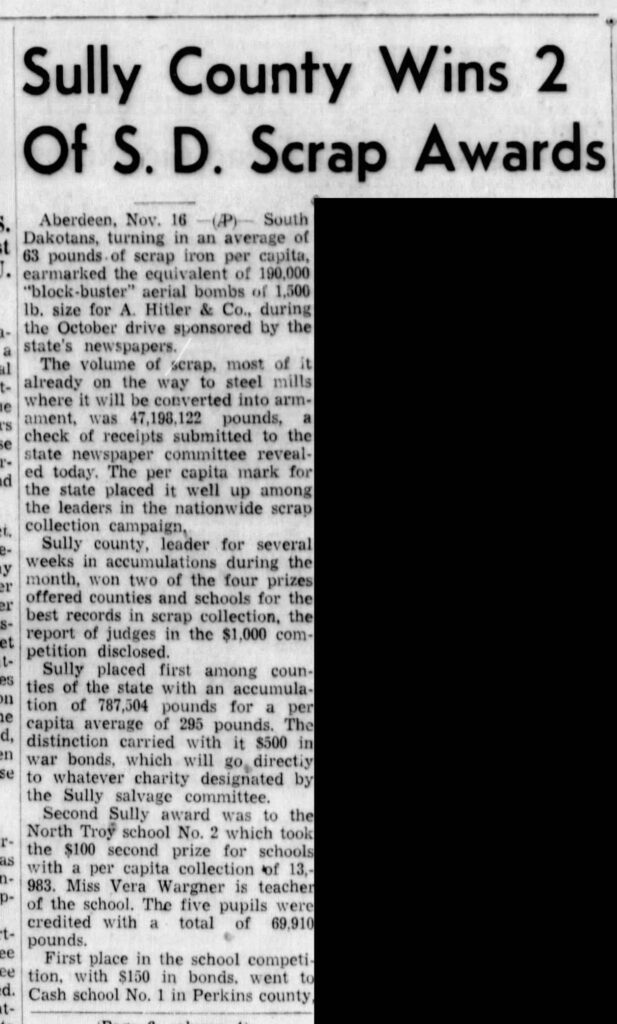
In October 1942, Sully County placed first among South Dakota counties in a scrap metal campaign, contributing per capita 295 pounds of scrap metal for recycling to support the war effort. According to a 1943 newspaper article, the county “had qualified 100%” for war bond purchases. This meant that all eligible purchasers had purchased the bonds.
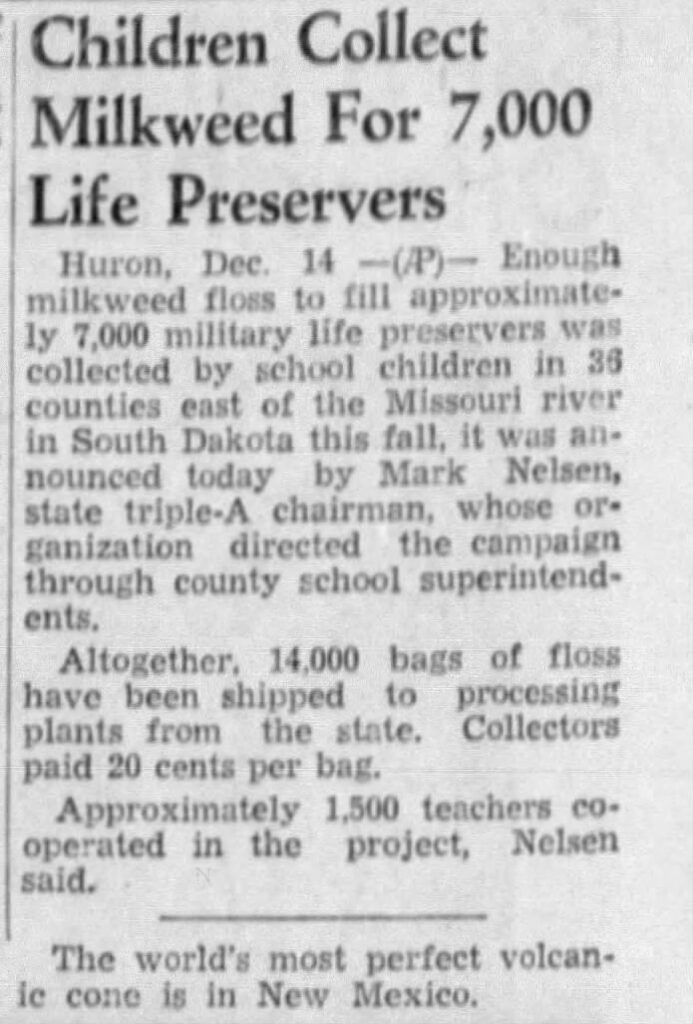
At the state level, South Dakota children participated in a national drive to collect milkweed floss for use in flight suits and life preservers. Before the war, kapok, a silky fiber from a fruit tree in the East Indies, was used. Due to the Japanese occupation of that region during the war, supplies were cut off. Milkweed was identified as a natural replacement. Children across South Dakota collected 14,000 bags of milkweed pods to be used to protect America’s pilots and sailors.
Effect on Education
World War II posed some problems for the community, too. One local historian reported its effects on education in Onida: “The next decade [the 1940s] were difficult years in all schools, due to the effects of World War II and postwar adjustments. It was a task to find qualified teachers to fill the many vacancies. Classes were cut as many moved away to work in war plants and numerous junior and senior boys went into army service.” Benny Gross was one of those teachers who left the community in 1942 to work in a defense plant in California. The farming industry was also affected by the labor shortage. A neighboring county reported bringing in Mexican nationals to help harvest the crops, a solution that proved only partially successful.
Conscientious Objectors
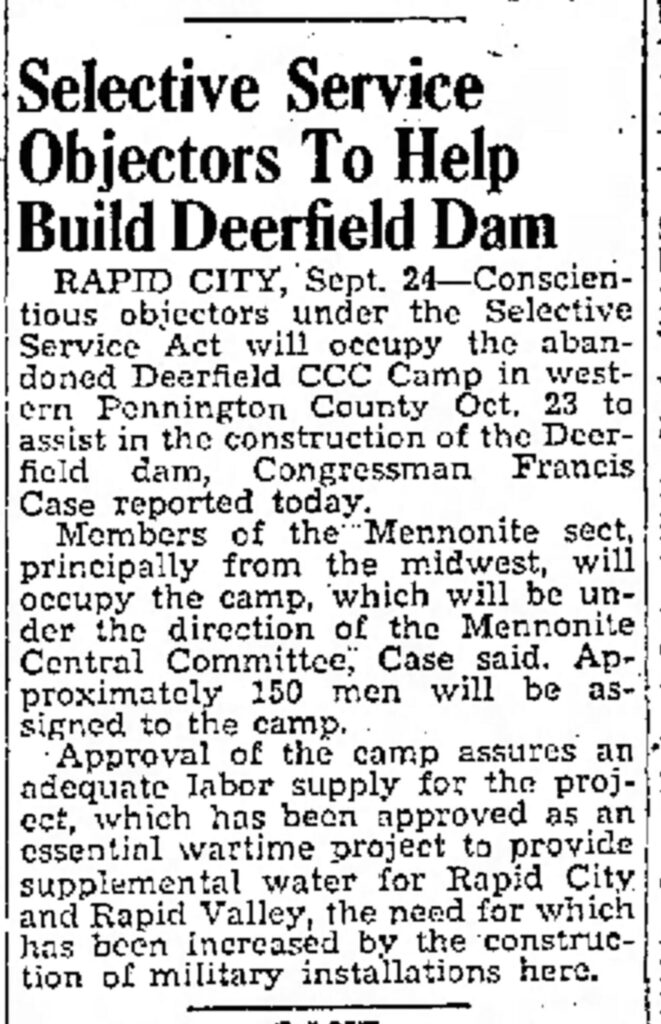
Not all South Dakotans favored the war or wanted anything to do with it. Robert Karolevitz noted that some citizens went to great extremes to avoid service: “The presence of conscientious objectors among the pacifist Hutterites, Mennonites, and Jehovah’s Witnesses, in particular, led to some prison terms and alternate service assignments in hospitals, asylums, forest camps, and other institutions where there was a shortage of menial labor.”
Military Experience
Training
Benny Jerome Gross enlisted in the U.S. Marine Corps Reserve on June 27, 1944, in Omaha, Nebraska. Although he requested an aviation assignment, he finished basic training at Marine Corps Recruit Depot, San Diego, California, with the 5th Recruit Battalion as an infantryman.
In September 1944, Gross was transferred to the 8th Training Battalion, 4th Infantry Training Regiment, at Camp Pendleton, Oceanside, California. Here, he completed a five-week rifleman course and earned his marksmanship qualification.
Iwo Jima
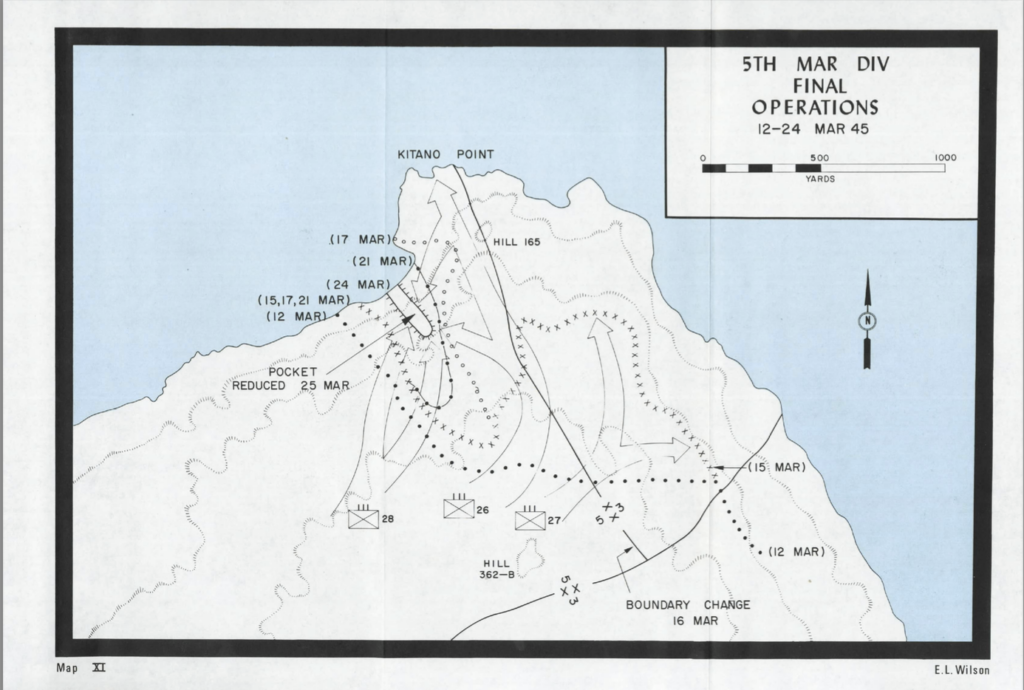
On November 23, 1944, he embarked aboard USAT Kota Agoeng at San Diego, California, bound for Hawaiʻi. Gross remained in Hawaiʻi into January. He left Hawai’i on USS Dickens, via Eniwetok and Saipan, and arrived at Iwo Jima on February 20, 1945, the day after the initial assault began. The 5th Marine Division played a critical role in the amphibious assault on the island of Iwo Jima. The island, part of the Volcano Islands, was small, but gaining this piece of land in the Pacific, already equipped with airfields, would allow the Allies’ heavy bombers to approach Japan.
Wounded
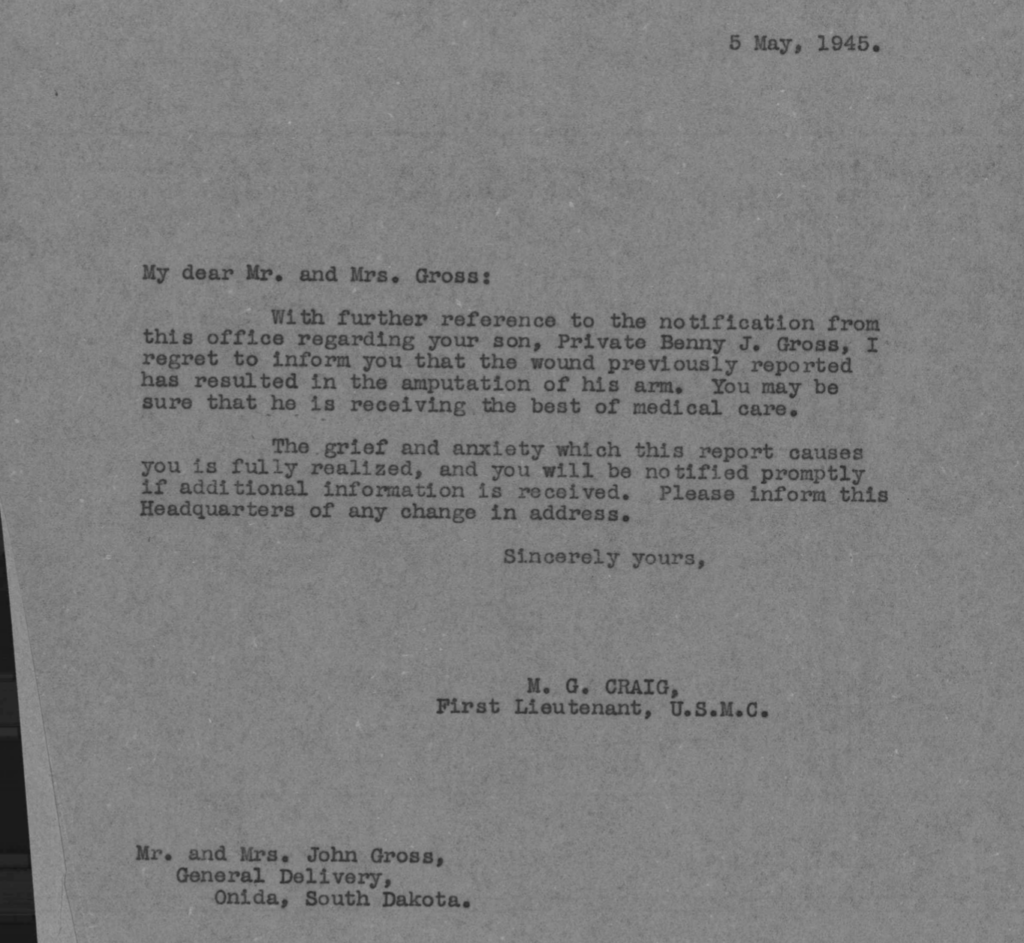
Private Gross was wounded in the opening days of the battle. There is some discrepancy about the exact date. Although there is no record of his treatment for this injury, he must have recovered enough to return to the fight because he sustained another injury when he was hit by shrapnel on March 15. This injury resulted in the loss of his left arm.
He was transported aboard USS Hyde, which first stopped in Guam to embark over 400 Marine casualties before continuing on to the U.S. Naval Hospital at Pearl Harbor. He was then transferred to the U.S. Naval Hospital at Mare Island, California. Here, surgeons completed a successful skin graft on his amputated arm and later conducted a revision surgery to try to alleviate persistent sensitivity. While recovering, he was fitted with a prosthetic arm and taught how to use it. He was promoted to private first class.
Discharge
On June 4, 1946, the Board of Medical Survey determined he was unfit for service and gave him a permanent disability rating. Gross was honorably discharged as a corporal from the Marine Corps on June 11, 1946, at Naval Station Treasure Island, San Francisco, California.
For being wounded in action, Gross was awarded the Purple Heart and a gold star. He also received a Navy Unit Commendation.
Veteran Experience
When Gross returned home, he worked on the family farm and ranch operation near Onida, South Dakota. Within months of his return, his younger brother John enlisted in the U.S. Air Force. The same year John Gross returned from military service, their father, John G. Gross, died, and the brothers shared responsibility for running the family farm.
Benny Gross remained single throughout his life. He played an active role in his community, working with youth baseball teams, volunteering with the Easter Seal Society, and joining the Sully County Farmers Union. He was a member of the American Legion, the Veterans of Foreign Wars, and the Disabled American Veterans.
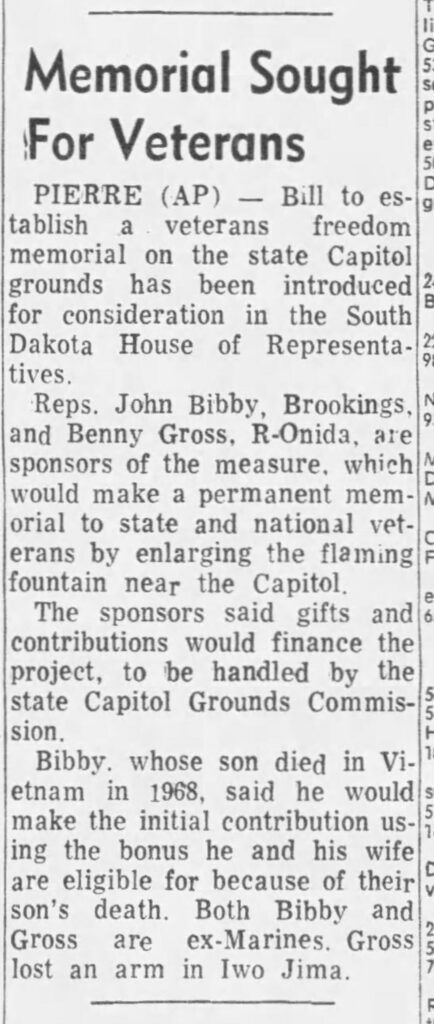
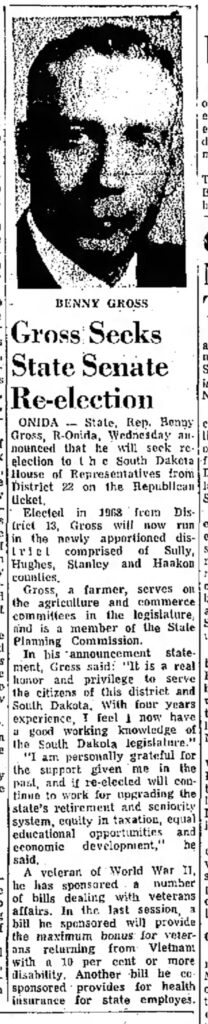
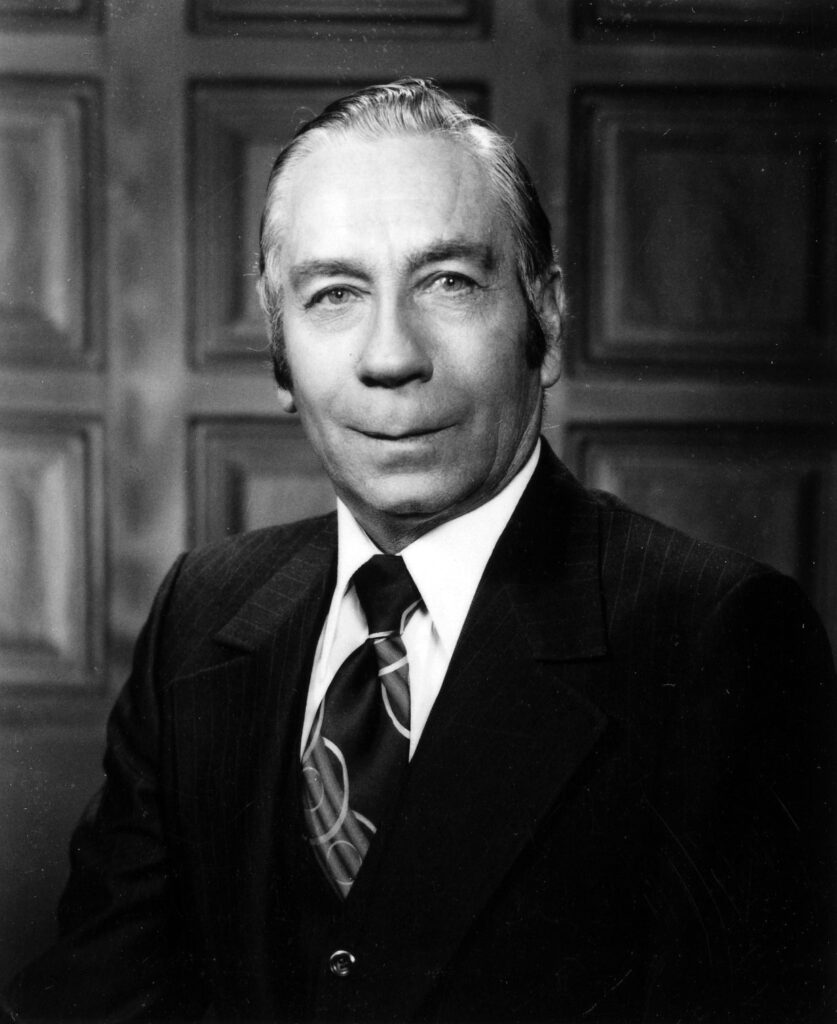
In 1968, Gross ran for the South Dakota State House of Representatives and won. During his first term, he explained why he favored a state bonus bill for Vietnam Veterans: “I feel this is the year to pass a state bonus bill. In order for a bonus to do the most good, it should be paid as soon as possible to the man being separated from service.” Throughout his time in office, which spanned the terms of four governors, Gross continued to sponsor and vote for bills honoring the service of Veterans, including one to establish a Veterans’ Freedom Memorial on the state Capitol.
Although this quiet and friendly man served in South Dakota’s House of Representatives for eighteen straight years, legislative reporter Bob Mercer wrote, “He rarely engaged in the debates.” According to a tribute to Gross written by Mercer, “Gross was like the first robin of spring during a debate. When he stood, it was a signal that the argument was about to be over because he was going to call the question.”
Commemoration
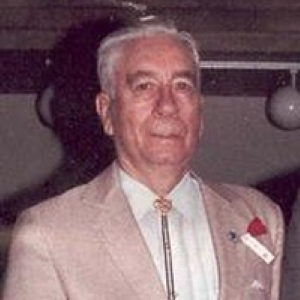
Benny Jerome Gross died on March 11, 2011, at the age of 92. He was buried at the Black Hills National Cemetery in Sturgis, South Dakota. South Dakota’s governor, Dennis Daugaard, ordered that the flags be flown at half-mast to honor Gross’s life.
Benny Jerome Gross lived a life of humble service and left a legacy of quiet leadership.
Bibliography
Primary Sources
Benny Gross photos. Legislative Archives 1979-1985. South Dakota Historical Society.
Benny Jerome Gross, Official Military Personnel File, Department of the Navy. National Archives and Records Administration – St. Louis.
Benny Jerome Gross. U.S., Cemetery and Funeral Home Collection, 1847-Current. Digital Images. https://ancestryclassroom.com.
Benny Jerome Gross. U.S., Marine Corps Muster Rolls, 1798-1958. Digital Images. https://ancestryclassroom.com.
Benny Jerome Gross. World War 2 Draft Cards Young Men, 1940-1947. Digital Images. https://ancestryclassroom.com.
“Bill Prefiled to Repeal Prescription Drug Law.” Mitchell Republic [Mitchell, South Dakota], December 24, 1971. Newspapers.com (8788934).
Bracken, J. Burton. “Invasion of Iwo Jima Island.” Chappell Register [Chappell, Nebraska], April 15, 1945. Newspapers.com (672221802).
“Children Collect Milkweed for 7000 Life Preservers.” Rapid City Journal [Rapid City, South Dakota], December 14, 1944. Newspapers.com. (35063144).
“Forty Members of South Dakota Farmers Union.” The Daily Plainsman [Huron, South Dakota], January 14, 1966. Newspapers.com (36709546).
“Half-staff Flags Set for Former Official.” Mitchell Republic [Mitchell, South Dakota], March 18, 2011. Newspapers.com (1165662425).
“Keep on Buying War Bonds.” Argus-Leader [Sioux Falls, South Dakota], January 26, 1944. Newspapers.com (229822543).
“Meet CSD’s Legislators.” The Daily Plainsman [Huron, South Dakota], January 17, 1971. Newspapers.com (21648671).
Mensing, Phyllis. “Panel Studying Kneip’s Airplane Request Advises Appropriate Be Cut in Half.” Argus-Leader [Huron, South Dakota], March 10, 1975. Newspapers.com (239109486).
“Milkweed in War Effort.” Rapid City Journal [Rapid City, South Dakota], March 26, 1943. Newspapers.com (350595979).
“Memorial Sought for Veterans.” Sioux Falls Argus Leader [Sioux Falls, South Dakota], January 19, 1970. Newspapers.com (239132315).
“Onida Man Seeks House Re-Election.” Rapid City Journal [Rapid City, South Dakota], February 25, 1970. Newspapers.com (351175145).
“Rep Gross Seeks Re-election from District 22.” Rapid City Journal [Rapid City, South Dakota], March 13, 1978. Newspapers.com (351769362).
“Selective Service Objectors to Help Build Deerfield Dam.” The Daily Plainsman [Huron, South Dakota], September 24, 1942. Newspapers.com (19337897).
South Dakota. Sully County. 1920 U.S. Census. Digital Images. http://ancestryclassroom.com.
South Dakota. Sully County. 1930 U.S. Census. Digital Images. http://ancestryclassroom.com.
South Dakota. Sully County. 1940 U.S. Census. Digital Images. http://ancestryclassroom.com.
“Sully County Wins 2 of S. D. Scrap Awards.” Rapid City Journal [Rapid City, South Dakota], Nov. 16, 1942. Newspapers.com (350597888).
Thompson, E.L. 75 Years of Sully County History, 1883-1958. Onida Watchman, 1958.
“Veteran Bill May Receive Priority.” Argus-Leader [Sioux Falls, South Dakota], Dec. 9, 1971. Newspapers.com (239167557).
Secondary Sources
“Benny Gross.” Isburg Funeral Chapels. Accessed January 19, 2026. https://www.isburgfuneralchapels.com/obituaries/Benny-Gross?obId=21529877.
“Benny Jerome Gross.” Find a Grave. Accessed October 25, 2025. https://findagrave.com/memorial/72323928/Benny-Jerome-Gross.
“Benny Jerome Gross.” Veterans Legacy Memorial. Accessed October 25, 2025. https://www.vlm.cem.va.gov/BENNYJEROMEGROSS/4353DB9.
“Former Legislator Who Was Injured at Iowa Jima Dies.” The Daily Republic [Mitchell, South Dakota], March 16, 2011. Newspapers.com (1165662374).
Kahler, Kathryn A. “Back in the Day.” Wisconsin Department of Natural Resources. Accessed April 12, 2026. https://dnr.wisconsin.gov/wnrmag/2019/Fall/back.
Karolevitz, Robert F. “Life on the Home Front: South Dakota in World War II.” South Dakota State Historical Society, 1990. https://www.sdhspress.com/journal/south-dakota-history-19-3/life-on-the-home-front-south-dakota-in-world-war-ii/vol-19-no-3-life-on-the-home-front.pdf.
Mercer, Bob. “Former Legislator Dies.” Watertown Public Opinion [Watertown, South Dakota], March 16, 2011. https://thepublicopinion.com//story/news/local/2011/03/16/former-legislator-dies/45669511/.
Thompson, E. L. Seventy-five Years of Sully County. Onida, South Dakota: Onida Watchman, 1958.
Todd, Chuck. Interview with the author. January 19, 2026.
Vergun, David. “Battle of Iwo Jima: Eighty Years Later, Lessons Learned.” U.S. Department of War. February 18, 2025. Accessed January 16, 2026. https://www.war.gov/News/Feature-Stories/Story/Article/4069599/battle-of-iwo-jima-80-years-later-lessons-learned/.
Wilson, Earl L. “5th Marine Division, Final Operations.” In Western Pacific Operations: History of U.S. Marine Corps Operations in World War II, edited by George W. Garand and Truman R. Stockbridge. Historical Division Headquarters, U.S. Marine Corps, 1971.
This profile was funded by a grant from the United States Department of Veterans Affairs. The opinions, findings, and conclusions stated herein are those of the author and do not necessarily reflect those of the United States Department of Veterans Affairs.