
Gunnery Sergeant Charles Frankel
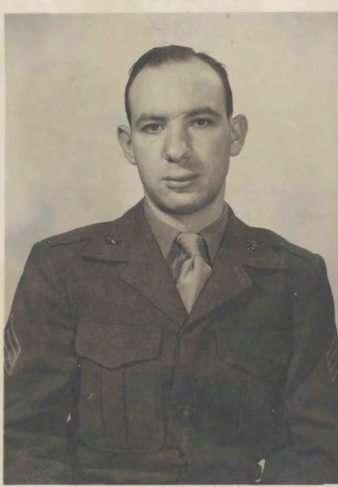
- Unit: 1st Marine Division, 5th Marines, 2nd Battalion, Company H
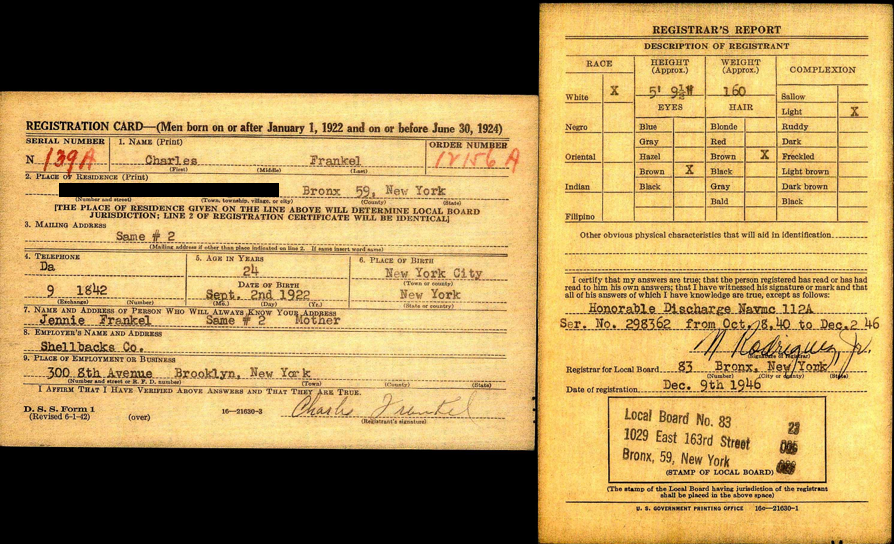
- Date of Birth: September 2, 1922
- Entered the Military: October 8, 1940
- Date of Death: February 4, 2017
- Hometown: Brooklyn, New York
- Place of Death: Sun City West, Arizona
- Award(s): Good Conduct Medal, Asiatic-Pacific Campaign Medal, American Campaign Medal, World War II Victory Medal
- Cemetery: Section H5, Row C, Site 90. National Memorial Cemetery of Arizona, Phoenix, Arizona
Mentored by Dr. Rebekah West Keur
Herberger Young Scholars Academy
2025/2026
Early Life
Charles Frankel was born on September 2, 1922, in the Brooklyn Borough of New York City. Growing up, he experienced a childhood defined by the challenges of the Great Depression and the strength of a close-knit family. According to the U.S. census, Frankel’s mother, Jennie Berkowitz Frankel, a Russian immigrant, raised him and his older siblings, Rachel and David. She worked in various roles in the garment industry to support the family.
Despite these hardships, Charles was an industrious young man. He attended two years of high school at Seward Park High School before leaving in 1938 to enter the workforce as a factory errand boy to help support his household. He was also committed to his education, as he later earned his high school diploma by passing a state examination.
As a young man, he worked as a salesman and sales manager for the Florida Citrus Fruit Commission at the 1939–1940 New York World’s Fair. In this role, he supervised other staff and sold citrus products to thousands of international visitors.



Homefront
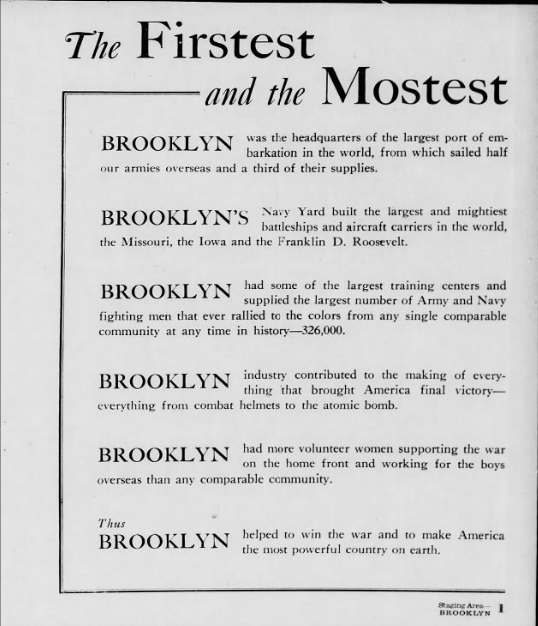
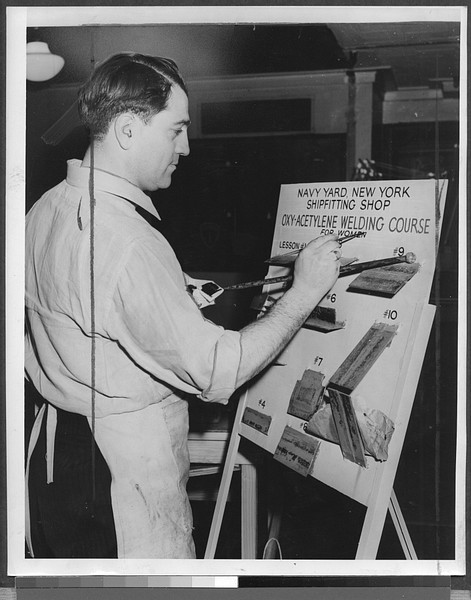
Brooklyn, New York, was a bustling center of war production. The Brooklyn Navy Yard worked 24 hours a day to build the massive ships that would carry Marines across the ocean. The Brooklyn Navy Yard, famously dubbed the Can-Do Shipyard, served as the world’s busiest naval construction facility, repairing over 5,000 vessels and building the fleet’s most powerful capital ships. Its massive output included legendary battleships like the USS Missouri (upon which the war’s final surrender was signed) and the USS Iowa, as well as critical Essex-class aircraft carriers, cruisers, and amphibious landing ships (LSTs) essential to the Pacific island-hopping campaigns. Often called the bookends of the war, the yard built both the USS Arizona, whose sinking at Pearl Harbor initiated the conflict, and the USS Missouri, which hosted the ceremony that finally brought the war to a close.
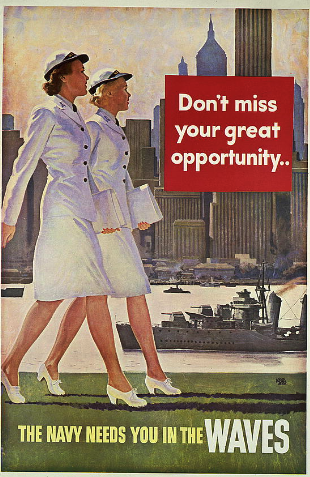
During the 1940s, Brooklyn served as a critical hub for the Women Accepted for Volunteer Emergency Service (WAVES), the women’s branch of the United States Naval Reserve. Unlike auxiliary groups, WAVES were fully enlisted members of the Navy, serving in vital roles that allowed men to be redeployed to active sea duty. In Brooklyn, WAVES often worked at the Brooklyn Navy Yard or Floyd Bennett Field and were integral to the war effort. These women performed sophisticated mechanical labor, including the maintenance and repair of complex radial aircraft engines, the training of combat pilots, and the performance of essential logistics. By taking on these highly technical roles, WAVES directly bolstered the spirit of Brooklyn’s home front, proving that the technical demands of the war were well within the nation’s female workforce’s capabilities.
For a Jewish family like the Frankels, the home front was defined by a deeply rooted network of faith and mutual support, where neighborhood synagogues and shtiebels served as sources for wartime morale. Jewish institutions served as vital support systems, facilitating the work of Landsmanshaftn, mutual aid societies based on shared European origins. These societies pivoted during the war to lead bond drives, organize scrap-metal collections, and provide emotional support to families mourning combat losses. Synagogues further anchored the community by maintaining “service flags” to honor those in uniform and coordinating extensive letter-writing campaigns to sustain the bond between deployed soldiers and their Brooklyn roots.
As news of the Holocaust reached the United States, synagogues transformed into centers for mourning and political activism, allowing Jewish Brooklynites to channel their grief into patriotic service and view the defeat of the Axis powers as a profound moral duty. This network provided a necessary buffer against the anxiety of the era, serving as a bedrock of resilience that helped families navigate the daily stresses of rationing and the hardships of the war years.
In addition, Brooklynites embraced the home front effort with fervor, transforming the borough’s tight-knit neighborhoods into centers of patriotic mobilization. Throughout bustling commercial corridors like Fulton Street and Flatbush Avenue, local shop windows were plastered with government-issued posters. Schools and civic groups staged intense War Bond drives to fund the massive naval output at the nearby shipyards. Beyond formal financial support, the borough’s urban landscape saw a dramatic shift as residents cultivated Victory Gardens in every available patch of soil, from the narrow backyards of rowhouses in Bay Ridge to the vacant lots of Williamsburg. Victory Gardens helped supplement rationed food supplies and ensured the local population remained self-sufficient.

Military Experience
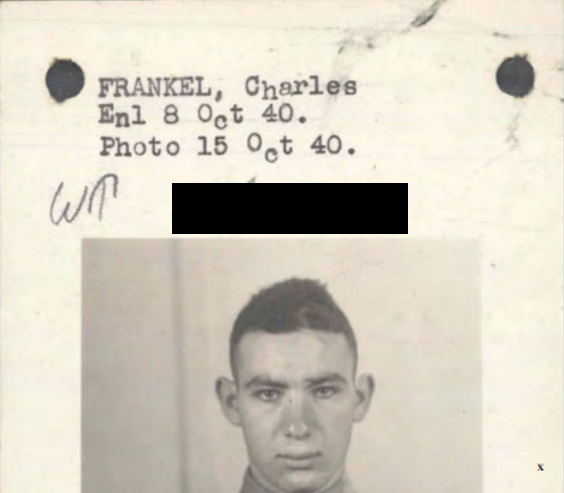
On October 8, 1940, more than a year before the United States officially entered World War II, Frankel walked into a recruiting station in New York City and enlisted in the United States Marine Corps.
He began his journey with recruit training at Parris Island, South Carolina. Following boot camp, he underwent specialized combat instruction with the 4th Training Battalion, where he mastered the mechanics and tactical employment of heavy weaponry. This training taught him not only how to maintain and fire his weapon rapidly to pin down enemy forces but also how to maneuver the heavy, cumbersome equipment through difficult terrain. His preparation concluded with advanced tactical exercises simulating the intense return fire and jungle conditions soldiers faced during the Guadalcanal and Okinawa campaigns.
From the Pacific to the Press
During World War II, Frankel was assigned a dangerous, physically demanding job as a Machine Gun Crewman (MOS 604). An MOS is a Military Occupational Specialty, a specific job title in the military. As a machine gunner, Frankel was responsible for a heavy weapon that provided suppressive fire. This role required him to carry heavy equipment through jungles and to remain in position even under intense return fire.
Frankel served with Company H, 2nd Battalion, 5th Marines, which was part of the famous 1st Marine Division. His unit was at the center of the most important battles in the Pacific Ocean. The 1st Marine Division participated in the jungle warfare of the Guadalcanal Campaign, a pivotal turning point for the U.S. in the Pacific, and the intense amphibious assault of the Okinawa. For his dedicated service and consistently excellent conduct throughout these campaigns, he was awarded the Asiatic-Pacific Campaign Medal, the American Campaign Medal, and the World War II Victory Medal.
However, Frankel’s narrative extends beyond these battles. Staff Sergeant Charles Frankel started as a Private, the entry-level rank. By the end of World War II, he had reached the rank of Sergeant. After the war, he remained in the Reserves, a part-time status that allows members to be called back to duty, and was eventually promoted to Staff Sergeant. His advancement through the ranks from Private to Sergeant, and later to Staff Sergeant, was not earned by a singular, dramatic act, but by a career-long standard of high performance. His records repeatedly note “Excellent” ratings for both proficiency and conduct, the hallmark of a Marine who provided reliable, high-quality service regardless of his assigned role. Ultimately, he was awarded the Good Conduct Medal, a distinction that recognizes disciplined, honorable service and unwavering integrity.
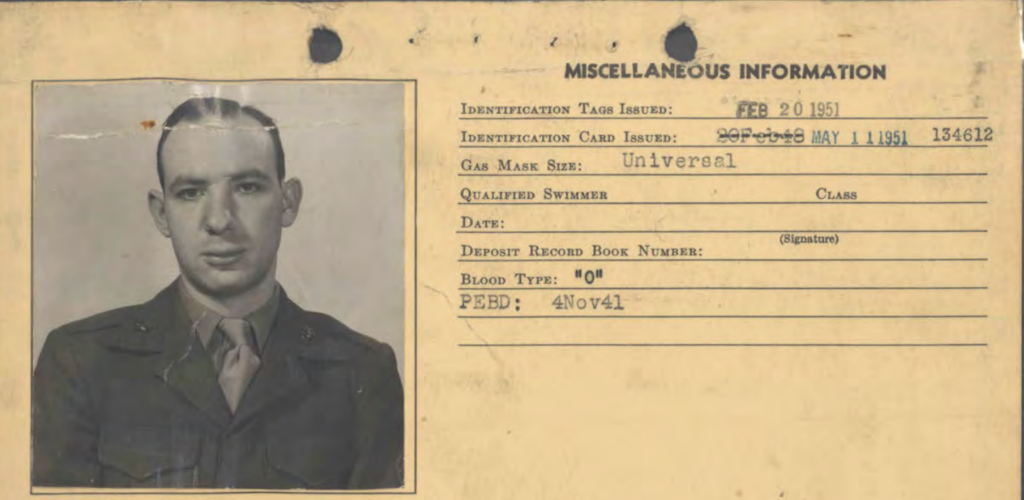
After World War II ended, Frankel was honorably discharged in 1946. Although Frankel’s combat experience was forged in the Pacific during World War II, his service during the Korean War era demonstrated a crucial pivot toward modern military communication. Recalled to active duty in November 1949, Frankel was primarily stationed in New York and Philadelphia during 1950 and 1951. He attended a specialized school at the Marine Corps Headquarters in Washington, D.C. to learn broadcasting and scriptwriting. As a Public Information Specialist, Frankel leveraged his background to manage the Marine Corps’ outreach and effectively facilitate recruitment drives.
Conclusion of Service
Frankel’s active military career concluded on June 12, 1951, when he was released from active duty due to a disability. However, he continued serving in the Navy National Reserves until 1977. Frankel spent over 30 years of his life in dedicated service to the United States.
Veteran Experience
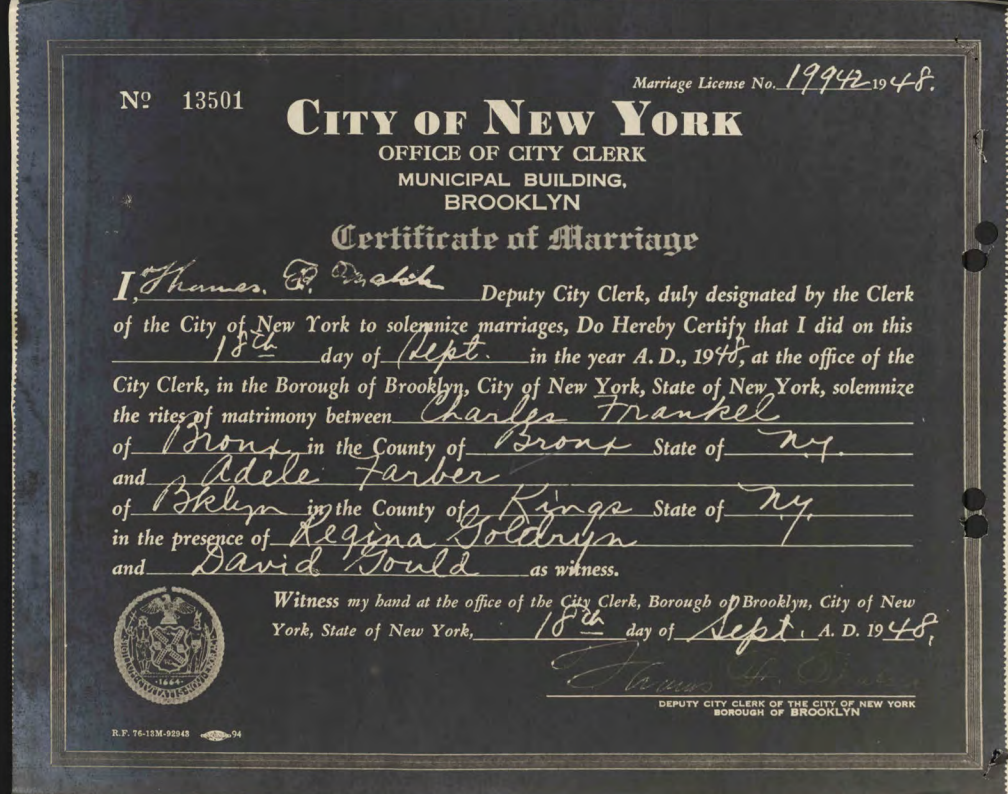
Frankel married Adele Farber in 1948. They remained happily married for 68 years. They had two children, a son, Robert, and a daughter, Shari.
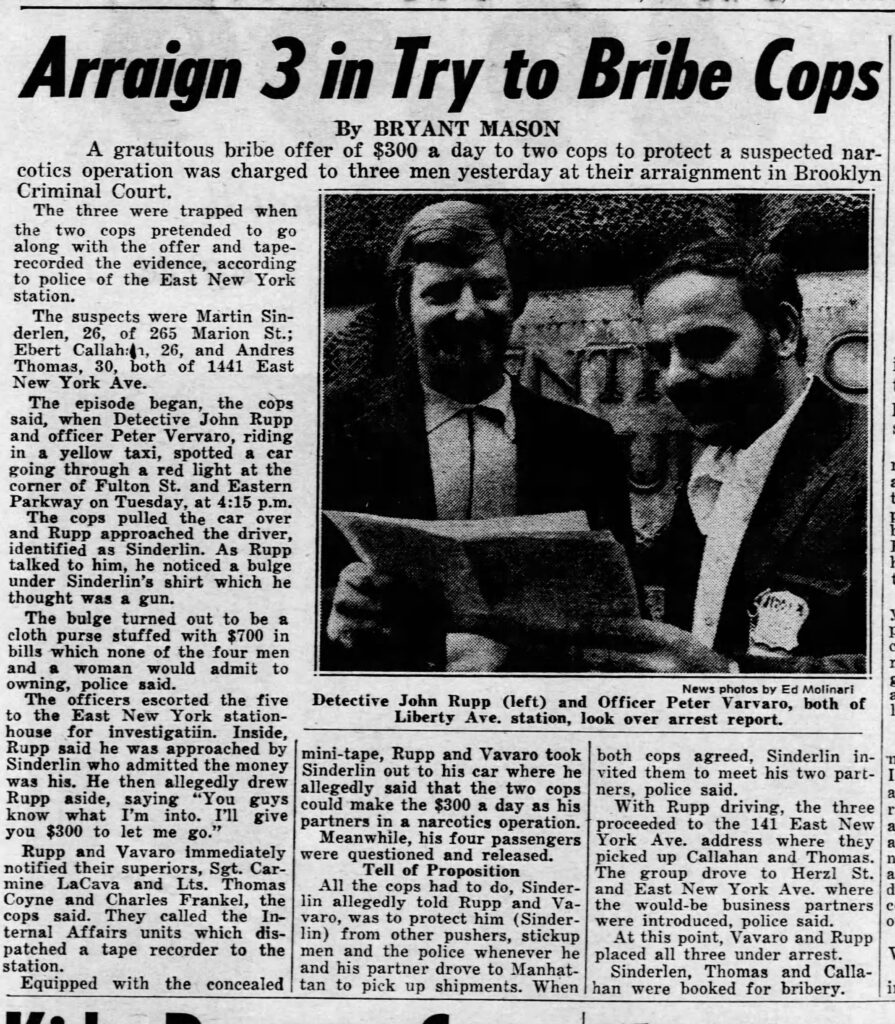
Transitioning to civilian service, Frankel joined the New York City Police Department (NYPD). While working as an officer, he continued his education at the City University of New York. His dedication led to a successful career in law enforcement; he rose through the ranks and was promoted to lieutenant in 1968.
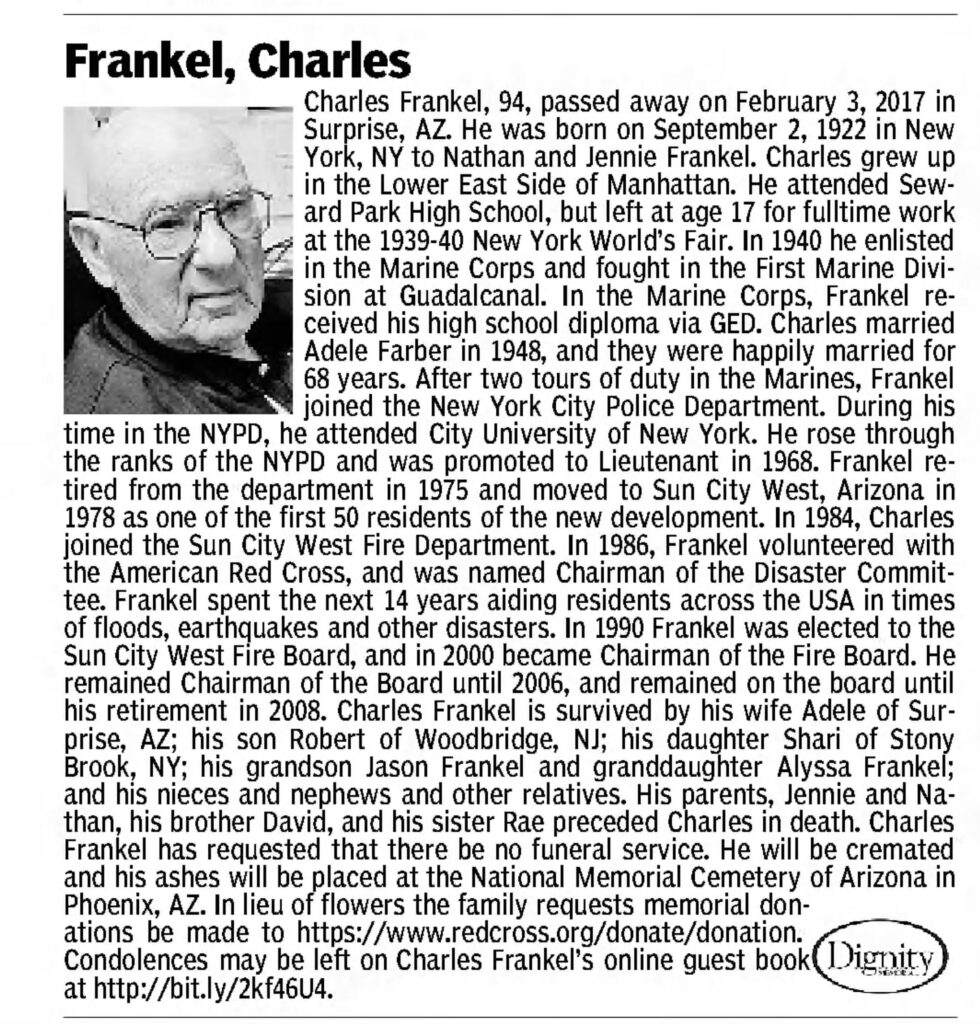
Frankel retired from the NYPD in 1975. Three years later, he and his wife moved to Sun City West, Arizona, where they were among the first 50 residents of the new development. Retirement did not slow Frankel down. In 1984, he joined the Sun City West Fire Department, and by 1986, he began volunteering with the American Red Cross. Named Chairman of the Disaster Committee, Frankel spent 14 years traveling across the United States to aid victims of floods, earthquakes, and other natural disasters.
His leadership in local government continued when he was elected to the Sun City West Fire Board in 1990. He was appointed Chairman of the Fire Board in 2000, a role he held until 2006. He remained a dedicated member of the board until his final retirement in 2008.

Commemoration
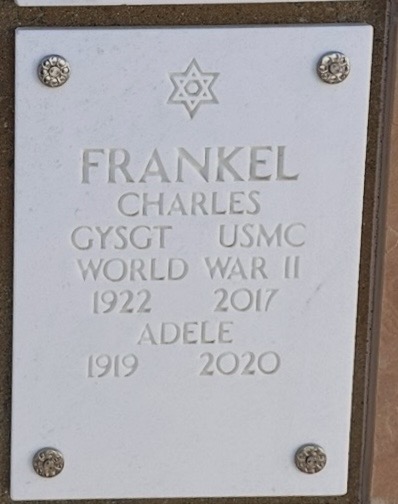
Staff Sergeant Charles Frankel passed away on February 4, 2017, at the age of 94, in Sun City West, Arizona. His life was defined by service, leadership, and community spirit that spanned the battlefields of World War II and the streets of New York City, culminating in decades of civic leadership in the American Southwest. He was inurned with full military honors at the National Memorial Cemetery of Arizona in Phoenix. His wife, Adele, joined him three years later.
Bibliography
Primary Sources
Brooklyn, New York HOLC Redlining Map. Map. April 1, 1938. University of Richmond. https://dsl.richmond.edu/panorama/redlining/#loc=5/39.1/-94.58.
“Charles Frankel.” The Arizona Republic [Phoenix, Arizona], February 12, 2017. Newspapers.com (272160892).
Charles Frankel, Official Military Personnel File, Department of the Navy, National Archives and Records Administration – St. Louis.
Charles Frankel, Report of Separation, Department of the Navy, National Archives and Records Administration – St. Louis.
Charles Frankel. U.S. Department of Veterans Affairs. BIRLS Death File, 1850-2022. Digital Images. https://ancestry.com.
Charles Frankel. U.S., World War II Draft Cards Young Men, 1940-1947. Digital Images. https://ancestry.com.
Dewey, Thomas E. Papers. University of Rochester Library.
Falter, John Philip. Don’t miss your great opportunity–The Navy needs you in the WAVES. Poster. 1944. Library of Congress (90714999). https://www.loc.gov/item/90714999.
“The Firstest and the Mostest.” Brooklyn Daily Eagle [Brooklyn, New York], December 9, 1945. Newspapers.com (54530880).
Frankel, Charles. New York, U.S., Arriving Passenger and Crew Lists (including Castle Garden and Ellis Island), 1820-1957. Digital Images. https://ancestry.com.
Frankel, Charles. U.S., Marine Corps Muster Rolls, 1798-1958. Digital Images. https://ancestry.com.
Getting the Big Show Ready. Photograph. 1945. Brooklyn Daily Eagle photographs, Center for Brooklyn History, Brooklyn Public Library. https://www.bklynlibrary.org/digitalcollections/item/b8e6768e-41b9-4b57-8998-98227e3a2110.
Mason, Bryant. “Arraign 3 for Trying to Bribe Cops.” Daily News [New York, NY], October 3, 1974. Newspapers.com (491973389).
New York. Bronx County. 1950 U.S. Census. Digital Images. https://ancestry.com.
New York. New York County. 1920 U.S. Census. Digital Images. https://ancestry.com.
New York. New York County. 1930 U.S. Census. Digital Images. https://ancestry.com.
New York. New York County. 1940 U.S. Census. Digital Images. https://ancestry.com.
New York State War Council. Papers. New York State Archives, Albany.
New York State War Council. War Council Bulletin: A Guide for Civilian Participation in the Victory Effort. New York State Archives, 1942.
Sun City West Independent. Sun City West Silver Celebration, January 22, 2003. https://delwebbsuncitiesmuseum.org/wp-content/uploads/2024/03/FILING%20CABINET%20SCW%20N-Z/SILVER%20ANNIVERSARY%20BOOK%20%20SCW.pdf.
U.S. Office of Civilian Defense. Victory Gardens: A Guide for Urban Communities. Washington, DC: Government Printing Office, 1943.
“Victory Gardens Flourish in Borough’s Vacant Lots.” Brooklyn Daily Eagle. [Brooklyn, New York], June 15, 1943. Newspapers.com (54530880).
WAVES Aviation Machinist’s Mates. Photograph. National Archives and Records Administration (80-G-44886). https://www.ibiblio.org/hyperwar/OnlineLibrary/photos/prs-tpic/females/wvw2-am2.htm.
Women shipfitters worked on board the USS NEREUS . . . Photograph. 1943. National Archives and Records Administration (NAID: 296892). https://catalog.archives.gov/id/296892.
Secondary Sources
“1935-1940 NYC: A Resurgence in Culture, Modernization & Municipal Infrastructure.” History101.nyc. Accessed November 14, 2025. https://www.history101.nyc/new-york-city-from-1935-to-1940.
Borch, Fred L., and Robert F. Dorr. “Sgt. John Basilone: Marine Hero of Guadalcanal and Iwo Jima.” Warfare History Network, spring 2011. https://warfarehistorynetwork.com/article/sgt-john-basilone-marine-hero-of-guadalcanal-and-iwo-jima/
Capeci, Jr., Dominic J. “Wartime Fair Employment Practices Committees: The Governor’s Committee and the First FEPC in New York City, 1941-1943.” Afro-Americans in New York Life and History 9 (1985): 45-63.
“Charles Frankel.” Find a Grave. Updated September 28, 2020. Accessed October 12, 2025. https://www.findagrave.com/memorial/176256823/charles-frankel.
“Charles Frankel.” Veterans Legacy Memorial, National Cemetery Administration. Accessed April 29, 2026. https://www.vlm.cem.va.gov/CHARLESFRANKEL/CBD56A7.
Costello, Kevin. “Brooklyn’s Home Front: Civilian Mobilization During World War II.” Journal of New York History. Volume 82, Number 3 (2001): 215-234.
Diner, Hasia R. The Jews of the United States, 1654 to 2000. University of California Press, 2004.
Gibson, Jake. “Our Streets, Our Stories: Personal Histories of Brooklyn.” Blog. May 8, 2025. https://www.bklynlibrary.org/blog/2025/05/08/our-streets-our-stories.
Gurock, Jeffrey S. Jews in Gotham: New York Jews in a Changing City, 1920–2010. New York University Press, 2012.
Hartzell, Karl Drew. The Empire State at War. State of New York, 1949.
Hess, Amanda. “New York City During World War II: Photos.” Slate, July 24, 2013. https://slate.com/culture/2013/07/new-york-historical-society-exhibits-shows-new-york-city-during-wwii-photos.html.
Hirsch, Foster. The Universe of the Brooklyn Daily Eagle. Columbia University Press, 2005.
“History.” 1st Marine Division Association. Accessed December 4, 2025. https://www.1stmardiv.marines.mil/About/History/.
“History of the Yard.” Brooklyn Navy Yard Development Corporation. Accessed March 12, 2026. https://www.brooklynnavyyard.org/history/.
“Inchon Landing (Operation Chromite).” Naval History and Heritage Command. Accessed April 29, 2026. https://www.history.navy.mil/browse-by-topic/wars-conflicts-and-operations/korean-war/korea-operations/inchon.html.
Kessner, Thomas. Fiorello H. La Guardia and the Making of Modern New York. McGraw-Hill, 1989.
Knapp, Gretchen Elizabeth. Home Front Maneuvers: Civilian Mobilization and Social Problem-Solving in Western New York during World War II. PhD diss., SUNY Buffalo, 1995.
Moore, Deborah Dash. At Home in America: Second Generation New York Jews. Columbia University Press, 1981.
“New York (Brooklyn) Navy Yard.” Naval History and Heritage Command. Accessed April 29, 2026. https://www.history.navy.mil/browse-by-topic/organization-and-administration/historic-bases/ny-brooklyn-navy-yard.html.
Nevins, Allan. Herbert H. Lehman and His Era. New York: Scribners, 1963.
O’Donnell, Patrick K. The Home Front: America During World War II. Atlantic Monthly Press, 2011.
Ottman, Tod M. Government That Has Both a Heart and a Head: The Growth of New York State Government during the World War II Era, 1930-1950. PhD diss., SUNY Albany, 2001.
“Ships Constructed at the Brooklyn Navy Yard.” Columbia University. Accessed March 12, 2026. http://www.columbia.edu/~jrs9/BNY-Ships.html.
Smith, Richard Norton. Thomas E. Dewey and His Times. Simon & Schuster, 1982.
This profile was funded by a grant from the United States Department of Veterans Affairs. The opinions, findings, and conclusions stated herein are those of the author and do not necessarily reflect those of the United States Department of Veterans Affairs.