Private Clarence Herman Overby
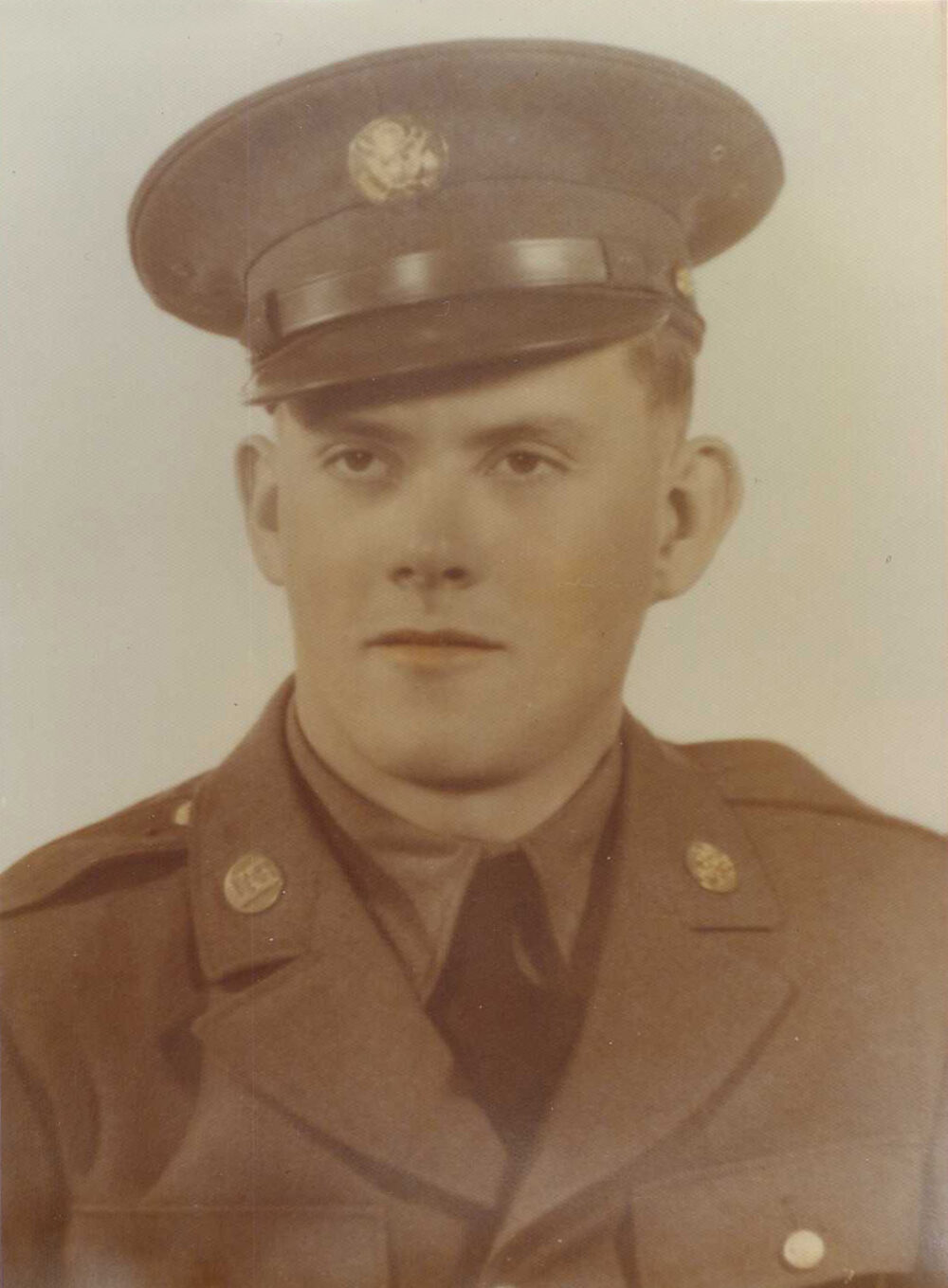
- Unit: Company C, 3rd Medical Battalion, 3rd Infantry Division
- Service Number: 37091805
- Date of Birth: November 8, 1916
- Entered the Military: September 25, 1941
- Date of Death: September 24, 1943
- Hometown: Binford, North Dakota
- Place of Death: Acerno, Italy
- Award(s): Purple Heart
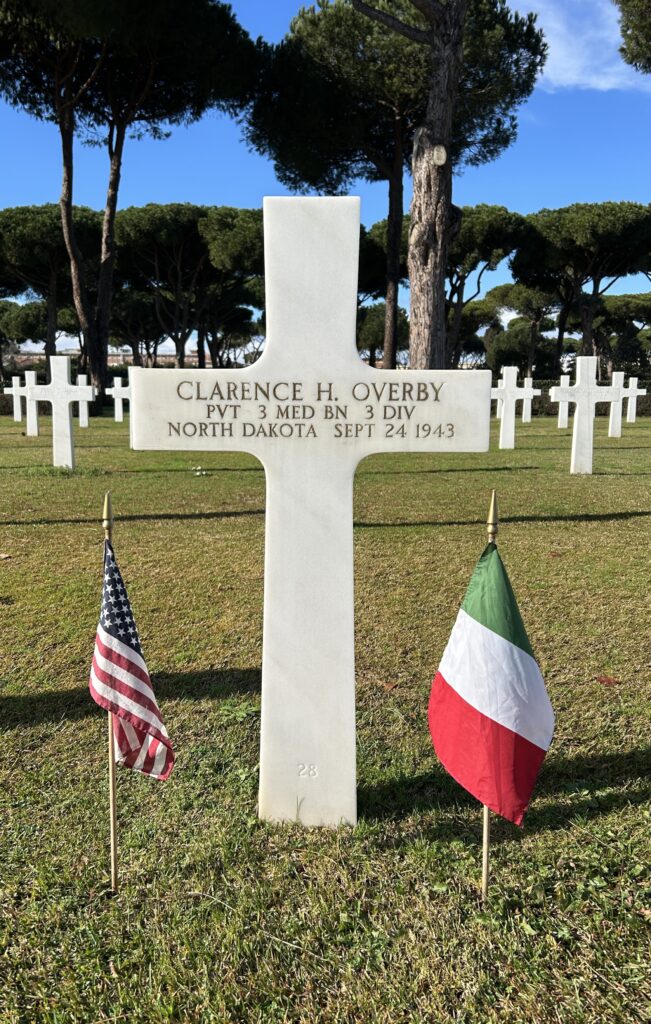
- Cemetery: Plot C, Row 8, Grave 28. Sicily-Rome American Cemetery, Nettuno, Italy
North High School, Fargo, North Dakota
2025/2026
Early Life
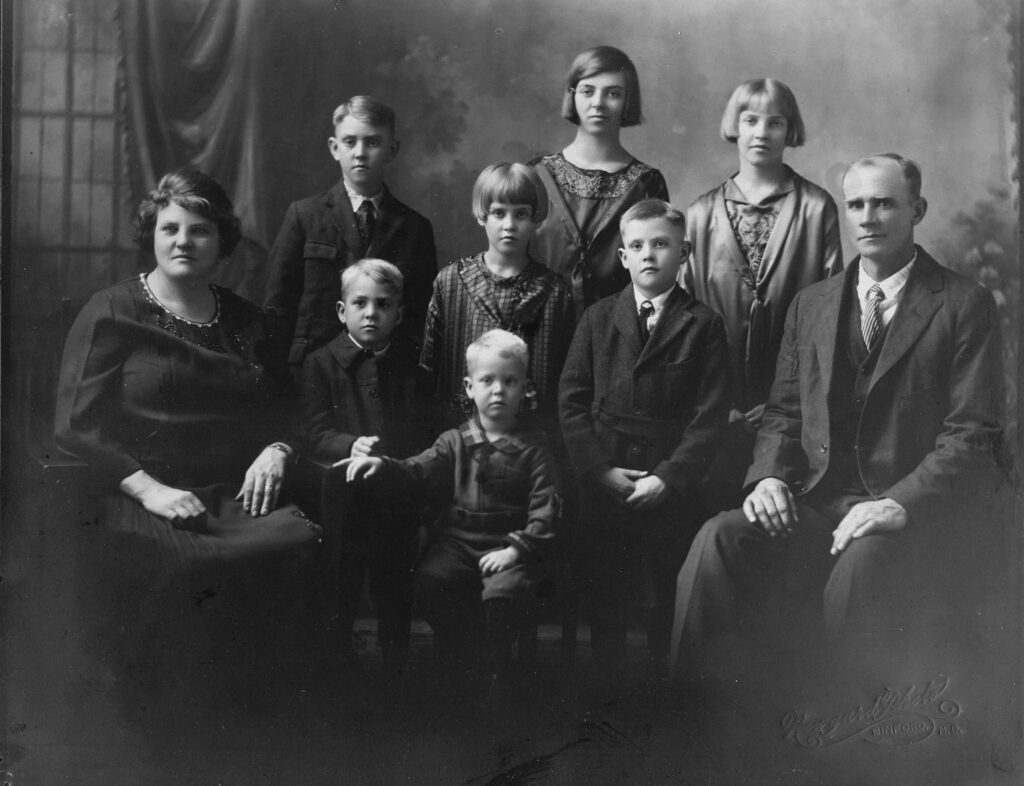
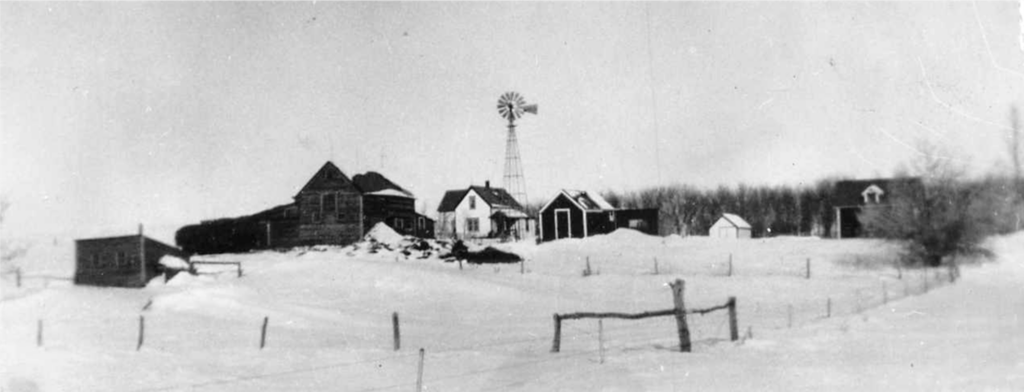
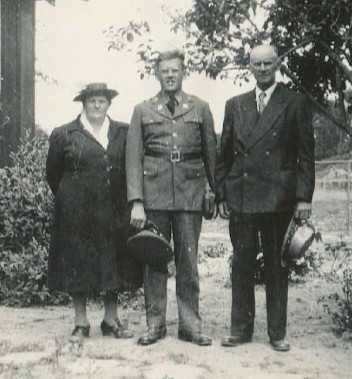
Clarence Herman Overby, along with his twin sister Clara, was born on November 8, 1916, in Binford, North Dakota, to Paul and Sophia Overby. Clarence was one of ten children born in the family, three of whom did not survive past infancy. The family lived on a farm outside of Binford in Griggs County. His paternal grandparents, Andrew and Emma Overby, moved to the Dakota Territory in the early 1880s as homesteaders and settled in the Binford area.
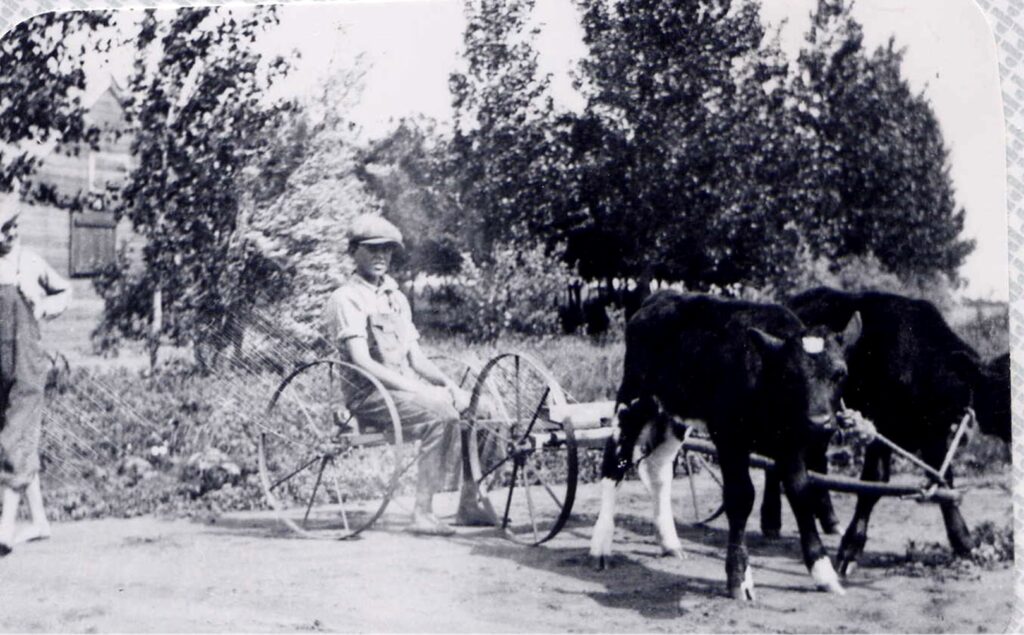
Growing up on a farm in rural North Dakota, Clarence and his family made do with what they had. The children grew potatoes and popcorn to sell in Binford during the summers. Clarence and his brothers trapped fur-bearing animals in the winter to sell their pelts in town. Clarence was skilled with his hands, often making items from scraps around the farm, such as a cigar-box violin or a cart made from an old drill press.
Overby attended the local school until eighth grade, which was common for boys in farming communities at the time. He had perfect attendance from sixth through eighth grades. Religion was an important factor within his family. They attended non-denominational gospel services around the countryside with travelling ministers.
Moving Away From Home
In 1938, at age 22, Overby left home and moved to Northfield, Minnesota. His sister Clara also moved to this area. Overby picked up a job working for Paul Day on his farm.
Two years later, in February of 1940, Overby wrote a letter to Ferdinand Ferch seeking employment. Ferch wrote back and gave him work on his farm outside LaMoure, North Dakota. Overby arrived on March 30, 1940. He was employed here until he was drafted into the United States Army.
Homefront
Griggs County is rural and sparsely populated. Overby grew up outside of Binford, which had a population of 311 people in 1940. The county is nestled on the edge of the Drift Prairie and the “Prairie Potholes” (wetlands formed by the receding glaciers) region of North Dakota.
The county’s main industry was, and still is, agriculture. Griggs County boasted roughly 600 farms by the 1950s. By the 1960s, it was one of the top-producing counties in the nation for flax and barley.
The War Effort
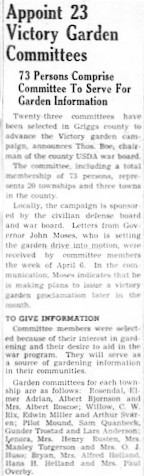
During the war, Griggs County used its agricultural expertise to support the war effort. Overby’s mother, Sophia, was the Bryan Township representative for the county’s Victory Garden Committee. Agricultural implement dealers shifted their business model from selling new equipment to helping farmers repair their existing equipment to extend its use.
As young men went off to serve in the war effort, farmers began to lack the labor needed to plant and harvest their crops. The local school board considered releasing students for an extended spring break to mobilize youth to help plant the crops.
Griggs County ran a war bond drive in April of 1942 and received 1,304 pledges totaling $82,814.68. The county also ran a United Service Organization (USO) drive, aiming to raise $350, which they achieved in two weeks. North Dakota oversubscribed on all war bond quotas and led the nation in per capita war bond purchases.
The county also participated in the war effort through various resource drives. The community ran a successful aluminum scrap drive, the Boy Scouts collected waste paper, and the summer carnival encouraged people to join the efforts with a theme of “Get in the Scrap” in 1942.
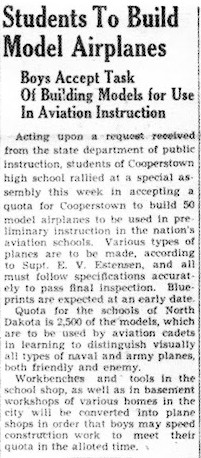
School-age children also contributed to the war effort. The school was tasked with having the children build 50 model planes. These planes were used to teach airmen preliminary flight instruction. In addition to the school, citizens opened up their home workshops to help aid the children, quickly producing all the models needed.
Military Experience
Clarence Overby received his first two military questionnaires at the beginning of February 1941. He met with the local draft board in August of 1941 and got reclassified as “Class 1 A.O.,” which meant he was a conscientious objector on religious grounds.
After being drafted, Overby was processed at Fort Snelling, Minnesota, on September 24, 1941. He completed basic training at Fort Warren, Wyoming. While he was in Wyoming, he had the opportunity to briefly link up with his younger brother, Byron, who served in the military as a medic in Italy. Byron would later be stationed in Alaska during the conflict.
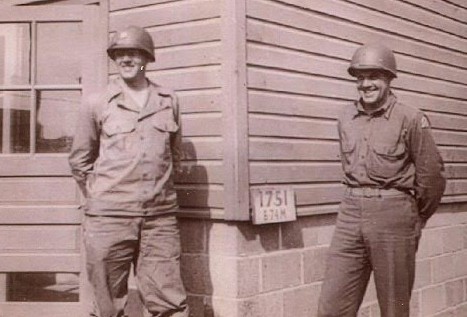
After completing basic training, Overby was sent to machinist school at Camp Normayle, San Antonio, Texas. Then he transferred to Fort Ord, California, where he met Dell Thornton, who would become his best friend in the service. They shared a common faith and were part of a group that would hold regular worship services while at Fort Ord. Clarence wrote home saying that he “sure is a swell kid and I’m glad to know him and be with him in the Army.”
Upon departing the United States for the European Theater of War, Private Clarence Overby was assigned to Company C, 3rd Medical Battalion, 3rd Infantry Division. The company was assigned to support the 30th Infantry Regiment. Overby’s main duty was to be a litter (stretcher) bearer. His job was to pull wounded soldiers from the front lines and bring them to aid stations, typically 100 to 300 yards from the line. From there, he would help transport soldiers to another battalion aid station, which would be a half mile to a mile away from the fighting. Sometimes this would be by litter, and sometimes by ambulance.
Operation Torch
Operation Torch was the first campaign in which Overby saw action. The goal of Operation Torch was to divert Germany’s attention from the Soviet Union, slow Germany’s advance into the Middle East, open the Mediterranean to Allied shipping, and persuade the French to fight with the Allies.
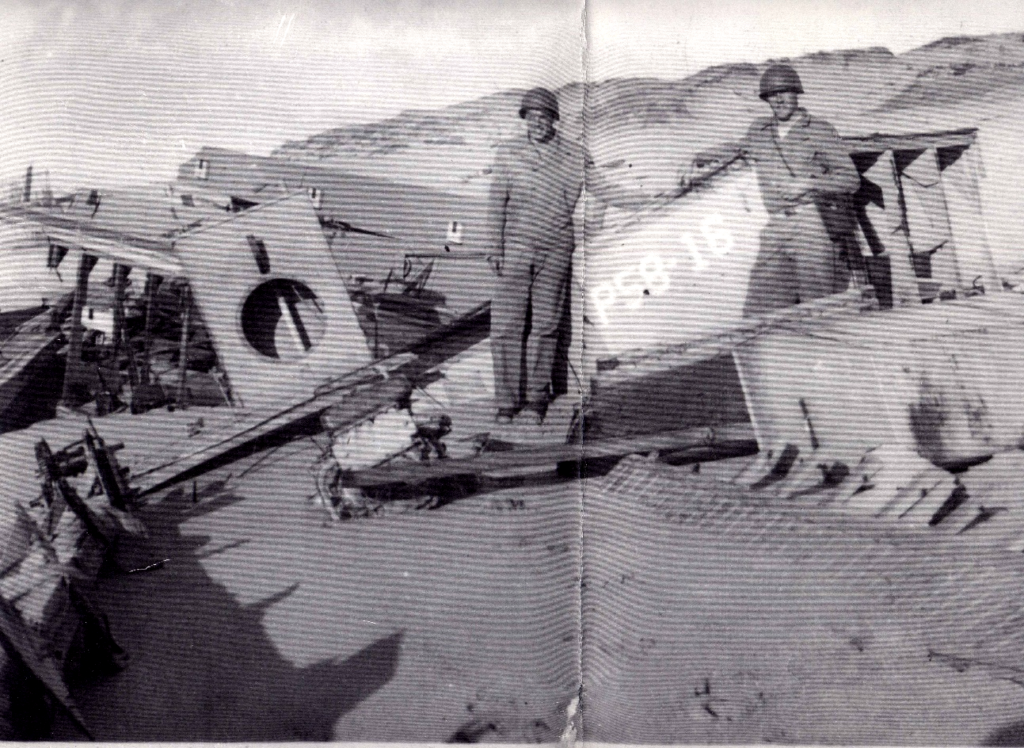
On November 8, 1942, the day of his twenty-sixth birthday, Clarence Overby and Company C of the 3rd Medical Battalion were attached to the 30th Infantry Regiment. They landed on “Blue” beach at Fedala, Morocco. The landing craft faced six-foot high waves. Disembarkment was chaotic and disorganized. Over half of the landing craft were sunk, swamped, or stranded. Dell Thornton thought that he and Overby were among the first hundred people to land on the beach in the confusion of the day.
Once ashore, Overby’s job as a litter bearer was to haul soldiers from the front lines to battalion aid stations. During the afternoon of D-Day, the Army established a clearing station in a casino for 150 litters, with any overflow being directed to space at a local school.
After the success in Fedala and Casablanca, Overby spent time near Rabat in what he described as the “Cork Forest.” He was dutiful in writing home to family and sending souvenirs from where he was stationed. In one letter, he described the excitement of the day when one of their tents caught fire from a candle. While stationed there, he wrote a letter home to his sister Clara about having to stand along the parade route and how he had never dreamed he would see the president in Africa.
Operation Husky
After Operation Torch, Private Overby participated in Operation Husky, the invasion of Sicily. This operation was designed to collapse the Italian government, with the hope that the Germans would either commit more troops to Italy or withdraw entirely to reinforce the Balkans.
Overby and the 30th Infantry Regiment departed Bizerte, Tunisia, on July 6, 1943, for the beaches of Sicily. The regiment was part of the Joss Force, commanded by Major General Lucian K. Truscott, Jr. They landed on the beaches of Licata, on the left flank of the invasion force. The medical detachments followed the infantry ashore approximately two hours later, with collecting companies another two hours behind. The medical staff struggled with the rapid pace of advancement towards Palermo, trying to keep aid stations close enough to the advancing line.
As American forces captured Palermo, elements of the 3rd Medical Battalion took control of an Italian hospital to begin providing medical care to the troops.
Operation Avalanche
Operation Avalanche, the invasion of mainland Italy, was led by a combined British and American force. The operation was designed to open the Mediterranean to Allied shipping, occupy additional German troops, and capture the Foggia Airfield to establish a base to bomb Nazi Germany.
The Americans landed at Salerno, Italy. The initial invasion began on September 9, 1943, but Overby and the 30th Infantry Regiment arrived on September 18.
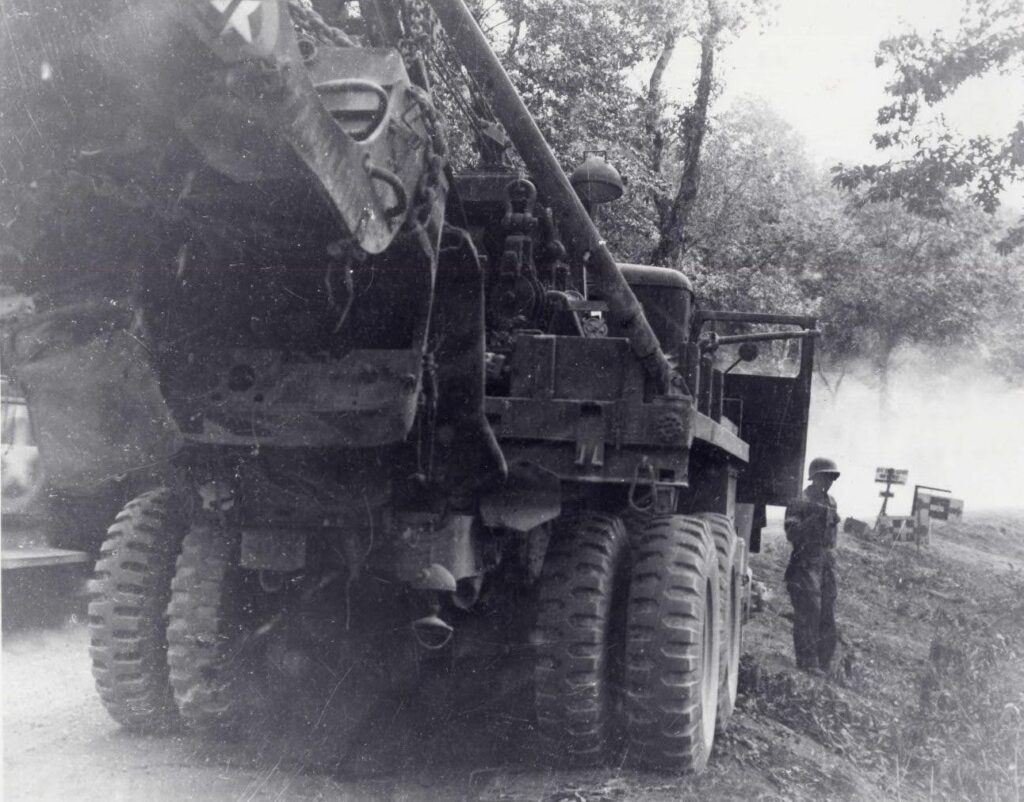
The mountainous terrain of Italy proved a challenge. Demolished bridges slowed the Army’s advance. When a regiment engaged with the enemy, an attempt to flank their position required soldiers to advance around mountains. On September 21, the 3rd Infantry Division encountered stiff resistance from enemy riflemen at a demolished bridge south of Acerno, Italy. The attempt to flank the enemy was delayed by heavy machine gun fire. Within three days of this bridge encounter, Private Clarence Overby was killed in action.
Commemoration
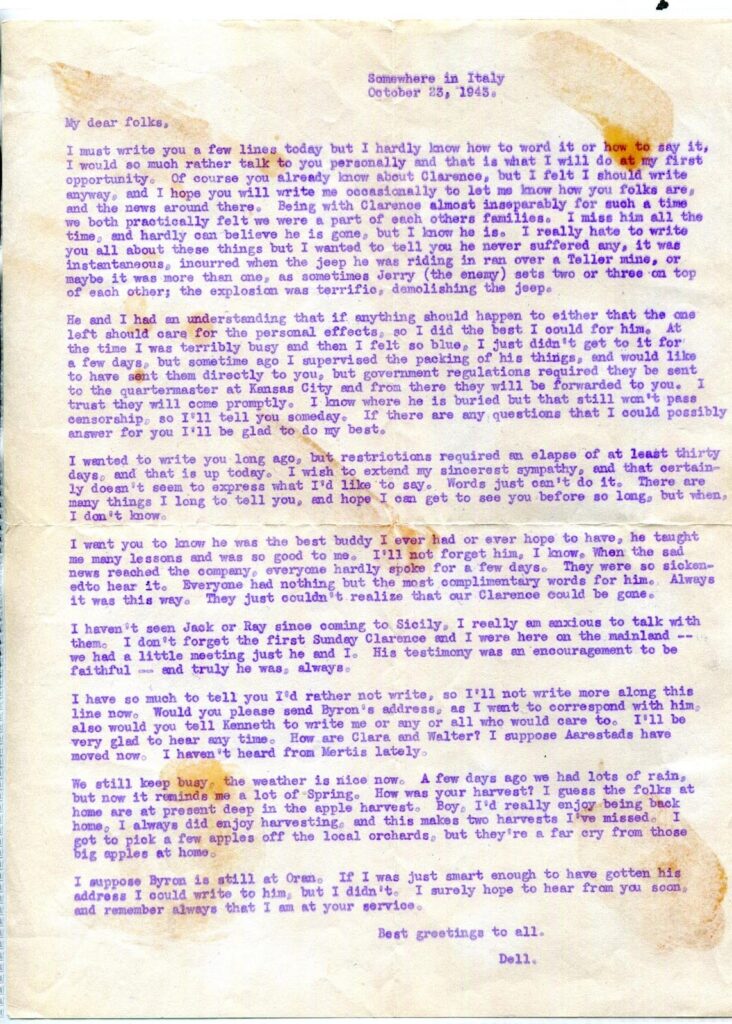
Clarence Overby was killed in action on September 24, 1943, near Acerno, Italy. He was retrieving wounded soldiers from the front lines when the jeep he was riding in struck a Teller mine.
Dell Thornton wrote to Overby’s parents. He described their son as the “best buddy I ever had or ever hope to have.” The death hit his company hard. Dell wrote that “everyone hardly spoke for a few days.”
Overby was temporarily interred at the Mount Soprano American Cemetery before his remains were transferred to a permanent resting place. He was awarded the Purple Heart and is buried in plot C, row 8, grave 28 in the Sicily-Rome American Cemetery, Nettuno, Italy.
Bibliography
Primary Sources
“1950 Census of Population Preliminary Counts.” Report. 1950. U.S. Census Bureau. https://www.census.gov/library/publications/1950/dec/pc-01.html.
“Appoint 23 Victory Garden Committees.” Griggs County Sentinel Courier [Cooperstown, North Dakota], April 16, 1942.
Area Facts Survey, Cooperstown, North Dakota: Manufacturing, Agriculture, Cattle. North Dakota State Library (F644.C8 A74 1964)
Clarence H. Overby, Final Pay Voucher, Department of the Army, National Archives and Records Administration – St. Louis.
Clarence H. Overby. World War II Draft Cards Young Men, 1940-1947. Digital Images. https://ancestryclassroom.com.
“Clarence Overby’s Buddy Relates Details Of Death On Italian Front.” Griggs County Sentinel-Courier [Cooperstown, North Dakota], November 18, 1943.
“Clarence Overby Killed In Action On Italian Front.” Griggs County Sentinel-Courier [Cooperstown, North Dakota], November 11, 1943.
“Defense Bond Campaign Now Being Organized in Griggs.” Griggs County Sentinel Courier [Cooperstown, North Dakota], January 8, 1942.
“Draftees to Get Bismarck Exam.” Griggs County Sentinel Courier [Cooperstown, North Dakota], November 27, 1941.
“Drive for Aluminum Nets 1,000 Pounds.” Griggs County Sentinel Courier [Cooperstown, North Dakota], September 11, 1941.
“Griggs County Pledges Large Amount In War Bonds, Stamps.” Griggs County Sentinel Courier [Cooperstown, North Dakota], May 21, 1942.
“Griggs County Prepares For All Out Bond Sale” Griggs County Sentinel Courier [Cooperstown, North Dakota], April 16, 1942.
“Merchants Warned on F.S.P. Rules.” Griggs County Sentinel Courier [Cooperstown, North Dakota], January 1, 1942.
“Motorists Waiting For Auto Stamps.” Griggs County Sentinel Courier [Cooperstown, North Dakota], January 15, 1942.
“New Innovation in Soldier Mail.” Griggs County Sentinel Courier [Cooperstown, North Dakota], August 13, 1942.
North Dakota. Griggs County. 1920 U.S Census. Digital Images. http://ancestryclasroom.com.
North Dakota. Griggs County. 1930 U.S Census. Digital Images. http://ancestryclasroom.com.
North Dakota. LaMoure County. 1940 U.S. Census. Digital Images. http://ancestryclasroom.com.
“Number of Inhabitants: North Dakota.” U.S. Department of Commerce, 1950 https://www2.census.gov/library/publications/decennial/1950/population-volume-2/37783928v2p34ch2.pdf.
Overby Family Photographs. Courtesy of Lorna Olson.
Overby Family Records. Courtesy of Lorna Olson.
“Personal Property Taxes.” Griggs County Sentinel Courier [Cooperstown, North Dakota], November 27, 1930.
“Plan Repair Move For Farm Machinery.” Griggs County Sentinel Courier [Cooperstown, North Dakota], November 20, 1941.
“Rubber, Iron Salvage Feature June Festival.” Griggs County Sentinel Courier [Cooperstown, North Dakota], June 18, 1942.
“Save Wastepaper for Boy Scouts.” Griggs County Sentinel Courier [Cooperstown, North Dakota], January 8, 1942.
“Schools Considering Spring Vacation To Help Farm Work.” Griggs County Sentinel Courier [Cooperstown, North Dakota], February 5, 1942.
“Students To Build Model Airplanes.” Griggs County Sentinel Courier [Cooperstown, North Dakota], February 12, 1942.
“USO Campaign in Griggs Underway.” Griggs County Sentinel Courier [Cooperstown, North Dakota], September 6, 1941.
Secondary Sources
Atkinson, Rick. An Army at Dawn: The War in North Africa, 1942-1943. Henry Holt and Co., 2002.
Atkinson, Rick. The Day of Battle: The War in Sicily and Italy, 1943-1944. Henry Holt and Co., 2008.
Blumenson, Martin. United States Army in World War II Mediterranean Theater of Operations Salerno to Cassino. Office of the Chief of Military History, Department of the Army, 1993. https://www.ibiblio.org/hyperwar/USA/USA-MTO-Salerno/index.html.
“Clarence H. Overby.” American Battle Monuments Commission. Accessed October 21, 2025. https://weremember.abmc.gov/s?q=*&type=16&criteria=title%3DOverby&b=0&a=c&v=G.
“Clarence H. Overby.” Veterans Legacy Memorial, National Cemetery Administration. Accessed March 4, 2026. https://www.vlm.cem.va.gov/.
“Clarence Herman Overby.” Find a Grave. Accessed October 12, 2025. https://www.findagrave.com/memorial/56312937/clarence_herman-overby.
Garland, Albert N., Howard McGaw Smyth, and Martin Blumenson. United States Army in World War II Mediterranean Theater of Operations Sicily and the Surrender of Italy. Office of the Chief of Military History, Department of the Army, 1993. https://www.ibiblio.org/hyperwar/USA/USA-MTO-Sicily/index.html.
Howe, George F. United States Army in World War II Mediterranean Theater of Operations Northwest Africa: Seizing the Initiative in the West. Office of the Chief of Military History, Department of the Army, 1957. https://www.ibiblio.org/hyperwar/USA/USA-MTO-NWA/index.html.
“Section 1: The Three Regions of North Dakota.” North Dakota Studies Grade 4 Curriculum. https://www.ndstudies.gov/gr8/content/unit-ii-time-transformation-1201-1860/lesson-1-changing-landscapes/topic-1-three-regions-north-dakota/section-1-three-regions-north-dakota.
Wiltse, Charles M. The Medical Department. Medical Service in the Mediterranean and Minor Theaters. Vol. II. Office of the Chief of Military History, Department of the Army, 1965. https://apps.dtic.mil/sti/tr/pdf/ADA293126.pdf.
“The WW2 Medical Battalion, Infantry Division.” WW2 US Medical Research Centre. Accessed December 29, 2025. https://www.med-dept.com/articles/the-ww2-medical-battalion-infantry-division/.
This profile was researched and created through the Researching Silent Heroes program, sponsored by the American Battle Monuments Commission.