

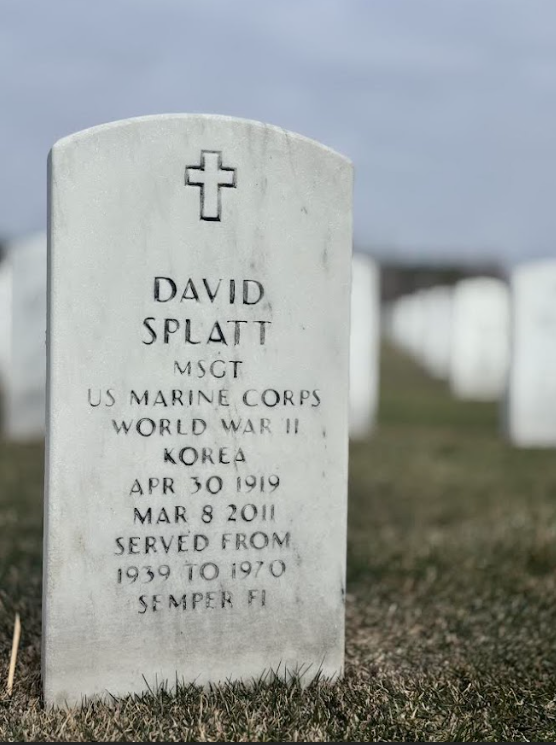
Master Sergeant David Splatt
- Unit: 1st Amphibian Tractor Battalion
- Date of Birth: April 30, 1919
- Entered the Military: November 15, 1939
- Date of Death: March 8, 2011
- Hometown: Born in Scotland, Grew up in Pontiac, Michigan
- Cemetery: Section 3, Site 480. Great Lakes National Cemetery, Holly, Michigan
Mentored by Ms. Chelsea Blair
Our Lady of Refuge School, Orchard Lake, Michigan
2025/2026
Early Life
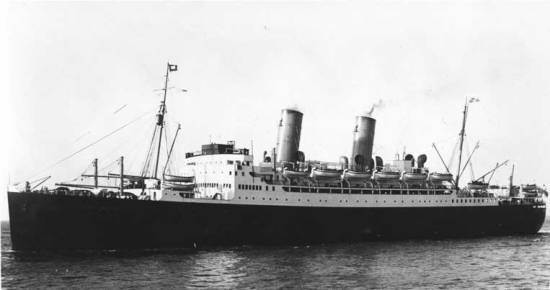
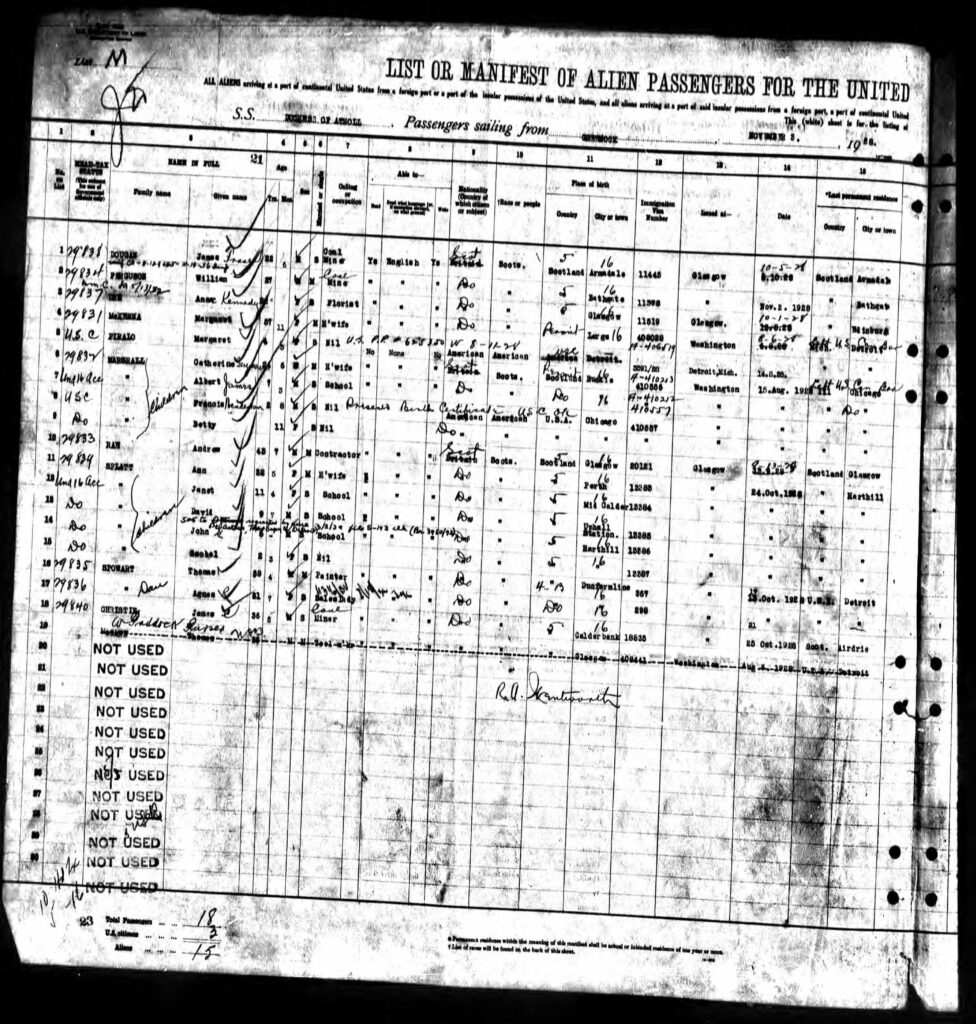
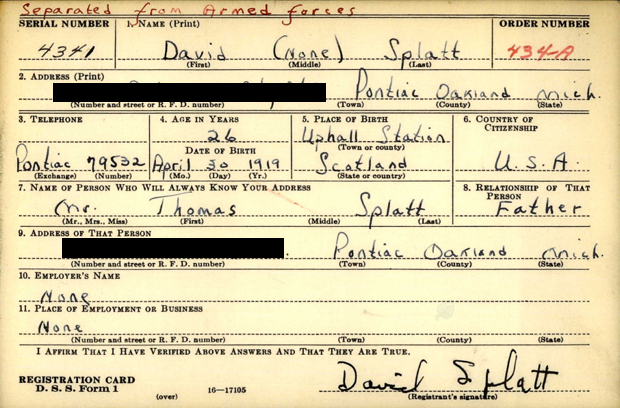
Born on April 30, 1919, in Uphall Station, Scotland, David was the son of Thomas Splatt and Ann Gilmour. His father moved to the United States in 1925. His mother and siblings journeyed from Scotland to Canada aboard the British passenger ship RMS Duchess of Atholl, then across the border, in 1928, when he was just nine years old. The family settled in Pontiac, Michigan, where his father worked for Fisher Body Automotive.
Homefront
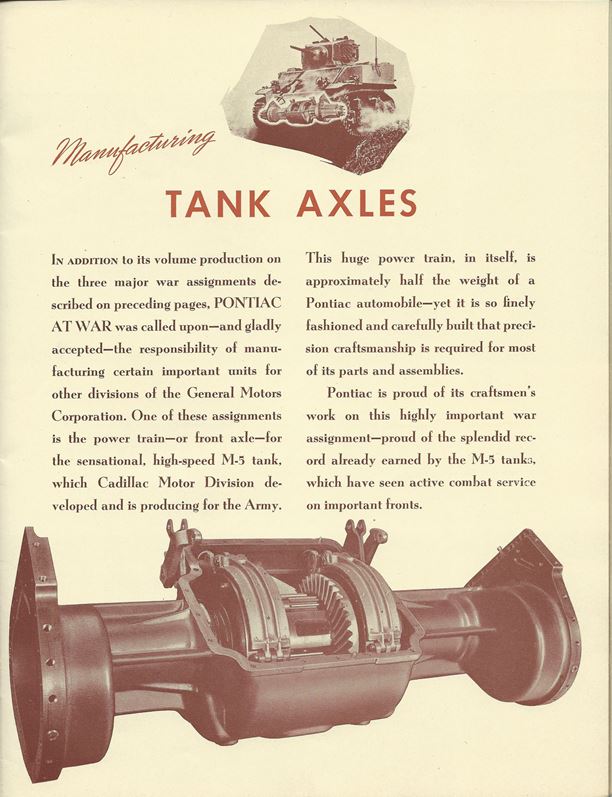
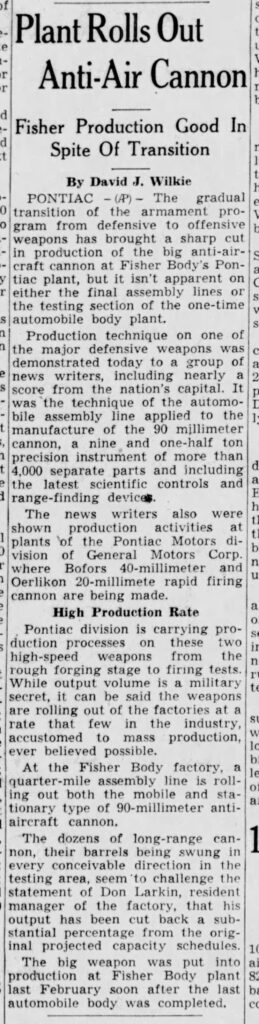
During World War II, the Fisher Body plant in Pontiac became an important part of the war effort, shifting from car production to the manufacture of military equipment. Workers at the plant helped build parts for the M4 Sherman tank, the M10 tank destroyer, and the M36 tank destroyer, all of which were used in combat overseas. The plant also contributed to the assembly of aircraft such as the B-17 Flying Fortress, B-25 Mitchell, and B-29 Superfortress. David Splatt’s father, Thomas, was one of the many workers at Fisher Body during this time, contributing to the production that supported American troops. His experience reflects how ordinary people in Pontiac played a direct role in what became known as the “Arsenal of Democracy.” The demand for labor to support the war effort also brought many new workers to Pontiac, helping it grow during the war.
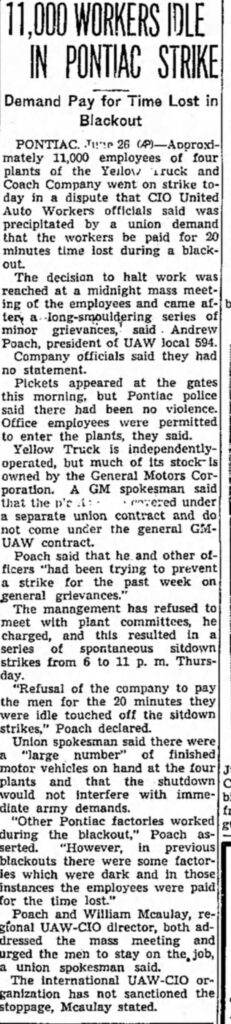
In 1942, workers at the Yellow Truck and Coach Manufacturing Company in Pontiac staged a strike that reflected the growing power of labor unions during World War II. The workers walked out to protest the company’s refusal to pay them for time spent working during mandatory blackout conditions, when production continued under strict wartime regulations. These blackouts were required for safety, but employees argued they should still be compensated for their labor during those hours. The strike highlighted the strength of organized labor in Pontiac, as unions pushed for fair wages and better working conditions even while industries were essential to the war effort. This local dispute was part of a much larger national labor movement, showing how workers across the country used union power to advocate for their rights while still supporting the broader goals of wartime production.
Military Experience
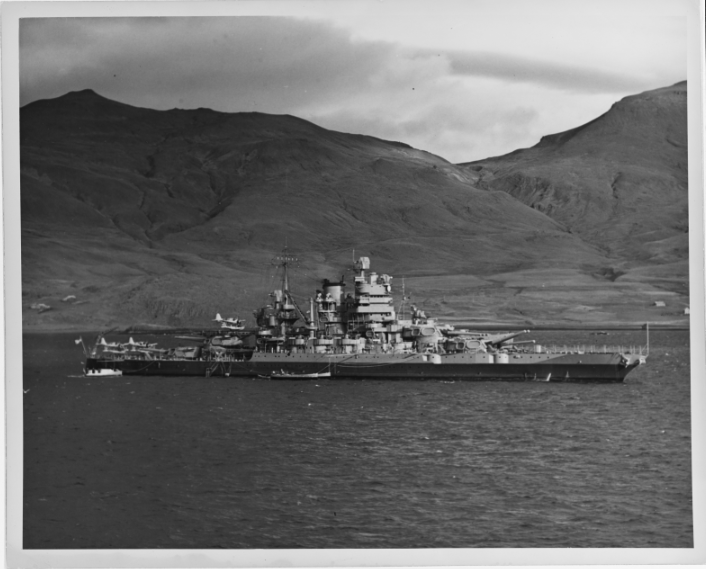
The story of David Splatt’s 30-year commitment to Marine service begins in 1939 at the Marine Corps Recruit Depot on Parris Island. There, as a newly enlisted private, he was introduced to the rigid discipline and transformation that would define his early service. From those training grounds, he was quickly moved to the naval hub at Norfolk, where he continued his duties as a Private and soon earned promotion to Private First Class. These early years were marked by constant movement. Training detachments, guard assignments, and sea school reflected the expansion of the Marine Corps on the eve of global war. By 1941, his service had already taken him aboard the battleship USS Idaho (BB-42), carrying him as far as Iceland, where American forces stood watch in the North Atlantic.
By 1942, he had been promoted to corporal, a noncommissioned officer responsible for leadership. Serving with Marine detachments aboard USS Idaho and later within amphibious transport groups in the South Pacific, Splatt’s role shifted from learning to leading. His assignments placed him at the heart of the evolving amphibious warfare strategy that would define the Pacific Theater of World War II. By 1943, he was stationed at Camp Elliott and later Camp Pendleton, immersed in training and preparation for large-scale operations. His transition into the 1st Armored Amphibious Battalion marked a turning point in his career. This was no longer routine duty, but specialized combat training. In 1944, he rose to the rank of sergeant, serving with armored amphibious units attached to the III Amphibious Corps in the field.
Near the climax of the war in 1945, Splatt reached the rank of gunnery sergeant and platoon sergeant within the 3rd Armored Amphibious Battalion, Fleet Marine Force, operating in the Pacific. This placed him among senior enlisted leaders responsible for guiding Marines through some of the most complex and dangerous amphibious assaults of the war. His unit supported critical island campaigns that demanded coordination, courage, and endurance.
After the war, records show Splatt continued his service until he retired in 1970.
Veteran Experience
Splatt married Shelia Daisy Renwick in Auburn Heights, Michigan, on December 11, 1948. His daughters, Jeanie, Annie, and Janet, were born while he was actively serving.
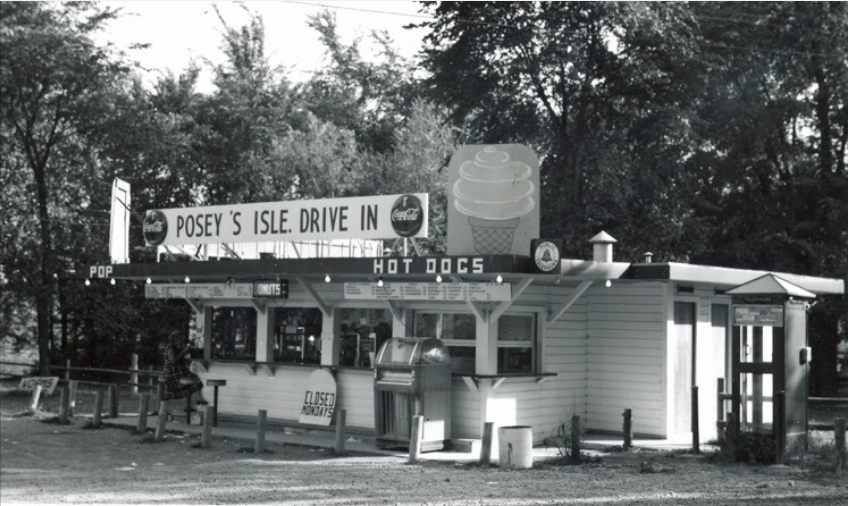
After he retired from the Marines, the family settled in Rochester, Michigan. There, he and his wife owned and operated a hamburger shop known as Posey’s Isle. Across the street, his wife’s sister owned Yates Cider Mill, where Splatt was known to make doughnuts, which contributed to the sense of community surrounding both businesses. In later years, he sold the shop and enjoyed playing golf and wintering in Florida.
Commemoration
Master Sergeant David Splatt passed away on March 8, 2011, at the age of 91. His wife of 58 years, Sheila, predeceased him in 2006. He was a proud father, grandfather, and great-grandfather.
Splatt was buried with full military honors at the Great Lakes National Cemetery in Holly, Michigan.
Bibliography
Primary Sources
“11,000 Workers Idle In Pontiac Strike.” The Daily Telegram [Adrian, Michigan], June 26, 1942. Newspapers.com (534892).
“Army Crew Set to Seize U.S. Rubber.” Detroit Evening Times [Detroit, Michigan], July 31, 1945. Library of Congress (sn88063294). https://www.loc.gov/resource/sn88063294/1945-07-31/ed-1/?sp=1&r=-0.664,-0.18,2.329,1.443,0.
“Arms Speeded As Pontiac Strike Ends.” Detroit Evening Times [Detroit, Michigan], August 1, 1942. Library of Congress (sn88063294). https://loc.gov/resource/sn88063294/1942-08-01/ed-1/?sp=1&st=image&r=-0.089,0.262,1,0.62,0.
David Splatt. Michigan, U.S., County Marriage Records, 1865-1972. Digital Images. https://ancestryclassroom.com.
David Splatt. U.S., Border Crossings from Canada to U.S., 1895-1960. Digital Images. https://ancestryclassroom.com.
David Splatt. U.S. Marine Corps Muster Rolls, 1798-1958. Digital Images. https://fold3.com.
David Splatt. World War II Draft Cards Young Men, 1940-1947. Digital Images. https://ancestryclassroom.com.
Duchess of Atholl. Allen Collection, Uboat.net. Accessed March 3, 2026. https://uboat.net/allies/merchants/ship/2257.html.
Harris, F.P. “Pontiac.” The Detroit Tribune [Detroit, Michigan], July 4, 1942. Library of Congress (sn92063852). https://www.loc.gov/resource/sn92063852/1942-07-04/ed-1/?dl=page&q=speech%2Bwar%2Bpontiac,mi&sp=19&r=-0.264,0.172,1.52,0.942,0.
Hunt, Elizabeth. Oral History. April 14, 1977. Pontiac Oral Histories, Oakland University. https://omeka.oaklanddigitalcollections.reclaim.hosting/cms/items/show/32.
Lawrence, Otis. Oral History. March 9, 1977. Pontiac Oral Histories, Oakland University. https://omeka.oaklanddigitalcollections.reclaim.hosting/cms/items/show/36.
Michigan. Oakland County. 1930 U.S. Census. Digital Images. https://ancestryclasroom.com.
Michigan. Oakland County. 1940 U.S. Census. Digital Images. https://ancestryclasroom.com.
“Pontiac Teachers Vote to Hold Strike.” The Michigan Daily [Ann Arbor, Michigan], May 17, 1944. https://digital.bentley.umich.edu/midaily/mdp.39015071756147/361.
Richards, Lilian. Lawrence, Otis. Oral History. March 17, 1977. Pontiac Oral Histories, Oakland University. https://omeka.oaklanddigitalcollections.reclaim.hosting/cms/items/show/27.
Ricks, Harry. Lawrence, Otis. Oral History. May 25, 1977. Pontiac Oral Histories, Oakland University. https://omeka.oaklanddigitalcollections.reclaim.hosting/cms/items/show/28.
USS Idaho. Photograph. October 1941. Collection of Vice Admiral Robert C. Giffen, USN. Naval History and Heritage Command (NH 94650). https://www.history.navy.mil/content/history/nhhc/our-collections/photography/us-navy-ships/battleships/idaho-bb-42/NH-94650.html.
View of the Wilson Foundry and Machine Company factory in Pontiac, Michigan. Postcard. Burton Historical Collection, Detroit Public Library (bh021481). https://digitalcollections.detroitpubliclibrary.org/bh021481.
Wilke, David. “Plant Rolls Out Anti-Air Cannon.” The Ann Arbor News [Ann Arbor, Michigan], December 3, 1942. Newspapers.com (1178690907).
Secondary Sources
“David Splatt.” Find a Grave. Accessed May 1, 2026. https://www.findagrave.com/memorial/67156564/david-splatt.
“David Splatt.” Veterans Legacy Memorial, National Cemetery Administration. Accessed May 1, 2026. https://www.vlm.cem.va.gov/DAVIDSPLATT/7C47C07.
“David Splatt MSGT. (Ret).” The Oakland Press, March 9, 2011. https://www.legacy.com/us/obituaries/theoaklandpress/name/david-splatt-obituary?id=22374620
Davis, Michael. Detroit’s Wartime Industry: Arsenal of Democracy. Arcadia Publishing, 2007.
“Food and Fun Go Hand in Hand.” Yates Cider Mill. Updated October 16, 2023. Accessed December 2, 2025. https://yatescidermill.com/food-and-fun-go-hand-in-hand/.
“Great Migrations Opportunities in Boomtown Pontiac.” Historical Marker Database. Updated June 21, 2021. Accessed May 1, 2026. https://www.hmdb.org/m.asp?m=175586.
Hickman, Kennedy. “World War II: USS Idaho (BB-42).” ThoughtCo. Updated July 3, 2019. Accessed January 16, 2026. https://www.thoughtco.com/uss-idaho-bb-42-2361286.
“Historical Population and Employment by Minor Civil Division, Southeast Michigan.” Southeast Michigan Council of Governments. June 2002. https://www.semcog.org/wp-content/uploads/2025/08/HistoricalPopulationAndEmploymentByMinorCivilDivisionSoutheastMichiganJune2002.pdf.
“Our Roots: Yates Cider Mill The Oldest Cider Mill in Michigan.” Updated January 2024. Accessed February 22, 2026. https://yatescidermill.com/history/.
Pontiac at War: A Special Report to Employees of Pontiac Motor Division. Report. November 1943. “Pontiac Motor Division in World War II.” The American Automobile Industry in World War Two: An American Auto Industry Heritage Tribute. Accessed March 1, 2026. https://usautoindustryworldwartwo.com/General%20Motors/pontiac.htm.
“Vanished Rochester: Posey’s Isle.” Remembering Rochester Blog, July 27, 2013. https://rochesteravonhistory.blogspot.com/2013/07/vanished-rochester-poseys-isle.html.
This profile was funded by a grant from the United States Department of Veterans Affairs. The opinions, findings, and conclusions stated herein are those of the author and do not necessarily reflect those of the United States Department of Veterans Affairs.