

Colonel Ernestine Stowell
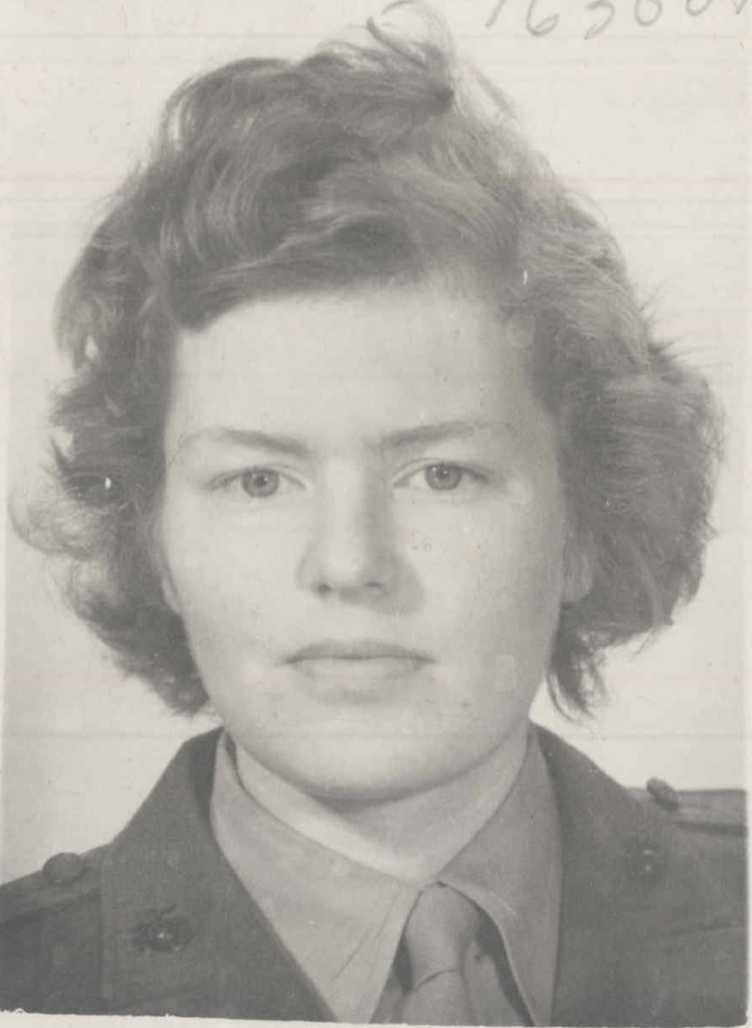
- Unit: Marine Corps Women’s Reserve, Headquarters, Second Headquarters Battalion, Company E
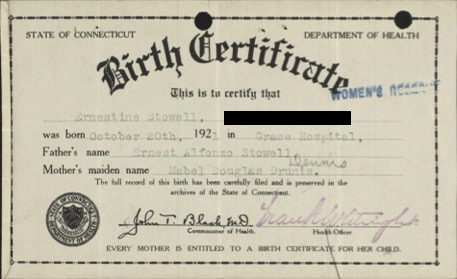
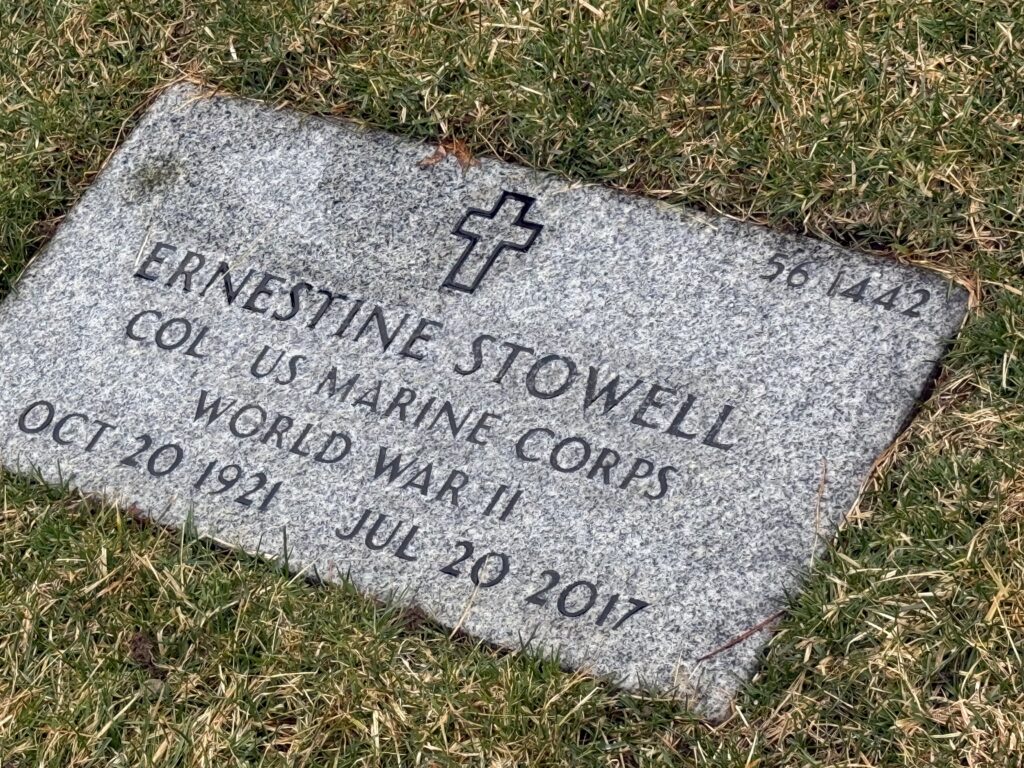
- Date of Birth: October 20, 1921
- Entered the Military: September 18, 1943
- Date of Death: July 20, 2017
- Hometown: New Haven, Connecticut
- Place of Death: Holyoke, Massachusetts
- Cemetery: Section 56, Site 1442. Massachusetts National Cemetery, Bourne, Massachusetts
Mentored by Mr. Michael Hill
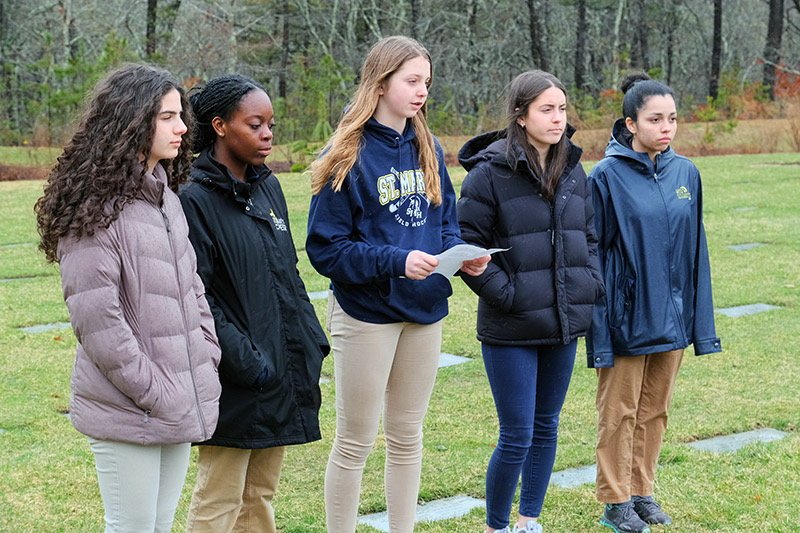
St. Mary’s Lynn, Lynn, Massachusetts
2025/2026
Early Life
Ernestine Stowell was born on October 20, 1921, in New Haven, Connecticut, where she spent her childhood and formative years. She grew up in a stable, middle-class household during the interwar period, a time marked by social change and economic hardship in the United States.
Ernestine had one sibling, an older brother, Douglas Stowell, who was one year her senior. Like his sister, he later served in the military during World War II.
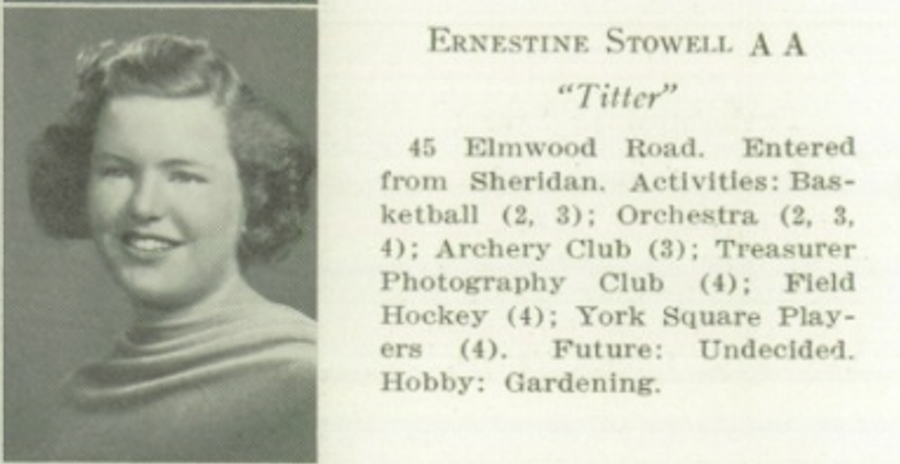
From 1935 to 1939, Stowell attended Hillhouse High School in New Haven, where she was an active and well-rounded student. Known as “Titter,” she participated in a wide range of extracurricular activities. She played basketball during her sophomore and junior years and field hockey as a senior. Stowell was also a member of the school orchestra, the archery club, and the York Square Players, and she served as treasurer of the photography club. In addition, she was a member of the Alpha Alpha Sorority.
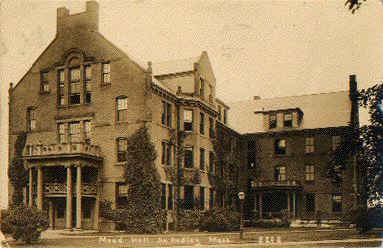
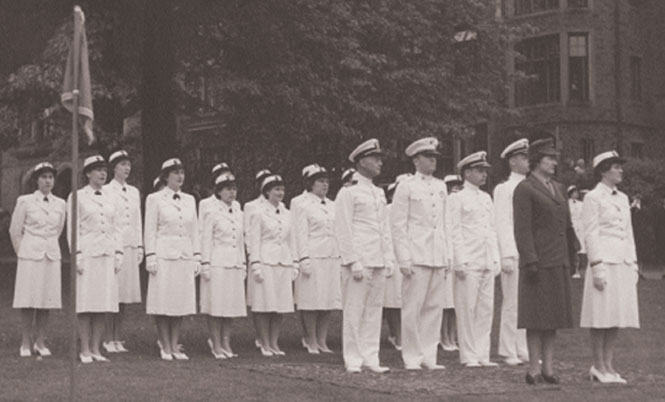
Following high school, Stowell enrolled at Mount Holyoke College, where she lived in Mead Hall and studied art history. She graduated with a Bachelor of Arts degree in 1943. During her college years, World War II was already underway, and she frequently observed training drills conducted by women in the military, including members of the Women Accepted for Volunteer Emergency Service (WAVES) and the United States Marine Corps Women’s Reserve. WAVES and Women Marines lived and trained on campus full-time. Witnessing these women in uniform had a lasting impact and influenced her decision to serve.
Homefront
South Hadley, Massachusetts
South Hadley, Massachusetts, is a small, historic New England town located along the Connecticut River and home to Mount Holyoke College, one of the nation’s oldest women’s colleges. During World War II, South Hadley was a quiet, close-knit community, but the presence of Mount Holyoke made the war effort highly visible. Students and residents alike were encouraged to contribute through food production, conservation, and volunteer labor.
One of the most notable wartime efforts in South Hadley was the establishment of a large Victory Garden at Mount Holyoke College. Maintained by students, the garden covered approximately 12 acres and produced thousands of vegetables, including tomatoes, cabbage, broccoli, potatoes, corn, beans, and squash. This effort reflected the nationwide push for food conservation and local self-sufficiency as resources were redirected to support American troops abroad.
New Haven, Connecticut
Nearby New Haven, Connecticut, where Stowell grew up, became a major industrial and logistical hub during the war. Factories in and around the city produced weapons, aircraft engines, tanks, ammunition, and other critical materials. The Winchester Repeating Arms Company manufactured machine guns and rifles used by American and Allied forces. The Pratt & Whitney factory in nearby East Hartford built more than 17,000 aircraft engines for the United States military, and Sikorsky Aircraft in Stratford contributed to early helicopter development. These industries made Connecticut part of “the Arsenal of Democracy.”
Civilian life on the home front was shaped by rationing, fundraising, and volunteer service. Local chapters of the American Red Cross organized aid efforts, sending care packages to soldiers overseas that included clothing, hygiene items, and other comforts. Religious and civic organizations sponsored canteens and recreational spaces for service members and conducted large-scale war bond drives to help finance the war. In New Haven alone, bond sales reached millions of dollars.
The war also brought significant population shifts. As men left for military service, women, immigrants, and African Americans filled essential roles in factories and defense industries. Women entered manufacturing and technical positions previously closed to them, while minority groups gained access to new employment opportunities, reshaping the region’s social and economic landscape. New Haven and other Connecticut cities experienced rapid growth as workers migrated to meet industrial demand.
Military Experience
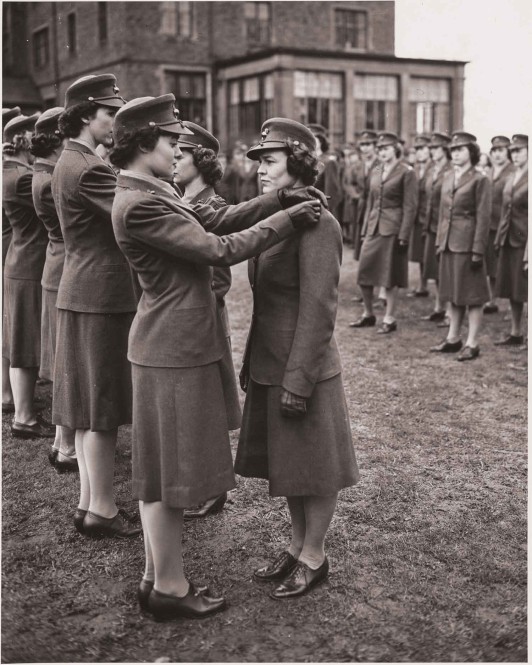
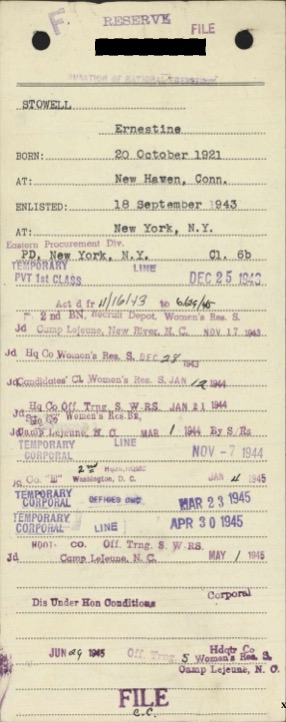
Ernestine Stowell enlisted in the United States Marine Corps Women’s Reserve on September 18, 1943. At the time, women were not eligible for the draft, and her decision to enlist was voluntary.
Following her enlistment, Stowell received training at Marine Corps Women’s Reserve Schools, Recruit Depot, Camp Lejeune, North Carolina. At the end of December 1943, she was promoted to private first class and assigned to the Women’s Reserve Battalion Headquarters Company. On December 27, 1943, she applied for the 12th Officer Candidate Class (OCS). That January, she joined the 2nd Battalion, Officer Training School (OTS) in Camp Lejeune.
In February 1944, Stowell was screened out of the 12th Officer Candidate Class, likely due to her short time of service. Instead, she was assigned to Recreation Duty with the Women’s Reserve Battalion at Camp Lejeune. Stowell played a key role in supporting service members’ morale and well-being. She organized and oversaw recreational programming and was placed in charge of a camp-wide art exhibit. In addition, she led art classes and instruction for personnel at Camp Lejeune, drawing on her academic background in art history to enrich daily life on the base. These efforts helped maintain morale and provide constructive outlets during a demanding period of wartime service.
On November 7, 1944, she was promoted to corporal. That December, Stowell submitted her second application for Officer Training School. She was endorsed by several commanding officers at Camp Lejeune. While she waited for the results, she was transferred to the 2nd Headquarters Battalion, Headquarters, U.S. Marine Corps, Washington, D.C., effective January 4, 1945, where she was assigned to the Division of Plans and Policies as a replacement for Corporal Crystal Theodore.
On March 23, 1945, her assignment was updated. She was formally assigned to Company E, 2nd Headquarters Battalion, specifically for duty in the Offices of the Commandant of the Marine Corps. On April 6, 1945, Stowell was finally approved for Officer Training School (OTS) and directed to transfer back to Camp Lejeune in May for a final screening.
On May 1, 1945, Stowell joined Officer Training School as a corporal. On June 20, 1945, she was recommended for a commission as a second lieutenant in the Marine Corps Women’s Reserve. The promotion never came to pass. One day before her expected commissioning date, on June 29, 1945, Stowell was honorably discharged from the Marine Corps at Camp Lejeune with the rank of Corporal. She entered OTS just days before V-E (Victory in Europe) Day, and was likely caught up in the military drawdown that followed.
Veteran Experience
After World War II, Ernestine Stowell returned home to civilian life but did not marry or have children. Rather than beginning a traditional family life, she devoted her postwar years to public service, professional exploration, and continued involvement in both her community and the military.
She moved to New York City, where she pursued a career in public relations and advertising, working for Gommi Associates, a commercial photography firm specializing in food styling. During this time, she also remained actively involved in the Marine Corps Reserve, joining a reserve company at Fort Schuyler in the Bronx. There, she conducted a personal classification training program for approximately 50 women, helping them prepare for service roles.
In 1962, Stowell returned to Mount Holyoke College, her alma mater, marking the beginning of a long and meaningful chapter of service to the institution. She joined the Capital Fund Campaign as a field worker, serving as a liaison between the college and its volunteer alumnae, and later rose to the position of Assistant Director of Alumnae Development, contributing to fundraising initiatives and participating in discussions on the evolving topic of coeducation. Her work helped strengthen alumnae engagement and support during a critical period of institutional growth.
Stowell’s efforts during the Capital Fund Campaign played a key role in raising $13 million, a significant achievement at the time. In recognition of her dedication, she received the Alumnae Association Medal of Honor, one of the college’s highest distinctions. Even later in life, she remained deeply connected to Mount Holyoke, ultimately serving as president of her graduating class until her death.
Beyond higher education and military service, Stowell also pursued a career in health and wellness. She lived in South Hadley, Massachusetts, for nearly 50 years and operated a chiropractic practice there for more than two decades. Known within the community for her commitment to natural healing and patient care, she became a respected local figure who emphasized service, wellness, and personal responsibility.
Her military involvement extended far beyond World War II. Stowell remained a member of the United States Marine Corps Reserve for over 30 years, retiring in 1981. She organized the 25th anniversary celebration of the United States Marine Corps Women’s Reserve in 1968 and held leadership roles in numerous Veterans’ organizations. She served as president of the Western Massachusetts chapter of the Women Marines Association and later became an Area Director for the national organization.
Additionally, she was a member of the Marine Corps League, the American Legion, and Women in Military Service for America, continuing her lifelong commitment to honoring service members and preserving military history.

Commemoration
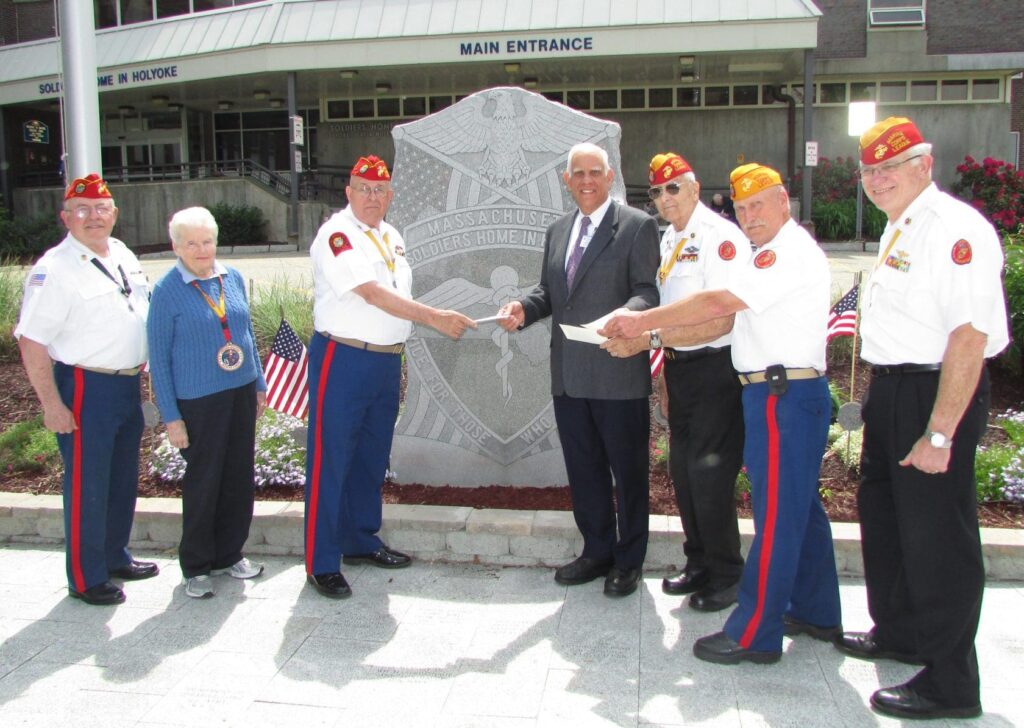
Ernestine Stowell passed away on July 20, 2017, at the Soldiers’ Home in Holyoke, Massachusetts, at the age of 95. Her life stands as a testament to enduring service, leadership, and civic responsibility. Through her work in education, healthcare, military service, and veteran advocacy, she left a lasting legacy in South Hadley, at Mount Holyoke College, and within the United States Marine Corps community. She is buried at Massachusetts National Cemetery in Bourne, Massachusetts.
Bibliography
Primary Sources
Connecticut. New Haven. 1940 U.S. Census. Digital Images. https://ancestry.com.
The Elm Tree. New Haven, Connecticut: Hillhouse High School Yearbook, 1939.
Ernestine Stowell, Discharge Special Order, Department of the Navy. National Archives and Records Administration – St. Louis.
Ernestine Stowell, Official Military Personnel File, Department of the Navy. National Archives and Records Administration – St. Louis.
Fiske, Beth H. Impact of the War on the Cleveland, Ohio Area. United States Department of Labor Bureau of Labor Statistics, 1944. https://jstor.org/stable/community.32526194.
“Holyoke Victory Gardens.” Holyoke Daily Transcript and Telegram [South Hadley, Massachusetts], July 2, 1943. https://compass.fivecolleges.edu/islandora/object/mtholyoke%3A25908?search_api_fulltext=Victory%20Garden.
Ernest A. Stowell and Mabelle Dougless Dennis, City of Revere 1915 Register of Marriages, Revere, Massachusetts. Digital Images. https://www.myheritage.com.
Mount Holyoke College Bulletin. South Hadley, Massachusetts: Mount Holyoke College, 1943.
Rinaldi, Lauren. “Ernestine Stowell Collection.” Interview by Lauren Rinaldi. Veterans History Project, Library of Congress. June 4, 2014. www.loc.gov/item/afc2001001.96489/.
Secondary Sources
“Back the Attack! Propaganda and World War II.” Ohio Memory. Published March 4, 2016. Accessed November 9, 2025. https://ohiomemory.ohiohistory.org/archives/2656.
Baker, Mark Allen. Connecticut in World War II. Arcadia Publishing, 2017. https://www.google.com/books/edition/Connecticut_in_World_War_II/eUMvDwAAQBAJ?hl=en&gbpv=1&pg=PA6&printsec=frontcover.
“Connecticut and the Second World War.” Yankee Institute. Accessed October 27, 2025. https://yankeeinstitute.org/2024/05/24/connecticut-and-the-second-world-war/.
“Dr. Ernestine ‘Ernie’ Stowell.” Find a Grave. Accessed November 5, 2025. https://www.findagrave.com/memorial/181832368/ernestine-stowell.
“Ernestine Stowell.” Beers & Story Funeral Home. Accessed November 5, 2025. https://obits.masslive.com/us/obituaries/masslive/name/ernestine-stowell-obituary?id=10911785.
“Ernestine Stowell.” Veterans Legacy Memorial. Accessed November 5, 2025. https://www.vlm.cem.va.gov/ERNESTINESTOWELL/249B0B3.
Fowler, Andrew. 2024. “Connecticut and the Second World War.” Yankee Institute. Accessed October 27, 2025. https://yankeeinstitute.org/2024/05/24/connecticut-and-the-second-world-war/.
Grow, Jennifer. “Resiliency in Wartime.” Mount Holyoke Alumni Association. January 15, 2014. Accessed November 1, 2025. https://alumnae.mtholyoke.edu/blog/resiliency-in-wartime/
Marchese, Nathaniel. “Connecticut’s Contribution to World War II: A Historical Analysis.” Open Journal for Studies in History. Volume 6 (December 2023): 57-66. https://centerprode.com/ojsh/ojsh0602/coas.ojsh.0602.03057m.html.
“Mead Hall.” A Postcard Collection of Mt. Holyoke. Accessed November 1, 2025. https://mtholyoke.com/dalbino/mead.html.
“Resiliency in Wartime.” Mount Holyoke College. Accessed November 1, 2025. https://alumnae.mtholyoke.edu/blog/resiliency-in-wartime.
“War Zone.” Daily Nutmeg. Published June 4, 2019. Accessed November 10, 2025. https://dailynutmeg.com/blogs/blog/world-war-2-new-haven-war-zone.
Wilcox, Jennifer. Sharing the Burden: Women in Cryptology During World War II. National Security Agency, Center for Cryptologic History, 2013.
“WWII-Marines.” Mount Holyoke Alumni Association. January 15, 2014. Accessed November 1, 2025. https://alumnae.mtholyoke.edu/blog/resiliency-in-wartime/wwii-marines/.
This profile was funded by a grant from the United States Department of Veterans Affairs. The opinions, findings, and conclusions stated herein are those of the author and do not necessarily reflect those of the United States Department of Veterans Affairs.