

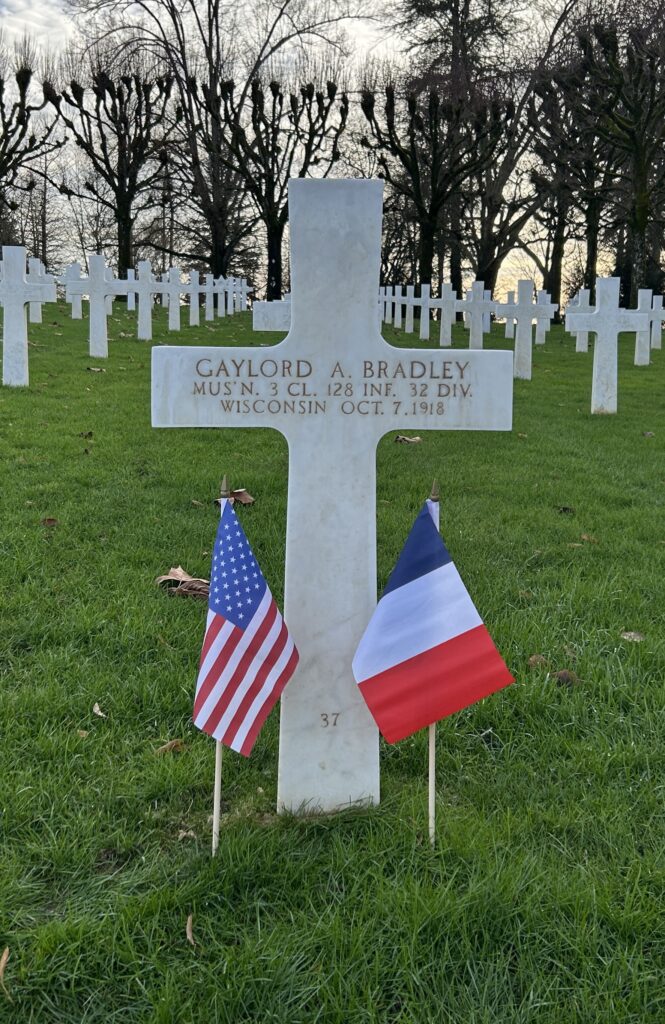
Musician Third Class Gaylord Anderson Bradley
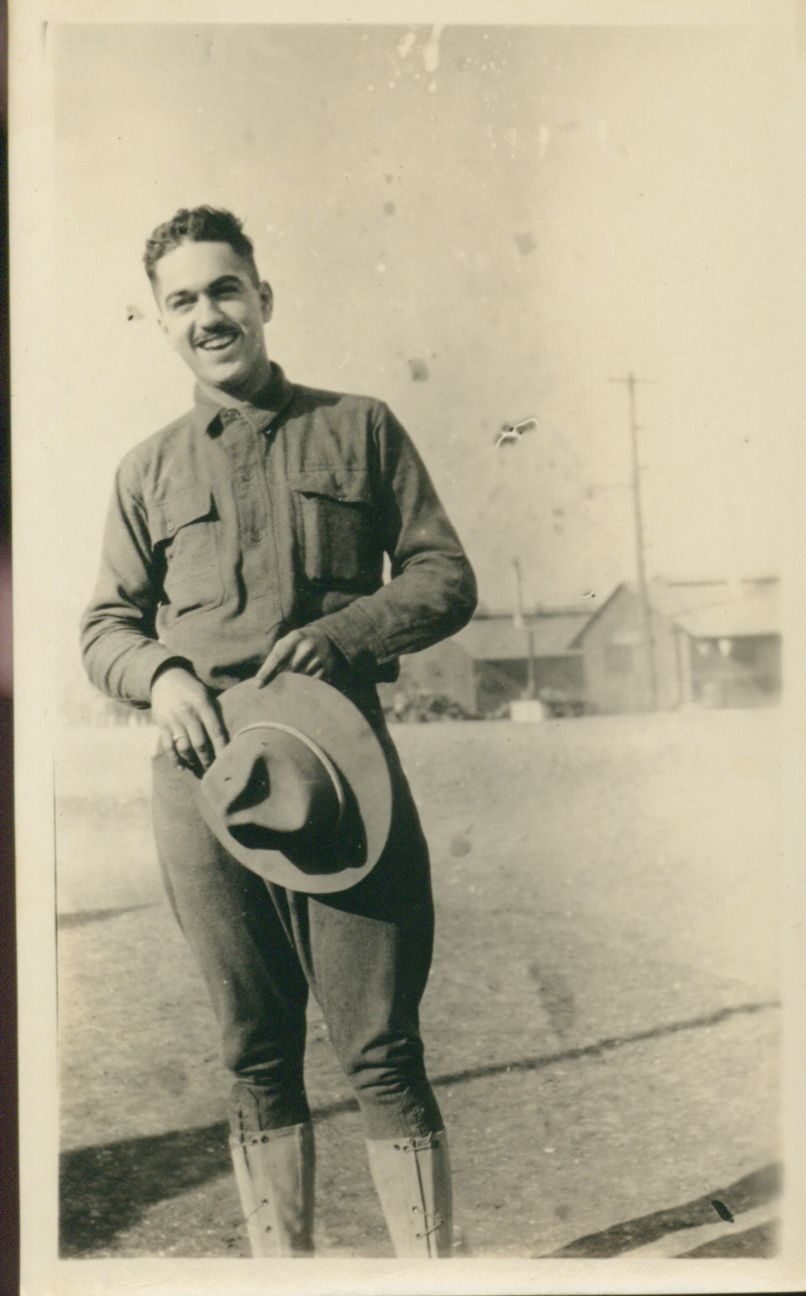
- Unit: Company D, 3rd Wisconsin Infantry, 128th Infantry Division
- Service Number: 282979
- Date of Birth: November 24, 1895
- Entered the Military: April 10, 1917
- Date of Death: October 8, 1918
- Hometown: Mauston, Wisconsin
- Place of Death: Meuse-Argonne, France
- Cemetery: Plot H, Row 33, Grave 37. Meuse-Argonne American Cemetery, Romagne-sous-Montfaucon, France
National History Day
2025/2026
Early Life
Gaylord Anderson Bradley was born in Mauston, Juneau County, Wisconsin, on November 24, 1895, to Edward W. Bradley (1862-1929) and Emily “Emma” Anderson Bradley (1867–1955). He was the youngest of four children, and his siblings include Clement “Clem” (1894–1937), Clara (1887–1902), and Ellen “Babe” (1889–1979). Another child, also named Gaylord, died in infancy in 1886.
Several generations of Bradley’s family lived and worked in Mauston before and during Bradley’s lifetime. His parents married in Juneau County, Wisconsin, in 1885. His maternal grandparents (Hiram Gaylord Anderson and Ellen Maria “Ella” Vanderpoel Anderson) resided there from at least 1880, where his grandfather earned a living buying railroad ties.
It is likely that Bradley’s father, Edward, worked with his father-in-law. The 1910 Federal Census lists Edward as a “Merchant Retailer,” and an oral history taken in 1979 suggests that they worked together running a dry goods or general store in town, delivering goods throughout the southeastern region of the state. Young Gaylord found work with his father and grandfather. A 1912 newspaper article records Bradley delivering a load of dry goods to Janesville, Wisconsin, nearly 120 miles away.
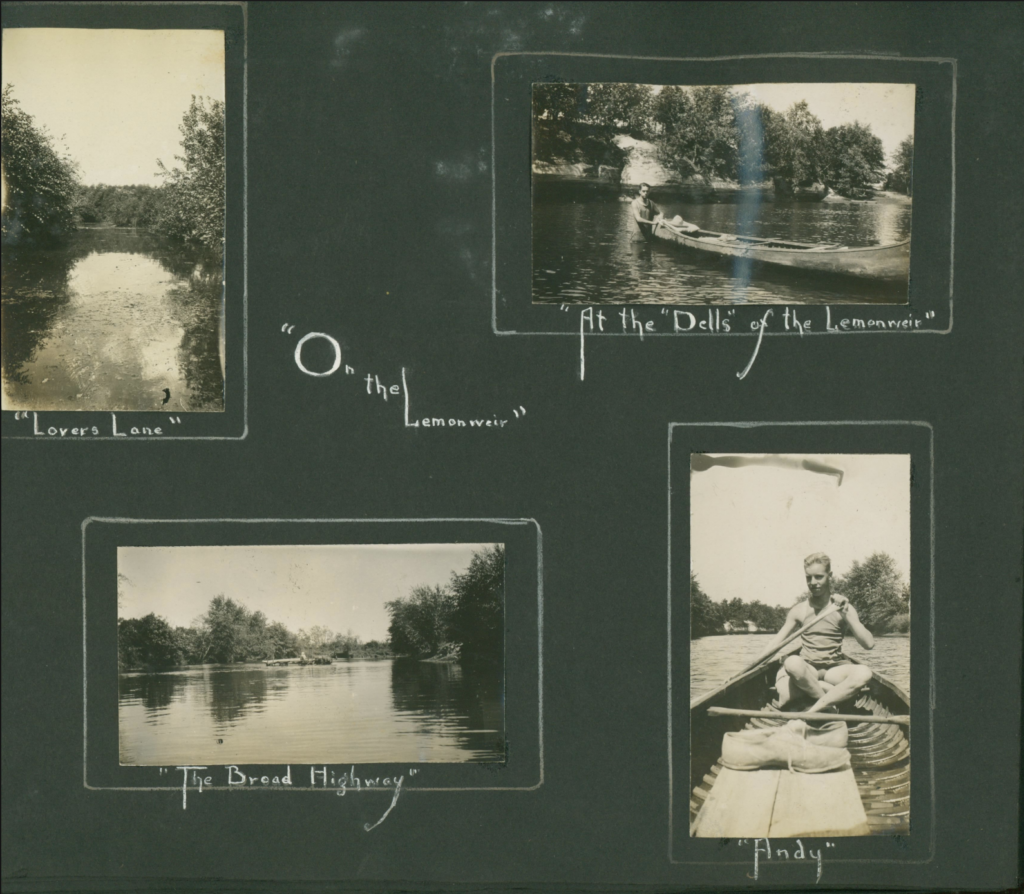
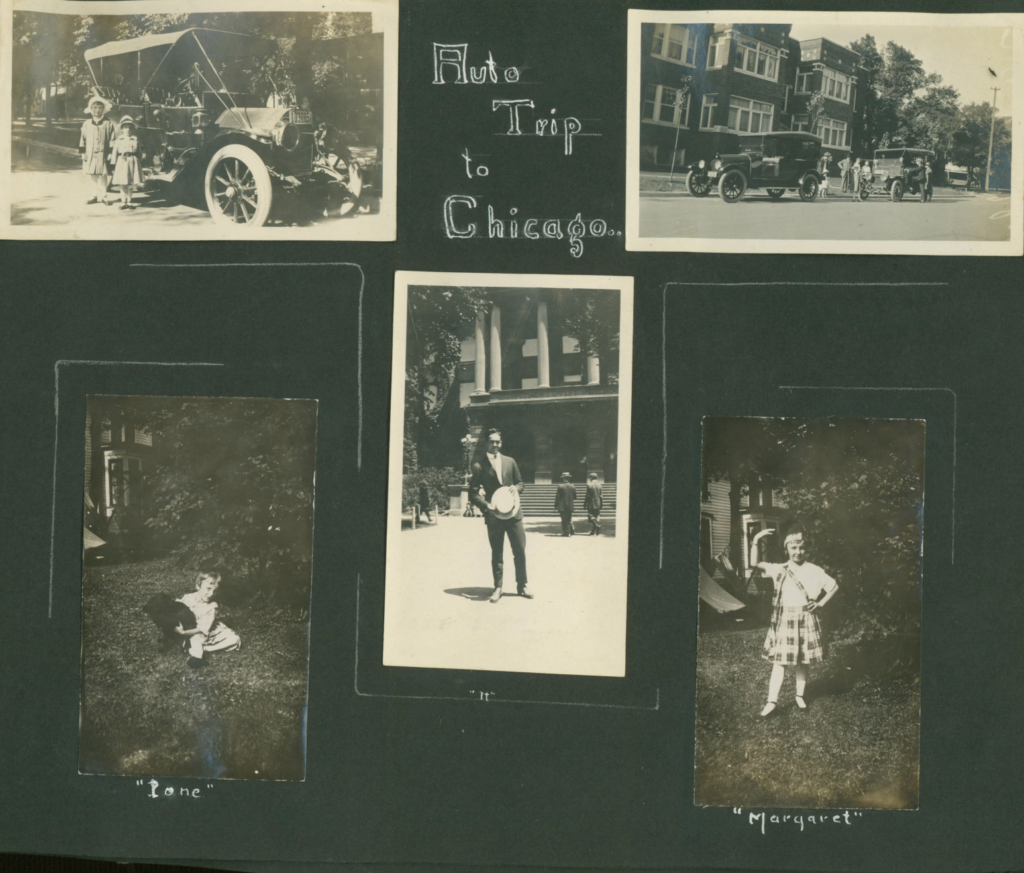
Bradley’s father’s and grandfather’s work seems to have provided a comfortable life for the family. His mother, a music teacher, instilled in her children a love of the arts. Pages from a scrapbook that Bradley assembled as a young man document family vacations to Milwaukee, Wisconsin, and Wilmette, Illinois, and even a car trip to Chicago. Other pages are full of photographs, showing happy scenes of Bradley, his friends, and family enjoying swimming and canoeing in the nearby Lemonweir River.
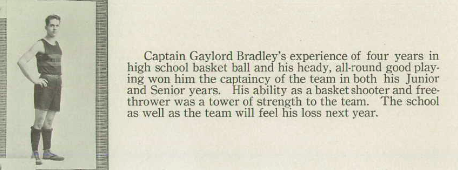
Bradley’s 1916 high school yearbook attests to his vibrant academic and social life. Not only did he serve as class president for all four years, but he also played basketball, was in the debate society, and avidly participated in school-sponsored music and arts programs.
After graduating from Mauston High School in 1916, Bradley enrolled at the Art Institute of Chicago and attended the Academic Department of its renowned museum from October 1916 until April 1917, where he studied painting and drawing. His school record notes that he left the program to serve in World War I.
Homefront
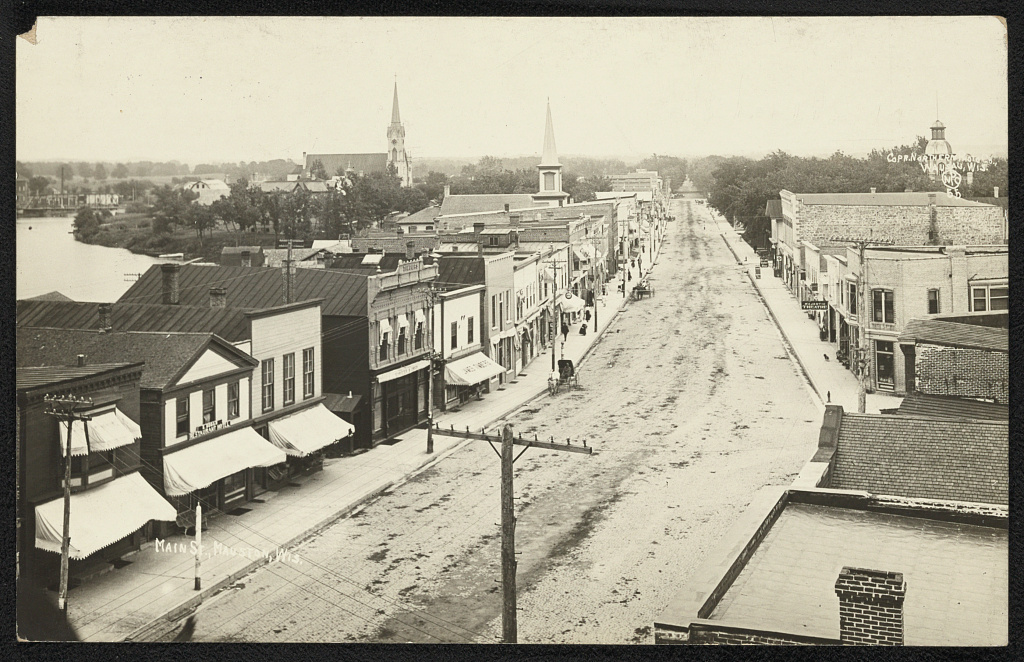
On the home front, life in Mauston reflected the steady growth of a small Midwestern community. The town was incorporated as a city in 1887, just a few years before Bradley’s birth, and served as the seat of Juneau County in the south-central part of the state. Located about seventy miles from the capital in Madison, Mauston remained closely tied to regional developments.
U.S. Census data shows that Mauston’s population grew from 1,013 in 1880 to 1,701 in 1910. This means that during his lifetime in Mauston, the town’s population increased by 68%. This growth suggests a community that was expanding, connected, and adapting during the years leading up to the Great War.
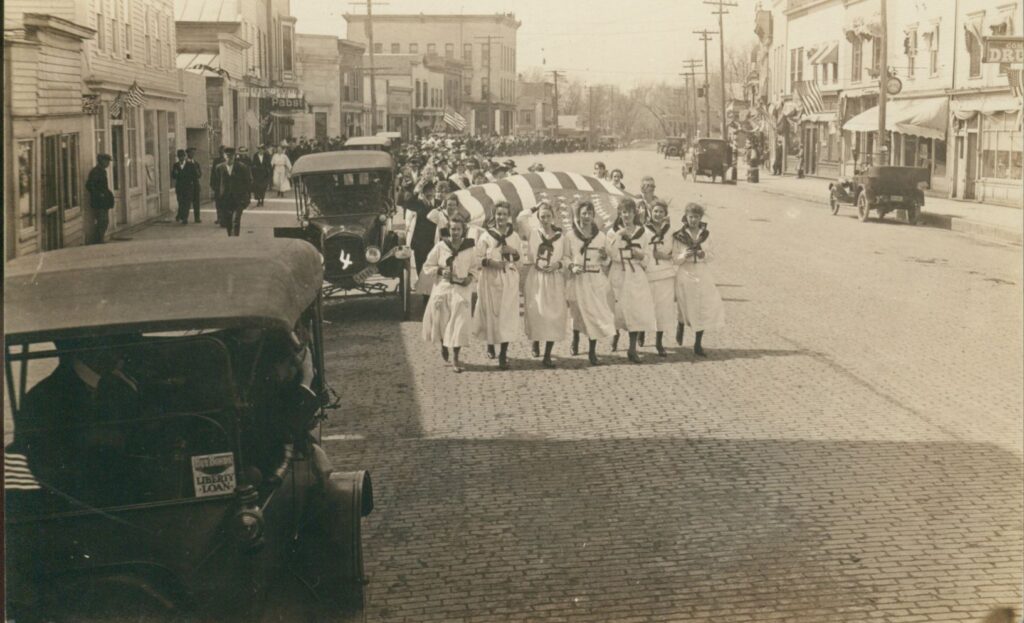
More generally, Wisconsin played a complex role in World War I, moving from early opposition to strong wartime support. At the outbreak of the war, roughly 40% of the state’s population was German by birth or extraction. In large part, Wisconsin’s ethnic heritage shaped statewide resistance to entering the war. U.S. Senator (and former Governor) Robert M. La Follette reflected this view, one of six senators who voted against war. However, once war was declared, many local communities held rallies to pledge loyalty. Only 2% of eligible men in Wisconsin failed to register for the draft, well below the national average of 8%.
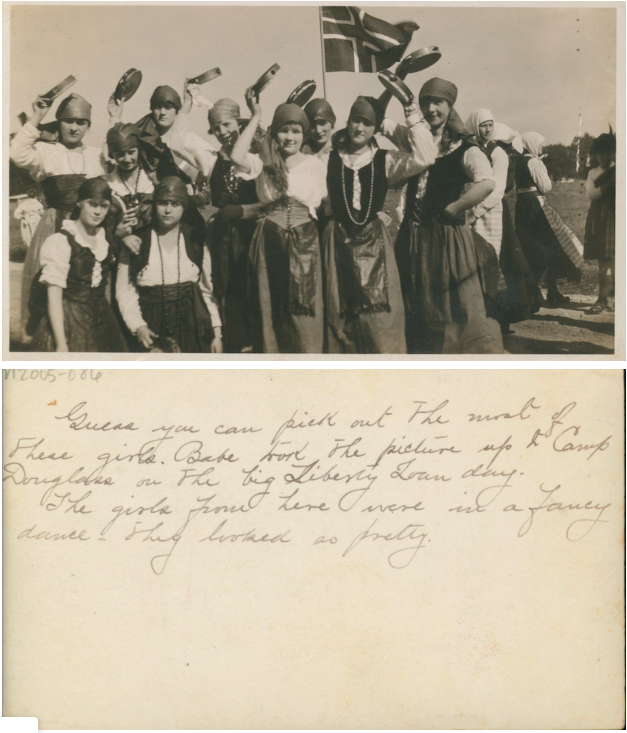
Wisconsin led the nation in dairy production for several decades before the war began, and by the time the U.S. entered the war, cheesemakers in the state produced about half of the nation’s supply. Still, Wisconsin families observed “meatless” and “wheatless” days before similar national efforts began. Citizens also exceeded expectations in purchasing Liberty Loans to fund the war.
Military Experience
Training
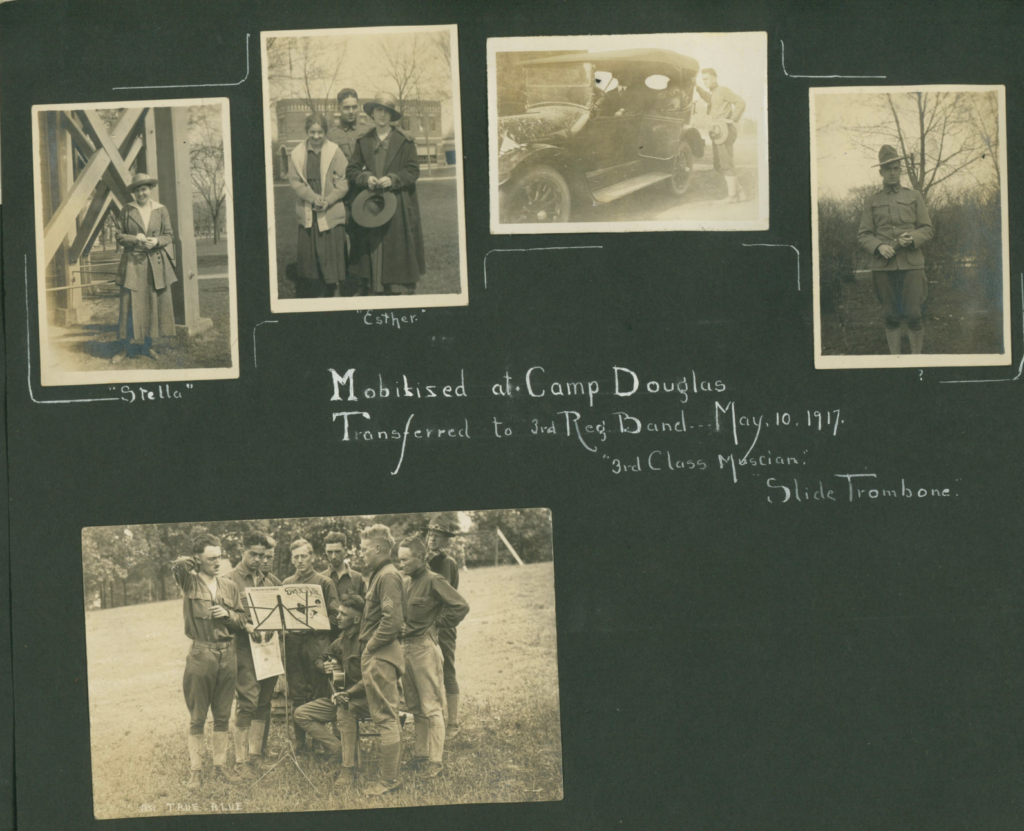
Bradley left his studies at the Art Institute of Chicago in April 1917 and enlisted in Company D of the 3rd Wisconsin Infantry at Camp Kilbourn (present-day Wisconsin Dells). He was mobilized on May 10, 1917, at Camp Douglas, where he served in the regimental band as a third-class musician, playing the slide trombone. In September 1917, he transferred to Camp MacArthur in Waco, Texas, for further training. On February 18, 1918, he departed for France with the 128th Infantry of the 32nd Division. He arrived on March 4 and was sent to the Western Front soon after.
The 32nd Division
The 32nd Division was composed largely of National Guard units from Wisconsin and Michigan. It earned its nickname, the “Red Arrow Division,” after breaking through the Hindenburg Line (an important German defensive system) in October 1918.
Following this victory, the 32nd Division adopted a shoulder patch showing a red arrow cutting through a line, symbolizing their strength in breaking enemy defenses. French allies, impressed by its tenacity in combat, called the division “Les Terribles.” The 32nd fought in major campaigns, including Alsace, Aisne-Marne, Oise-Aisne, and Meuse-Argonne. In this final offensive, the deadliest campaign in American history, resulting in the loss of more than 26,000 American lives, the 32nd Division played a key role in the final push toward Allied victory.
Today, Wisconsin Highway 32 (which runs through the author’s hometown of Milwaukee, Wisconsin) is called the “Red Arrow Highway” and is named for the division. It is the only Wisconsin state highway marker that contains an image.
A Soldier’s Reflections
On January 1, 1918, Bradley began keeping a nearly daily diary, recording his experiences. Coupled with his scrapbook, which includes photographs and brief written commentary, we have a robust account of his life as a soldier.
Bradley opened his diary with an entry that presciently began, “Have decided to keep a diary, wish I had done it sooner–hard telling what I might have to write.” In the intervening pages, he describes stateside training at Camp MacArthur in Waco, Texas. While in training, his days were filled with playing Reveille early in the mornings, monotonous daytime hiking, and evening musical performances in local dance halls.
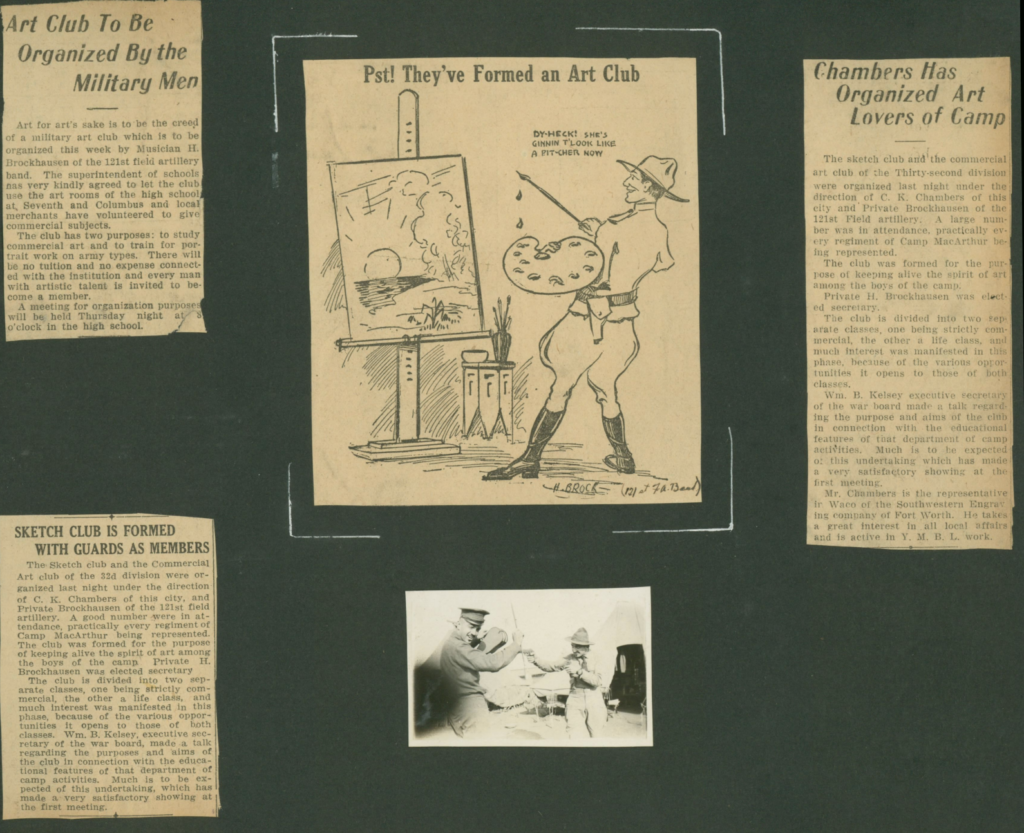
At Camp MacArthur, Bradley found time to continue his artistic practice through a newly established art club. Starting in February 1918, Bradley records details about getting ready to ship out, the voyage to France, camp life, and experiencing mortar and gas attacks.
In nearly every entry, no matter his location, he reports on the weather conditions and what he ate (usually lamenting the bad weather and bad food). The last entry was dated October 7, 1918, during the Meuse-Argonne Offensive. Bradley shared that he had a “fine breakfast of coffee, French fried bread, and jam” and reported that he had finally received a backlog of letters and photographs from his family and friends. In his final written words, he vowed to write to his sister Babe more often, as he expected she would need cheering up.
Commemoration
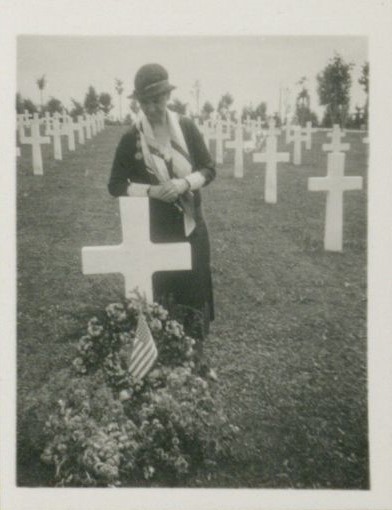
A report from the American Red Cross Hospital #114 in Bradley’s Official Military Personnel File stated that he was seriously injured in action by multiple gunshot wounds and was admitted to the field hospital on October 7, 1918. He died of those wounds the following day, on October 8, 1918. According to his Wisconsin National Guard Service Record, his official cause of death was “gunshot wounds to the back, fractured skull, extreme shock.” His remains were initially buried on October 13, 1918, in the French Military Cemetery Fleury-sur-Aire. He was later reinterred at the Meuse-Argonne American Cemetery.
Local newspaper reporting in The Mauston Star on December 19, 1918, revealed that while Bradley’s family learned of his injuries and serious condition, they did not have confirmation of his death until much later. Oral history provides further details. Local historian Mary Lou Schultz interviewed Leo Comer, Bradley’s comrade and childhood friend, in the late 1970s, when Comer was in his 80s. In their correspondence and in Schultz’s interview notes, Comer reported that Bradley’s older sister, Babe, wrote to him, asking him to investigate Bradley’s death. Comer was able to provide some details, confirming for the Bradley family that their son and brother had perished and where he was buried.
Bradley’s memorial service was held in May 1919 at St. John’s Episcopal Church in Mauston. Reporting in The Mauston Star attested to the tragedy of his untimely passing. The article stated that the services were conducted by the chaplain of the 10th Regiment of the Wisconsin National Guard and were “short and reviewed briefly the career and character of the deceased, who was one of our most popular young men. Many who attended were his comrades-in-arms. The audience was the largest in the history of St. John’s.” Fittingly, the local Boys Band played.
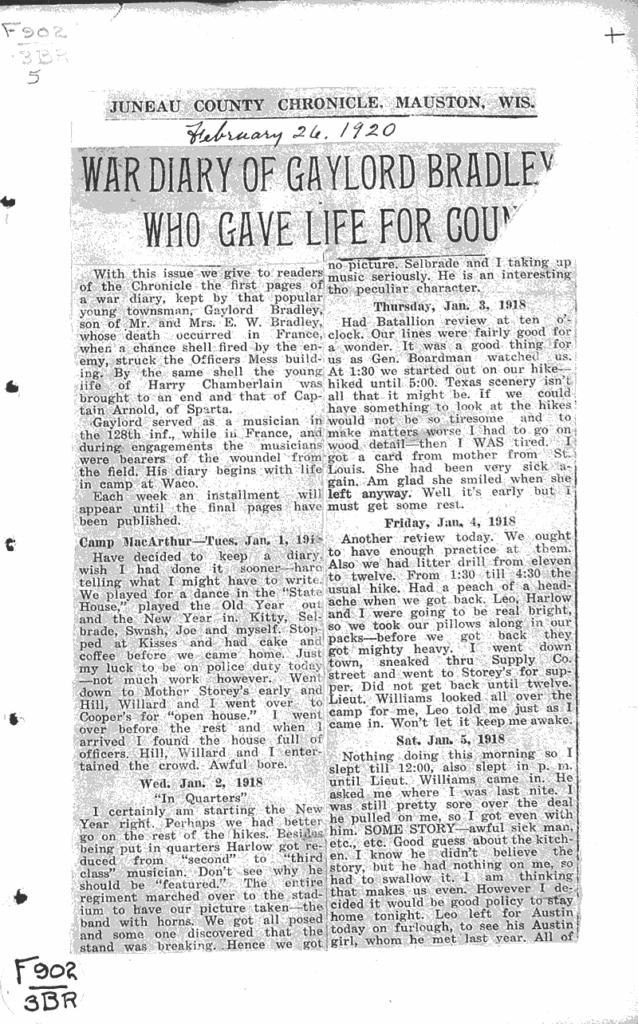
Bradley’s diary and personal effects were sent to his family on July 14, 1919. Shortly after, beginning on February 26, 1920, transcriptions of the pages were published as a weekly serial in the Juneau County Chronicle.
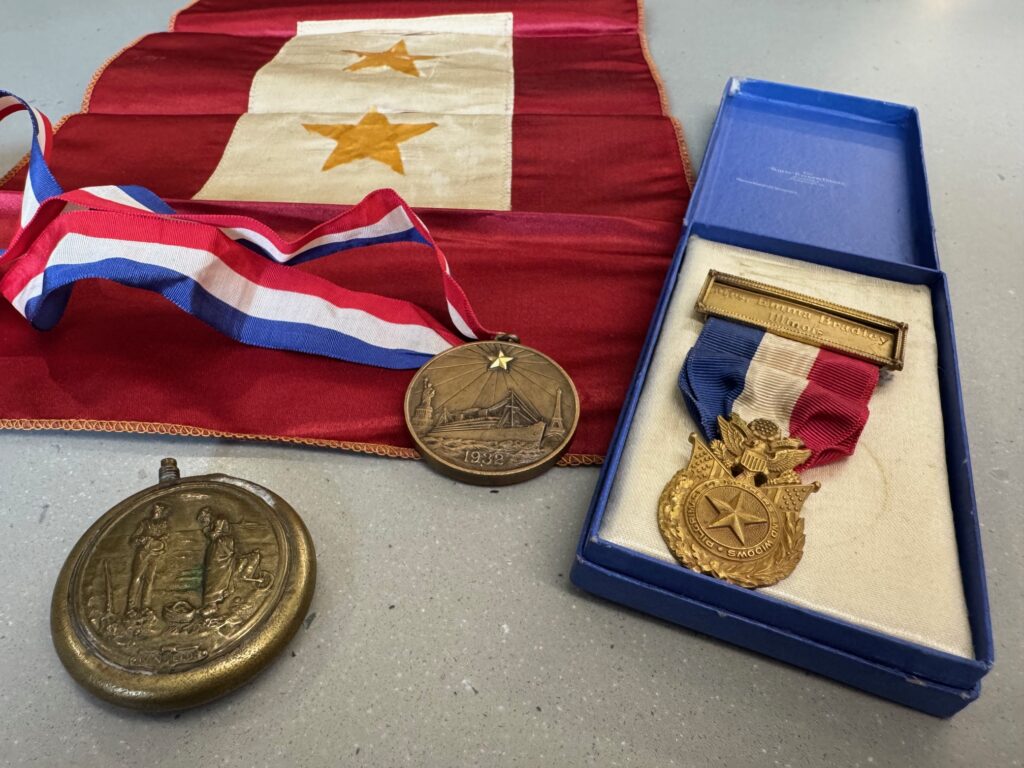
In 1932, Bradley’s mother, Emma, took part in the Gold Star Mother and Widow Pilgrimage. By this time, her husband (Bradley’s father) had passed, and she was no longer living in Mauston, but in Wilmette, Illinois. A folder marked “Ephemera” from the Gaylord Bradley Papers, held by the Wisconsin Historical Society, contains a remarkable collection of items from this voyage: a lapel pin (in its original box) with her name engraved on it, a medal from a 1932 Gold Star Mother and Widow Pilgrimage, a Jeanne d’Arc medal, and a red satin window hanging with two gold stars.
Bibliography
Primary Sources
“Boys Band at Tomah.” The Mauston Star [Mauston, Wisconsin], May 10, 1917.
“Clinton, June 12.” The Beloit Daily Free Press [Beloit, Wisconsin], June 15, 1914. Newspapers.com (1215789418).
Gaylord Anderson Bradley, Official Military Personnel File (partial), Department of the Army, National Archives and Records Administration – St. Louis.
Gaylord Bradley Papers, 1916–1918, 1979–1981. Wisconsin Historical Society (M2005-086 MAD 2M/12/E2).
“Gaylord Bradley Reportedly Killed.” The Mauston Star [Mauston, Wisconsin], December 19, 1918.
Gaylord Bradley. U.S., School Yearbooks, 1900-2016. Digital Images. https://ancestry.com.
Main St., Mauston, Wis. Photograph. 1912.Postcard Filing Series, Library of Congress. https://www.loc.gov/item/2024694175/.
“Memorial Services at St. John’s.” The Mauston Star [Mauston, Wisconsin], May 1, 1919.
Wisconsin. Juneau County. 1880 U.S. Census. Digital Images. https://ancestry.com.
Wisconsin. Juneau County. 1900 U.S. Census. Digital Images. https://ancestry.com.
Wisconsin. Juneau County. 1910 U.S. Census. Digital Images. https://ancestry.com.
Wisconsin, U.S., State Censuses, 1855-1905. Digital Images. https://ancestry.com.
Secondary Sources
A Comprehensive Plan for Mauston, Wisconsin. State of Wisconsin, Department of Local Affairs and Development, 1973.
“Edward W. Bradley.” Find a Grave. Accessed October 22, 2025. https://www.findagrave.com/memorial/164608436/edward_w-bradley.
“Ellen Maria ‘Ella’ Vanderpoel Anderson.” Find a Grave. Accessed October 28, 2025. https://www.findagrave.com/memorial/164606985/ellen_maria-anderson.
“Emily C. ‘Emma’ Anderson Bradley.” Find a Grave. Accessed October 22, 2025. https://www.findagrave.com/memorial/164608191/emily_c-bradley.
“Gaylord A. Bradley.” American Battle Monuments Commission. Accessed October 22, 2025. https://weremember.abmc.gov/s?q=*&criteria=first_name%3DGaylord&type=16&v=G&sort=title:ASC.
“Gaylord Anderson Bradley.” Find a Grave. Accessed October 22, 2025. https://www.findagrave.com/memorial/164608732/gaylord-anderson-bradley.
“Hiram Gaylord Anderson.” Find a Grave. Accessed October 28, 2025. https://www.findagrave.com/memorial/164606742/hiram_gaylord-anderson.
“The Meuse-Argonne Offensive.” National Archives. Accessed February 2, 2026. https://www.archives.gov/research/military/ww1/meuse-argonne.
Meyer, Carrie A. Letters from the Boys: Wisconsin World War I Soldiers Write Home. Wisconsin Historical Society Press, 2018.
Novara, Elizabeth. “The Pilgrimages of Gold Star Mothers and Widows in the 1930s: A View into Veterans’ and Women’s History.” Library of Congress Blogs. Posted September 22, 2022. https://blogs.loc.gov/manuscripts/2022/09/the-pilgrimages-of-gold-star-mothers-and-widows-in-the-1930s-a-view-into-veterans-and-womens-history/.
This profile was researched and created through the Researching Silent Heroes program, sponsored by the American Battle Monuments Commission.