

Sergeant George “Hank” Sylvester Greeneberg, Jr.
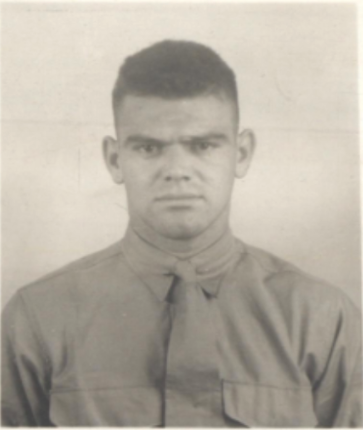
- Unit: Fleet Marine Force, 2nd Marine Division, 8th Marines
- Date of Birth: March 6, 1920
- Entered the Military: October 6, 1941
- Date of Death: April 12, 2007
- Hometown: Camden, New Jersey
- Place of Death: Baton Rouge, Louisiana
- Award(s): Purple Heart
- Cemetery: Section 11, Site 5A. Baton Rouge National Cemetery, Baton Rouge, Louisiana
Mentored by Mr. Paul Valdezco
Glasgow Middle School
2025/2026
Early Life
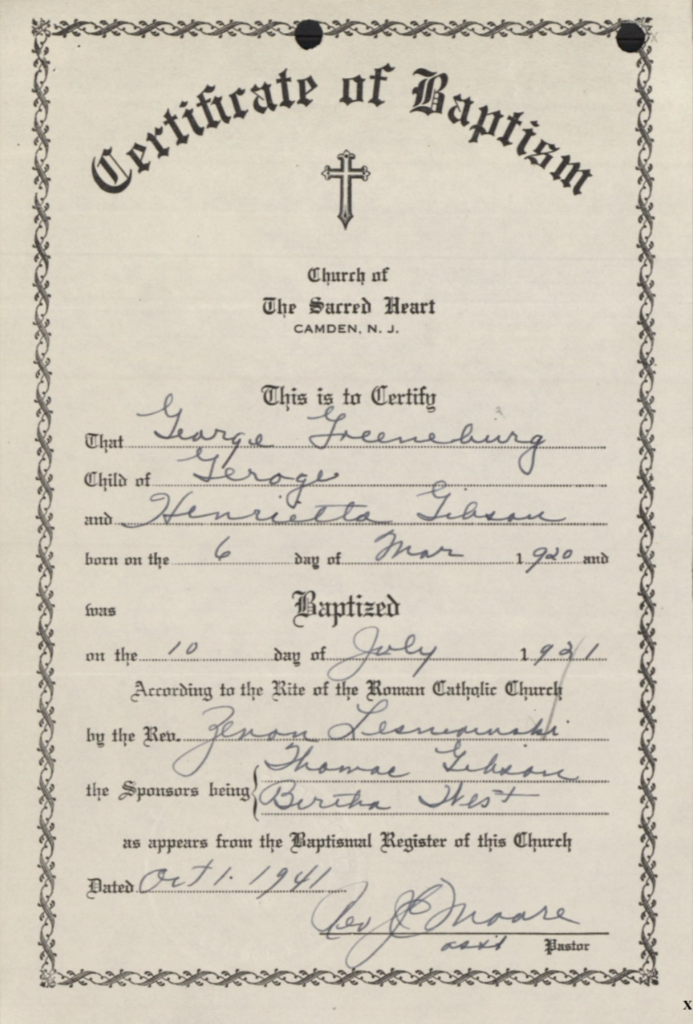
George Sylvester Greeneberg, Jr. was born on March 6, 1920, in Camden, New Jersey, to George and Henrietta. Greeneberg’s father was a veteran of both World War I and World War II. His mother passed away when he was only 11 years old. His father next married Elizabeth Lapp. Greeneberg grew up in a blended family with five step-siblings, Isabel, Herbert, James, Francis, and Alice.
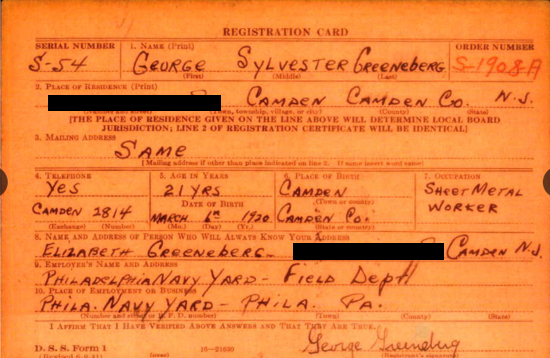
Academics were only one part of Greeneberg’s learning. After seventh grade, he attended Camden Vocational Technical High School, where he studied plumbing and heating. Greeneberg also ran track in 1938, showing both energy and commitment. To support himself, he worked full-time as a roofing sectional worker in Camden, putting in 40 hours a week. Later, he found work as a sheet metal worker at the Philadelphia Navy Yard, where he helped install and fabricate air-conditioning systems and other metal equipment, carefully following blueprints. These early jobs taught Greeneberg responsibility, precision, and a sense of pride in his work.


Homefront
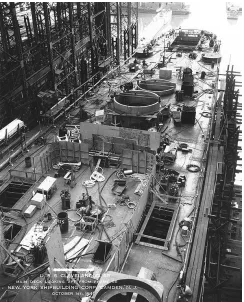
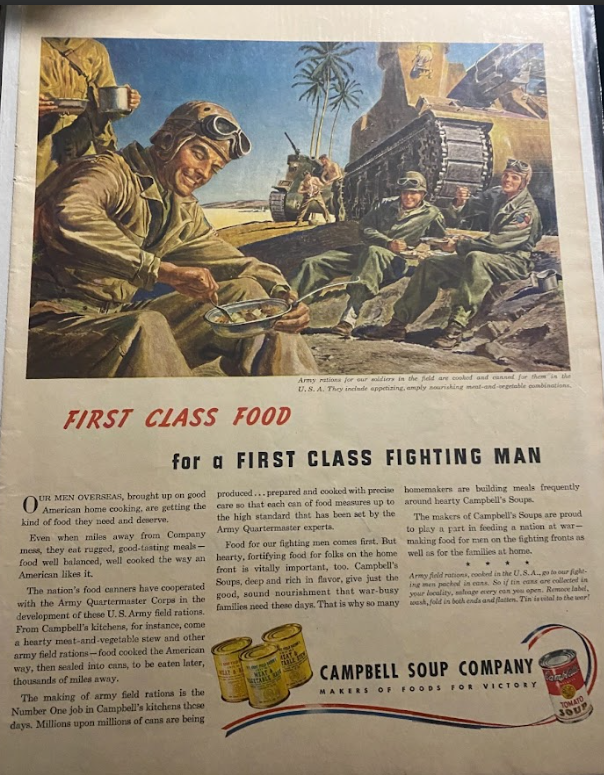
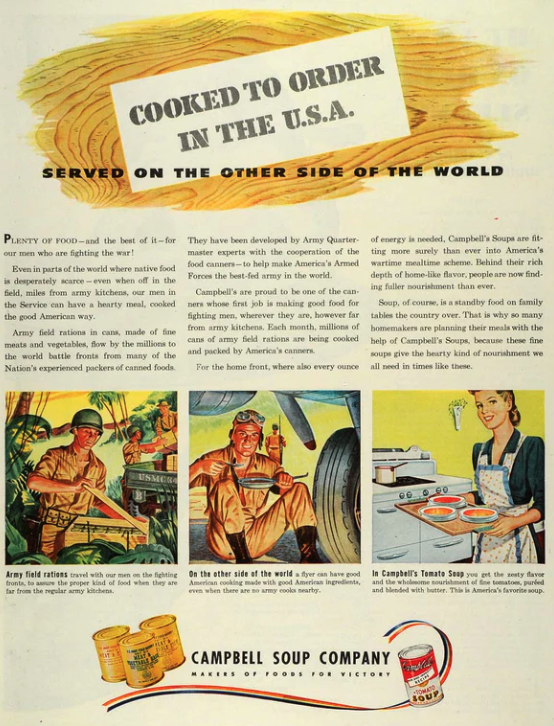
Camden, New Jersey, was the hometown that shaped George Sylvester Greeneberg, Jr. during the late 1930s and early 1940s. Located along the Delaware River and serving as the county seat of Camden County, the city was known for its strong industrial base and hardworking community. Major employers such as the New York Shipbuilding Corporation and the Campbell Soup Company provided jobs, stability, and pride for many local families. As global tensions grew and the United States prepared for war, Camden’s factories, shipyards, and neighborhoods became closely tied to the nation’s growing defense efforts.
During World War II, Camden played an important role in supporting the American war effort. The New York Shipbuilding Corporation produced major naval vessels for the U.S. Navy, while factories across the city expanded production to meet wartime needs. Companies like Campbell Soup helped supply food for troops and workers, and thousands of men and women, including many from minority communities, joined the industrial workforce. Families at home supported the war through rationing, war bond drives, and community volunteer work. Despite wartime labor challenges and sacrifices, Camden residents took pride in knowing their city had contributed significantly to the nation’s victory.
Military Experience
Greeneberg volunteered for military service on October 6, 1941, enlisting in Philadelphia, Pennsylvania, just weeks before the United States entered World War II. He completed basic training at Marine Corps Recruit Depot Parris Island, South Carolina, and later received additional training as a Scout Sniper and a Rifle Noncommissioned Officer (NCO). This training emphasized advanced marksmanship, camouflage, reconnaissance, and small-unit leadership.
Greeneberg served with Company F, 2nd Battalion, 8th Marines, Second Marine Division, Fleet Marine Force. He deployed to the Pacific aboard the USS Monrovia in 1943. After staging in Wellington, New Zealand, his unit conducted landing operations at Efate in the New Hebrides on November 9, 1943, before sailing to the Gilbert Islands. From November 20 to 24, 1943, he fought in the Battle of Tarawa, where Marines engaged in intense combat to capture the island and its strategic airfield.
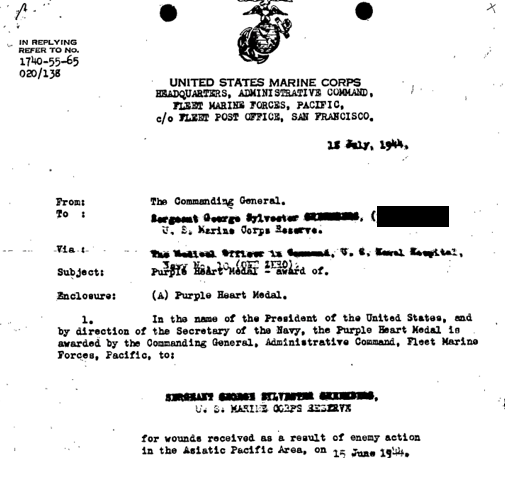
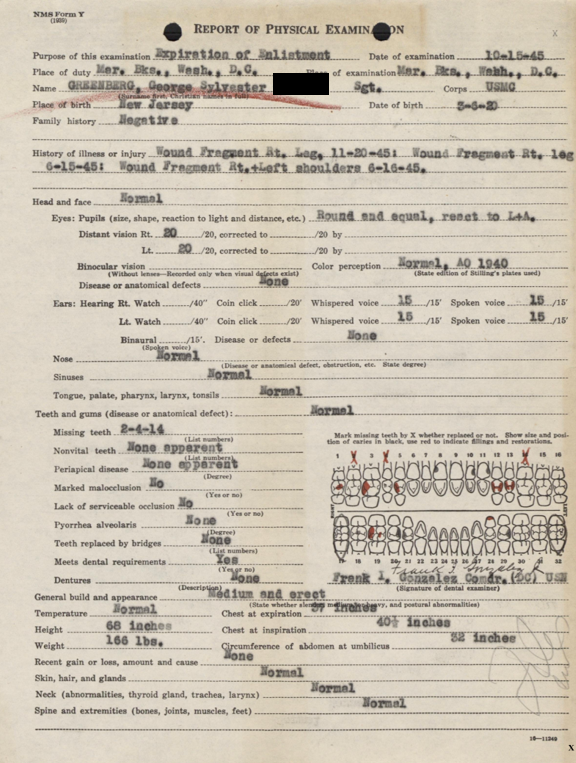
Greeneberg later participated in the Battle of Saipan in the Marianas Islands from June 15 to July 8, 1944, a key operation in the Pacific island-hopping campaign. During the fighting, he was wounded by shell fragments in his right leg and left shoulder, earning the Purple Heart for injuries sustained in combat. His unit, the 2nd Marine Division, was also awarded the Presidential Unit Citation for extraordinary heroism during the Battle of Tarawa.
Over the course of the war, Greeneberg rose from private to staff sergeant, reflecting his leadership and field experience. By April 1945, he was stationed at Camp Lejeune, North Carolina, with the Tenth Training Battalion, Infantry Training Regiment, where he helped train new Marines in infantry tactics and weapons handling. He was honorably discharged on October 18, 1945.
Veteran Experience
After the war, Greeneberg returned to civilian life in Camden, New Jersey. The 1950 census recorded him living with his stepmother, Elizabeth, and his step-siblings. He resumed work as a sheet steel mechanic, continuing the skilled trade he had developed before the war.
In August 1950, Greeneberg married Virginia “Ginny” Short in New Jersey, and together they began building a family. They had one daughter, Barbara.
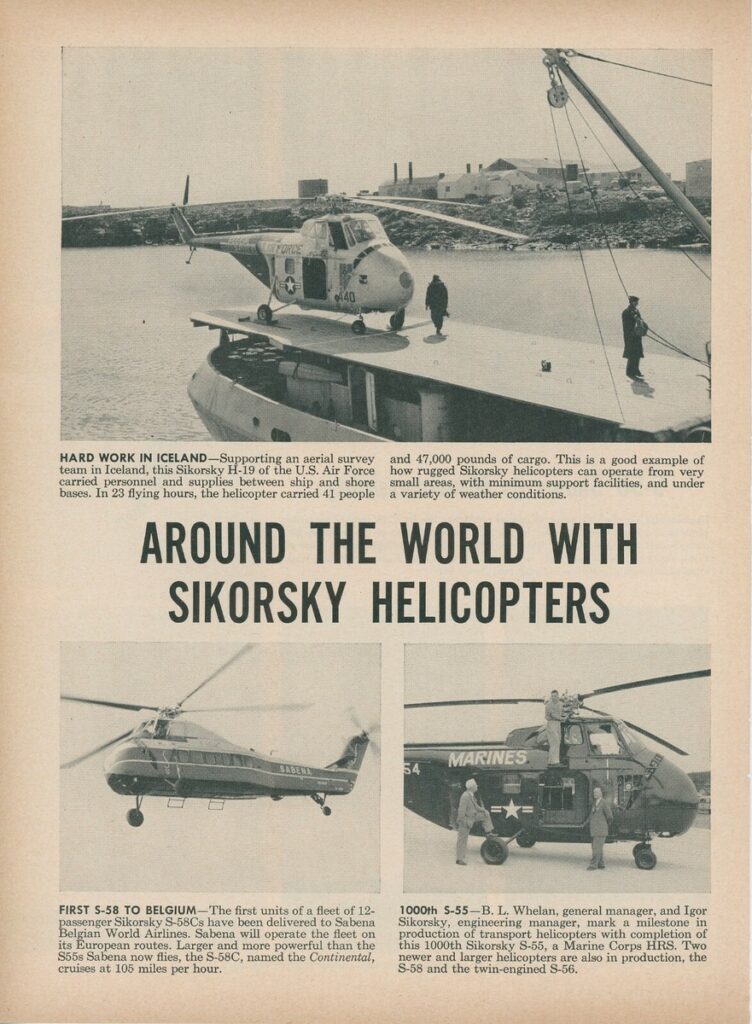
As his career progressed, Greeneberg moved into more advanced work and became an aeronautical engineer with Sikorsky Aircraft in Connecticut, a company known for designing and manufacturing helicopters. In this role, aeronautical engineers typically design, test, and improve aircraft systems, including structures, engines, and flight components. They work with detailed technical drawings, analyze performance and safety, and help develop new technologies to ensure aircraft operate efficiently and reliably. Drawing on his hands-on experience with metals and machinery, Greeneberg likely contributed to the development or refinement of helicopter components and systems.
He lived in Milford, Connecticut, for more than 50 years before moving to Baton Rouge, Louisiana. His wife, Virginia, passed away in 2020.

Commemoration
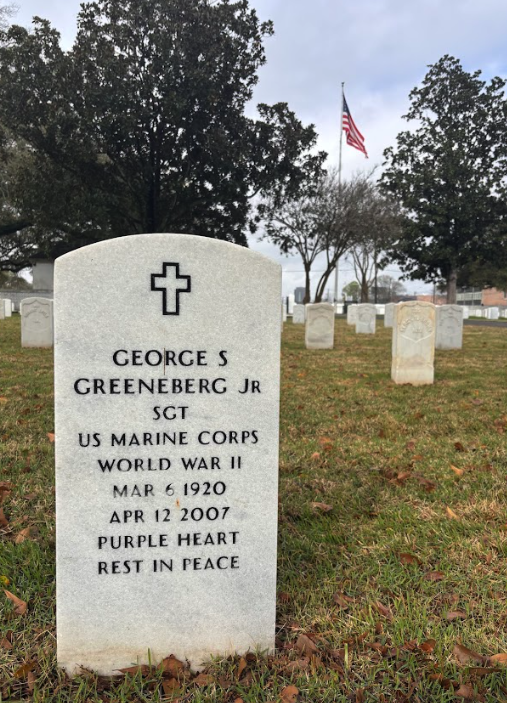
Sergeant George Sylvester Greeneberg, Jr., passed away on April 12, 2007, in Baton Rouge, Louisiana, after a life defined by service, hard work, and devotion to family. He was laid to rest with military honors at Baton Rouge National Cemetery, a fitting resting place for a World War II Marine who served his country with courage and humility. He is buried with his wife, Virginia. His burial among fellow veterans reflects the respect earned through his sacrifice and dedication. Through remembrance and honor, his legacy continues.
Bibliography
Primary Sources
Around the World with Sikorski Helicopters. Advertisement. Air Force, September 1953. https://www.airandspaceforces.com/app/uploads/2025/11/0953_September1953_LR.pdf.
Camden Vocational Technical High School 1938. U.S. School Yearbooks 1900-2016. Digital Images. https://ancestry.com.
Cooked to Order in the USA. Advertisement. 1943. https://www.periodpaper.com/products/1943-ad-campbells-tomato-soup-wwii-war-food-rationing-conservation-army-military-118318-sep6-169.
First Class Food. Advertisement. 1943. https://i.ebayimg.com/images/g/Or4AAOSwZgZmQk57/s-l400.
George S. Greeneberg Jr., DD-214, Department of the Navy. National Archives and Records Administration – St. Louis.
George S. Greenberg Jr., New Jersey Marriage Index, 1901-2016. Digital Images. https://ancestry.com.
George S. Greeneberg Jr., Official Military Personnel File, Department of the Navy. National Archives and Records Administration – St. Louis.
George S. Greenberg Jr., U.S. Marine Corps Muster Rolls, 1798-1958. Digital Images. https://ancestry.com.
George Sylvester Greenberg. Baptismal Record 1941. Digital Images. https://ancestry.com.
George Sylvester Greenberg. World War II Draft Cards Young Men, 1940-1947. Digital Images. https://ancestry.com.
New Jersey. Camden County. 1930 U.S. Census. Digital Images. http://ancestry.com.
New Jersey. Camden County. 1940 U.S. Census. Digital Images. http://ancestry.com.
New Jersey. Camden County. 1950 U.S. Census. Digital Images. http://ancestry.com.
Secondary Sources
“Battle of Tarawa” HISTORY. Updated May 28, 2025. Accessed January 13, 2026. https://www.history.com/articles/battle-of-tarawa.
“Camden History.” City of Camden. Accessed November 7, 2025, https://history.ci.camden.nj.us/mural.
Citino, Robert. “Battle of Tarawa.” The National WWII Museum. Updated August 16, 2018. Accessed January 13, 2026. https://www.nationalww2museum.org/war/articles/photo-finish-battle-tarawa.
Decuers, Larry. “Battle of Saipan.” The National WWII Museum. Updated July 7, 2020. Accessed January 13, 2026. https://www.nationalww2museum.org/war/articles/banzai-attack-saipan.
“George S. Greeneberg, Jr.” Veterans Legacy Memorial, National Cemetery Administration. Accessed April 17, 2026. https://www.vlm.cem.va.gov/GEORGESGREENEBERGJR/ED591A0.
“George S. ‘Hank’ Greeneberg.” Courier Post, April 17, 2007. https://www.legacy.com/us/obituaries/courierpostonline/name/george-greeneberg-obituary?id=49455391.
“George S. ‘Hank’ Greeneberg.” Find a Grave. Updated September 28, 2020. Accessed February 17, 2026. https://www.findagrave.com/memorial/19754386/george-s-greeneberg.
Gillette, Jr., Howard. “Camden, New Jersey.” The Encyclopedia of Greater Philadelphia. https://philadelphiaencyclopedia.org/essays/camden-new-jersey/.
Hearn, Scott. “Five Surprising things in our Archives.” The Campbell’s Company. Updated October 29, 2019. Accessed February 17, 2026. https://www.thecampbellscompany.com/newsroom/campbells-history/five-surprising-things-in-our-archives-collection/.
“Monrovia (APA-31).” Naval History and Heritage Command. Last modified December 28, 2015. Accessed February 17, 2026. https://www.history.navy.mil/research/histories/ship-histories/danfs/m/monrovia.html.
“Virginia S. Greeneberg.” Find a Grave. Updated June 1, 2010. Accessed April 17, 2026. https://www.findagrave.com/memorial/53103244/virginia_s-greeneberg.
“WWII: Ships for the Allies.” New York Shipbuilding Company. Accessed March 18, 2026. https://newyorkship.org/history/wwii-ships-for-the-allies/.
This profile was funded by a grant from the United States Department of Veterans Affairs. The opinions, findings, and conclusions stated herein are those of the author and do not necessarily reflect those of the United States Department of Veterans Affairs.