

Master Sergeant Germain “Jerry” Joseph Suminski
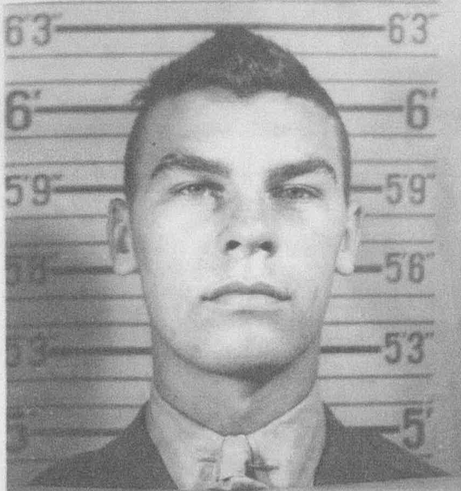
- Unit: 5th Amphibious Corps
- Date of Birth: July 30, 1923
- Entered the Military: October 12, 1942
- Date of Death: January 18, 2019
- Hometown: Milwaukee, Wisconsin
- Place of Death: Parma, Ohio
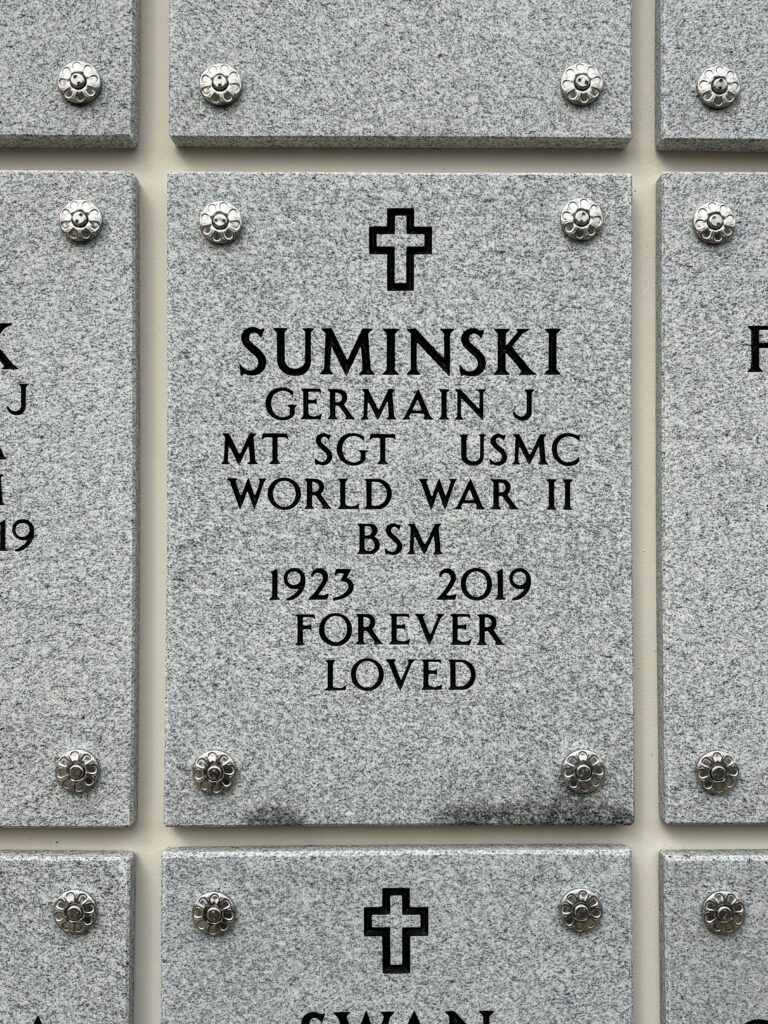
- Award(s): Bronze Star
- Cemetery: Section F13, Grave B12. Ohio Western Reserve National Cemetery, Rittman, Ohio
Mentored by Dr. Christa Adams
Bard High School Early College, Cleveland, Ohio
2025/2026
Early Life
Germain “Jerry” Joseph Suminski was born on July 30, 1923, in Milwaukee, Wisconsin, to Germain M. Suminski and his wife, Catherine Skiba Suminski. The eighth of 13 children, Suminski hailed from a very large Polish-American family. Suminski’s father was licensed as an embalmer in Wisconsin. He owned and operated his own funeral home adjacent to the family home.
Growing up, Suminski attended Messmer High School, a Catholic school, in Milwaukee. He worked part-time as a newsboy for a local newspaper while in high school. In 1941, Suminski began working at Curtis 1000, a paper manufacturing company.

Homefront
Milwaukee, Wisconsin, was a large, multi-ethnic, multi-racial city with a significant total population of 587,472 in 1940. It was the thirteenth largest city in the United States.
A Diverse Neighborhood
Suminski’s neighborhood was in the lower east side of the city, an ethnically diverse area located between Lake Michigan and the Milwaukee River. In addition to descendants of Polish immigrants like Suminski, the region also had German-Americans, Irish-Americans, and African-Americans living and working there.
During the 1930s, unemployment in the city increased by seventy-five percent due to the Great Depression. The lack of employment, coupled with growing unrest, led to numerous strikes in the city.
The “Arsenal of Democracy”
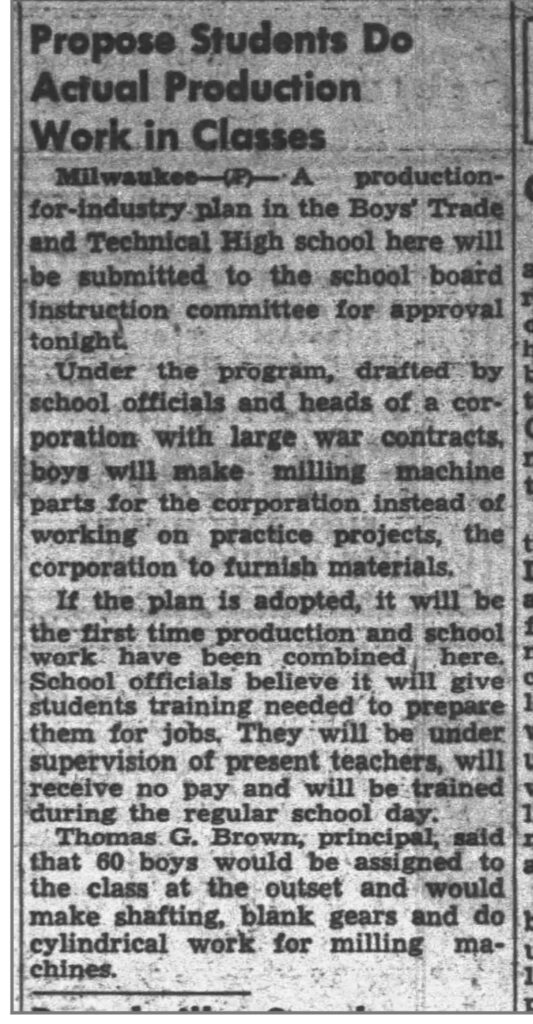
Known as the “arsenal of democracy,” Milwaukee grew rapidly during the 1940s, directly as a result of the Second World War. Milwaukee factories mobilized to produce weapons and machinery to support the war effort. Several companies specialized in the production of ordnance fuses and fuse caps. High school students in Milwaukee’s Trade and Technical High School were also mobilized to produce milling machine parts, helping local manufacturers meet wartime demand.
Victory Gardens
According to the Encyclopedia of Milwaukee, in 1943, almost fifty-five percent of the city’s households had gardens. The county opened ninety acres to residents without yards. In 1944, the federal government praised Milwaukee’s 123,000 victory gardens, rating them first in “size” and “management.” Victory Gardens alleviated demand for fresh produce and enabled citizens to preserve food for future use.
America’s Dairyland
Outside of the urban center, Milwaukee County produced cheese and dairy products. In Burlington, about thirty-five miles outside Milwaukee, dairy producers pivoted to prioritizing canned and powdered milk during the Second World War.
Women Workers
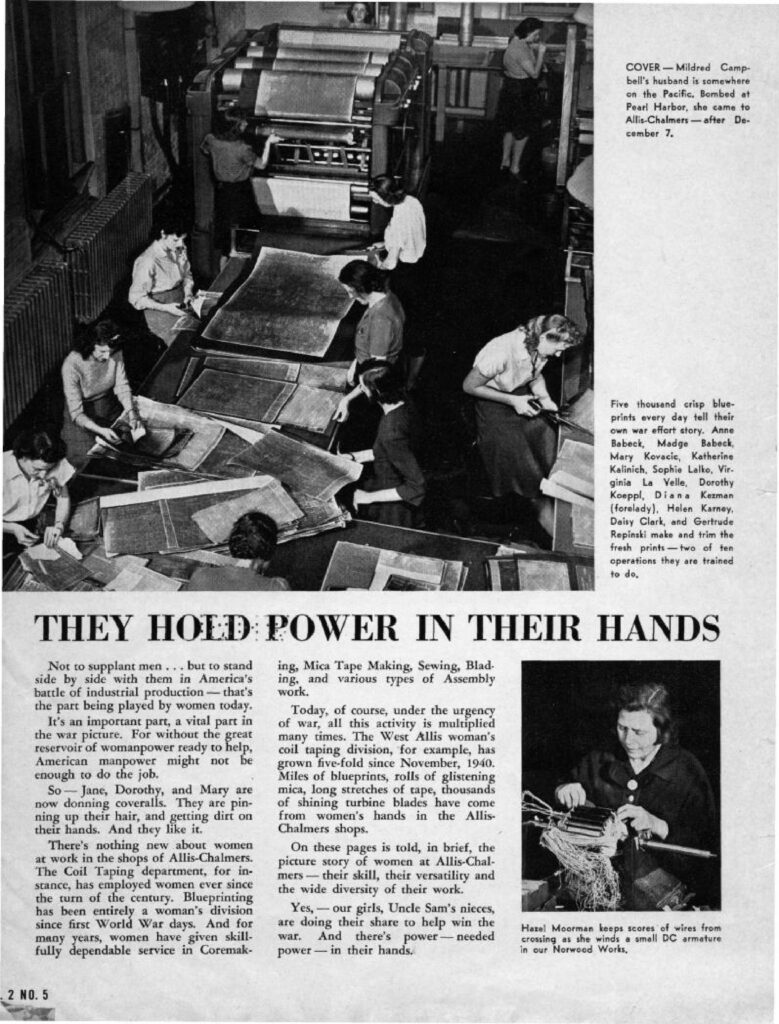
Milwaukee followed a pattern similar to other urban manufacturing centers in the United States during the war. As men were drafted or assigned to different production teams, women took their places. One company, Allis-Chalmers, published a pamphlet highlighting the contributions of women workers. Milwaukee-Downer College, anticipating growing interest among women in university studies, created a new curriculum set called “Study for Victory,” which provided female students with course plans in diplomacy, pre-engineering, pre-aviation, and other fields related to manufacturing.
The “Defense Strike”
In 1941, workers at the Allis-Chalmers manufacturing plant went on strike. They wanted higher wages, better conditions, and union security. This “Defense Strike” lasted seventy-six days during a crucial period of manufacturing expansion. It halted millions of dollars in U.S. Navy defense orders and forced President Roosevelt to intervene.
POWs in Wisconsin
In 1945, Milwaukee’s General Mitchell Field was used by the U.S. Army as a prisoner of war (POW) work camp for German POWs. “Camp Billy Mitchell,” as it came to be known, housed over 3,000 prisoners during its operation and caused significant disruptions in civilian use of the airfield. POWs were tasked with assembling radio batteries for the city’s Signal Battery Company.
Population Growth
As a result of the expansion of manufacturing during the war, Milwaukee’s population grew by 100,000 between 1940 and 1950. The city also absorbed refugee migrants displaced by the war in Europe.
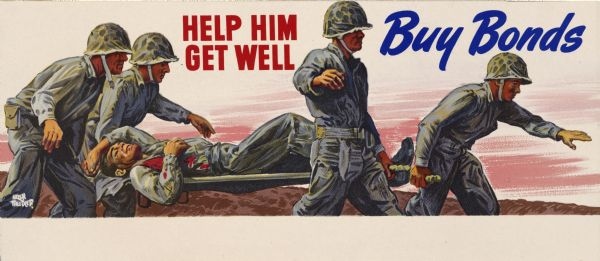
Military Experience
Suminski enlisted in the United States Marine Corps (USMC) on October 12, 1942. His supervisor at Curtis 1000, E. J. Hoslett, himself a former Marine, wrote Suminski a letter of introduction praising Suminski’s work ethic. Hoslett stated that Suminski was “exceptionally reliable, honest, and a fine character” who possessed stenographic and typing skills. Hoslett promised that Suminski would still have a job at Curtis 1000 after the conclusion of the war.
After completing training at the Marine Corps Recruit Depot in San Diego, California, Suminski was stationed at the Amphibious Corps Pacific Fleet Marine Barracks at Camp Elliott in San Diego. He worked as a clerk and stenographer throughout his time in the Marine Corps.
5th Amphibious Corps
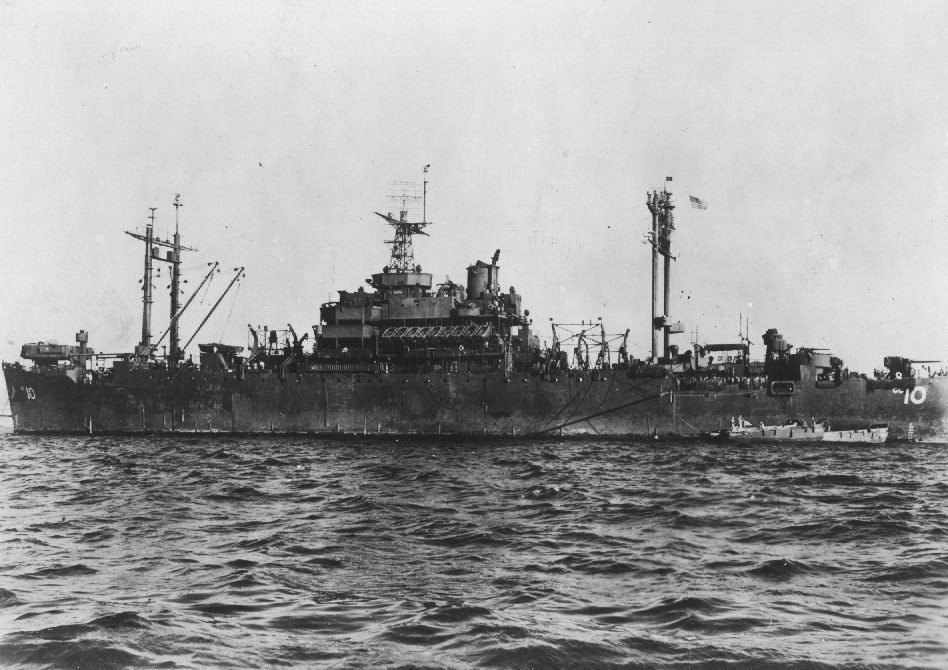
Suminski was ultimately assigned to the 5th Amphibious Corps on board USS Auburn II (AGC-10). He spent some time on board at Pearl Harbor, Hawai’i, before departing in 1944 to the islands of Eniwetok, Saipan, Tinian, and ultimately Iwo Jima.
Saipan
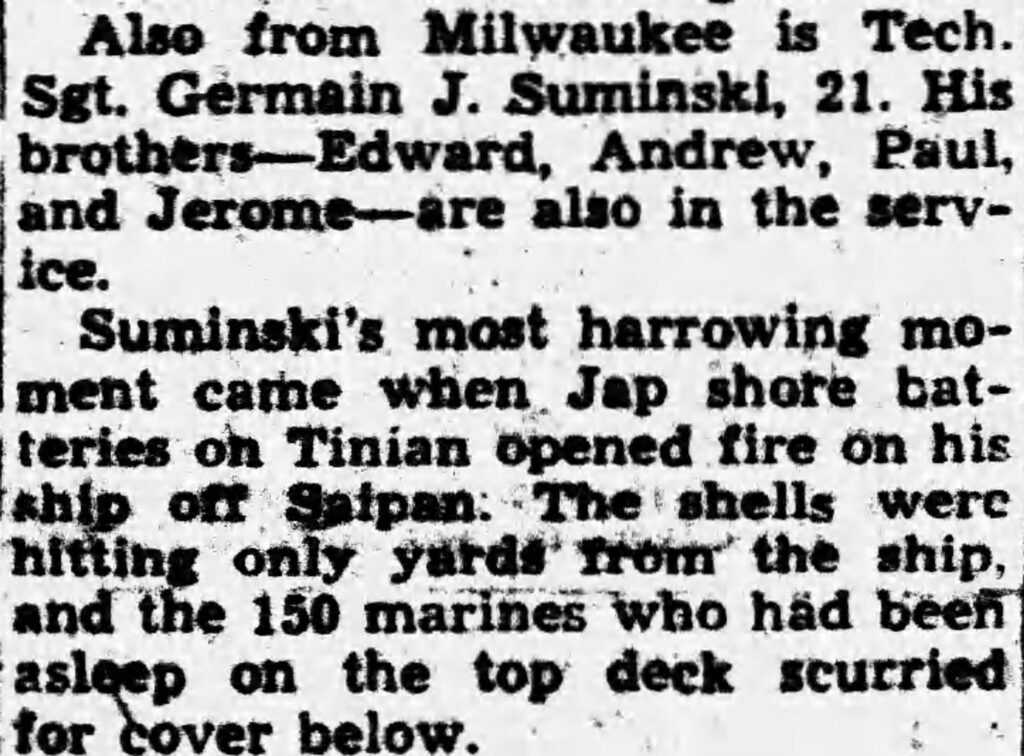
Suminski was briefly featured in an article in the Oshkosh Northwestern, where he described coming under fire on board his ship near Saipan. Secondary sources indicate that personnel onboard the Auburn II also served in planning and support capacities at the Battle of Iwo Jima. Suminski was present for some of the most significant military actions undertaken by the USMC during the war.
Iwo Jima
At Iwo Jima, a large force of Marines fought for thirty-six days to secure the island. On February 23, 1945, just four days into the battle, the iconic flag raising on Mt. Suribachi took place. The USMC suffered casualties exceeding thirty percent of its forces during this assault. Suminski himself remembered being blown into the air after an artillery shell landed a few feet away from his foxhole on Iwo Jima. He came away unscathed and was grateful for this “lucky break.”
Iwo Jima was strategically important because it was within bombing range of the Japanese home islands, and its capture would enable B-29 bombers to fly unimpeded to Japan. Additionally, Iwo Jima was an ideal position and staging ground for further American expansion in the Pacific Theater, preceding the occupation of Okinawa.
Honoring Service
By the end of the war, Suminski had reached the rank of master sergeant. He received a Bronze Star in recognition of his service in the Pacific Theater, which was awarded for his “operations against enemy Japanese forces on Iwo Jima, Volcano Islands, from 19 February to 26 March 1945. Under harassing enemy bombardment, Master Technical Sergeant Suminski efficiently handled his innumerable duties, thereby contributing materially to the success of the operation.”
Veteran Experience
After serving in the war, Suminski began to build his life in Cleveland, Ohio. In the 1950 census, Suminski was listed as a lodger and was employed back at Curtis 1000 as office manager. He met his future wife, Patricia Nihill, a Cleveland native, whom he married in 1952. The following year, they welcomed their son, John.
Baby Boom
The new family settled in Parma, Ohio, a postwar suburb of Cleveland. In this way, their experience reflects that of other Veterans starting families during the Baby Boom of the late 1940s through the 1950s. Suminski’s family continued to grow, adding several grandchildren and great-grandchildren.
A Growing Career
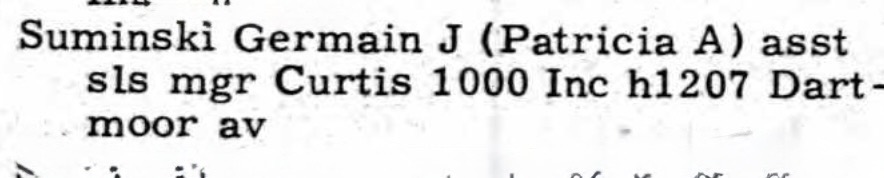
By 1959, Suminski was promoted to assistant sales manager at Curtis 1000. As his former supervisor E. J. Hoslett predicted, Suminski was “executive material.” He continued to work at Curtis 1000 for the remainder of his career, ultimately becoming the company’s vice-president.
Service at Parmadale
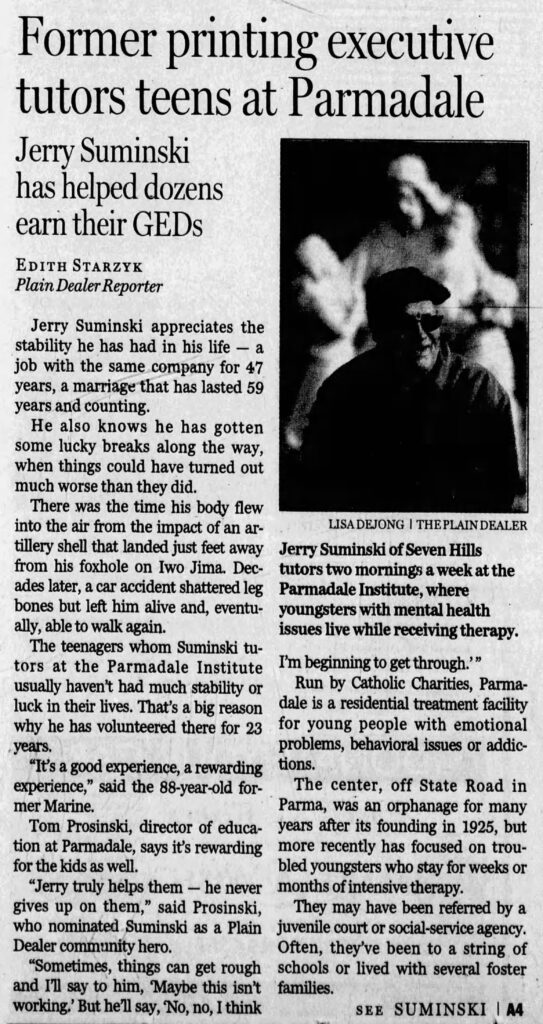
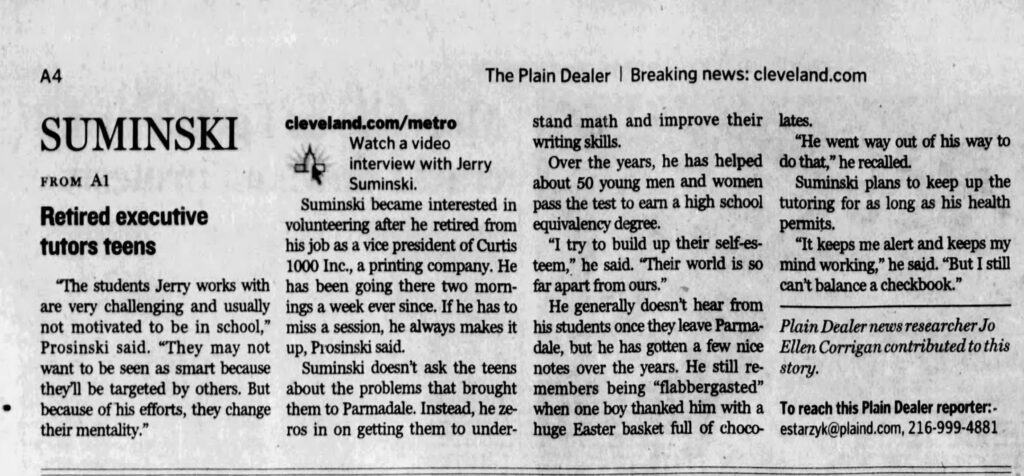
Suminski quietly volunteered for twenty-three years at the Parmadale Institute, which was affiliated with Cleveland Catholic Charities. He dedicated his time helping at-risk teens complete the requirements for their GEDs. In a 2011 Community Heroes profile in the Cleveland Plain Dealer, he stated that he tried to build his students’ self-esteem and did not focus on what brought them to Parmadale but rather on how he could help them move forward and live successful lives. Students at Parmadale remembered him fondly, speaking of his kindness and unwavering support.
Commemoration
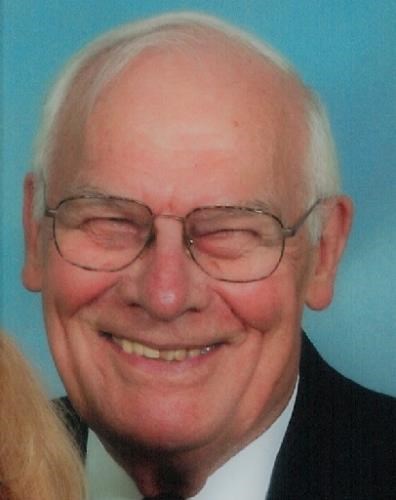
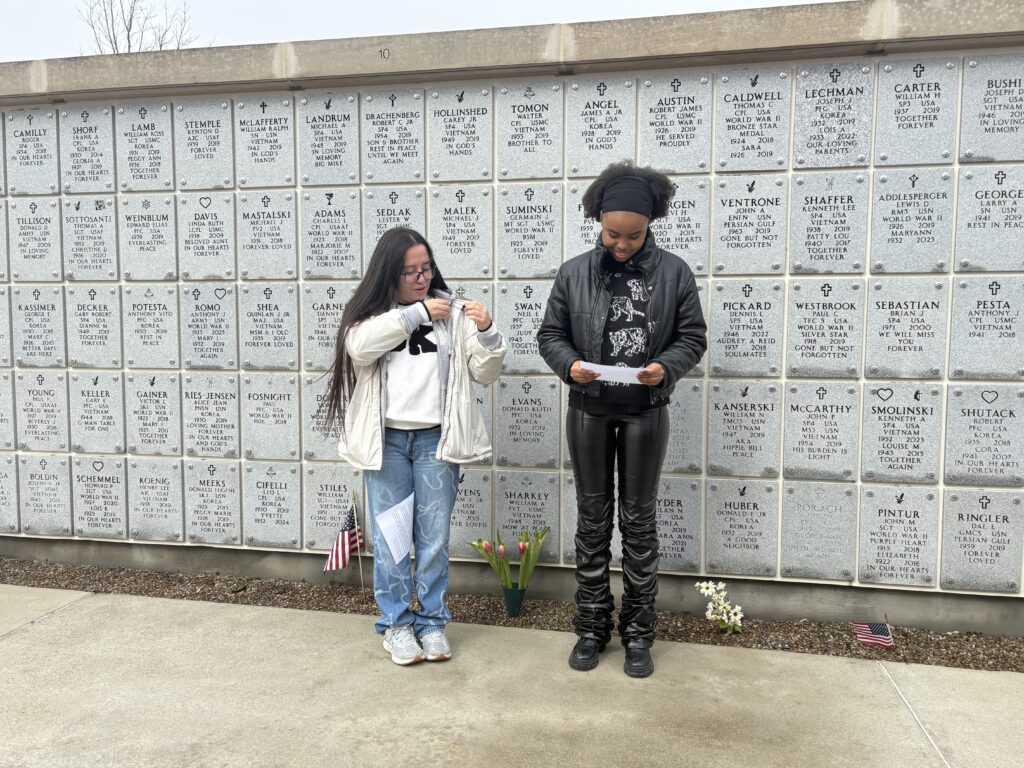
Germain “Jerry” Joseph Suminski died on January 18, 2019, in Parma, Ohio. He is buried at the Ohio Western Reserve National Cemetery in Rittman, Ohio. Service was a defining characteristic of Suminski’s life, both during his time in the USMC and later, in his quiet work volunteering at the Parmadale Institute.
Bibliography
Primary Sources
“40 Embalmers Get License to Work in State.” The Capital Times [Milwaukee, Wisconsin], August 19, 1920. Newspapers.com. (520382529).
Allis-Chalmers Manufacturing Company. Women Safe at Work at Allis-Chalmers. Photograph. 1942. Wisconsin Historical Society. http://www.wisconsinhistory.org/turningpoints/search.asp?id=1286.
Briggs, Lucia. Women’s Education and the War. Lawrence University Archives, 1943. https://jstor.org/stable/community.24552918.
The Capitol. Milwaukee, Wisconsin: Messmer High School, 1938.
Contact News, Public Service. Dear Joe: an address book of Wisconsin public service employees in the armed services. Pamphlet. 1944. Wisconsin Historical Society. http://www.wisconsinhistory.org/turningpoints/search.asp?id=1298.
Department of the Treasury. Help Him Get Well – Buy Bonds. 1944. Poster. Wisconsin Historical Society. https://www.wisconsinhistory.org/Records/Image/IM66783.
Germain J. Suminski. Ohio, U.S., County Marriage Records, 1774-1993. Digital Images. https://ancestryclassroom.com.
Germain Joseph Suminski. Muster Rolls of U.S. Navy Ships, Stations, and Other Naval Activities, 01/01/1939-01/01/1949. Digital Images. https://www.fold3.com.
Germain Joseph Suminski, Official Military Personnel File, Department of the Navy, National Archives and Records Administration – St. Louis.
Germain Joseph Suminski, Report of Separation, Department of the Navy, National Archives and Records Administration – St. Louis.
Germain Joseph Suminski. U.S., Marine Corps Muster Rolls, 1798-1958. Digital Images. https://ancestryclassroom.com.
Germain Joseph Suminski. World War II Draft Cards Young Men, 1940-1947. Digital Images. https://ancestryclassroom.com.
“Gugler Lithographic World War II Mobilization Posters.” Wisconsin Historical Society. c.1944. https://www.wisconsinhistory.org/Records/Article/CS357#:~:text=The%20Gugler%20Lithographic%20Company%20in%20Milwaukee%20worked,motifs%20*%20Uncle%20Sam%20*%20Stark%20contrasts.
“Jerry Suminski, volunteer tutor, works with teens: Community Heroes 2011.” Cleveland Plain Dealer [Cleveland, Ohio], December 20, 2011. https://www.cleveland.com/metro/2011/12/jerry_suminski_volunteer_tutor.html.
John Suminski. Ohio, U.S., Birth Index, 1908-2003. Digital Images. https://ancestryclassroom.com.
“Milwaukee OPA District Starts Home Front Pledge Campaign.” The Wisconsin Jewish Chronicle [Milwaukee, Wisconsin], Sept. 10, 1943. Newspapers.com (49940175).
Ohio. Cuyahoga County. 1950 U.S. Census. Digital Images. http://ancestryclassroom.com.
“Operations to Begin Friday at Milwaukee.” Muncie Evening Press [Muncie, Indiana], March 27, 1941. Newspapers.com (249290310).
Parma City Directory 1959. Cleveland, OH. Cleveland Directory Company. 1959. https://ancestryclassroom.com.
“Propose Students Do Actual Production Work in Classes.” The Post-Crescent [Appleton, Wisconsin], January 7, 1942. Newspapers.com (396132895).
“Simply Gave Up.” The Oshkosh Northwestern [Oshkosh, Wisconsin], October 28, 1944. Newspapers.com (476757481).
State Advisory Committee of Consumer Interests. Suggestions to County Committees of Consumer Interests. 1944. Wisconsin Historical Society. http://www.wisconsinhistory.org/turningpoints/search.asp?id=1293.
“Suminski, Germain Jerry.” The Plain Dealer [Cleveland, Ohio], Jan. 20, 2019. Newspapers.com (1158930456).
U.S. Census Bureau. Wisconsin Decennial Census Data. Washington, D.C.: U.S. Census Bureau, 1940. https://www2.census.gov/library/publications/decennial/1940/population-volume-1/33973538v1ch10.pdf.
USS Auburn (AGC-10) at anchor in Manila Bay, circa August-September 1945. Photograph. Amphibious Photo Archive, NavSource Online. https://www.navsource.net/archives/10/01/0110.htm.
Wisconsin Department of Agriculture. Favorite Recipes from America’s Dairyland. 1944. Wisconsin Historical Society. http://www.wisconsinhistory.org/turningpoints/search.asp?id=1536;.
“Wisconsin High On List On Island in the Pacific.” The Oshkosh Northwestern (Oshkosh, Wisconsin), October 28, 1944, Newspapers.com (476757481).
Wisconsin. Milwaukee County. 1920 U.S. Census. Digital Images. http://ancestryclassroom.com.
Wisconsin. Milwaukee County. 1930 U.S. Census. Digital Images. http://ancestryclassroom.com.
Wisconsin. Milwaukee County. 1940 U.S. Census. Digital Images. http://ancestryclassroom.com.
Wright’s Milwaukee City Directory. Milwaukee, WI. Wright Directory Company. 1922. https://ancestryclassroom.com.
Secondary Sources
“75th Anniversary Battle of Iwo Jima.” National Museum of the Marine Corps. Accessed January 16, 2026. https://www.usmcmuseum.com/battle-of-iwo-jima.html.
“African Americans.” Encyclopedia of Milwaukee. Accessed November 5, 2025. https://emke.uwm.edu/entry/african-americans/.
“Agriculture.” Encyclopedia of Milwaukee. Accessed November 5, 2025. https://emke.uwm.edu/entry/agriculture/.
Arens, Major Mark P. V (Marine) Amphibious Corps Planning for Operation Olympic and the Role of Intelligence in Support of Planning. USMCR (MCIA): 1996. https://irp.fas.org/eprint/arens/chap2.htm.
“Auburn II (AGC-10).” Naval History and Heritage Command. Accessed January 15, 2026. https://www.history.navy.mil/research/histories/ship-histories/danfs/a/auburn-ii.html.
“Battle of Iwo Jima.” National World War II Museum, New Orleans. Accessed January 17, 2026. https://www.nationalww2museum.org/war/topics/battle-iwo-jima#:~:text=Approximately%2070%2C000%20U.S.%20Marines%20and,rest%20were%20killed%20in%20action.
“Burlington’s Role in Milwaukee’s Dairy Industry.” Burlington Historical Society. Accessed November 12, 2025. https://burlingtonhistory.org/burlingtons-role-wisconsins-dairy-industry#:~:text=In%201922%2C%20the%20plant%20added,in%20the%201949%20photo%20below.
Dugan, Hannah. “Stalag Milwaukee: German World War II prisoners left their confinement at Camp Billy Mitchell 75 years ago.” Milwaukee Independent [Milwaukee, Wisconsin], April 21, 2021. https://www.milwaukeeindependent.com/articles/stalag-milwaukee-german-world-war-ii-prisoners-left-their-confinement-at-camp-billy-mitchell-75-years-ago/.
“Germain J. Suminski.” Veterans Legacy Memorial, National Cemetery Administration. Accessed April 8, 2026. https://www.vlm.cem.va.gov/GERMAINJSUMINSKI/D23FD0A.
“Germain Jerry Suminski.” Cleveland.com Accessed November 5, 2025. https://obits.cleveland.com/us/obituaries/cleveland/name/germain-suminski-obituary?id=7955253.
“Germans.” Encyclopedia of Milwaukee. Accessed November 5, 2025. https://emke.uwm.edu/entry/germans/.
Gurda, John. “How Industry Drove Growth in 1940s Milwaukee.” Milwaukee Magazine, February 25, 2022. https://www.milwaukeemag.com/how-industry-drove-growth-in-1940s-milwaukee/.
Henzel, Ann-Elise. “How Did Socialist Mayors Affect Milwaukee?” WUWM National Public Radio. March 15, 2019. Accessed November 10, 2025. https://www.wisconsinhistory.org/Records/Image/IM66783.
“Lower East Side.” Neighborhoods in Milwaukee. Accessed November 10, 2025. https://www.neighborhoodsinmilwaukee.org/Lower%20East%20Side.pdf.
“Milwaukee History.” Milwaukee County Historical Society. Accessed November 5, 2025. https://milwaukeehistory.net/education/milwaukee-timeline/.
“Peoples.” Encyclopedia of Milwaukee. Accessed November 5, 2025. https://emke.uwm.edu/entry/peoples/.
Starzyk, Edith. “Former Printing Executive Tutors Teens at Parmadale.” Plain Dealer [Cleveland, Ohio], December 20, 2011. Newspapers.com (1073985318).
“Strikes.” Encyclopedia of Milwaukee. Accessed November 5, 2025. https://emke.uwm.edu/entry/peoples/.
“Suminski, Germain J.” National Cemetery Association. Accessed October 24, 2025. https://www.cem.va.gov/nationwide-gravesite-locator/.
“USMC Enlisted Rank Insignia of World War II.” Accessed January 16, 2026. https://uniform-reference.net/insignia/usmc/usmc_enlisted_ww2.html.
Van Ells, Mark D. “How Milwaukee’s German-Americans faced down fascism eighty years ago.” Milwaukee Independent [Milwaukee, Wisconsin], March 17, 2017. https://www.milwaukeeindependent.com/articles/how-milwaukees-german-americans-faced-down-fascism-eighty-years-ago/.
“When Milwaukee Went to War Part 4: Bullets, Fuses, Quintants, and Can Openers.” War Memorial Center. Accessed November 10, 2025. https://warmemorialcenter.org/events/75th-commemoration/when-milwaukee-went-to-war-part-4/.
“When Milwaukee Went to War Part 9: The Workforce.” Milwaukee County War Memorial Center. Accessed November 10, 2025. https://warmemorialcenter.org/events/75th-commemoration/when-milwaukee-went-to-war-part-9/.
This profile was funded by a grant from the United States Department of Veterans Affairs. The opinions, findings, and conclusions stated herein are those of the author and do not necessarily reflect those of the United States Department of Veterans Affairs.