
Corporal Harlan Theodore Rosvold
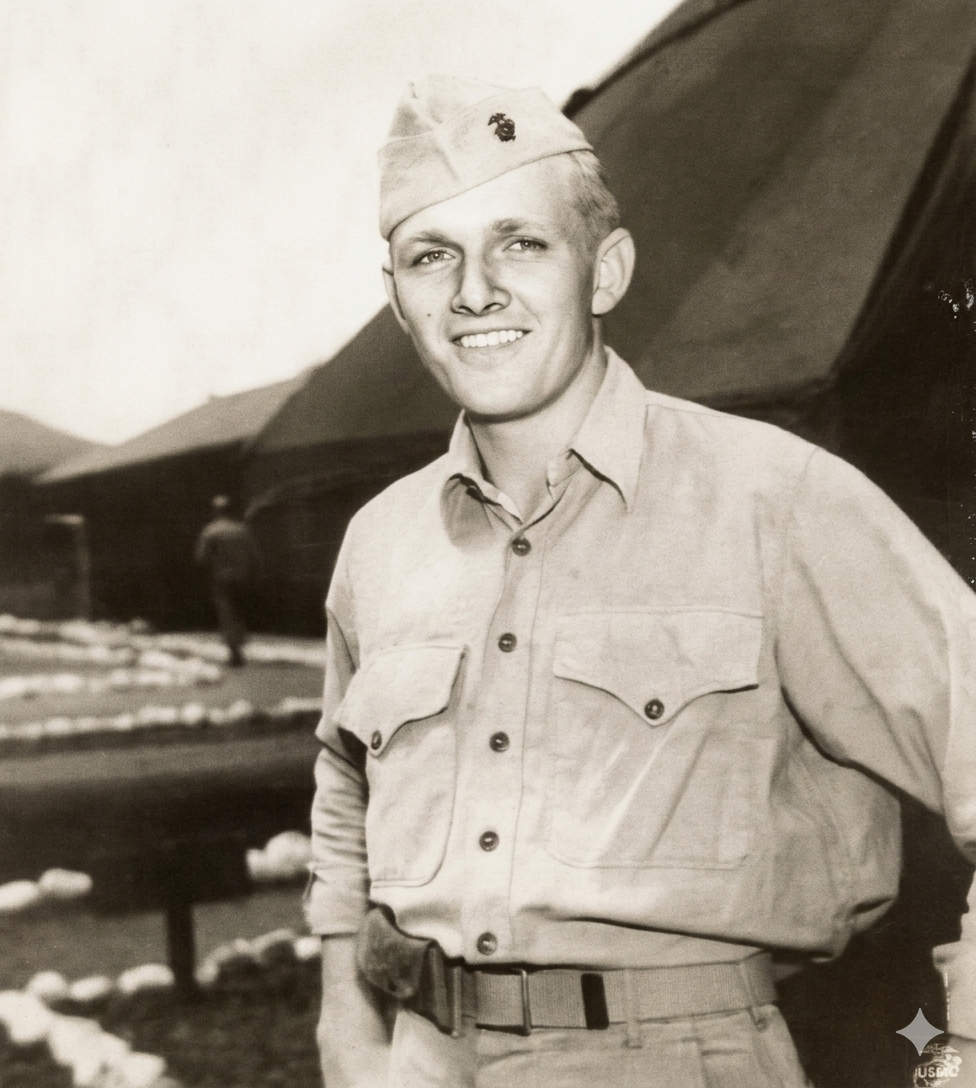
- Unit: Second Amphibious Armoured Division
- Date of Birth: March 6, 1925
- Entered the Military: October 4, 1943
- Date of Death: March 7, 2023
- Hometown: Kenyon, Minnesota
- Place of Death: Oak Park Heights, Minnesota
- Cemetery: Section C, site 491,. Fort Snelling National Cemetery, Minneapolis, Minnesota
Mentored by Mrs. Marley Hoefs
St. Croix Falls High School, St. Croix Falls, Wisconsin
2025/2026
Early Life
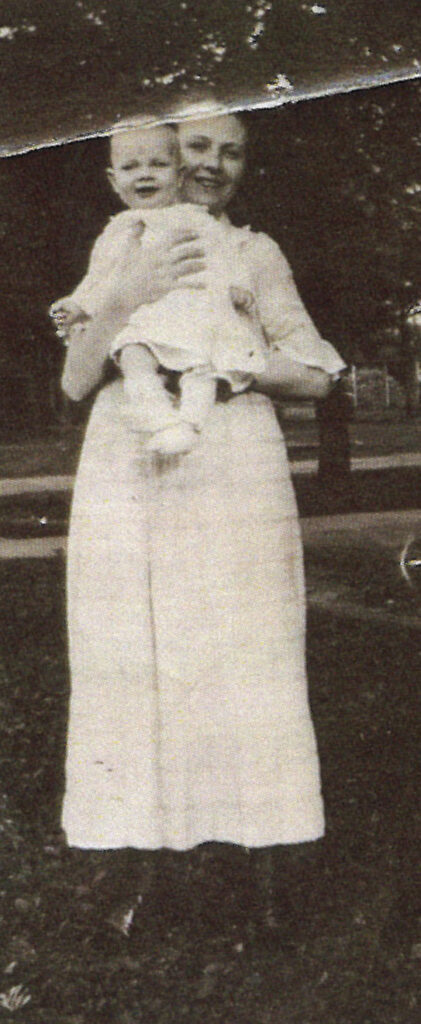
Harlan Rosvold was born on March 6, 1925, marking a modern milestone for his family: he was the first of the Rosvold children to be born in a hospital, rather than at home. Born to Emil and Eva (Haugen) Rosvold, he was affectionately known to his family as “Holly.”
He was part of a large, bustling household that would eventually include nine children. His siblings included Leona, Eleanor, Mildred, Walford, Marvin, Lois, Lorraine, Carol, and Patricia. However, when Harlan was just four years old, his older brother Walford died of a ruptured appendix. Despite this loss, the siblings remained a tight-knit group, a bond that would later see three of them—Harlan, Lois, and Marvin—serving their country during World War II.
Siblings Separated
The Great Depression brought a devastating blow to the family in July 1933. Harlan’s mother, Eva, passed away from complications of a gallstone attack at 38 years old. The loss was catastrophic for the family structure; the youngest child, Patricia, was only two months old at the time.
Harlan’s father, Emil, held a job that demanded long hours, making it nearly impossible to manage the household alone. For a time, the family attempted to stay together through the efforts of the older children and a series of hired housekeepers. Eventually, the burden became too great to sustain. The family was forced to separate: the older girls, Leona, Eleanor, and Mildred, moved out as they graduated; the infant Patricia was adopted by a couple from Washington State (reuniting with the family only as an adult); Marvin went to live with family friends; and Lois moved in with friends in Grand Forks.
Finding Home in Kenyon
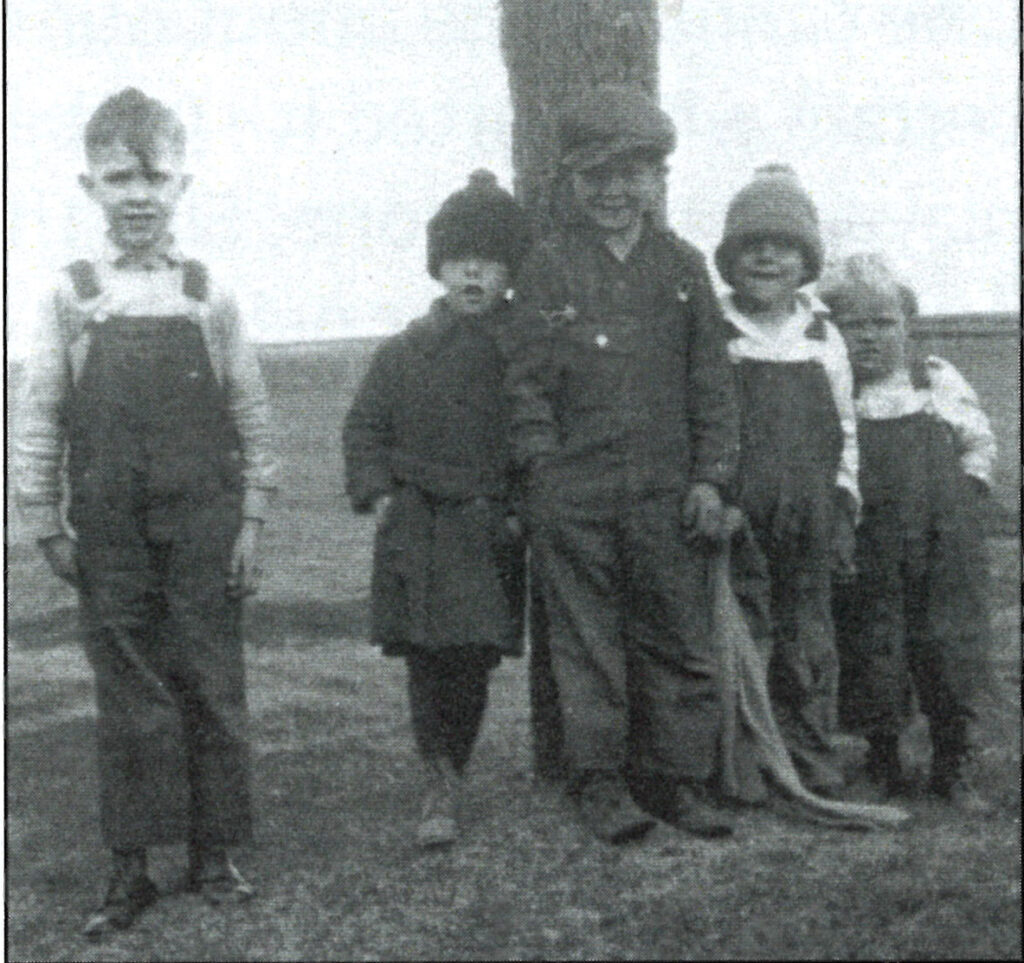
Following the siblings’ separation, Harlan moved to Kenyon, Minnesota, to live with his grandparents. By the time he was 15, he moved in with his aunt and uncle, Edwin and Maria Haugen. There, he lived alongside his cousins Conrad, Darlene, and Ronald Haugen, finding a measure of stability during his teenage years.
High School Years: Winter Boarding and Pin-Setting
Harlan attended Kenyon High School, where getting an education required significant determination. In an era before school buses, transportation relied on neighborly carpools. The harsh Minnesota winters made this commute difficult, so Harlan and his cousins would stay in town during the winter months to ensure they could attend class.
To pay for his room and board in town, Harlan demonstrated a strong work ethic. Along with two classmates in similar circumstances, he worked at the local bowling alley, setting pins. The manual labor paid modest wages—between 2.5 and 3 cents per line—but it was enough to cover weekly room and board, allowing him to attend classes. Harlan completed his education, graduating from Kenyon High School in 1943, prepared to face the wider world and the ongoing World War. During his high school years, he met Joyce Dallbotten at a 4H meeting. After the war, Joyce would become his wife.
Homefront
Goodhue County is a rural region in southeastern Minnesota, bordering the Mississippi River about an hour south of the Twin Cities of Minneapolis and St. Paul. The city of Red Wing serves as the county seat and a major city.
Industrial Support: The “Skytrooper” Boot
One of the most prominent businesses in the county to this day is the Red Wing Shoe Company. During World War II, the Red Wing Shoe Company was recognized for its significant contributions, receiving an “E” for Excellence from the War Department. The company’s largest contribution to the war effort was the development and production of “Skytrooper” Jump Boots for American paratroopers. These specialized boots were engineered to withstand the severe shock of parachute landings while maintaining the flexibility required for infantry combat on the ground.
Agriculture and POW Labor
Even today, agriculture remains the economic foundation of the county, but the war precipitated a roughly 16% drop in the rural population, leading to a critical labor shortage. To sustain operations, the region turned to labor from Prisoners of War (POWs). The Faribault Canning Company, located near Kenyon, relied on German POWs to harvest snapping peas in the summer and corn in the fall. Approximately 3,000 prisoners were housed in a camp nearby, paid 67 cents a day, and “farmed out” to local growers between canning seasons. Interestingly, because many residents in the Goodhue and Rice County area had German ancestry, they were often able to communicate easily with the laborers.
Home Front Sacrifices and Initiatives
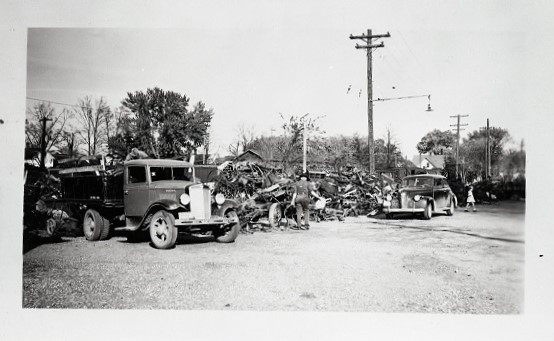
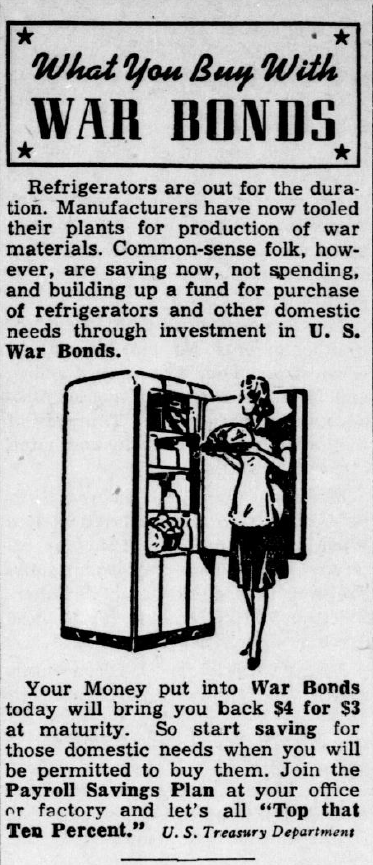
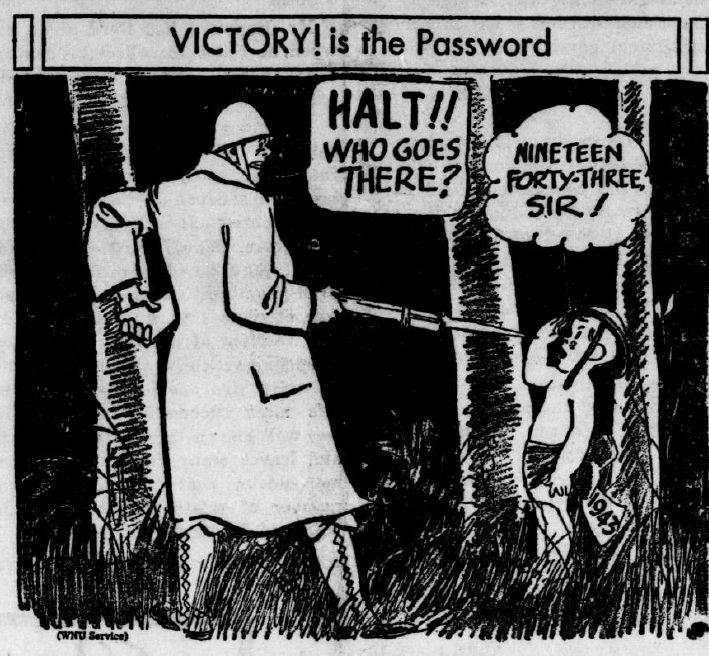
Civilians in Goodhue County actively supported the war effort through daily sacrifices and community programs. Residents managed the rationing of essential goods, with coal dealers voluntarily rationing supplies even before official orders were issued. Newspapers like The Zumbrota News educated the public on using ration books, while advertisements promoted war bonds as a way to save for appliances, such as refrigerators, that were unavailable while factories were retooled for war materials. The community also organized metal scrap drives and addressed public health concerns; after a survey revealed that student diets were deficient in nutrients needed for growth, there was a strong push for school-provided lunches to ensure the health of youth.
Service and Medical Training
The war caused a shortage of medical personnel; many were deployed overseas to tend the wounded. To solve this problem, the Cadet Nurse Corps was created. St. John’s Nursing School in Red Wing participated in the Cadet Nurse Corps from 1943 to 1948, offering students free tuition, room, and board in exchange for a promise to serve in military or essential civilian nursing roles. Additionally, 67 women from Goodhue County volunteered for newly organized military units to support the war effort directly.
Post-War Justice
The impact of Goodhue County residents extended well beyond the fighting, influencing the pursuit of justice in the war’s aftermath. William C. Christianson left his position on the Minnesota Supreme Court to serve as a judge at the Nuremberg Military Tribunal. He presided over the trial of Adolph Hitler’s cabinet, a significant trial, where 21 defendants were eventually convicted of planning aggressive war crimes.
Military Experience
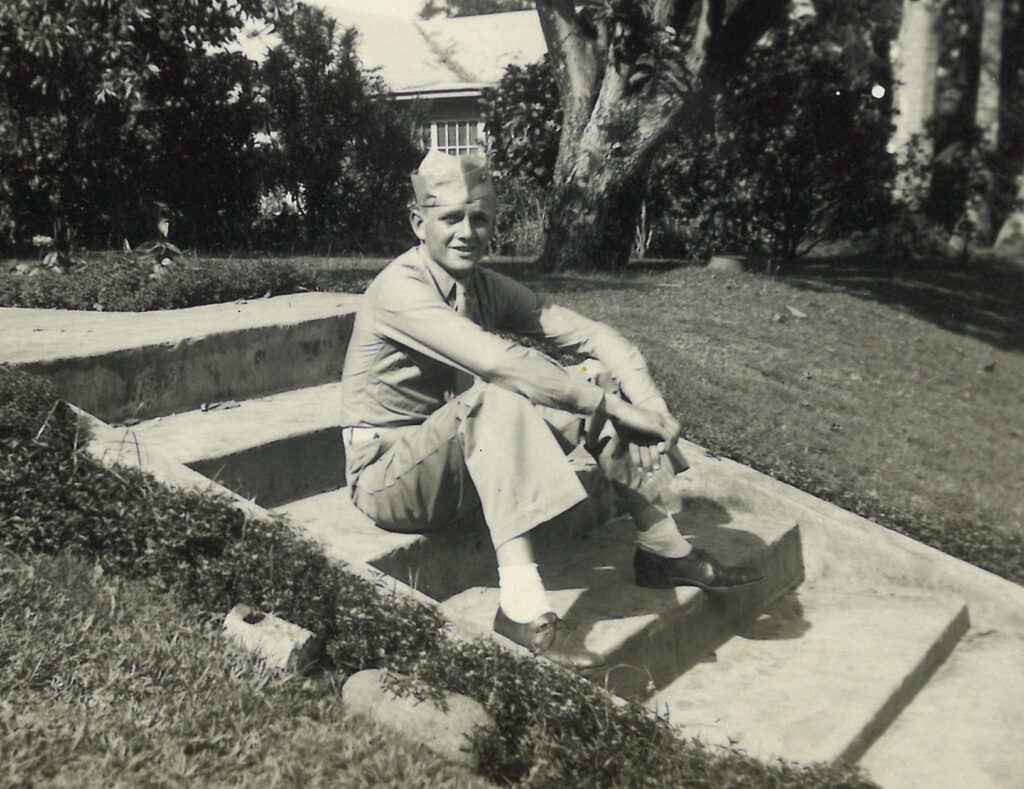
Harlan Rosvold received his draft notice in 1943, just after graduating from high school. He had the option of deferring to work on his uncle’s farm. The prospect of “milking 25 cows by hand” did not appeal to him, and he asked his high school sweetheart, Joyce, to write him a letter to support his enlistment. He joined the U.S. Marine Corps in Minneapolis, Minnesota, on October 4, 1943.
Boot Camp
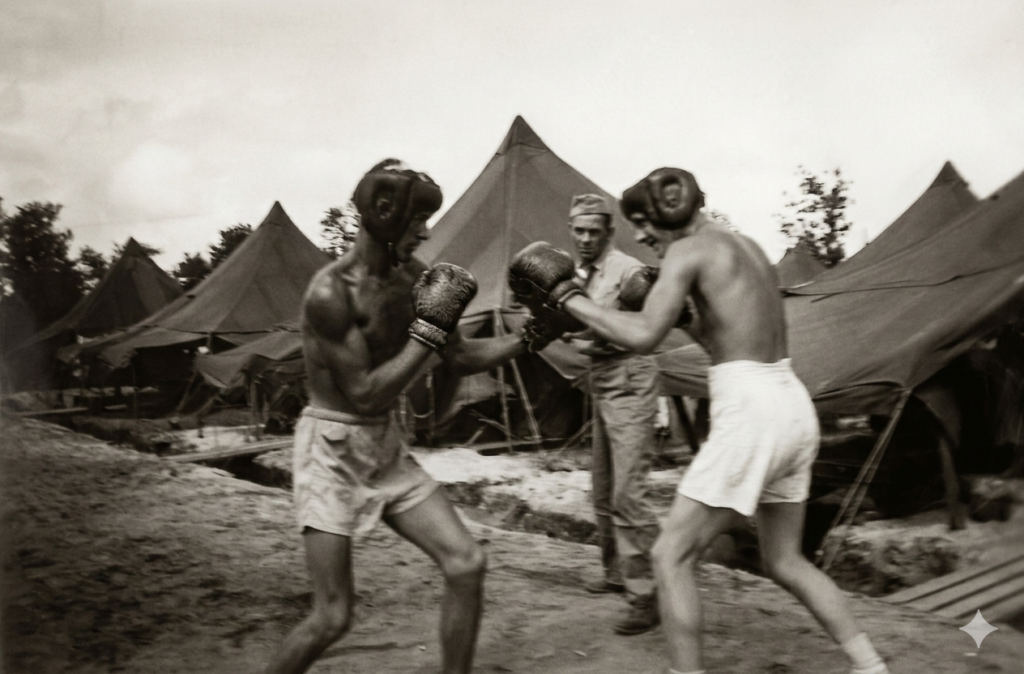
Boot camp in San Diego, California, was a shock for the 18-year-old; his drill instructor told the recruits they were the “sorriest-looking bunch” and that “no mother in America would claim any of them.” Rosvold endured grueling “boon-docking” training, which included marching, bayonet drills, and carrying a fellow Marine 100 yards through wet sand. He also survived “fallout”—midnight runs where recruits had to carry seabags containing all their earthly possessions. While older men in their 30s struggled, Rosvold got into the best shape of his life.
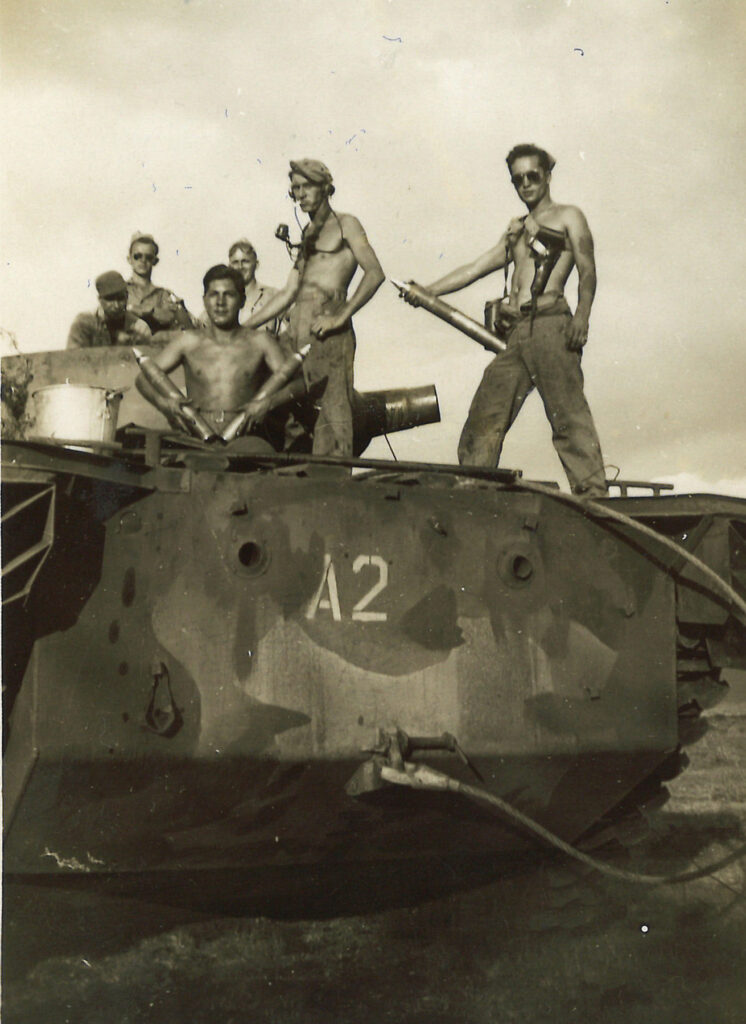
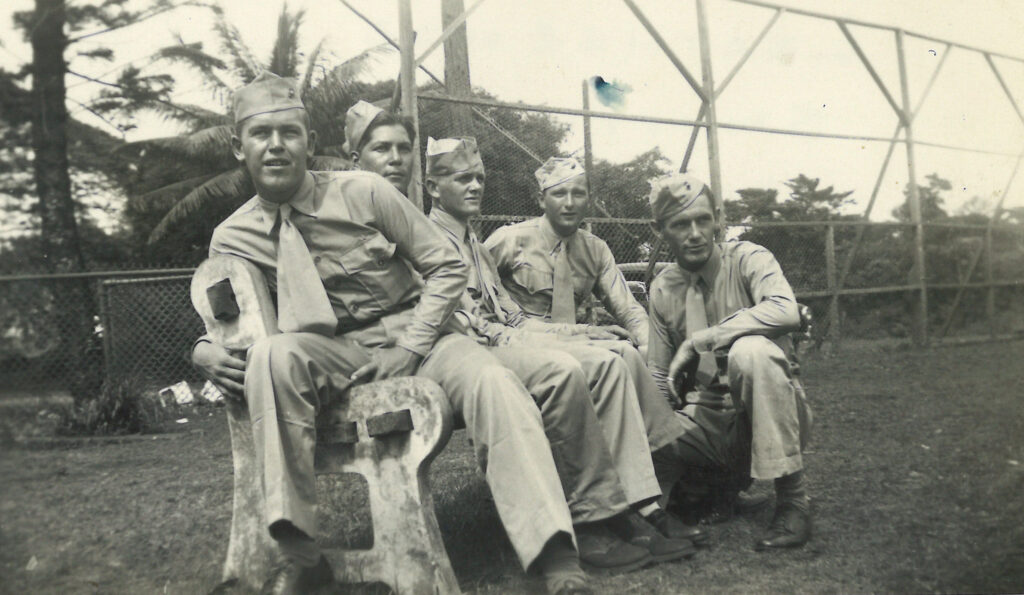
Following boot camp, Rosvold underwent specialized training at Camp Matthews to master the M-1 rifle and subsequently attended Land Tank School. He was eventually “volunteered” for the Second Amphibious Tank Battalion in Oceanside, California. There, he cross-trained in every position within the tank—driver, loader, and gunner for both the 75mm Howitzer and .30 caliber machine guns—learning to navigate the unique challenge of driving tanks through water.
Journey to the Pacific
Miserable conditions and tragedy marked Rosvold’s journey overseas. Traveling to Maui on the USS Comet, he recalled that the ship’s drains were non-functional; when seasick Marines tried to wash away their vomit, the water had nowhere to go, flooding the quarters. By May 1944, he was aboard a Landing Ship Tank, LST 390. Here, he witnessed the first true horror of the war when a nearby LST in his group exploded due to a welding accident, killing over 200 men. Later, aboard the Haskell-class Attack Transport 168 heading for the Marshall Islands, Rosvold marveled at the sheer scale of the American military, noting that the convoy stretched “as far as the eye could see.”
The Battle of Saipan
On June 15, 1944, after a traditional pre-invasion breakfast of steak and eggs at 4:30 a.m., Rosvold’s crew launched their assault on Saipan. The coral reefs prevented a beach landing, forcing the tanks to navigate through heavy fire from hundreds of yards out. Disaster struck when an artillery shell hit Rosvold’s tank as they crossed a small airstrip. The blast killed the radio operator, Alvin Caldwell. In a display of loyalty, Rosvold later returned to the disabled tank to recover Caldwell’s watch and Catholic medal, ensuring they were sent to his parents.
Forced to bail out, Rosvold made it to the beach and served as a runner for his company commander. He later survived a “banzai” attack, a desperate tactic where Japanese soldiers, often drunk on sake and beer to gain courage, would charge headlong into American lines, screaming praises to the emperor. Rosvold completed his time on Saipan, joining various tank crews and filling in gaps as needed. The victory at Saipan was hard-won but strategically vital, bringing B-29 bombers within range of Tokyo.
The Battle of Tinian
On July 24, 1944, Rosvold landed on Tinian with the 4th Infantry Division. Unlike Saipan, his tank landed at the same time as the infantry. Immediately upon hitting the shore, Claude Reese Bass, an ammunition passer on Rosvold’s tank, was wounded but survived. The terrain of Tinian was flatter, allowing the tanks to move more effectively with the infantry. This campaign was strategically critical; the Navy’s construction battalions (known as “Seabees”) eventually transformed Tinian’s flat ground into the busiest airfield of the war, where the Enola Gay would later launch its atomic mission. Rosvold’s unit lost no further men on Tinian and returned to Saipan to prepare for their next major engagement.
The Battle of Iwo Jima
In February 1945, Rosvold arrived at Iwo Jima with a specific crew he remembered fondly: Commander Bill Watkins (“one cool dude”), Gunner Carlton “Eel” Evans (deadly with the 75mm), Loader Calvin Orr, and ammunition passers Leroy Baxter and Smith. The invasion conditions were chaotic. Rough seas with two to three-foot waves made radios useless.
On Iwo Jima, Rosvold drove his tank onto the beach. With his periscopes fogged up, he had to drive “blind” through a 1×6-inch slit in the hatch. Because of this limited view and the downed radios, Watkins steered Rosvold by tapping him on the shoulder, directing which way to go. Upon landing, the black volcanic ash offered zero traction—Rosvold compared it to driving in a “bin of wheat.” Their tank did not get over the seawall because of this and became somewhat of a sitting duck. They eventually returned to the sea.
Early in the battle, the tank was hit, and loader Calvin Orr was severely wounded by shrapnel. Orr refused evacuation to stay with his crew, an action for which he later received a Bronze Star. At one point, Rosvold opened his hatch to see better, only to hear a sharp crack as a bullet gouged the metal a foot away, forcing him to slam it shut. Unable to cross the steep seawall initially, the tanks fired at the caves of Mount Suribachi from the water’s edge until metal decking could be laid down. Rosvold later had a front-row seat to the flag raising on Mount Suribachi. While he missed the specific moment the flag went up, he knew it happened because every gun in the fleet—machine guns, artillery, and naval cannons—unleashed a massive celebratory barrage of “fireworks.”
Discharge
Rosvold’s unit was the first to land on Iwo Jima and the first to leave, departing on March 16, 1945. The departure was treacherous; the seas were so rough that many tanks sank while trying to load back onto the LSTs. The crew returned to Maui to train for an invasion of mainland Japan that never took place. Rosvold’s unit was awarded two Presidential Unit Citations for their bravery in the Central Pacific and Iwo Jima. He was discharged as a corporal on February 3, 1946, after a final assignment on military police (MP) duty at the Great Lakes Naval Training Center in Illinois.

Veteran Experience
Upon returning to Minnesota, Rosvold reunited with his high school sweetheart, Joyce Dalbotten, whom he had originally met at a 4-H meeting. While Rosvold served, Joyce was a Rosie the Riveter, contributing to the war effort by working in factories in Chicago. The two reconnected while he was stationed at the Great Lakes Naval Training Station.
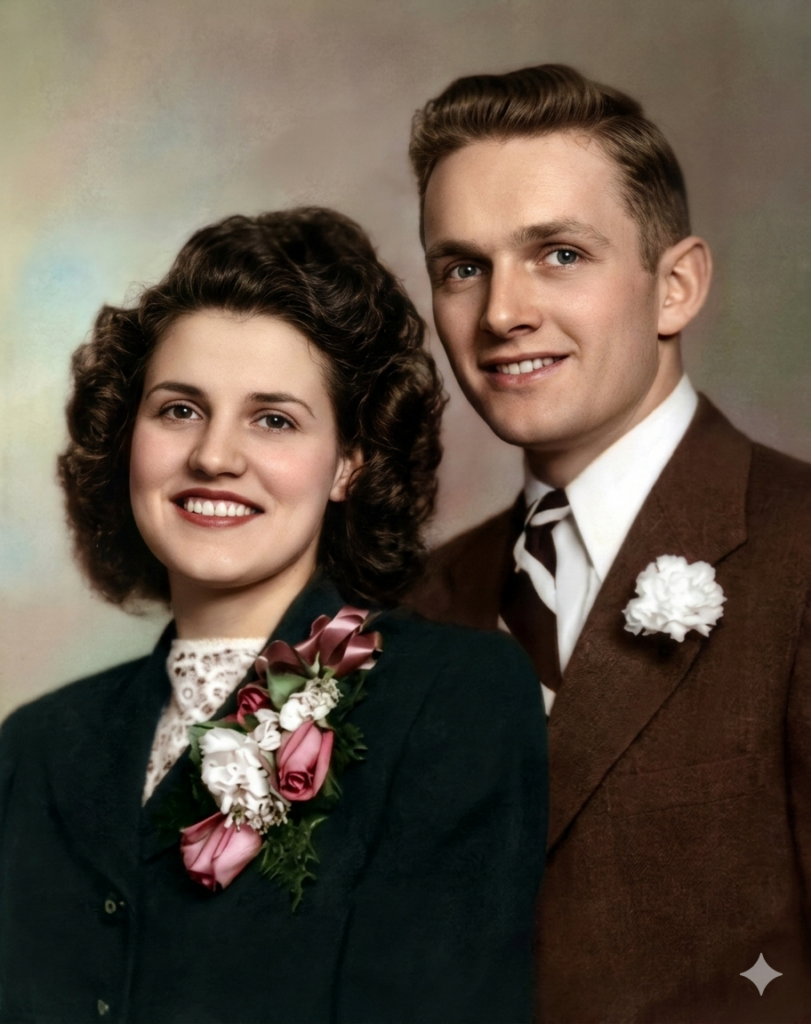
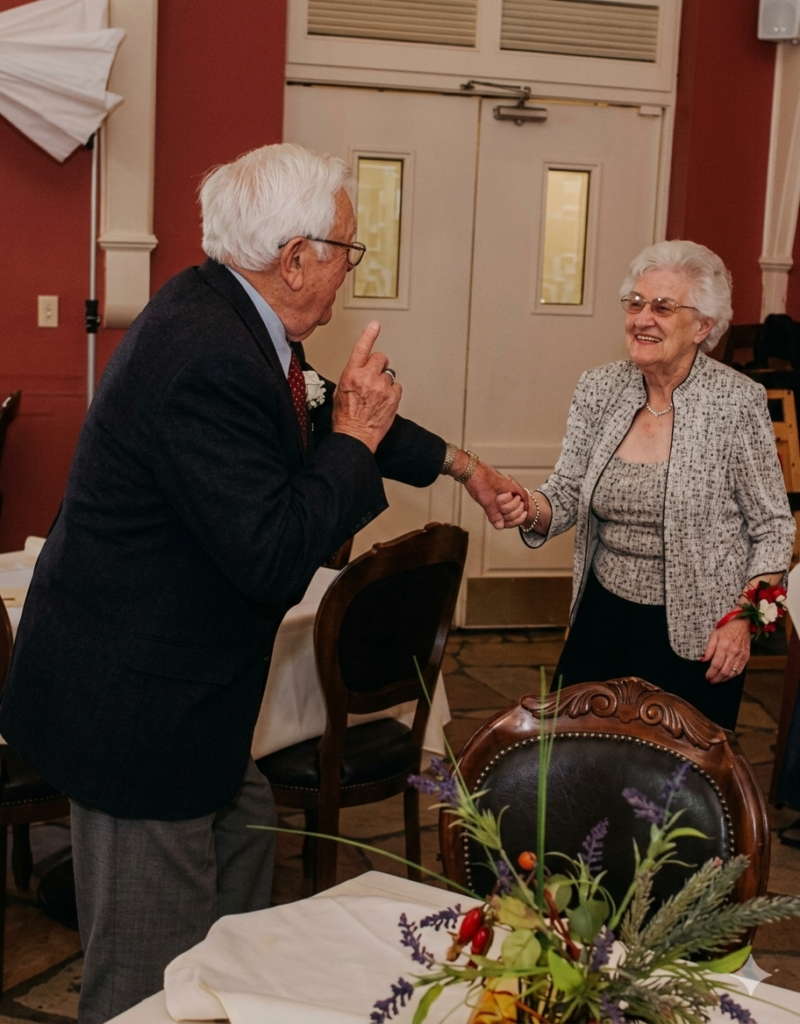
They married on December 27, 1947, at the famous “Little Brown Church in the Vale” in Nashua, Iowa. Together, they raised six children: Dawn, Greg, Vickie, Bonnie, Todd, and Steve. After bouncing between Kenyon and Minneapolis early in their marriage, the couple settled in Mendota Heights, Minnesota, in 1957. They remained in this family home for the next 60 years.
Finding his Passion
Rosvold’s post-war career began with a period of “job-hopping” as he adjusted to civilian life. He worked in various roles, including farmhand for his uncle, dump truck driver at a limestone quarry, cook at White Castle, and assembly-line worker at the Ford Motor Plant. Finding the commute to Ford too difficult for a young family, they returned to Kenyon, where Rosvold found his footing in construction.
Working for Kenneth Flom Construction and later Maus Woodworking, he acquired specialized skills in cabinetry, tile laying, and trim work—skills he utilized to build his own home and eventually start his own contracting business. In 1957, he secured a position in the construction department at Farmers Union Central Exchange (later Cenex). This role required extensive travel to Washington, Oregon, and Alaska as the company acquired new co-ops.
Community Service and Faith
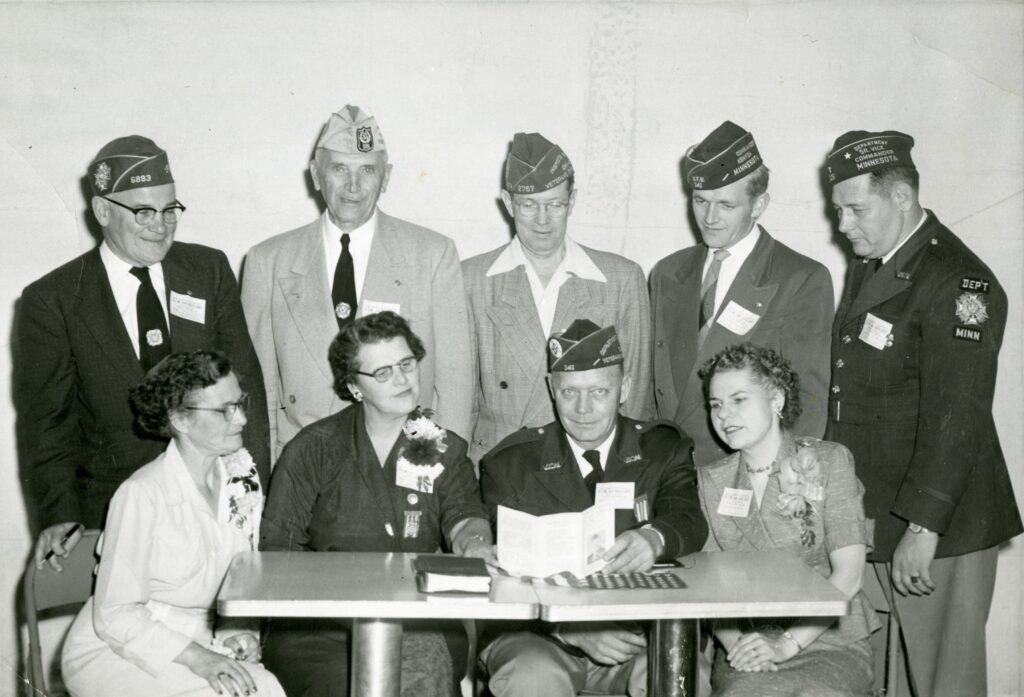
Throughout his life, Rosvold remained deeply involved in his community. In his early years back in Kenyon, he was active in VFW Post 141. After moving to Mendota Heights, he and Joyce became pillars of St. Stephen’s Lutheran Church. Rosvold served multiple terms as the church council president and served as the Sunday School Superintendent for grades 6 through 12, which at times enrolled as many as 150 students. Alongside Joyce, he helped lead the “Couples Club,” which raised funds for community organizations. Perhaps his most lasting contribution to the congregation was serving as a founding member of the church’s Foundation, a financial legacy that continues to this day.
Retirement
In his later years, Rosvold reaped the rewards of a life defined by hard work. Thanks to his daughter Dawn’s career as a flight attendant, he and Joyce traveled extensively. These trips included an Honor Flight to Washington D.C., a return to the black sands of Iwo Jima for the battle’s fortieth anniversary, and a poignant visit to Normandy to dedicate his brother Marvin’s downed P-47 Thunderbolt, which can be found in the Overlord Museum in Colleville-sur-Mer. Although the brothers served in the same war, they never discussed their combat experiences with one another—a testament to the solemn weight they both carried. Yet, while Rosvold often kept his war experiences to himself, he recognized the vital importance of history. He urged the men of the Second Amphibious Armored Division to document their experiences and ensured his own legacy would endure by writing his memoir, The Life and Times of Harlan Rosvold.
Commemoration
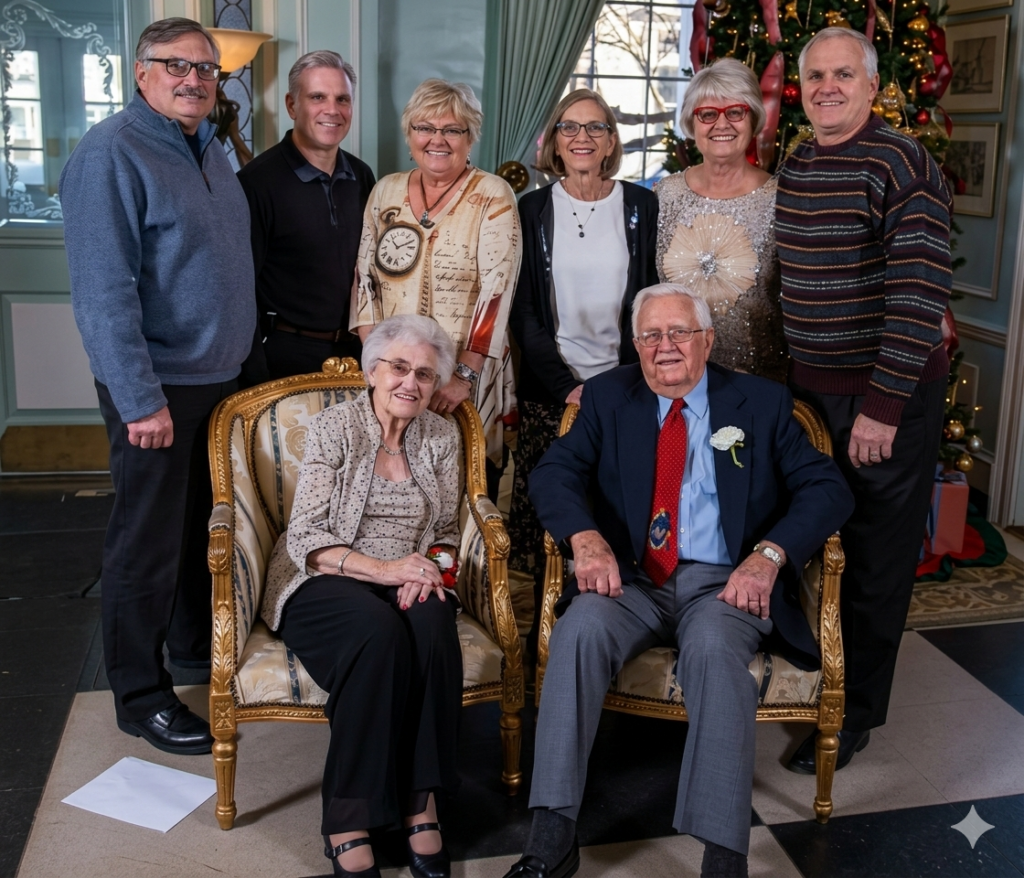
Harlan Rosvold passed away on March 7, 2023. He rests at Fort Snelling National Cemetery, surrounded by the comrades he served with and the country he helped build. Born into a life that was far from easy, he faced hardships as a child. It was his trademark “Norwegian stubbornness” that allowed him not only to survive but also to build a long, prosperous, and meaningful life.
Legacy
Rosvold was a builder in every sense of the word. But Rosvold’s most enduring construction project was his family and community. Although proud of his time as a Marine, Rosvold’s Scandinavian nature was never to brag. Honoring Rosvold means carrying forward the values he lived by: quiet service, steady faith, hard work, and love of family and community. His legacy is not only in the buildings that still stand or the stories he helped preserve, but in the lives he shaped as a husband, father, grandfather, church leader, and friend. He showed us that a life well lived does not need fanfare, only purpose. He was a man who overcame a tough beginning to leave a beautiful ending.
His wife, Joyce, died in Ocotber 9, 2025. She is buried with her husband at Fort Snelling National Cemetery.
Bibliography
Primary Sources
“Dealers at Red Wing Start Rationing.” The Austin Daily Herald [Austin, MN], November 4, 1943. Newspapers.com (1002876188)
“Harlan Rosvold.” Iowa, U.S., County Marriage Records, 1865-1972. Digital images. https://ancestryclassroom.com.
Harlan Rosvold, DD-214, Department of the Navy. National Archives and Records Administration – St. Louis.
Harlan Rosvold, Discharge Special Order, Department of the Navy. National Archives and Records Administration – St. Louis.
Harlan Rosvold, Final Pay Voucher, Department of the Navy. National Archives and Records Administration – St. Louis.
Harlan Rosvold, Official Military Personnel File, Department of the Navy. National Archives and Records Administration – St. Louis.
Harlan Rosvold-WWII Veteran Interview. Video [5:43]. Pioneer PBS-Public Broadcasting. April 6, 2023. https://www.youtube.com/watch?v=-YYUcrb4R2E&t=28s.
“Harlan T. Rosvold.” Willwerscheid Funeral Home & Cremation Service – West-Heights. Accessed October 16, 2025. https://www.altogetherfuneral.com/obituaries/HarlanRosvold/.
Harlan Theodore Rosvold. U.S. Marine Corps Muster Rolls, 1798-1958. https://fold3.com.
Harlan Theodore Rosvold. World War II Draft Cards Young Men, 1940-1947. Digital images. https://ancestryclassroom.com.
Harlan Theodore Rosvold Photograph Collection. Goodhue County Historical Society.
“Joyce Muriel Rosvold ” Willwerscheid Funeral Home & Cremation Service – West-Heights. Accessed October 16, 2025. https://www.altogetherfuneral.com/obituaries/d-20829341/saint-paul-minnesota/joyce-muriel-rosvold/october-2025.
The Life and Times of Harlan Rosvold. Rosvold Family Records. 2018
Minnesota. Goodhue County. 1930 U.S. Census. Digital images. http://ancestryclassroom.com.
Minnesota. Goodhue County. 1940 U.S. Census. Digital images. http://ancestryclassroom.com.
“Officer in Charge of German Prisoners Tells of Prisoner’s Care in the United States” Le Sueur News-Herald [Le Sueur, Minnesota], September 20, 1944. Minnesota Historical Society Archives. https://newspapers.mnhs.org/jsp/PsImageViewer.jsp?doc_id=6f40afc3-85f5-420d-8378-ee7602bc5579%2Fmnhi0031%2F1H0Y9S5E%2F44092001.
“Ration Book No. 4 Good Beginning Nov. 1.” The Zumbrota News [Zumbrota, Minnesota], October 10, 1943. Minnesota Historical Society Archives. https://newspapers.mnhs.org/jsp/PsImageViewer.jsp?doc_id=7c40d332-c89c-49b1-ad34-f608d89a2f16%2Fmnhi0031%2F1H0YNK5E%2F43102201.
Rosvold, Dawn. In-Person Interview with the author. November 12, 2025.
Rosvold, Harlan Theodore. Birth Record. Minnesota Historical Society. https://www.mnhs.org/search/people/record/68c72742-4ca8-4798-a2ca-962bf9f7f247?recordType=birth-records
Victory is the Password. Political cartoon. The Zumbrota News [Zumbrota, Minnesota], January 1, 1943. Minnesota Historical Society Archives. https://newspapers.mnhs.org/jsp/PsImageViewer.jsp?doc_id=7c40d332-c89c-49b1-ad34-f608d89a2f16%2Fmnhi0031%2F1H0YNK5E%2F43010101.
“What You Buy With War Bonds.” The Zumbrota News [Zumbrota, Minnesota], January 1, 1943. Minnesota Historical Society Archives. https://newspapers.mnhs.org/jsp/PsImageViewer.jsp?doc_id=7c40d332-c89c-49b1-ad34-f608d89a2f16%2Fmnhi0031%2F1H0YNK5E%2F43010101.
World War II Scrap Drive. Goodhue County Historical Society.
Secondary Sources
“Acquisitions/Loans.” Overlord Museum-Omaha Beach. Accessed November 21, 2025. https://www.overlordmuseum.com/en/the-collections/acquisitions-loans/.
“Battle of Iwo Jima.” The National WWII Museum. Accessed December 22, 2025. https://www.nationalww2museum.org/war/topics/battle-iwo-jima.
“Battle of Tinian.” National Park Service. Updated June 10, 2022. Accessed March 11, 2026. https://www.nps.gov/amme/learn/historyculture/battle-of-tinian.htm.
Benidt, Bruce. “Ex-state justice, Nuremberg judge Christianson dies.” Star Tribune, May 28, 1985. https://mncourts.libguides.com/wcchristianson/obits.
Bisno, Adam. “Operation Forager: The Battle of Saipan.” Naval History and Heritage Command. Accessed March 11, 2026. https://www.history.navy.mil/browse-by-topic/wars-conflicts-and-operations/world-war-ii/1944/saipan.html.
Decuers, Larry. 2020. “Banzai Attack: Saipan.” The National WWII Museum. Updated July 7, 2020. Accessed March 11, 2026. https://www.nationalww2museum.org/war/articles/banzai-attack-saipan.
Grothe, Johanna. 2025. “World War II U.S. Cadet Nurse Corps in Goodhue County.” Goodhue County Historical Society Newsletter (Red Wing), Summer, 2025, 5.
“Harland Theodore Rosvold.” Find a Grave. Updated March 9, 2023. Accessed March 11, 2026. https://www.findagrave.com/memorial/250346277/harlan-theodore-rosvold.
“Harland Theodore Rosvold.” Veterans Legacy Memorial, National Cemetery Administration. Accessed March 11, 2026. https://www.vlm.cem.va.gov/HARLANTHEODOREROSVOLD/aad7c0.
Huppert, Boyd. “Iwo Jima vet to bond with brother in Normandy.” KARE 11 News, July 7, 2017. https://www.kare11.com/article/news/iwo-jima-vet-to-bond-with-brother-in-normandy/89-455080577.
Johnson, Frederick L. “Goodhue County.” MNopedia, Minnesota Historical Society. Updated December 26, 2025. Accessed March 11, 2026. https://www.mnhs.org/mnopedia/search/index/goodhue-county.
“Joyce Muriel Dalbotten Rosvold.” Find a Grave. Updated October 29, 2025. Accessed March 11, 2026. https://www.findagrave.com/memorial/288490997/joyce-muriel-rosvold.
Neset, Brittney. 2015. “Faribault Foods WWII barracks history unearthed.” Faribult Daily News, May 15, 2015. https://www.southernminn.com/faribault_daily_news/faribault-foods-wwii-barracks-history-unearthed/article_c93d2548-c6e9-5611-8454-c35e65cdbfb8.html.
“Supporting US Troops for More Than 100 Years.” Red Wing Shoe Company. Updated November 9, 2021. Accessed March 11, 2026. https://www.redwingshoeco.com/blog-entries/supporting-us-troops-for-more-than-100-years.
This profile was funded by a grant from the United States Department of Veterans Affairs. The opinions, findings, and conclusions stated herein are those of the author and do not necessarily reflect those of the United States Department of Veterans Affairs.