

Private First Class Harold Lee Harris
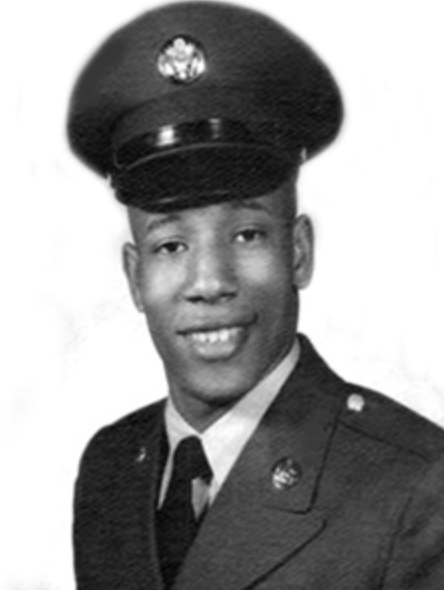
- Unit: Company C, 1st Battalion, 5th Cavalry Regiment, 1st Cavalry Division
- Service Number: 14877819
- Date of Birth: October 29, 1946
- Date of Death: October 22, 1966
- Hometown: Durham, North Carolina
- Place of Death: Bình Định Province, Vietnam
- Award(s): Combat Infantryman's Badge, Purple Heart, Vietnam Service Medal, Republic of Vietnam Campaign Service Medal, National Defense Service Medal
- Cemetery: Court B, Courts of the Missing, Honolulu Memorial. National Memorial Cemetery of the Pacific, Honolulu, Hawai'i
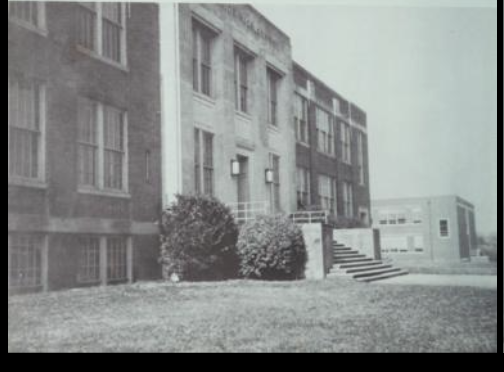
Smith High School, Greensboro, North Carolina
2025/2026
Early Life
Harold Lee Harris was born on October 29, 1946, to Jesse and Constella Harris in Durham, North Carolina. He grew up in the Walltown area with his two siblings, Mabel and James. This was a blue-collar neighborhood, with most residents working for Duke University, tobacco warehouses, and the textile industry.
In 1950, the Harris family lived on West Club Boulevard in the small 704-square-foot home of Harris’s older half-brother Junious Blakes. In addition to the Harris family of five, Junious, his wife, their two children, and his mother-in-law shared the house.
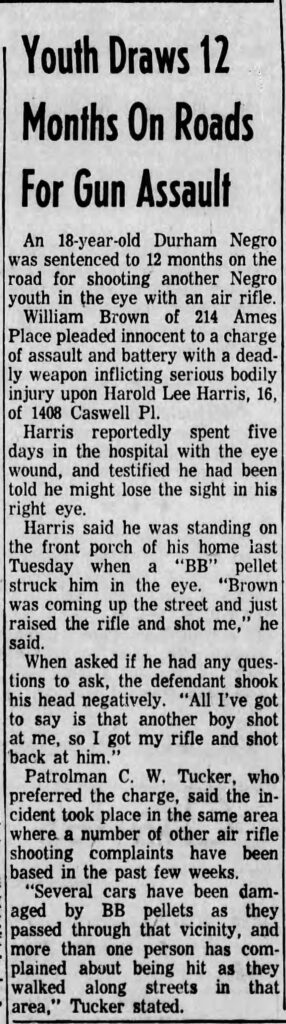
After his parents divorced, Harris, his mother, and siblings eventually moved to Caswell Street in Durham, where he experienced a harrowing event. In 1963, while sitting on his porch, William Brown shot 16-year-old Harris in the right eye with an air rifle. Harris told investigators, “Brown was coming up the street and just raised the rifle and shot me.” Brown said that he fired at Harris because Harris had previously shot at him. The police reported a number of shooting complaints in the area, noting that BB pellets had struck several cars and at least one person. The assault forced Harris to spend five days in the hospital. Doctors feared he might lose sight in that eye, but that did not happen. The court convicted William Brown of assault and sentenced him to 12 months on a road crew.
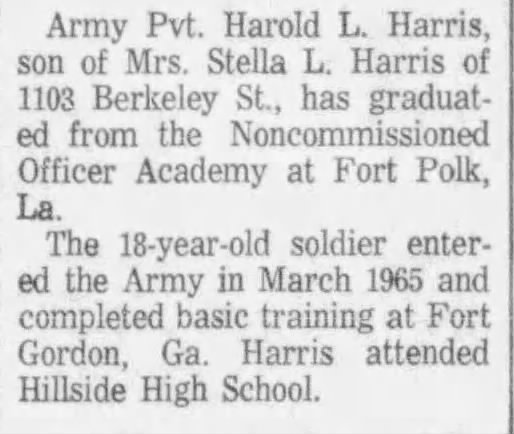
While in Durham, Harris attended Hillside High School and was a member of West Durham Baptist Church. According to a childhood friend, Harris was quiet and reserved. He did not participate in sports like the neighborhood boys did, but that may have been because he had two younger siblings to look after.
In 1965, Harris married Sylvia Jean Jones. They had three children: Harold Jr., Harriet, and Anita.

Homefront
Black Wall Street
Durham was historically a center for African American economic strength. Beginning in the late 1890s, a strong, prosperous African American business district flourished on Parrish Street. Home to the North Carolina Mutual Life Insurance Company, Mechanics and Farmers Bank, and many other African American-owned businesses (dentists, doctors, grocers, and newspapers), this area came to be known as Black Wall Street. This economic stability and political influence distinguished Durham from many Southern towns that lacked a comparable African American financial infrastructure.
Civil Rights Movement
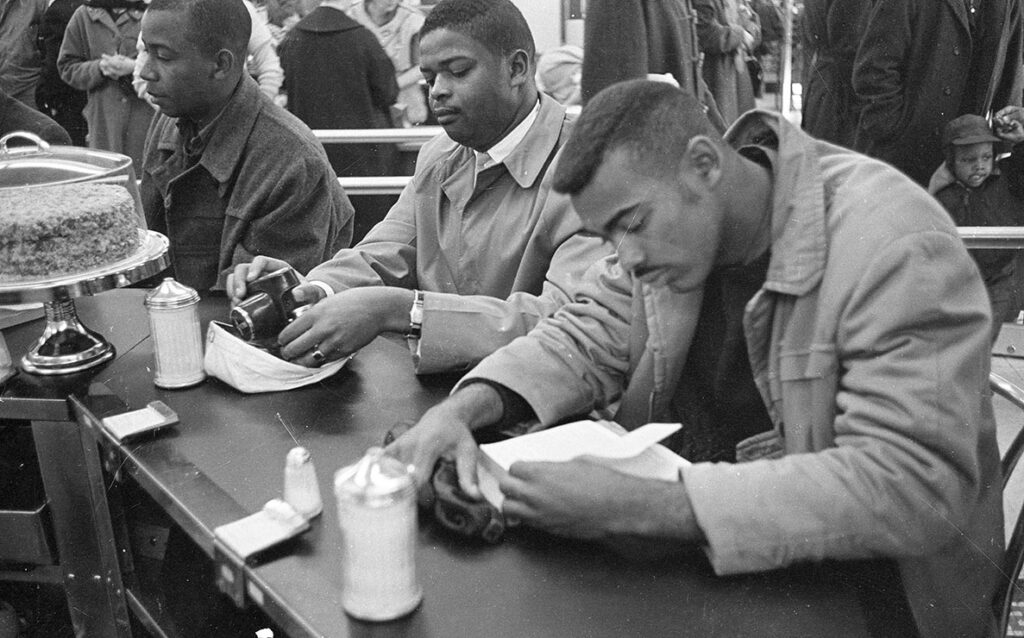
Despite Durham’s reputation for African American prosperity, daily life for African Americans remained constrained by segregated education, restricted housing opportunities, and unequal treatment by police. These factors led Durham to become deeply engaged in the Civil Rights Movement. The city became a site of sustained activism with students, ministers, and community organizers leading sit-ins, boycotts, and demonstrations. One notable demonstration was the 1962 protest at Howard Johnson’s. Police arrested the four students who began the protest in August 1962, and a court sentenced them to 30 days in jail. This led to further protests at Howard Johnson’s, culminating in a 4,000-person demonstration in June 1963, which eventually forced Durham restaurants to desegregate their dining facilities.
As these local struggles intensified, the escalation of the Vietnam War created anti-war sentiment in the African American community. Many African American men enlisted or were drafted during this era, and the military disproportionately assigned them to combat roles. According to an October 1966 report by the National Advisory Commission on Selective Service, 16.3 percent of draftees were African Americans, and African Americans made up 23 percent of all combat troops in Vietnam. At the time, they accounted for only about 11 percent of the population.

Military Experience
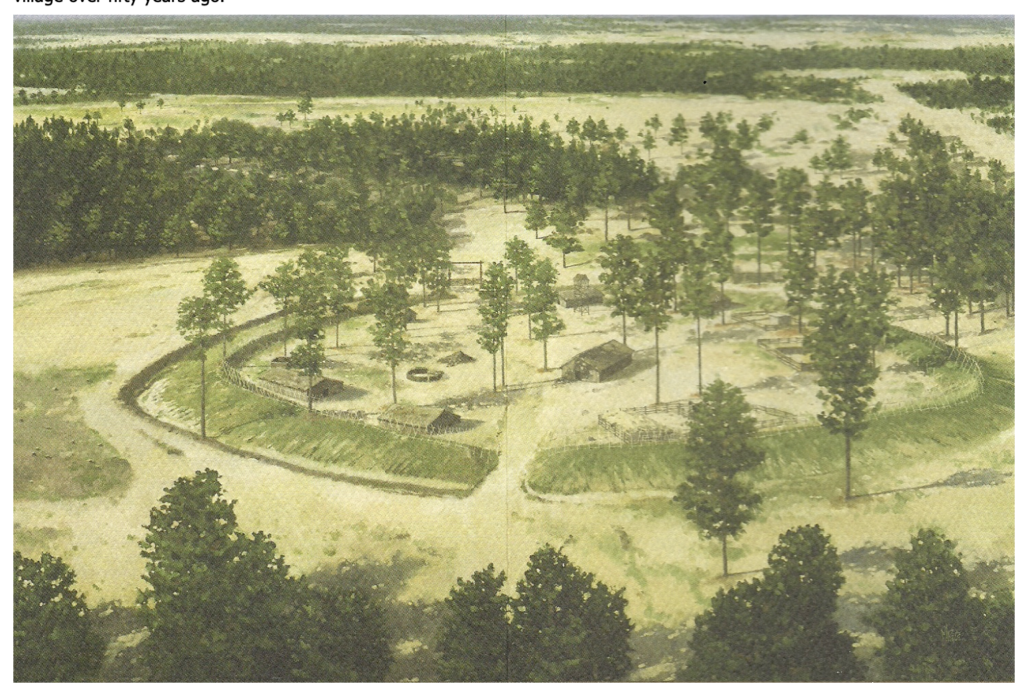
Harris enlisted in the U.S. Army in March 1965 and attended basic training at Fort Gordon, Georgia. After he completed boot camp, he attended the Noncommissioned Officer Academy at Fort Polk, Louisiana. Fort Polk was known for its realistic training complex that allowed soldiers to practice in simulated Vietnamese villages. The Army designed these villages to replicate the physical and psychological conditions of guerrilla warfare. Soldiers trained in small unit patrols, ambush response, and village interactions. The Army intended this training to prepare a conventional combat force for the realities of fighting an unconventional war in Vietnam.
On August 14, 1966, Harris arrived in Vietnam and joined Company C, 1st Battalion, 5th Cavalry Regiment, 1st Cavalry Division. Company C, also known as Charlie Company, served as an air assault infantry unit in Vietnam. It provided rapid helicopter insertion, search-and-destroy missions, perimeter defense, and reconnaissance. Helicopter crews flew soldiers into combat zones and dropped them off to conduct foot patrols. Soldiers on patrols searched for the enemy, protected areas, and responded to attacks. They moved quickly, often on short notice, through difficult terrain, and provided on-the-ground defense.
Commemoration
On October 18, 1966, as part of Operation Irving, Charlie Company descended into a narrow valley in Bình Định Province with a dense jungle canopy. By mid-afternoon, a monsoon hit, drenching the patrol and separating them from the battalion landing zone. The dense jungle rendered maps and helicopters useless. The patrol lost its bearings, and by the third evening, they had run out of rations.
The patrol reached a small stream and began to cross it. The stream rose rapidly and overflowed its banks. Soldiers on the far side used a long bamboo pole to reach across the stream. Soldiers stepped into the stream and grabbed the pole, then swung it across, propelling them onto the other side. Two squads made it across the stream when Private First Class Harris and his platoon sergeant, Sergeant First Class Elijah Daniels, stepped into the stream and grabbed the pole. At that moment, either the bank collapsed, or the current became too strong, because the water swept them away. Search teams found Sergeant Daniels’s body four days later, but they never recovered Private First Class Harris.
The Army declared Harris dead in December 1966. His family held a memorial service for him on February 12, 1967, at his childhood church, the West Durham Baptist Church. At that service, Sylvia Harris, his widow, received her husband’s Purple Heart and Vietnam Service Medals, as well as an American flag.
Private First Class Harris is memorialized on Court B of the Courts of the Missing at the National Memorial Cemetery of the Pacific in Honolulu, Hawai‘i. His name is also inscribed on the Vietnam Veterans Memorial Wall in Washington, D.C.


Bibliography
Primary Sources
“Births.” The Carolina Times [Durham, North Carolina], November 14, 1964.
Civil Rights Protestors and Woolworth’s Sit-In, Durham, NC. Photograph. February 10, 1960. N&O Negative Collection, State Archives of North Carolina. https://www.flickr.com/photos/north-carolina-state-archives/24495308926/.
“Doings of Those in Uniform.” The Durham Sun [Durham, North Carolina], June 14, 1965. Newspapers.com (791450295).
“Ex-student of Durham War Victim.” Durham Herald Sun [Durham, North Carolina], December 13, 1966. Newspapers.com (791740511).
Hasset, Steve. Facebook Messenger exchange with Cheryl Chauncey. December 15, 2025.
The Hornet. Hillside High School, 1962. https://lib.digitalnc.org/record/256488?v=uv#?xywh=-938%2C-84%2C8038%2C4663&cv=13.
“Local Births.” The Carolina Times [Durham, North Carolina], January 14, 1967.
Long, Tony. Phone interview with Cheryl Chauncey. February 3, 2026.
North Carolina. County Marriages, 1762-2011. Digital images. https://www.familysearch.org.
North Carolina. Durham County. 1950 U.S. Census. Digital images. https://ancestryclasroom.com.
North Carolina Mutual Block, Parrish Street, Durham, N.C. Photograph. c.1920. The North Carolina Experience, Documenting the American South. https://docsouth.unc.edu/nc/andrews/ill8.html.
North Carolina. Surry County. 1930 U.S. Census. Digital images. https://ancestryclasroom.com.
Tiger Village. Photograph. Robertson Collection, Stephen F. Austin State University. https://www.sfasu.edu/heritagecenter/9961.asp.
“Widow receives medals.” The Herald‑Sun [Durham, North Carolina], February 27, 1967. Newspapers.com (791836024).
“Youth Draws 12 Months on Roads for Gun Assault.” Durham Herald Sun [Durham, South Carolina], January 1, 1963. Newspapers.com (791144976).
“Youths Not Registering for Draft.” The Durham Sun [Durham, North Carolina], October 2, 1958. Newspapers.com (790409530).
Secondary Sources
“A.D. Clark Pool.” From the Rock Wall. Accessed November 15, 2025. https://fromtherockwall.org/places/ad-clark-pool.
“Black Protest and the Integration of Restaurants in Durham.” Museum of Durham History. Accessed February 2, 2026. https://www.museumofdurhamhistory.org/black-protest-and-the-integration-of-restaurants-in-durham/.
“Black Students Matter: Taking Over Allen in ’69.” Duke University Libraries. Accessed November 15, 2025. https://exhibits.library.duke.edu/exhibits/show/black-students-matter–allen-/durham–60s.
“Civil Rights & the Urban Tools of Dispossession (1920–1970).” World Food Policy Center. Accessed November 15, 2025. https://wfpc.sanford.duke.edu/north-carolina/durham-food-history/civil-rights-the-urban-tools-of-dispossession-1920-1970/.
“Constella B Harris.” Billion Graves. Accessed January 12, 2026. https://billiongraves.com/grave/Constella-B-Harris/17158344.
Deutsch, Heather. Walltown: The History of A Neighborhood and A Housing Renovation Program. University of North Carolina at Chapel Hill, 2004. https://doi.org/10.17615/jcw7-px12.
“The Draft.” Vietnam Veterans Memorial Fund. Accessed February 2, 2026. https://www.vvmf.org/topics/The-Draft/.
“Durham’s Legacy as ‘Black Wall Street’ Continues to Shape Lives Today.” Hilltop Wealth Advisors. Accessed January 12, 2026. https://www.hilltopwealthadvisors.com/blog/durham-black-wall-street.
“Durham’s Parrish Street: A Legacy of Black Wall Street.” Discover Durham. Accessed November 15, 2025. https://www.discoverdurham.com/community-culture/black-history/durhams-story/durhams-parrish-street-a-legacy-of-black-wall-street/.
Ehrsam, Frederick E. The Downfall of Durham’s Historic Hayti. Duke University, 2010. https://sites.duke.edu/djepapers/files/2016/10/Ehrsam-Fred_DJE.pdf.
“Harold Lee Harris.” American Battle Monuments Commission. Accessed October 31, 2025. https://weremember.abmc.gov/sq=*&criteria=title%3DHarris~first_name%3DHarold~war%3DVietnam%20War&type=16&v=G.
“Harold Lee Harris.” Defense Personnel POW/MIA Accounting Agency. Accessed October 31, 2025. https://dpaa-mil.sites.crmforce.mil/dpaaProfile?id=a0Jt0000000KZknEAG.
“Harold Lee Harris.” Veterans Legacy Memorial, National Cemetery Administration. Accessed October 31, 2025. https://www.vlm.cem.va.gov/HaroldLeeHarris/49217.
“Harold Lee Harris.” The Wall of Faces. Accessed May 5, 2025. https://www.vvmf.org/Wall-of-Faces/21560/HAROLD-L-HARRIS/page/2/.
Hassett, Steve. Charlie 1/5 Cav: An Airmobile Infantry Company’s 67 Months in Vietnam. 2022.
“History.” Hayti Reborn. Accessed November 15, 2025. https://www.haytireborn.com/history.
Houin, Keith. “Fort Polk Plays Role in Training During Vietnam War.” U.S. Army. Accessed November 15, 2025. https://home.army.mil/polk/about/garrison-directorates-and-support-offices/public-affairs/design-test-page/news/news-you-can-use/fort-polk-plays-role-training-during-vietnam-war.
“PFC Harold Lee Harris, Sr.” Find a Grave. Accessed October 31, 2025. https://www.findagrave.com/memorial/17689442/harold-lee-harris.
“Johnson Henry Blakes.” Army Cemeteries Explorer. Accessed October 15, 2025. https://ancexplorer.army.mil/publicwmv/index.html#/arlington-national/search/results/1/CgZCbGFrZXMSB0pvaG5zb24aBUhlbnJ5/.
“Junious Henry ‘JB’ Blakes.” Find a Grave. Accessed October 15, 2025. https://www.findagrave.com/memorial/214543249/junious-henry-blak.
“Knowing Struggles, Past and Present: Interactive Map of Durham Traces Human and Civil Rights Activism.” Southern Coalition for Social Justice. Accessed November 15, 2025. https://southerncoalition.org/knowing-struggles-past-and-present-interactive-map-of-durham-traces-human-and-civil-rights-activism/.
Richardson, Lynn. The Bull City—A Short History of Durham, North Carolina. Durham County Library, 2021. https://durhamcountylibrary.org/wp-content/uploads/2021/06/NCC-The-Bull-City%E2%80%94A-Short-istory-of-Durham.pdf.
United States Department of the Interior. Star Historic District. North Carolina: North Carolina State Historic Preservation Office, 2012. https://files.nc.gov/ncdcr/nr/MG0070.pdf.
U.S. Department of Agriculture, National Agricultural Statistics Service. 1964 North Carolina County Tables. North Carolina, 1964. https://www.nass.usda.gov/AgCensus/archive/files/1964-North_Carolina-COUNTY_TABLES-725-Table-01.pdf.
This profile was researched and created through the Researching Silent Heroes program, sponsored by the American Battle Monuments Commission.