
Corporal Herman Harold Schneider
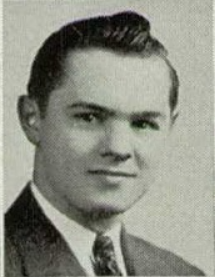
- Unit: 1st Amphibian Tractor Battalion
- Date of Birth: June 9, 1925
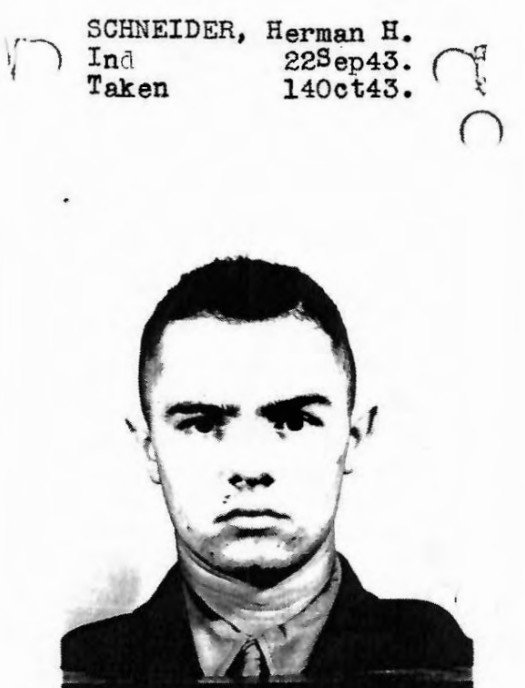
- Entered the Military: September 22, 1943
- Date of Death: July 8, 2015
- Hometown: Detroit, Michigan
- Award(s): American Campaign Ribbon
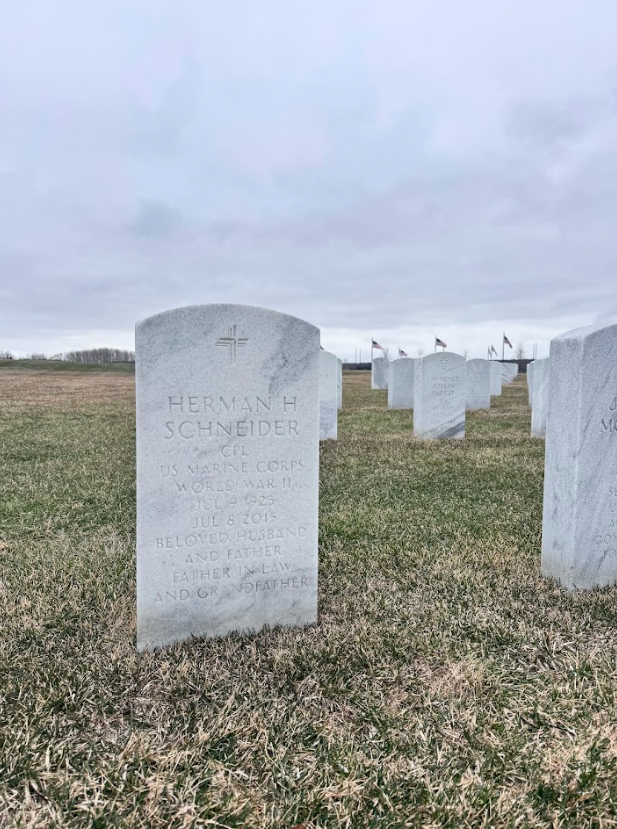
- Cemetery: Section 11, Site 2142. Great Lakes National Cemetery, Holly, Michigan
Mentored by Ms. Chelsea Blair
Our Lady of Refuge School, Orchard Lake, Michigan
2025/2026
Early Life
Herman Herold Schneider was born on June 9, 1925. He was the son of Herman Henry Schneider and Katherine Schettenhelm. His mother was born in Germany. His paternal grandparents were George L. Schneider and Emma Hahn.
Schenider grew up in a large family with ten siblings, including Louise, Luellen, Arthur, Walter, Elizabeth, John, Carl, Theodore, Frederick, and Dorothy. He was the youngest.
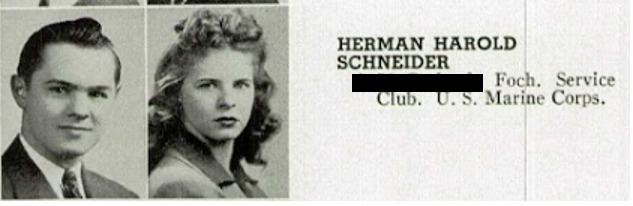
He attended Southeastern High School in Detroit and graduated in 1943. During high school, he was part of a service club, played sports such as swimming, basketball, and softball, and also sang in his church choir. He also took two years of metal shop class.
Prior to his military service, Herman worked at Tom’s Quality Meat, which later became part of the Farmer Jack grocery chain, a Detroit icon.

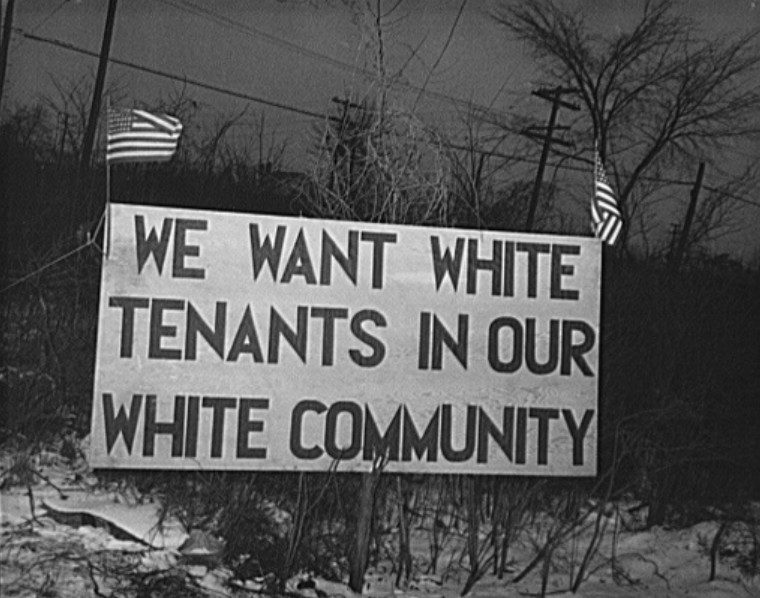
Homefront
Even before the war, Detroit was a major manufacturing center, but its importance increased dramatically in the late 1930s and early 1940s. As defense production expanded, thousands of workers migrated to the city in search of employment, leading to rapid population growth and a significant housing shortage.
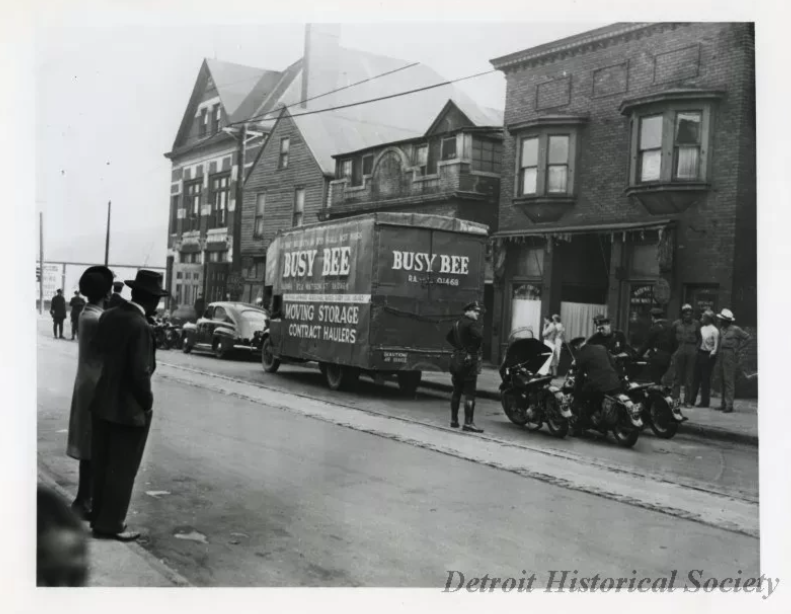
The strain on housing contributed to social tensions within the city. One notable example was the Sojourner Truth Housing Project riot, where white residents protested and rioted to prevent Black defense workers and their families from moving into newly built housing. This highlighted the racial divisions that existed on the home front.
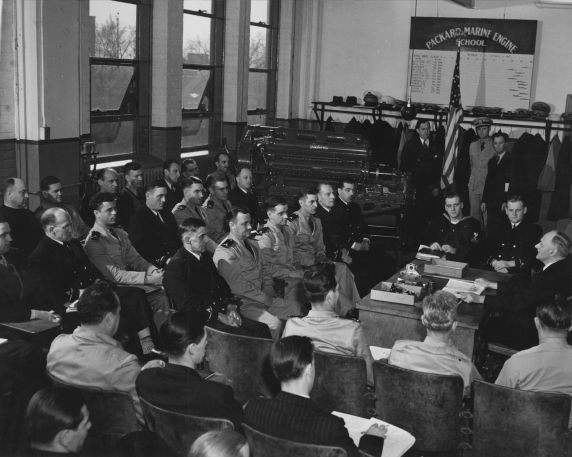
Detroit was deeply involved in wartime manufacturing and became known as the “Arsenal of Democracy.” Automobile factories were converted to produce military equipment, including tanks, bombers, and amphibious vehicles. The Packard Motor Car Company contributed by producing powerful marine engines for the Navy and Allied boats, while also operating a training school to prepare military personnel to maintain them. Factories across the city also produced gas masks, rubber for tires, and other essential war materials. However, the intense production pace sometimes led to labor tensions, including strikes at major industrial plants such as U.S. Rubber.
Local residents supported the war effort in various ways. Community organizations, including the American Legion, organized fundraising campaigns such as poppy sales to aid injured soldiers and their families. Volunteers collected clothing and supplies for war relief efforts, including assistance for displaced populations in Europe. Cultural events and festivals were also held to raise funds, demonstrating how Detroit’s diverse population contributed to the war effort.
Women played an increasingly important role during this period. Many entered the workforce in factories, producing essential war materials such as gas masks, while others joined organizations like the WAVES, which supported the U.S. Navy by taking on roles that allowed more men to serve in combat positions. These opportunities marked a significant shift in women’s employment and social roles.
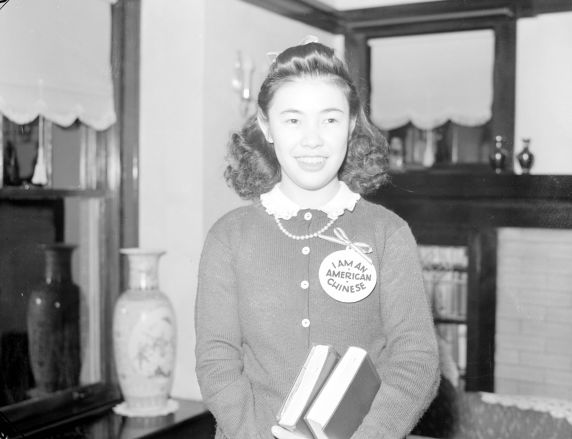
The war also brought social and political challenges. Leaders called for greater unity among workers of different races, while tensions over housing and employment persisted. Minority communities faced discrimination, as seen when members of Detroit’s Chinese American community wore identification buttons after the attack on Pearl Harbor to distinguish themselves during a time of heightened suspicion. At the same time, some institutions in Detroit, such as Wayne University, made efforts to support displaced Japanese American students targeted by wartime internment policies.
Propaganda and public messaging were widely used throughout the city to encourage support for the war. Advertisements promoted conservation, urging citizens to reuse clothing and accept limited goods due to wartime shortages. Local organizations canceled events or redirected their efforts to support troops through groups like the USO, reinforcing a sense of shared sacrifice.
Overall, Detroit during World War II was a city of both opportunity and challenge. Its industrial strength made it essential to the Allied victory, while its diverse population contributed in many ways to the war effort. At the same time, the city faced significant social tensions and inequalities that reflected broader issues within the United States during the war.
Military Experience
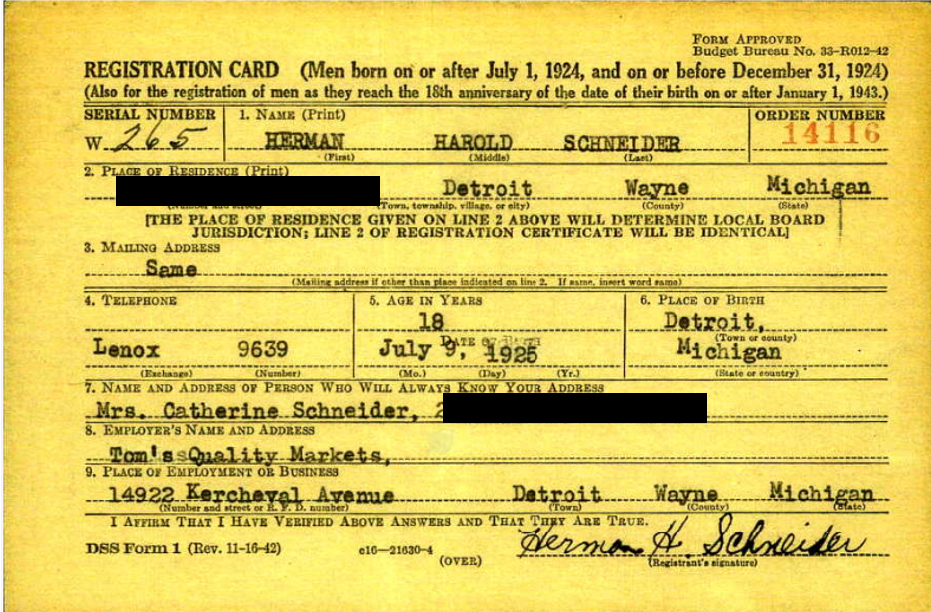
Herman Schneider registered for the draft on his eighteenth birthday, shortly after graduating from Southeastern High School.
Following his enlistment on September 22, 1943, he was assigned to a transitional unit in San Diego for training. In 1944, Schneider also completed a 16-week course on aviation ordnance and aircraft support at the Naval Air Technical Training Center in Norman, Oklahoma. He received additional training related to patrol bombers and general military operations in Norfolk, Virginia.
Over the course of his service, Schneider rose in rank. He was promoted to private first class and later achieved the rank of corporal on November 11, 1944.
Schneider served in Marine aviation units, including Marine Bombing Squadron 623 and Marine Fighting Squadrons 314 and 311. His duties involved supporting aircraft operations, including maintenance, patrol preparation, and ensuring aviation readiness. He worked with PBJ-1 medium bombers during bombing and patrol missions and later supported F4U Corsair fighter aircraft during occupation duties in Japan. His daily responsibilities likely included maintaining aircraft systems, assisting with flight operations, and supporting squadron readiness.
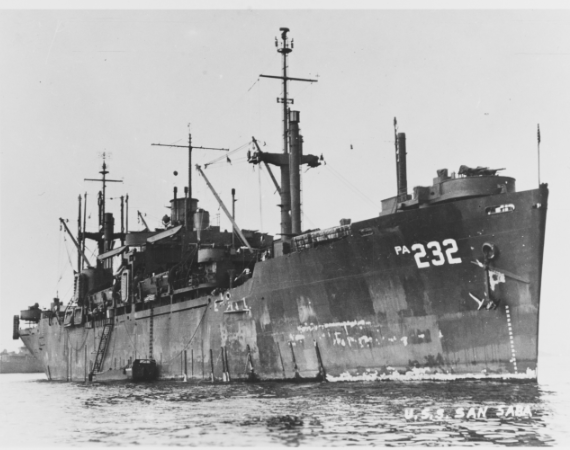
During his service, Schneider was assigned to several units and transport ships. On August 27, 1945, he was aboard the USS Banner (AK-142), operating in the Pacific after the end of World War II. In October 1945, he traveled on the SS Sea Sturgeon from Okinawa to Omura, Japan. By November 16, 1945, he was assigned to Marine Fighting Squadron 311, Fleet Marine Force, Japan, where he participated in post-war occupation duties. Later, from June 20 to July 4, 1946, he was transported aboard the USS San Saba (APA-232) from Yokosuka, Japan, back to the United States, arriving in San Diego, California.
He remained there through late 1945 and early 1946 with VMF-311. He returned to the United States on July 4, 1946, and proceeded to Great Lakes, Illinois, where he completed his separation from military service.
Although Schneider did not participate in direct combat, his service during the post-war occupation of Japan played an important role in maintaining stability and enforcing the terms of Japan’s surrender following World War II. His unit contributed to security, reconstruction, and the transition to peace in the region.
For his service, Schneider was awarded the American Campaign Ribbon, recognizing his contribution to the United States military effort during World War II.
Veteran Experience
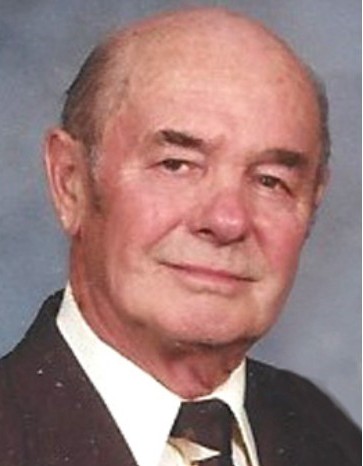
After completing his military service and returning to the United States in 1946, Herman Schneider began a long and steady civilian career. He worked for Detroit Edison for 41 years, retiring in 1990.
On October 3, 1953, he married Rosemary L. Warner. They had one daughter, Nancy. Outside of work, Herman had a variety of personal interests. He enjoyed collecting stamps and coins, hobbies that reflected both patience and attention to detail. He also took an interest in the stock market and spent time following and participating in it. In addition, he enjoyed gardening, which provided him with both relaxation and a sense of accomplishment.
Commemoration
Herman Henry Schneider passed away one day before his 90th birthday on July 8, 2015. His wife, Rosemary, passed away on November 7, 2016. They are buried together at Great Lakes National Cemetery in Holly, Michigan.
Schnieder was known for his kind and gentle nature. He was deeply devoted to his family and placed great importance on his roles as a husband, father, and grandfather.
Bibliography
Primary Sources
Black and white photographic print of police escorting a Busy Bee Moving van to the Sojourner Truth Housing Projects in late April 1942 . . . Photograph. 1942. Detroit Historical Society (2009.066.002). https://www.detroithistorical.org/learn/online-research/collection/photo/print-photographic-6408.
Herman Harold Schneider, Official Military Personnel File, Department of the Navy, National Archives and Records Administration – St. Louis.
Herman Henry Schneider. Michigan, U.S., Wayne County Marriage Records, 1865-1972. Digital Images. https://ancestryclassroom.com.
“Herman Schneider.” Faulmann & Walsh. Accessed December 28, 2025. https://www.faulmannwalsh.com/obituaries/Herman-Schneider?obId=3584152.
“Herman Schneider.” Macomb Daily [Macomb, Michigan], July 12, 2015. https://www.macombdaily.com/obituaries/herman-harold-schneider-warren-mi-2/.
Herman Schneider. World War II Draft Cards Young Men, 1940-1947. Digital Images. https://ancestryclassroom.com.
Michigan. Wayne County. 1930 U.S. Census. Digital Images. http://ancestryclassroom.com.
Michigan. Wayne County. 1940 U.S. Census. Digital Images. http://ancestryclassroom.com.
Michigan. Wayne County. 1950 U.S. Census. Digital Images. http://ancestryclassroom.com.
Military, Packard Marine Engine School, Detroit, Michigan. Photograph. Walter P. Reuther Library, Archives of Labor and Urban Affairs, Wayne State University. Accessed December 10, 2025. https://reuther.wayne.edu/node/1693.
Miss Lucille Lee wears one of the “I am an American Chinese” buttons . . .Photograph. December 10, 1941. Walter P. Reuther Library, Wayne State University. https://reuther.wayne.edu/node/13796.
Sigel, Arthur S. Detroit, Michigan. Riot at the Sojourner Truth homes, a new U.S federal housing project, caused by white neighbors’ attempt to prevent Negro tenants from moving in. Sign with American flag “We want white tenants in our white community,” directly opposite the housing project. Photograph. February 1942. Library of Congress (2017844754). https://www.loc.gov/item/2017844754/.
Southeastern High School Yearbook. Detroit Public Schools, 1943. https://www.classmates.com/yearbooks/Southeastern-High-School/64917?page=1.
Spina, Tony. Officers and servicemen listen to a lecture at the Packard Marine Engine School, Detroit, Michigan. Photograph. 1941. Walter P. Reuther Library, Wayne State University. https://reuther.wayne.edu/node/6642.
Secondary Sources
Coleman, Ken. “On this day in 1942 . . .” Michigan Advance, April 29, 2023. https://michiganadvance.com/2023/04/29/on-this-day-in-1942-black-families-move-into-detroit-housing-after-protests-from-white-residents/.
Crowl, Philip A., and Edmund G. Wilson. The Pacific: Matterhorn to Nagasaki. United States Army Center of Military History, 1958.
Davis, Michael. Detroit’s Wartime Industry: Arsenal of Democracy. Arcadia Publishing, 2007.
“Herman Harold Schneider.” Find a Grave. Accessed May 1, 2026. https://www.findagrave.com/memorial/148965399/herman-harold-schneider.
“Herman Harold Schneider.” Veterans Legacy Memorial, National Cemetery Administration. Accessed May 1, 2026. https://www.vlm.cem.va.gov/HERMANHAROLDSCHNEIDER/1EF718C.
“Oklahoma Naval Air History.” Updated 2019. Accessed December 10, 2024. https://www.oklahomanavalairhistory.com/techarticle01.php.
“Rosemary Schneider.” Find a Grave. Accessed May 1, 2026. https://www.findagrave.com/memorial/174930843/rosemary-schneider.
Sambito, William J. A History of Marine Attack Squadron 311. History and Museums Division, Headquarters, U.S. Marine Corps, 1978. https://www.marines.mil/Portals/1/Publications/A%20History%20of%20Marine%20Attack%20Squadron%20311%20%20PCN%2019000308000_1.pdf.
Sherrod, Robert. History of Marine Corps Aviation in World War II. Historical Branch, G-3 Division, Headquarters, U.S. Marine Corps, 1952. https://archive.org/details/historyofmarinec00sher.
“USS San Saba (APA-232).” NavSaource Online: Amphibious Photo Archive. Updated March 24, 2023. Accessed December 11, 2025. https://www.navsource.net/archives/10/03/03232.htm.
USS San Saba. Photograph. 1970. U.S. Naval History and Heritage Command Photograph. (NH 73258). https://www.history.navy.mil/our-collections/photography/numerical-list-of-images/nhhc-series/nh-series/NH-73000/NH-73258.html.
“Who Is Farmer Jack?” Detroit Historical Society Blog, January 7, 2022. https://www.detroithistorical.org/learn/online-research/blog/who-farmer-jack.
This profile was funded by a grant from the United States Department of Veterans Affairs. The opinions, findings, and conclusions stated herein are those of the author and do not necessarily reflect those of the United States Department of Veterans Affairs.