
Corporal Ivan Caldwell Cannady
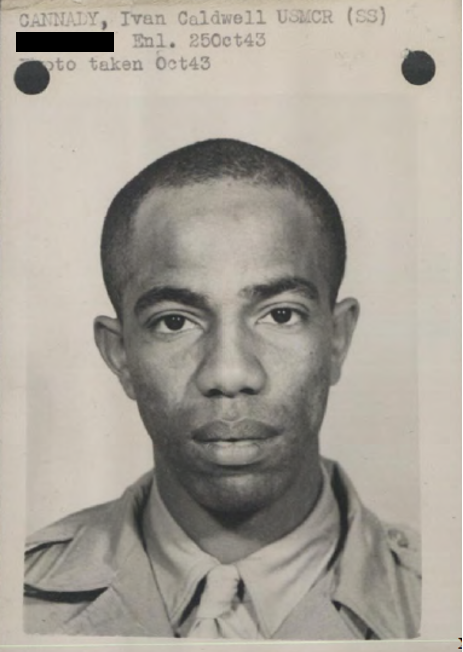
- Unit: 2nd Marine Headquarters and Service Company, Headquarters Battalion
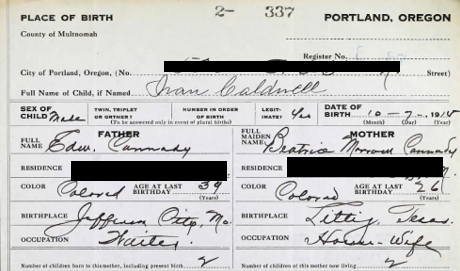
- Date of Birth: October 7, 1915
- Entered the Military: October 25, 1943
- Date of Death: December 14, 1987
- Hometown: Portland, Oregon
- Place of Death: Los Angeles, California
- Cemetery: Section 192, row F, site 2. Los Angeles National Cemetery, Los Angeles, California
Mentored by Ms. Aditi Mehta Doshi
Van Nuys High School
2025/2026
Early Life
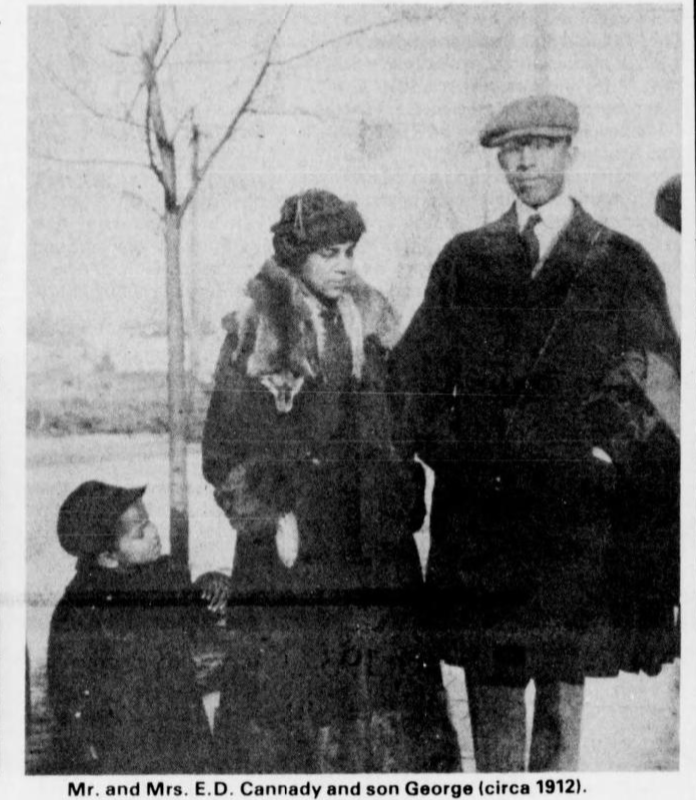
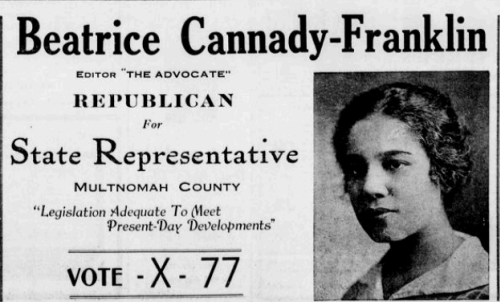
On October 7, 1915, Ivan Caldwell Cannady was born to Beatrice Morrow Taylor and Edward Daniel Cannady in Portland, Oregon. He grew up along the Willamette River, raised by a mother who founded Portland’s first branch of the National Association for the Advancement of Colored People (NAACP) and a father that founded The Advocate, Portland’s second oldest Black newspaper. Ivan and his older brother, George Cannady, challenged racial expectations throughout their childhood.
Student Experience
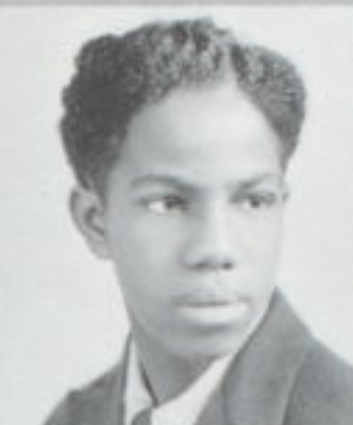
Ivan Cannady and George Cannady were the first Black students to attend and graduate from Portland’s Grant High School. At Grant High School the brothers participated in numerous school activities, George played football and Ivan was a member of the Grantonian newspaper staff.
During the summers, the Cannady brothers spent time as the first Black attendees at the Spirit Lake Young Men’s Christian Association (YMCA) Camp. At the YMCA Camp, the brothers engaged in baseball, track, and swimming. Ivan also immersed himself in the arts by participating in singing, dancing, and theater. Ivan eventually became a camp counselor at the YMCA Camp.
Ivan delayed his education at Willamette University when he could not register for the journalism and commercial art courses he was interested in. However, he returned to Willamette University to complete his bachelor’s degree.
Leaving Portland
In the 1930s, Mr. Cannady sailed between Seattle and San Francisco as a bus boy on the H. F. Alexander ship. He eventually left Portland, earning his law degree at Lincoln University in San Francisco. After moving to Los Angeles, he worked as a mail carrier. In his new home, Mr. Cannady started a family with his first wife, Annette Bell Cannady, and their daughter, Brenda Jean Cannady, who was born on November 2, 1938.
Homefront
History of Portland
By the late 1800s, rapid growth in Oregon had attracted many groups, including European, Chinese, and Japanese immigrants, and African American migrants. However, Oregon’s statehood began with roots of White supremacy. The state was created as an anti-Black society, and was admitted to the union in 1859 with a racial exclusionary clause in its constitution, the only state to do so.
Growth during World War II
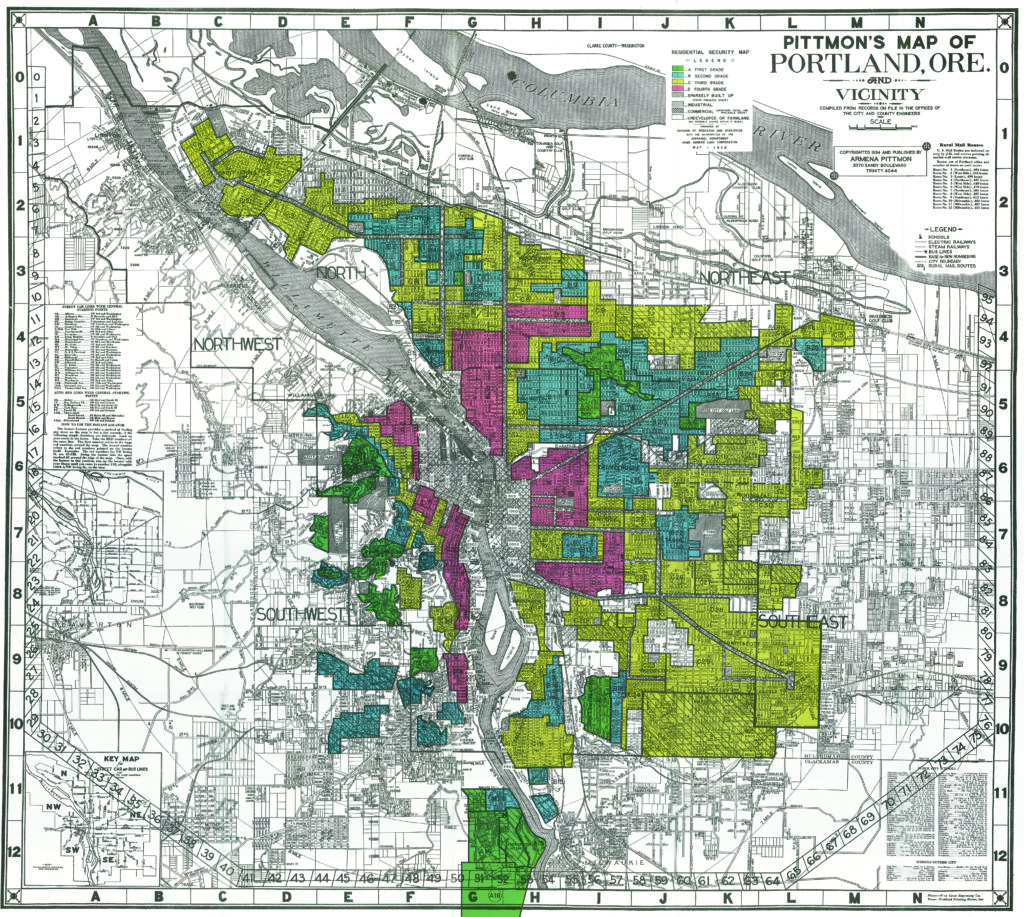
By the 1940s, Ivan Cannady’s hometown of Portland was a center of wealth, population, and political momentum in Oregon. Defense industries offered steady work and income during the wartime, and defense employment hit a peak of 140,000 workers during World War II. The Housing Authority of Portland quickly constructed homes for 40,000 defense workers and their families at 25 sites throughout the city, including the city of Vanport. Though initially created as a diverse, wartime project, it became a focal point for housing discrimination and redlining.
Defense Industries
Kaiser’s defense plants and shipyard were among the largest homefront industries in Portland, employing 100,000 employees by 1943. Included in the shipbuilding workforce were 28,000 women, and 14,700 African Americans, including 6,700 African American women.
While employment opportunities expanded during World War II, anti-Black attitudes in Oregon persisted, demonstrated by discriminatory treatment towards African American workers who had migrated to Portland to join the shipbuilding industry.
Executive Order 8802, signed by President Franklin D. Roosevelt in 1941, prohibited racial, religious, or ethnic discrimination in the defense industry and federal government. However, African Americans working in the Kaiser Shipyards in Portland, Oregon worked in segregated spaces. Unions partnered with the shipyards, including the International Brotherhood of Boilermakers, refused to admit Black members. Instead, skilled Black workers were reduced to working municipal jobs and admitted into lesser “auxiliary” unions, resulting in lower pay and fewer benefits.
In response, Black workers boycotted unions and protested against discrimination in the workforce, leading to the firing of 345 Black workers from Kaiser shipyards in Portland in 1943.

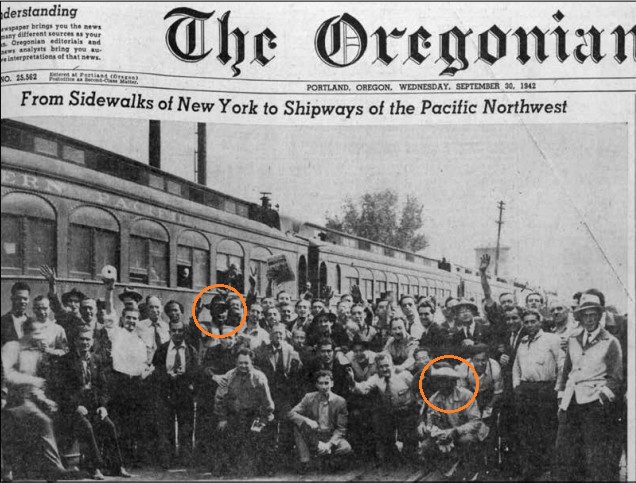
in the Kaiser shipyards. 39 of those recruits were Black. A photograph of the “Kaiser Karavan” train was published on that day in The Oregonian newspaper (circles added).
Military Experience
Mortford Point
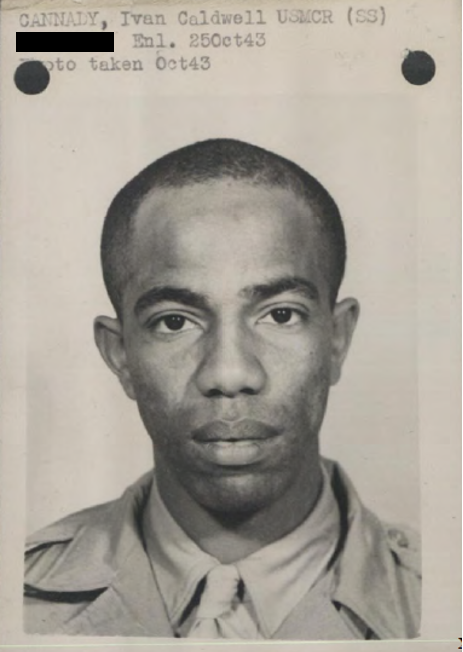
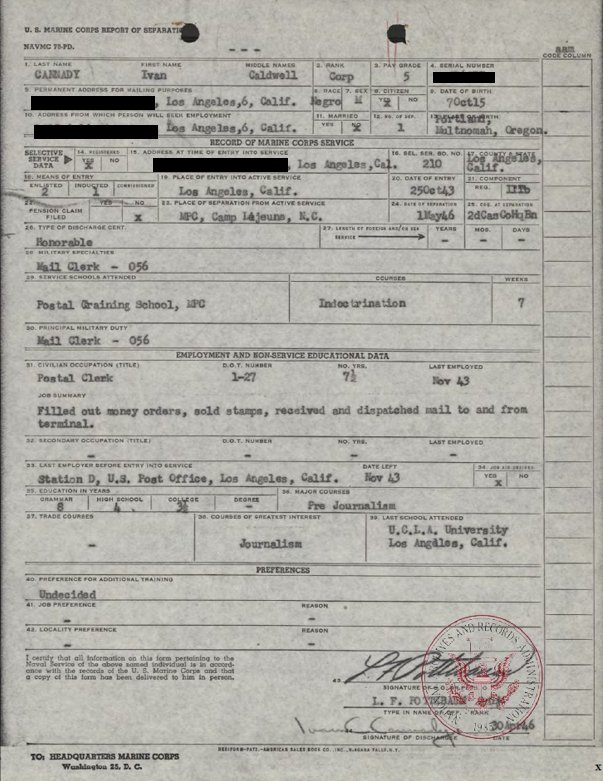
Ivan Cannady enlisted in the United States Marine Corps on October 25, 1943, at Los Angeles, California. He was assigned to the 2nd Marine Headquarters and Service Company, Headquarters Battalion, Montford Point, Camp Lejeune, North Carolina. Montford Point was significant as it was the segregated training facility for America’s first Black Marines. The segregated camp gave African American Marines the opportunity to use their service as a way of showing their capabilities for elite combat and paved the way for full military desegregation.
Military Life
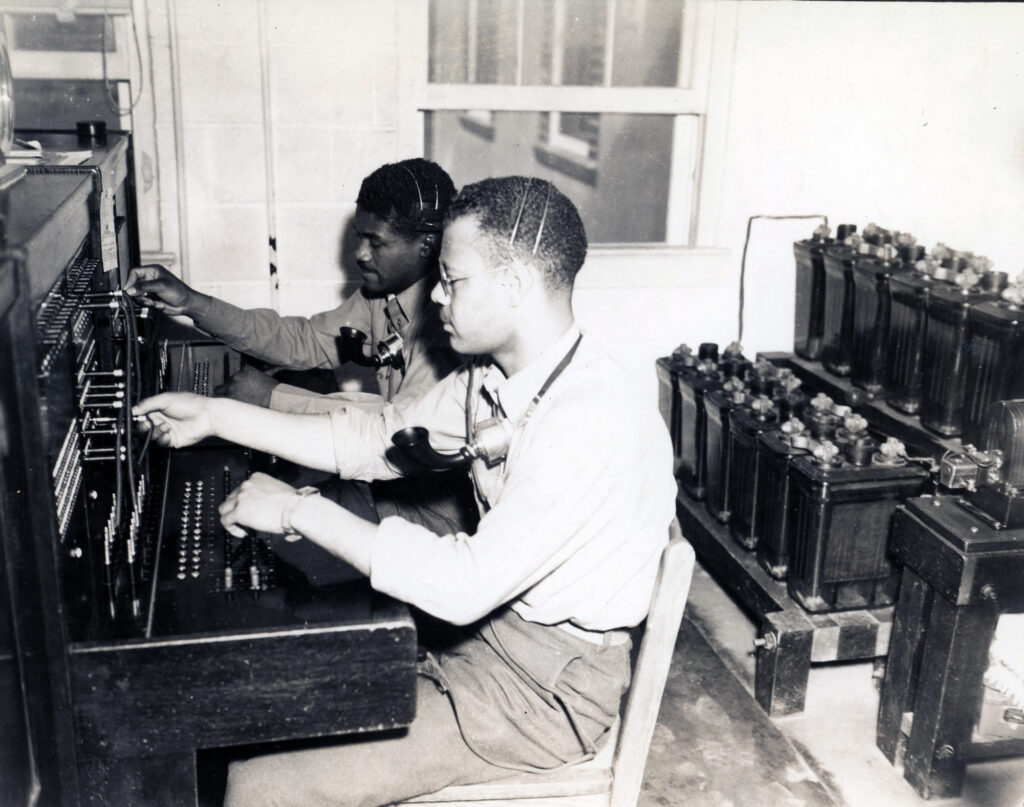
At Montford Point, Ivan Cannady worked as an Assistant Navy Mail Clerk where he performed various duties in a post office, such as receiving, sorting, and distributing all classes of mail, insuring and registering mail, and selling stamps. He attended seven weeks of Postal Training School and completed the course “indoctrination.” Cannady raised morale by keeping information flowing between the homefront and the front lines. He was promoted from private to private first class on December 31, 1944. He was honorably discharged on May 1, 1946 and promoted to corporal upon his discharge.
Veteran Experience
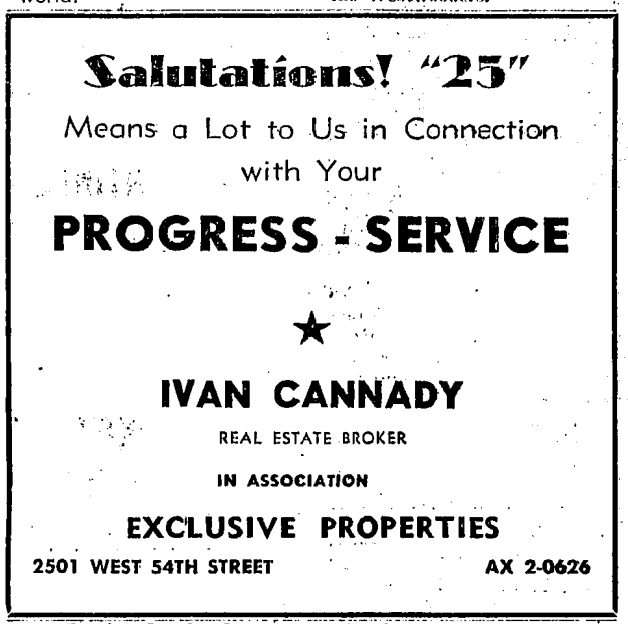
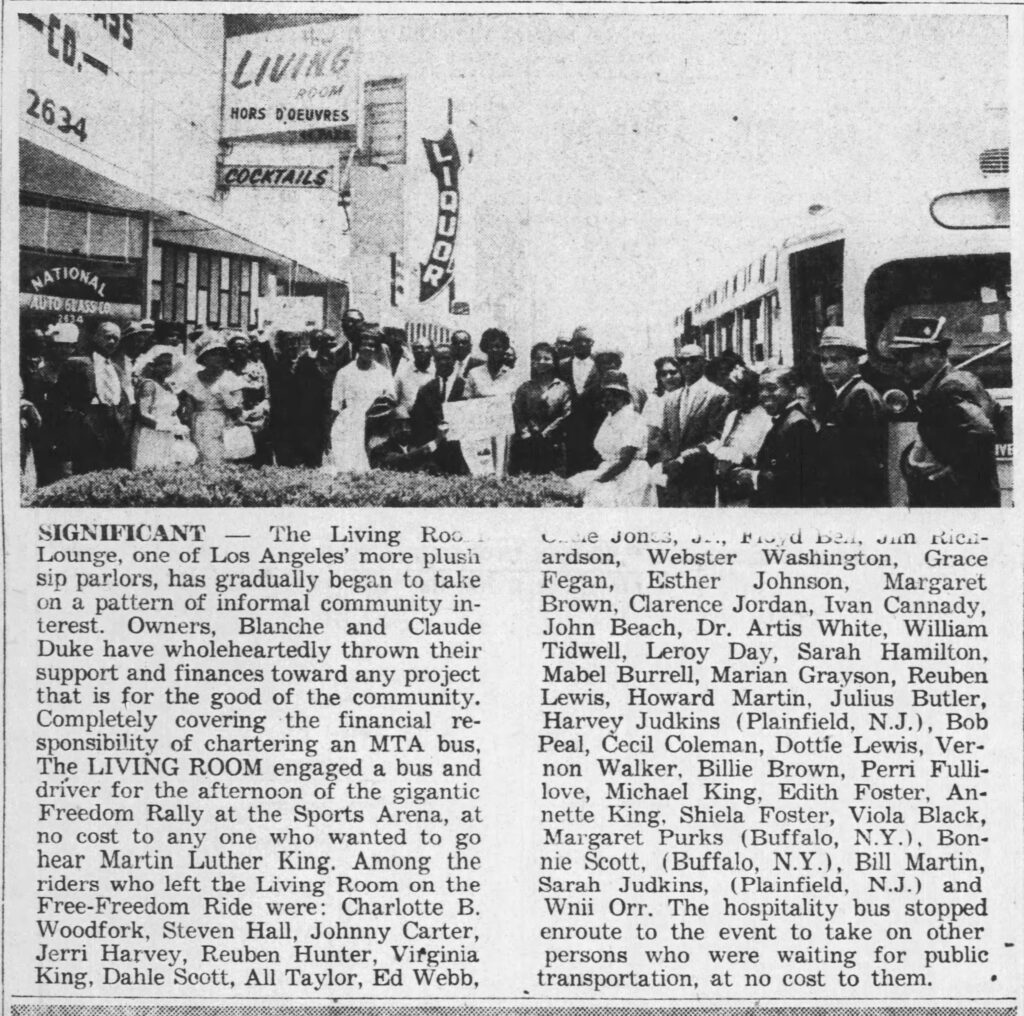
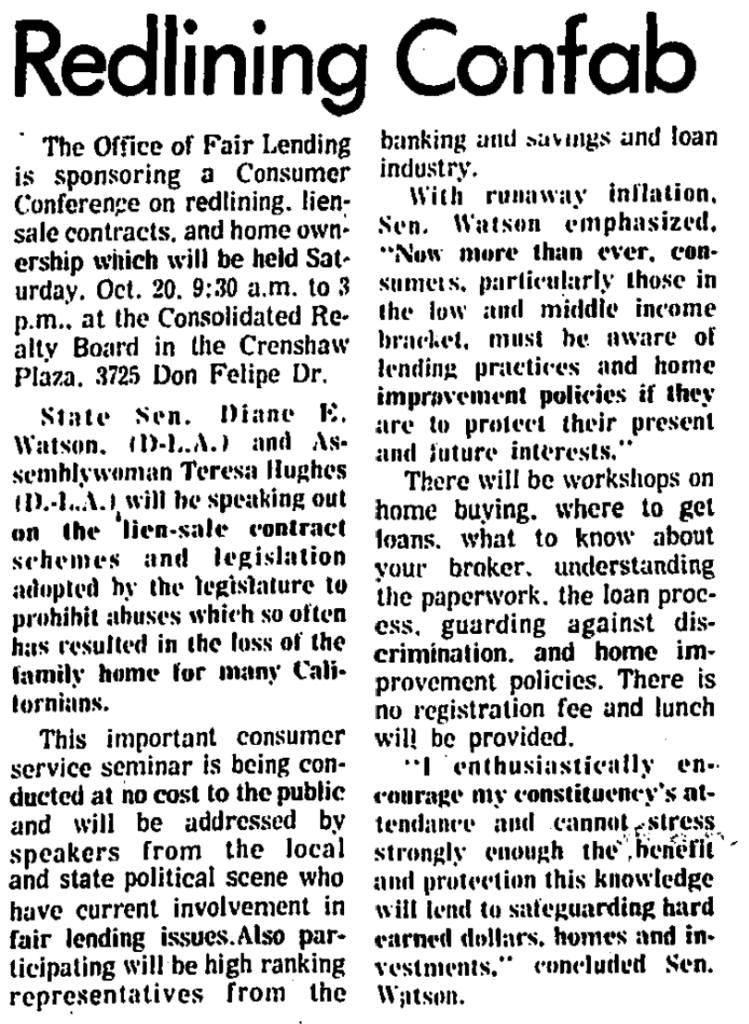
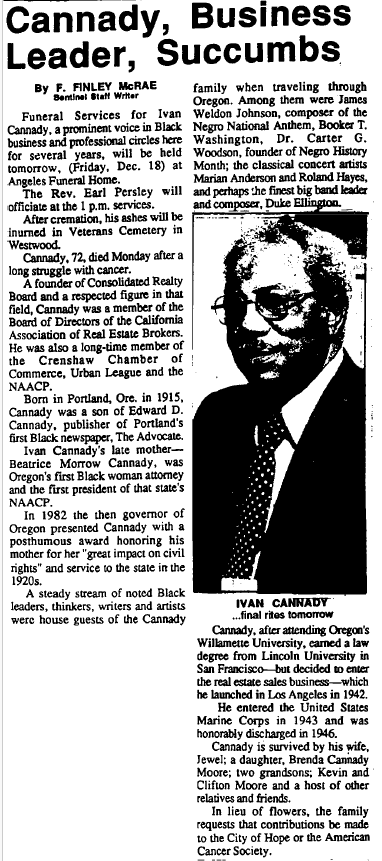
After Ivan Cannady completed his military service, he had a successful real estate career in Los Angeles. He founded the Consolidated Realty Board (CRB), the largest Black real estate group in the nation, which fought redlining and encouraged Black investment in local communities. He was also the vice president of the Southern Division of California Association of Real Estate Brokers. As a real estate professional, Cannady spoke out against housing discrimination in Los Angeles and was a member of the Urban League, NAACP, and Alpha Phi Alpha fraternity. Cannady married several times and had one child, Brenda Jean Cannady.
Commemoration
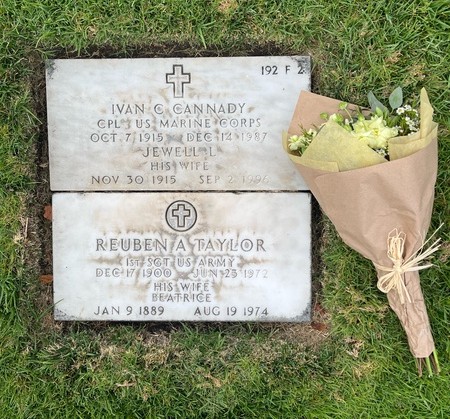
On December 14, 1987, Ivan Caldwell Cannady Jr. passed away at the age of 70 after an extended battle with cancer. He is buried at Los Angeles National Cemetery in Los Angeles, California, with his wife Jewell, mother, Beatrice Taylor, and stepfather, Reuben Taylor. Mr. Cannady is remembered for his service to the Montford Point Marines and his contributions to the Civil Rights Movement through his fight against housing discrimination.

Bibliography
Primary Sources
“Advocate Sponsors Negro Week.” The Advocate [Portland, Oregon], February 13, 1932. https://oregonnews.uoregon.edu/lccn/sn98062568/1932-02-13/ed-1/seq-1/
Beatrice H. Cannady. Oregon, U.S., State Divorces, 1925-1971. Digital Images. http://ancestrylibrary.com.
Beatrice Morrow. Utah, U.S., Social Security Applications and Claims Index, 1936-2007. Digital Images. http://ancestrylibrary.com.
California. Los Angeles County. 1940 U.S. Census. Digital images. http://ancestrylibrary.com.
California. Los Angeles County. 1950 U.S. Census. Digital images. http://ancestrylibrary.com.
Cannady, Ivan. “Mail-box.” The Los Angeles Tribune [Los Angeles, CA], September 12, 1958. Newsbank.
“Canning and Preserving Plan Set.” The Oregon Daily Journal [Portland, OR], December 13, 1942. Newspapers.com (184735846).
Daniel Edward Cannady. World War I Draft Registration Cards, 1917-1918. Digital Images. http://ancestrylibrary.com.
“Display Ad 229.” Los Angeles Sentinel, June 25, 1959. Proquest (562582906).
Edward D Cannady. Oregon, U.S., City Directories, 1822-1995. Digital Images. http://ancestrylibrary.com.
“Family Album Northwest.” Portland Observer [Portland, Oregon], October 9, 1980. https://oregonnews.uoregon.edu/lccn/sn83025151/1980-10-09/ed-1/seq-7/.
George E Cannady. World War II Cards Young Men, 1940-1947. Digital Images. http://ancestrylibrary.com.
George E. Cannady. U.S., Marriage Records, 1936-2014. Digital Images. http://ancestrylibrary.com.
George Edward Cannady. California, U.S., African American Who’s Who, 1948. Digital Images. http://ancestrylibrary.com.
George Edward Morrow Cannady. U.S., State Births, 1842-1924. Digital Images. http://ancestrylibrary.com.
“Goes to Los Angeles.” The Oregon Daily Journal [Portland, Oregon], September 12, 1935. Newspapers.com (1091462321).
Grant High School Yearbook. Portland Public Schools, 1930.
Grant High School Yearbook. Portland Public Schools, 1932.
“Hughes Coming to Portland.” The Advocate [Portland, Oregon], May 14, 1932. https://oregonnews.uoregon.edu/lccn/sn98062568/1932-05-14/ed-1/seq-1/.
Ivan Caldwell Cannady, Official Military Personnel File, Department of the Navy, National Archives and Records Administration – St. Louis.
Ivan Caldwell Cannady, Report of Separation, Department of the Navy, National Archives and Records Administration – St. Louis.
Ivan Caldwell Cannady. Utah, U.S., Social Security Applications and Claims Index, 1936-2007. Digital Images. http://ancestrylibrary.com.
Ivan Caldwell Cannady. World War II Cards Young Men, 1940-1947. Digital Images. http://ancestrylibrary.com.
Ivan C Cannady. California, U.S., Marriage Index, 1960-1985. Digital images. http://ancestrylibrary.com.
Ivan C Cannady. California, U.S., Voter Registrations, 1900-1968. Digital Images. https://ancestrylibrary.com.
“Ivan Canady is Sued for Divorce.” Los Angeles Tribune [Los Angeles, California], December 10, 1954. https://www.newspapers.com/article/los-angeles-tribune-ivan-cannady-is-sued/183317936/.
“Ivan Cannady Realty Co.” The Los Angeles Tribune [Los Angeles, California], October 3, 1942. Newspapers.com (999831511).
Ivan C. Cannady. U.S., Public Records Index, 1950-1993. Digital images. https://ancestrylibrary.com.
Ivan C. Cannady. U.S., Department of Veterans Affairs BIRLS Death File, 1850-2020. Digital Images. http://ancestrylibrary.com.
Manual of Military Occupational Specialties. United States Government Printing Office, 1945. https://books.google.com/books?id=LlAEAAAAMAAJ.
“Nebraskans tell marriage of daughter to Californian.” Los Angeles Tribune [Los Angeles, California], September 14, 1946. Newspapers.com (183318250).
“Observations from the Sidelines.” Portland Observer [Portland, Oregon], April 22, 1982.
“Omega Chapter.” The SPHINX. 74, no. 2, (Summer 1988): 43. https://issuu.com/apa1906network/docs/198807402/45.
Oregon. Multnomah County. 1930 U.S. Census. Digital images. https://ancestrylibrary.com.
“Portland Gas & Coke Co. employees posing with defense bonds and poster.” Oregon Journal. March 1942. Photo. https://staff.digitalcollections.ohs.org/portland-gas-coke-co-employees-posing-with-defense-bonds-and-poster.
“Production Goals Set at Conference.” The Oregon Daily Journal [Portland, Oregon], November 29, 1942. Newspapers.com (184735586).
“Redlining Confab.” Los Angeles Sentinel [Los Angeles, California], October 18, 1979.
“School History.” About Grant/History at Grant. Portland Public Schools. https://or01913224.schoolwires.net/Page/6962.
“Significant.” The California Eagle, June 21, 1961. Newspapers.com (693444405).
Simmons, Betty. “Around the Bay Area.” The Chicago Defender [Chicago, Illinois], December 2, 1950. Newspapers.com (1136060195).
Simmons, Betty. “Around the Bay Area.” The Chicago Defender [Chicago, Illinois], December 30, 1950. Newspapers.com (1136020156).
“Supreme Court Decision Carried the Seed for Its Own Destruction, and the NAACP Encouraged It.” Los Angeles Tribune (Los Angeles, California), September 5, 1958. Newsbank.
Wilson, L.A. Montford Point Marine Training. Photograph. c.1943-1946. National Archives and Records Administration (NAID: 218517624). https://catalog.archives.gov/id/218517624.
Secondary Sources
Abbot, Carl. “Portland.” Oregon Encyclopedia, Oregon Historical Society. Accessed November 16, 2025. https://www.oregonencyclopedia.org/articles/portland/.
Adibade, Sasha Burchek, and Heather Day-Melgar. “Redlining and Climate-Related Heat.” Oregon Encyclopedia, Oregon Historical Society. Accessed November 11, 2025. https://www.oregonencyclopedia.org/articles/redlining/.
“African American Resources in Portland, Oregon, from 1851 to 1973.” National Park Service, United States Department of the Interior. 2020. https://www.portland.gov/sites/default/files/2020-09/mpd_final.pdf.
“Black Labor and Race Relations in East Bay Shipyards During World War II.” Jim Crow Museum. Accessed November 16, 2025.
“Burning And Welding On Liberty Ships: The Story Of An American Rosie The Riveter.” West Point Center for Oral History. Accessed November 16, 2025. https://www.westpointcoh.org/interviews/burning-and-welding-on-liberty-ships-the-story-of-an-american-rosie-the-riveter.
“Fighters on the Farm Front: Oregon’s Emergency Farm Labor Service, 1943-1947.” Oregon State University. Accessed November 11, 2025. https://smallfarms.oregonstate.edu/smallfarms/fighters-farm-front-oregons-emergency-farm-labor-service-1943-1947.
Hiatt, Anna. “Who were the Montford Point Marines?” JSTOR Daily. Last modified June 26, 2019. Accessed January 17, 2026. https://daily.jstor.org/who-were-the-montford-point-marines/.
“Highway to Homeownership.” Consolidated Board of Realtists of Southern California, Inc. Last modified September 13, 2025. https://consolidatedboardofrealtist.com/event-6306408?CalendarViewType=1&SelectedDate=9/28/2025.
Hornsby, Alton, ed. Black America : A State-by-State Historical Encyclopedia. ABC-CLIO, 2011.
Horton, Kami. “120 years ago, ‘The Advocate’ became a voice for Black Oregonians.” Oregon Public Broadcast. Accessed October 14, 2025. https://www.opb.org/article/2023/09/05/the-advocate-oregon-black-newspaper/.
Imarisha, Walidah. “Why Aren’t There More Black People in Oregon? A Hidden History.” PDXTalks, Portland State University, 2015. https://archives.pdx.edu/ds/psu/34187.
“Ivan C. Cannady.” Veterans Legacy Memorial, National Cemetery Adminsitration. Accessed April 10, 2026. https://www.vlm.cem.va.gov/IVANCCANNADY/F59BB7F.
“Ivan Caldwell Cannady.” Find a Grave. Accessed December 14, 2025. https://www.findagrave.com/memorial/460097/ivan-caldwell-cannady.
Jacobs, D’Andrea. “Montford Point Marines and the Congressional Gold Medal.” VA News. Last modified February 7, 2024. Accessed January 17, 2026. https://news.va.gov/128492/montford-point-marines-and-the-congressional-gold-medal/.
Linder, John. “Liberty Ships and Jim Crow Shipyards: Racial Discrimination in Kaiser’s Shipyards, 1940-1945.” Oregon Historical Quarterly, winter 2019. https://www.ohs.org/oregon-historical-quarterly/back-issues/upload/09_Linder_Liberty-Ships-and-Jim-Crow-Shipyards_OHQ-Winter-2019_web.pdf.
Mangun, Kimberley Ann. Beatrice Morrow Cannady: A Force for Change. Oregon State University Press, 2010.
Robbins, William G. “This Land, Oregon.” Oregon History Project. Accessed November 9, 2025. https://www.oregonhistoryproject.org/narratives/this-land-oregon/oregon-in-depression-and-war-1925-1945/african-american-and-women-workers-in-world-war-ii/.
“WWII Farm Labor.” Special Collections & Archives Research Center, Oregon State University Libraries. Accessed November 11, 2025. https://scarc.library.oregonstate.edu/omeka/exhibits/show/extension/homefront/wwii.
This profile was funded by a grant from the United States Department of Veterans Affairs. The opinions, findings, and conclusions stated herein are those of the author and do not necessarily reflect those of the United States Department of Veterans Affairs.