
First Lieutenant James Franklin Davis
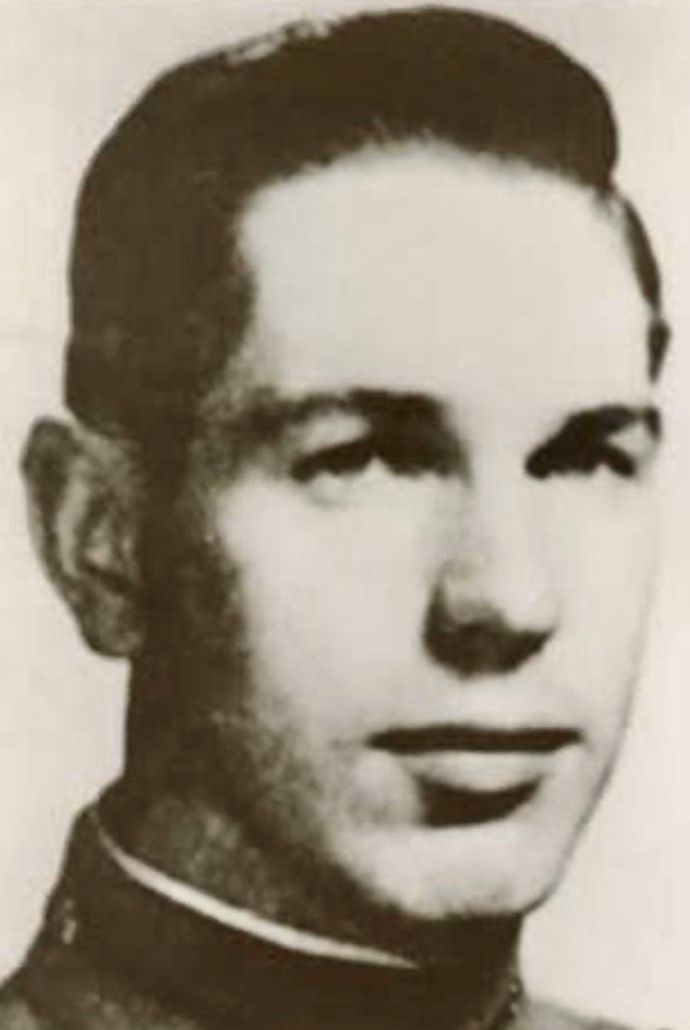
- Unit: 49th Fighter-Bomber Squadron, 8th Fighter-Bomber Group
- Service Number: AO2215657
- Date of Birth: February 22, 1930
- Date of Death: May 11, 1953
- Hometown: Greenville, South Carolina
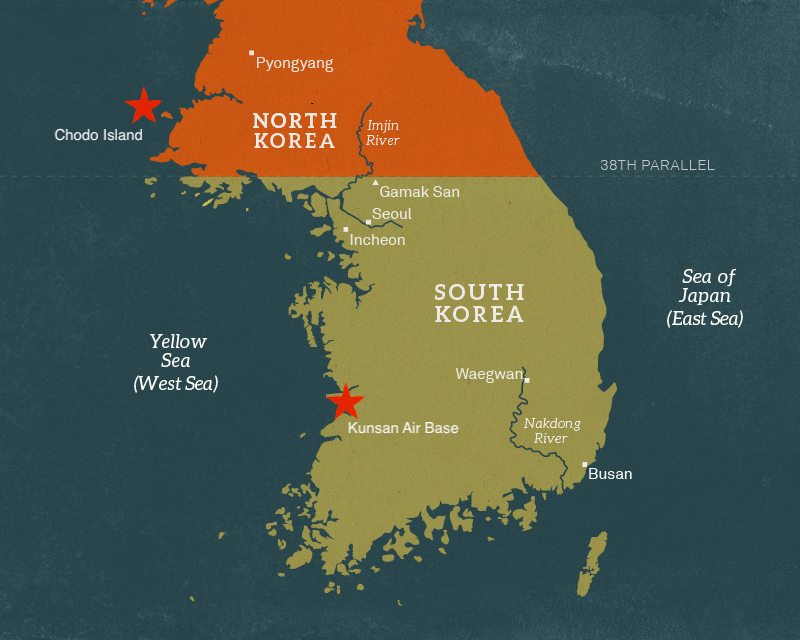
- Place of Death: The Yellow Sea, near Chodo Island
- Award(s): Air Medal, the Purple Heart, the Korean Service Medal, the United Nations Service Medal, the National Defense Service Medal, the Korean Presidential Unit Citation, and the Republic of Korea War Service Medal
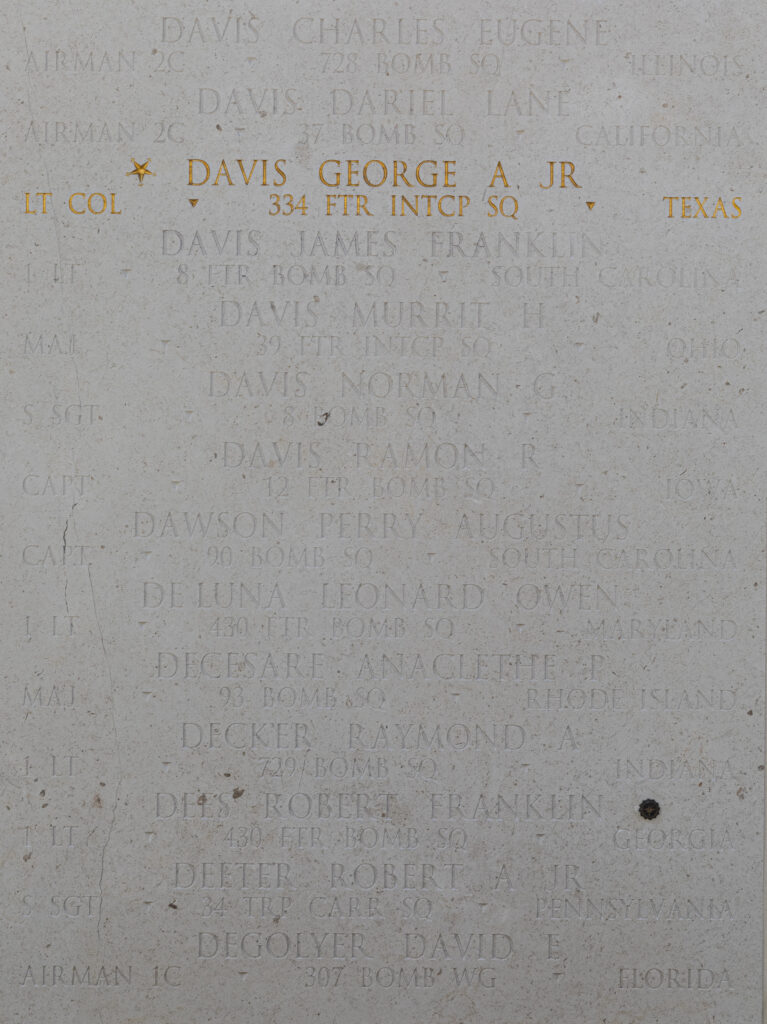
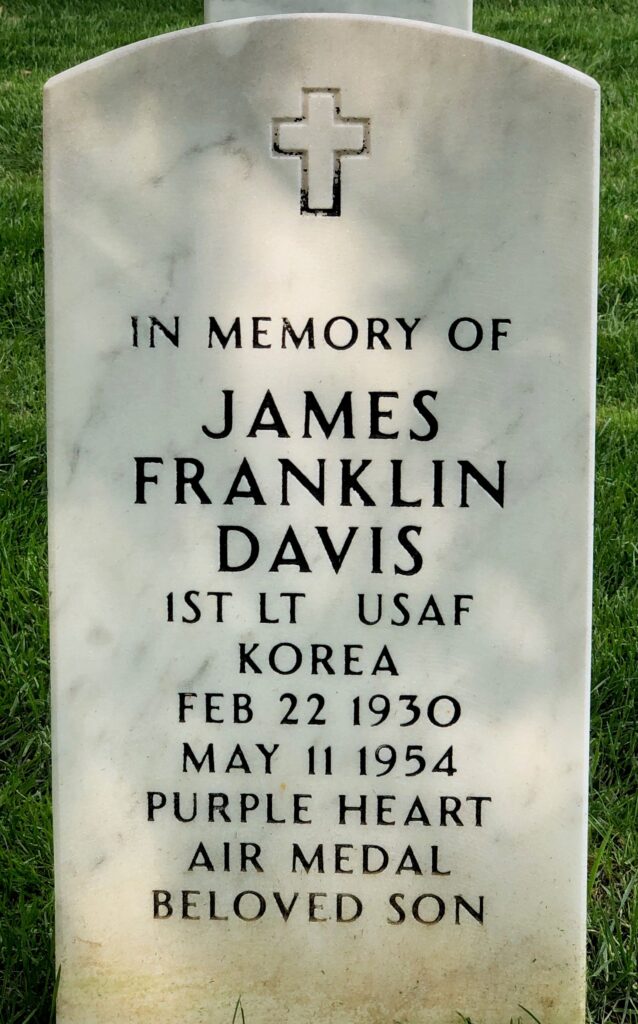
- Cemetery: Court Five, Courts of the Missing, Honolulu Memorial,. National Memorial Cemetery of the Pacific in Honolulu, Hawai'i. Memorial marker at Arlington National Cemetery.
GREEN Charter School Spartanburg, Spartanburg, South Carolina
2025/2026
Early Life
First Lieutenant James Franklin Davis was born on February 22, 1930, in Greenville, South Carolina, where he grew up as an only child to working-class parents Benjamin and Mary “Sadie” Davis. His father, Benjamin, worked as a clerk for a mill store. Greenville was full of textile mill villages where workers and their families bought groceries and dry goods. In fact, the family lived less than one mile from one of the biggest textile mills, Judson Mill. His mother operated her own beauty shop, and James’s grandmother, Florence Kuykendall, who lived with the family in 1940, worked as a housekeeper for private homes in the area.
High School
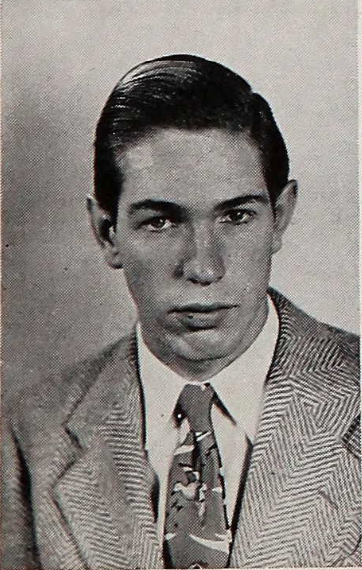
Davis attended Greenville High School. His yearbook described him as someone who truly excelled in sports. He was on several high school sports teams, including varsity football, baseball, and basketball. In 1947, during his senior year, he served as vice president of his homeroom and of the Block “G” Club. This was an athletic organization for student-athletes who had earned varsity letters.
College
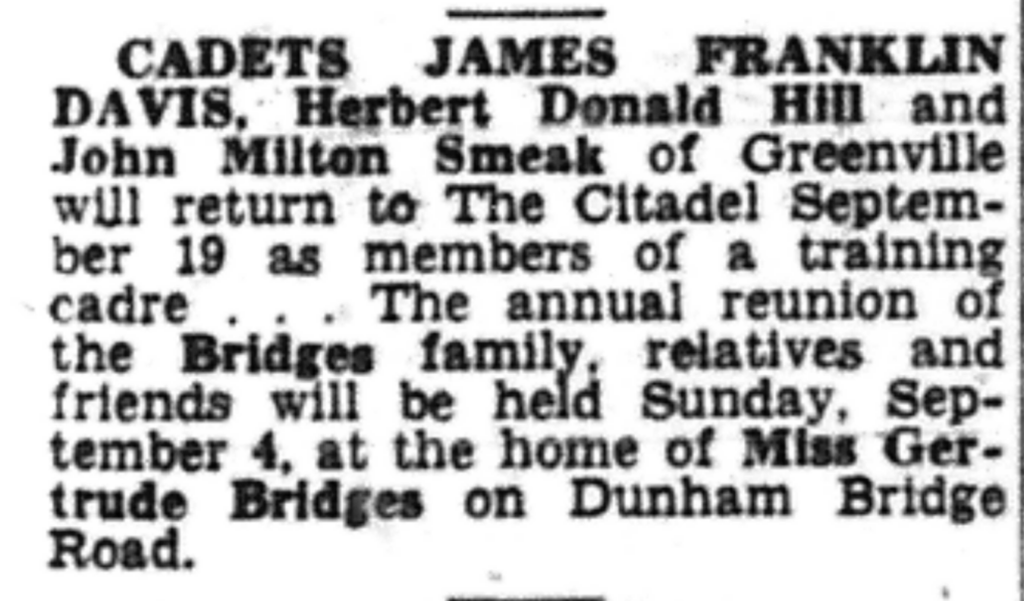
Once Davis graduated from Greenville High School, he went off to college at The Citadel, a military college in Charleston, South Carolina. The “Town Talk” section of The Greenville News chronicled some of his time at The Citadel. In July 1949, it recognized him and other Citadel cadets for their participation in the previous year’s intramural program.
Davis graduated from The Citadel in 1951. Although The Citadel did not require military service after graduation, as West Point or the United States Naval Academy did, he still chose to use his training and education to join the United States Air Force.

Homefront
Greenville, South Carolina, experienced a major boom from the 1940s into the 1950s. Developers built one of the first million-dollar apartment complexes in 1947, following World War II. And newspapers featured constant engagement and wedding announcements. In one edition of The Greenville News, there were three wedding announcements in just one day!
This boom period was built around an underrated sector—textile mills. In fact, leaders called Greenville the “Textile Capital of the World.” With thousands of people living in 19 mill villages, the area became a mixed village known as the “textile crescent.” These mills created numerous jobs and became the backbone of the city.
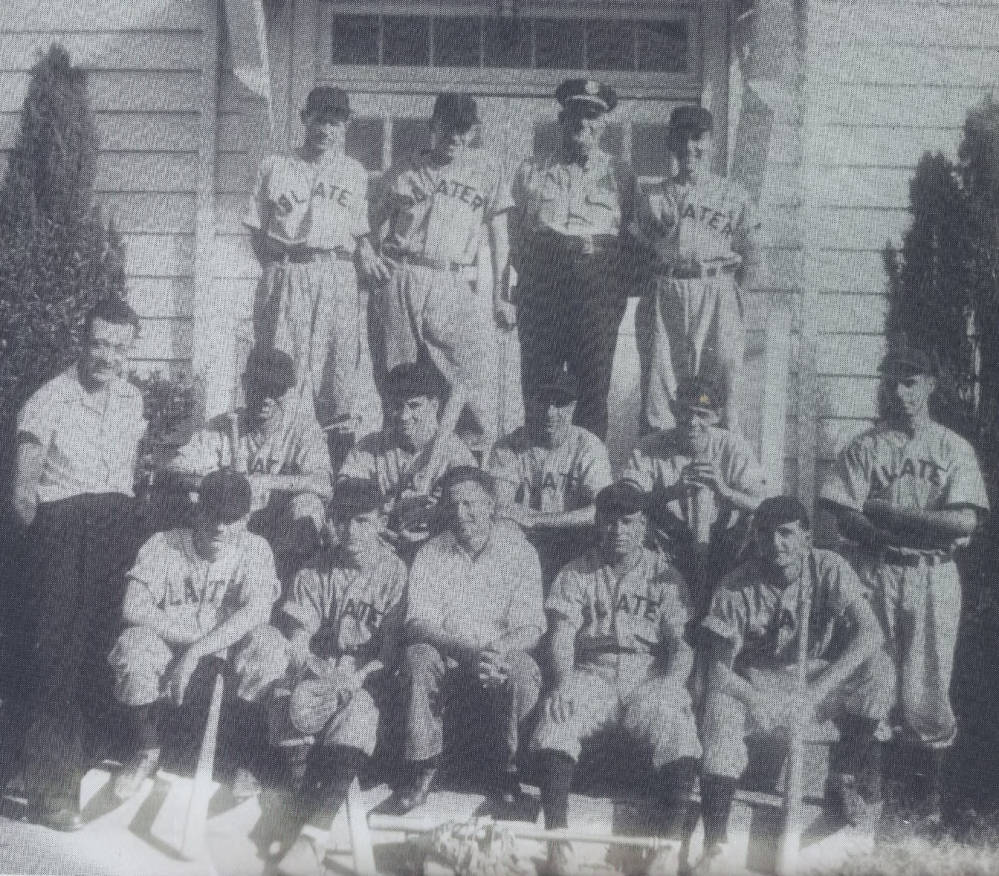
Another way the mills worked themselves into the community was through baseball. Each mill created its own team, and they would play each other in the Greenville Textile League. One of the most prominent of these mills was Slater Textiles, which later developed and produced the heat-resistant beta-cloth used in the NASA Apollo 11 space suits.
Donaldson Air Force Base
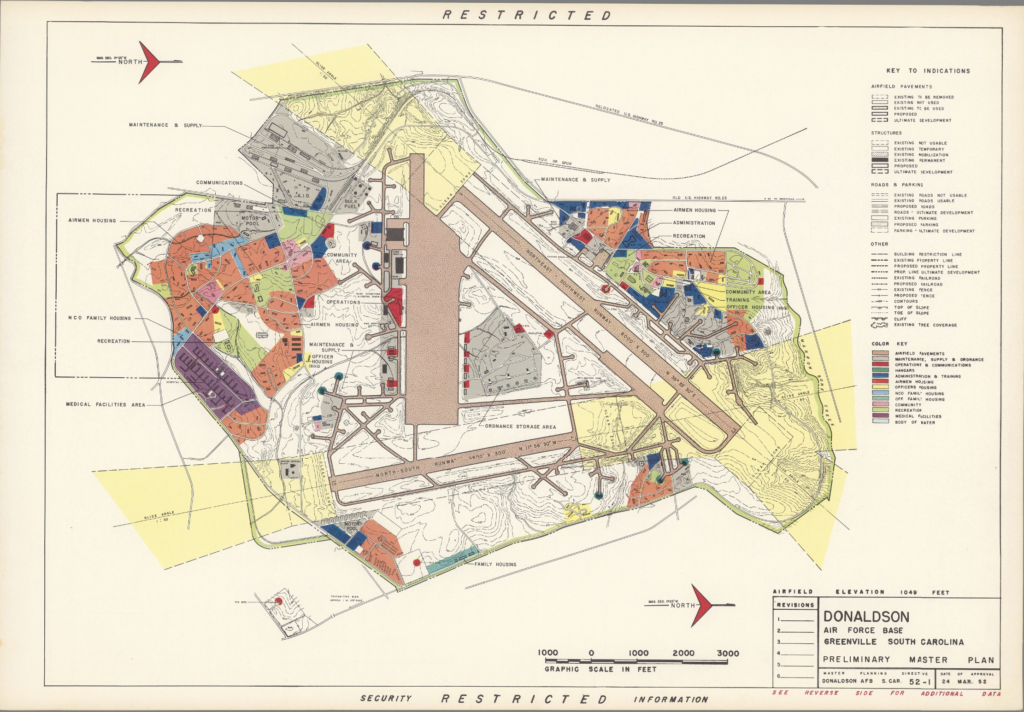
Greenville was also home to Donaldson Air Force Base. The U.S. Army originally established it as an Army base in 1942. They later converted it into a major Air Force base that supported the Korean War and bolstered America’s interests during the Cold War. Its biggest contributor to the Korean War was the 18th Air Force.
The 18th Air Force was a tactical air command unit. Their purpose during the Korean War was to prepare Air Force Reserve Wings for combat by training individual replacements and crews.
The Cold War
The first article written about the Korean War in The Greenville News was in June 1950. It depicted the divided Korean peninsula with multiple North Korean intervention points into South Korea. Months later, the paper reported on the ongoing geopolitical standoff that fueled the Cold War: fears of a Russian attack. In October 1950, Greenville was informed that its mayor, along with others in the state, should prepare a civil defense plan in case of a Russian atomic attack in the next three years.
The very next day, the news reported that the military was sending troop carriers to Donaldson Air Force Base to prepare the runways by widening and lengthening them. These reports illustrate how national defense efforts pulled Greenville into the war.
Propaganda in Advertising
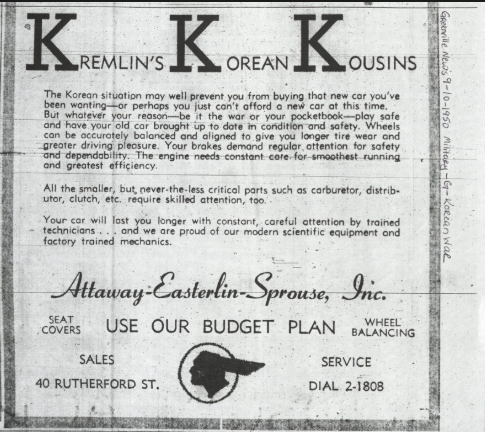
The ongoing and ever-present threat of terror from Russia and the tragic combat in Korea did not stop local companies from using it as shocking advertising. Attaway-Easterlin Pontiac in Greenville ran their ad, “Kremlin’s Korean Kousin.” This eye-catching advertisement used the initials of the KKK to grab attention to sell their car repair services instead of buying a new car due to the cost of the war.
“The Korean situation may well prevent you from buying that new car you’ve been wanting—or perhaps you just can’t afford a new car at this time. But, whatever your reason—be it the war or your pocketbook—play safe and have your old car brought up to date in condition and safety.” This advertisement reveals how deeply global conflicts permeated everyday life in Greenville.
Military Experience
Records reveal little about Davis’s time between graduating from The Citadel and joining the Air Force. It is known that after he joined, he served with the 8th Fighter-Bomber Squadron, 49th Fighter-Bomber Group. He had at least one deployment out of Kunsan Air Base in South Korea, and he flew the F-84G Thunderjet.
The 49th Fighter-Bomber Group and Its Impact
The 49th Fighter-Bomber Group began combat operations in June 1950, at the beginning of the Korean War. Their early successes made them among the first fighter jet groups to be stationed at air bases across South Korea, including Kunsan Air Base.
Once stationed in Korea, they evacuated civilians and conducted air support missions. They also conducted air interdiction operations that disrupted and destroyed enemy transportation, including roads and railway lines. Their highest-profile successes were two air support missions for ground-force assaults on the Sui-ho hydroelectric plants in June 1952 and on the Kumgang Political School in October 1952.
The F-84G Thunderjet
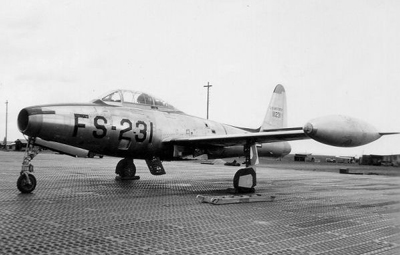
Though details of which missions First Lieutenant Davis flew on are not clear, it is clear that he flew the F-84G Thunderjet. The Air Force deployed and operated the F-84G between June and September 1951. The Air Force relied heavily on it during the war. This was because of their versatility. They had a 2,000-mile combat travel range and a 40,500-foot operating ceiling. They were armed with six .50-caliber machine guns and could carry eight 5-inch High Velocity Aircraft Rockets or 2,000 pounds of bombs. These capabilities made the aircraft effective as day fighters, long-range escorts, fighter-bombers, and potential nuclear strike fighters.
Kunsan Air Base—A Key to the War
According to the report on his final mission, First Lieutenant Davis did some work at Kunsan Air Base in South Korea. Kunsan Air Base, known today as the “Wolf Pack,” was originally constructed by the Japanese in 1928 as a fighter-interceptor base. Following Japan’s surrender in 1945, the installation came under U.S. control and later played a role in America’s growing military presence on the Korean Peninsula prior to the Korean War.
Once the Korean War started, it fell under the control of North Korea, but the U.S. Army’s 3rd Battalion, 24th Infantry, recaptured the base and Kusan City on September 30, 1950. Afterwards, it hosted several U.S. Air Force units. From this base, First Lieutenant Davis flew at least one recorded mission towards Chodo Island.
Commemoration
Lieutenant Davis’s Final Flight
The only publicly available mission on record for First Lieutenant Davis is his final one. On May 10, 1953, First Lieutenant Davis, along with three other squadron members, left Kunsan Air Base for a combat mission in North Korea. The squadron was tasked with escorting an F-86 Sabre with engine trouble to Chodo Island Air Force Base on Chodo Island, near North Korea.
The cloud cover over Chodo Island was incredibly dense, leading Lieutenant Davis to lose track of the other planes. He radioed that he would return with the other two pilots while the flight leader finished bringing the F-86 to the island. When the flight leader returned to the rest of the squadron, however, First Lieutenant Davis was not with them. He had gone missing somewhere in the clouds.
Following his disappearance, the U.S. Air Force conducted two searches for him and his aircraft. These were unsuccessful, and he was declared Missing in Action and presumed dead on May 11, 1953. At the end of the war, the recovered POWs never mentioned having any contact with Lieutenant Davis at a holding point, interrogation center, hospital, or permanent POW camp. His body was never found, and he is still unaccounted for to this day.
Awards
After his death, he was awarded the Air Medal, the Purple Heart, the Korean Service Medal, the United Nations Service Medal, the National Defense Service Medal, the Korean Presidential Unit Citation, and the Republic of Korea War Service Medal.
He is memorialized at Court Five of the Courts of the Missing at the National Memorial Cemetery of the Pacific in Honolulu, Hawai’i. His name is engraved on the Korean War Veterans Memorial Wall in Washington, D.C. He also has a memorial marker at Arlington National Cemetery in Arlington, Virginia.
Bibliography
Primary Sources
“Americans Brave Arctic Wastes in Efforts to Increase Knowledge.” Greenville News-Piedmont Company [Greenville, South Carolina], January 28, 1957.
“Apartment Project Will be Built in Greenville.” The Greenville News [Greenville, South Carolina], May 29, 1947.
“DAFB Crew Made History in The Arctic… And This is the Crew that Made History.” The Greenville News [Greenville, South Carolina], October 15, 1955.
“DAFB Flies Carrier Trees to Antarctica.” Greenville News-Piedmont Company [Greenville, South Carolina]. October 15, 1959.
Donaldson Air Force Base: Greenville, South Carolina: Preliminary Master Plan. Map. United States Air Force, 1952. David Rumsey Map Collection. https://www.davidrumsey.com/luna/servlet/detail/RUMSEY~8~1~315019~90083853:Donaldson-Air-Force-Base—Greenvil.
“Donaldson Men Play Big Role in European Defense.” The Greenville News [Greenville, South Carolina], September 6, 1959.
“FAMILY INCOME AT $1,231; This Was Median Figure in 1939, Census Bureau Says.” The New York Times [New York, New York], April 30, 1943. https://www.nytimes.com/1943/04/30/archives/family-income-at-1231-this-was-median-figure-in-1939-census-bureau.html.
“Greenville’s Gift to N.Z. And Fiji.” Greenville News-Piedmont Company [Greenville, South Carolina], July 13, 1957.
“Invasion Points Shown.” The Greenville News [Greenville, South Carolina], June 29, 1950.
James Franklin Davis. South Carolina. Greenville County. 1930 U.S. Census. Digital images. https://ancestryclassroom.com.
James Franklin Davis. South Carolina. Greenville County. 1940 U.S. Census. Digital images. https://ancestryclassroom.com.
James Franklin Davis. U.S., School Yearbooks, 1900-2016. https://ancestryclassroom.com.
Kremlin’s Korean Kousin. Advertisement. The Greenville News [Greenville, South Carolina], September 10, 1950.
“Role of the 18th Air Force.” Greenville News-Piedmont Company [Greenville, South Carolina], August 23, 1957.
“S.C. Mayor Warned Ready Civil Defense.” The Greenville News [Greenville, South Carolina], October 6, 1950.
Slater Baseball Team. Photograph. 1941. Greenville County Library System (gcls_slater_013). https://greenvillelibrary.contentdm.oclc.org/digital/collection/p17168coll59/id/0/.
“Town Talk.” The Greenville News [Greenville, South Carolina], July 30, 1949.
“Troop Carrier Units Be Sent to Greenville.” The Greenville News [Greenville, South Carolina], October 7, 1950.
“Vet Pitcher, Catchers Keeps Slater Near Top.” The Greenville News [Greenville, South Carolina], May 31, 1953.
Secondary Sources
“1st Lt. James Franklin Davis.” Defense POW/MIA Accounting Agency. Accessed October 16, 2025. https://dpaa-mil.sites.crmforce.mil/dpaaProfile?id=a0Jt000000K6I81EAF.
“1st Lt. James Franklin Davis.” Find a Grave. Accessed October 14, 2025. https://www.findagrave.com/memorial/153234621/james-franklin-davis.
“1st Lt James Franklin Davis.” Military Hall of Honor. Accessed January 9, 2026. https://militaryhallofhonor.com/honoree-record.php?id=223200.
“49th Fighter Bomber Group.” Korean War Project. Accessed January 9, 2026. https://www.koreanwar.org/html/units/usaf/49fbg.htm.
“The Birth of Donaldson Air Force Base in Greenville.” The Greenville News [Greenville, South Carolina], May 2, 2017. https://www.greenvilleonline.com/story/news/local/greenville-roots/2017/05/02/donaldson-center-greenville/100891924/.
“F-48G Thunderjet.” Warhawk Air Museum. Accessed January 26th, 2026. https://warhawkairmuseum.org/explore/aviation-collection/f-84g-thunderjet/.
“Field Of Memories: A History Of White Field And The Slater Sluggers Textile Baseball Team – Part 2.” Traveler’s Rest Monitor. Accessed January 25, 2026. https://www.travelersrestmonitor.net/single-post/2019/08/06/field-of-memories-a-history-of-white-field-and-the-slater-sluggers-textile-baseball-team.
“James Franklin Davis.” American Battle Monuments Commission. Accessed February 13, 2026. https://weremember.abmc.gov/s?q=*&criteria=title%3Ddavis~branch%3DU.S.%20Air%20Force~cemetery%3DHonolulu%20Memorial&type=16&v=G.
“James Franklin Davis.” Veterans Legacy Memorial, National Cemetery Administration. Accessed February 13, 2026. https://www.vlm.cem.va.gov/JAMESFRANKLINDAVIS/570DB.
“Korean War.” National Army Museum. Accessed February 12, 2026. https://www.nam.ac.uk/explore/korean-war.
“Korean War Project Remembrance – 1LT James Franklin Davis.” Korean War Project. Accessed January 9, 2026. https://www.koreanwar.org/html/7014/korean-war-project-south-carolina-ao2215657-1lt-james-franklin-davis/.
“Kunsan Air Base.” Air Force Military Website. Accessed January 26, 2026. https://www.kunsan.af.mil/About-Us/Fact-Sheets/Article/412721/kunsan-air-base/.
“‘No longer forgotten’ – Monument honors 6,554 Greenville County soldiers who fought in Korean War.” The State. Accessed January 26, 2026. https://www.thestate.com/news/local/military/article14433248.html.
“The Republic F-84 Thunderjet Was the ‘Champ of the Fighter-Bombers.’ ” The War History Online. Accessed January 16, 2026. https://www.warhistoryonline.com/aircraft/republic-f-84-thunderjet.html.
“Textile Collections: Images from Greenville’s Textile Crescent.” Greenville Historical Society. Accessed Nov 6, 2025. https://greenvillehistory.org/photogallery/textile-collection/.
This profile was researched and created through the Researching Silent Heroes program, sponsored by the American Battle Monuments Commission.