

Staff Sergeant Janet Ann Pearson Stoeberl
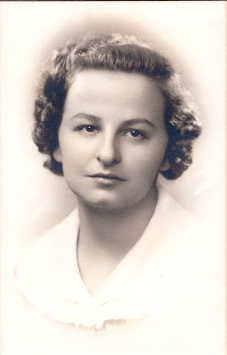
- Unit: Women's Reserve Battalion, Company C
- Date of Birth: December 9, 1919
- Entered the Military: July 15, 1943
- Date of Death: November 9, 2007
- Hometown: St. Paul, Minnesota
- Place of Death: Phoenix, Arizona
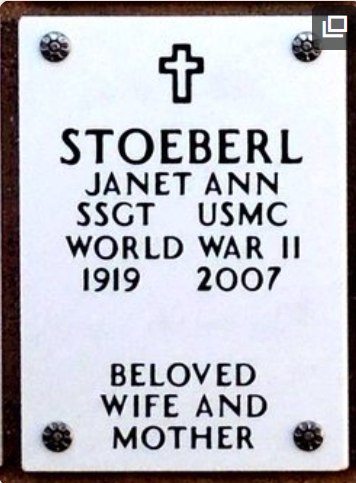
- Cemetery: Section 54, Grave 3422. National Memorial Cemetery of Arizona, Phoenix, Arizona
Mentored by Dr. Rebekah West Keur
Herberger Young Scholars Academy
2025/2026
Early Life
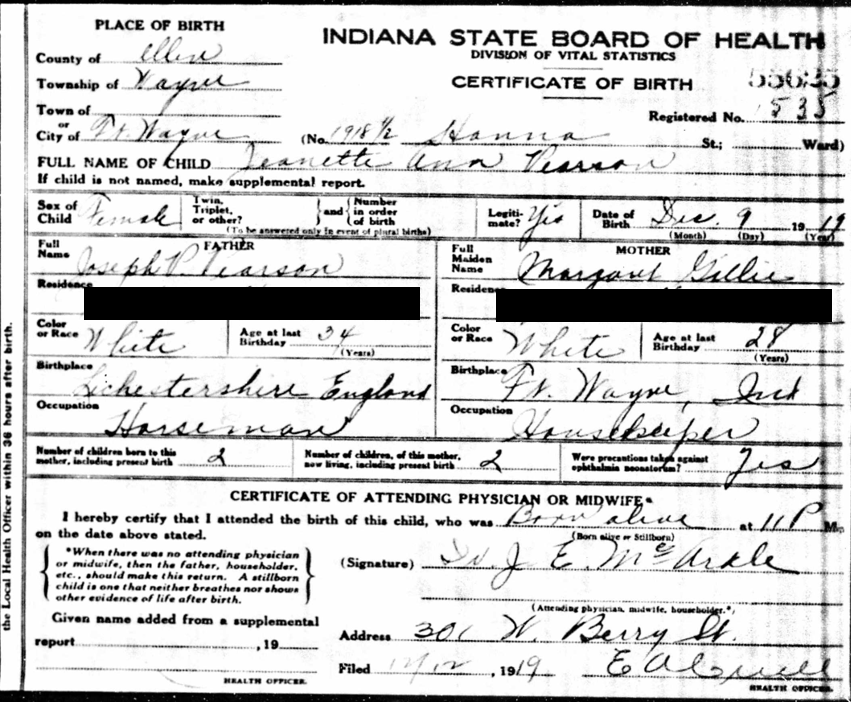
Janet Ann Pearson was born on December 9, 1919, in Fort Wayne, Indiana. She was the second of seven children born to Joe and Margaret Pearson and grew up alongside her siblings: John, Carol, Bonnie, Margaret, Jack, and Judith. Her father, Joe, was born in England and immigrated to the United States in 1909. He married Pearson’s mother in 1916. She was an Indiana native born to Scottish immigrants.
Because of the Expatriation Act of 1907, Margaret Pearson was listed as an alien in census records because her husband had not become a naturalized citizen. Despite this fact, the family was deeply rooted in the American Midwest.
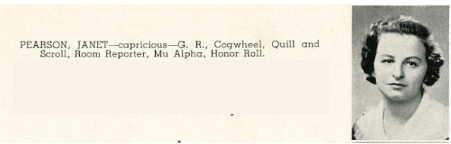
The family moved to Fargo, North Dakota, by 1920 and eventually settled in St. Paul, Minnesota. Pearson grew up in the Frogtown neighborhood of St. Paul and attended Mechanics Arts High School, graduating in 1937. Her senior yearbook described her as “capricious.” She was a member of the yearbook staff, the Girls’ Reserve social club, Quill and Scroll, Mu Alpha, and the Honor Roll.
Pearson later attended the University of Minnesota. In 1940, she was living with her family and working as an assembler in St. Paul, Minnesota.

Homefront
During World War II, St. Paul and the surrounding region shifted from the hardships of the Great Depression into a massive industrial engine as industry pivoted toward military production. In St. Paul, this meant a transformation of daily life. Citizens participated in scrap metal drives, grew Victory Gardens to supplement food rationing, and adjusted to a city crowded with thousands of new workers and soldiers.
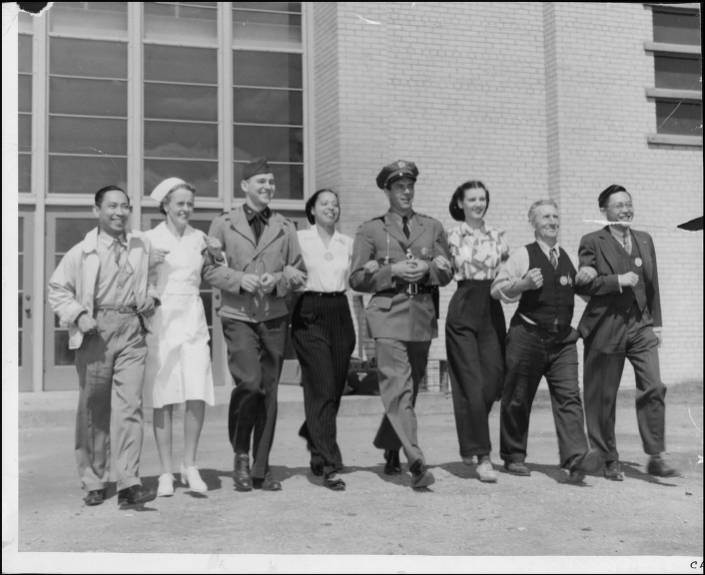
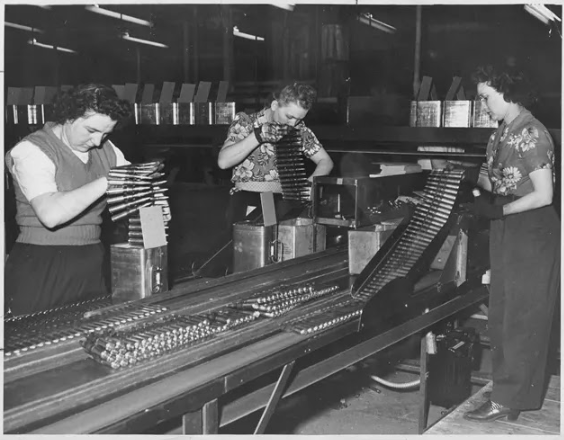
The Twin Cities Ordnance Plant (TCOP) in nearby New Brighton served as the cornerstone of regional production. Sprawling across four square miles, the facility employed over 25,000 workers at its peak—more than half of whom were women. Operating 24 hours a day, the plant produced billions of rounds of .30 and .50 caliber ammunition. It was also a landmark for social change. The TCOP was one of the first major local employers to integrate its workforce, providing essential defense jobs to African American workers and helping to pave the way for future civil rights progress in the industrial sector.
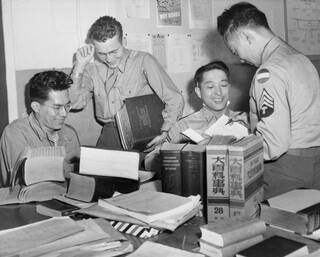
Fort Snelling acted as the primary gateway for military service in the Upper Midwest. Known as the “Ellis Island” of the region, it served as a military induction and processing center. Over 300,000 recruits were sworn in, poked, prodded, and outfitted before being sent to basic training. Beyond basic processing, the fort housed the secretive Military Intelligence Service Language School (MISLS). There, Japanese-American soldiers (Nisei) were trained in linguistics and intelligence, providing the U.S. military with the vital ability to translate captured documents and interrogate prisoners in the Pacific Theater.
In addition to heavy industry and troop processing, St. Paul was a center of technological innovation, home to companies like Honeywell. Originally a thermostat company, Honeywell shifted its entire focus to developing high-tech military equipment, including the C-1 autopilot system and electronic turbo-supercharger regulators for B-17 bombers. This transition required a highly disciplined workforce capable of manual labor and precision engineering.
Even the local scenery changed, as the St. Paul City Hall and Ramsey County Courthouse became focal points for war bond rallies and civil defense coordination, ensuring that every block of the city was involved in the global effort.
Military Experience
In early 1943, the U.S. Marine Corps established the Women’s Reserve. Their recruitment slogan was “Free a Marine to Fight.” The goal was to recruit women for administrative, clerical, and technical roles stateside so that male Marines could be moved from office desks to combat units in the Pacific.
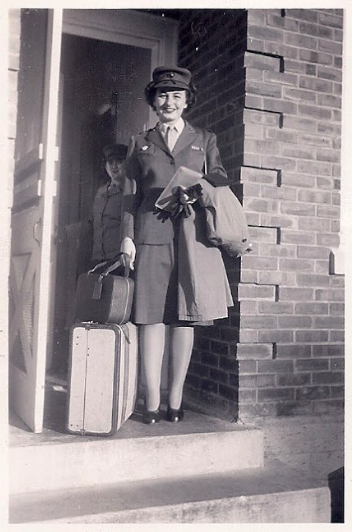
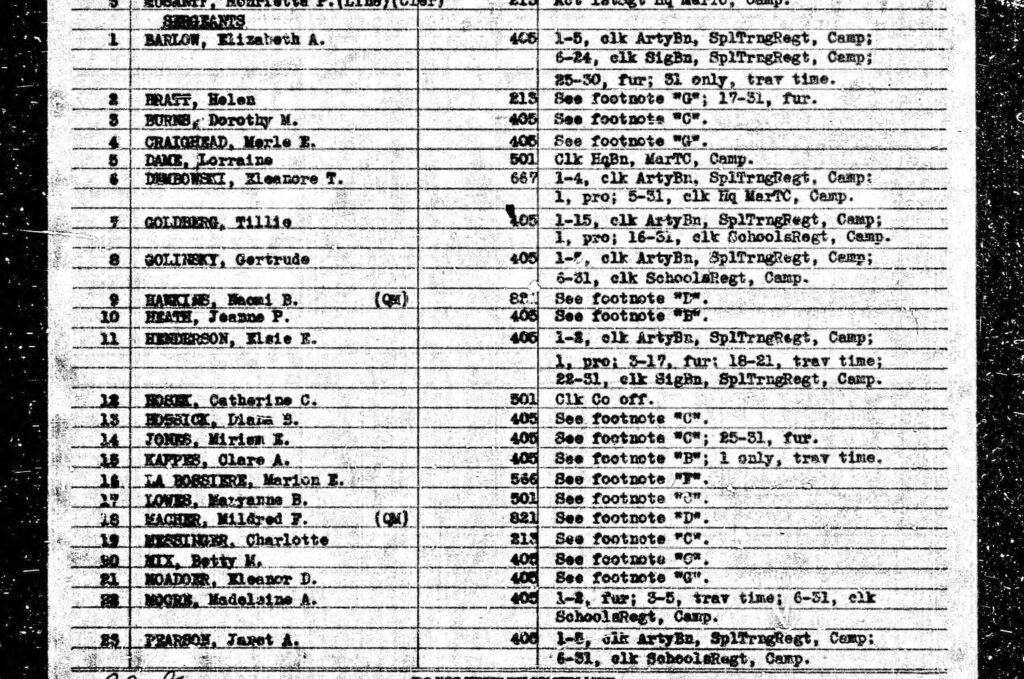
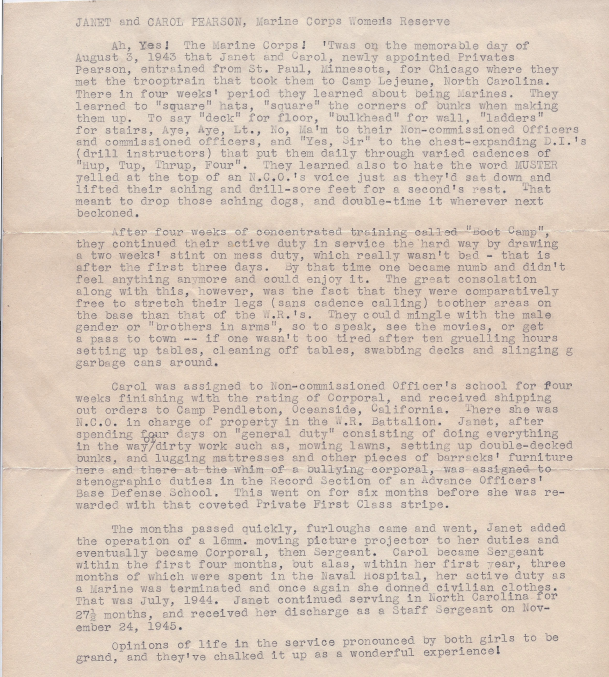
Pearson enlisted as a private in the Marine Corps Women’s Reserve on July 15, 1943. She underwent six weeks of instruction that included military drill (marching in formation), physical conditioning, and learning Marine Corps history and customs. Because she was being trained for specialized clerical work, she also attended a “Specialist School” at the base. Here, she trained in the specific military methods for bookkeeping, filing, and payroll.
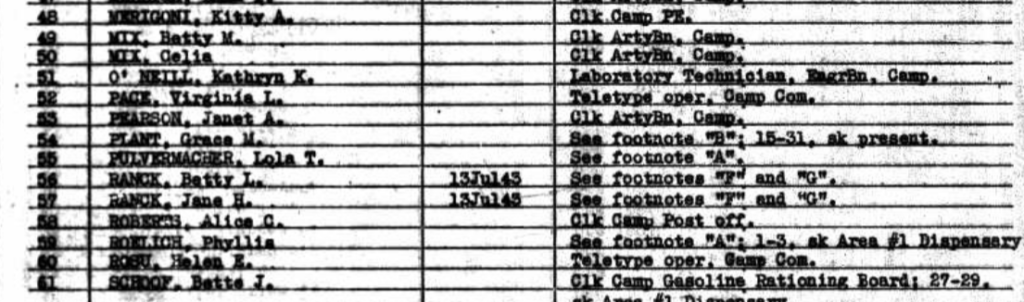
Following her training, Pearson was assigned to Company “C” of the Women’s Reserve Battalion at Camp Lejeune, North Carolina. She remained stationed there throughout her service. While she did not see combat, her role was vital to the war’s success. Starting as a private, she earned rapid promotions: private first class in April 1944, corporal in July 1944, sergeant on January 1, 1945, and eventually staff sergeant.
Pearson’s primary job was as a clerk, often associated with the Quartermaster department. Quartermaster units managed the complex logistics to house, clothe, and equip the troops. As a clerk, Pearson was responsible for the essential “paperwork” of the war. Her daily tasks likely included administrative operations, such as maintaining service records, processing payroll, and managing official correspondence. This ensured the military “machine” functioned without error.
In her final role as a staff sergeant, Pearson transitioned into personnel management. She moved into a leadership role, supervising other women and ensuring smooth battalion operations. Her work directly supported the 6th Marine Division. This division went on to fight in the Battle of Okinawa, the largest amphibious assault in the Pacific, a stepping stone toward the end of the war. By the end of the war, Women Reservists made up two-thirds of the personnel at major stateside posts like Camp Lejeune, serving as the “backbone” for American combat power overseas.
Veteran Experience
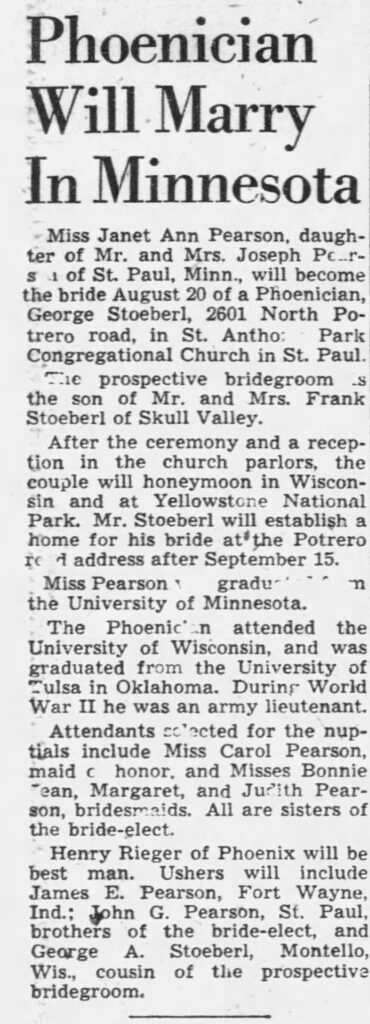
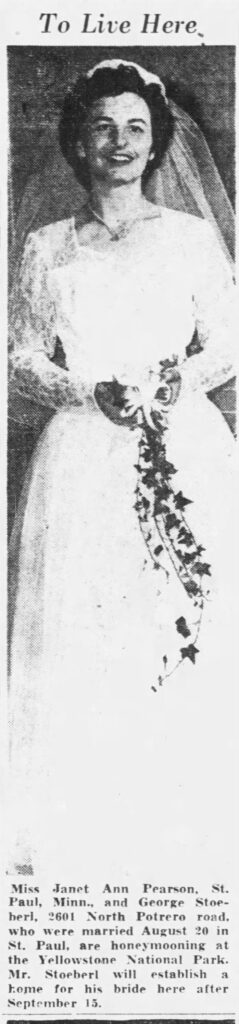
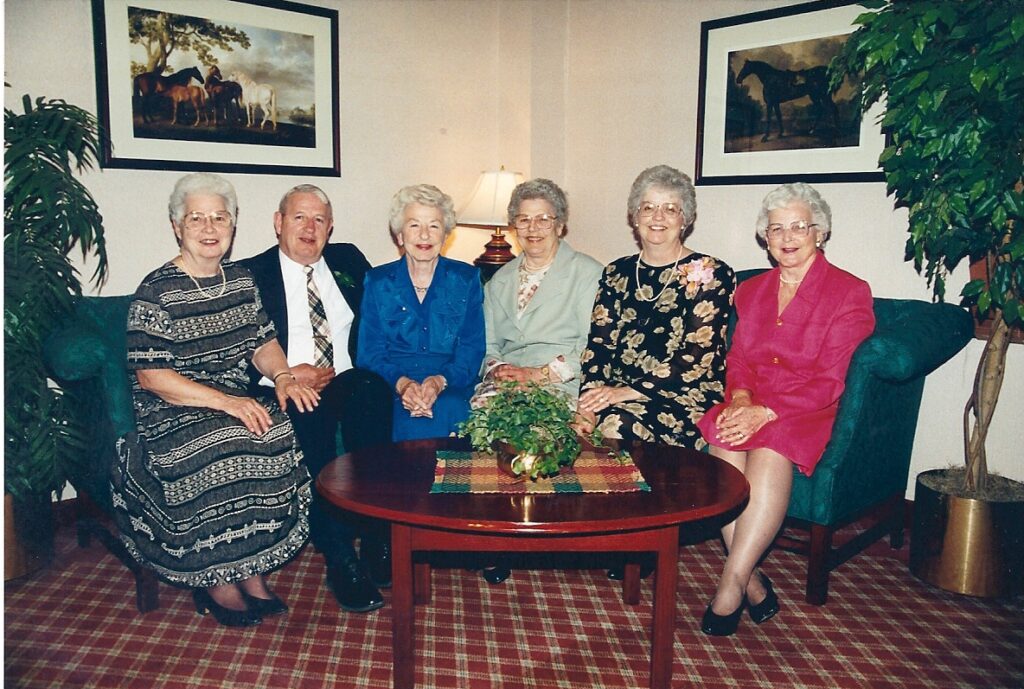
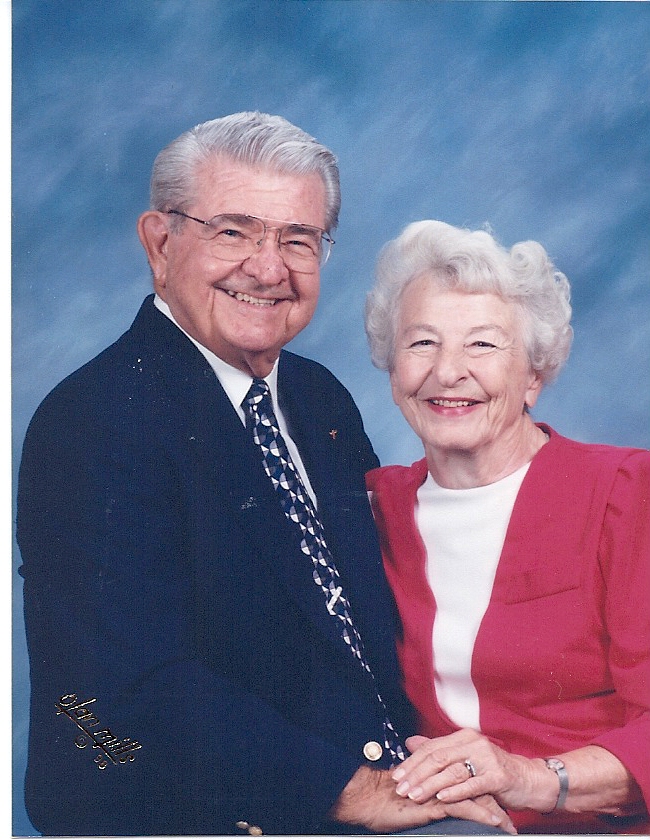
Staff Sergeant Pearson was honorably discharged in 1945. She returned to civilian life and met her future husband, George Stoeberl, a former Army lieutenant during World War II. They married on August 20, 1949, and after a honeymoon out west, they settled in Phoenix, Arizona. They shared 58 years of marriage and raised two children, Gary and Catherine.
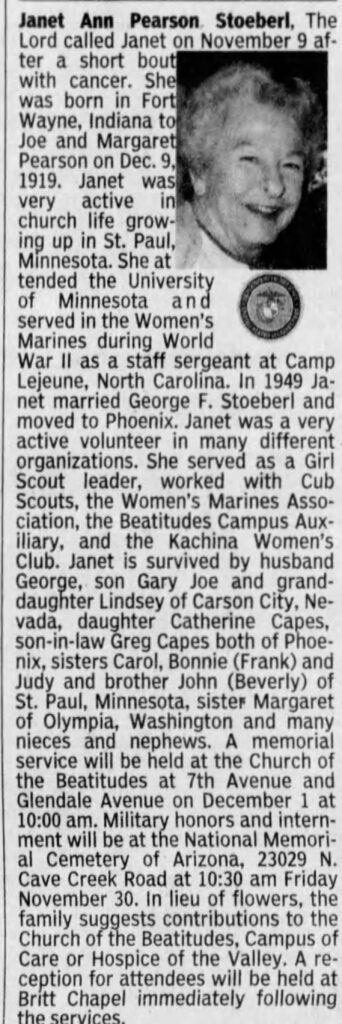
Stoeberl’s veteran experience was defined by continued service. She became a prominent figure in Phoenix’s community, serving as a Girl Scout leader and a Cub Scout volunteer for many years. She was an active member of the Women’s Marines Association and mentored younger female service members. Her obituary describes her as a woman of immense discipline and Esprit de Corps, a French military term meaning a feeling of pride and fellowship shared by the members of a particular group.
Commemoration
Janet Ann Pearson Stoeberl passed away from cancer on November 9, 2007, at the age of 87. She was inurned with full military honors at the National Memorial Cemetery of Arizona, recognized as a beloved wife, mother, and a proud Staff Sergeant of the U.S. Marine Corps. Her husband, George, passed away nine years later and rests next to his wife.
Stoeberl’s legacy stands as a reminder that the administrative work of the Marine Corps Women’s Reserve was just as essential to victory as the battles fought on distant shores.
Bibliography
Primary Sources
Arizona. Maricopa County. 1950 U.S. Census. Digital Images. https://ancestry.com.
Employment Diversity at Arms Plant. Photograph. Minneapolis Newspaper Photograph Collection, 1942. Hennepin County Library (P19597). https://digitalcollections.hclib.org/digital/collection/MplsPhotos/id/19420/rec/98.
Jeanette Ann Pearson. Indiana, U.S., Birth Certificates, 1907-1944. Digital Images. https://ancestry.com.
Janet Ann Pearson. Photograph Collection. FamilySearch. https://familysearch.org.
Japanese translators at Fort Snelling. Photograph. 1945. Minnesota Historical Society (E448.24 p3). https://www.mnhs.org/collection-record?uuid=b89f6281-a174-44de-8a6d-3b3b46532fee.
“Janet Anne Person Stoeberl.” The Arizona Republic [Phoenix, Arizona], November 25, 2007. Newspapers.com (126650936).
Janet Pearson. U.S. Marine Corps Muster Rolls, 1893-1958. Digital Images. https://ancestry.com.
Janet Pearson. U.S., School Yearbooks, 1900-2016. Digital Images. https://ancestry.com.
Minnesota. Ramsey County. 1930 U.S. Census. Digital Images. https://ancestry.com.
Minnesota. Ramsey County. 1940 U.S. Census. Digital Images. https://ancestry.com.
North Dakota. Cass County. 1920 U.S. Census. Digital Images. https://ancestry.com.
“Phoenician Will Marry in Minnesota.” The Arizona Republic [Phoenix, Arizona], August 13, 1949. Newspapers.com (117362647).
“To Live Here.” Arizona Republic [Phoenix, Arizona], August 28, 1949.
Woman operating a drill press at the Honeywell plant in Minneapolis. Photograph. c.1945. Minnesota Historical Society (HD4.2 p79). https://www.mnhs.org/collection-record?uuid=baa58abb-b49f-4615-9aee-1acc0a993d89.
Women Factory Workers at Arms Plant. Photograph. 1945. Minneapolis Star and Tribune Photographs, Hennepin County Library (P19357). https://www.hclib.org/about/locations/special-collections/.
Secondary Sources
“George F. Stoeberl.” Find a Grave. Accessed November 24, 2025. https://www.findagrave.com/memorial/173269379/george-f-stoeberl.
“George F. Stoeberl.” Veterans Legacy Memorial, National Cemetery Administration. Accessed May 1, 2026. https://www.vlm.cem.va.gov/GEORGEFSTOEBERL/B39FD57.
Hinnerschitz, Stephanie. “Victory Gardens: Food for the Fight.” The National WWII Museum. Updated November 26, 2024. Accessed November 12, 2025. https://www.nationalww2museum.org/war/articles/victory-gardens-world-war-ii.
“Janet Ann Pearson Stoeberl.” Find a Grave. Accessed November 24, 2025. https://www.findagrave.com/memorial/23087166/janet-ann-stoeberl.
“Janet Ann Stoeberl.” Veterans Legacy Memorial, National Cemetery Administration. Accessed May 1, 2026. https://www.vlm.cem.va.gov/JANETANNSTOEBERL/99786E7.
Palmer, IV, Lance Corporal Charles W. “Female Warriors Earn Place in History.” U.S. Marine Corps. Updated March 20, 2001. Accessed May 1, 2026. https://www.lejeune.marines.mil/News/Article/Article/511598/female-warriors-earn-place-in-history/.
Ryerson, Jade. “Twin Cities Ordnance Plant: Integrating the WWII Workforce.” National Park Service. Accessed November 12, 2025. https://www.nps.gov/articles/000/twin-cities-ordnance-plant-integrating-the-wwii-workforce.htm.
Stremlow, Colonel Mary V. Free a Marine to Fight: Women Marines in World War II. U.S. Marine Corps. Accessed December 5, 2025. https://www.marines.mil/Portals/1/Publications/Free%20a%20Marine%20to%20Fight%20Women%20Marines%20in%20World%20War%20II%20PCN%2019000312900_1.pdf.
“War Bonds, Scrap Drives & Housing Shortages: St. Paul’s as World War II Home-Front.” National Park Service. Accessed November 12, 2025. https://www.nps.gov/articles/war-bonds-scrap-drives-housing-shortages-st-paul-s-as-world-war-ii-home-front.htm.
Witek, Anja. “Works Progress Administration Strikes, 1939.” MNopedia, Minnesota Historical Society. Updated June 3, 2019. Accessed November 12, 2025. https://www3.mnhs.org/mnopedia/search/index/event/works-progress-administration-strikes-1939.
This profile was funded by a grant from the United States Department of Veterans Affairs. The opinions, findings, and conclusions stated herein are those of the author and do not necessarily reflect those of the United States Department of Veterans Affairs.