

Private First Class John Estrada
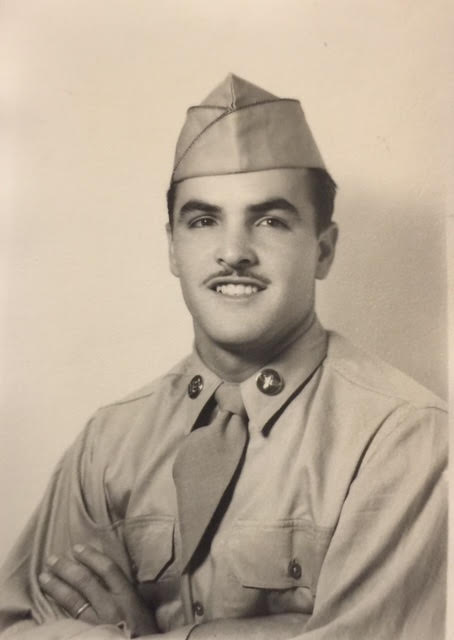
- Unit: 2nd Tank Battalion
- Date of Birth: December 21, 1924
- Entered the Military: October 12, 1942
- Date of Death: August 11, 2008
- Hometown: Los Angeles, California
- Place of Death: Utah
- Award(s): World War II Victory Medal, American Campaign Medal, Asiatic Pacific Campaign Medal, and the Combat Action Ribbon, Honorable Service Lapel Pin
- Cemetery: Section BB, Site 32. Utah Veterans Memorial Cemetery, Bluffdale, Utah
Mentored by Mrs. Heidi Stone
Syracuse Arts Academy Junior High School, Syracuse, Utah
2025/2026
Early Life
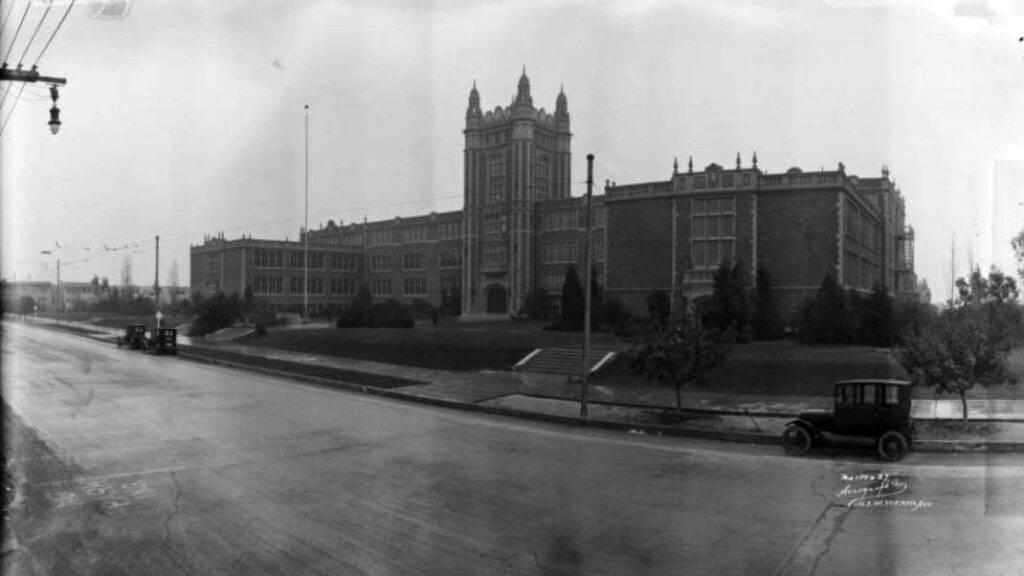
John Estrada was born on December 21, 1924, in Los Angeles, California, to Miguel and Rose Estrada. As the oldest child in a large family, he learned responsibility early, growing up alongside many siblings: Esperenza, Thomas, Julia, Mike, Mary, Francis, Nick, Anita, and Arthur. He attended Los Angeles High School in California. After graduating, he attended a vocational school and focused on courses in pottery and the machine shop. After graduation, Estrada worked as a carpenter for the Homes Beautiful Company.

Homefront
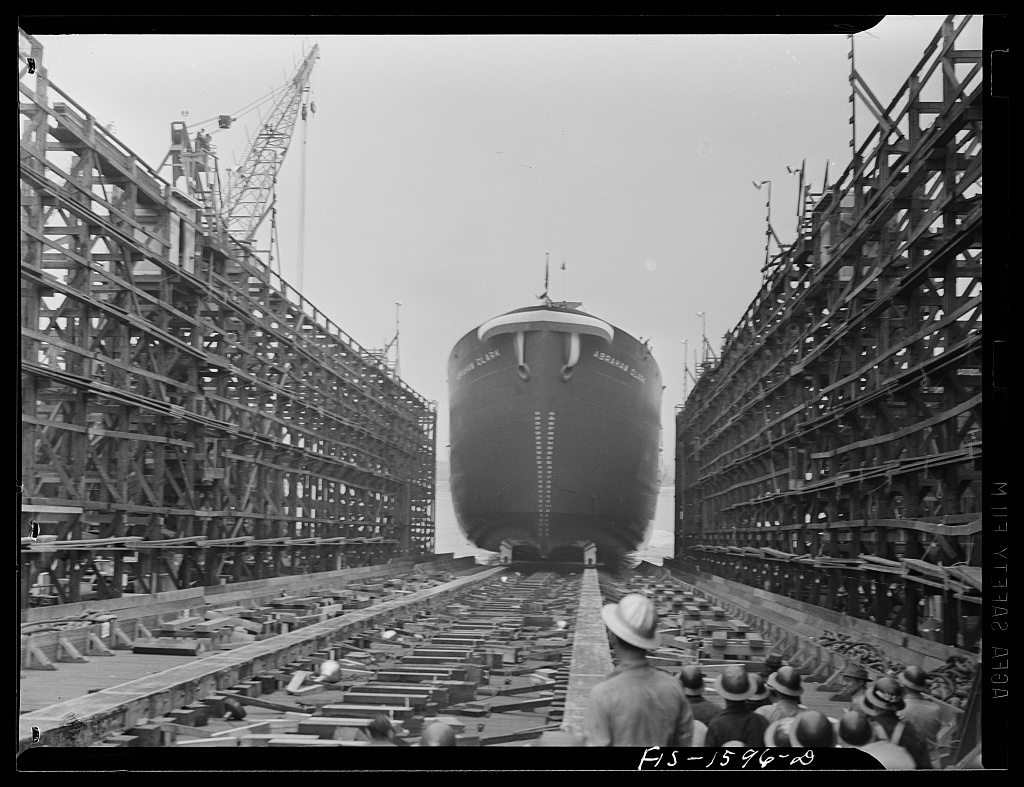
Before World War II, the Great Depression caused high unemployment and housing shortages in Los Angeles. During the war, job opportunities increased dramatically as factories and shipyards shifted to military production. At that time, Los Angeles was a major economic hub for both manufacturing and agriculture. The city became a center of war production, with companies such as Hughes Aircraft Company, Northrop Corporation, Douglas Aircraft Company, Vultee/Convair, and Lockheed Corporation building military aircraft, radar systems, and other defense equipment.
Automotive firms, including General Motors, Chrysler of California, and Studebaker Pacific, shifted from civilian production to war-related manufacturing, producing tanks, aircraft engines, and bomber fuselages. Shipbuilding was also important, with Consolidated Steel Corporation operating major shipyards in Wilmington that built destroyers, cruisers, and naval steel components. The rise of these industries brought thousands of immigrants and workers from other states into the Los Angeles area, fueling both economic growth and population expansion during the war.
Agriculture also played an important role in supporting the war effort. Many families in Los Angeles planted “victory gardens” to help feed themselves, while California farmers produced crops such as corn, tomatoes, and root vegetables. By this time, Los Angeles County had become one of the top agricultural producers in the United States.
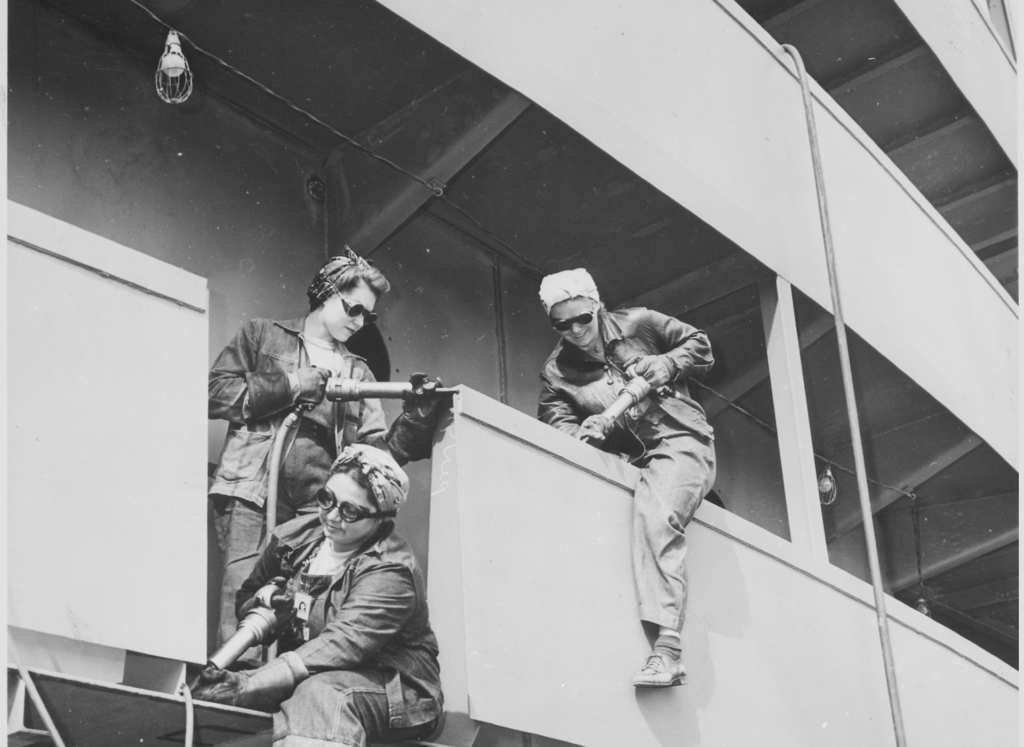
The Los Angeles community was deeply involved in supporting the war effort. Residents purchased war bonds and stamps to help finance military operations and participated in rationing programs that limited sugar, meat, gasoline, and other essential goods. Many joined volunteer organizations, including the Red Cross, which ran blood drives, knitted clothing for soldiers, and organized care packages. Women took on new roles outside the home, working in defense factories such as Douglas Aircraft, Lockheed, and Hughes Aircraft, building planes and assembling military equipment, while others served as volunteers in hospitals, community centers, and civil defense programs, demonstrating the city’s collective commitment to the war effort.
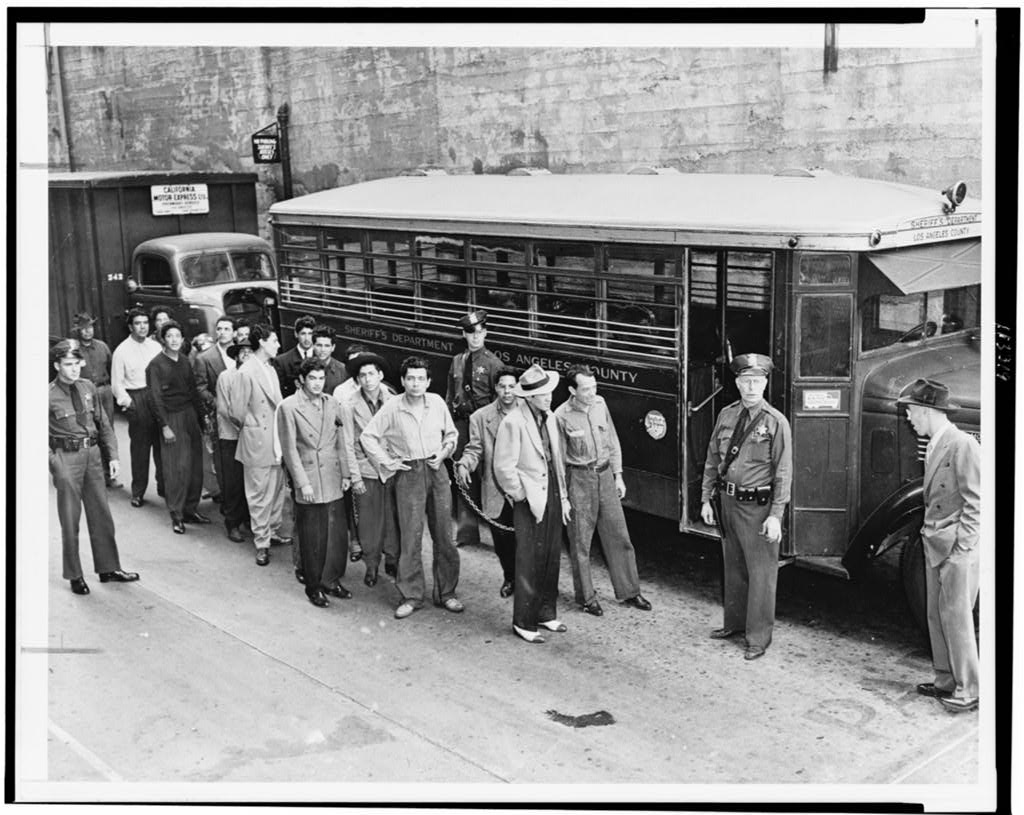
Despite these contributions, Los Angeles faced social tensions. The Zoot Suit Riots of 1943 involved violent clashes between U.S. servicemen and Mexican American youth who wore zoot suits, seen as unpatriotic during wartime rationing. These events reflected racial prejudice and anxiety over rapid population changes. Meanwhile, propaganda—through posters, films, and radio—encouraged support for the war and maintained public morale.
Military Experience
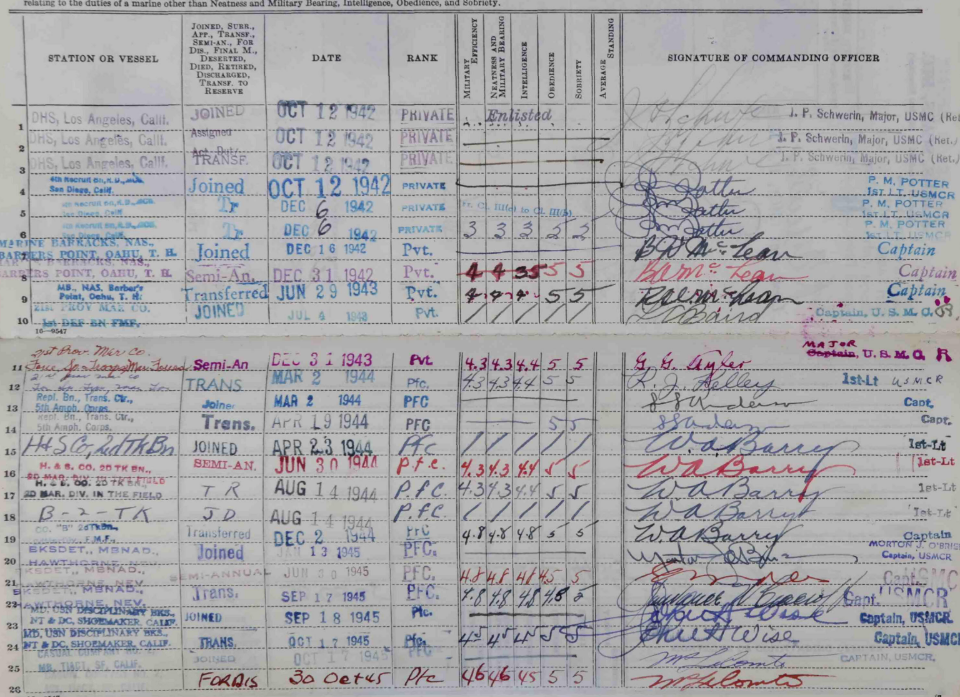
John Estrada’s life took a dramatic turn during World War II. Determined to serve, he quit high school and, with his mother’s signed consent (he was underage), enlisted in the U.S. Marine Corps on October 12, 1942, in Los Angeles, California. He completed basic training at Marine Corps Base San Diego and was assigned to the 2nd Tank Battalion. On December 16, 1942, he departed California and was stationed at Marine Corps Air Station Barbers Point on Oahu, Hawaii, where his primary duty was serving as a guard.
He was later promoted to private first class on January 1, 1944. As a tank and anti-tank gun crewman, Estrada was responsible for aiming and firing tank weapons in cramped, high-pressure conditions, alongside four to five other Marines inside a tank.
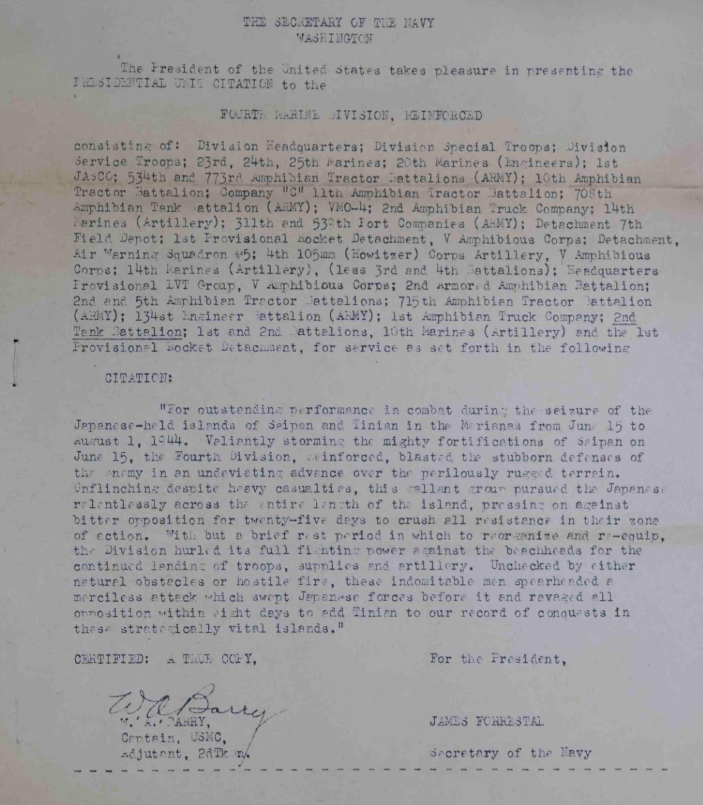
Estrada served in the Pacific Theater, participating in major campaigns in the Mariana Islands, including Saipan and Tinian. In late May 1944, he deployed from Pearl Harbor as part of the assault force heading toward Saipan. On June 16, 1944, his battalion supported the first waves of the invasion, using tanks to move from ship to shore while firing on Japanese beach defenses. Their role was critical in protecting the Marine infantry as they landed. After the beaches were secured, Estrada and his battalion continued to provide mobile fire support inland during weeks of intense fighting, with his service on Saipan lasting from June 16 to July 9, 1944.
Following the Battle of Saipan, Estrada was deployed to Tinian from July 24 through August 1944. During this campaign, the 2nd Armored Battalion again played a key role by supporting a surprise landing. Their tanks provided close fire support, helping suppress enemy defenses and protect Marines as they came ashore. The battalion then assisted in the rapid advance inland, contributing to the capture of vital air bases that were crucial to Allied success in the Pacific.
Private Estrada returned home in 1945 on a medical ship after contracting dengue hemorrhagic fever. He was honorably discharged on October 30, 1945, having served his country with courage, resilience, and dedication.
After being released from the military for one year, Epperson re-enlisted in the U.S. Air Force in 1947. While in the Air Force, he was stationed in Roswell, New Mexico, for two years, where he worked as a bartender at a C-54 outlet that supported air transport for B-29 bombers.
During his time of service, he earned many awards, including the Honorable Service Lapel Pin, Discharge Button, WWII Victory Medal, American Campaign Medal, Asiatic-Pacific Campaign Medal, and the Combat Action Ribbon (retroactively awarded for his service).
Veteran Experience
After World War II, John Estrada continued his service by joining the United States Air Force. On February 28, 1947, he married the love of his life, Gloria Frances Martinez Estrada. Together, they shared 61 years of marriage and raised two children, Christelle and John. After returning home, the family settled in Los Angeles, California, where Estrada worked for the Common Electric Manufacturing Company, providing for his family and offering stability.
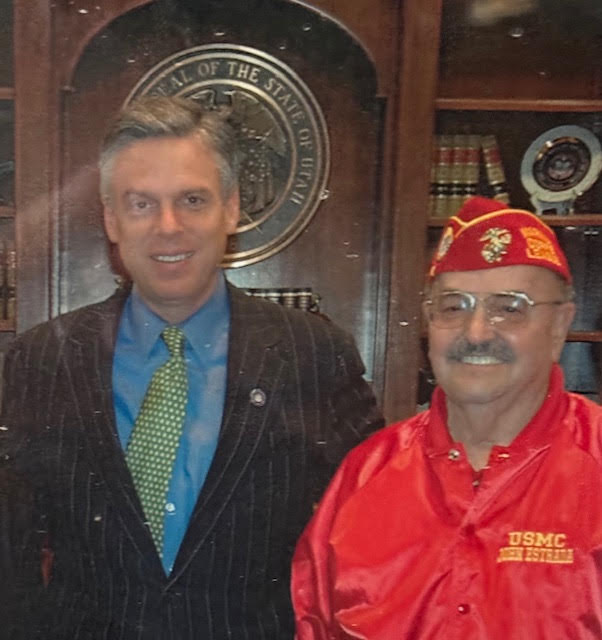
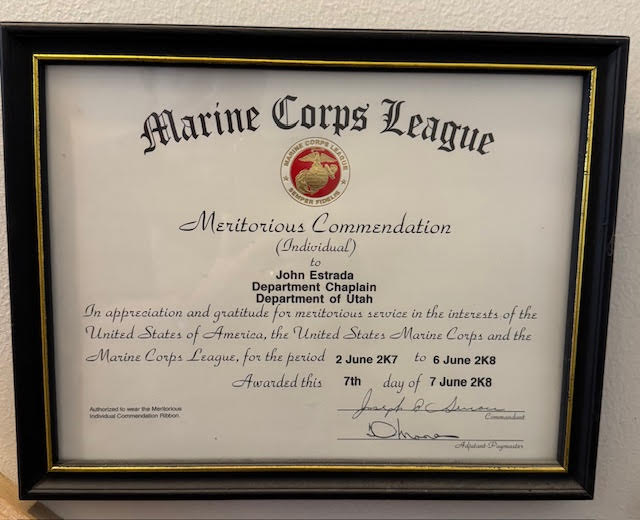
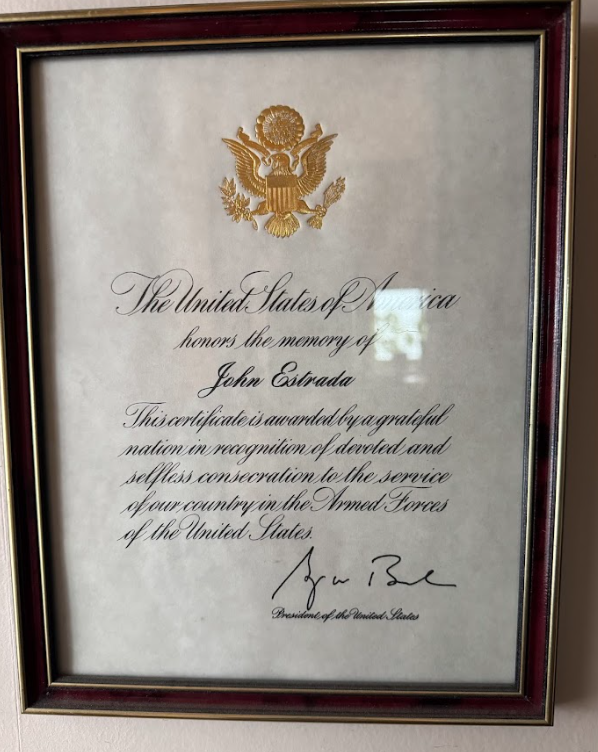
Later in life, after moving to Utah, Mr. Estrada remained deeply committed to serving others. He became a chaplain for the Utah Marine Corps League and dedicated countless hours to supporting fellow Veterans. Even in retirement, he actively fundraised for Veterans, particularly those returning from the wars in Iraq and Afghanistan. He was recognized by President George W. Bush posthumously with a memorial certificate.
In recognition of his generosity and lifelong dedication to service, Estrada was nominated for and received numerous honors, including the Governor’s Medal for service from Utah Governor Jon Huntsman.
Commemoration
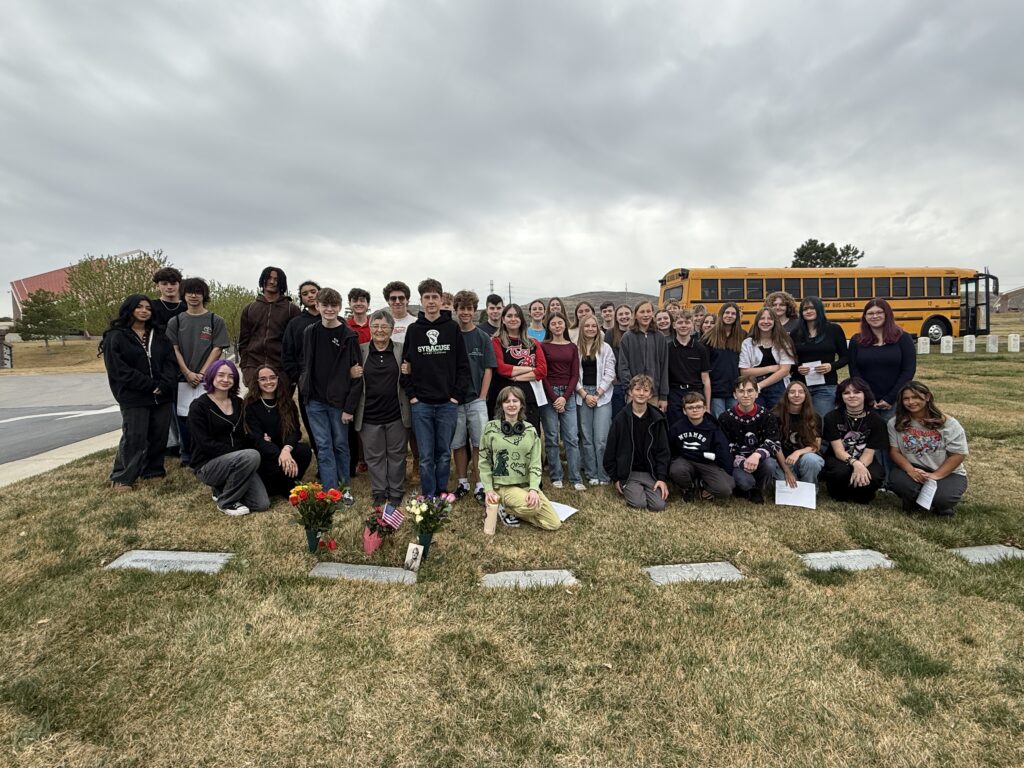
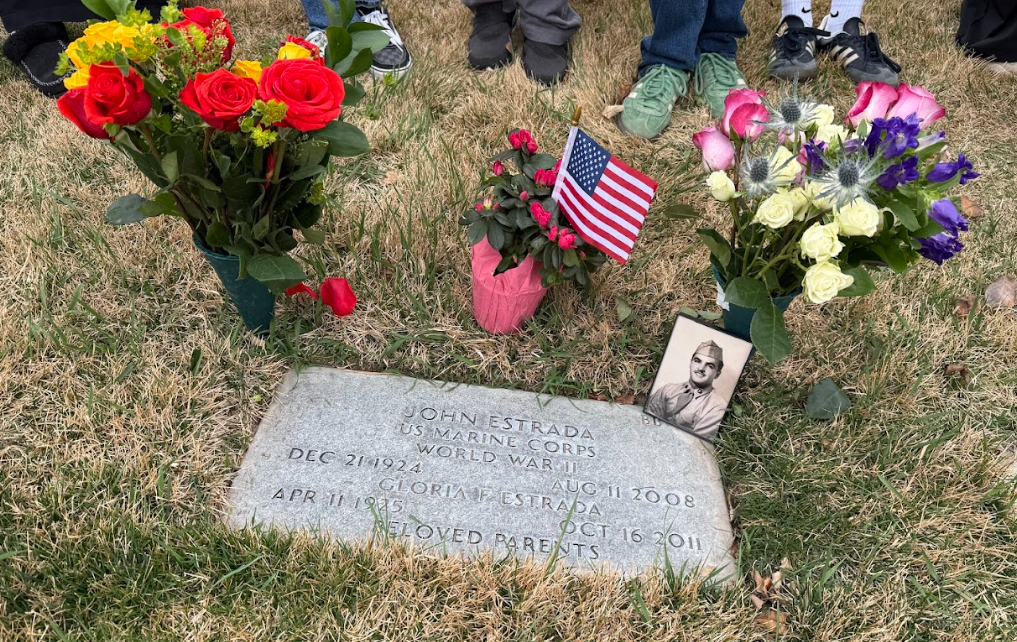
Mr. Estrada passed away on August 11, 2008. He is buried with his wife at the Utah Veterans Cemetery in Bluffdale, Utah.
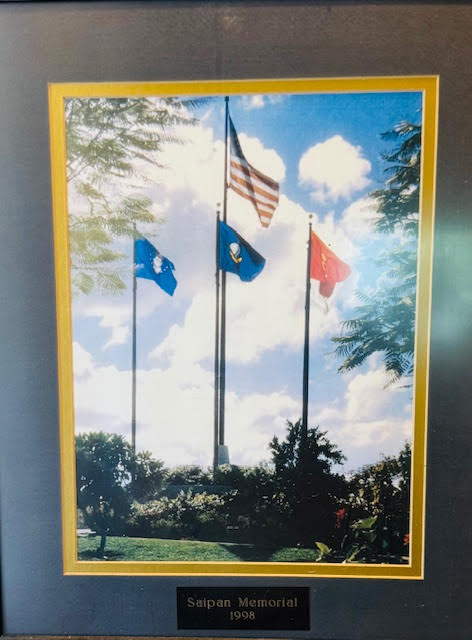
Today, a photo of the Saipan Memorial that he took is displayed at the Camp Williams Visitor Center, serving as a lasting tribute to his courage, service, and continued commitment to others.
Bibliography
Primary Sources
California. Los Angeles County. 1930 U.S. Census. Digital Images. http://ancestry.com.
California. Los Angeles County. 1940 U.S. Census. Digital Images. http://ancestry.com.
California. Los Angeles County. 1950 U.S. Census. Digital Images. http://ancestry.com.
California Shipbuilding Corporation, Wilmington, California. Change of shift. Photograph. April 1942. Library of Congress (2017830157). https://www.loc.gov/item/2017830157/.
“Chippers.” Women war workers of Marinship Corp. Photograph. 1942. National Archives and Records Administration (NAID: 522889). https://catalog.archives.gov/id/522889.
Christelle Estrada to Heidi Stone. Email correspondence. 2026.
Estrada Family Photographs. Courtesy of Christelle Estrada.
“John Estrada.” Deseret News [Salt Lake City, Utah], August 16, 2008.
John Estrada. Los Angeles, Licenses, 1947. https://familysearch.org.
John Estrada, Official Military Personnel File, Department of the Navy, National Archives and Records Administration – St. Louis.
John Estrada. Oral history (audio cassette). March 8, 2002. J. Williard Marriott Library, University of Utah. https://archiveswest.orbiscascade.org/ark:80444/xv636679?q=john%20estrada.
John Estrada, Report of Separation, Department of the Navy, National Archives and Records Administration – St. Louis.
John Estrada. U.S. Marine Corps Muster Rolls, 1893–1958. Digital Images. https://ancestry.com.
John Estrada. WWII Draft Registration Cards Young Men, 1940–1947. Digital Images. https://ancestry.com.
“Veteran Receives High 5.” KSL, November 9, 2007. https://www.ksl.com/article/2121363.
Zoot suiters lined up outside Los Angeles jail en route to court after feud with sailors. Photograph. June 9, 1943. Library of Congress (95504788). https://www.loc.gov/item/95504788/.
Secondary Sources
“1940–1950: The Modern Commercial City in War and Peace.” Los Angeles Conservancy. Last modified December 21, 2022. Accessed November 12, 2025. https://www.laconservancy.org/1940-1950-the-modern-commercial-city-in-war-and-peace/.
“Battle of Saipan.” Encyclopædia Britannica. Accessed January 18, 2026. https://www.britannica.com/event/Battle-of-Saipan.
“California’s Infrastructure.” State of California Capitol Museum. Last modified March 17, 2023. Accessed November 12, 2025. https://capitolmuseum.ca.gov/experiences/exhibits/called-to-action-californias-role-in-ww2/californias-infrastructure/.
“Early Los Angeles Drive-in Restaurants.” Water and Power Associates. Accessed November 12, 2025. https://waterandpower.org/museum/Early_LA_Drive_In_Restaurants.html.
“Gender on the Homefront.” The National World War II Museum. Accessed April 21, 2026. https://www.nationalww2museum.org/war/articles/gender-home-front.
Hinnershitz, Stephanie. “Victory Gardens: Food for the Fight.” The National World War II Museum. Last modified November 26, 2024. Accessed November 21, 2025. https://www.nationalww2museum.org/war/articles/victory-gardens-world-war-ii.
Hinnershitz, Stephanie. “The Zoot Suit Riots and Wartime Los Angeles.” The National World War II Museum. Last modified June 1, 2023. Accessed November 21, 2025. https://www.nationalww2museum.org/war/articles/zoot-suit-riots-and-wartime-los-angeles.
“History of American Propaganda Posters: American Social Issues Through Propaganda.” Norwich University. Accessed November 12, 2025. https://online.norwich.edu/online/about/resource-library/history-american-propaganda-posters-american-social-issues-through-propaganda.
“Marine Fight for Tinian.” Warfare History Network. Winter 2019. https://warfarehistorynetwork.com/article/marine-fight-for-tinian/.
Meares, Hadley. “How LA’s Victory Gardens Helped Win WWII.” LAist. Last modified April 28, 2022. Accessed April 21, 2026. https://laist.com/news/la-history/how-las-victory-gardens-helped-win-wwii.
“People and the War.” State of California Capitol Museum. Last modified March 17, 2023. Accessed November 12, 2025. https://capitolmuseum.ca.gov/experiences/exhibits/called-to-action-californias-role-in-ww2/people-and-the-war/.
Pitt, Leonard M. “City Layout.” Encyclopedia Britannica. Last updated November 13, 2025. Accessed November 13, 2025. https://www.britannica.com/place/Los-Angeles-California/City-layout.
“Saipan.” 2nd Armored Amphibious Battalion Association. Accessed December 7, 2025. http://2ndarmoredamphibianbattalion.com/saipan/.
Springate, Megan E. “Victory Gardens on the World War II Home Front.” National Park Service. Accessed November 12, 2025. https://www.nps.gov/articles/000/victory-gardens-on-the-world-war-ii-home-front.htm.
“WWII on the West Coast.” Santa Clara University Digital Exhibits. Last modified fall 2022. Accessed November 12, 2025. https://dh.scu.edu/exhibits/exhibits/show/public-digital-history-world-w/the-effects-of-wwii-on-the-wes.
This profile was funded by a grant from the United States Department of Veterans Affairs. The opinions, findings, and conclusions stated herein are those of the author and do not necessarily reflect those of the United States Department of Veterans Affairs.