
Private First Class John Hess
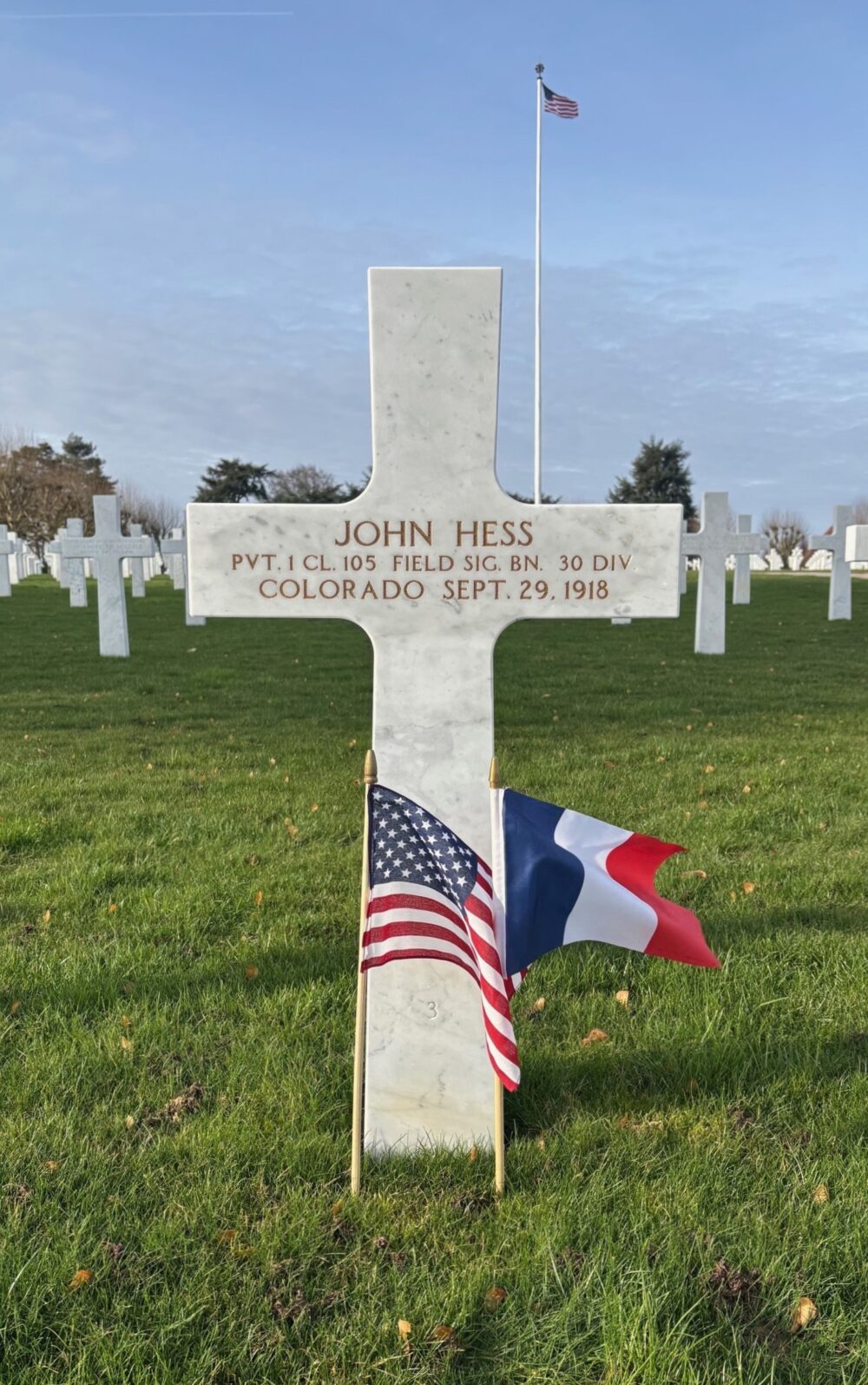
- Unit: Company C, 105th Field Signal Battalion, 30th Division
- Service Number: 920418
- Date of Birth: January 6, 1888
- Date of Death: September 29, 1918
- Hometown: Odense, Denmark
- Place of Death: Bony, France
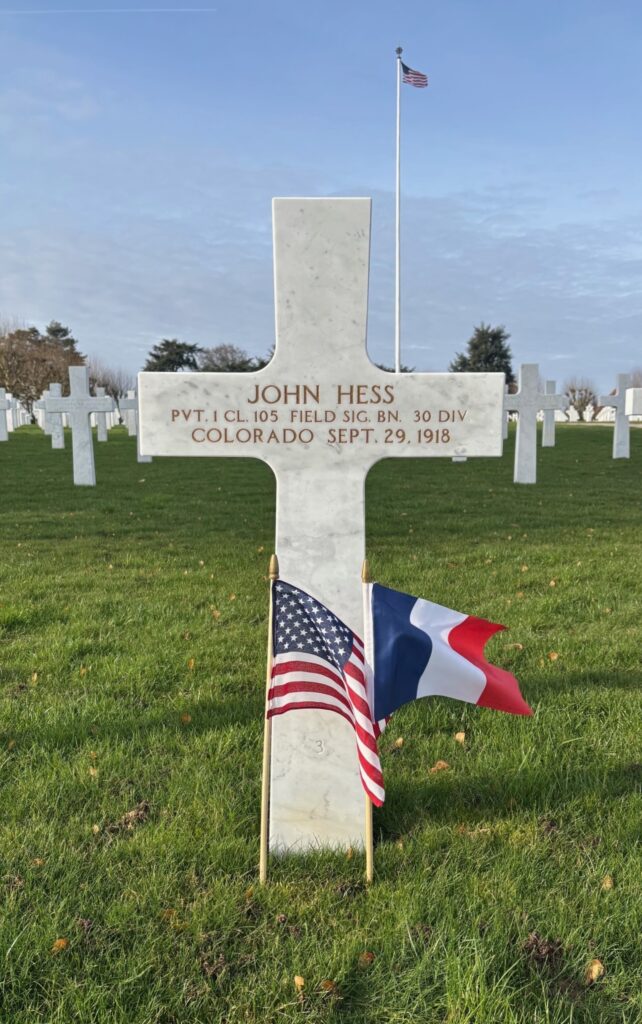
- Cemetery: Plot A, Row 9, Grave 3. Somme American Cemetery, Bony, France
Pueblo County High School, Pueblo, Colorado
2025/2026
Early Life
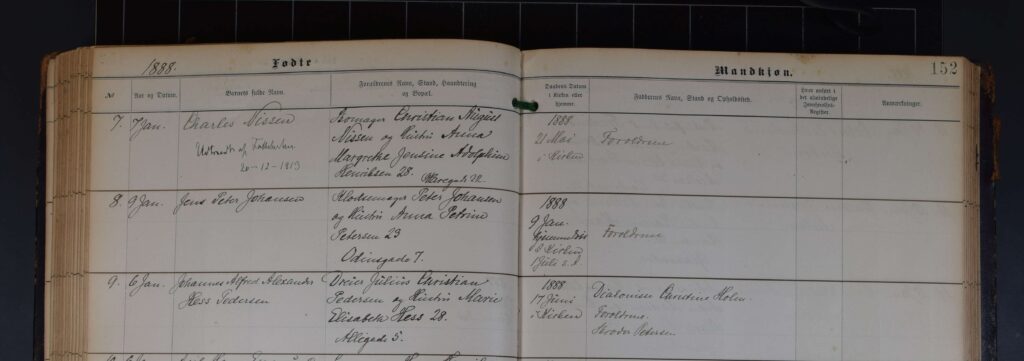
John Hess was born Johannes Alfred Alexander Hess Pedersen in Odense, Denmark, on January 6, 1888. He emigrated from Denmark to the United States.
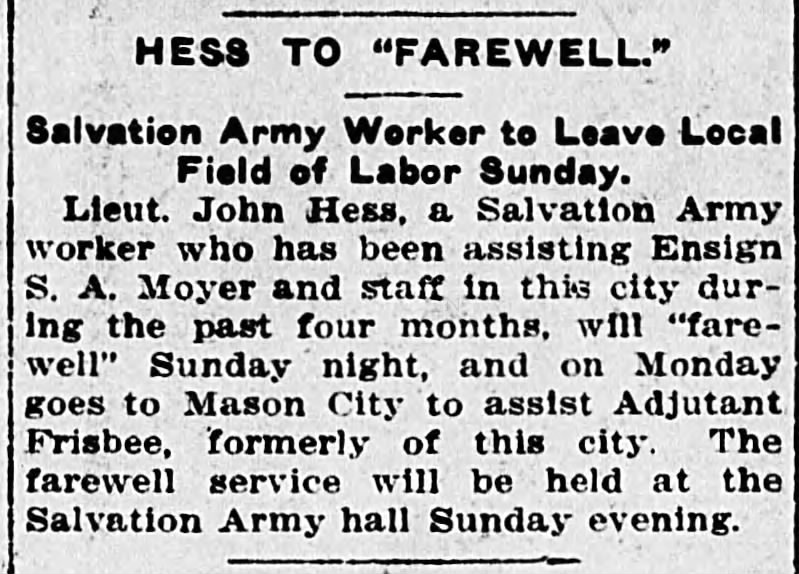
His earliest record in America dates to 1911, when he is listed as a probationary officer with the Salvation Army in Iowa. During his career, he held the ranks of lieutenant, captain, and ensign. While serving as a Salvation Army officer, he traveled throughout the Midwest, including Iowa, Nebraska, Arizona, and Boulder, Colorado.
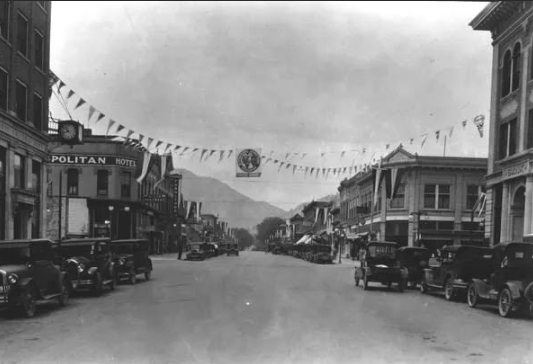
The Salvation Army was founded in London, England, in 1865 by William and Catherine Booth to help people in poverty. Known for its military-themed structure, the group expanded globally to provide social services, disaster relief, and community support. The Salvation Army opened its first storefront in Boulder, Colorado, in 1892 on Walnut Street and then moved to 1628 Pearl Street.
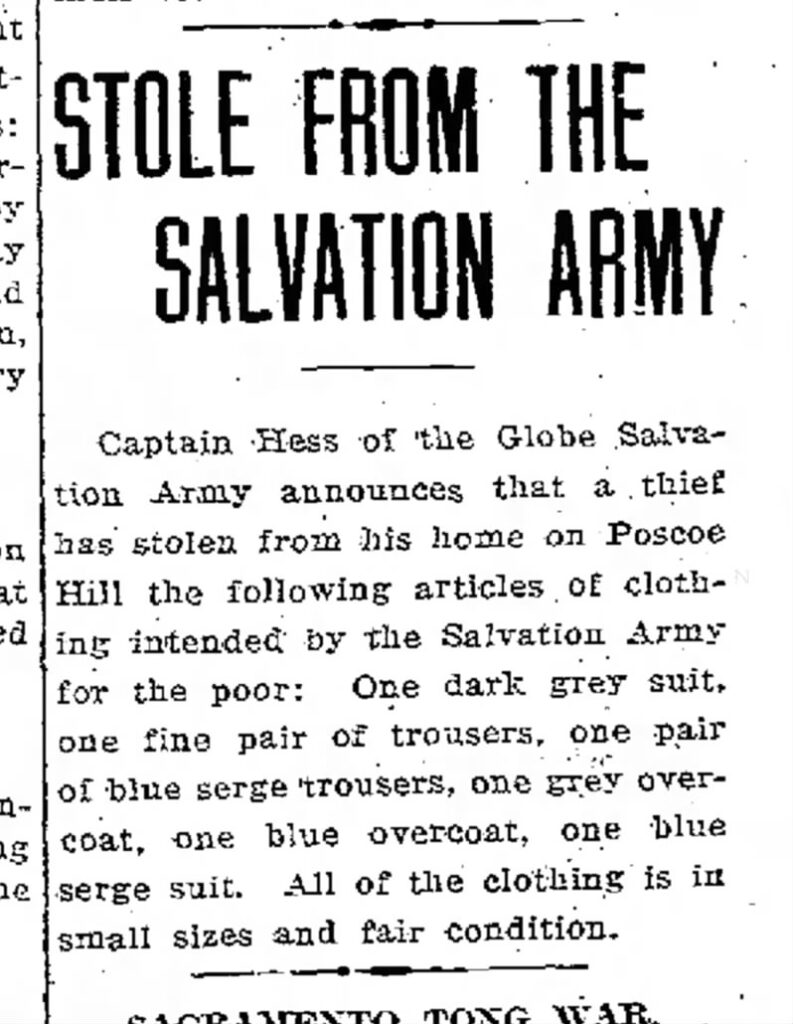
Hess lived on Pearl Street in Boulder, Colorado. There are several mentions of his name working for the Salvation Army in the local newspaper, The Boulder Daily.

Homefront
In the early twentieth century, 16% of Colorado’s population was foreign-born. Many of them were from European countries that were involved in the Great War. Most people worked in industries such as mining and farming, or for the railroads.
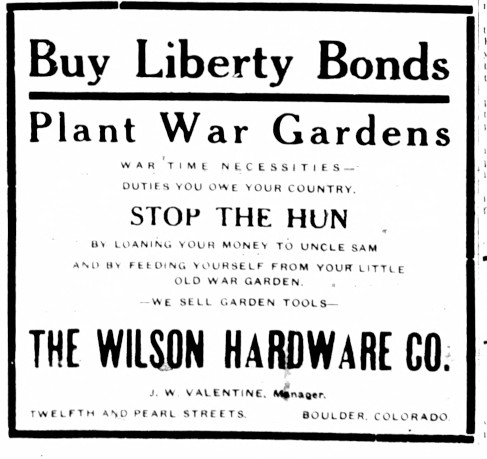
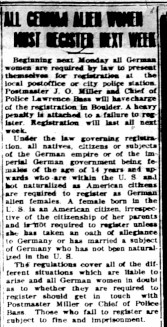
Local newspapers urged citizens to buy war bonds and plant war gardens to support the war effort and young men serving in the military. There was some hostility towards Germans or Austrians in the town. In June of 1918, all German women were required to register with the police or post office. However, many new immigrants were eager to prove their loyalty to their new home, the United States, and enlisted to serve.
In Colorado, National Guard members were paid a $10 bonus to sign up for active duty. Once the draft began, the number of Coloradans in the military reached about 43,000. In Boulder, the University of Colorado helped the war effort by building barracks on the campus. It also established one of the first Reserve Officer Training Corps (ROTC) programs on a college campus.
Military Experience
The United States entered World War I on April 1, 1917. The following month, President Woodrow Wilson signed the Selective Service Act. This act required all men aged twenty-one to thirty to register for the draft.
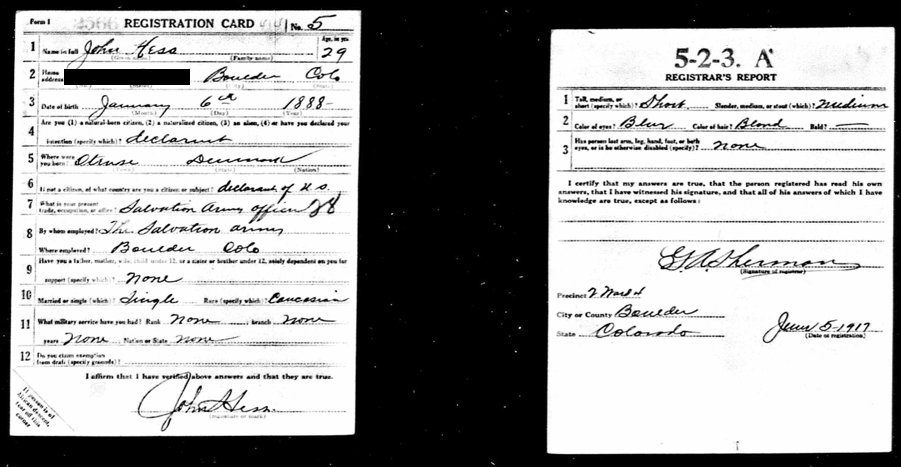
Hess registered for the draft on June 5, 1917, in Boulder, Colorado. He was twenty-nine years old. He was not yet a United States citizen, but had declared his intention to become one.
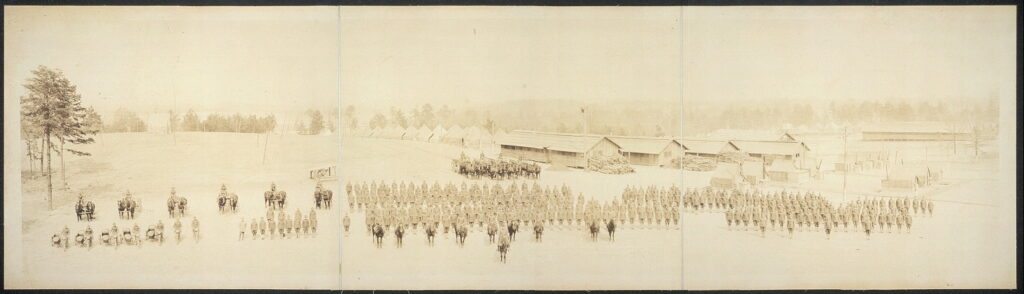
His journey from Colorado to basic training at Camp Sevier, South Carolina, is unclear.
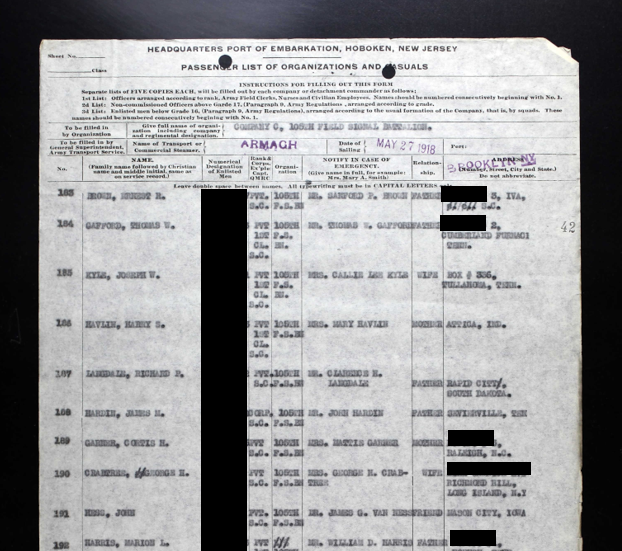
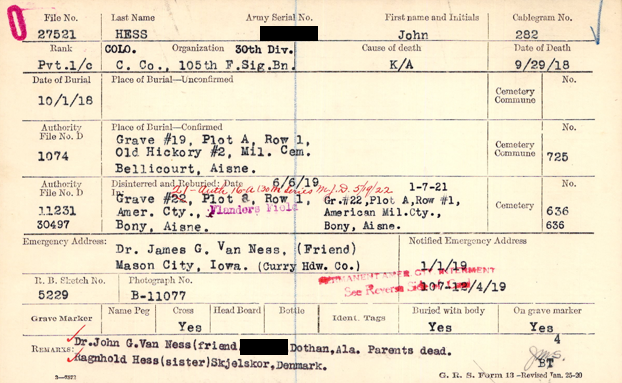
After training at Camp Sevier, Hess boarded SS Armagh on May 27, 1918, with other members from Company C of the 105th Field Signal Battalion. This battalion was part of the 30th Division. They departed the port at Hoboken, New Jersey. On the ship manifest, Mr. James G. Van Ness of Mason City, Iowa, was listed as Hess’ emergency contact.
Troop transports from the United States to France typically took 12 to 18 days. The last members of the 30th Division were reported to arrive in France on June 24, 1918. In early July, the local newspaper, The Boulder Daily Camera, reported that Hess had written to friends from on board the ship and was presumed to have arrived in France. Once in Europe, the division trained with British troops near Calais and then Ypres. In late August and early September, they participated in the Ypres-Lys offensive. On September 24, they joined the Somme offensive.
Field Signal Battalions were assigned to each U.S. division and specialized in battlefield communication. These men were responsible for operating field radios and laying and maintaining telephone and telegraph lines. The 105th Field Signal Battalion went into the Somme Sector as part of the Hundred Days Offensive to break through the seemingly impenetrable Hindenburg Line.
According to accounts of other soldiers in Company C, the action near Bellicourt at the end of September was intense. Soldiers were caught in a barrage of heavy artillery fire and gas attacks as they tried to maintain communications with the front line. There were many casualties in the detachment.
Commemoration
Private First Class Hess was killed on September 29, 1918, the day Allied forces broke through the Hindenburg Line on the Western Front in Belgium and northern France. Units were responsible for burying soldiers as soon as possible. This task was difficult due to battlefield conditions, but great care was taken to record the graves of fallen soldiers. Hess was originally buried at a temporary military cemetery in Bellicourt, Aisne, France, near the front lines. After the war, his remains were reinterred at the Somme American Cemetery.
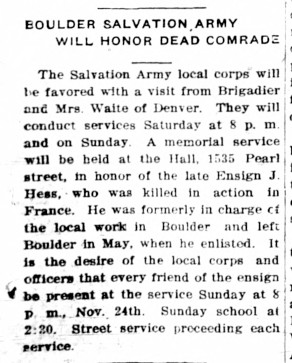
Back in Boulder, the Salvation Army organized a service on November 28, 1918, to honor Hess’s sacrifice in France.
In 1928, the Lions Club of Boulder erected two stone pillars at the gateway to the Road of Remembrance to honor those who had served in the war. Additionally, an Honor Roll of soldiers who died during World War I was displayed at the courthouse.

Bibliography
Primary Sources
“All German Alien Women Must Register Next Week.” Boulder Daily Camera [Boulder, Colorado], June 15, 1918. https://www.coloradohistoricnewspapers.org/?a=d&d=BDC19180615-01.2.23.
“Brief History of Divisions, 1917-1918.” War Plans General Division, 1921. https://apps.dtic.mil/sti/tr/pdf/ADA438001.pdf.
“Boulder Salvation Army Will Honor Dead Comrade.” Boulder Daily Camera [Boulder, Colorado], November 21, 1918. https://www.coloradohistoricnewspapers.org/?a=d&d=BDC19181121-01.
“Buy Liberty Bonds.” Boulder Daily Camera [Boulder, Colorado], April 4, 1918. https://www.coloradohistoricnewspapers.org/?a=d&d=BDC19180404-01.
Folk, Joseph. “Why America Is Fighting.” The Longmont Call [Longmont, Colorado], November 16, 1917. https://www.coloradohistoricnewspapers.org/?a=d&d=LGC19171116-01.
John Hess. Card Register of Burials of Deceased American Soldiers, 1917-1922. National Archives and Records Administration (NAID: 109045933). https://catalog.archives.gov/id/109045933?objectPage=449.
“Hess to ‘Farewell.'” Evening Times-Republican [Marshalltown, Iowa], November 28, 1911. Newspapers.com (194721198).
History of Clear Creek and Boulder valleys, Colorado: containing a brief history of the state of Colorado . . . an account of the Ute trouble: a history of Gilpin, Clear Creek, Boulder, and Jefferson counties, and biographical sketches. O.L. Baskin & Co., 1880. https://archive.org/details/historyofclearcr00olba/page/434/mode/1up.
John Hess U.S., World War I Draft Registration Cards, 1917-1918. Digital Images. https://ancestry.com.
Johannes Alfred Alexander Hess Pedersen. Baptismal Certificate. Digital Images. https://ancestry.com.
“Local News Items.” Boulder Daily Camera [Boulder, Colorado], July 20, 1918. https://www.coloradohistoricnewspapers.org/?a=d&d=BDC19180720-01.
Murphy, Elmer, and Robert Thomas. The Thirtieth Division in the World War. Old Hickory Publishing Company, 1936. https://babel.hathitrust.org/cgi/pt?id=mdp.39015008821954&seq=67&view=1up.
Operations, Thirtieth Division, Old Hickory Belgium, Ypres-Voormezeele, the Hindenburg line, Bellicourt, Nauroy-Premont-Brancourt, Busigny-Escaufourt-Vaux-Andigny. Map. 1918. 30th Infantry Division, U.S. Army. State Library of North Carolina, North Carolina Digital Collections (298233592). https://digital.ncdcr.gov/Documents/Detail/operations-thirtieth-division-old-hickory-belgium-ypres-voormezeele-the-hindenburg-line-bellicourt-nauroy-premont-brancourt-busigny-escaufourt-vaux-andigny./1939619?item=1940251.
“Stole from the Salvation Army.” Arizona Silver Belt [Globe, Arizona], March 11, 1916. Newspapers.com (194722021).
Stringer, Harry R., Ed. Heroes All! A compendium of the names and official citations of the soldiers and citizens of the United States and of her allies who were decorated by the American government for exceptional heroism and conspicuous service above and beyond the call of duty in the war with Germany, 1917-1919. Fassett Publishing, 1919. Library of Congress (20008194). https://www.loc.gov/item/20008194/.
Twenty-seventh and the Thirtieth Division hold a field meet on the battlefields made famous during their recent drive through the Hindenburg line. Near Corbie, Somme, France, November 5, 1918. Photograph. November 5, 1918. State Archives of North Carolina, North Carolina Digital Collections (30662_822V8). https://digital.ncdcr.gov/Documents/Detail/twenty-seventh-and-the-thirtieth-division-hold-a-field-meet-on-the-battlefields-made-famous-during-their-recent-drive-through-the-hindenburg-line.-near-corbie-somme-france-november-5-1918/555593.
Secondary Sources
“30th Division: ‘Old Hickory.’” North Carolina State Archives. Updated 2016. Accessed April 10, 2026. https://wayback.archive-it.org/194/20160727173258/http://exhibits.archives.ncdcr.gov/wwi/OldNorthState/30thdivision.htm.
“About Us.” The Old Hickory Association. Updated 2021. Accessed April 10, 2026. https://www.schistory.net/OHA/about.htm.
“Boulder History.” Visit Boulder. Accessed April 10, 2026. https://www.bouldercoloradousa.com/travel-info/boulder-history/.
“Boulder Timeline.” Museum of Boulder. Accessed April 10, 2026. https://museumofboulder.org/time/.
Carls, Alice-Catherine. “Forgotten Heroes of World War One: Pfc Preston W. Rushing and the 105th Field Signal Battalion.” Murray State University. https://digitalcommons.murraystate.edu/cgi/viewcontent.cgi?article=1620&context=jphs.
Cocker, Kathy, and Carole Stokes. A Concise History of the U.S. Army Signal Corps. U.S. Army Signal Center and Fort Gordon, 1991. https://apps.dtic.mil/sti/tr/pdf/ADA274938.pdf.
“Colorado in World War One.” World War One Centennial Commission. Updated 2024. Accessed April 10, 2026. https://www.worldwar1centennial.org/colorado-in-wwi-home-page.html.
Dorset, Lyle W. “The Ordeal of Colorado Germans in World War 1.” Colorado Magazine, 1974. https://www.historycolorado.org/sites/default/files/media/document/2018/ColoradoMagazine_v51n4_Fall1974.pdf.
“History of Boulder.” Colorado Home Source. Updated April 1, 2021. Accessed April 10, 2026. https://www.coloradohomesource.com/blog/history-of-boulder-co/.
“History of Pearl Street.” Downtown Boulder. Accessed April 10, 2026. https://boulderdowntown.com/visit/history-of-pearl-street.
Jackson III, R. Marshall. “Old Hickory Division.” NCPedia. Updated 2006. Accessed April 10, 2026. https://www.ncpedia.org/old-hickory-division.
“John Hess.” American Battle Monuments Commission. Accessed April 10, 2026. https://weremember.abmc.gov/s?q=hess&v=G&type=16&sort=title:ASC.
“John Hess.” Veterans Legacy Memorial, National Cemetery Administration. Accessed April 10, 2026. https://www.vlm.cem.va.gov/JohnHess/DC9F.
Osborn, Patrick, and Marc Romanych. The Hindenburg Line. New York: 2016.
Pettem, Silvia. “Boulder County History: Salvation Army has long ties to community.” Daily Camera, May 6, 2019. https://www.dailycamera.com/2016/12/17/boulder-county-history-salvation-army-has-long-ties-to-community/.
Rains, Rebecca. Getting the Message Through: A Branch History of the U.S. Army Signal Corps. U.S. Army Center of Military History, 2011. https://history.army.mil/portals/143/Images/Publications/catalog/30-17.pdf.
Sherrard, Gerald E. “Colorado World War One Selective Service Draft Registration Cards.” Denver Library. Accessed April 10, 2026. https://history.denverlibrary.org/sites/history/files/ColoradoWWIDraftRegistrationCards1917.pdf.
Spence, Clark. The Salvation Army Farm Colonies. 1985.
This profile was researched and created through the Researching Silent Heroes program, sponsored by the American Battle Monuments Commission.