
Captain John Howard Yancey
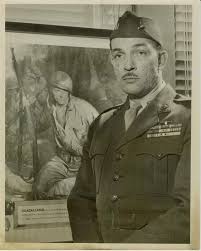
- Unit: 1st Marine Division, 7th Marines, 2nd Battalion, Company E
- Date of Birth: April 27, 1918
- Entered the Military: December 31, 1941
- Date of Death: May 16, 1986
- Hometown: Plumerville, Alabama
- Place of Death: Little Rock, Arkansas
- Award(s): Two Navy Crosses
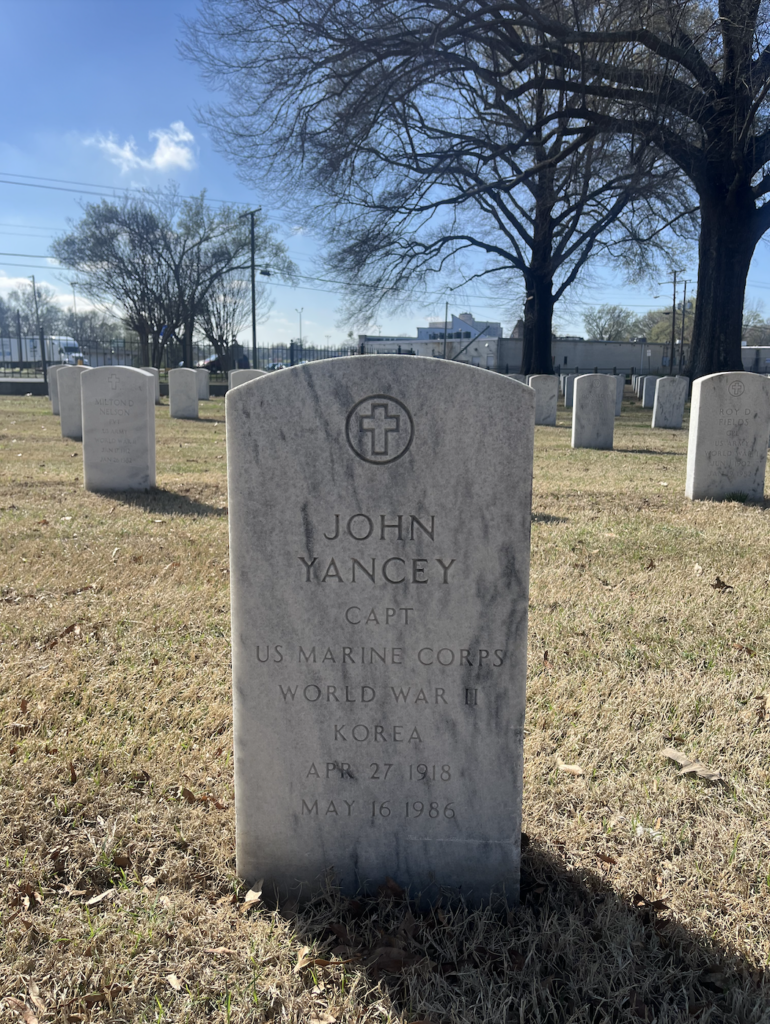
- Cemetery: Section 17, Site 13. Little Rock National Cemetery, Little Rock, Arkansas
Mentored by Mrs. Katy Wellborn
Pulaski Academy, Little Rock, Arkansas
2025/2026
Early Life
John Howard Yancey was born on April 27, 1918, in Plumerville, Arkansas. His parents were Mary Ethel and John Benjamin Yancey. His father was a farmer and later worked as a gas station attendant. Mary Ethel stayed at home. In addition to John Howard, the couple had two other sons, John and Herman.
On September 15, 1926, the couple divorced. Yancey went to live with his father, who eventually remarried a woman named Flora, a school teacher. On August 30, 1931, John Yancey Sr. died, and the boys went to live with their mother.
Yancey graduated from Little Rock Central High School in 1939. He later attended Ouachita Baptist College for two years, where he studied psychology. While in college, he played varsity baseball and football. He also enjoyed hunting with a 12-gauge shotgun.
In the summer of 1940, he served as an athletic instructor at the Kramer Summer Camp in Little Rock, Arkansas, where he taught boys the fundamentals of football and wrestling.
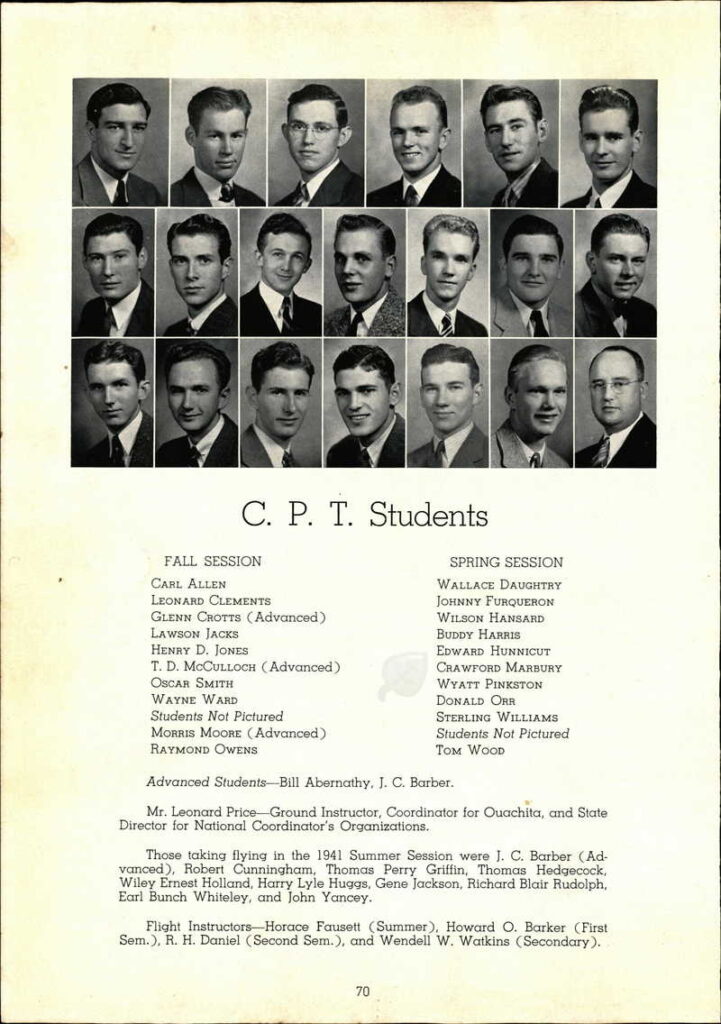
During the summer of 1941, Yancey took part in the Civilian Pilot Training program, designed to rapidly expand the pool of trained pilots in the United States.
He left school in the winter of 1941 to join the United States Marine Corps.

Homefront
Plumerville, Arkansas, is a small rural town near Little Rock that underwent significant change during World War II. Arkansas became an important location for military manufacturing and training because of its remote location, natural resources, and mild climate. Ordnance plants near Plumerville produced bombs and explosives, helping move the state beyond its agricultural economy. Increased industry led to expanded electric power from Arkansas Power and Light, supporting both war production and civilian needs.
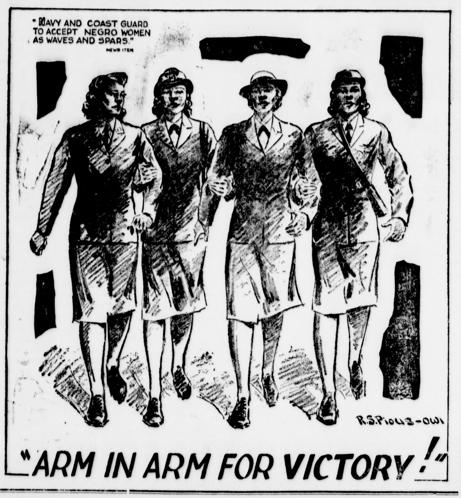
Agriculture remained important, with farmers raising livestock, growing cotton, and cultivating rice, while families planted Victory Gardens. Residents supported the war through rationing, scrap drives, and the purchase of war bonds. However, many workers left Arkansas for higher-paying jobs in other states, and teacher shortages hurt the education system. Women, African Americans, young people, and others joined the workforce, though segregation continued.
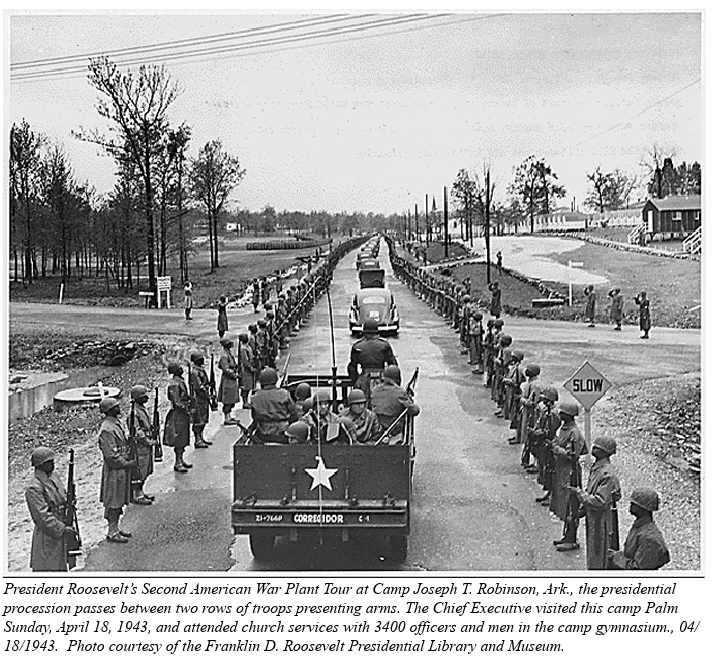
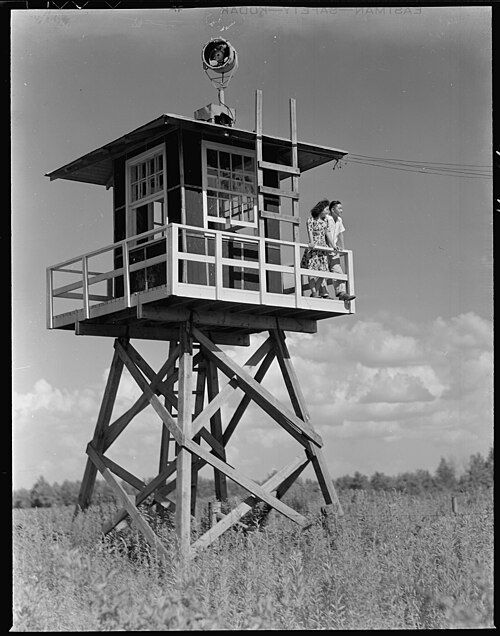
Arkansas was also home to Japanese American incarceration camps at Rohwer and Jerome after Executive Order 9066. Many incarcerees came from California and lived behind barbed wire, including thousands of schoolchildren. Meanwhile, Camp Robinson became a major U.S. Army training center and also housed German prisoners of war.
Overall, World War II transformed Arkansas economically, socially, and militarily, connecting the state more closely to the rest of the nation.
Military Experience
Training
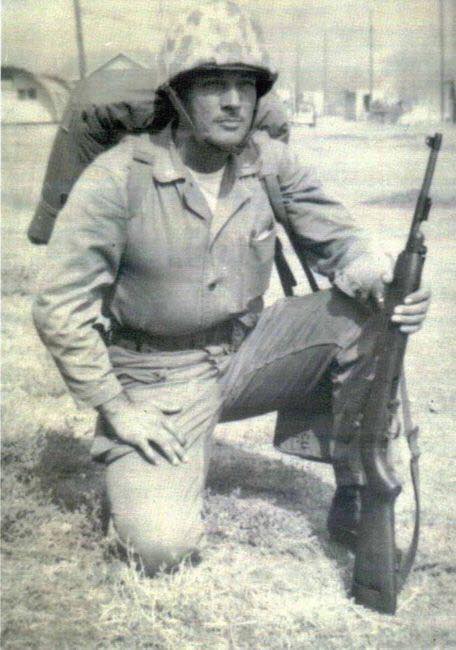
John Howard Yancey enlisted in the U.S. Marine Corps as a private on December 31, 1941, in Little Rock, Arkansas. On February 17, 1942, he qualified as an expert rifleman. On March 3, he joined the 9th Marines, 1st Battalion, Company B, and was later promoted to private first class.
Yancey became the platoon guide of the 2nd Marine Raider Battalion, Company F, on April 23, 1942. This would be his unit throughout the war. His unit was sent to Pearl Harbor, Hawaiʻi, to prepare for battle in the Pacific. On May 21, while aboard USS J. Franklin Bell, he was promoted again, to corporal. His unit arrived on Guadalcanal on September 22, 1942.
Guadalcanal
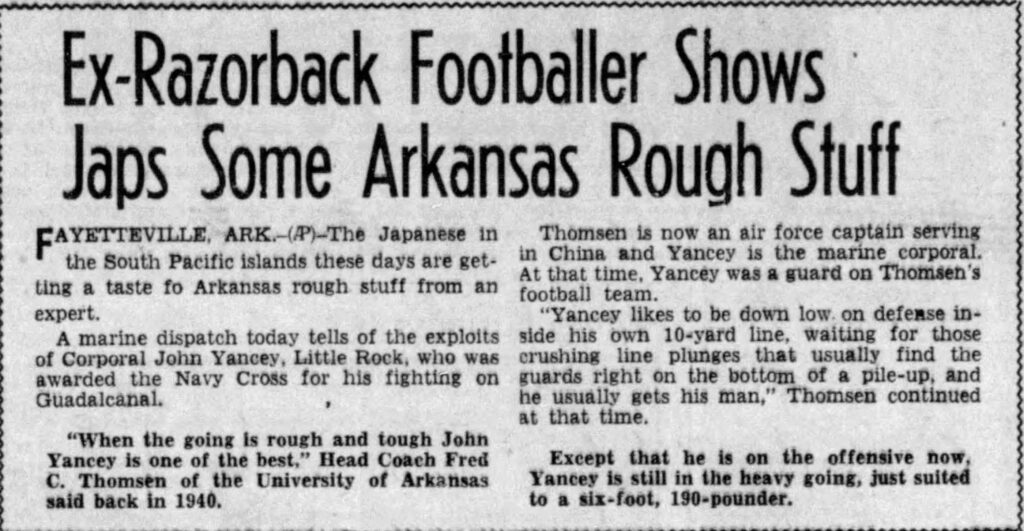
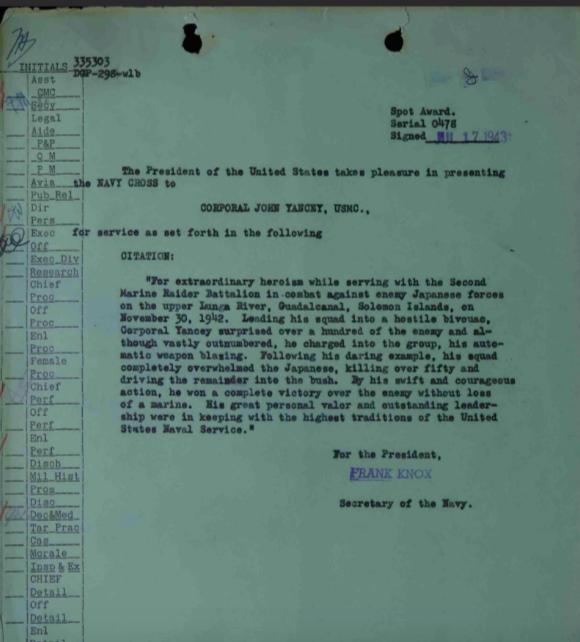
On November 30, 1942, Corporal John Yancey earned a Navy Cross “for extraordinary heroism” on Guadalcanal. He led his squad into a surprise attack on more than 100 enemy combatants. Even though he was vastly outnumbered, “he charged into the group, his automatic weapon blazing.” Because of his daring example, the squad completely overwhelmed the enemy, killing over 50 of them while sending the rest running. Not a single member of his squad was lost.
Stateside
After the battle of Guadalcanal, Yancey was sent back to Camp Elliott, California. Yancey spent the summer of 1943 serving as an instructor. That fall, he joined the Candidates Detail, Infantry Battalion, TransCenter Candidates Class. He graduated from the Candidates Class at Marine Base Quantico, Virginia, the next year, and was discharged from enlisted service on March 21, 1944, to accept his commission as a second lieutenant. Upon his discharge, he was awarded the Good Conduct Medal.
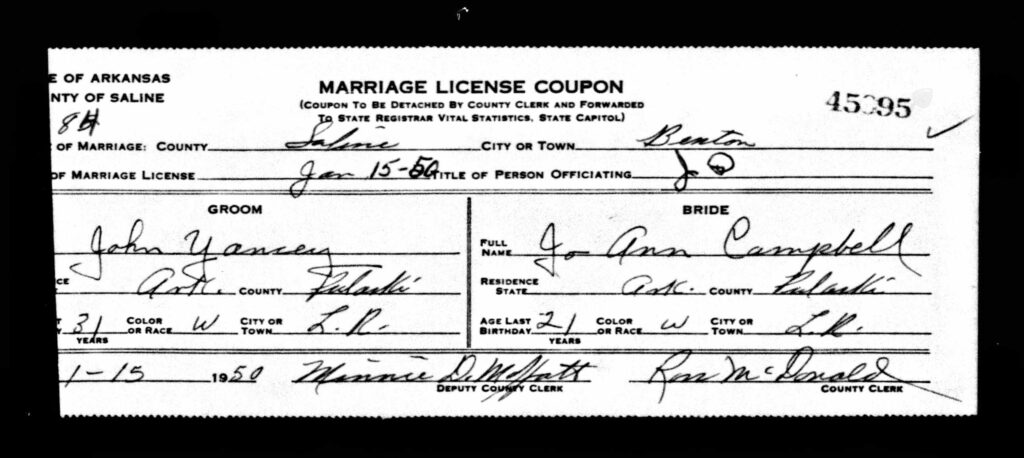
Not much is known about Yancey’s military service immediately after this, but we do know he served in the Marine Reserves. He also attended the University of Arkansas and played football for the Razorbacks. He married Jo Ann Campbell on January 15, 1950, in Benton, Arkansas.
Korean War
When the Korean War broke out, Yancey was 32 years old. He volunteered to return to active duty service. He served as a platoon leader with the 1st Marine Division, 7th Marines, 2nd Battalion, Company E. At the Chosin Reservoir in North Korea, from November 27 to 28, 1950, Yancey defended his platoon in extreme conditions, suffering over 90% casualties while holding off massive Chinese forces. Despite being severely wounded multiple times, he continued leading counterattacks, earning his second Navy Cross.
The Navy Cross citation stated that Yancey, “bravely rushed into the thick of the fighting in a daring attempt to rally the men and seal the gap in the lines.” It also stated that after the company commander had been killed, Yancey “unhesitatingly assumed command and boldly made his way from one platoon to another in the face of intense enemy fire, shouting words of encouragement to the men, seeking aid for the casualties, and directing the defense of the vital terrain.”
Discharge
After the Korean War, Yancey returned to the Marine Corps Reserve as a captain commanding the 6th Rifle Company in Little Rock. He remained active in the Reserve despite lasting combat injuries. His military record is marked by bravery, tactical skill, and leadership under fire in two major conflicts, which is why General Lew Walt suggested that Yancey serve as his executive officer during the Vietnam War. Unfortunately, because of Yancey’s injuries, the Marine Corps rejected this idea.
Veteran Experience
The Yanceys went on to have a son, Stuart, and four daughters, Anne, Dena, Laura, and Mary. The family opened Yancey’s, a liquor store, in the Heights neighborhood in Little Rock for decades. Yancey also worked in real estate.
During the segregation crisis at Central High between 1957 and 1959, the Yanceys were involved in the fight for integration. The desegregation of Central High School gained national attention on September 3, 1957, when Governor Orval Faubus mobilized the Arkansas National Guard to prevent nine African American students from entering the school. Little Rock high schools were closed at the start of the 1958 school year. On September 12, 1958, the Women’s Emergency Committee to Open Our Schools (WEC) was formed that summer to combat the closings. Yancey’s wife was a member of this group.
In the 1960s, Yancey decided to run for the state senate in support of racial integration and in opposition to Governor Orval Faubus. His run was unsuccessful. During this period, Yancey also filed a lawsuit against Governor Faubus seeking fair legislative reapportionment in the state. He argued that Arkansas’s method of drawing its legislative maps gave rural areas more political power than cities. He won this case, and Arkansas was forced to redraw its maps so that representation was based on the actual population.

Commemoration
John Howard Yancey died on May 16, 1986, in Little Rock, Arkansas. He is buried in the Little Rock National Cemetery. A detachment of the Marine Corps League in Dallas, Texas, is named after him, recognizing his distinguished combat record and service. Yancey also served as the model for a bronze bust of Count Pulaski displayed in the Pulaski County Courthouse in Arkansas.
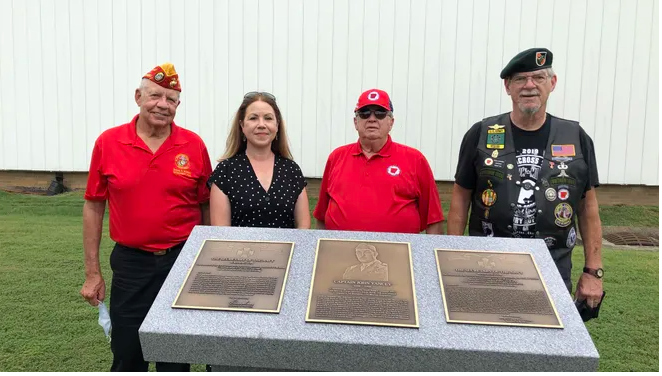
In 2019, Yancey was inducted into the Arkansas Military Veterans Hall of Fame. In July 2020, the Marines renamed Building 2 in Camp Pike in North Little Rock in Yancey’s honor. The building stands on the historic military training grounds where Arkansas troops have trained for generations.
These memorials and honors ensure that Yancey’s remarkable wartime service and civic contributions are remembered in both military and civilian communities.
Bibliography
Primary Sources
Arkansas. Bowie Township. 1920 U.S. Census. Digital Images. http://ancestryclassroom.com.
Arkansas. Bowie Township. 1930 U.S. Census. Digital Images. http://ancestryclassroom.com.
“Arm in Arm for Victory!” The Arkansas State Press [Little Rock, Arkansas], November 17, 1944. Library of Congress (sn84025840).
Camp Joseph T. Robinson, Arkansas. Photograph. April 18, 1943. FDR Library Photograph Collection. http://www.fdrlibrary.marist.edu/daybyday/resource/april-1943/.
Dickson L. Flake. Interview for the Arkansas Memories Project. November 19, 2010. Pryor Center for Arkansas Oral & Visual History, University of Arkansas. https://pryorcenter.uark.edu/videoplayer.php?c=1&dir=projects/Arkansas%20Memories/FLAKE-Dickson-574&video=FLAKE-Dickson-20101119-Final&title=Victory%20Gardens&playhead=1345.
“Ex-Razorback Footballer Shows Japs Some Arkansas Rough Stuff.” Times Record [Fort Smith, Arkansas], July 24, 1943. Newspapers.com (1228684373).
Jo Ann Yancey. U.S., City Directories, 1822-1995. Digital Images. https://ancestry.com.
John Howard Yancey, DD-214, Department of the Navy. National Archives and Records Administration – St. Louis.
John Howard Yancey, Discharge Special Order, Department of the Navy. National Archives and Records Administration – St. Louis.
John Howard Yancey, Final Pay Voucher, Department of the Navy. National Archives and Records Administration – St. Louis.
John Howard Yancey, Official Military Personnel File, Department of the Navy. National Archives and Records Administration – St. Louis.
John Yancey. Arkansas, U.S., County Marriage Records, 1865-1972. Digital Images. https://ancestry.com.
John Yancey. Arkansas, U.S., Department of Veterans Affairs BIRLS Death File, 1850-2020. Digital Images. https://ancestry.com.
John Yancey. Arkansas, U.S., Social Security Death Index, 1935-2014. Digital Images. https://ancestry.com.
John Yancey. U.S., School Yearbooks, 1900-2016. Digital Images. https://ancestry.com.
“Reapportionment, Road Program Highlight Week’s News in State.” Northwest Arkansas Times [Fayetteville, Arkansas], February 1, 1965. https://ancestry.com.
Van Tassel, Gretchen. Barracks at Rohwer concentration camp, Arkansas, Dec. 9, 1943. Photograph. National Archives and Records Administration (538199), Densho Encyclopedia. https://encyclopedia.densho.org/sources/en-denshopd-i37-00541-1/.
War Ration Book Four. Japanese American National Museum eMuseum, object no. 76955. https://janm.emuseum.com/objects/76955/war-ration-book-four.
Yancey v. Faubus, 238 F. Supp. 290 (E.D. Ark. 1965). https://law.justia.com/cases/federal/district-courts/FSupp/238/290/2401489/.
Secondary Sources
Afsordeh, Danielle. “Arkansas Women: The Great War and World War II.” Roberts Library, Central Arkansas Library System. Accessed November 13, 2025. https://robertslibrary.org/blog/arkansas-women-the-great-war-and-world-war-ii/.
“American Red Cross.” Encyclopedia of Arkansas. March 19, 2024. Accessed November 1, 2025. https://encyclopediaofarkansas.net/entries/american-red-cross-3380/.
“Arkansas History (Grades 7-8).” Life Interrupted Center for Arkansas History and Culture. Accessed November 10, 2025. https://ualrexhibits.org/lifeinterrupted/education/arkansas-history-grades-7-8/.
“Camp Joseph T. Robinson.” Encyclopedia of Arkansas. Accessed October 8, 2025. https://encyclopediaofarkansas.net/entries/camp-joseph-t-robinson-2262/.
“Capt John Howard Yancey.” Find a Grave. Accessed November 1, 2025. https://www.findagrave.com/memorial/3146840/john_howard-yancey.
“Capt. John Yancey Memorial Dedicated at Camp Pike,” Southwest Times Record (Fort Smith, Arkansas), August 8, 2020. https://www.swtimes.com/story/news/military/2020/08/08/capt-john-yancey-memorial-dedicated-at-camp-pike/42228697/.
“Did You Know: Bust at Courthouse isn’t Count Pulaski.” THV 11. Accessed April 3, 2026. https://www.thv11.com/article/news/local/did-you-know-bust-at-courthouse-isnt-count-pulaski/91-309003768.
Goulden, Joseph C. 2020. Korea: The Untold Story of the War. Mineola: Dover Publications, Inc.
Hammel, Eric. Chosin: Heroic Ordeal of the Korean War. Presidio Press, 1990.
“High School Life at Rohwer War Relocation Center.” The National WWII Museum. Accessed October 8, 2025. https://www.nationalww2museum.org/war/articles/high-school-life-rohwer-war-relocation-center.
“History of the Post-World War II.” Arkansas National Guard Museum. Updated January 20, 2017. November 15, 2025. https://arngmuseum.com/history/history-of-the-post/world-war-ii/.
Hope, Holly. “We’ve Gotta Get Tough”: History of World War II Home Front Efforts in Arkansas, 1941–1946. Little Rock: Arkansas Historic Preservation Program, 2008.
Hunt, George P. The Story of the U.S. Marines. Random House, 1951.
“JoAnn Campbell Yancey.” Find a Grave. Accessed November 1, 2025. https://www.findagrave.com/memorial/90647152/joann-yancey.
“John Yancey Korean War Memoir.” The Korean War Educator. Accessed March 22, 2026. https://thekwe.org/memoirs/yancey_john/index.htm.
“John Yancey.” Veterans Legacy Memorial, National Cemetery Administration. Accessed March 22, 2026. https://www.vlm.cem.va.gov/JOHNYANCEY/07B583D.
Niiya, Brian. “Rohwer.” Densho Encyclopedia. Accessed November 13, 2025. https://encyclopedia.densho.org/Rohwer/.
“Remembering Jerome: The Forced Relocation of Japanese Americans in WWII.” University of Arkansas Museum. Accessed April 2, 2026. https://wordpressua.uark.edu/uamuseum/remembering-jerome-the-forced-relocation-of-japanese-americans-in-wwii/.
Sides, Hampton. On Desperate Ground: The Marines at the Reservoir, the Korean War’s Greatest Battle. Doubleday, 2018.
Sloan, Bill. The Darkest Summer: Pusan and Inchon 1950: The Battles That Saved South Korea—and the Marines—from Extinction. Simon & Schuster, 2009.
Wilson, Jim. Retreat, Hell! We’re Just Attacking in Another Direction. William Morrow and Company, Inc., 1988.
“Women’s Emergency Committee to Open Our Schools (WEC).” Encyclopedia of Arkansas. Accessed November 1, 2025. https://encyclopediaofarkansas.net/entries/womens-emergency-committee-to-open-our-schools-716/.
“World War II.” Encyclopedia of Arkansas. Accessed October 8, 2025. https://encyclopediaofarkansas.net/entries/world-war-ii-2402/.
“World War II Ordnance Plants.” Encyclopedia of Arkansas. Accessed August 21, 2025. https://encyclopediaofarkansas.net/entries/world-war-ii-ordnance-plants-373/.
“Yancey, John H.” U.S. Marine Raider Association. Updated May 16, 1986. Accessed December 1, 2025. https://marineraiderassociation.org/yancey-john-h/.
“Yancey, John Howard.” Encyclopedia of Arkansas. Accessed February 27, 2026. https://encyclopediaofarkansas.net/entries/john-howard-yancey-3174/.
This profile was funded by a grant from the United States Department of Veterans Affairs. The opinions, findings, and conclusions stated herein are those of the author and do not necessarily reflect those of the United States Department of Veterans Affairs.