

Corporal Joseph Elia Camardese, Sr.
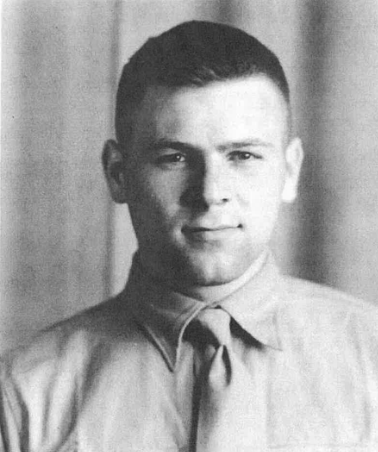
- Unit: Fleet Marine Force, Pacific, Headquarters and Service Battalion, Motor Transport Company
- Date of Birth: April 27, 1923
- Entered the Military: January 13, 1943
- Date of Death: November 30, 2014
- Hometown: Philadelphia, Pennsylvania
- Place of Death: Columbia, Maryland
- Award(s): American Campaign Ribbon, Good Conduct Ribbon, Victory Ribbon WWII, and Asiatic-Pacific Campaign Medal
- Cemetery: Section II, Row A, Site 12. Delaware Veterans Memorial Cemetery, Millsboro, Delaware
Mentored by Mrs. Jennifer Harris
Salisbury Christian School
2025/2026
Early Life
Joseph Elia Camardese was born on April 27, 1923, in Philadelphia, Pennsylvania, to Elia and Mary Camardese. His father was born in Italy and immigrated to the United States in 1909. He worked as a lawn mower mechanic. His mother was born in Germany and immigrated to the United States in 1911. She was a homemaker.
The couple had two older children, Anthony and Robert, before Joseph was born. Anthony was born in 1918, and Robert in 1920.
By 1940, Joseph was enrolled at the Central High School in Philadelphia. His father then worked as an office clerk for a mercantile appraiser, and his brother, Anthony, who still lived at home, worked as a salesman at a department store. While in high school, Joseph worked as a private chauffeur, responsible for keeping the car at the owner’s disposal and handling all cleaning and repairs. He also worked briefly as a laborer for the JB Stetson Company before joining the military.


Homefront
War Industry and Migration
Before World War II, Philadelphia, Pennsylvania, was known as the “Workshop of the World” for its manufacturing growth. While production had slowed after World War I due to the Great Depression, it picked up at the start of World War II. Many people moved into the area, especially African Americans moving from the South, and women from all racial groups needed to work in jobs that were previously done by men. Workers moved into row houses that were already in the city. Builders constructed additional row houses during this time to house the people moving into the area.
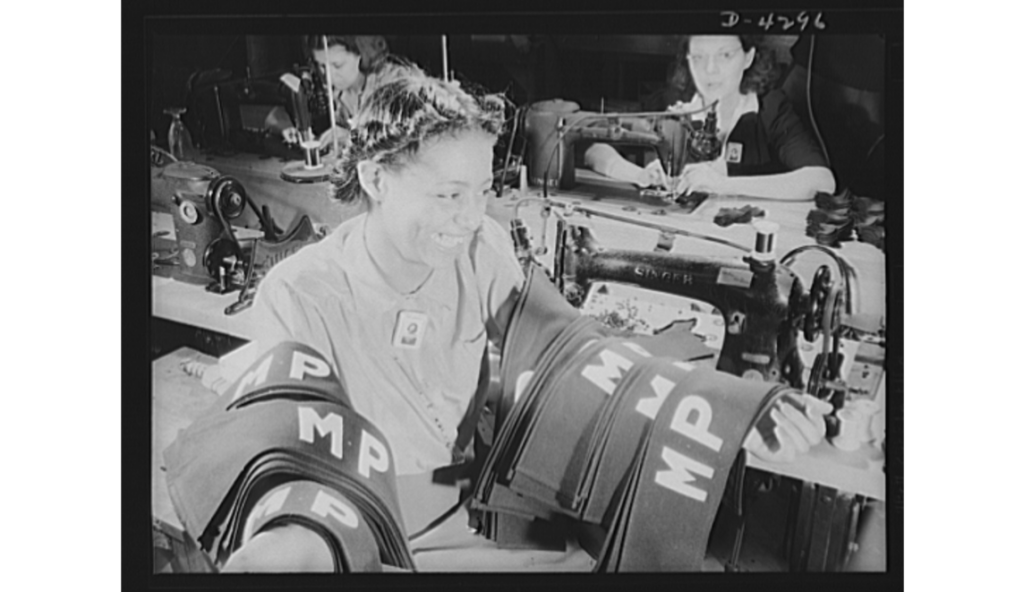
Women entered traditional male occupations such as machinists, blacksmiths, riveters, and welders at the Naval Shipyard and at military supply centers like the Philadelphia Quartermaster Depot. Women also drove taxis and worked on factory assembly lines. To accommodate these women, the city built war nursery schools for mothers to send their preschool children.
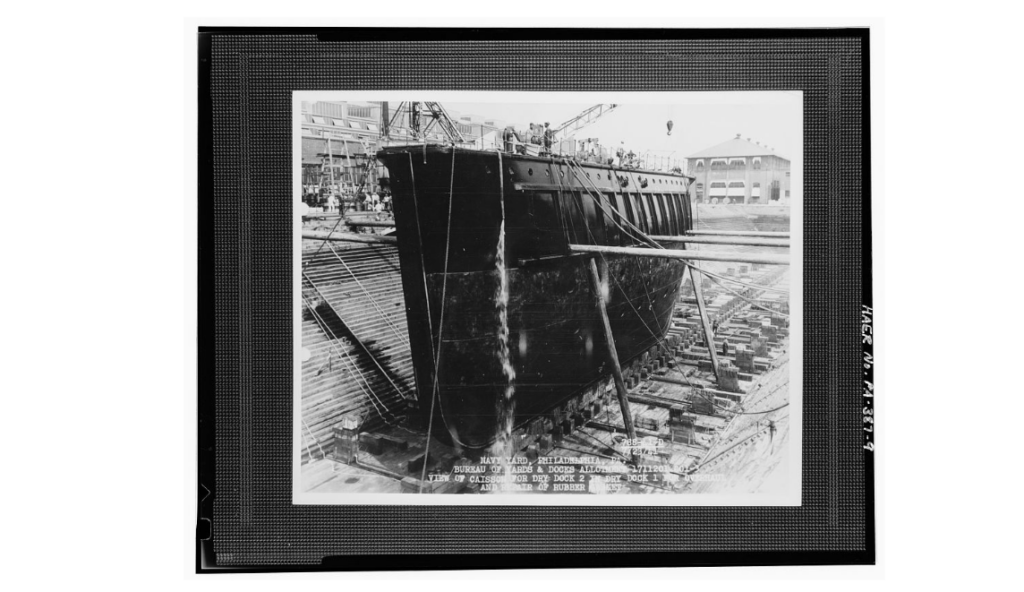
Both Philadelphia Naval Base and Philadelphia Naval Yard operated during the war years. By 1944, there were over 47,000 employees working there. By 1945, workers built 53 ships, and overhauled, converted, or fitted out many others. There were also over 1,400 aircraft and 150 flying boats built at the Yard’s Naval Aircraft Factory.
The War Effort
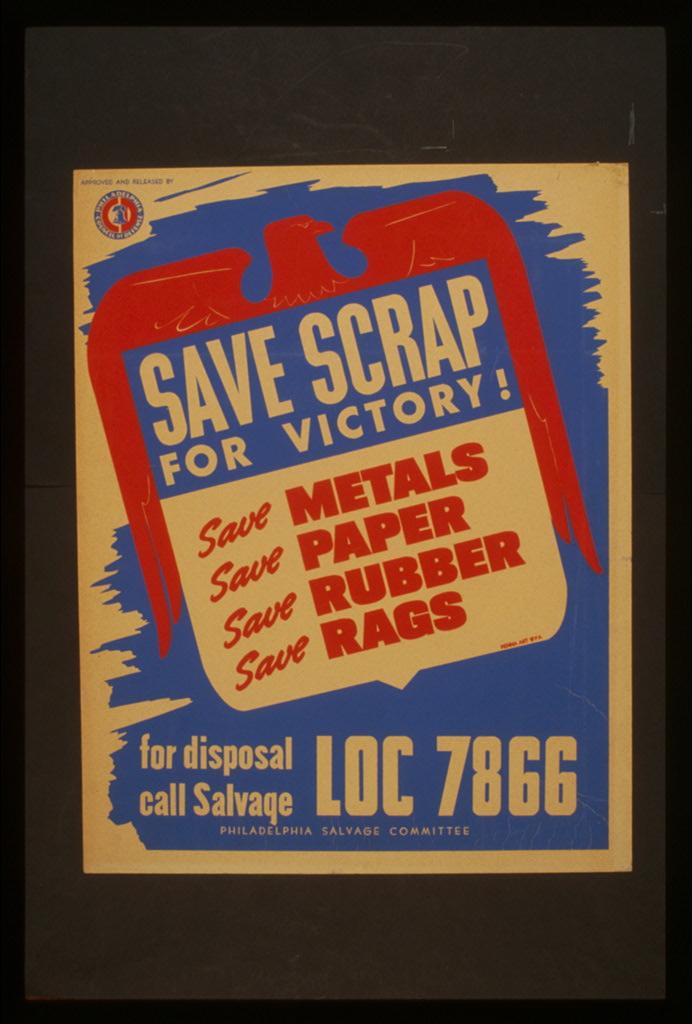
Communities rallied to grow fruits and vegetables for the war effort. Passion Field, a high school athletic field, was used as a Victory Garden.
To promote the purchase of war bonds, the government distributed posters throughout the city. The posters featured women who worked in the shipyards. Residents voted for their favorite girl, and she was then named “War Bond Girl.”
The Philadelphia United Service Organization (USO) used a Navy training blimp and five Navy airplanes to drop blue papers on the city to get people’s attention. The papers encouraged residents to volunteer at the USO or to donate money. Approximately 30,000 people volunteered, and over 27 million attended events during the seven years the Philadelphia USO was operational. The Jewish Welfare Board (JWB), a part of the USO, provided services to Philadelphia’s Jewish community and others in need.
A USO Club, the Stage Door Canteen, provided entertainment for male servicemen. It offered different shows every night. At the beginning of the war, the USO clubs did not allow black servicemen to attend. They had their own separate location, but that changed as the war progressed.
Philadelphia Transit Strike
One large event that affected the area was the Philadelphia Transit Strike. The strike began on August 1, 1944, at four o’clock in the morning. Many white transit workers were upset when eight black men were promoted and trained to become drivers.
The strike greatly affected the entire city of Philadelphia. Some people were able to drive their cars to work, but others had to hitchhike or catch rides on milk trucks.
The strike slowed down production for the war effort. There were a few instances of violence, but the strike was mostly peaceful. Black men argued that if they could fight on the front lines for their country, they could operate public transportation.
Troops from the national government entered the city to end the strike. On August 5, 1944, workers were told that the strike must end or they would face severe consequences. The strike ended on August 7, 1944, and most things went back to normal.
The eight black men who were promoted were soon trained and allowed to drive public transportation. Production for the war effort resumed, and the federal troops in the city left shortly after.
The three men who led the strike lost their jobs and faced arrest.
Military Experience
Training
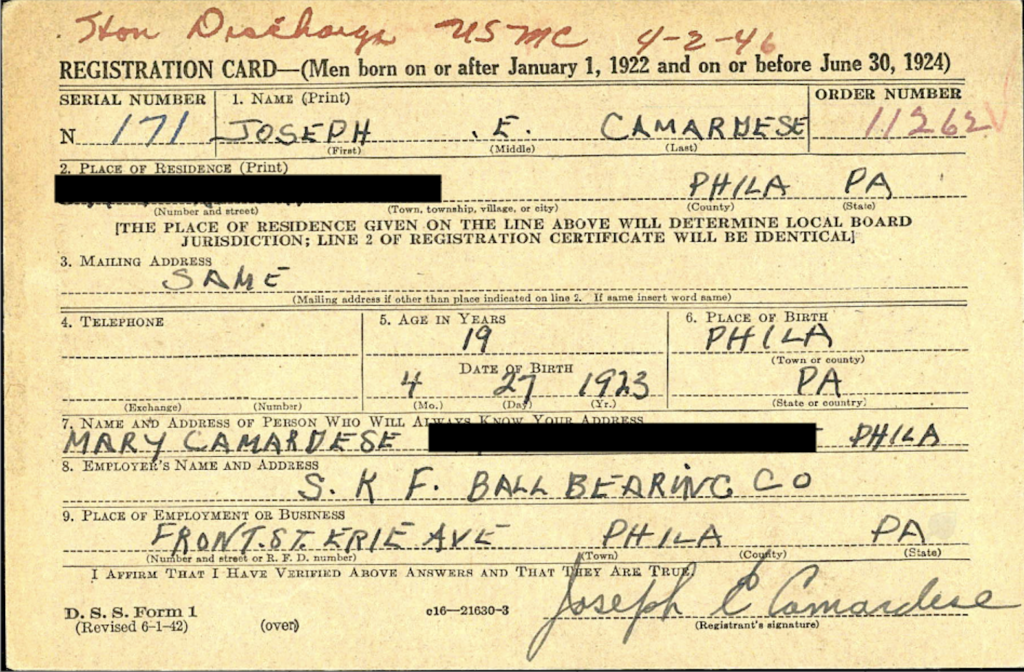
Joseph Camardese joined the United States Marine Corps on January 13, 1943, in Philadelphia, Pennsylvania. He attended basic training at Marine Barracks, Parris Island. From there, he went to Camp Lejeune in Jacksonville, North Carolina. While at Camp Lejeune, he received three weeks of motor transport training.
Post Service Battalion
Joseph Camardese was then assigned to the Transport Detachment, Post Service Battalion at the Marine Barracks, Quantico. He was a military vehicle operator and a truck driver for the Post Service. While there, on January 7, 1944, he was promoted to private first class.
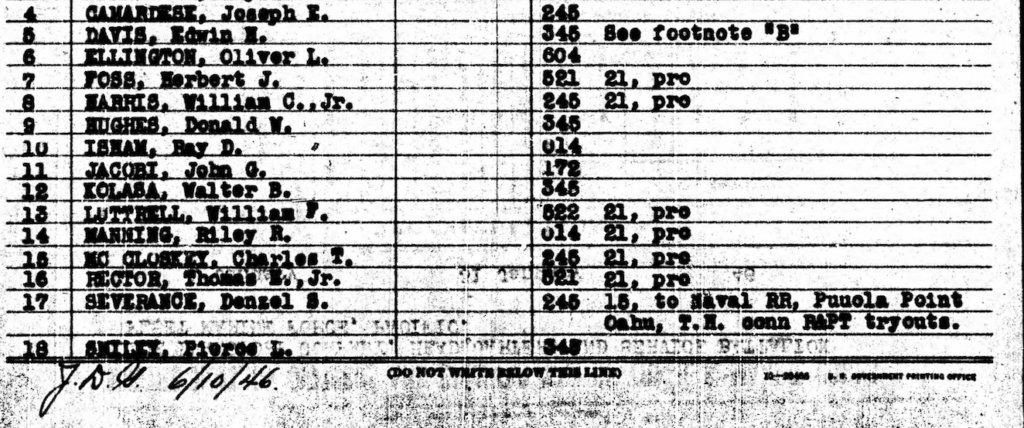
On December 20, 1944, Camardese embarked aboard USS Florence Nightingale in Norfolk, Virginia. A few weeks later, on January 10, 1945, he disembarked at Pearl Harbor, Hawai’i, as part of the Fleet Marine Force, Pacific (FMFPac) Headquarters and Service Battalion, Motor Transport Company. There, he drove trucks for the FMFPac headquarters operation. This group provided support to the massive Marine operations across the Pacific.
Camardese returned stateside to Camp Lejeune in early 1946 and was discharged on April 2, 1946, at the Great Lakes Separation Center in Great Lakes, Illinois. By that time, he had reached the rank of corporal.
Veteran Experience
Life in Wisconsin
After his discharge from the U.S. Marine Corps, Camardese married Ruth Margaret Engels, who had also served in the U.S. Marine Corps during the war. They then moved to her hometown of Green Bay, Wisconsin. Together, they had three children, Joseph Camardese, Jr. (Jody), Michael, and Susan. In 1950, Camardese worked in the newspaper trades, casting cuts and making mats, for the Green Bay Press-Gazette. A worker in this role was known as a “stereotyper.” Casting cuts referred to making duplicate metal printing blocks of existing photographs and illustrations by pouring molten metal into the mat, made by pressing papier-mâché against the composed type or images, which then served as a mold for the curved stereotype plate, an essential component of high-volume newspaper production at the time.
Community Involvement in Washington, D.C.
In 1951, Joseph Camardese moved his family to Washington, D.C., where he took a job at the Government Printing Office. He worked there for 30 years before he retired.
Joseph Camardese was very involved in his community. He was the manager for the U.S.D.A. American Legion Post 36 baseball team. He also coached youth football and baseball for St. Bernard’s Catholic Youth Organization (CYO). Additionally, Camardese also served as a volunteer firefighter for the Riverdale Heights Fire Department and was a member of the American Legion Post 46 and the Sons of Italy Lodges in Ocean City and Baltimore.
Retirement
When Joseph Camardese retired from the Government Printing Office, he and Ruth moved to Fenwick Island, Delaware.


Commemoration
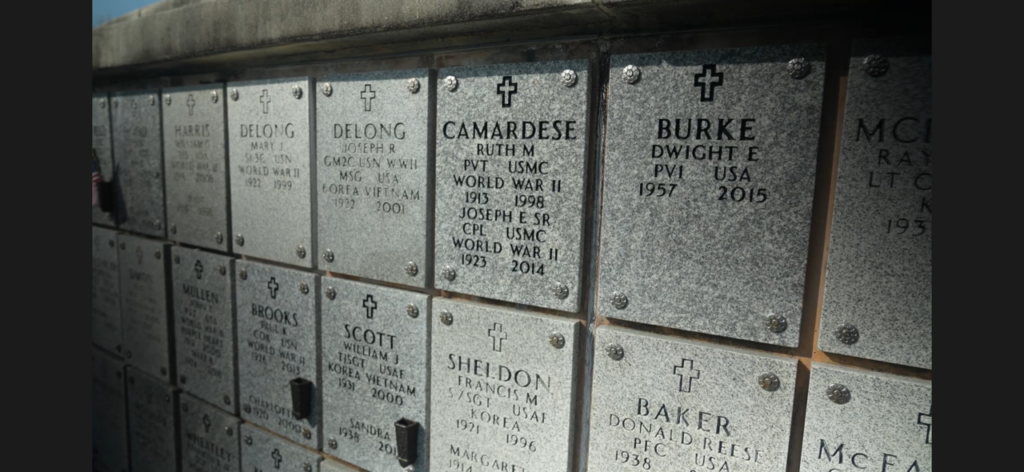
Joseph Elia Camardese, Sr., passed away on November 30, 2014, at age 91 in Columbia, Maryland. He is inurned at the Delaware Veterans Memorial Cemetery in Millboro, Delaware, with his wife, Ruth.
Bibliography
Primary Sources
Crowd of Philadelphia Transportation Company employees on strike. Photograph. c. 1944. Philadelphia Record Photograph Collection, Pennsylvania Historical Society. https://digitallibrary.hsp.org/index.php/Detail/objects/2018.
Delaware. Sussex County. 1930 U.S. Census. Digital Images. http://ancestryclassroom.com.
Delaware. Sussex County. 1940 U.S. Census. Digital Images. http://ancestryclassroom.com.
Delaware. Sussex County. 1950 U.S. Census. Digital Images. http://ancestryclassroom.com.
“Home Towns in Wartime: Philadelphia, Pa.” Old Magazine Articles. Last modified 2025. Accessed December 12, 2025. https://www.oldmagazinearticles.com/1940s-WW2_Philadelphia_Pennsylvania.
Joseph E Camardese. U.S., Marine Corps Muster Rolls, 1798-1958. Digital Images. http://ancestryclassroom.com.
Joseph Elia Camardese. Pennsylvania, Veteran Compensation Application Files, WWII, 1950-1966. Digital Images. http://ancestryclassroom.com.
Joseph Elia Camardese Sr., Official Military Personnel File (partial), Department of the Navy, National Archives and Records Administration – St. Louis.
Joseph Elia Camardese Sr., Report of Separation, Department of the Navy, National Archives and Records Administration – St. Louis.
Liberman, Howard. Women workers at quartermaster depot. Insignia for military police are being turned out in an Eastern quartermaster corps depot where this young worker has obtained war production employment. Philadelphia Quartermaster Corps. Photograph. 1942. Office of War Information Photograph Collection, Library of Congress (2017692039). https://www.loc.gov/item/2017692039/.
Naval Base Philadelphia-Philadelphia Naval Shipyard, League Island, Philadelphia, Philadelphia County, PA. Photograph. Historic American Engineering Record, Library of Congress (pa3416). https://www.loc.gov/item/pa3416/.
Pearce, Glenn Stuart. War industry needs water. Protect production: Use it wisely. c. 1941-1943. Poster. Work Project Administration Poster Collection, Library of Congress (98518430). https://www.loc.gov/item/98518430/.
Penna Art WPA. Save scrap for victory! Save metals, save paper, save rubber, save rags. c. 1941-1943. Poster. Work Project Administration Poster Collection, Library of Congress (98518704). https://www.loc.gov/item/98518704/.
Penn Art WPA. War Workers! Are You Looking for a – House? Apartment? Room? We Can Help You. c. 1941-1943. Poster. Works Projects Administration Poster Collection, Library of Congress (98518710). https://www.loc.gov/item/98518710/.
Philadelphia Transportation Company employee protest photograph. Photograph. c. 1943. Philadelphia Record Photograph Collection, Pennsylvania Historical Society. https://digitallibrary.hsp.org/index.php/Detail/objects/2318.
Rosener, Ann. War nursery schools. Philadelphia, Pennsylvania. Photograph. 1943. Office of War Information Photograph Collection, Library of Congress (2017697656). https://www.loc.gov/item/2017697656/.
Ruth Camardese. U.S., City Directories, 1822-1995. Digital Images. http://ancestryclassroom.com.
Ruth Peeters. Iowa, U.S., Marriage Records, 1880-1949. Digital Images. http://ancestryclassroom.com.
Siegel, Arthur S. Philadelphia, Pennsylvania. Due to the war the janitor is a girl at the W. Atlee Burpee Company, seed dealer. Photograph. 1943. Office of War Information Photograph Collection, Library of Congress (2017850009). https://www.loc.gov/item/2017850009/.
Siegel, Arthur S, photographer. Philadelphia, Pennsylvania. Outdoor sign over doorway entrance, at the W. Atlee Burpee Company, seed dealers. Photograph. 1943. Office of War Information Photograph Collection, Library of Congress (2017850035). https://www.loc.gov/item/2017850035/.
Vachon, John. Row houses under construction. Philadelphia, Pennsylvania. Photograph. 1941. Office of War Information Photograph Collection, Library of Congress (2017813634). https://www.loc.gov/item/2017813634/.
Wisconsin. Brown County. 1920 U.S. Census. Digital Images. http://ancestryclassroom.com.
Wisconsin. Brown County. 1930 U.S. Census. Digital Images. http://ancestryclassroom.com.
Secondary Sources
“Civil Rights in a Northern City: Philadelphia,” Temple University Libraries. Accessed December 18, 2025. https://exhibits.temple.edu/s/civil-rights-in-a-northern-cit/page/what–the-philadelphia-transit.
“Joseph E. Camardese Sr.” Veterans Legacy Memorial, National Cemetery Administration. Accessed December 18, 2025. https://www.vlm.cem.va.gov/JOSEPHECAMARDESESR/8a1d0f.
“Joseph Elia Camardese.” Delaware Wave [Bethany Beach, Delaware], December 23, 2014. Newspapers.com (111142875).
“Joseph Elia Camardese Sr.” Find a Grave. Accessed December 18, 2025. https://www.findagrave.com/memorial/139764354/joseph-elia-camardese.
Lovelace, Maryann. “Facing Change in Wartime Philadelphia: The Story of the Philadelphia USO.” The Pennsylvania Magazine of History and Biography Volume 123, Issue No. 3, (1999): 143–75. http://www.jstor.org/stable/20093286.
“Passion Field (Philadelphia, PA).” Society for American Baseball Research. Last Modified 2026. Accessed March 2, 2026. https://sabr.org/bioproj/park/passon-field/.
“Philadelphia Transportation Company (PTC) Strike.” The Encyclopedia of Greater Philadelphia. Accessed December 18, 2025. https://philadelphiaencyclopedia.org/essays/philadelphia-transportation-company-ptc-strike/.
This profile was funded by a grant from the United States Department of Veterans Affairs. The opinions, findings, and conclusions stated herein are those of the author and do not necessarily reflect those of the United States Department of Veterans Affairs.