

Seaman Kylis Therod Payne
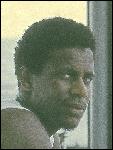
- Unit: USS Chipola
- Service Number: B239840
- Date of Birth: March 31, 1951
- Entered the Military: February 16, 1972
- Date of Death: June 5, 1972
- Hometown: Baltimore, Maryland
- Place of Death: South China Sea, off the coast of Vietnam
- Cemetery: Court B, Courts of the Missing, National Memorial Cemetery of the Pacific, Honolulu, Hawaiʻi and . Memorial marker at Baltimore National Cemetery, Baltimore, Maryland
The Siena School, Silver Spring, Maryland
2025/2026
Early Life
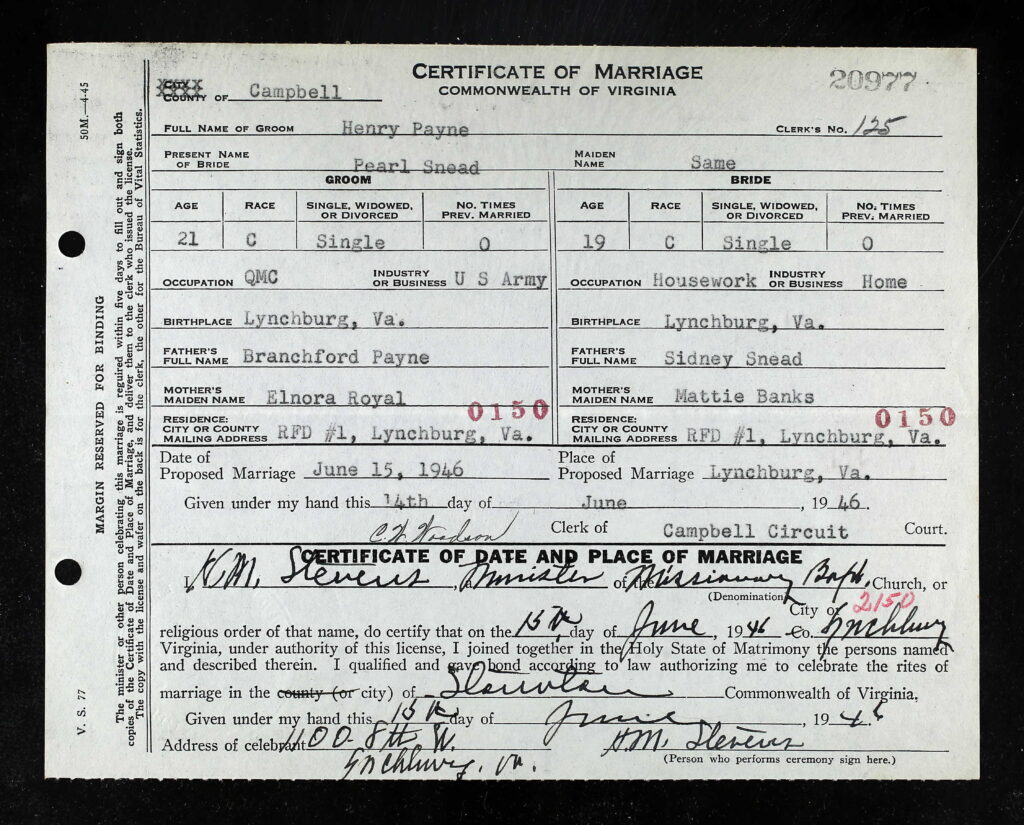
Kylis Therod Payne was born on March 31, 1951, in Baltimore, Maryland, to Henry Payne and Pearl Snead Payne. Prior to his birth, his parents lived in Lynchburg, Virginia, and married in June 1946. His father was enlisted in the U.S. Army Quartermaster Corps, and his mother worked at home. His grandparents included Sidney Snead, Mattie Banks Snead, Branchford Payne, and Elnora Royal Payne, all of whom lived in Virginia.
While participating in the Baltimore Job Corps Skills Center program, Payne welcomed his first daughter, Glanda M. Payne, with his wife, Shirley Elizabeth Payne, on March 30, 1969. On July 13, 1969, Payne graduated from the Baltimore Job Corps Skills Center along with twenty-three other young men from the Baltimore area. The ceremony was held at Gilford Elementary School. During this program, graduates received training in graphic arts, manufacturing operations, food service, electronics, and electrical assembly, as well as basic education. Training periods lasted three months to a year, depending on the vocation. Two years later, his second daughter, Tamara Erica Payne, was born on November 18, 1970.

Homefront
Before the War
In 1729, the city of Baltimore was founded by the Maryland colonial government, establishing it as a tobacco trade center and a 60-lot development north of the Patapsco River. In addition to tobacco, the city began shipping flour to Ireland and other ports in Europe and South America in the mid-1700s. Baltimore was also known for building ships. During the War of 1812, ships known as Baltimore Clippers destroyed British ships with their speed and maneuverability.
Baltimore was known as the world’s largest flour market by 1827. The expansion of railroads in the 1830s made Baltimore an important manufacturer of steel and clothing, while the Port of Baltimore became one of the world’s largest natural harbors for importing and exporting goods. Various companies, including Martin Aircraft, Bethlehem Steel, Western Electric, and Maryland Drydock, were influential in military manufacturing during World Wars I and II and the Korean War.
The Vietnam Home Front
During the Vietnam War, the community supported military defense efforts by providing employment to thousands through ship and aircraft maintenance and the operation of military bases. Some of the materials that were produced in the area included ships, planes, iron ore, and copper. These materials were usually shipped via the Baltimore Harbor, the railroad, or Baltimore Washington International Airport, which opened in 1950 as Friendship International Airport.
Additionally, the Vietnam War draft affected many lower-class citizens, specifically African Americans. There were numerous protests against the draft board and calls for legislation to reform it. According to an article in Baltimore’s Afro-American, President Lyndon Johnson was disappointed that the draft law passed by Congress “protected sons of the wealthy from the life or death of military service, while making certain the sons of poor who dare protest the injustice would face prosecution to the full extent of the law.” Many young men who faced trouble with the law were sometimes sent to Vietnam. During the court hearing, the judge would give them a choice of jail or Vietnam.
There were many protests throughout the United States. In October 1967, Catholic activists known as the Baltimore Four poured blood on draft records at the Selective Service Center in the Baltimore Customs House. They were found guilty in federal court on May 24, 1968. A second, more well-known protest was the Catonsville Nine, where nine activists burned hundreds of draft records using homemade napalm (a mixture of chemicals to create a highly flammable gelatinous liquid) in 1968.
In November 1969, 300,000 students representing eastern universities, including Johns Hopkins University, marched from Arlington Cemetery to Washington, D.C. in the Moratorium to End the War in Vietnam March.
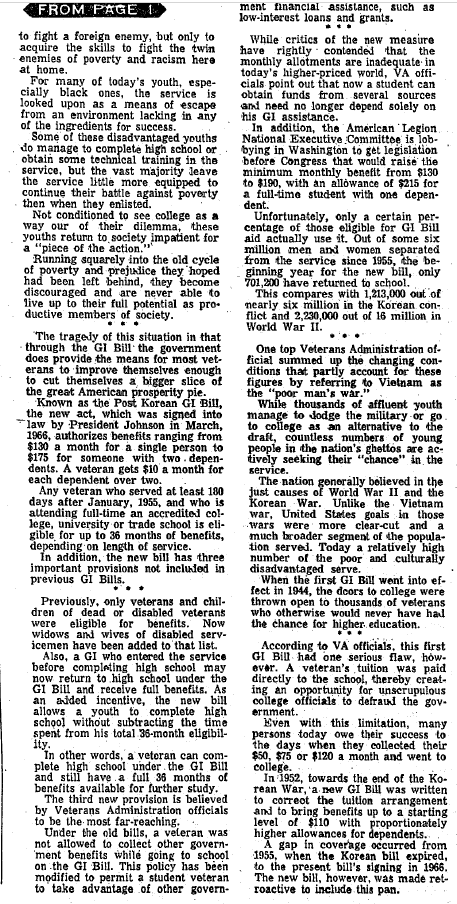
Upon returning home, many Vietnam Veterans were treated indifferently and not welcomed home like soldiers from World War II and the Korean War. Many Veterans did not discuss their service in the war and missed opportunities with the GI Bill to further their education.
During the Vietnam War, Baltimore residents fought for civil rights. Although the passage of the Civil Rights Act of 1964 and the Voting Rights Act of 1965 should have made life easier for African Americans, the assassination of Dr. Martin Luther King, Jr. in 1968 left many people feeling that nothing really had changed. Baltimore residents faced the draft, housing shortages, and fewer educational opportunities. The people of Baltimore did their best to survive, make sense of what was happening, and move forward to build better lives for their families and communities.



Military Experience
Payne’s Early Service
On February 16, 1971, Kylis Therod Payne, age 20, enlisted in the U.S. Navy in Baltimore, Maryland. He was sent to the Naval Training Center in Great Lakes, Illinois, for recruit training.
On May 31, 1971, Payne was assigned to be part of a ground crew on USS Chipola (AO-63), stationed in Pearl Harbor, Hawaiʻi. The Chipola was a Cimarron-class fleet oiler that was commissioned in 1944. Its main job was to refuel naval ships at Pearl Harbor and in the South China Sea. Sailors on board would participate in various drills, loading and unloading, and other manual labor. They would provide oil to ships, ensuring the lines were securely connected and disconnected. Long hours, pressure, wartime hazards, and demanding physical labor made the sailors’ lives stressful.
The USS Chipola left Pearl Harbor on April 20, 1972, heading to Subic Bay, Republic of the Philippines. The Chipola was sent to the South China Sea as part of the Vietnam Ceasefire (March 30, 1972 to January 1973). Although this campaign was supposed to assist the Vietnamese Navy, in May 1972, President Richard Nixon ordered the isolation of North Vietnam from extreme communist support.
Man Overboard
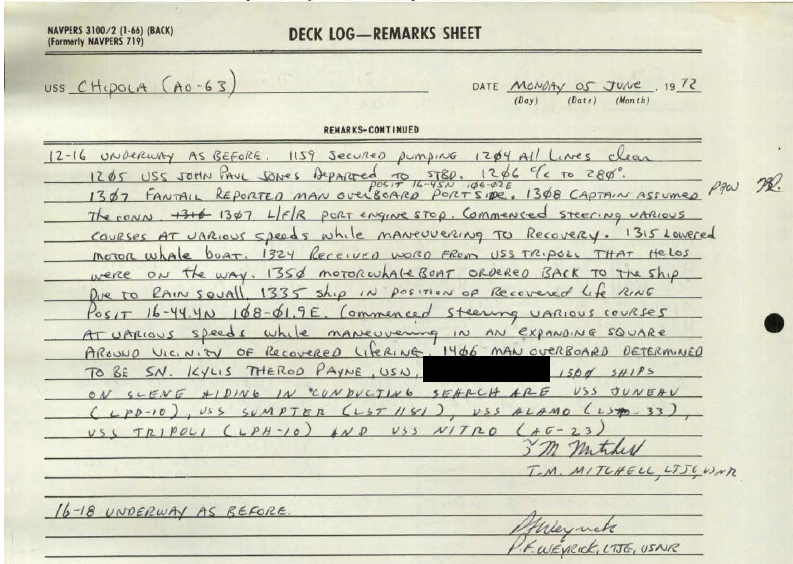
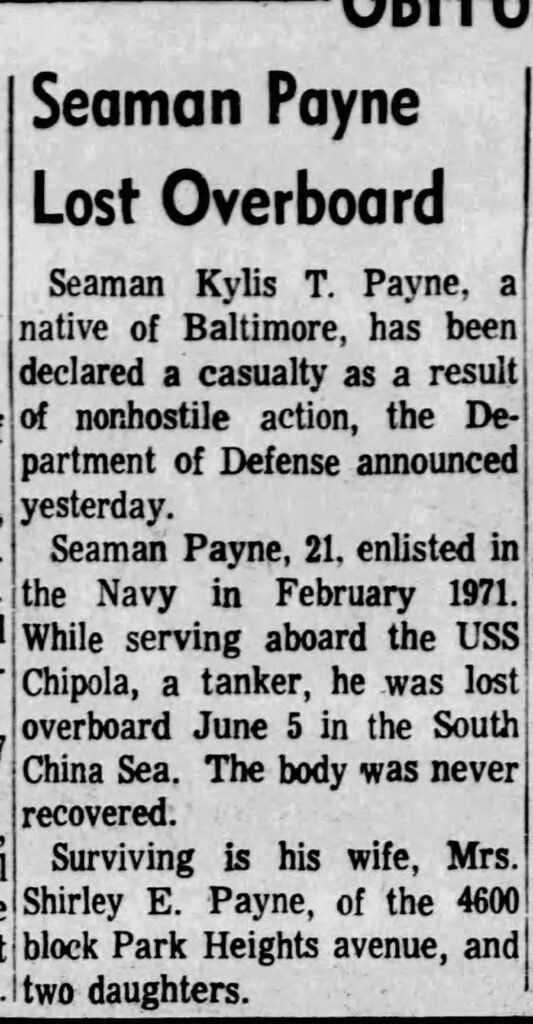
According to Chipola’s deck logs, on June 5, 1972, at 1:07 p.m., sailors reported a man overboard on the port side of the ship. The captain began to maneuver the ship to recover the missing sailor. Eight minutes later, the ship lowered a rescue boat. At 1:24 p.m., the USS Tripoli responded that it had dispatched helicopters to aid in the search. By 1:35 p.m., the ship had returned to the point where the sailor went overboard and began to maneuver around the area. At 1:50 p.m., officers ordered the smaller rescue boat to return to the ship due to a rain squall. By 2:06 p.m., it was determined that the man who went overboard was Seaman Kylis Therod Payne.
By 3:00 p.m., the USS Juneau (LPD-10), the USS Sumpter (LST-1181), the USS Alamo (LSD-33), the USS Tripoli (LPH-10), and the USS Nitro (AG-23) arrived and participated in the search. Sadly, Payne’s remains were not recovered.
Military airstrikes and bombing led North Vietnamese leaders to begin negotiations in September 1972. On October 11, 1972, the Nixon administration ordered the U.S. Pacific force to cease bombing.

Commemoration
Witnesses stated that prior to the unfortunate incident, Payne was assigned extra duty, but the reason behind that duty is unknown. An officer on deck, Thomas Mitchell, wrote, “SN Payne was always on my mind. The crew did all that we could do. We just could not get turned around quick enough.” Another sailor, Stanley D. Maier, remembered his conversation with Payne. “He discussed missing his family and [the] struggles he was going through.”
Telegrams were sent to Seaman Payne’s wife, Mrs. Shirley Elizabeth Payne, and his mother, Mrs. Pearl Snead Payne, about the incident. On June 6, 1972, an official letter from the U.S. Navy Commander T. G. Caston explained the investigation of the loss of Seaman Payne to his wife and that “all of his personal belongings as well as the cash that was found in his effects were packaged and prepared and will be shipped for delivery to her upon their arrival in Subic Bay, Philippine Islands on June 10, 1972.”
Seaman Payne was 21 years old when he was lost at sea, leaving a wife, two young daughters, and parents to navigate his loss.
The U.S. government continues to search for missing servicemembers in Vietnam.
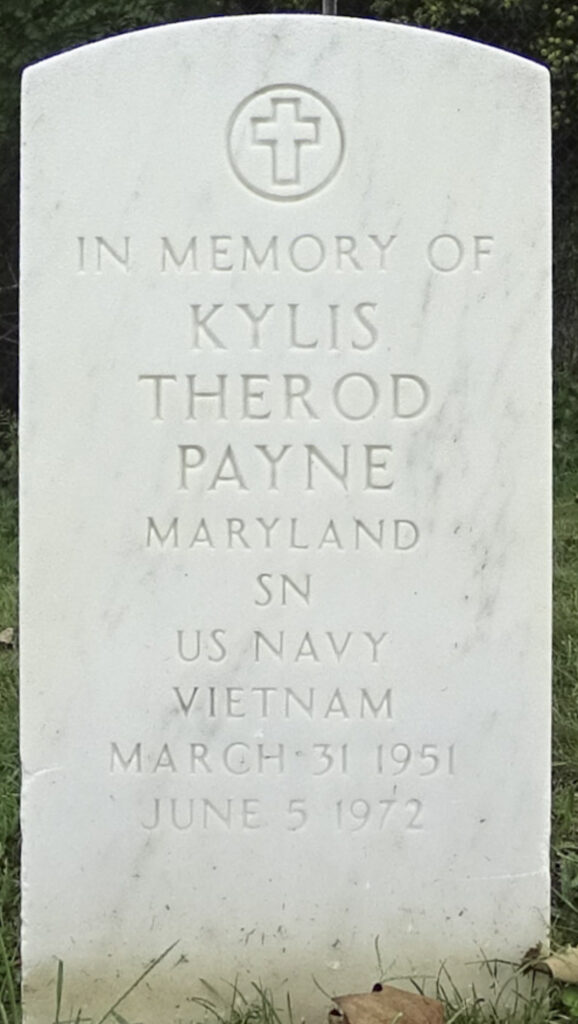
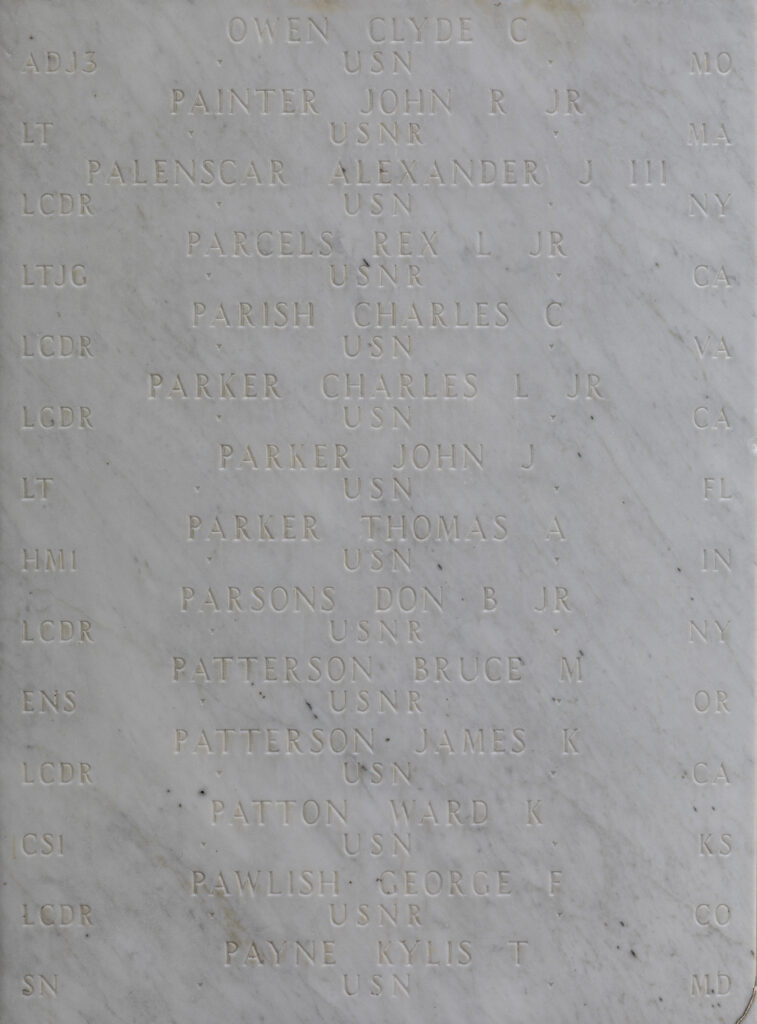
Kylis Therod Payne’s name is memorialized on Court B of the Courts of the Missing at the National Memorial Cemetery of the Pacific in Honolulu, Hawaiʻi. His family also placed a memorial marker at Baltimore National Cemetery in Baltimore, Maryland.



Bibliography
Primary Sources
“Amend this Unjust Law,” Afro-American [Baltimore, MD], July 1, 1967. ProQuest Historical Newspapers.
“Baltimore harbored blacks’ early commercial success.” The Austin American-Statesman [Austin, TX], February 9, 1997. ProQuest Historical Newspaper.
Beverly Dorsey interview. Oral History. March 13, 2005. Maryland Center for History and Culture. https://www.mdhistory.org/resources/beverly-dorsey-interview/.
Chipola (AO-63) – April 1972. Logbooks of U.S. Navy Ships and Stations, Records of the Bureau of Naval Personnel (RG 24). National Archives and Records Administration (NAID 221035838). https://catalog.archives.gov/id/221035838.
Chipola (AO-63) – June 1972. Logbooks of U.S. Navy Ships and Stations, Records of the Bureau of Naval Personnel (RG 24). National Archives and Records Administration (NAID 221035983). https://catalog.archives.gov/id/221035983.
Chipola (AO-63) – May 1971. Logbooks of U.S. Navy Ships and Stations, Records of the Bureau of Naval Personnel (RG 24). National Archives and Records Administration (NAID 221035122). https://catalog.archives.gov/id/221035122.
“Draft Protestors due to Federal sentencing today.” Afro-American [Baltimore, MD], May 25, 1968. ProQuest Historical Newspapers.
Francis Szczepanski Negatives Collection. Photographic negatives. Digital Maryland, Enoch Pratt Free Library. https://collections.digitalmaryland.org/digital/collection/mdst.
Glanda Monquie Byrd. U.S. Index to Public Records, 1994-2019. Digital images. https://ancestry.com.
“Hemmed In 1935-1979.” Maryland State Archives. Accessed November 5, 2025. https://msa.maryland.gov/megafile/ecp/26/037/html/olson11.html.
Henry Payne. Virginia, Certificate of Marriage, 1946. Digital images. https://ancestry.com.
“Job Corpsman To Graduate.” The Evening Sun [Baltimore, MD], July 12, 1969. Newspapers.com (372172729).
Kylis Payne. U.S., Social Security Death Index, 1935-2014. https://ancestry.com.
Kylis Therod Payne, Freedom of Information Act Record, Department of the Navy, National Archives and Records Administration – St. Louis.
Kylis Therod Payne. Manuscript/Mixed Materials Collection. Library of Congress (PWMASTER_128579).
Kylis Therod Payne. NARA-AAD-Display Full Records-Defense Casualty Analysis System. Accessed October 10, 2025. https://aad.archives.gov/aad/record-detail.jsp?dt=3179&mtch=144&cat=all&tf=F&q=PAYNE&bc=&sort=30299%20desc&rpp=10&pg=4&rid=35658&rlst=44887,65666,64577,108282,35658,61228,84621,76168,21482,87696.
Kylis Therod Payne. U.S. Casualties of the Vietnam War, 1956-1998. https://ancestry.com.
“Lawmakers ask for reform in draft board membership.” Afro-American [Baltimore, MD], August 2, 1969. ProQuest Historical Newspapers.
Larry Kamanitz Collection. Mixed manuscript collection. Maryland Center for History and Culture (MS 3186). https://mdhistory.libraryhost.com/repositories/2/resources/842.
“May 17, 1968: Catonsville Nine Burn Draft Records.” Zinn Education Project. Accessed November 24, 2025. https://www.zinnedproject.org/news/tdih/catonsville-nine-files/.
Milton S. Eisenhower. Oral History Interview. June 16, 1972. Oral History Program, Maryland Historical Society. https://mdhistory.libraryhost.com/repositories/2/archival_objects/183133.
“Seaman Payne Lost Overboard.” The Evening Sun [Baltimore, MD], June 15, 1972. Newspapers.com (371186476).
Shirley E. (Payne) Elder. U.S. Public Records, 1970-2009. Digital images. https://ancestry.com.
Tamara E. Payne. U.S. Index to Public Records, 1994-2019. Digital images. https://ancestry.com.
“Throngs of Marylanders Join Washington Rally.” The Evening Sun [Baltimore, MD], November 15, 1969. Newspapers.com (370596018).
“We can succeed, says one Job Corps graduate.” The Baltimore Afro-American [Baltimore, MD], July 19, 1969. Newspapers.com (1135365029).
“Viet Vet missing out on GI Bill educations.” Afro-American [Baltimore, MD], July 12, 1969. ProQuest Historical Newspapers.
Virginia. Campbell County. 1940 U.S. Census. Digital images. https://ancestry.com.
Secondary Sources
“1966-1976: After the Unrest.” Baltimore Civil Rights Heritage. Accessed November 5, 2025. https://baltimoreheritage.github.io/civil-rights-heritage/1966-1976/.
“Abbreviations Used for Navy Enlisted Rankings.” Naval History and Heritage Command. Accessed December 13, 2025. https://www.history.navy.mil/research/library/online-reading-room/title-list-alphabetically/a/abbreviations-used-for-navy-enlisted-ratings.html#anchor17548.
“Baltimore.” World Book Student.
Bentley, Helen D., and F. K. Kidder. 2006. The Great Port of Baltimore: Its First 300 Years, 1706-2006. Port of Baltimore Tricentennial Committee.
“Chipola.” Naval History and Heritage Command. Updated June 30, 2015. Accessed January 3, 2026. https://www.history.navy.mil/research/histories/ship-histories/danfs/c/chipola.html.
“Deckhands, Marine Oilers, and Ship Engineers.” U.S. Department of Energy. Accessed January 3, 2026. https://www.energy.gov/eere/water/deckhands-marine-oilers-and-ship-engineers.
“The History of Baltimore.” City of Baltimore. Accessed November 5, 2025. https://www.baltimorecity.gov/sites/default/files/5_History.pdf.
“Kylis T. Payne.” Veterans Legacy Memorial, National Cemetery Administration. Accessed February 6, 2026. https://www.vlm.cem.va.gov/KYLISTPAYNE/AD506C3.
“Kylis Therod Payne.” Honor States. Accessed October 5, 2025. https://www.honorstates.org/profiles/291865/.
“Kylis Therod Payne.” Veterans Legacy Memorial, National Cemetery Administration. Accessed February 6, 2026. https://www.vlm.cem.va.gov/KylisTherodPayne/49525.
“Kylis Therod Payne.” The Wall of Faces, Vietnam Veterans Memorial Fund. Accessed October 5, 2025. https://www.vvmf.org/Wall-of-Faces/39865/KYLIS-T-PAYNE/.
Merrill, Philip J. Baltimore and the Civil Rights Movement. Arcadia Publishing, 2023.
Mitchell, Alexander D., and Paul K. Williams. Baltimore Then and Now. Pavilion Books, 2016.
“Payne, Kylis Therod, SN.” TogetherWeServed. Accessed October 5, 2025. https://navy.togetherweserved.com/usn/servlet/tws.webapp.webapp?cmd=ShadowBoxProfile&type=Person&ID=522697&binder=true.
Phillips, Christopher. Freedom’s Port: The African American Community of Baltimore, 1790-1860. University of Illinois Press, 1997.
“Seamen.” Careers in the Military. Accessed January 3, 2026. https://www.careersinthemilitary.com/career/detail/seamen.
“SN Kylis Therod Payne.” Find a Grave. Updated August 13, 2014. Accessed October 5, 2025. https://www.findagrave.com/memorial/134308413/kylis-therod-payne.
“SN Kylis Therod Payne.” Find a Grave. Updated February 25, 2000. Accessed October 5, 2025. https://www.findagrave.com/memorial/1066497/kylis-therod-payne.
“SN Kylis Therod Payne.” Defense POW/MIA Accounting Agency. Accessed October 27, 2025. https://dpaa-mil.sites.crmforce.mil/dpaaProfile?id=a0Jt00000001UbvEAE
“Social justice and Baltimore: A brief history.” College & Research Libraries News. Accessed November 5, 2025. https://crln.acrl.org/index.php/crlnews/article/view/9603/10994.
“USS Chipola (AO-63).” VetFriends. Accessed January 3, 2026. https://www.vetfriends.com/branches/navy/units/uss-chipola-ao-63.
“USS Chipola (AO-63).” Military Fandom. Accessed January 4, 2026. https://military-history.fandom.com/wiki/USS_Chipola_(AO-63).
This profile was researched and created through the Researching Silent Heroes program, sponsored by the American Battle Monuments Commission.