
Private Margarito R. Hernandez
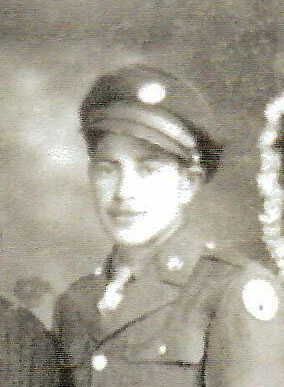
- Unit: 831st Bombardment Squadron, 485th Bombardment Group, Heavy
- Service Number: 39290964
- Date of Birth: June 9, 1920
- Entered the Military: March 25, 1943
- Date of Death: April 20, 1944
- Hometown: Los Angeles, California
- Place of Death: SS Paul Hamilton in the Mediterranean Sea
- Award(s): Purple Heart
- Cemetery: Tablets of the Missing. North Africa American Cemetery, Carthage, Tunisia
National History Day
2025/2026
Early Life
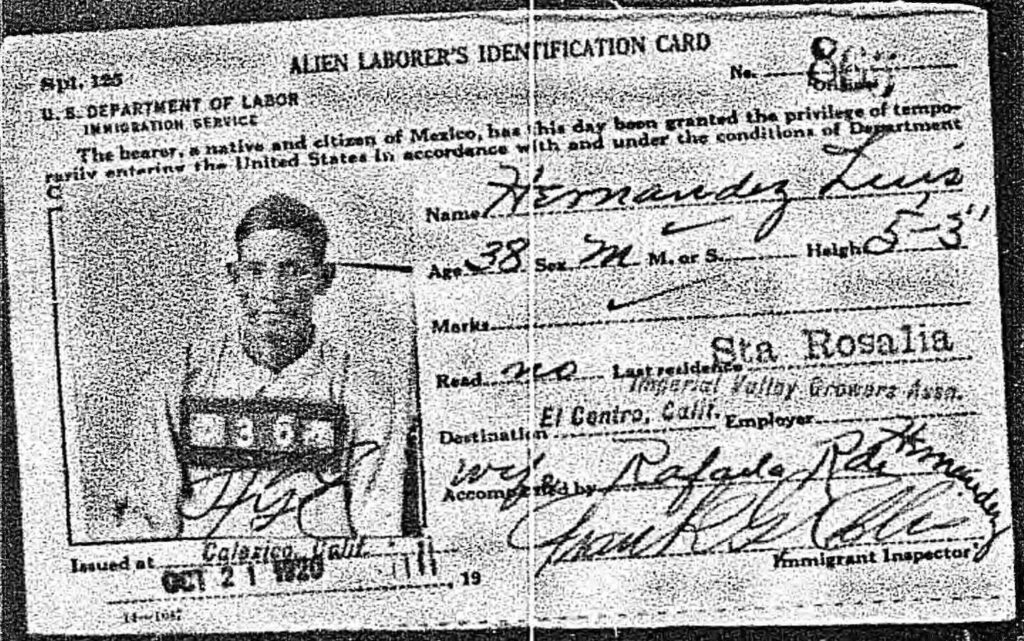
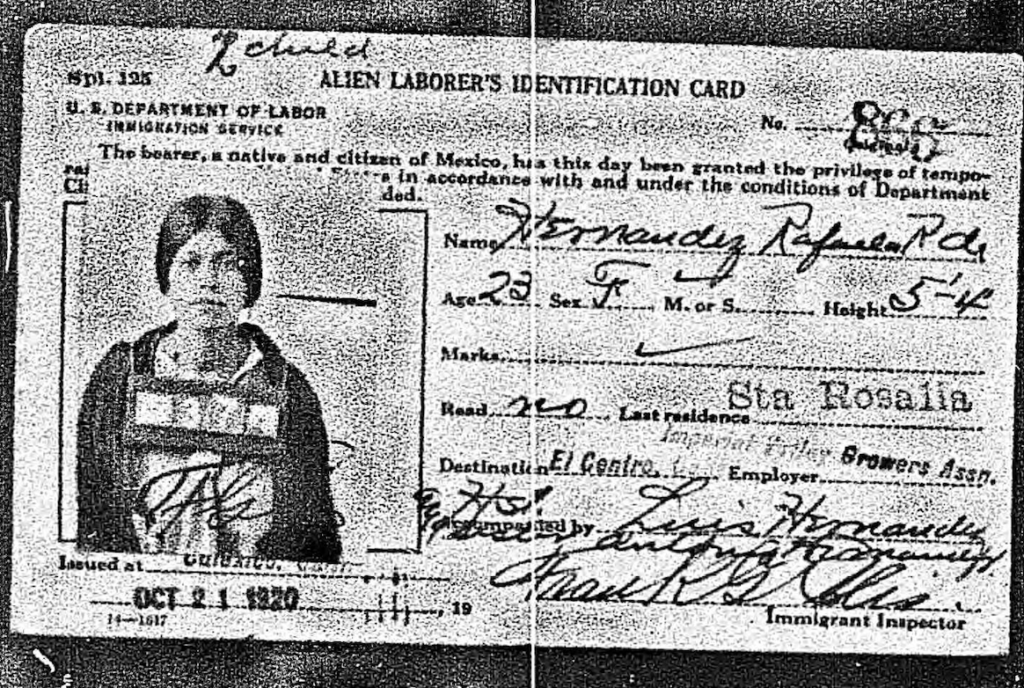
Margarito R. Hernandez was born in the Rosario municipality of the state of Sinaloa, Mexico, on June 9, 1920. Only four months later, his parents, Luis and Raphaela, his older sister Ramona, and Margarito moved to Downey, California. By 1930, Luis and Raphaela’s family had grown to include two more daughters, Dorothy and Juanita. Luis worked at an asbestos mill, and Raphaela was a homemaker. Neither spoke English. Luis died that same year, at only 47 years old.
By 1940, Raphaela was remarried to José Garcia, and together they had a son named Joe. José and Margarito worked picking fruit during the season. Downey was known as “orange-grove town,” and grapefruit and lemon were also prevalent in the area. As this work was seasonal, they both spent half the year unemployed. A post-World War I recession caused a significant drop in crop prices. During the Depression, the number of laborers was disproportionate to the number of jobs, allowing farmers to pay significantly lower wages. The 1940 U.S. Census showed that José earned only $175 a year, while Margarito earned $25 at age 20. The average yearly income in 1940 was $1,368.
Hernandez did not attend high school, most likely because he needed to work to support his family. On March 23, 1943, Hernandez enlisted in the U.S. Army Air Forces. He was single and had no dependents.

Homefront
Manufacturing
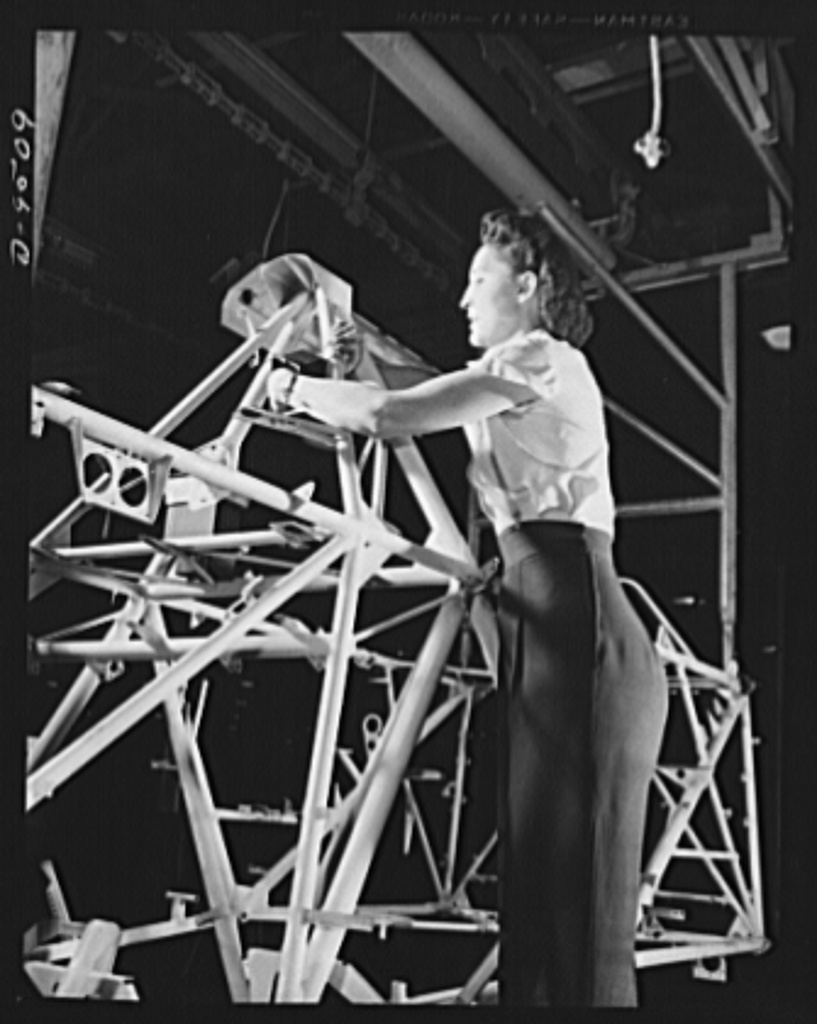
Los Angeles County, California, home to Downey, flourished during World War II. Over two million people worked at aircraft manufacturers in the area, including Douglas Aircraft, Lockheed, North American, and Vultee Aircraft in Downey. This area of the country produced over 300,000 planes during the war, or one every fifteen minutes. Native Americans, Black workers, and women workers came to this area for these jobs, as well as for those in shipbuilding, machining, rubber, aluminum, and military facilities.
Shipbuilding
The California Shipbuilding Corporation yard on Terminal Island in Los Angeles was built in 1941 and quickly became the second largest manufacturing employer in the area. It produced 467 Liberty and Victory ships between 1941 and 1945. Mexicans were recruited for the Bracero Program to complete railroad and agricultural work. Before 1942, Japanese American farmers were essential to this work. After their internment, the Mexican Braceros were the force behind Los Angeles County being the single most productive agricultural county in the U.S. during the war, known for producing citrus, walnuts, poultry, vegetables, and dairy products.
Racial Tensions
This increase in population to the area—estimated at around half a million people—led to housing shortages and deeper racial tensions. Tensions had already been high after the Mexican Repatriation Program during the Great Depression. The U.S. government expelled two million Mexicans from the country to free up jobs for “real Americans,” but many of those who had been deported were citizens.
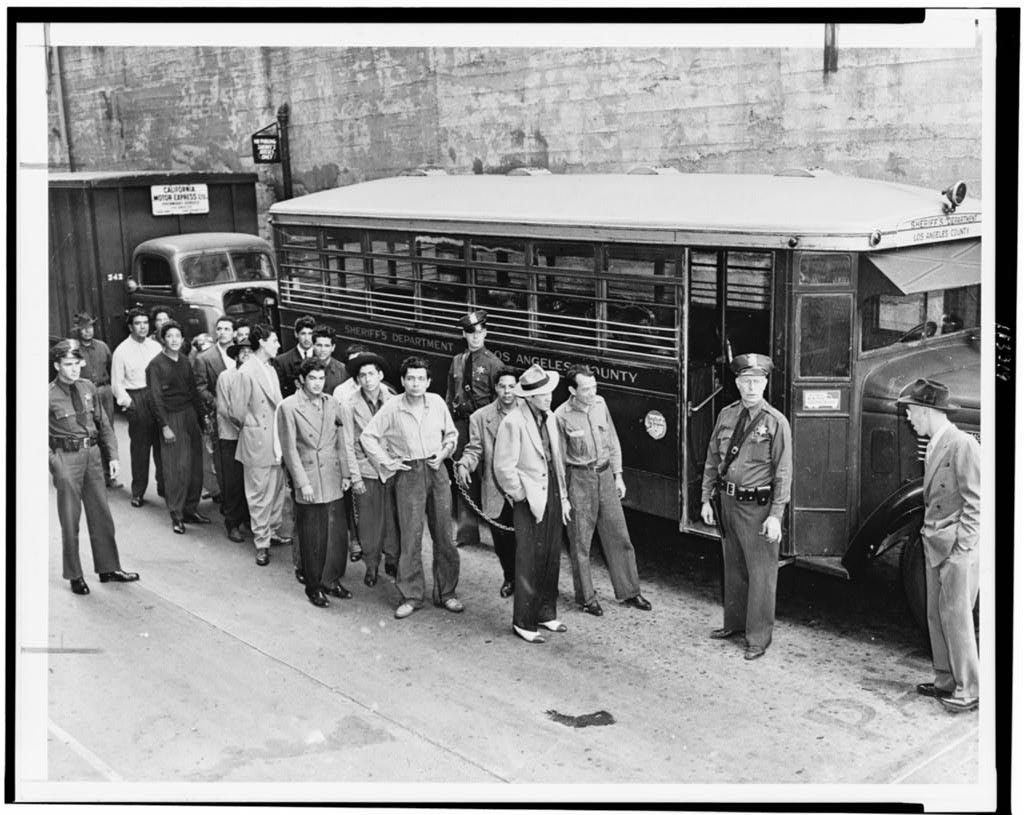
Mexican Americans created gangs for territorial control of their neighborhoods and protection. Many wore zoot suits, identified by their high-waisted pants with baggy legs and long coats with wide lapels. They attached their identity to Pachuco culture, which challenged the “Juan Crow” laws that limited the rights of Mexican Americans at the time. The War Production Board banned the making or wearing of these suits because they wasted so much fabric.
On May 31, 1943, 12 sailors got into a fight with a group of Mexican-American teenagers in zoot suits. Seaman Second Class Joe Dacy Coleman ended up with a broken jaw. When fellow sailors at the Naval Reserve Armory learned of Coleman’s injury, fifty sailors formed a vigilante group on June 3. They went through the streets of Los Angeles with concealed weapons, searching for anyone wearing a zoot suit. When they found someone, they would beat them up, tear off their clothes, and burn the suits in the streets. The incidents did not stop until June 8, when the Southern Sector of the Western Defense Command declared Los Angeles off-limits to military personnel. The Los Angeles City Council also banned wearing zoot suits. The Zoot Suit Riots, as they came to be named, led to over 600 Mexican-Americans being arrested, primarily for “disturbing the peace.”
Military Experience
In March of 1943, Hernandez became a private with the U.S. Army Air Forces. After basic training, Hernandez joined the 831st Bombardment Squadron as part of the newly activated 485th Bombardment Group in September 1943. They trained with B-24s at Fairmont Army Airfield in Nebraska before being sent to the Mediterranean Theater, where they primarily flew long-range missions against targets such as marshaling yards, oil refineries, and other strategic objectives in Italy, France, Germany, and surrounding areas.
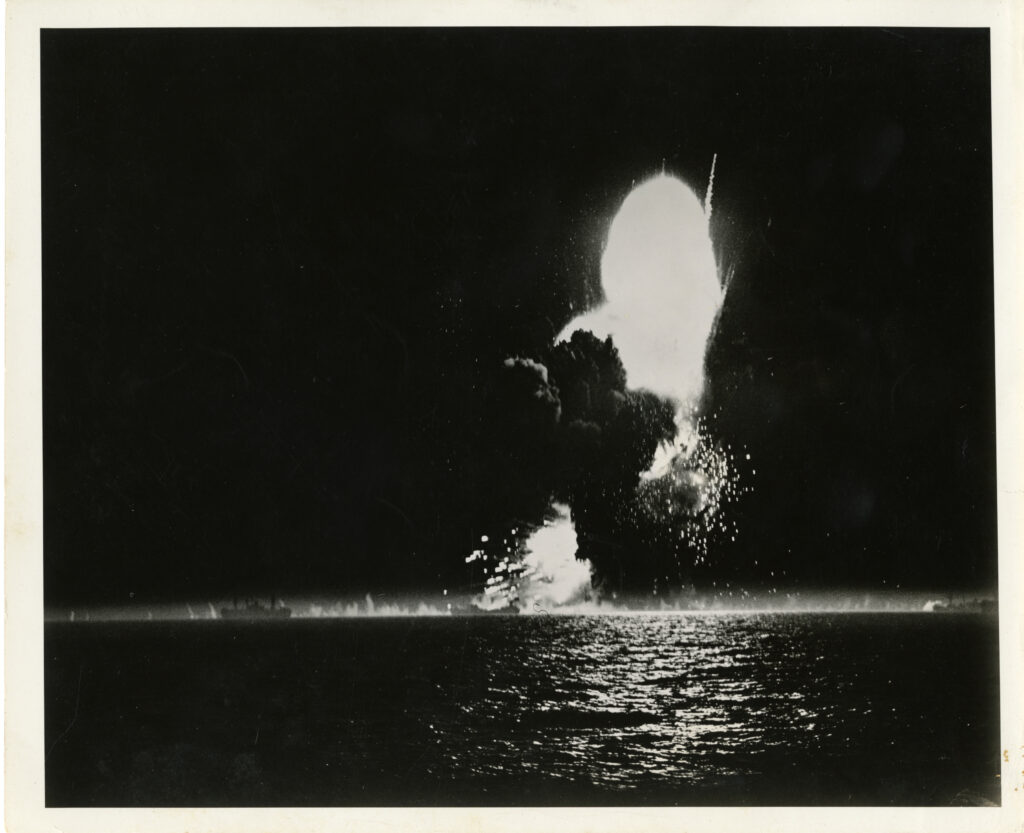
Hernandez was aboard SS Paul Hamilton when it left Hampton Roads, Virginia, on April 2, 1944, as part of convoy UGS 38. Paul Hamilton was carrying supplies and members of the 485th Bombardment Group and the 5th Reconnaissance Group to Italy via Bizerte, Tunisia. On April 20, 1944, 23 German torpedo planes attacked the convoy. A torpedo struck Paul Hamilton directly, detonating the large amount of ammunition aboard the vessel. Flames were reported to have reached close to 1,000 feet in the air. The remnants of the ship sank in less than thirty seconds, killing all 580 men aboard, including 154 men of the 831st. Only one set of remains was ever recovered.
Private Hernandez, along with the others, was first reported as Missing in Action. One year later, they were all officially declared Killed in Action.
A total of five ships in the convoy were hit that day. USS Lansdale and SS Royal Star (a British merchant ship) both sank. SS Samite and SS Stephen F. Austin were able to make it back to Algiers.

Commemoration
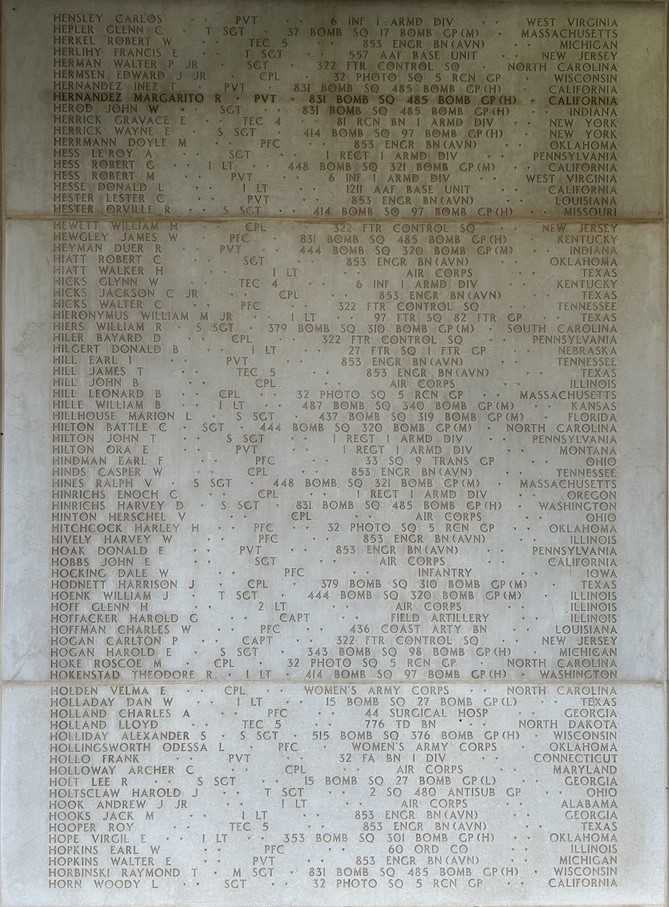
Private Hernandez was awarded the Purple Heart posthumously. His name is engraved on the Tablets of the Missing at the North Africa American Cemetery in Carthage, Tunisia.
Bibliography
Primary Sources
California. Los Angeles County. 1940 U.S. Census. Digital Images. http://ancestryclasroom.com.
“Calship Yard Construction Amazing Feat of Engineering.” News-Pilot [San Pedro, California], October 20, 1941. Newspapers.com (605119125).
The Explosion of the SS Paul Hamilton in the Mediterranean Sea on 20 April 1944. Photograph. 1944. Collection of U.S. Official Coast Guard Images, the National WWII Museum. https://www.ww2online.org/image/explosion-ss-paul-hamilton-mediterranean-sea-20-april-1944.
Luis Hernandez. U.S., Border Crossings from Mexico to U.S., 1895-1964. https://ancestryclassroom.com.
Margarito Hernandez. U.S., World War II Army Enlistment Records, 1938-1946. https://ancestryclassroom.com.
Palmer, Alfred T. Production. BT-13A (Valiant) basic trainers. A woman employee at Vultee’s Downey, California plant works on a fuselage frame for a ‘Valiant’ basic trainer. Photograph. c.1942. Farm Security Administration/Office of War Information Black-and-White Negatives, Library of Congress. https://www.loc.gov/pictures/item/2017697014/.
Rafaela Hernandez. U.S., Border Crossings from Mexico to U.S., 1895-1964. https://ancestryclassroom.com.
Zoot suiters lined up outside Los Angeles jail en route to court after feud with sailors. Photograph. June 9, 1943. Miscellaneous Items in High Demand, Library of Congress. https://www.loc.gov/pictures/item/95504788/.
Secondary Sources
“485th Bombardment Group.” Army Air Corps Museum. Accessed December 30, 2025. https://www.armyaircorpsmuseum.org/485th_Bombardment_Group.cfm.
“About the City of Downey.” Bob Archuleta. Accessed December 1, 2025. https://sd30.senate.ca.gov/district/downey.
Basso, Matthew L. World War II and The American Home Front. National History Landmarks Program: 2024. https://npshistory.com/publications/nhl/theme-studies/world-war-ii-home-front-v2.pdf.
Bruce, Bobbi. “Things you didn’t know about Downey: Orange Crops.” Accessed December 1, 2025. https://www.thedowneypatriot.com/articles/things-you-didnt-know-about-downey-orange-cops.
Dennin, Kimberly. “Migrant Farm Workers.” Heritage Museum of Orange County. https://heritagemuseumoc.org/migrant-farm-workers-1929-1976/.
Hersh, Matthew H. “Equitable Growth and Southern California’s Aerospace Industry.” Washington Centery for Equitable Growth. https://equitablegrowth.org/wp-content/uploads/2015/11/SoCal-Aerospace-Tech-Report.pdf.
“A look back: Lehigh Valley man was among the missing in sinking of SS Paul Hamilton 79 years ago today.” The Morning Call. Accessed December 30, 2025. https://www.mcall.com/2023/04/20/lehigh-county-man-among-missing-in-paul-hamilton-79-years-ago-today/.
“Margarito Hernandez.” Honor States. Accessed December 10, 2025. https://www.honorstates.org/profiles/17432/.
“Margarito R. Hernandez.” American Battle Monuments Commission. Accessed October 22, 2025. https://weremember.abmc.gov/s?q=hernandez&v=G&type=16&sort=first_name:ASC.
“Margarito R. Hernandez.” Veterans Legacy Memorial, National Cemetery Administration. Accessed April 5, 2026. https://www.vlm.cem.va.gov/MargaritoRHernandez/7831.
“Once America’s Most Productive Agricultural County.” Los Angeles Almanac. Accessed December 1, 2025. https://www.laalmanac.com/agriculture/ag721.php.
“Pvt. Margarito R. Hernandez.” Find a Grave. Accessed October 22, 2025. https://www.findagrave.com/memorial/56247641/margarito-r-hernandez.
Stubblebine, David. “California Shipbuilding Corporation.” World War II Database. Accessed December 1, 2025. https://ww2db.com/facility/California_Shipbuilding_Corporation.
“The Zoot Suit Riots and Wartime Los Angeles.” The National World War II Museum. Accessed December 1, 2025. https://www.nationalww2museum.org/war/articles/zoot-suit-riots-and-wartime-los-angeles.
This profile was researched and created through the Researching Silent Heroes program, sponsored by the American Battle Monuments Commission.