
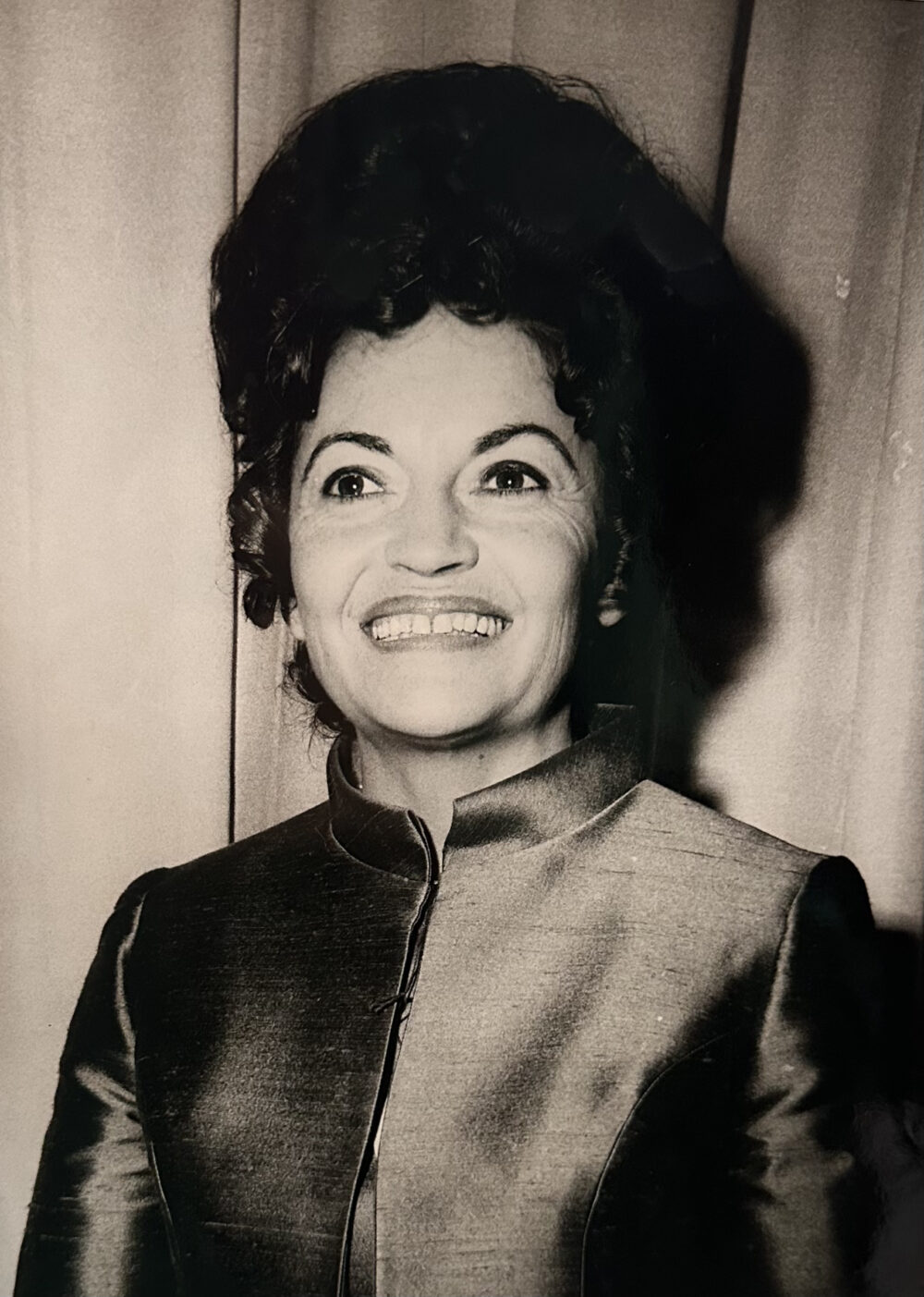
Sergeant Maria Consuelo “Connie” Espinosa Pendergast
- Unit: Aviation Women’s Reserve Squadron-7, U.S. Marine Corps Air Station El Toro, California
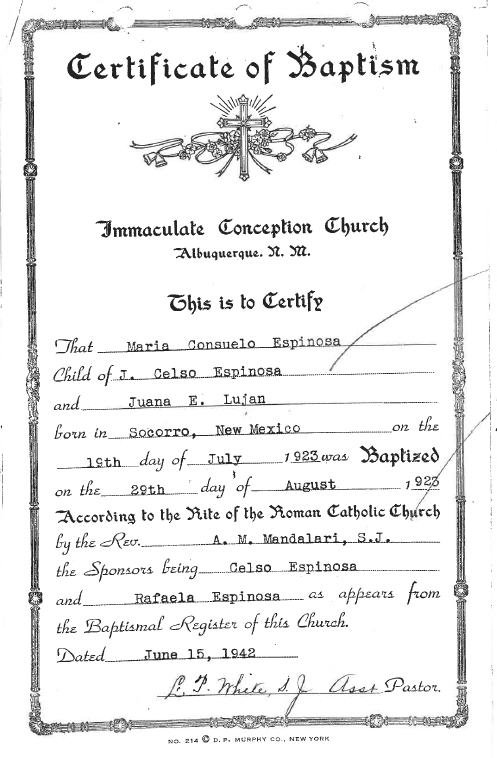
- Date of Birth: July 19, 1923
- Entered the Military: September 29, 1943
- Date of Death: July 24, 2010
- Hometown: Socorro, New Mexico, and Phoenix, Arizona
- Place of Death: Ohio
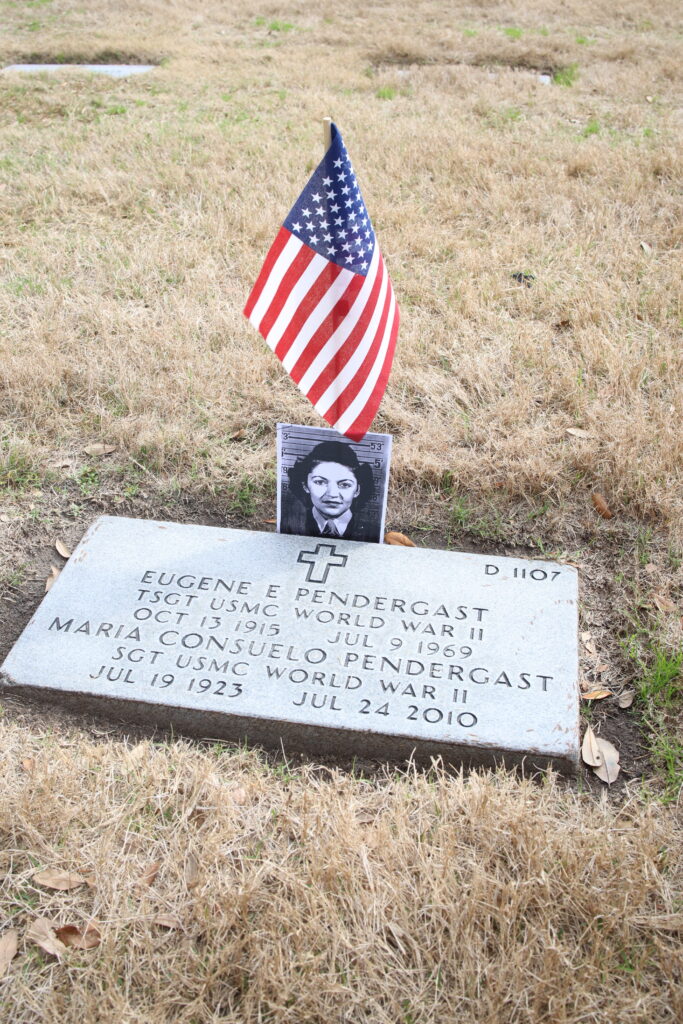
- Cemetery: Section D, Grave 1107. Houston National Cemetery, Houston, Texas
Mentored by Mrs. Vannessa Guerra
Dr. Archie Blanson CTE High School
2025/2026
Early Life
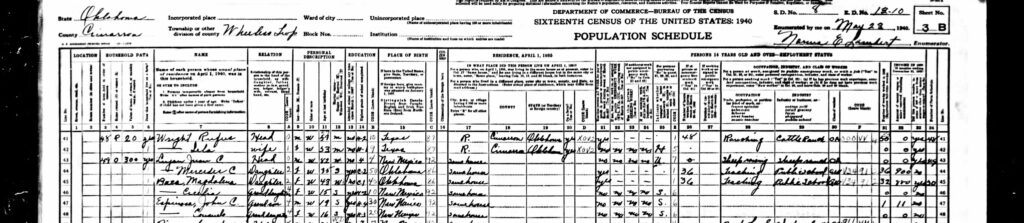
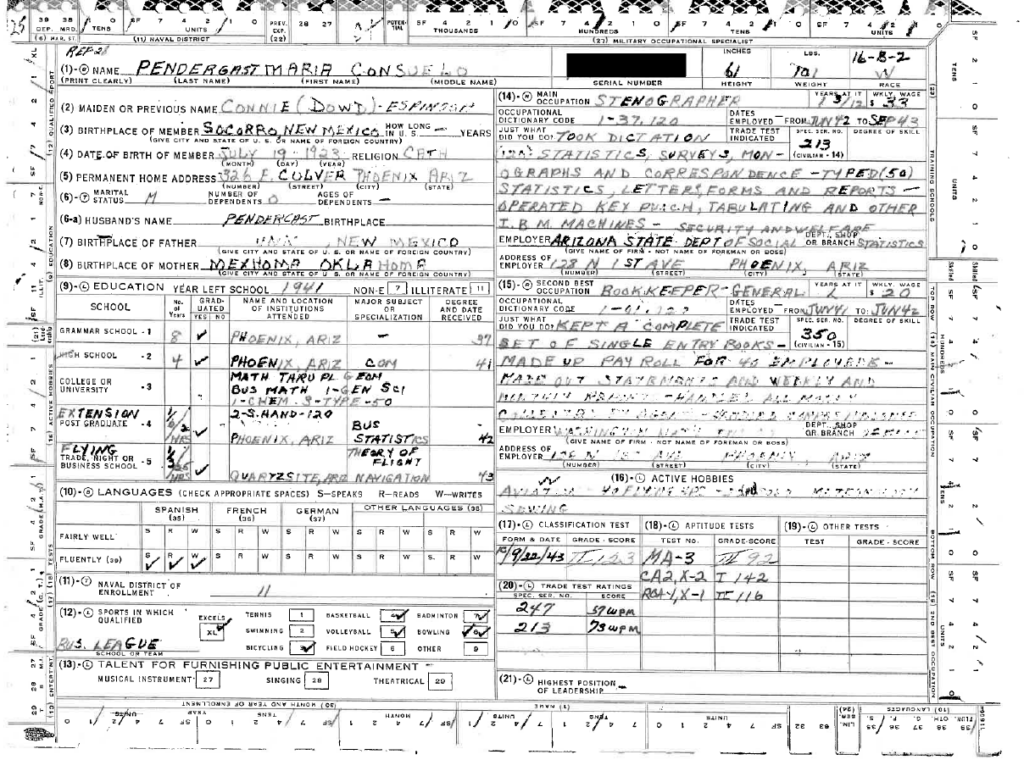
Maria Consuelo “Connie” Espinosa was born on July 19, 1923, in Socorro, New Mexico, to J. Celso Espinosa and Juana E. Jujan. She grew up in the American Southwest, a region shaped by both tradition and change. She had an older brother, John, who also served in the military. In the 1940 census, Connie is living with her mother, Juana, and her parents, Juan and Mercedes, in Oklahoma.
As a young woman, Espinosa graduated from St. Mary’s High School in Phoenix and continued her studies at several institutions. She attended the University of New Mexico, Phoenix College, and later the University of Houston. Her education reflected both ambition and preparation for her future career.
Career Before the War
Before entering the military, Espinosa gained experience through several office positions in Phoenix, Arizona. She began working in June 1941 as a part-time stenographer at Friendly House, a social work and employment agency. In this role, she handled correspondence, filing, and routine office interviews. She also assisted with employment calls and daily office tasks.
From October 1941 to June 1942, Espinosa worked for the Washington National Insurance Company. There, she served as a cashier and managed financial records. She received insurance payments, kept account books, and handled payroll for about 30 employees. She also prepared weekly and monthly reports for the company’s home office.
In June 1942, Espinosa became a stenographer for the State Department of Social Security and Welfare. She served as secretary to the Director of the Division of Research and Statistics. In this position, she handled dictation and filing and typed statistical reports for state and federal agencies. She also worked with IBM equipment and completed routine clerical duties.
These experiences helped Espinosa develop strong administrative and communication skills. They also prepared her for the responsibilities she would later take on in the Marine Corps.
Early Marriage and Personal Life
On December 27, 1941, Espinosa married Jesse Lewis Dowd, Jr. in Phoenix, Arizona. The marriage, however, was short-lived and complicated by circumstances that soon came to light. According to court records, Espinosa later learned that Dowd had previously been married and divorced, information that had not been disclosed to her at the time of their marriage. As a result, Espinosa sought to have the marriage annulled in 1942. She chose to retain her maiden name after the annulment.
Homefront
War Efforts in New Mexico
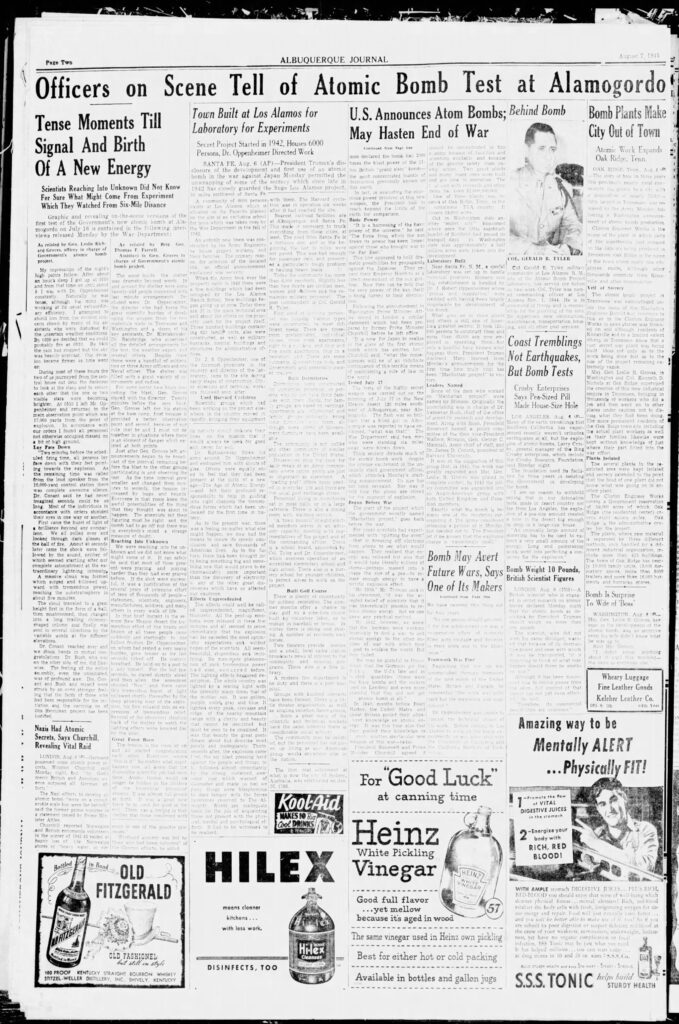
Before her military service, Espinosa lived in communities across New Mexico and Arizona. These areas experienced growth during the years leading up to World War II. The Southwest became an important region for military and scientific development. As a result, many residents experienced rapid economic and social change. New Mexico played a significant role in the national war effort. The Manhattan Project brought scientists and military personnel to Los Alamos. This project focused on developing the atomic bomb during the war. Although much of this work remained secret, it shaped the region’s importance.
Community Contributions
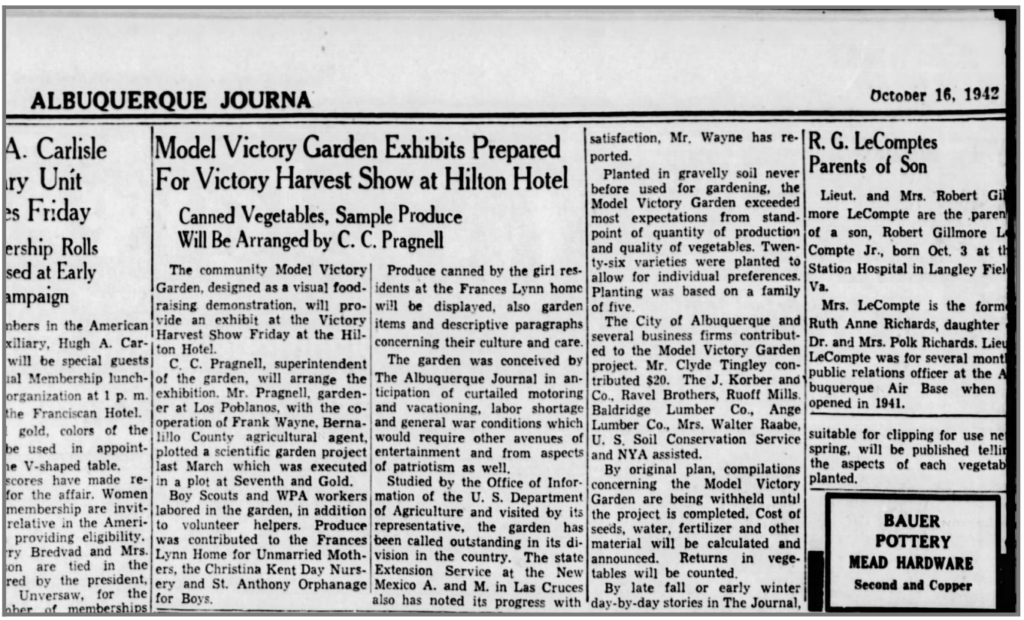
Simultaneously, local communities supported the war in visible ways. Farmers increased production and used prisoners of war for agricultural labor. Residents also participated in Victory Gardens and food conservation efforts. Residents of Albuquerque created model gardens to show the community that various plants could be grown in gravelly soil. The scientific garden used a mix of soils and fertilizers to support the plant and vegetable growth.
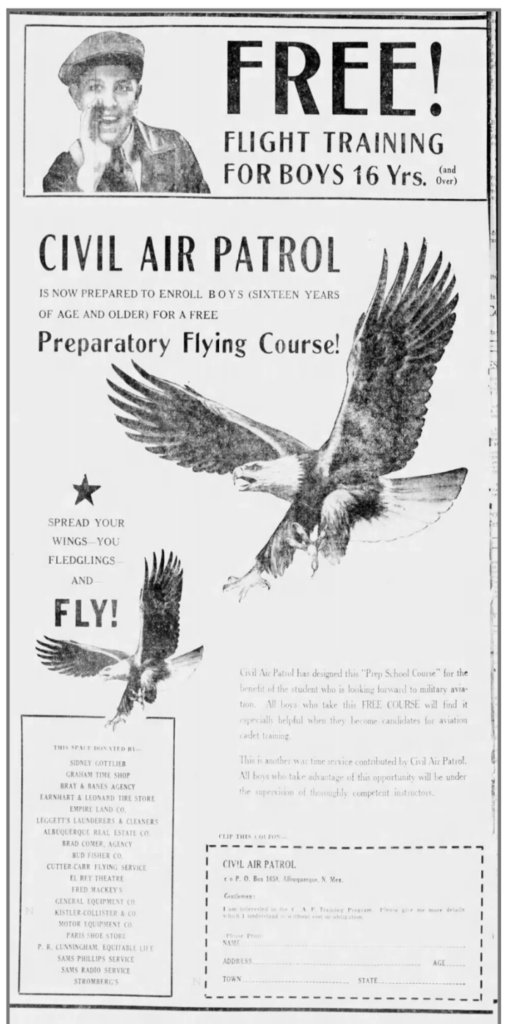
Additionally, civilians contributed through volunteer programs and training efforts during the war. Programs like the Civil Air Patrol helped prepare young men for military service. Newspaper advertisements were placed to recruit 16-year-old boys interested in future military service. Women also took on new roles in both employment and volunteer work. These changes reflected the shared responsibility of supporting the war effort.
Military Experience
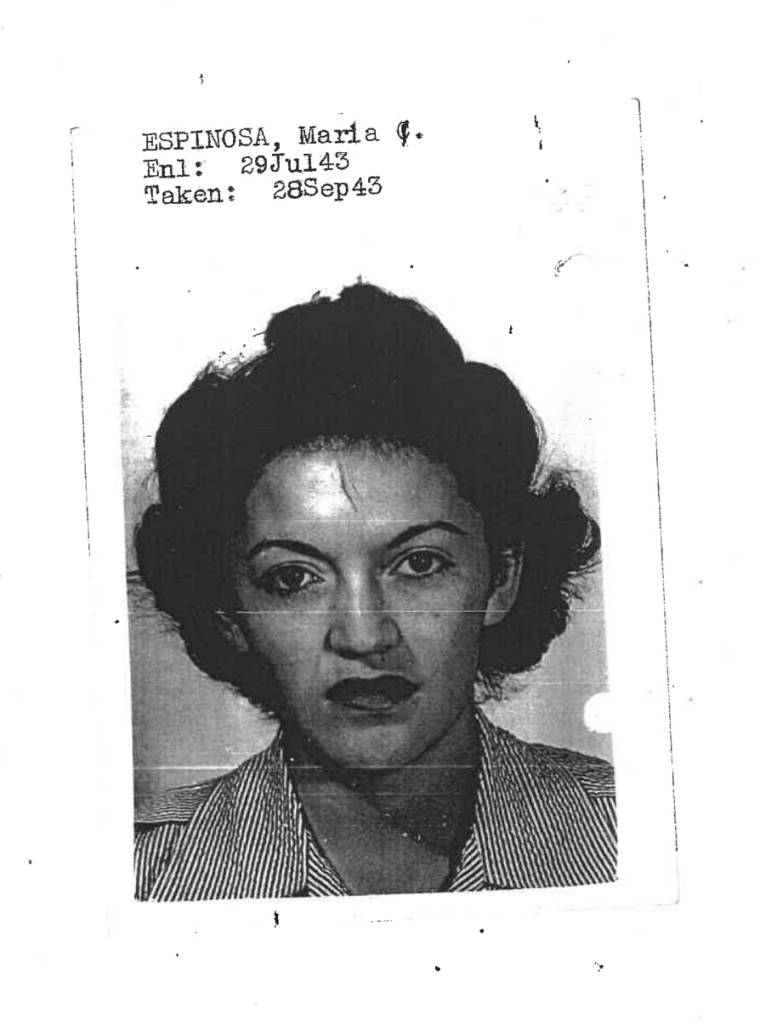
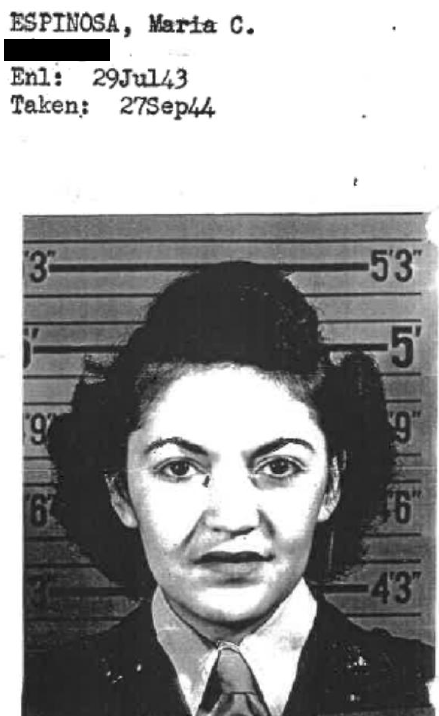
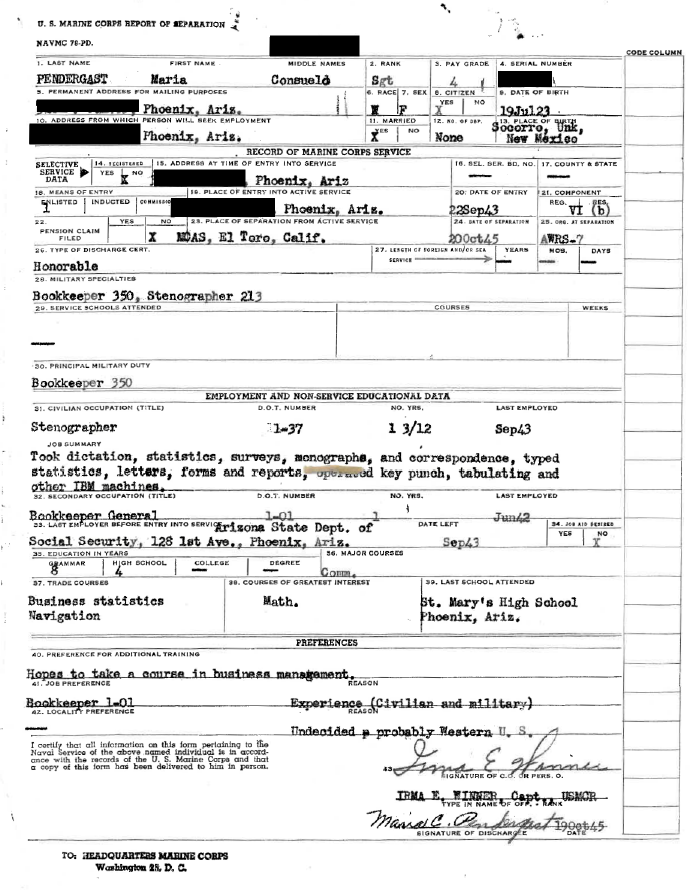
Maria Consuelo “Connie” Espinosa enlisted in the United States Marine Corps on July 29, 1943, during World War II. She later began active service on September 27, 1944. After training, she was assigned to Aviation Women’s Reserve Squadron-7 at Marine Corps Air Station El Toro, California. Her service remained within the United States, where she supported military operations during the war.
Duties and Responsibilities
While stationed at El Toro, Espinosa worked as a bookkeeper and stenographer. Her responsibilities included typing reports, preparing correspondence, and maintaining important records. She also operated keypunch machines and other office equipment used to organize military data. Through this work, she helped ensure that communication and administrative operations within her unit ran efficiently.
Leadership and Promotion
As Espinosa gained experience, she took on greater responsibility in her role. Her performance led to a promotion to the rank of sergeant. This advancement reflected both her skill and reliability within the Marine Corps. Although she did not deploy overseas, her work directly supported her unit’s operations and contributed to the broader war effort.
Espinosa continued her service at El Toro until the end of the war. She was honorably discharged from the Marine Corps on October 20, 1945. Her time in the military marked an important period of service, where she used her skills to support operations during World War II before returning to civilian life.
Veteran Experience
Returning to Civilian Life
After leaving the Marine Corps, Espinosa returned to civilian life in Houston, Texas. She returned to the oil industry, serving as a secretary to E. Cockrell Jr., an independent oil producer. In this role, she continued to use the organizational and communication skills she had developed before and during the war.
Family Life
Espinosa married Eugene Pendergast on June 23, 1945, while she was still serving in the Marine Corps. After the war, the couple settled in Houston, Texas. Together, they had one daughter, Kathryn Maria Pendergast, born on December 11, 1950. Her family life became an important part of her years after military service.
Professional Leadership and Recognition
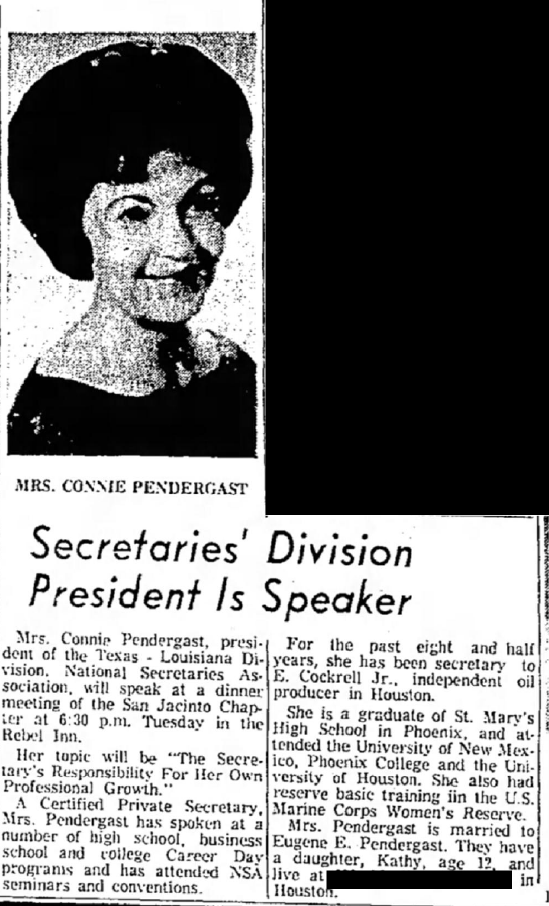
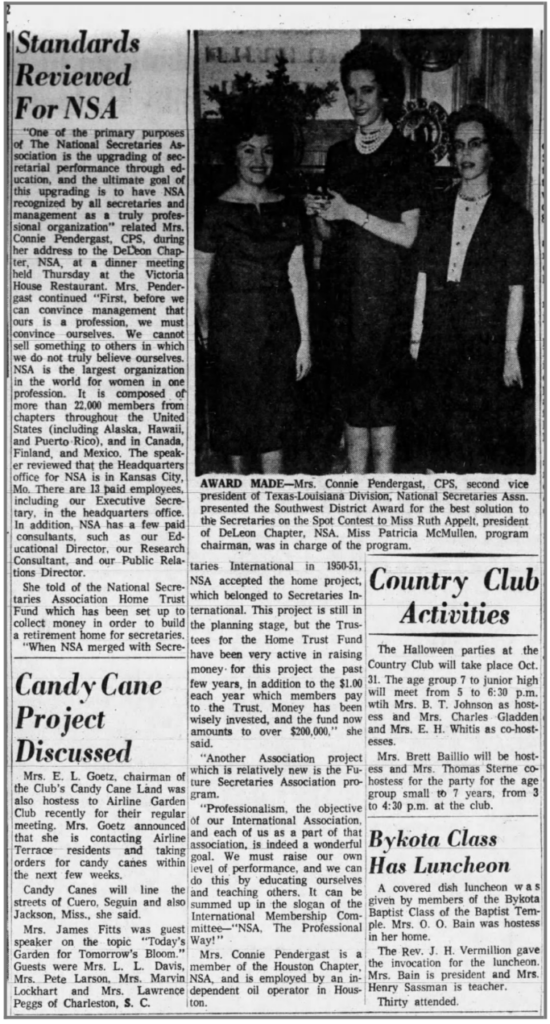
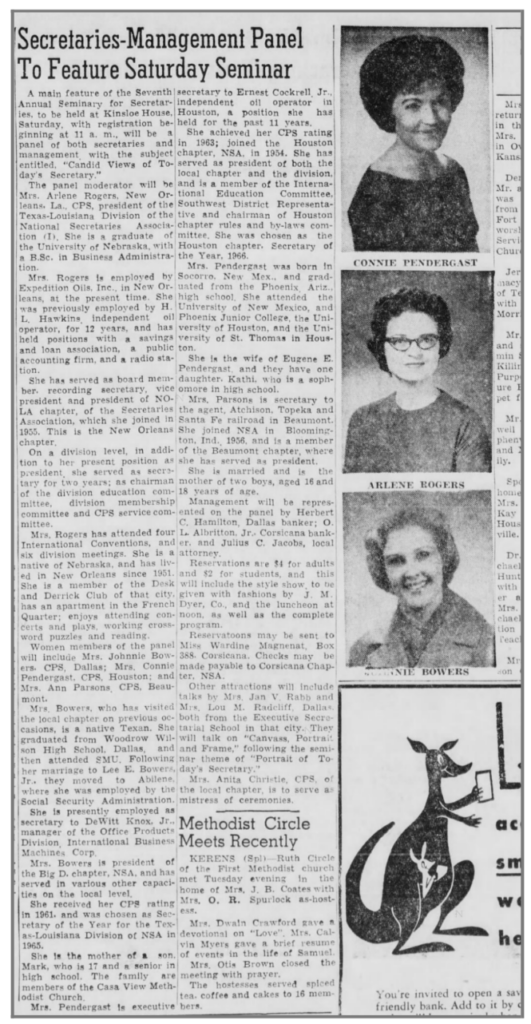
Pendergast became highly involved in professional organizations during her career. She was a member of the National Secretaries Association beginning in 1954. Within the organization, she held leadership roles, including serving as Second Vice President of the Texas-Louisiana division. In 1966, she was honored as “International Secretary of the Year,” recognizing her professional excellence. Her work also extended into professional development and certification. Pendergast was involved with the Institute for Certifying Secretaries. She helped support certification programs for individuals completing professional examinations. Through this work, she contributed to raising standards within her field.
Honors and Community Involvement
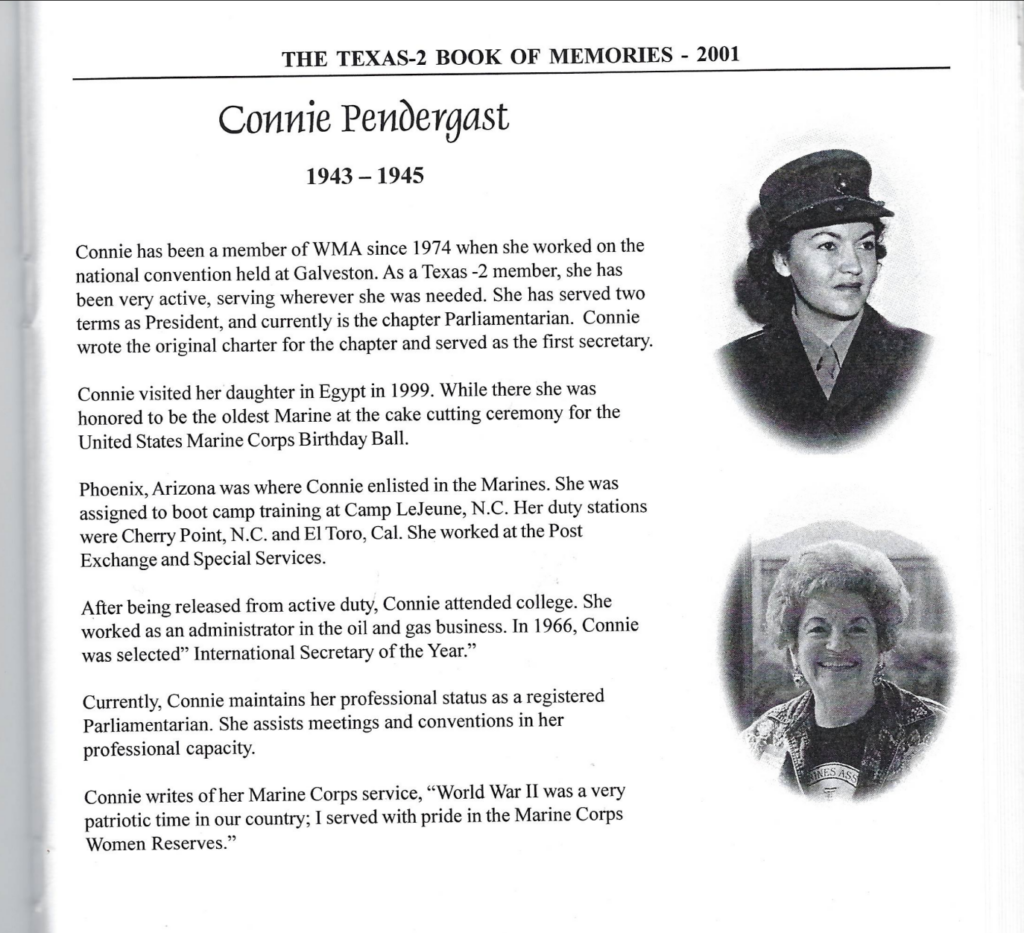
Throughout her life, Pendergast received various recognitions for her achievements and service. She was one of 47 individuals from North and South America honored with the Golden Plate Award in 1967. During a professional visit to Louisiana, she was the guest of honor at the Conversational Hour for the Professional Secretaries Association. While visiting her daughter in Egypt in 1999, she was recognized as the oldest Marine at a Marine Corps Birthday Ball ceremony.
She was also invited to speak at many events, where she discussed leadership, responsibility, and professional growth. In her own words, Pendergast stated, “The aim of a good secretary is to be of assistance and benefit to management. To do this she must continually desire to be a better secretary and endeavor to assume more responsibility in her job. Realizing that to be a secretary one has to have more qualifications than taking and transcribing dictation, a small group of farsighted women in the middle west took it upon themselves to organize an association and set up goals for the secretarial profession. From this small group has grown the National Secretaries Association.” Her message reflected both her experience and her commitment to professional excellence. Her leadership influenced others within her field.
In 1969, her husband, Eugene, died.
Service as a Veteran
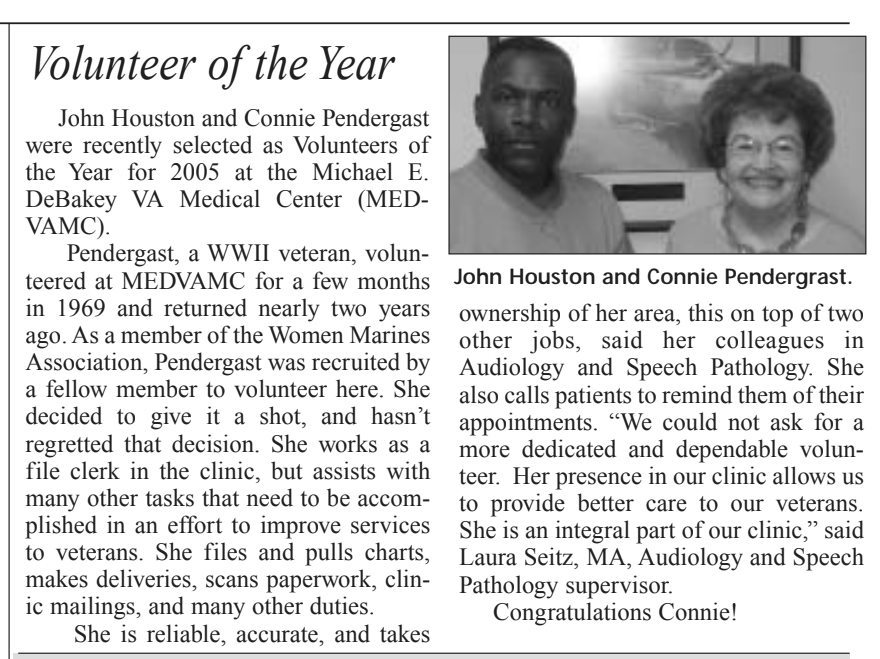
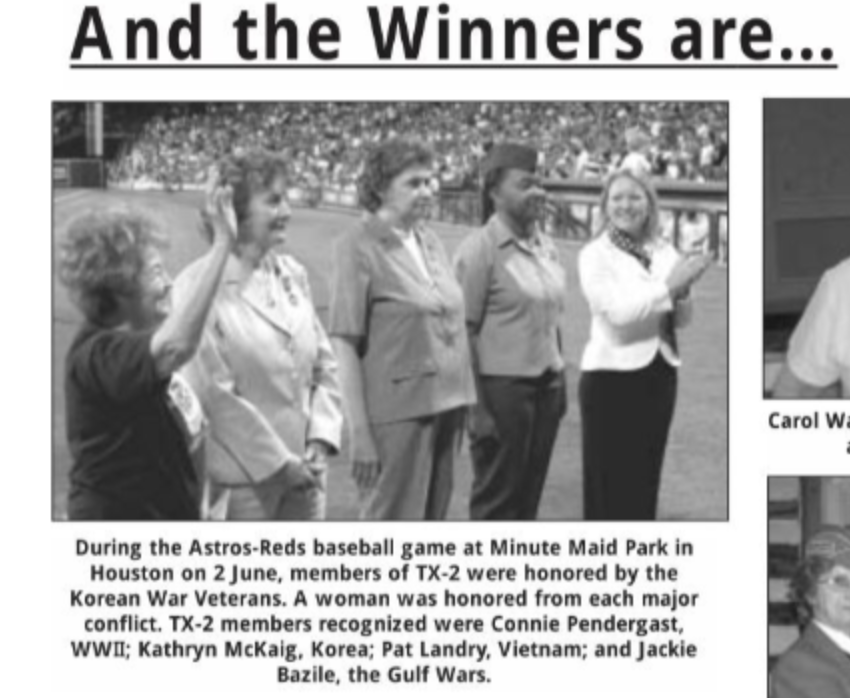
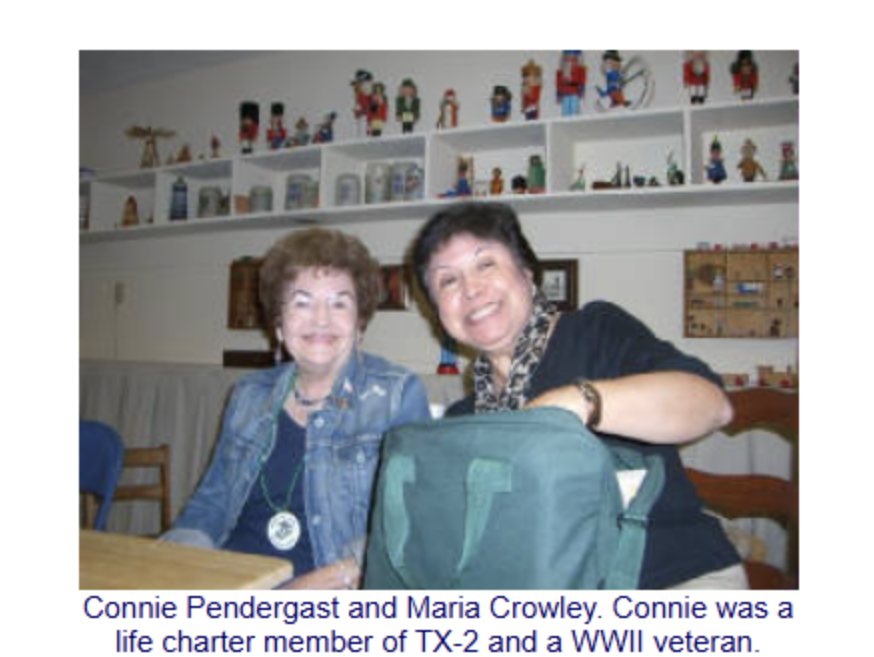
Pendergast remained connected to her military service and fellow veterans. She was an active member of the Women Marines Association, Texas Gulf Coast Chapter. Within the organization, she served as president for two terms and also worked as a parliamentarian. Her leadership helped support both veterans and active-duty service members. Pendergast also volunteered at the Michael E. DeBakey Veterans Affairs Medical Center in Houston. She began volunteering in 1984 and returned again in 2004 as an office clerk. Her work in the Audiology and Speech Pathology department supported patient care and operations.
Commemoration
Maria Consuelo Pendergast passed away in 2010 and is buried at Houston National Cemetery with her husband, fellow Marine Technical Sergeant Eugene Edward Pendergast.
Her story reminds us that World War II was won not only by those who fought on the front lines, but also by Marines who served quietly behind the lines. Pendergast once wrote, “World War II was a very patriotic time in our country; I served with pride in the Marine Corps Women Reserves.” Her life reflected a continued connection to both her military service and her community. Through her work, leadership, and service, she left a lasting impact on those around her.
Bibliography
Primary Sources
“And the Winners Are . . . ” WMA’Nouncements, Summer 2006, p. 6. Women Marines Association.
“Daughter Born to Eugene Pendergasts of Houston, Tex.” The Paxton Record [Paxton, Illinois], December 14, 1950. Newspapers.com (509205054).
FREE! Flight Training For Boys 16 yrs. Advertisement. Albuquerque Journal [Albuquerque, New Mexico], August 8, 1943. Newspapers.com (156277387).
Huggins, Betty. Telephone interview with the author. December 15, 2025.
“Juanita Lujan Espinosa Obituary.” The Arizona Republic [Phoenix, Arizona], July 26, 1984. Newspapers.com (183735554).
Kathryn Maria Pendergast. Texas, U.S., Birth Index, 1903–1997. Digital Images. https://ancestryclassroom.com.
“Manhattan Project Was Secret Name for Atomic Bomb Production.” Montpelier Evening Argus [Montpelier, Vermont], August 8, 1945. Newspapers.com (660863279).
Maria C. Pendergast. Ohio, U.S., Death Records, 1908–1932, 1938–2022. Digital Images. https://ancestryclassroom.com.
Maria Consuelo Espinosa, Report of Separation, Department of the Navy, National Archives and Records Administration – St. Louis.
Maria Consuelo Espinosa, Official Military Personnel File, Department of the Navy, National Archives and Records Administration – St. Louis.
“Model Victory Garden Exhibits Prepared For Victory Harvest Show at Hilton Hotel.” Albuquerque Journal [Albuquerque, New Mexico], October 16, 1942. Newspapers.com (156812702).
“Mrs. Connie Pendergast.” The Times-Picayune [New Orleans, Louisiana], March 9, 1970.
“Mrs. Pendergast Entertained During Conversational Hour.” Morning World [Monroe, Louisiana], April 22, 1967. Newspapers.com (1040000212).
Oklahoma. Cimarron County. 1940 U.S. Census. Digital Images. https://ancestryclassroom.com.
“OPEN FORUM.” Carlsbad Current-Argus [Carlsbad, NM], February 16, 1945. Newspapers.com (503155537).
“Our Walk Through Time: 50 Years of WMA.” WMA ’Nouncements, Vol. 35, No. 4, 2010, p. 25. Women Marines Association.
“Secretary of Year Will Speak to NSA.” The Brazosport Facts [Freeport, Texas], August 26, 1966. Newspapers.com (17668423).
“Secretaries Division Presidents Is Speaker.” The Baytown Sun [Baytown, Texas], September 9, 1963. Newspapers.com (5912225).
“Secretaries-Management Panel to Feature Saturday Seminar.” Corsicana Daily Sun [Corsicana, Texas], March 14, 1966. Newspapers.com (43383761).
“Six Local Secretaries Are Presented CPS Certificates.” The Times [Shreveport, Louisiana], October 16, 1971. Newspapers.com (214664355).
Sparks, Lynn. Telephone interview with the author. December 15, 2025.
“Standards Reviewed for NSA.” Victoria Advocate [Victoria, Texas], October 21, 1962. Newspapers.com (436132185).
The Texas-2 Book of Memories. 2001. Courtesy of Lynn Sparks.
“Three Secretaries Honored at Meeting.”The Amarillo Globe-Times [Amarillo, Texas], November 21, 1962. Newspapers.com (29964247).
“Twentieth Anniversary Observed by National Secretaries’ Assn.” The Times [Shreveport, Louisiana], May 31, 1962. Newspapers.com (214287039).
“U.S. Announces Atom Bombs; May Hasten End of War.” Albuquerque Journal [Albuquerque, New Mexico], August 7, 1945. Newspapers.com (156894844).
“Volunteer of the Year.” WMA ’Nouncements, Spring 2006, p. 9. Women Marines Association.
“Women at War Workers Sell Bonds to Legion.” Albuquerque Journal [Albuquerque, New Mexico], November 28, 1942. Newspapers.com (156853423).
Secondary Sources
“Eugene E. Pendergast.” Veterans Legacy Memorial, National Cemetery Administration. Accessed April 7, 2026. https://www.vlm.cem.va.gov/EUGENEEPENDERGAST/F556974.
“Eugene Edward Pendergast.” Find a Grave. Updated March 3, 2000. Accessed April 7, 2026. https://www.findagrave.com/memorial/3119324/eugene_edward-pendergast.
“Maria C. ‘Connie’ Pendergast.” Find a Grave. Updated July 27, 2010. Accessed April 7, 2026. https://www.findagrave.com/memorial/55511189/maria_c-pendergast.
“Maria Consuelo Pendergast.” Veterans Legacy Memorial, National Cemetery Administration. Accessed April 7, 2026. https://www.vlm.cem.va.gov/MARIACONSUELOPENDERGAST/F2D500D.
“History: The Great Depression and World War II.” New Mexico Tells New Mexico History. Last modified 2010. Accessed November 11, 2025. https://online.nmartmuseum.org/nmhistory/people-places-and-politics/the-great-depression/history-the-great-depression-and-world-war-ii.html.
Kratz, Jessie. “Navajo Code Talker: Adolph Nagurski.” Pieces of History Blog. National Archives and Records Administration. November 9, 2022. https://prologue.blogs.archives.gov/2022/11/09/navajo-code-talker-adolph-nagurski/.
“Prisoners of War in New Mexico Agriculture.” New Mexico Farm & Ranch Heritage Museum. Last modified 2009. Accessed November 11, 2025. https://oralhistory.nmfarmandranchmuseum.org/browse_by_project.php?project=6.
This profile was funded by a grant from the United States Department of Veterans Affairs. The opinions, findings, and conclusions stated herein are those of the author and do not necessarily reflect those of the United States Department of Veterans Affairs.