

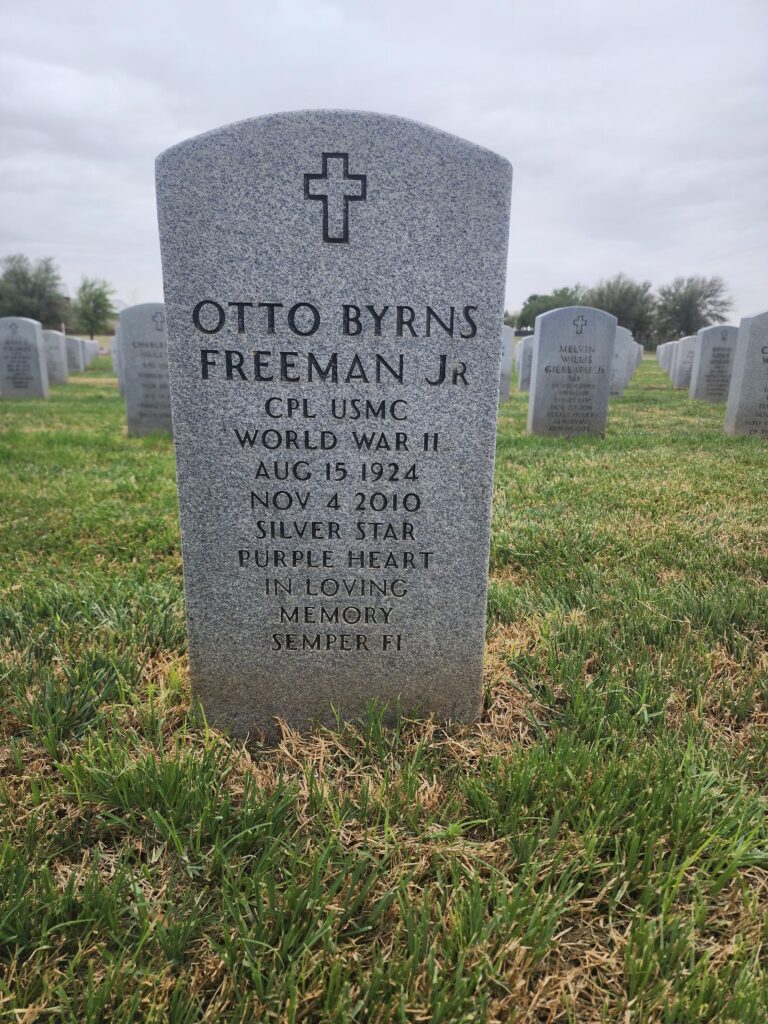
Corporal Otto Byrns Freeman, Jr.
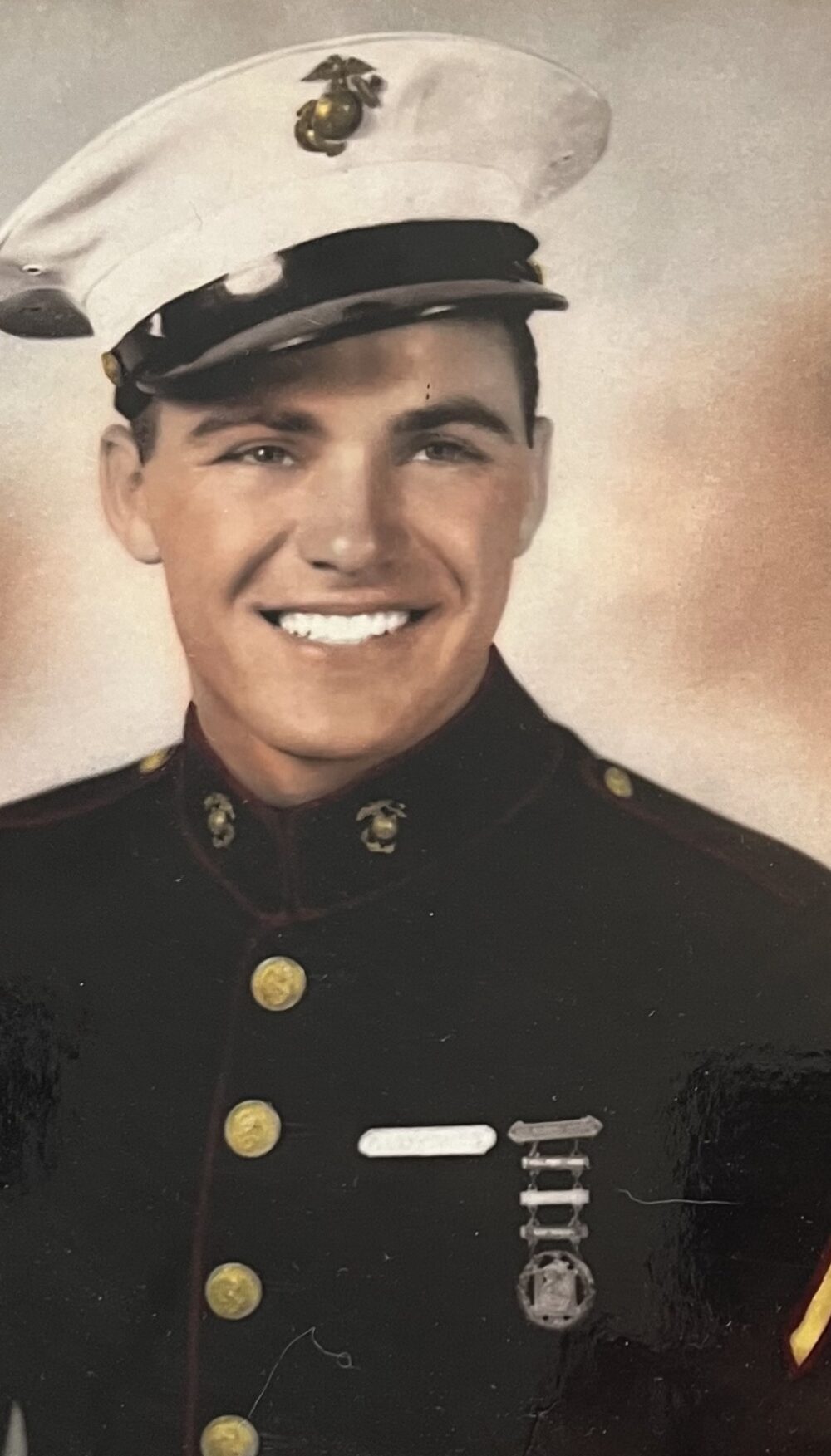
- Unit: Fourth Marine Division, 23rd Marines, 1st Battalion
- Date of Birth: August 15, 1924
- Entered the Military: June 17, 1943
- Date of Death: November 4, 2010
- Hometown: Sweetwater, Texas
- Place of Death: Sweetwater, Texas
- Award(s): Silver Star Medal, Purple Heart, Asian Pacific Ribbon with three battle stars, American Campaign Medal, World War II Victory Medal, Presidential Unit Citation
- Cemetery: Section 1, Row C, Site 102. Texas State Veterans Cemetery at Abilene, Abilene, Texas
Mentored by Mrs. Heather McCormick, Mr. Kelly Moore, and Ms. Judy Garza
Snyder Junior High School, Snyder, Texas
2025/2026
Early Life
Otto Byrns Freeman was born on August 15, 1924, in Sweetwater, Texas, a rural railroad town in Nolan County. He was the youngest child of Otto Freeman and Clara (Hopkins) Freeman. Freeman grew up in a close-knit family alongside his sister Kathleen, with three older siblings, Inez, John Edward, and Claudia. His mother, Clara, doted on him, and he was especially close to his parents.
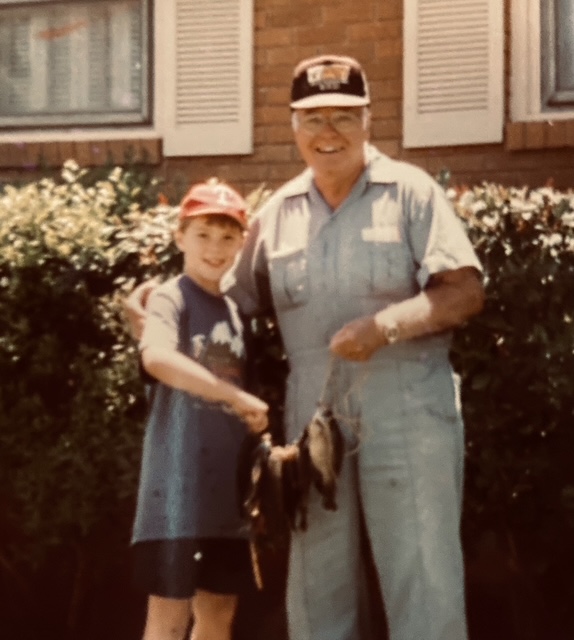
Freeman’s childhood was shaped by the rhythms of small-town life in West Texas. He spent his early years hunting quail and deer, fishing, and riding his horse, Popcorn, often with friends. Popcorn later had a colt named Kernel, and both horses were important parts of his youth. He did day work on local ranches and developed a love for the outdoors and rural traditions.
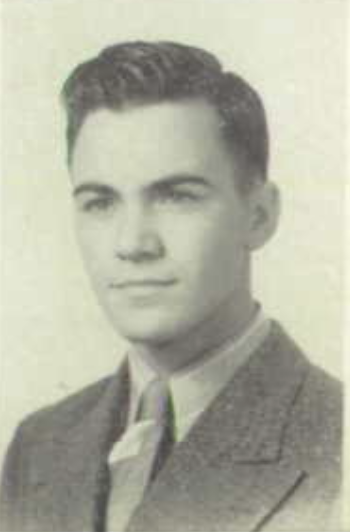
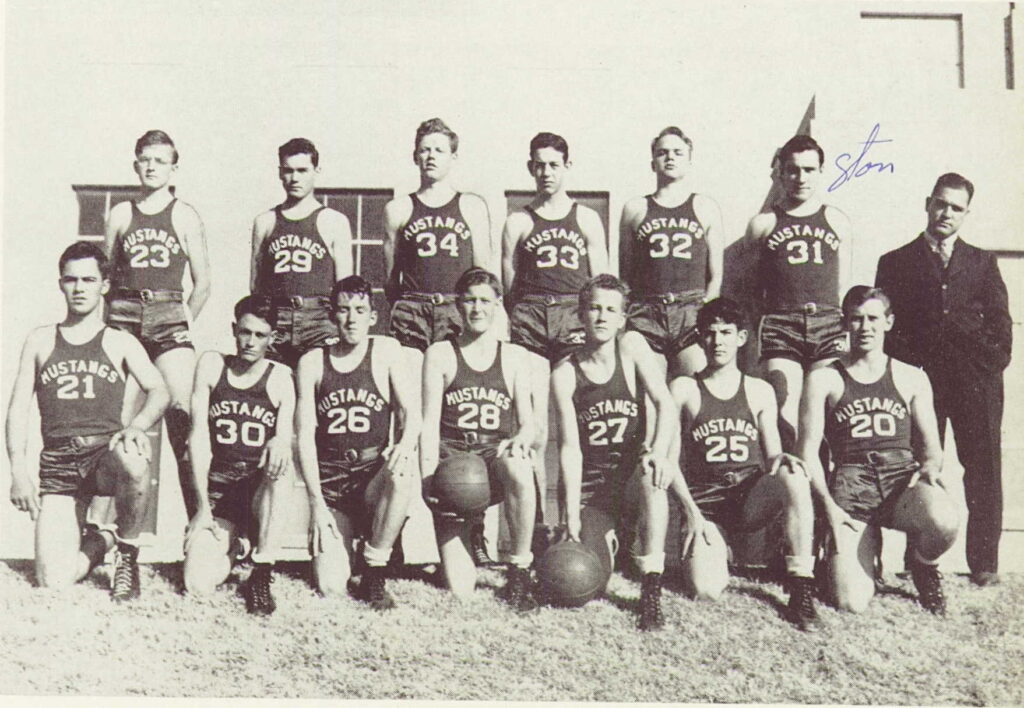
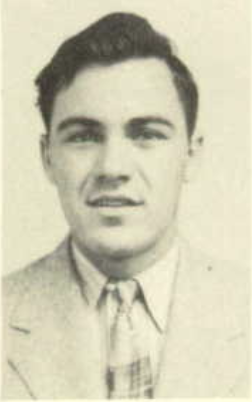
He attended Newman High School in Sweetwater, where he played basketball and football and ran track. However, since he was held back in elementary school, by senior year, he was too old to play sports, so he served as a yell leader, helping rally school spirit. He graduated from Newman High School in 1943.
Otto Freeman was known for his outgoing personality, loud voice, and sense of fun. Strong family ties, outdoor adventures, and community involvement defined his formative years and helped shape his character before entering military service.
Homefront
Sweetwater, Texas, during World War II was a rural community defined by its rapidly growing railroad industry and a close-knit, resilient population. The town was dry and dusty, but full of life and activity, especially as the war began to reshape its landscape. Sweetwater became a significant center for wartime manufacturing and training. Cotton, oil, and cattle were the main products, but the war years brought new factories, such as the International Harvester Company and several packing plants, as well as gypsum and cement plants, apparel manufacturers, and a cottonseed oil mill. These industries not only supported the war effort but also provided jobs for local families.
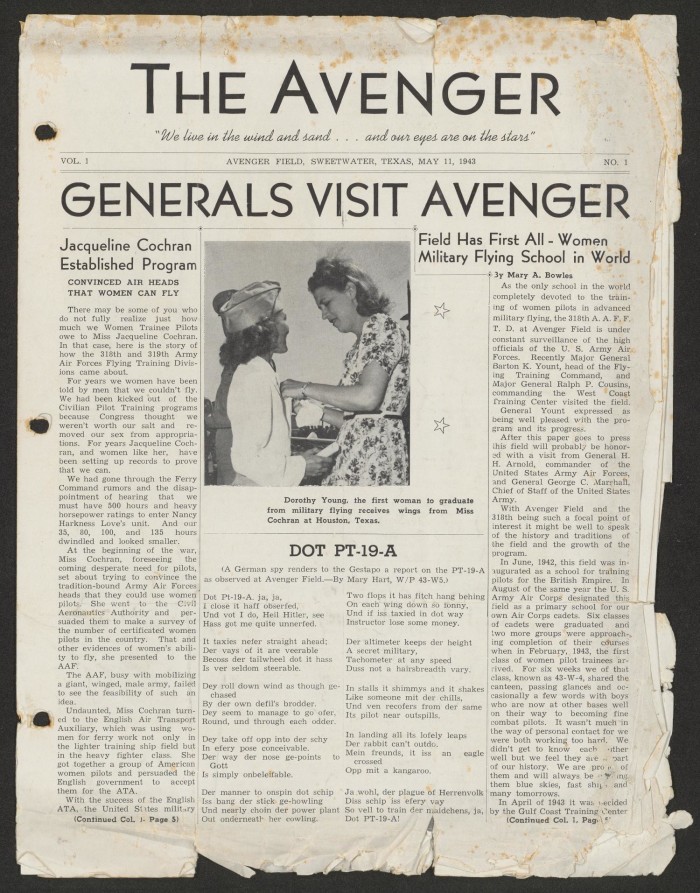
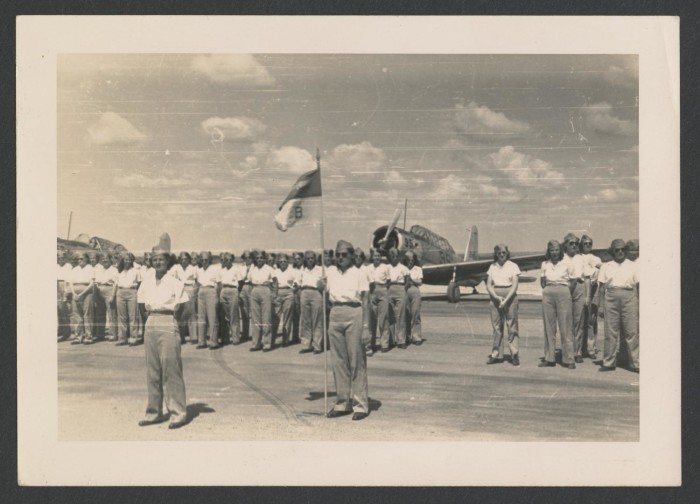
During the war, Sweetwater’s airfield was rented by the U.S. government and became home to the Sweetwater Bombardier School, which trained thousands of bombardiers for the Army Air Forces. Most notably, Avenger Field became the primary training base for the Women Airforce Service Pilots (WASP), the first women in American history to fly military aircraft. This marked a dramatic social change, as local women and those arriving from around the country stepped into roles previously closed to them, including flying, mechanics, and factory work. The presence of WASP pilots in Sweetwater created excitement, pride, and some controversy, as some community members were not pleased with women joining the Air Force.
The war brought population shifts, with new workers, military personnel, and their families arriving in town. Residents engaged in rationing, used gas stamps, bought war bonds, and grew Victory Gardens to support the troops. Posters and propaganda campaigns were a constant reminder to conserve resources and keep war information secret. The local newspaper, the Sweetwater Reporter, covered everything from war bond drives to egg production for the troops, reflecting both the town’s agricultural roots and its wartime innovations.
Sweetwater’s transformation from an agricultural and transportation hub to a vital military training and manufacturing center was rapid and profound. The oil industry boomed, and new opportunities appeared, not just for men but also for women and other groups. The legacy of the WASP program, the expansion of industry, and the community’s united effort during the war years created lasting pride and a sense of identity that shaped Sweetwater for decades to come.
Military Experience
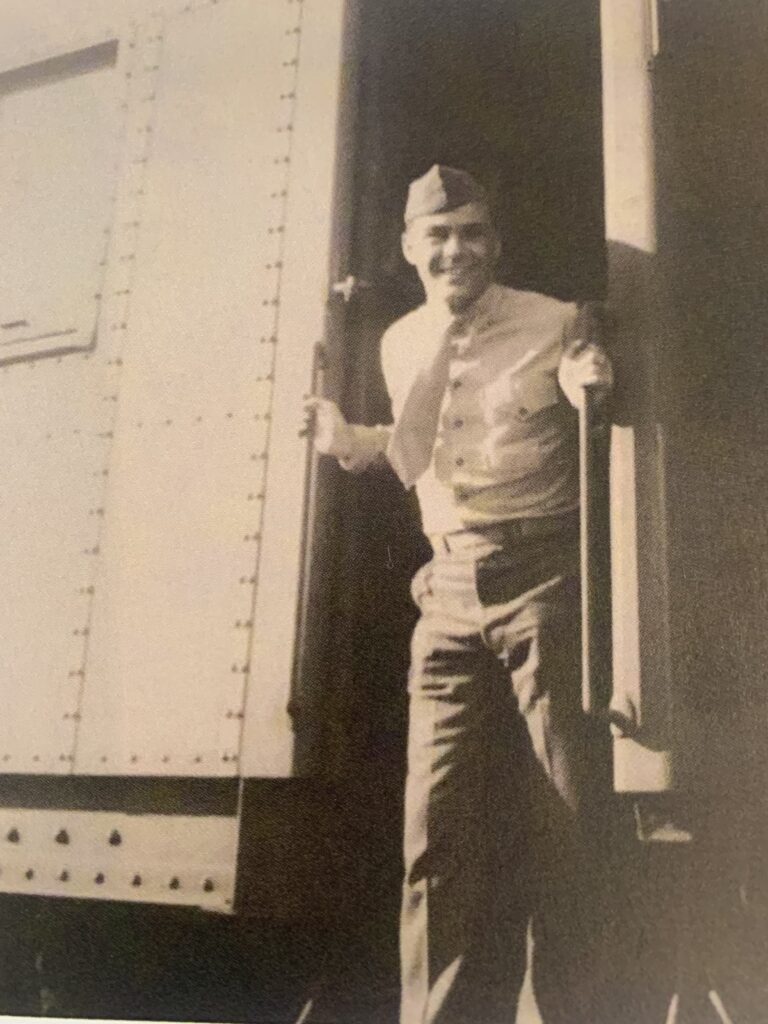
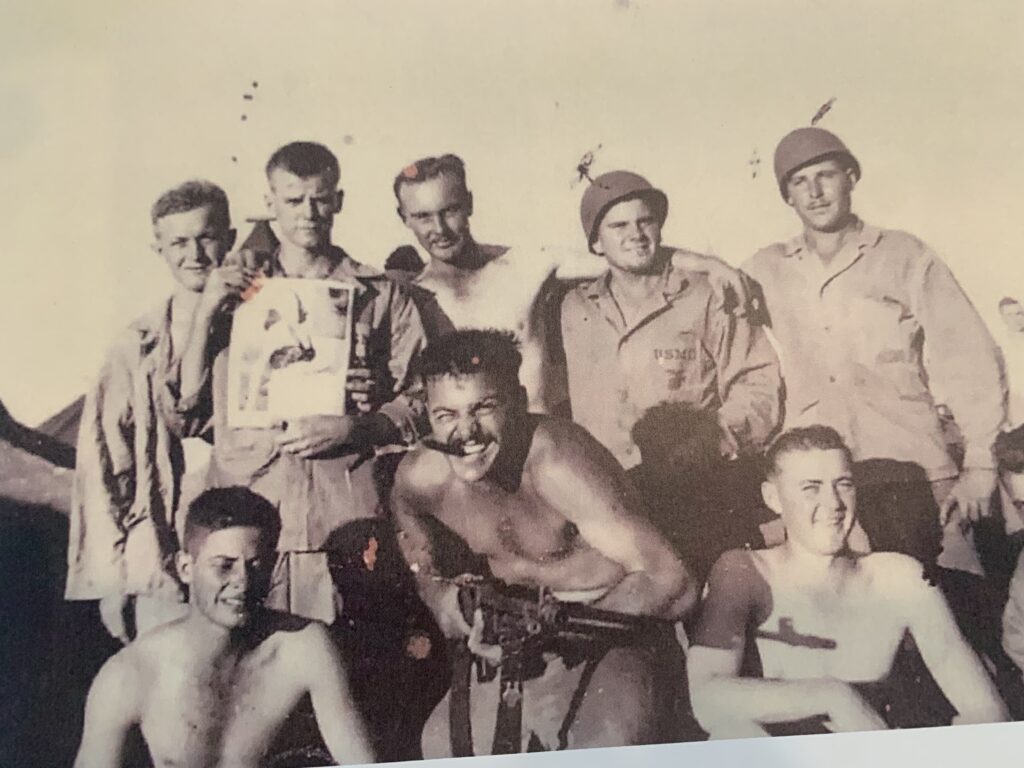
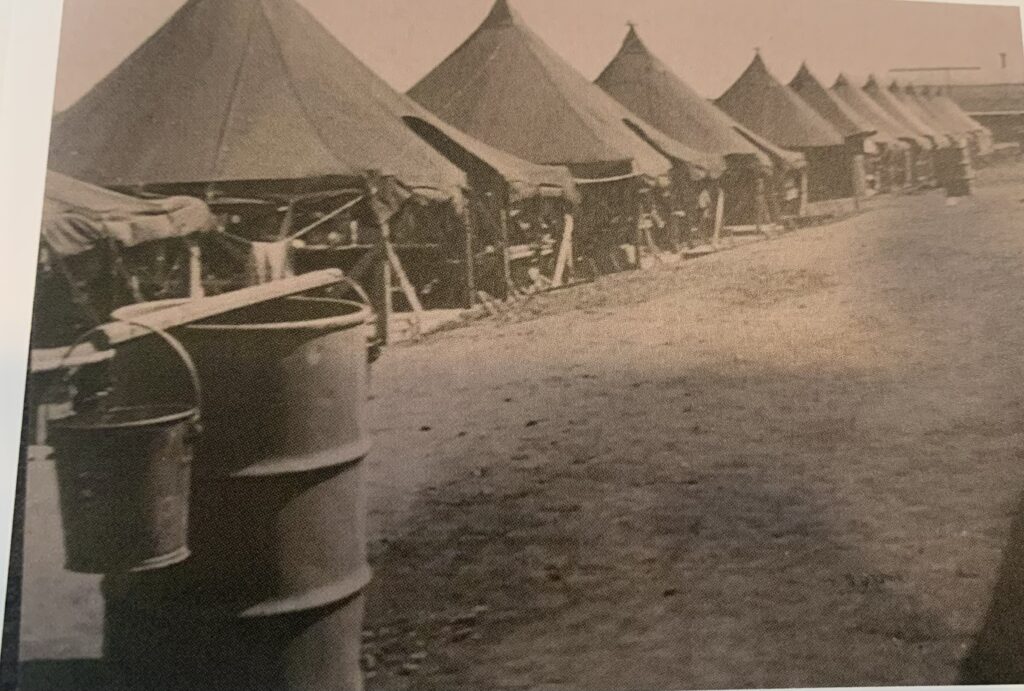
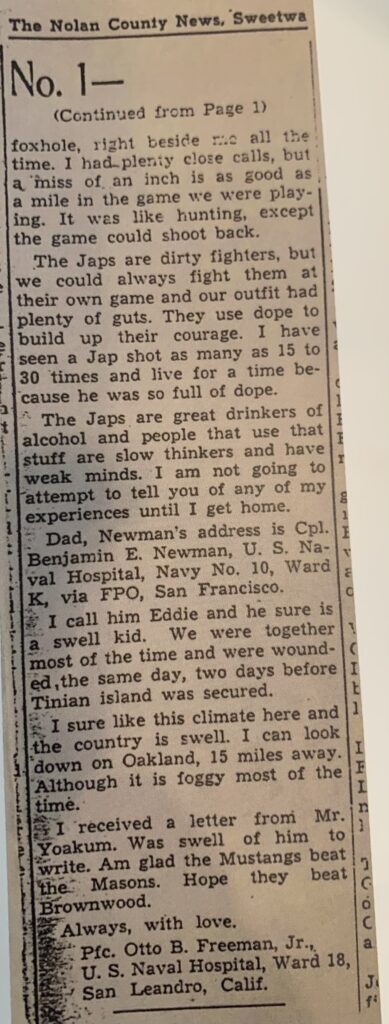
Freeman enlisted in the U.S. Marine Corps on June 17, 1943, and was assigned to the First Battalion, Twenty-Third Marines, Fourth Marine Division. As an automatic rifleman, Freeman played a crucial role in providing rapid, suppressive fire to support his squad during intense combat operations in the Pacific.
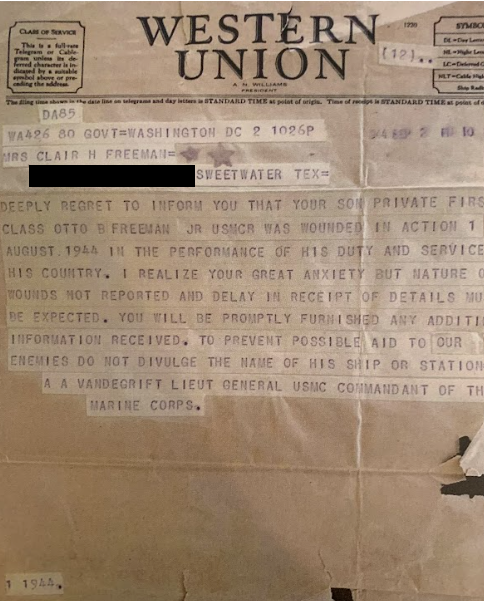
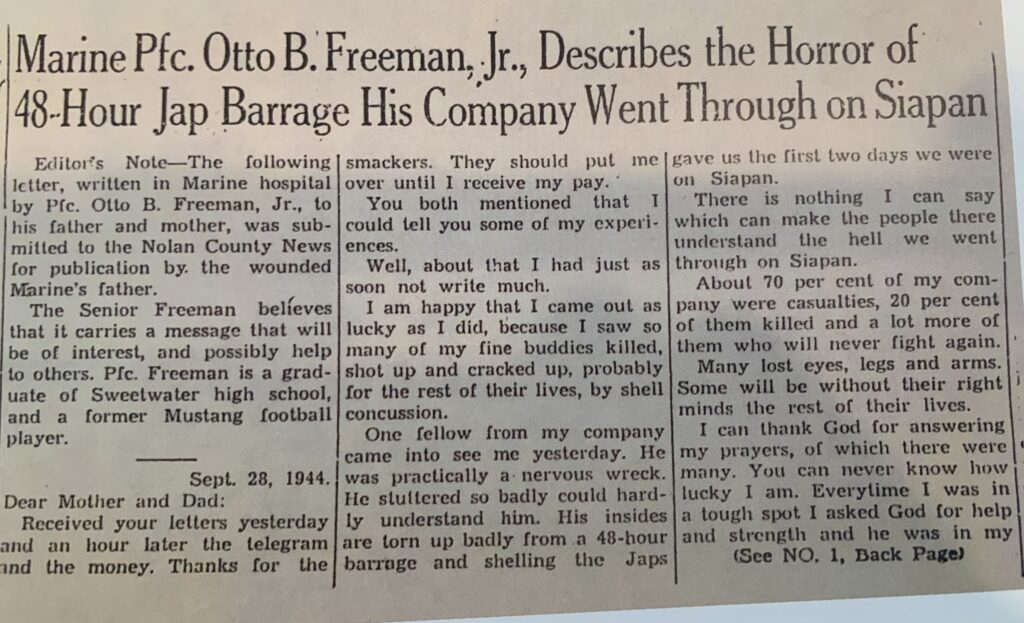
His most distinguished action occurred during the Battle of Tinian, a critical campaign from July 24 to August 1, 1944, which was essential for securing airfields for U.S. B-29 bombers. On August 1, 1944, while his company was advancing under relentless enemy fire, Freeman spotted the source of enemy fire threatening his company’s left flank. Without hesitation, he moved into clear view of two enemy machine guns. Demonstrating bold aggressiveness and remarkable courage, Freeman opened fire and maintained a steady, accurate stream of bullets on the hostile emplacements. He succeeded in destroying one machine gun and damaging the other before being wounded in both legs.
Although unable to move, Freeman gallantly guarded two other Marines who were also seriously wounded. Despite his pain and exhaustion, he held his position with indomitable fortitude, protecting his companions until all three could be evacuated. His alert readiness, daring initiative, and tenacious determination during this period of combat contributed materially to the success of operations against a vital Japanese stronghold. Freeman’s courage and valiant conduct in the face of fierce opposition upheld the highest traditions of the United States Naval Service.
For his actions on Tinian, Private First Class Freeman was awarded the Silver Star Medal and the Purple Heart. After spending almost a year recovering in a San Francisco hospital, he was honorably discharged on September 28, 1945.
Veteran Experience
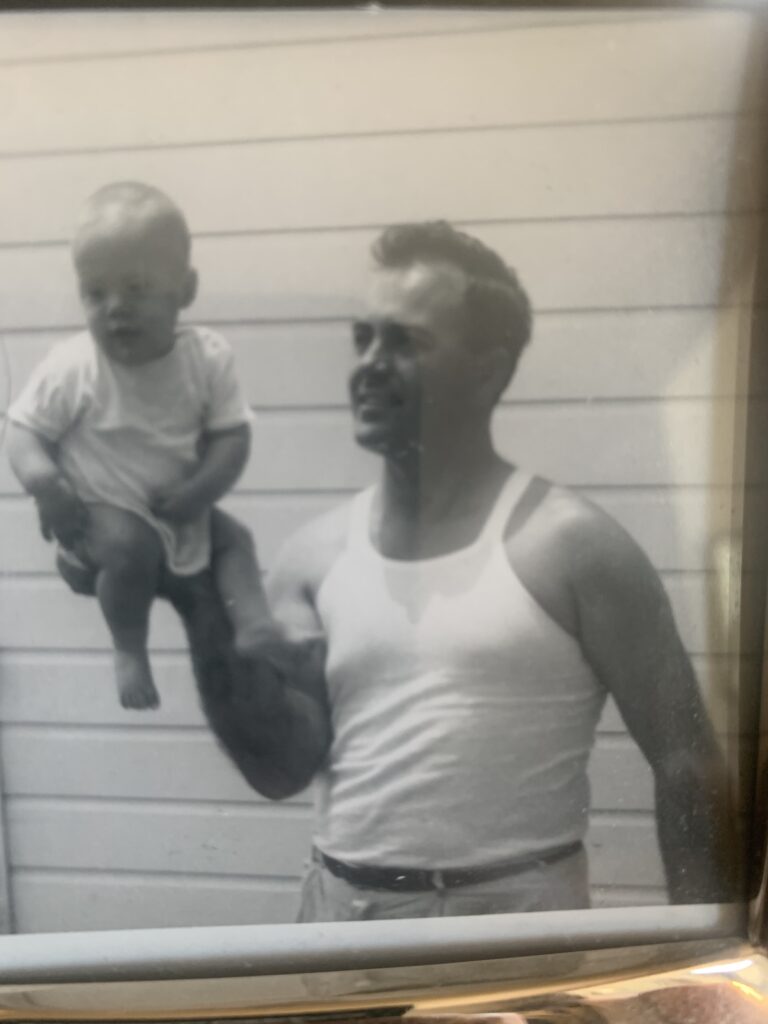
After Otto Byrns Freeman was honorably discharged from the U.S. Marine Corps on September 28, 1945, he returned to Sweetwater, Texas, carrying both physical and emotional scars from his wartime experiences. After a year of recovery in a San Francisco military hospital, the transition to civilian life was challenging. Freeman struggled with what we now recognize as post-traumatic stress disorder (PTSD), although at the time it was rarely discussed or formally diagnosed. Despite these challenges, he was determined to move forward and build a meaningful life after the war.
Encouraged by friends and family, Freeman took advantage of the educational opportunities provided to returning veterans. He enrolled at Texas Tech University, where he majored in agriculture and was notably voted “Most Handsome” by his peers. He roomed with his friend Jimmy Duncan, who had also served as a Marine. When the Korean War began, many World War II Marines were called back to service, but Freeman was unable to reenlist due to his injuries—a fact that frustrated him, as he felt a strong sense of duty.
After graduating, Freeman began working for Armor Co. Meat Packing, a job that took him to San Antonio and Corpus Christi, where he met his future wife, Cora Weissinger. He continued his career in the meatpacking industry, eventually returning to Sweetwater to work for the Pace Meatpacking Plant.
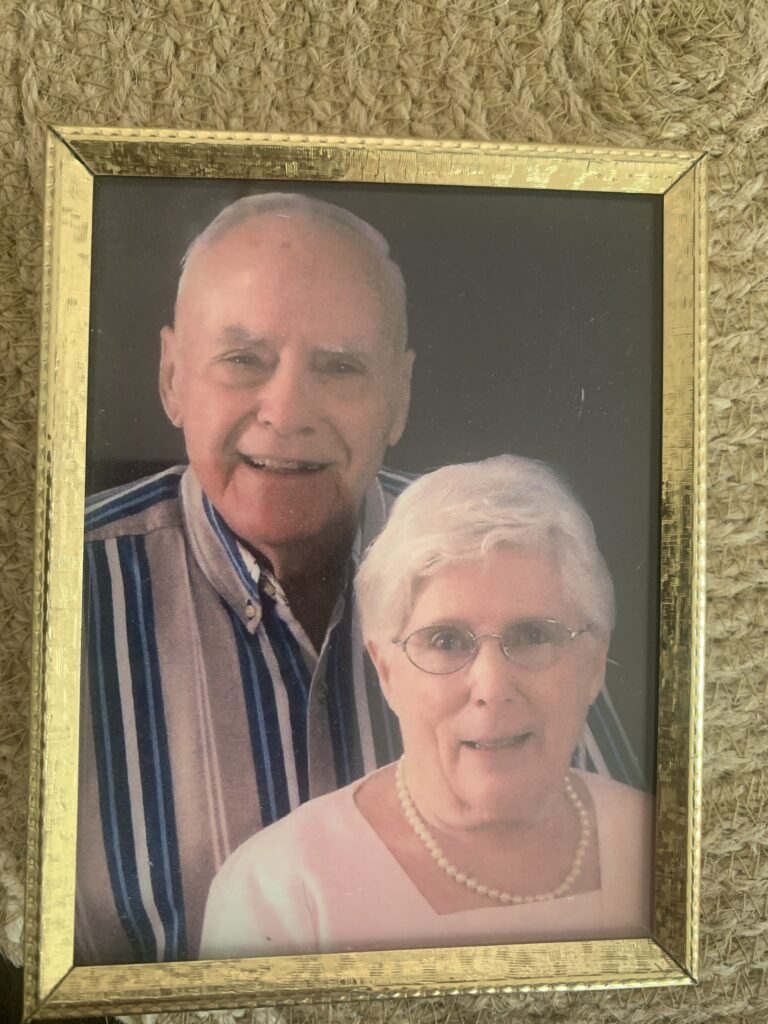
Freeman became a devoted family man, marrying Cora and raising four children. He was known for his modesty, warmth, and sense of humor. He rarely talked about his wartime experiences, choosing instead to focus on the present and enjoy time with family and friends. Freeman was active in his community, joining the Elks Club, playing golf with friends, and participating in local social circles. After retiring, he enjoyed meeting his friends for coffee at the bank every morning, where he was famous for telling jokes and being the “funny man.”
Although he did not join any veterans’ organizations, Freeman attended reunions and special events in the late 1980s, such as visiting the Nimitz Museum when a ship was named after one of his platoon mates. These rare occasions gave him the opportunity to reconnect with fellow Marines and honor the legacy of those who served.
Freeman’s greatest pride was his family and the relationships he built in his community. He was respected and trusted by those who knew him, remembered for his integrity, friendliness, and dedication to living life to the fullest despite the hardships he endured. His quiet strength and commitment to doing the right thing left a lasting impression on family, friends, and the broader Sweetwater community.
Commemoration
After his passing on November 4, 2010, Freeman was laid to rest in the Texas State Veterans Cemetery at Abilene with full honors, surrounded by those who knew and loved him. His courage and character—especially his selfless actions during the Battle of Tinian—remain sources of inspiration.
Many of his grandchildren have chosen to complete school projects on his service, ensuring his story remains alive and is shared with others. The impact of his wartime heroism and postwar example is so profound in his family that one of his great-grandchildren was named “Tinian” in honor of the island where Freeman was wounded and earned the Silver Star. These tributes reflect the deep respect and pride his family feels for his sacrifice and service.
Freeman is remembered for his integrity, modesty, and commitment to doing the right thing. His story is a reminder of the importance of family, community, and service to others. Through family stories, school projects, and even the names of the next generation, Otto Byrns Freeman’s memory continues to inspire and unite those whose lives he touched.
Bibliography
Primary Sources
“443 Million Texas Eggs Crop of 1943.” Sweetwater Reporter [Sweetwater, Texas], May 13, 1943. https://texashistory.unt.edu/ark:/67531/metapth282546/.
Carolynn Freeman. Photograph. 1940. Digital Images. https://ancestryclassroom.com.
Freeman Family Photographs. Courtesy of Emily Freeman.
Newman High School Yearbook. Sweetwater Independent Schools, 1941. Digital Images. https://ancestryclassroom.com.
Newman High School Yearbook. Sweetwater Independent Schools, 1942. Digital Images. https://ancestryclassroom.com.
Newman High School Yearbook. Sweetwater Independent Schools, 1943. Digital Images. https://ancestryclassroom.com.
Otto Byrns Freeman, Official Military Personnel File, Department of the Navy, National Archives and Records Administration – St. Louis.
Otto Byrns Freeman, Report of Separation, Department of the Navy, National Archives and Records Administration – St. Louis.
Otto Byrns Freeman. U.S. Department of Veterans Affairs BIRLS Death File, 1850-2020. Digital Images. https://ancestryclassroom.com.
Otto Byrns Freeman. “Town News.” Abilene Reporter News [Abilene, Texas], June 17, 1943. https://ancestryclassroom.com.
Otto Byrns Freeman. “Navy Casualties.” Abilene Reporter News [Abilene, Texas], September 26, 1944. https://ancestryclassroom.com.
Otto Byrns Freeman. Texas, U.S., Select County Marriage Records, 1837-1965. Digital Images. https://ancestryclassroom.com.
Otto Byrns Freeman. World War II Draft Cards Young Men, 1940-1947. Digital Images. https://ancestryclassroom.com.
“Otto Byrnes (O.B.) Freeman.” San Angelo Standard Times [San Angelo, Texas], November 7, 2010. Newspapers.com (780274989).
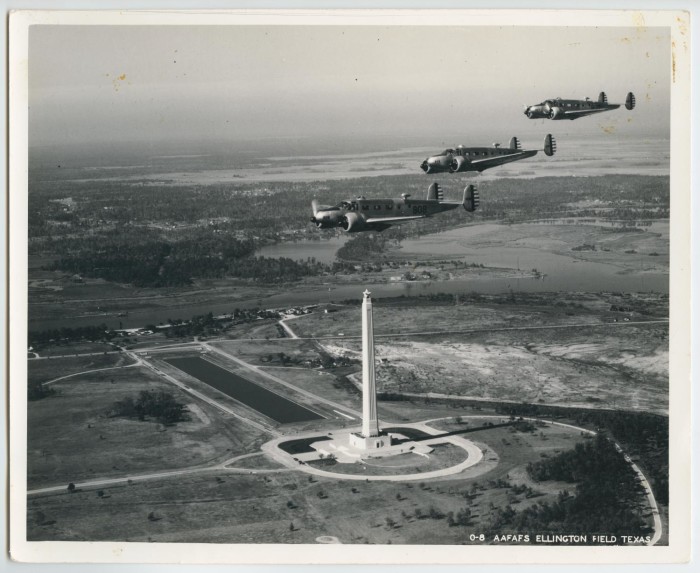
Planes Flying Over Ellington Field. Photograph. c.1941-45. Pioneer County City Museum (PCCM) Collection, Portal to Texas History at University of Northern Texas Libraries (WASP_2013-01-855V). https://texashistory.unt.edu/ark:/67531/metapth907433/?q=Planes%20Flying%20Over%20Ellington%20Field.
Secondary Sources
“Brenda Dawn Freeman Cantrell.” McCoy Funeral Home. Accessed October 30, 2025. https://www.mccoyfh.com/obituary/brenda-cantrell.
Guise, Kim. “Rosie the Riveter and Benny the Bungler: WWII Propaganda at Work.” National WWII Museum. Updated May 16, 2020. Accessed November 25, 2025. https://www.nationalww2museum.org/war/articles/wwii-propaganda
“History of Sweetwater Army Air Field (Avenger Field).” Texas State Historical Association. Updated July 1, 1995. Accessed November 25, 2025. https://www.tshaonline.org/handbook/entries/sweetwater-army-air-field.
“How WWI Sparked Population Shifts in the United States.” Doughboy Foundation. Updated January 3, 2025. Accessed November 25, 2025. https://doughboy.org/how-wwi-sparked-population-shifts-in-the-united-states/.
Moore, Allison. “What You Didn’t Know About Sweetwater, Texas.” KEAN105.3 FM. Updated February 18, 2022. Accessed November 25, 2025. https://keanradio.com/surprising-facts-about-sweetwater-texas/.
“Nolan County, Texas: History, Geography, and Economy.” Texas State Historical Association. Updated August 27, 2016. Accessed November 25, 2025. https://www.tshaonline.org/handbook/entries/nolan-county.
“Sweetwater, Texas: A Historical Overview of Nolan County’s County Seat.” Texas State Historical Association. Updated August 14, 2015. Accessed November 25, 2025. https://www.tshaonline.org/handbook/entries/sweetwater-tx.
“Texas in World War II.” Texas Historical Commission. Updated 2025. Accessed November 25, 2025. https://thc.texas.gov/learn/military-history/texas-world-war-ii.
Texas in World War II: Fundamentals of Military Oral History. Texas Historical Commission, 2009.
This profile was funded by a grant from the United States Department of Veterans Affairs. The opinions, findings, and conclusions stated herein are those of the author and do not necessarily reflect those of the United States Department of Veterans Affairs.