
First Lieutenant Parr Hooper
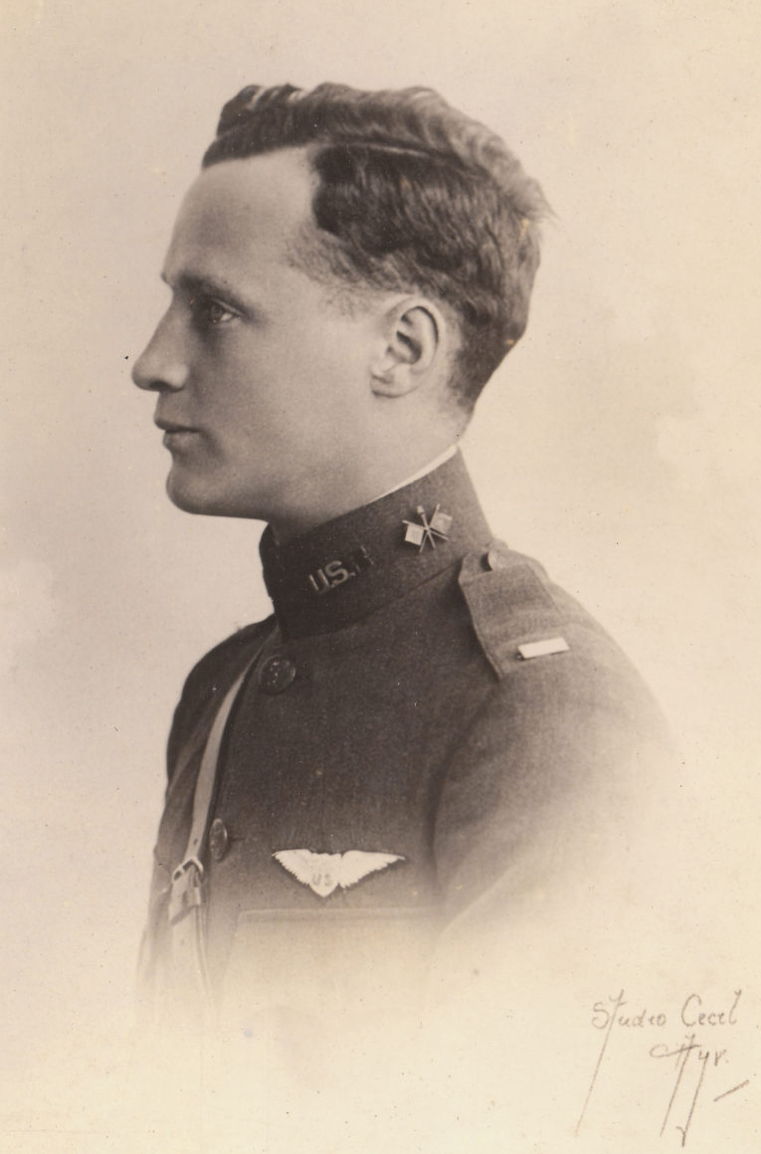
- Unit: 32nd Aero Squadron
- Date of Birth: September 5, 1892
- Entered the Military: June 23, 1917
- Date of Death: June 10, 1918
- Hometown: Baltimore, Maryland
- Place of Death: Near the Chateau de Sorel, Picardy, France
- Award(s): Purple Heart, United States Aviator Badge, World War I Victory Medal, Order of St. Sava
- Cemetery: Tablets of the Missing. Aisne-Marne American Cemetery, Belleau, France
St. Mary’s Ryken High School, Leonardtown, Maryland
2025/2026
Early Life
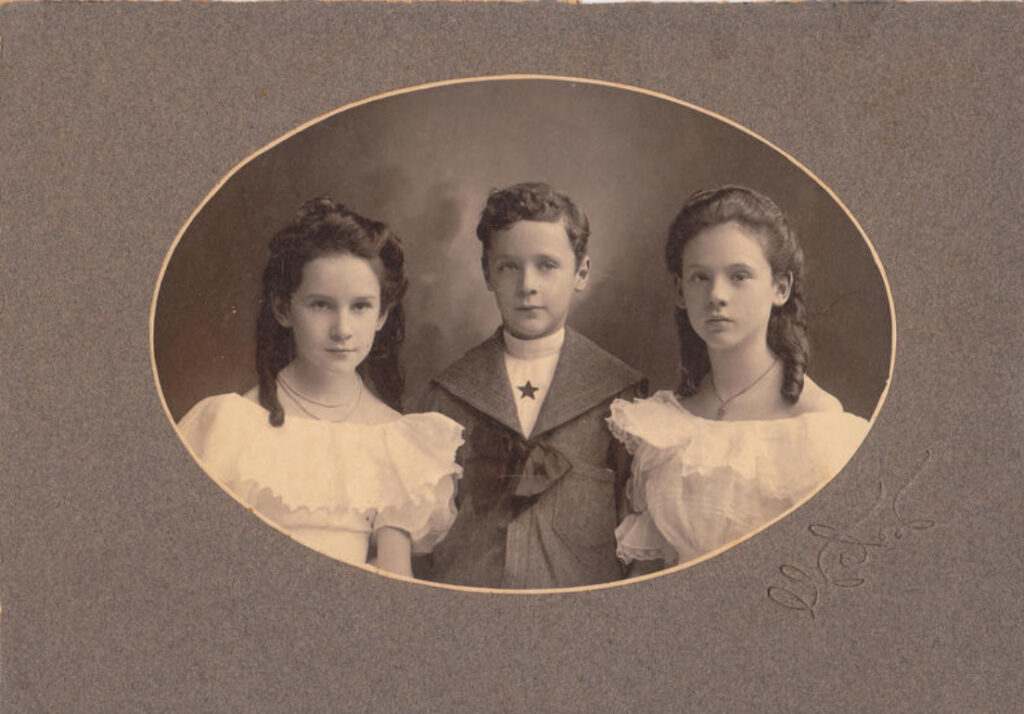
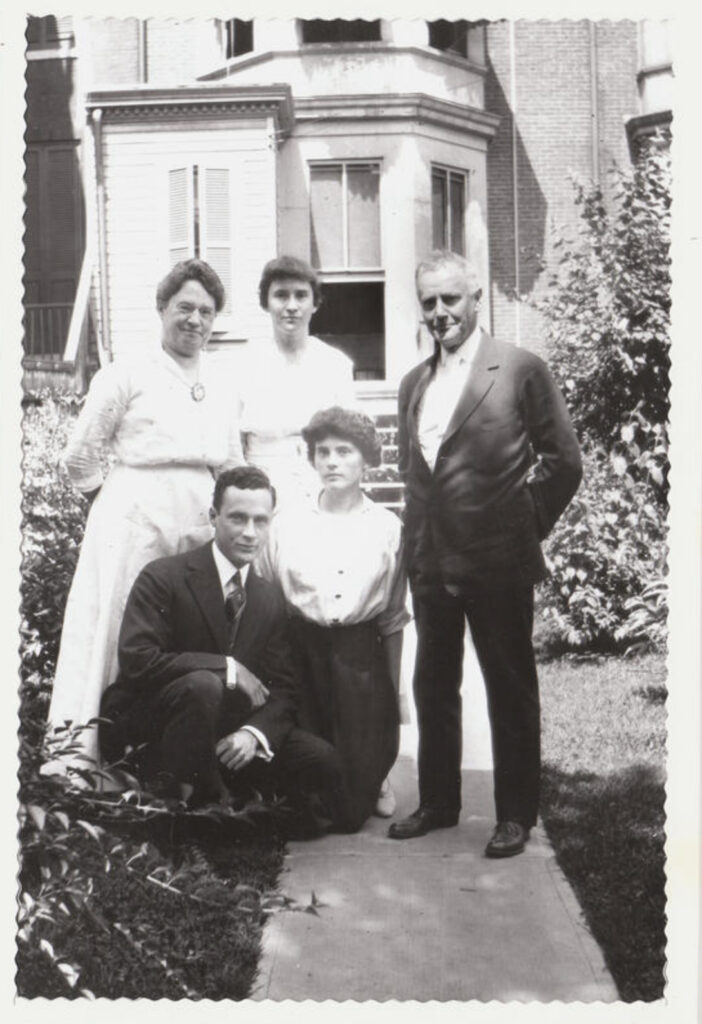
Parr Hooper was born on September 5, 1892, in Pikesville, Maryland, the youngest child of Herbert and Margaret (Parr) Hooper. He grew up with two older sisters, Mary and Margaret. Both sides of his family were deeply rooted in Maryland, having lived in the Baltimore and Dorchester regions since the late eighteenth century.
Parr’s maternal grandfather, Israel Miltiades Parr, was one of Baltimore’s wealthiest and most influential grain merchants. In the 1900 census, Parr, his sisters, and his parents lived in Israel’s rented home in Baltimore. The household also included Parr’s uncle, William H. Parr, and two African American employees—John Uphoe, a waiter from Virginia, and Mary Howard, the family’s servant and cook. Herbert Hooper, Parr’s father, also contributed to the family’s financial success, rising to become an employer in the wool manufacturing business by 1910.
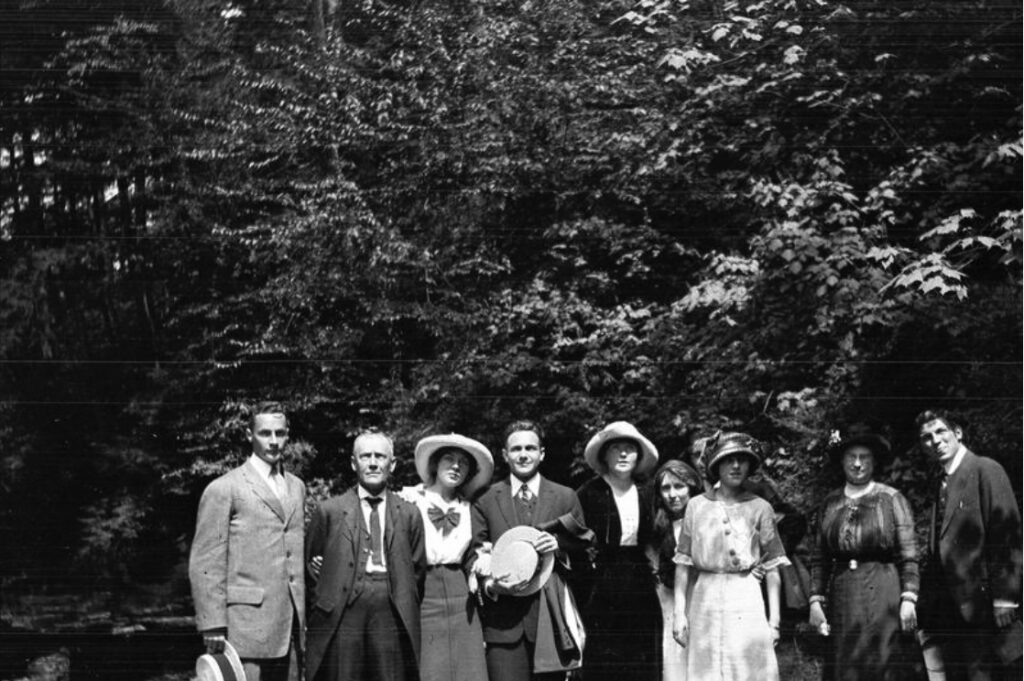
The Hooper family enjoyed regular vacations at Cape May, New Jersey, or at the Blue Mountain House in western Maryland. These trips were part of the rhythm of a family that lived comfortably and moved confidently in upper‑class Baltimore circles.
Education
Parr grew up privileged but also with curiosity, discipline, and a strong technical mind. He attended Baltimore Polytechnic Institute, graduating in 1910, and quickly set his sights on engineering. That fall, he enrolled at Cornell University’s Sibley College of Engineering, immersing himself in mechanical engineering, naval architecture, and the emerging world of aviation.
In his time at Cornell, Parr was a member of Alpha Chi Rho, Tau Beta Pi (the engineering honor society), the Maryland Club, the Cross Country Club, and the Aero Club. He graduated in 1913 with a B.S. in mechanical engineering.
Employment
After graduation, Parr first worked for the Langston Monotype Company in Philadelphia before accepting a position as a premium clerk and mechanic with New York Shipbuilding Company in Camden, New Jersey. On his 1917 draft registration card, he described himself simply and proudly as a shipbuilder.
Homefront
Although Parr Hooper was working in New Jersey when the United States entered the First World War, his true home—socially, culturally, and emotionally—was Baltimore.
Wartime Production
In the 1910s, Baltimore was one of the nation’s most strategically important industrial centers. The federal government regarded the city as vital to the war effort because of its manufacturing capacity, its access to major waterways and rail lines, and its proximity to the nation’s capital.
During the war, Bethlehem Steel, Baltimore Dry Dock and Shipping, and Maryland Shipbuilding Company produced merchant and cargo vessels at a staggering pace. Mills in Hampden, Woodberry, Mt. Vernon, and Hooperwood turned out enormous quantities of cotton duck canvas, the essential fabric for tents, web gear, and countless pieces of military equipment. Other factories produced munitions, while thousands of Baltimoreans volunteered to make bandages for the Red Cross.
Food Conservation
The home front extended far beyond the factory floor. Baltimore became a national model for food conservation. “Liberty Gardens” could be found in window boxes, schoolyards, vacant lots, and city parks. Dr. John Goucher, president of Goucher College, famously plowed up the front lawn of his estate, Alto Dale, and with the help of students, harvested 256 bushels of potatoes.
Posters urging thrift, sacrifice, and patriotism blanketed the city. Baltimore also served as a major distribution hub for grain and food supplies destined for military camps across the country and for the American Expeditionary Forces in Europe.
Social Changes
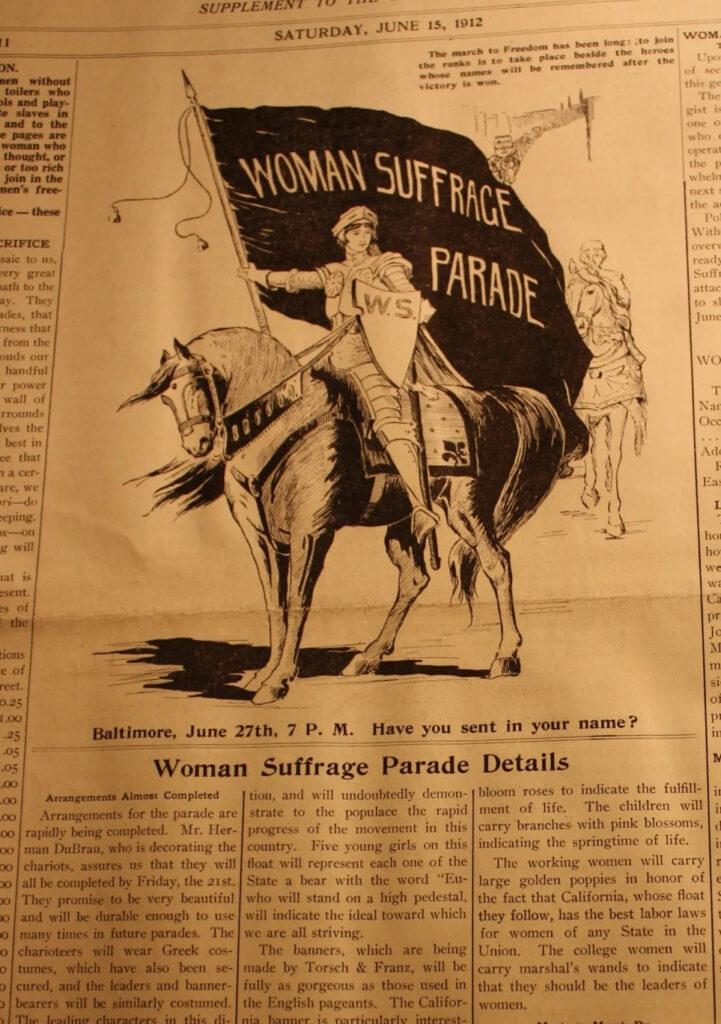
At the same time, Baltimore was a battleground for women’s rights. The city’s suffrage movement was fierce, diverse, and often confrontational. In 1912, more than a thousand women marched through the streets, led by Ida Baker Neepier dressed as Joan of Arc, while Lucy Branham, a 26‑year‑old organizer for the National Woman’s Party, became one of the movement’s most militant voices.
Augusta Chissell, an African American activist, founded the Progressive Women’s Suffrage Club in 1915 and helped establish Baltimore’s NAACP branch. Groups like the Just Government League staged marches and long-distance hikes to draw attention to the cause. Although Maryland’s legislature resisted the Nineteenth Amendment, Baltimore’s women fought relentlessly for political equality.
Baltimore’s wartime transformation was rapid, profound, and drove more societal change. Labor demands opened new opportunities for women and African Americans. The city’s population surged by more than 175,000 between 1910 and 1920 as African American migrants and rural White workers arrived seeking industrial employment.
To accommodate this growth, Baltimore annexed more than 50 square miles of surrounding land in 1918, paving the way for new suburban communities such as Dundalk and Brooklyn. Wealthier residents moved outward, leaving the inner city increasingly segregated and economically strained. Redlining practices entrenched racial inequality, while the presence of African Americans, Jews, and labor organizers fueled the resurgence of a highly visible KKK chapter.
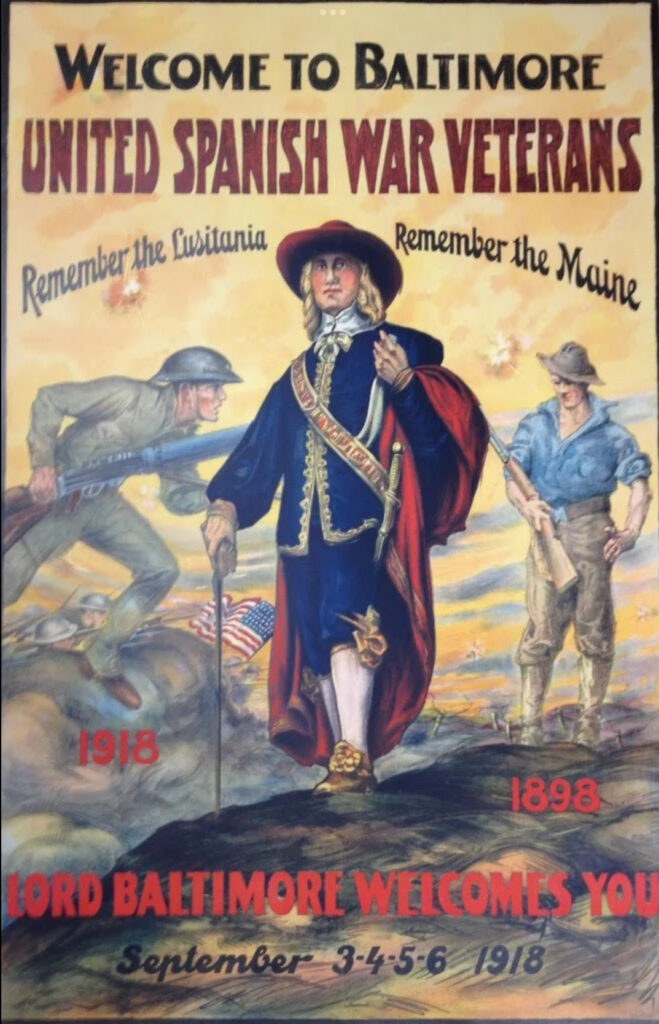
Labor unrest became a defining feature of the era. Mill, rail, and dock workers, as well as longshoremen, staged dozens of strikes. Some mills ultimately shut down and relocated their operations to the Deep South. Even as labor disputes roiled the industrial landscape, Baltimore served as a gathering place for patriotic commemoration. In September 1918, the city hosted the Twentieth annual encampment of the United Spanish War Veterans at the Fifth Armory, reflecting the city’s role as a civic center for military and veteran culture.
Wartime Tensions
The war also exposed deep fractures within the city. Baltimore had one of the largest German‑American populations in the country, and wartime suspicion quickly turned into hostility. German-language newspapers such as the Deutsch Correspondent were shut down. German schools and turnvereins (gymnastics clubs) closed permanently.
City streets also fell victim to the anti-German movement sweeping the city. German Street was renamed Redwood Street in honor of George B. Redwood, the first Baltimore officer killed in France. In the face of growing hostility and suspicion, many German-Americans Anglicized their names or sought rapid naturalization to prove their loyalty. Others endured harassment, public humiliation, and even violence.
Life on the home front was not without hardship for the rest of Baltimore’s population. Coal shortages were severe. Parents sent children to gather fallen coal along railroad tracks, a dangerous practice that resulted in at least one child’s death. Fears of sabotage ran high, with many residents convinced that German‑American “enemy aliens” might poison the city’s water supply. And in July 1916, the arrival of the German merchant submarine Deutschland in Baltimore’s harbor stirred both fascination and anxiety.
War Bonds Drives
The city’s patriotism was also measured in dollars. Baltimore was tasked with raising $25 million in Liberty Bonds. German‑American residents alone contributed $500,000. To encourage purchases, the city offered hot‑air balloon rides for every $1,000 in bonds purchased, while schoolchildren held penny drives to support the cause.
Supporting the War Effort
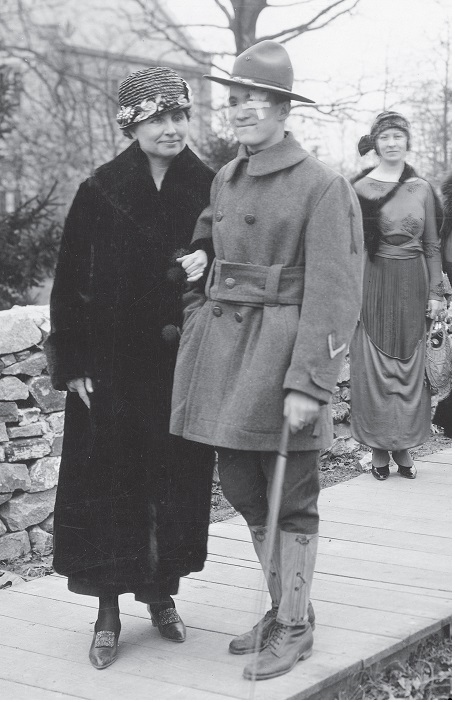
Camp Holabird, established in 1917 in southeast Baltimore, became the Army’s first motor transport training center and depot. At Fort McHenry, U.S. Army General Hospital No. 2 grew into the largest receiving hospital in the country, with more than 100 buildings, 3,000 beds, and a staff of over 900. More than 20,000 wounded and sick soldiers passed through its wards, and the hospital became a major center for neurosurgery, plastic surgery, and rehabilitation.
The Evergreen Red Cross Institute for the Blind, founded in 1917 on what would later become Loyola University’s campus, trained soldiers who had lost their sight in skills such as typing, Braille, and bookbinding.
Two regiments of the American Expeditionary Forces, the 115th Infantry of the 29th Division and the 313th Infantry (“Baltimore’s Own”) of the 79th Division, drew heavily from the city’s population and suffered devastating casualties in the 1918 campaign.
Military Experience
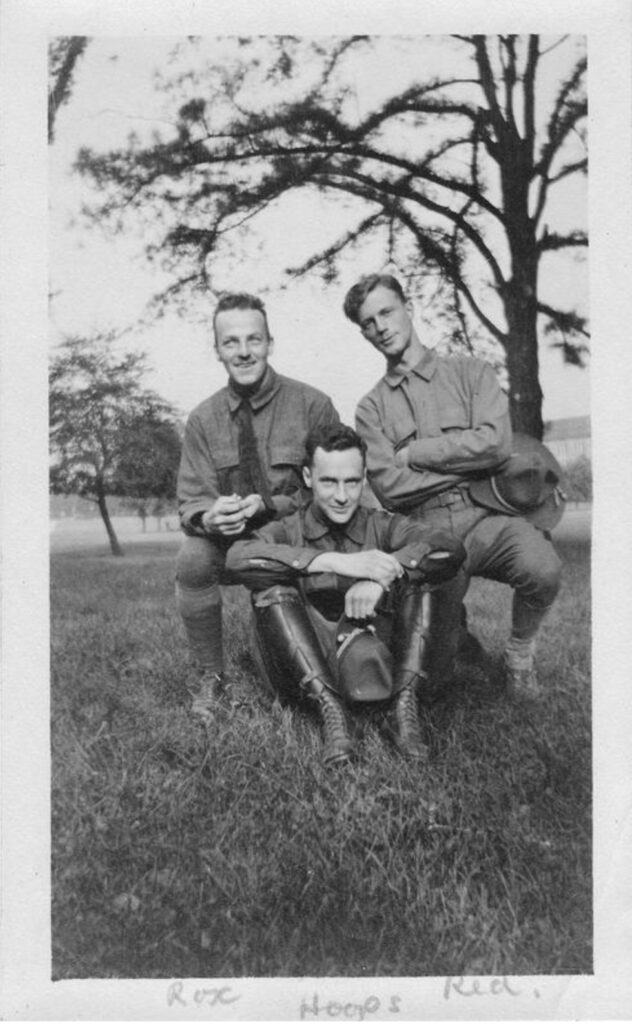
When the United States entered the First World War, Parr Hooper did not hesitate. In June 1917, he enlisted in Washington, D.C., volunteering for one of the most dangerous and technically demanding branches of the new American war effort—the Aviation Section of the U.S. Signal Corps.
Training
His path to the front began with ground school at the School of Military Aeronautics at Ohio State University. Shortly afterward, he and 150 other aviation cadets boarded Carmania in New York on September 18, 1917, believing that they were destined for the Italian front. The convoy gathered at Halifax three days later and crossed the Atlantic uneventfully. However, when Carmania docked in Liverpool on October 2, 1917, it was clear their destination had changed.
After arriving in England, Parr began an intensive round of training to become a pilot. His first stop was the Royal Flying Corps No. 2 School of Military Aeronautics at Oxford University, at Christ Church College on October 8. A month later, from November 3–13, he trained in machine gunnery at Harrowby Camp near Grantham. On November 14, he was among 50 cadets selected for flight training and was posted to No. 2 Training Squadron at Northolt Aerodrome, where he trained from November 18 to December 10.
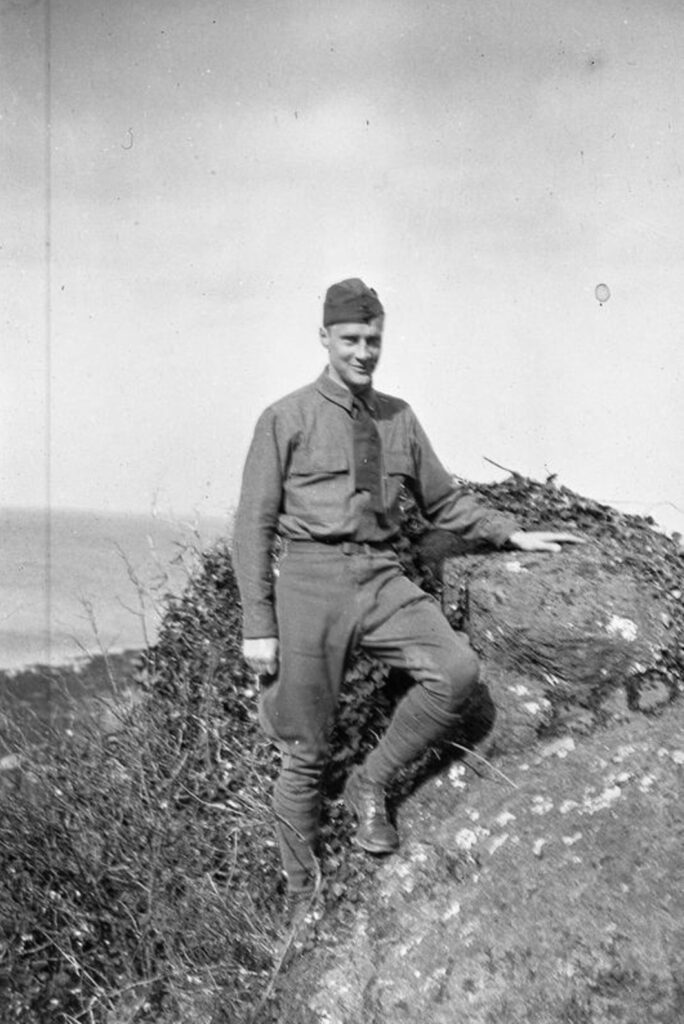
His next phase of instruction took place at No. 56 Training Squadron at London Colney Aerodrome, where he trained from December 12, 1917 to March 19, 1918. From there, he moved north to Scotland, attending the No. 2 Auxiliary School of Aerial Gunnery at Turnberry (March 20–29) and the No. 1 School of Aerial Fighting at Ayr (March 31–April 26). By the end of April 1918, Parr was fully trained as a combat pilot and had been commissioned as a first lieutenant in the United States Army Signal Corps.
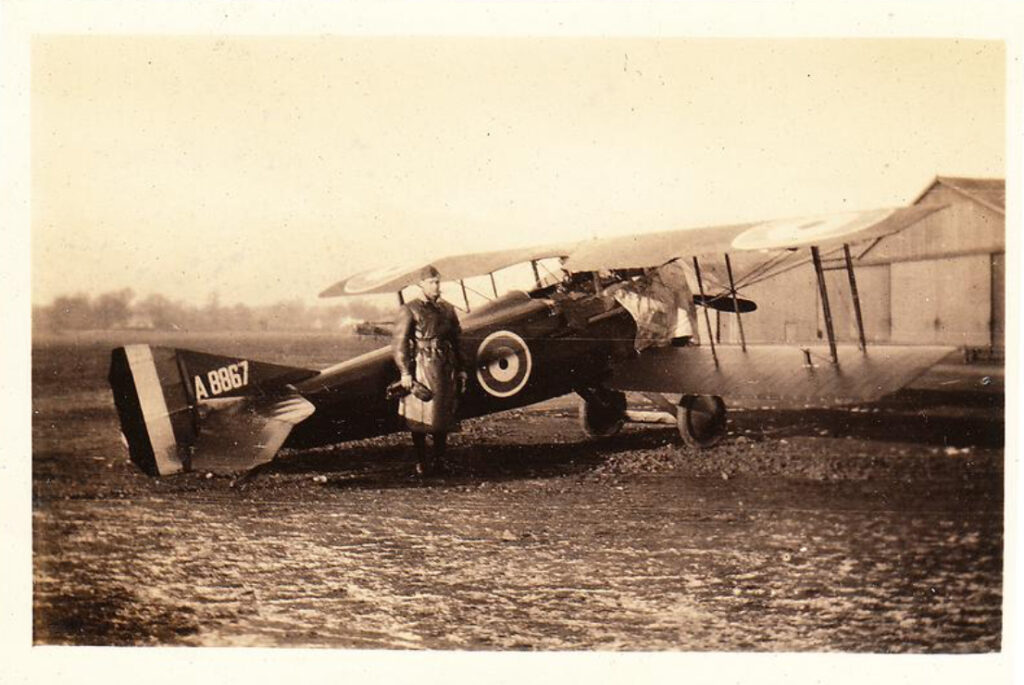
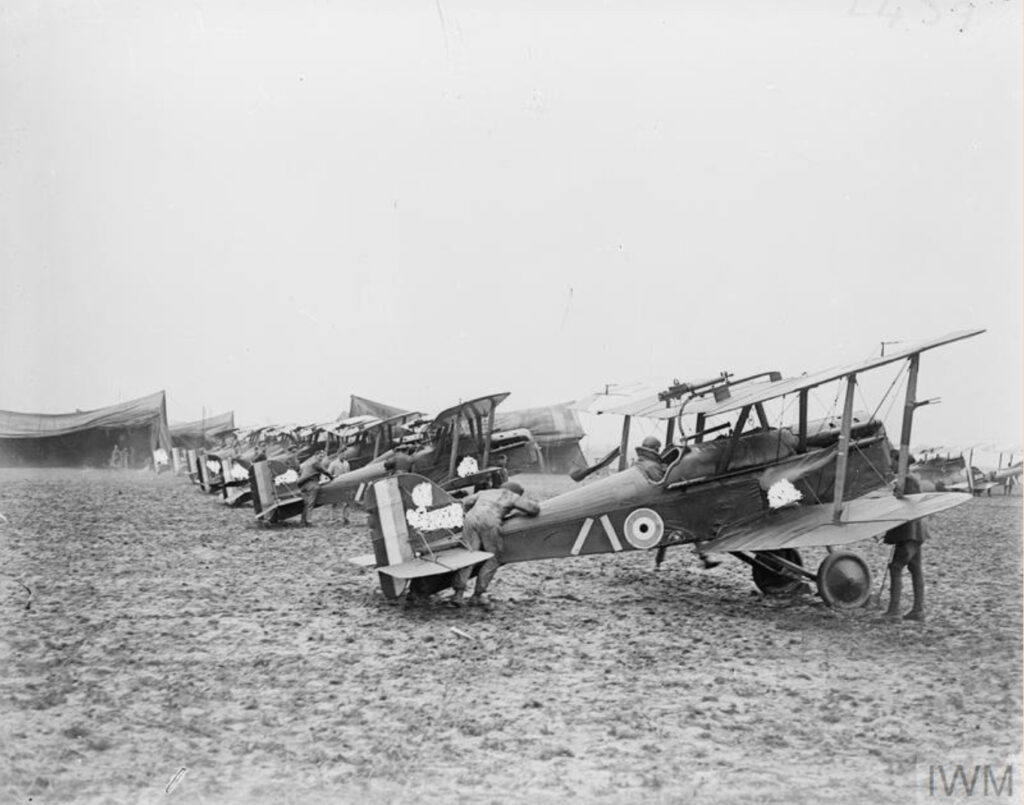
Before receiving a squadron assignment, Parr briefly served as a ferry pilot from May 4–12, 1918, flying aircraft between various locations in England and France. On May 12, he was posted to No. 32 Squadron of the Royal Air Force—an experienced British unit flying the S.E.5a, one of the finest fighter aircraft of the war. Like other American pilots, Parr was sent to an R.A.F. Squadron to gain combat experience and flight‑leader training before joining an American squadron.
Combat Pilot
Life in No. 32 Squadron was dictated by weather, machinery, and danger. On days when flying was possible, Parr typically flew two patrols—one in the morning, one in the late afternoon. The squadron was tasked with reconnaissance missions over the front, offensive patrols to disrupt enemy movements, strafing attacks on German formations, and constant efforts to secure air superiority. Between flights, Parr worked closely with mechanics to repair damage from previous patrols, his mechanical engineering background making him an asset on the ground as well as in the air.
His combat service coincided with one of the war’s most intense phases. In May and June 1918, British squadrons were shifted into Picardy to support French forces resisting a major German offensive—Operation Hagen—aimed at capturing Compiègne and gaining access to critical rail networks, allowing rapid movement of troops and supplies. The fighting was fierce, and the skies over Picardy were crowded with aircraft from both sides.
On June 6, 1918, Parr earned his first official credit for bringing down an enemy aircraft during a violent dogfight. It was a brief moment of triumph in a rapidly escalating battle.
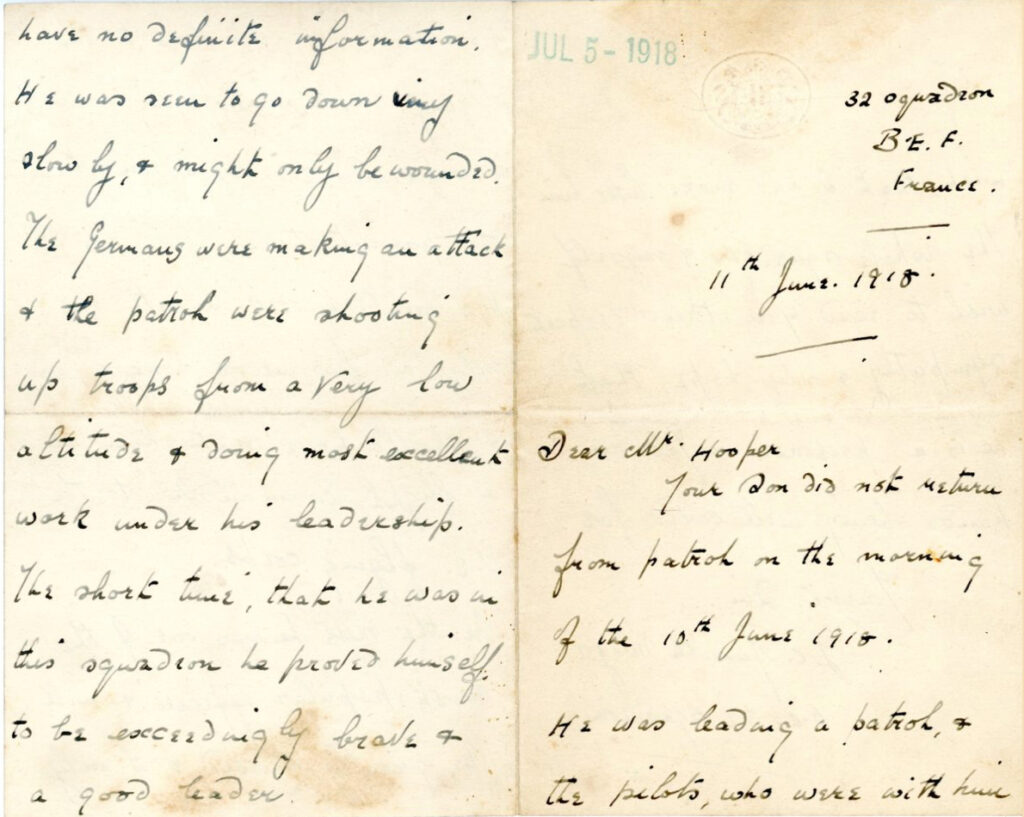
Four days later, his war came to an end. On June 10, 1918, while leading a patrol from No. 32 Squadron at Fouquerolles, Parr took part in strafing and bombing attacks against German infantry engaged in Operation Hagen. During the action, his S.E.5a was seen spiraling slowly downward until it crashed in a burst of steam near Sorel‑Château. None of the other pilots in the air that day could say with certainty what had happened. They assumed he either fell victim to enemy aircraft in the area or was brought down by intense anti‑aircraft fire.
Initially listed as missing in action, Parr’s status was changed to killed in action in June 1919.
Commemoration
Parr Hooper’s service was brief but distinguished. He received the Purple Heart, the United States Aviator Badge, the World War I Victory Medal, and the Order of St. Sava. His final weeks were spent in the skies over France, flying some of the most dangerous missions of the war, leading men in combat, and fulfilling the calling he had pursued with unwavering determination from the moment he enlisted.
After the war, Parr’s father, Herbert, and other family members and friends sought more information regarding his fate. It was clear to all that he had been killed when his plane went down over the front on June 10, 1918. As early as August 14, 1918, another member of his squadron, Lieutenant Arthur J. Bateman, wrote to the family that Parr had most likely died in the crash.
In September, Herbert received a letter informing him that no records of Parr existed in the German War Office’s prisoners of war files. Still with no definitive answer, family and friends continued to seek information on his whereabouts or grave. In early 1919, word reached them that the Grave Registration Service in Paris had no matches in their records for Parr. He was simply gone, lost to the mud of the Western Front like so many others.
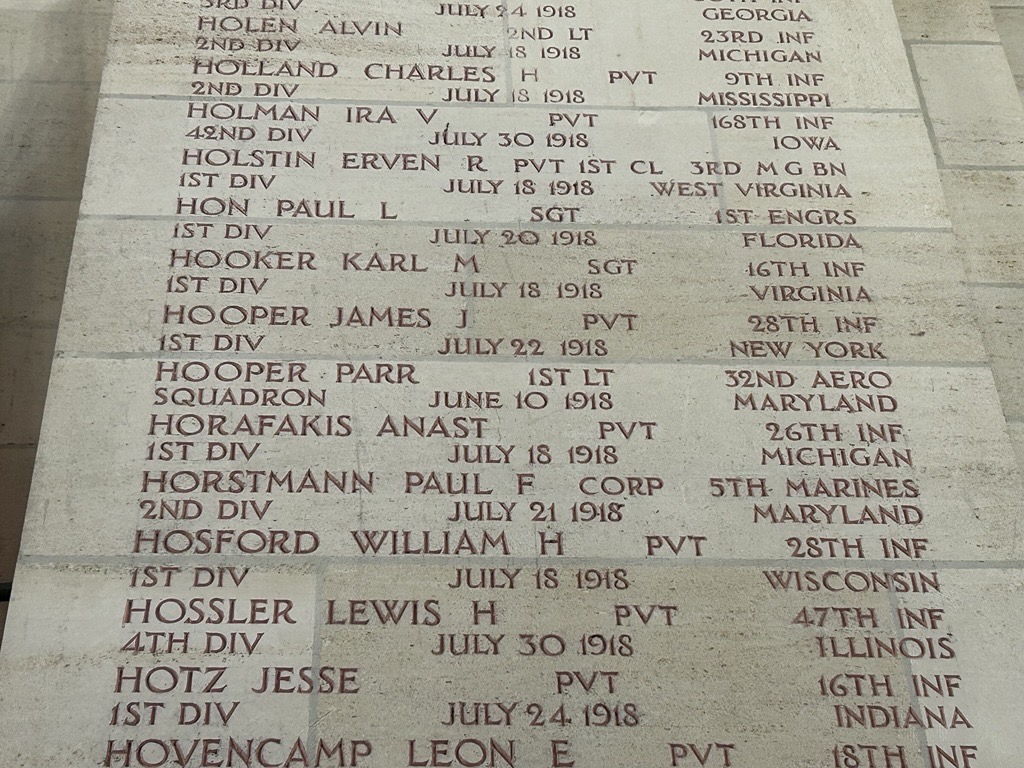
With no identifiable remains and no known grave, First Lieutenant Parr Hooper was listed on the Tablets of the Missing located in the Aisne-Marne American Cemetery in Belleau, France.
Bibliography
Primary Sources
“Bond Taken by School of 27 Nationalities: Children of Foreign Born Raise Fund Of $57 In One Week For Liberty Bond.” Baltimore Sun [Baltimore, Maryland], June 9, 1917. Newspapers.com (37344427).
Maryland. Baltimore City. 1900 U.S. Census. Digital Images. https://www.ancestry.com.
Maryland. Baltimore City. 1910 U.S. Census. Digital Images. https://www.ancestry.com.
Parr Hooper. Final Pay Voucher. Department of the Army. National Archives and Records Administration – St. Louis.
Parr Hooper. New York, U.S., U.S. Yearbooks, 1900-2016. Digital Images. https://ancestry.com.
Parr Hooper. U.K., R.A.F. Officer Service Records, 1918-1919 https://ancestry.com.
Parr Hooper. U.S., Army Transport Service Arriving and Departing Passenger Lists, 1910-1939. Digital Images. https://ancestry.com.
Parr Hooper. World War I Draft Registration Cards, 1917-1918. Digital Images. https://ancestry.com.
“Poly Riflemen Improve.” The Baltimore Sun [Baltimore, Maryland], January 21, 1909. Newspapers.com (372510382).
Sperberg-McQueen, Marian, Editor. Somewhere in France: The World War I Letters of Lieutenant Parr Hooper, American Pilot in the RFC/RAF. Privately published, 2016. https://parr-hooper.cmsmcq.com/w2016/index.xhtml.
Secondary Sources
“1 LT Parr Hooper.” Find A Grave. Updated August 5, 2010. Accessed October 31, 2025. https://www.findagrave.com/memorial/55948259/parr-hooper.
“Art, Propaganda, and Medicine.” Johns Hopkins and the Great War. Online exhibition. Johns Hopkins University. https://exhibits.library.jhu.edu/exhibits/show/hopkins-and-the-great-war/johns-hopkins-hospital/art–propaganda-and-medicine.
“A Triumphal and Monster Parade: The June 1912 Baltimore Suffrage Parade.” Maryland Center for History and Culture. Accessed December 4, 2025. https://www.mdhistory.org/a-triumphal-and-monster-parade-the-june-1912-baltimore-suffrage-parade1/.
“Augusta T. Chissell: 1880-1973.” Maryland State Archives. Accessed December 4, 2025. https://msa.maryland.gov/msa/educ/exhibits/womenshallfame/html/chissell.html.
“Baltimore’s African American Suffragists.” Hopkins and the 19th Amendment: Activists in Suffrage and Health Reform. Online exhibition. Johns Hopkins University. https://exhibits.library.jhu.edu/exhibits/show/hopkins19thamendment/mobilizingbaltimore/africanamericansuffragists.
Cassie, Ron. “Nothing Less: Baltimore and Maryland Women Stood on the Front Lines of the Suffrage Fight.” Baltimore, August 2020. https://www.baltimoremagazine.com/section/historypolitics/suffrage-fight-baltimore-maryland-women-front-lines/.
“Cotton Mills of the Jones Falls.” Baltimore Industry Tours. Accessed December 4, 2025. https://www.baltimoreindustrytours.com/history.php.
“The History of Baltimore.” City of Baltimore. Accessed December 4, 2025. https://www.baltimorecity.gov/sites/default/files/5_History.pdf.
Kitchen, Martin. The German Offensives of 1918. Tempus, 2005.
Lloyd, Nick. The Western Front: A History of the Great War 1914-1918. W.W. Norton & Co. 2021.
“Maryland and the 19th Amendment: Marching Towards Women’s Suffrage.” Maryland State Archives. Accessed December 4, 2025. https://msa.maryland.gov/msa/speccol/sc5500/sc5572/000001/000000/000007/html/t7.html.
“Maryland and World War I.” World War One Centennial Commission. Accessed December 4, 2025. https://www.worldwar1centennial.org/index.php?view=article&id=625&catid=62.
“The Maryland Military Homefront during World War I.” Maryland Center For History and Culture. Accessed December 4, 2025. https://www.mdhistory.org/the-maryland-military-homefront-during-world-war-i/.
“The Men of the Second Oxford Detachment.” Accessed October 31, 2025. https://parr-hooper.cmsmcq.com/2OD/.
“National Crisis and Urban Renaissance, 1917-1980.” Maryland State Archives. Accessed December 4, 2025. https://msa.maryland.gov/megafile/ecp/26/040/html/0500.html.
“Parr Hooper.” American Battle Monuments Commission. Accessed October 31, 2025. https://weremember.abmc.gov/s?q=Hooper&v=G&type=16.
“Parr Hooper.” Honor States. Accessed March 23, 2026. https://www.honorstates.org/profiles/139424/.
“Parr Hooper.” Veterans Legacy Memorial, National Cemetery Administration. Accessed March 23, 2026. https://www.vlm.cem.va.gov/ParrHooper/E0B9.
“Propaganda in the Free State: MDHS’s Collection of Poster Art.” Maryland Center For History and Culture. Accessed December 4, 2025. https://www.mdhistory.org/propaganda-in-the-free-state-mdhss-collection-of-poster-art/.
“Women’s Suffrage in Maryland.” Maryland Historical Trust. Accessed December 4, 2025. https://mdhistoricaltrust.wordpress.com/tag/progressive-womens-suffrage-club/.
This profile was researched and created through the Researching Silent Heroes program, sponsored by the American Battle Monuments Commission.