
Corporal Paul Dzeiak
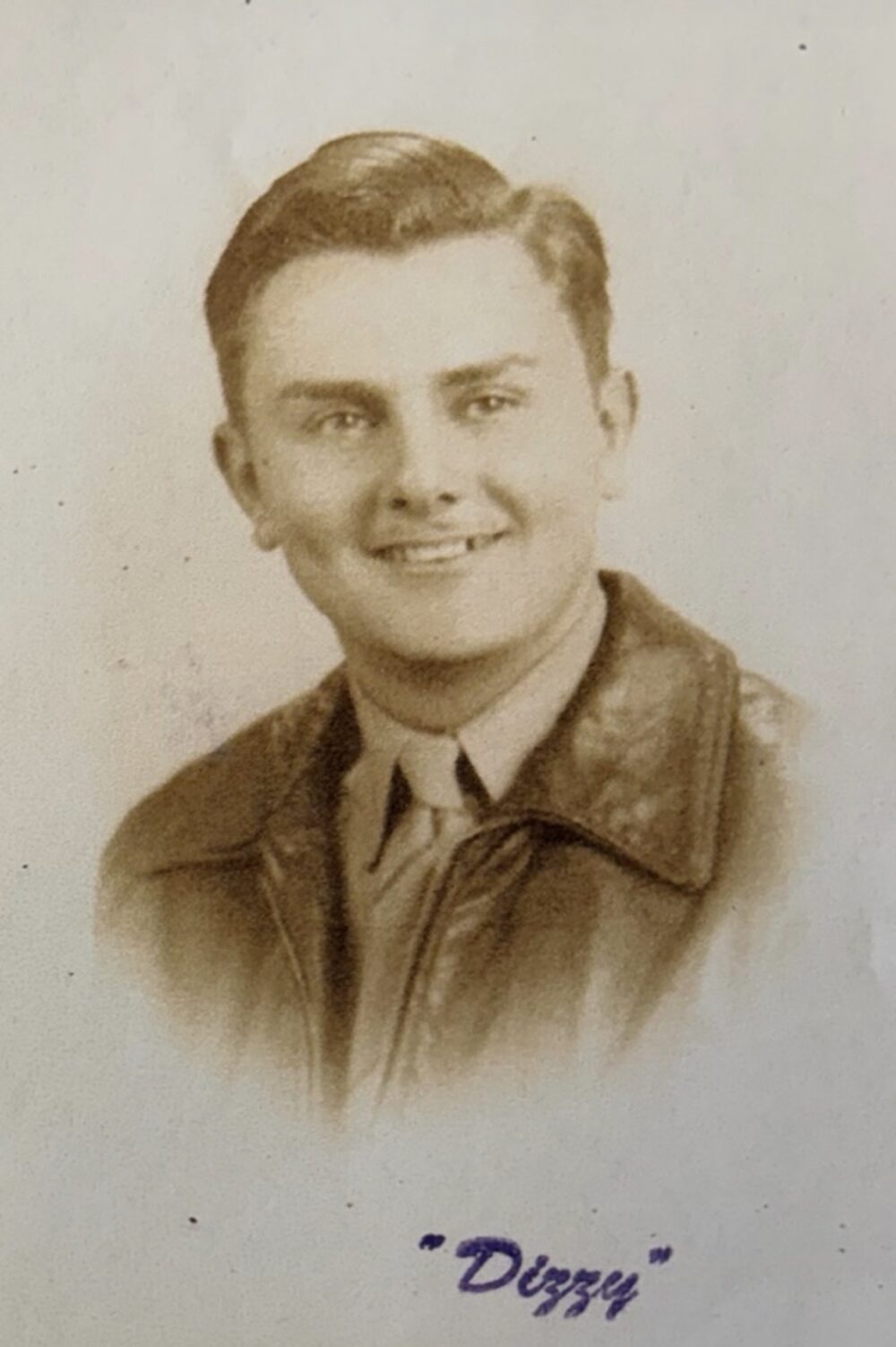
- Unit: 3rd Marine Division, 2nd Battalion
- Date of Birth: March 28, 1923
- Entered the Military: April 3, 1943
- Date of Death: June 15, 2021
- Hometown: Cleveland, Ohio
- Place of Death: Berea, Ohio
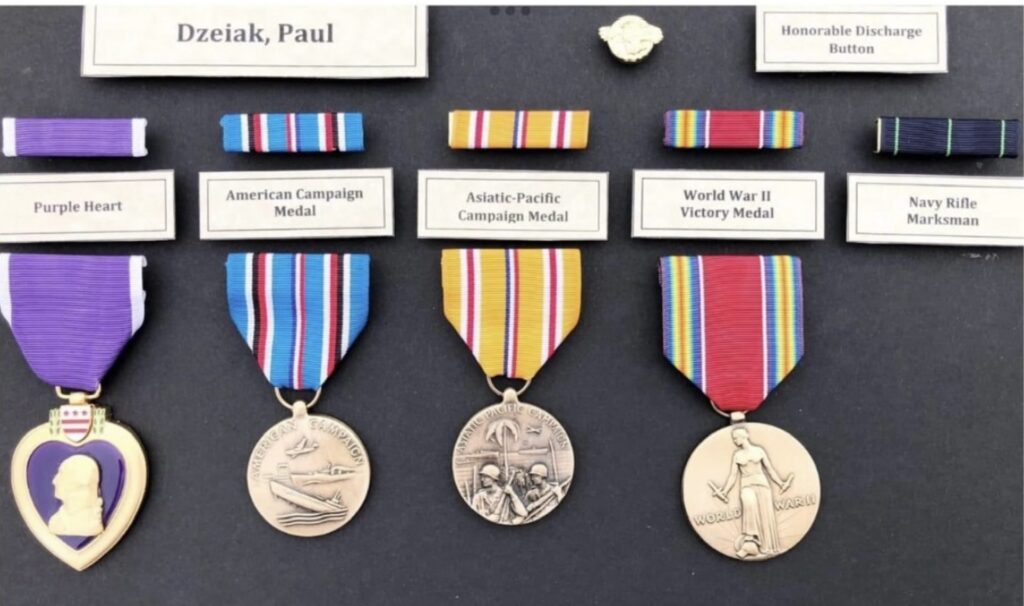
- Award(s): Purple Heart, American Campaign Medal, Asiatic-Pacific Campaign Medal, World War II Victory Medal
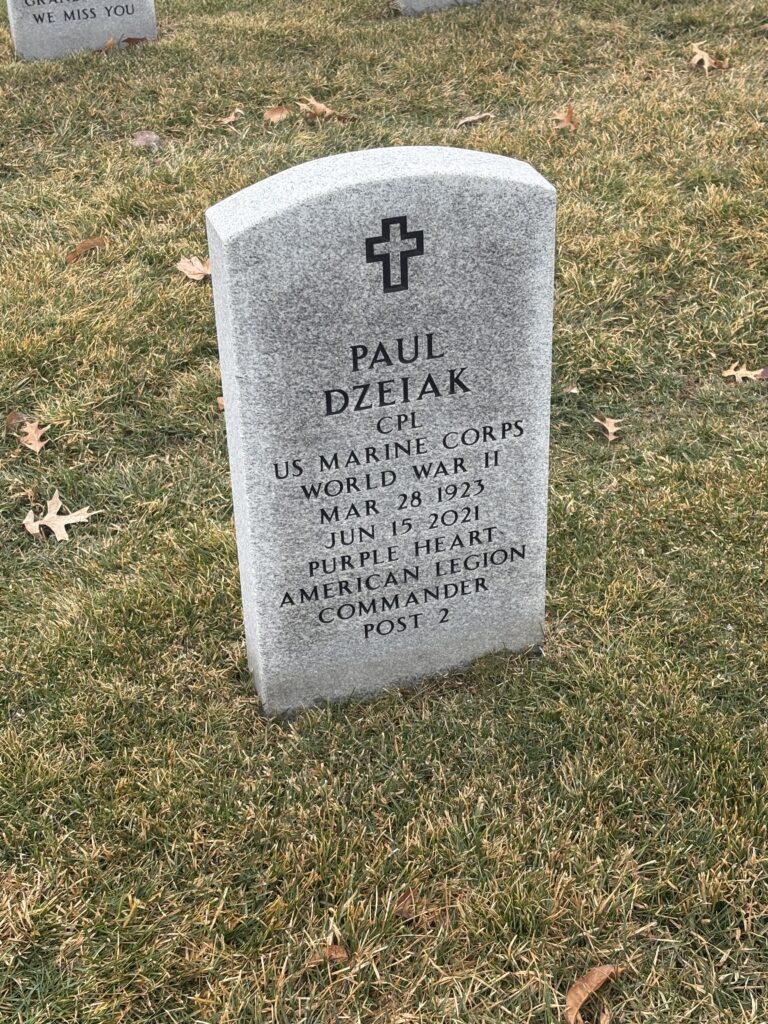
- Cemetery: Section 10, grave 3181. Ohio Western Reserve National Cemetery, Rittman, Ohio
Mentored by Dr. Christa Adams
Bard High School Early College, Cleveland, Ohio
2025/2026
Early Life
Paul Dzeiak was born on March 28, 1923, in Cleveland, Ohio, to Andrew Dzeiak, who worked in the steel industry, and Susanna Dzeiak, a homemaker. He grew up as the middle child with an elder sister, Margaret, and a younger sister, Mary.
Dzeiak’s parents were immigrants from Slovakia, likely drawn to Cleveland because of its burgeoning manufacturing industries. Dzeiak’s father, Andrew, arrived first, securing employment before sending for his wife, Susanna, to travel to the United States. The family settled on Cleveland’s West Side, joining other immigrants in an ethnically diverse neighborhood.
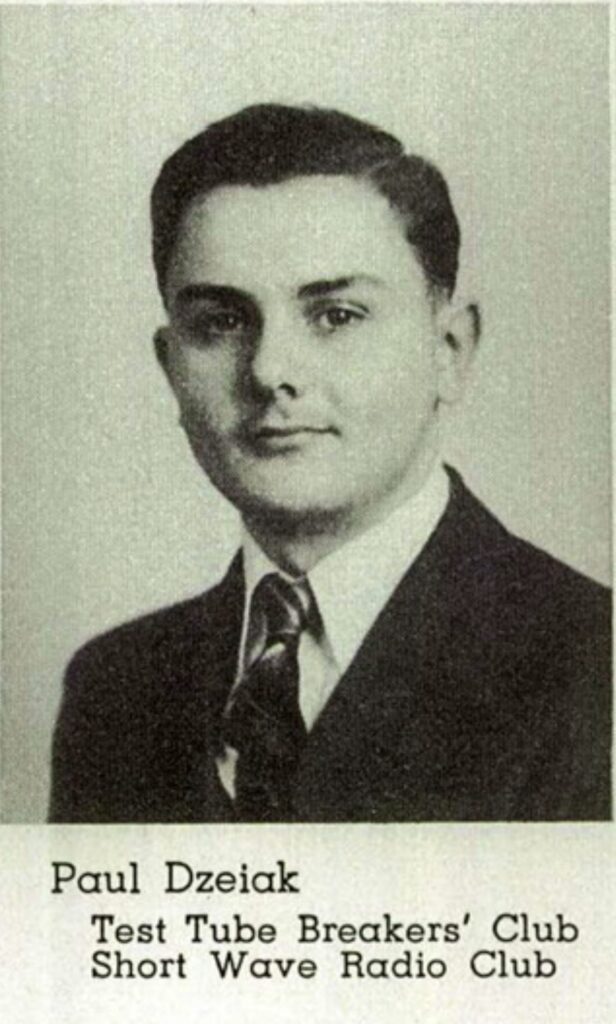
Dzeiak attended Lincoln High School, where he studied electrical engineering and was a member of the Test Tube Breakers Club and the Short Wave Radio Club.

Homefront
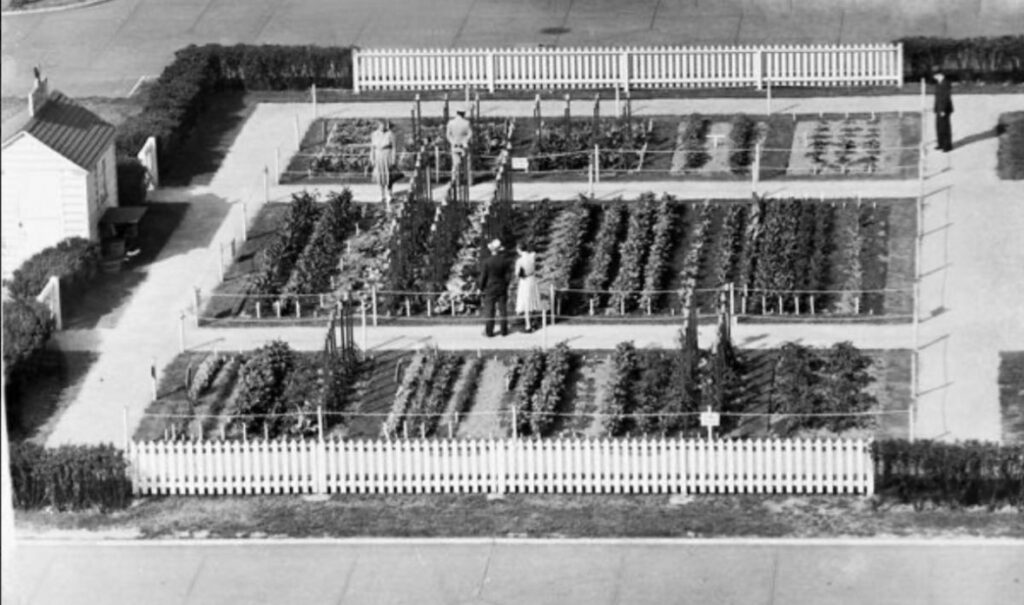
Cleveland, Ohio, was ethnically diverse in the early twentieth century, with around 20 percent of the city’s population listed as “foreign born.” The city was also the sixth largest in the country as of 1940, with a population of 878,336. In addition to its large population, Cleveland was also industrially prosperous, with 40 percent of its population involved in local manufacturing.
Manufacturing in Cleveland
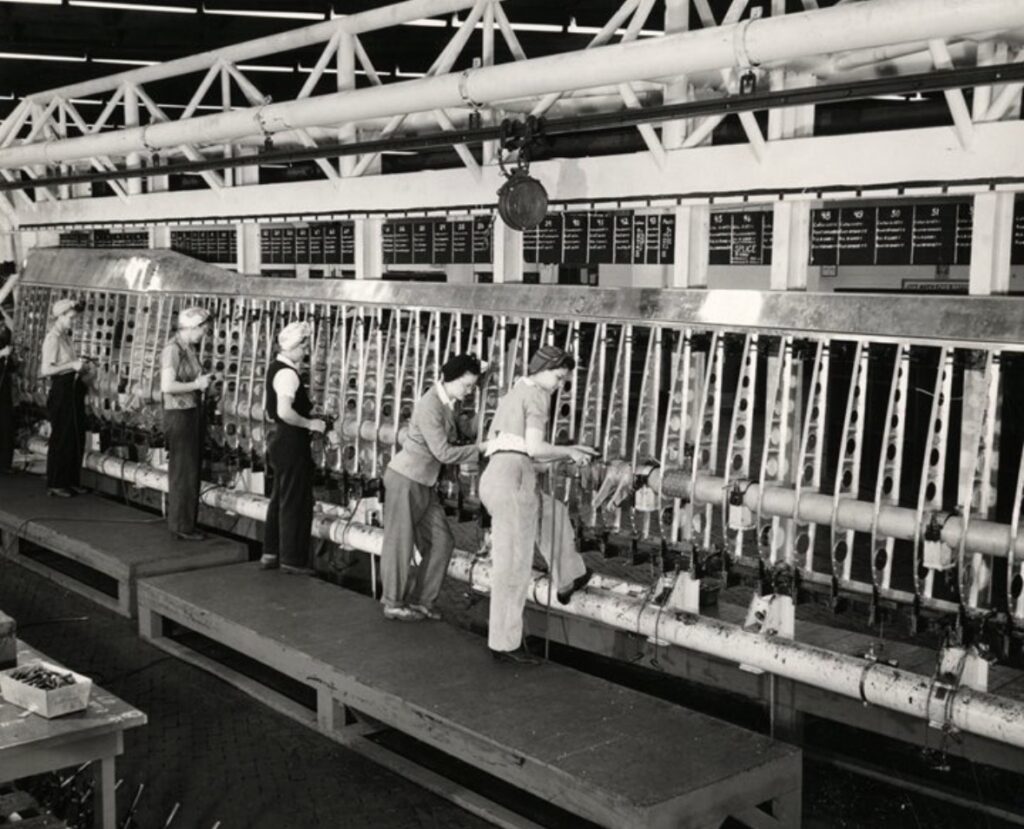
Cleveland was an essential manufacturing site during World War II, rushing to meet wartime production goals. Along with the booming steel industry, aircraft and munition production centers were also spread throughout the city. Sites such as Fisher Body Aircraft Plant No. 2 employed women to construct bombers. Women were also called upon to fill Works Projects (formerly Progress) Administration (WPA) positions, along with heavy demand for seamstresses and nurses for groups like the Red Cross.
Cleveland’s manufacturing infrastructure contributed immensely to wartime success. In only a few years, the city and its factories mobilized to continue meeting wartime production demands. The Second World War also signaled many opportunities for political and social activism in Cleveland. For women, employment in factories and crucial volunteer and fundraising activities allowed them to feel included in their communities and in efforts to protect the country.
Wartime Tensions
The city, however, also experienced unrest during the war as divergent political ideologies continued to develop and spread. Tensions grew particularly in the wake of the demand for higher manufacturing output. Eventually, worker strikes at the Cleveland Graphite Bronze Company’s plants led to their being placed under U.S. Army control. Cleveland likewise experienced significant population growth in the 1940s, resulting in housing shortages and increased labor demands.
Military Experience
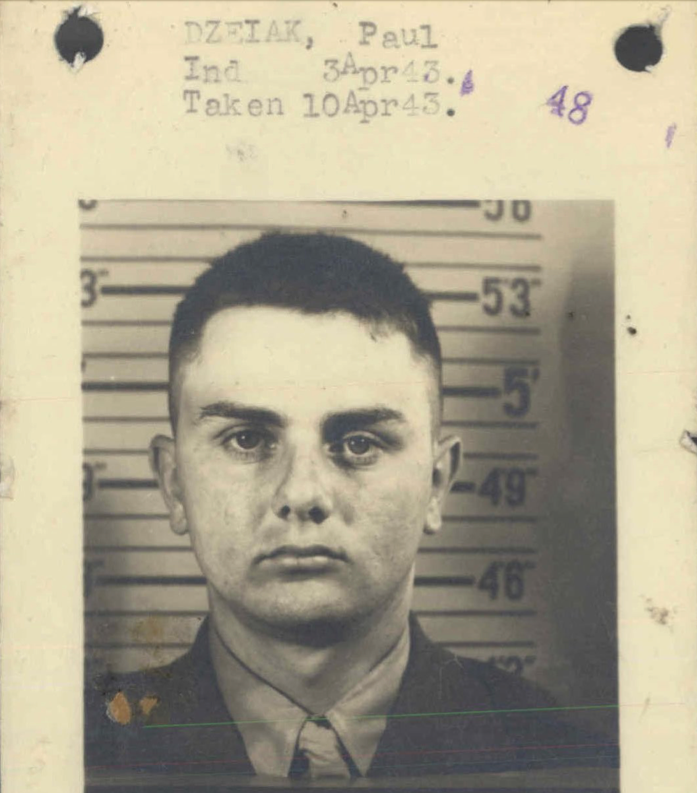
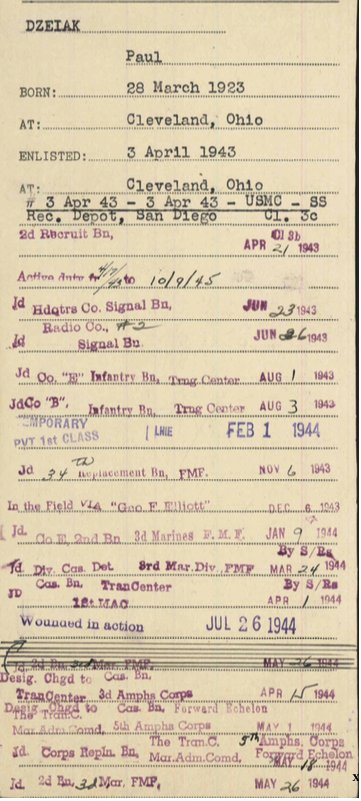
Paul Dzeiak enlisted in the United States Marine Corps (USMC) on April 3, 1943. He trained as a Rifleman at the Marine Corps Recruit Depot (MCRD) in San Diego, California. As a Rifleman, Dzeiak was prepared to serve a core role in the USMC Infantry. On December 6, 1943, Dzeiak boarded USS George F. Elliott, bound for the Pacific Theater.
Travel to the Pacific
Initially, Dzeiak moved between units. He ultimately settled in the 2nd Battalion, 3rd Marine Division early in 1944. Dzeiak’s unit was nicknamed “The Island Warriors,” referencing their service island hopping in the Pacific Theater. Based on his Official Military Personnel File (OMPF), Dzeiak likely spent time in January 1944 at Guadalcanal engaged in training, then was sent with his division to Kwajalein in the Marshall Islands and on to Saipan, where his division was held offshore.
Engaging the Enemy
On July 21, 1944, Dzeiak and his unit participated in the Battle of Guam. Major General Allen Turnage (1891-1971) led Dzeiak’s division. With artillery support, the Marines landed on Asan Beach with the objective of capturing the cliffs beyond the shoreline. After three days of arduous fighting, the Marines captured the beach and further gained control of Adelup Point, Chorito Cliff, and Bundschu Ridge.
The American assault on Fonte began on July 25, 1944. Fonte was a Japanese-held plateau above the beach. There were 5,000 Japanese soldiers defending the plateau, under the leadership of Lieutenant General Takeshi Takashina (1891-1944).
Beginning at 3 am, the Japanese descended the plateau’s slope to break the American line. According to secondary sources, the Japanese drank and caroused well into the evening before they attacked. The Japanese efforts were very disorganized, their disarray compounded by the evident drunkenness of the Japanese soldiers who were haphazardly running, slashing, and throwing grenades. It rained throughout the attack, and the terrain was sodden.
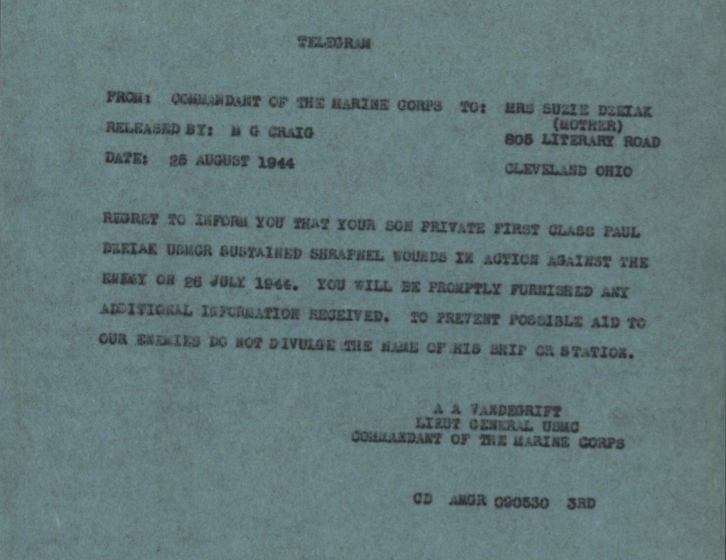
On July 26, 1944, one day into the battle, Dzeiak was sent to USS Rixey for grenade and bayonet wounds in both thighs. While Dzeiak received treatment, his fellow American Marines held their position and ultimately took control of the Fonte Plateau on July 29, 1944. The Japanese suffered serious losses.
Results of the Battle of Guam
As a participant in the Battle of Guam, Dzeiak contributed to one of the most strategically important American victories of the Second World War. By gaining control of Guam, American servicemembers could begin B-29 bomber missions to the main Japanese archipelago. Guam likewise served as an important refueling station for American submarines and became home to the Apra Naval Base. The service of Dzeiak and his comrades led to further American successes in the Pacific, hastening the end of the war.
Recovery
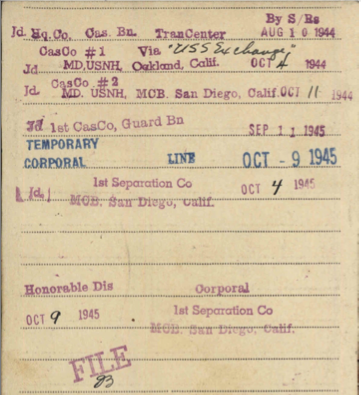
On October 11, 1944, Dzeiak received a full examination at the U.S. Naval Hospital in Aiea Heights, Hawai’i. The doctors found “complete peroneal paralysis on the left side” as a result of his injuries. An X-Ray revealed multiple “shrapnel fragments in the soft tissue of both thighs.” Those pieces were removed on August 10, 1945. After Dzeiak underwent intensive physical therapy, the movement slowly returned to his leg. Additionally, he contracted malaria while in service. On September 29, 1945, the attending physician recommended that Dzeiak be honorably discharged from the USMC.
Receiving Honors
Dzeiak was honored with multiple commendations for his service, including the Purple Heart, the American Campaign Medal, the Asiatic-Pacific Campaign Medal, the World War II Victory Medal, the Navy Rifle Marksman Ribbon, and the Honorable Discharge Button.

Veteran Experience
Dzeiak was honorably discharged from the U.S. Marine Corps on October 9, 1945, in San Diego, California. He never married and continued to live in his old neighborhood on Cleveland’s West Side for the remainder of his life. Initially, he worked in trade as a truck driver for a local stove wholesale company. In his later years, he moved to an assisted living facility in Berea, Ohio.
Legacy of Service
Later in his life, Dzeiak was involved with numerous veterans’ organizations, including the Disabled American Veterans, which he joined in 1945. He served as the commander of the American Legion Post 2. Dzeiak was so enthusiastic that at one point he was a member of fourteen different groups, but “had to cut back” because of too many commitments.
Dzeiak also assisted with the planning and development of the Ohio Western Reserve National Cemetery in Rittman, Ohio, where he was later buried. He contributed 4,707 volunteer hours at the cemetery over a 34-year span (1983-2017), holding the record for the longest serving volunteer at the site. His legacy of service is evident in this and in his other efforts to honor the service and sacrifice of other Second World War Veterans.

Commemoration
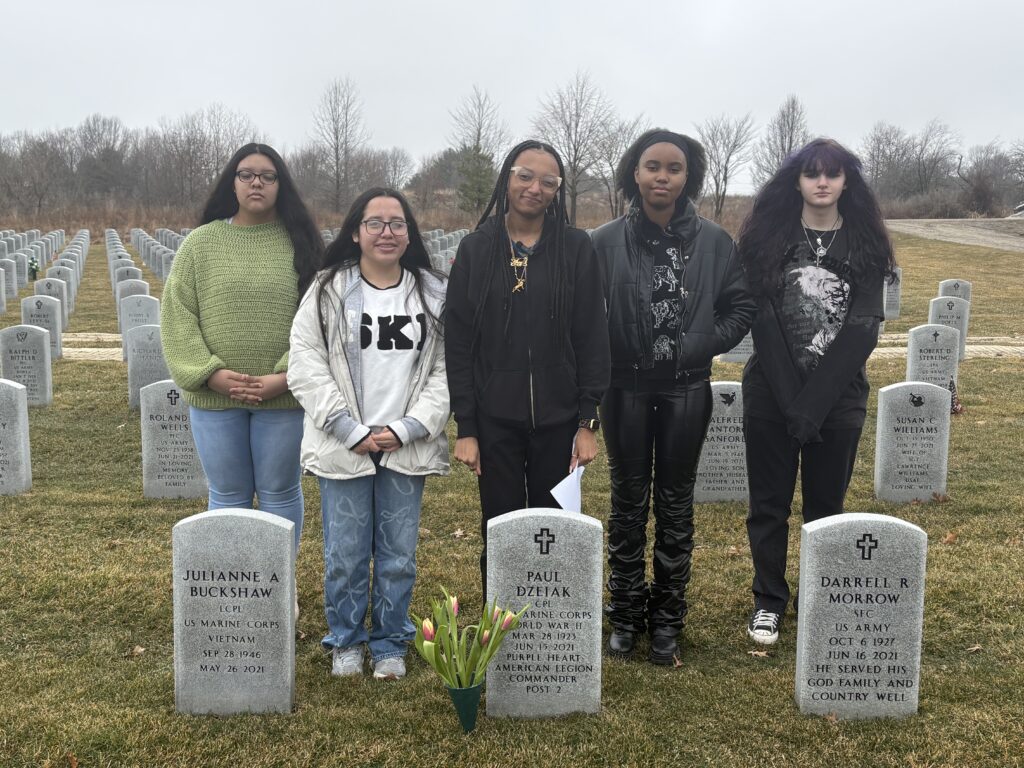
Paul Dzeiak died on June 15, 2021, and was buried in the cemetery that he helped create — the Ohio Western Reserve National Cemetery in Rittman, Ohio. By all accounts, a quiet soul, he lived a life centered on service — whether in the USMC or later as an advocate for and ally of other Veterans.
Bibliography
Primary Sources
Andre Dzeiak. Ohio, U.S., County Naturalization Records, 1800-1977. Digital Images. https://ancestryclassroom.com.
Andre Dzeiak. Ohio, U.S., Naturalization Petition and Record Books, 1888-1946. Digital Images. https://ancestryclassroom.com.
“Boulevard Realty Company.” Advertisement. Cleveland Plain Dealer [Cleveland, Ohio], August 27, 1944. https://infoweb-newsbank-com.eresources.cuyahogalibrary.org.
Charles, Roland W. Troop Ships of World War II. The Army Transportation Association: 1947. https://www.80thdivision.com/pdfs/wwii_Troopships.pdf.
“City Steams for ‘Landing Day’ Job.” Cleveland Plain Dealer [Cleveland, Ohio], January 10, 1944. https://infoweb-newsbank-com.eresources.cuyahogalibrary.org.
Cleveland City Directory 1923. Cleveland, OH. Digital Images. https://ancestryclassroom.com.
Curtiss, Cornelis. “The Elephants are Coming.” Cleveland Plain Dealer [Cleveland, Ohio], November 5, 1944. https://infoweb-newsbank-com.eresources.cuyahogalibrary.org.
Dzeiak Family Records. Courtesy of Jeanette Mueller.
Kuehn, Alice. “Neighborhood House Women Hold Second Annual Bazar to Further Work of Group.” Cleveland Plain Dealer [Cleveland, Ohio], May 25, 1940. https://infoweb-newsbank-com.eresources.cuyahogalibrary.org.
Leacacos, John P. “Urges Half-Time to Fill WPA List.” Cleveland Plain Dealer [Cleveland, Ohio], January 4, 1940. https://infoweb-newsbank-com.eresources.cuyahogalibrary.org.
Lincoln High School Yearbook. Cleveland, Ohio: Cleveland Public Schools, 1941. https://ancestryclassroom.com.
Lodge, Major O.R. The Recapture of Guam. Historical Branch, G-3 Division Headquarters, US Marine Corps, 1954. https://www.usmcu.edu/Portals/218/Lodge_The%20Recapture%20of%20Guam.pdf.
“Moseley Named Commander as DAV Chooses Officers.” The Daily Advocate [Greenville, Ohio], June 26, 1989. https://basic.newspapers.com/image-view/651627680/?match=1.
Mothers Tap Dancing Lessons at the Lincoln Park Recreation Center (Lincoln Park Baths). Photograph. 1940. Experience Tremont History. https://tremonthistory.org/portfolio-items/lincoln-park-baths/.
Mueller, Jeanette. Email message. January 13, 2026.
Ohio. Cuyahoga County. 1930 U.S. Census. Digital Images. http://ancestryclassroom.com.
Ohio. Cuyahoga County. 1940 U.S. Census. Digital Images. http://ancestryclassroom.com.
Ohio. Cuyahoga County. 1950 U.S. Census. Digital Images. http://ancestryclassroom.com.
Paul Dzeiak. U.S., Public Records Index, 1950-1993, Volume 1. Digital Images. https://ancestryclassroom.com.
Paul Dzeiak, Official Military Personnel File, Department of the Navy, National Archives and Records Administration – St. Louis.
Paul Dzeiak, Report of Separation, Department of the Navy, National Archives and Records Administration – St. Louis.
Paul Dzeiak. World War II Draft Cards Young Men, 1940-1947. Digital Images. https://ancestryclassroom.com.
Robertson, Helen. “Week’s News, Views on Food.” Cleveland Plain Dealer [Cleveland, Ohio], December 31, 1944. https://infoweb-newsbank-com.eresources.cuyahogalibrary.org.
U.S. Department of Agriculture. Shoot to Kill. Poster. 1943. War History Commission World War II Poster, Ohio Historical Connection. https://ohiomemory.org/digital/collection/p267401coll32/id/16000.
Secondary Sources
“African Americans.” Encyclopedia of Cleveland History. Accessed November 3, 2025. https://case.edu/ech/articles/a/african-americans.
“Agriculture.” Encyclopedia of Cleveland History. Accessed October 30. 2025. https://case.edu/ech/articles/a/agriculture.
Albrecht, Brian, and James Banks. Cleveland in World War II. The History Press, 2015.
“Battle of Guam.” National Park Service. Accessed January 15, 2026. https://www.nps.gov/wapa/learn/historyculture/battle-of-guam.htm#:~:text=The%20Battle%20of%20Guam%20began,on%20Assan%20(Asan)%20Beach.
“Berea Honors World War II Purple Heart veteran: Community Voices.” Cleveland Plain Dealer [Cleveland, Ohio], March 27, 2018. https://www.cleveland.com/berea/2018/03/berea_honors_world_war_ii_purp.html.
Brian Albrecht. “Romance blooms in the midst of war For two couples, a lifelong bond sprung from uncertain times.” Cleveland Plain Dealer [Cleveland, Ohio], October 28, 2007. https://infoweb-newsbank-com.eresources.cuyahogalibrary.org.
Canon, Jim. “A Brief History of the 2nd Battalion, 3rd Marines.” Accessed January 14, 2026. http://www.echo23marines6569.org/BattalionHistory1.html.
“Cleveland Graphite Bronze Seizure.” Encyclopedia of Cleveland History. Accessed November 3, 2025. https://case.edu/ech/articles/c/cleveland-graphite-bronze-seizure.
“Dzeiak, Paul E.” National Cemetery Association. Accessed October 24, 2025. https://www.cem.va.gov/nationwide-gravesite-locator/.
“Dzeiak, Paul.” The Plain Dealer [Cleveland, Ohio], June 20, 2021. Newspapers.com (11560050190).
“History of Ohio Steelmaking.” Teaching Cleveland Digital. Accessed November 3, 2025. https://teachingcleveland.org/history-of-ohio-steelmaking-2/.
“I-X Center.” Encyclopedia of Cleveland History. Accessed October 30, 2025. https://case.edu/ech/articles/i/i-x-center.
Jarosz, Tyler. “Mall Victory Garden A Wartime Demonstration.” Cleveland Historical. Accessed November 14, 2025. https://clevelandhistorical.org/items/show/988.
“Marine Corps Acronyms.” U.S. Marines. Accessed January 15, 2026. https://www.usmcu.edu/Portals/218/MARINE%20CORPS%20ACRONYMS.pdf.
Otiso, Kefa and Bruce W. Smith. “Immigration and Economic Restructuring in Ohio’s Cities, 1940-2000.” Ohio Journal of Science. Volume 105, Issue 5, (December 2005): 133-137. https://kb.osu.edu/server/api/core/bitstreams/59bd97df-1ade-5f5a-ac84-5c6e2251b4d0/content.
“Paul Dzeiak.” Veterans Legacy Memorial, National Cemetery Administration. Accessed April 20, 2026. https://findagrave.com/memorial/228596274/paul-English-Dzeiak.
“Paul English Dzeiak.” Find a Grave. Accessed October 24, 2025. https://www.vlm.cem.va.gov/PAULDZEIAK/9d5649.
Reference Section Historical Branch. The Third Marine Division and Its Regiments. Washington, DC: History and Museums Division Headquarters, US Marine Corps: 1983. https://www.usmcu.edu/Portals/218/HD%20MCUP/HD%20Pubs/The%203D%20Marine%20Division%20and%20its%20Regiments%20%20PCN%2019000317400-unlocked.pdf?ver=2019-05-16-123740-613.
“Surviving Fisher Body Plants – General Motors Corporation in World War Two.” The American Automobile Industry in World War Two. Accessed October 30, 2025. https://usautoindustryworldwartwo.com/Fisher%20Body/fisherbodyclevelandplant2.htm.
“Timeline.” Encyclopedia of Cleveland History. Accessed October 30, 2025. https://case.edu/ech/timeline#1900.
“USMC, 3rd Marine Division.” U.S. Marines. Accessed January 14, 2026. https://www.3rdmardiv.marines.mil/About/.
“USMC, Military Occupational Speciality.” U. S. Marines. Accessed January 14, 2026. https://www.marines.com/about-the-marine-corps/roles/military-occupational-specialty.html.
“World War II.” Encyclopedia of Cleveland History. Accessed October 30, 2025. https://case.edu/ech/articles/w/world-war-ii.
This profile was funded by a grant from the United States Department of Veterans Affairs. The opinions, findings, and conclusions stated herein are those of the author and do not necessarily reflect those of the United States Department of Veterans Affairs.