

Private Philip Biondi
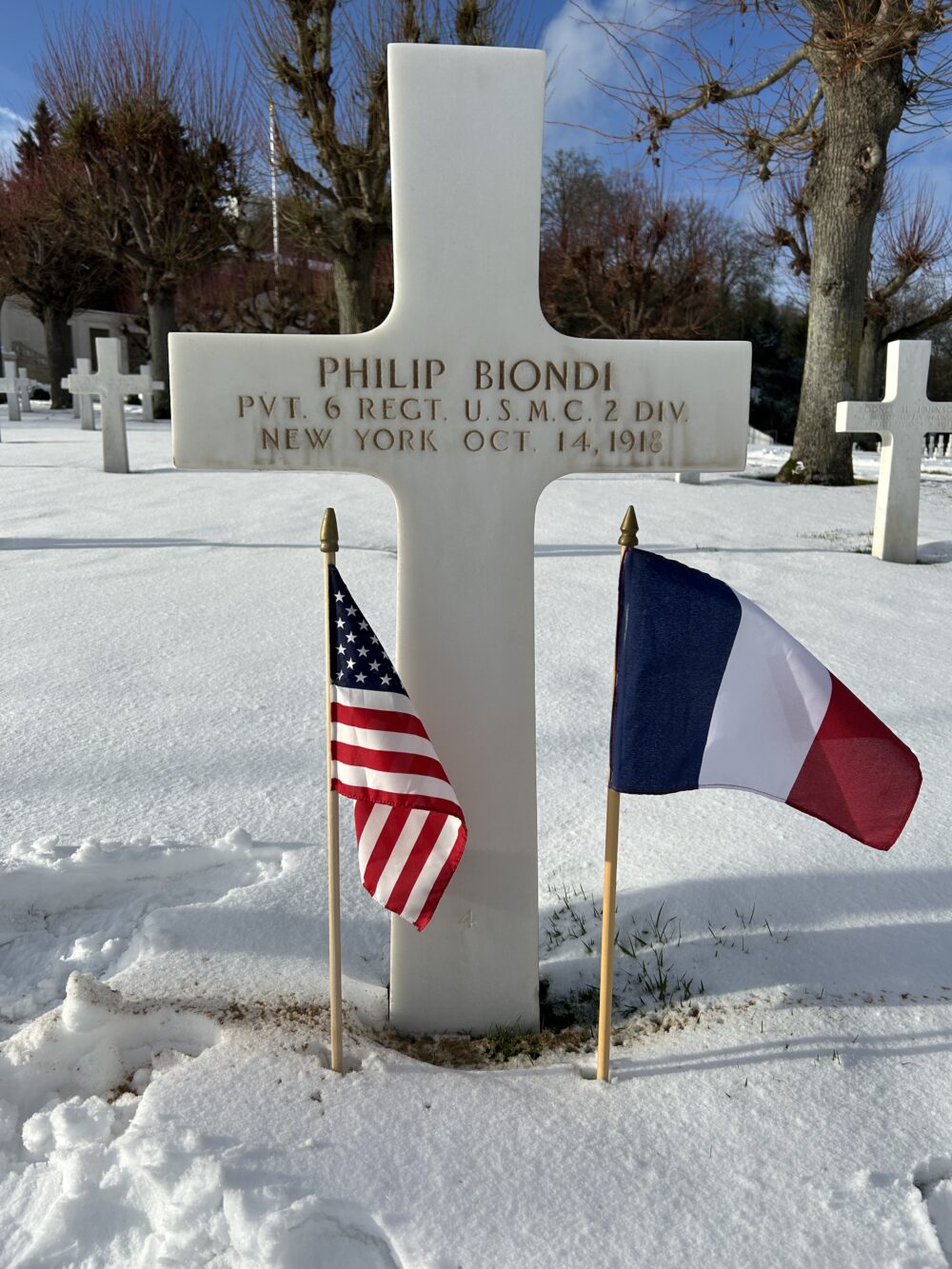
- Unit: 2nd Division, 6th Marine Regiment, 75th Company
- Service Number: 161502
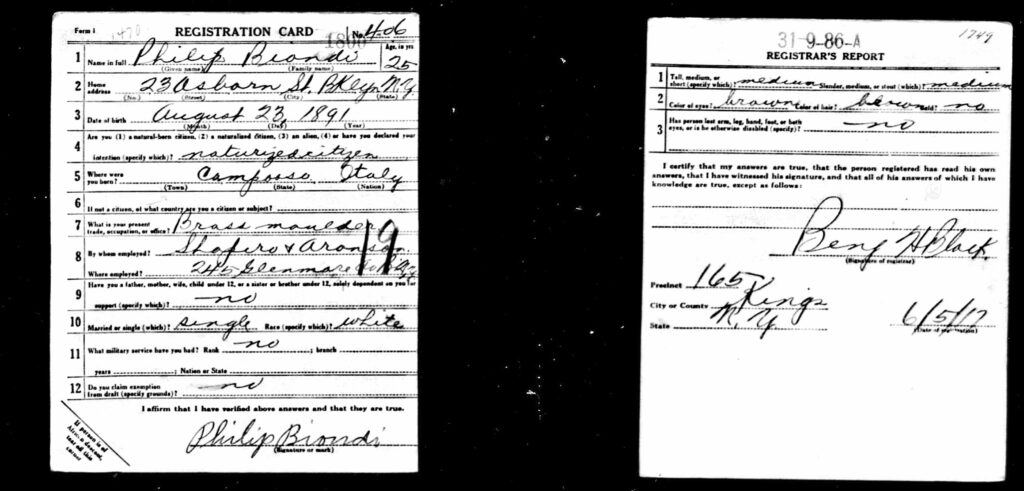
- Date of Birth: August 23, 1891
- Entered the Military: May 3, 1918
- Date of Death: October 14, 1918
- Hometown: Brooklyn, New York and Bound Brook, New Jersey
- Place of Death: Base Hospital outside of Paris, France
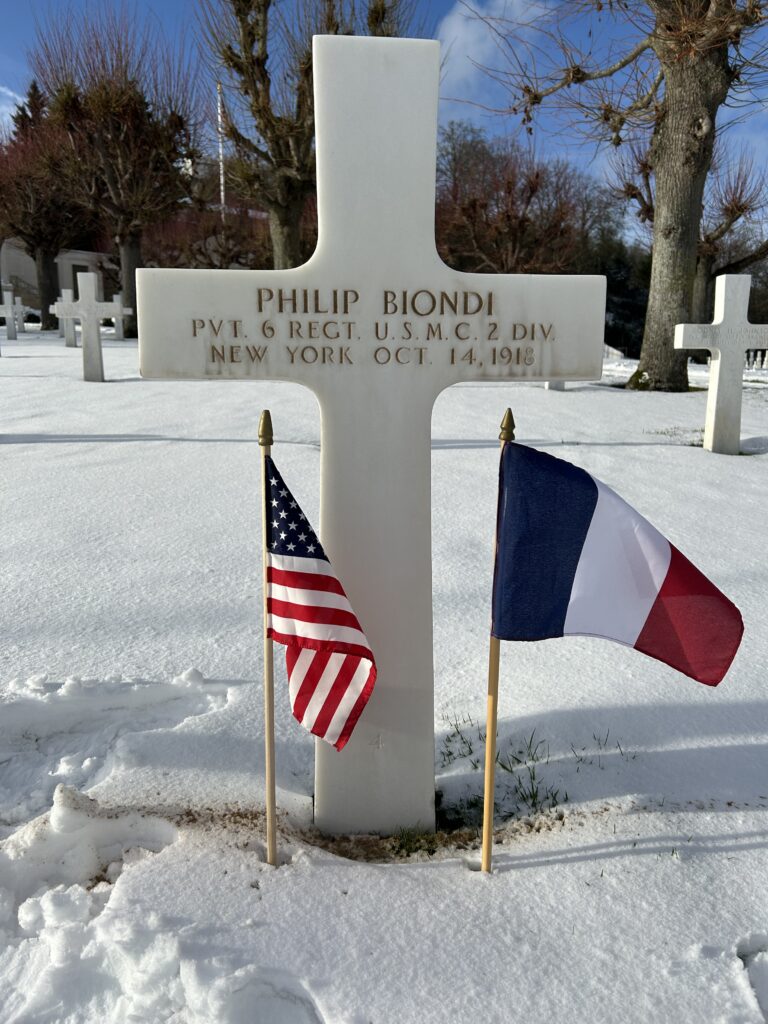
- Cemetery: block A, row 7, grave 4. Suresnes American Cemetery, Suresnes, France
Bronxville High School, Bronxville, New York
2025/2026
Early Life
Philip Biondi was born on August 23, 1891, in Castle Petroso, Italy. Castle Petroso is in central Italy (Biondi later listed his birthplace as Naples, Italy, the closest major city). Many residents in this region owned their land and made their living through sheep farming. This region had one of the highest emigration rates from Italy. Since people largely owned their land, they would use it as collateral to pay for passage to the United States. His father, Domenico (later Dominic), immigrated to the United States aboard SS Aller, arriving at Ellis Island on April 15, 1902. Philip followed a year later, followed by his mother and younger brothers. More siblings were born in New Jersey.
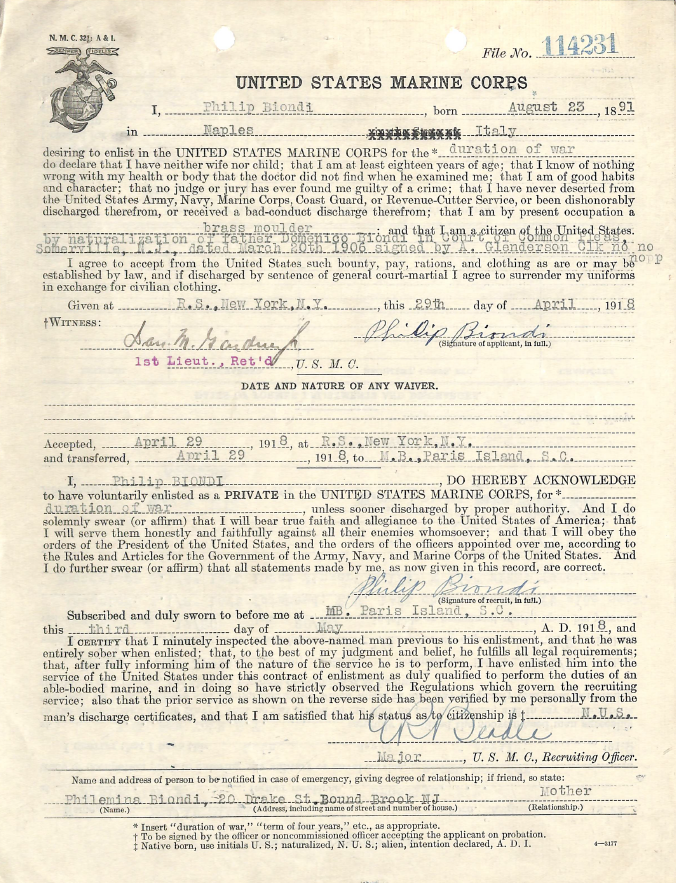
In his application to the U.S. Marine Corps, Biondi noted that he and his siblings became naturalized citizens with his father’s application on March 20, 1906.
By 1915, Philip had moved out of the family’s home. The 1915 New Jersey census shows most of the family living at 20 Drake Street in Bound Brook. This included his mother, Philomena (Filomena) Vacca Biondi, and his father, Domenico (Dominic), a laborer. His brothers, Salvatoro (Sam) and Donato (Thomas), worked in the brass industry. There were also three sisters, Adalorato, Ammaluto, and Fannie, and two younger brothers, Domenico and John.
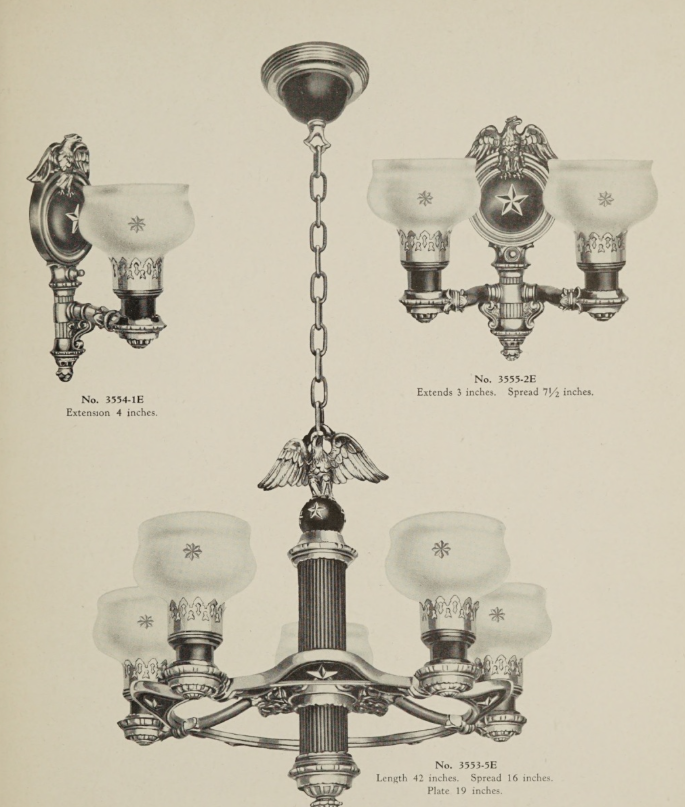
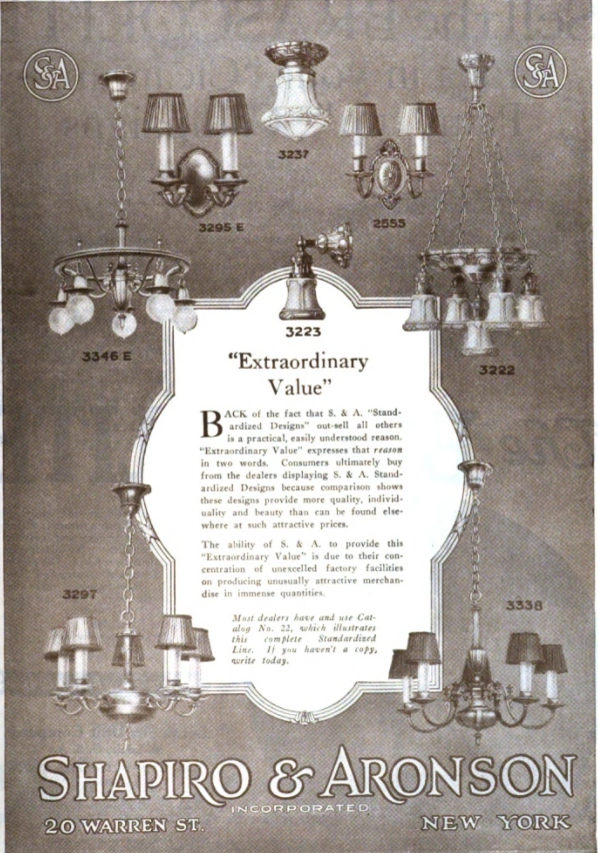
By 1915, Biondi had moved to 23 Osborne Street in Brooklyn, New York. He worked for Shapiro and Aronson as a brass molder. This work entailed pouring molten brass into molds. He worked at 245 Glenmare Ave in Brooklyn, but the company also had several locations in Brooklyn and Manhattan.
On May 3, 1918, Philip Biondo enlisted in the U.S. Marine Corps. At the time of his enlistment, he was 5’4” tall, weighed 121 pounds, and had brown hair and brown eyes. His complexion was described as ruddy.


Homefront
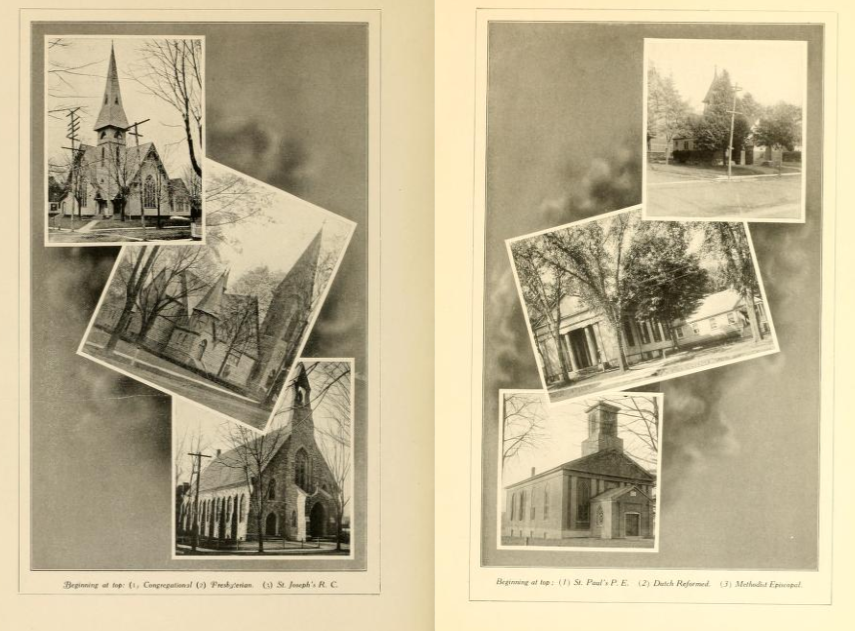
Biondi’s family settled in Bound Brook, New Jersey. A 1909 pamphlet described the town as an up-and-coming community that welcomed new immigrants and offered them the chance to own their own home in a suburban area. The town boasted good public schools and access to the New Jersey Central Railroad.
Philip Biondi likely moved to Brooklyn, New York, for work. While working at Shapiro and Aronson, he used his skills as a molder to create light fixtures. During World War I, Brooklyn was a busy area with the Brooklyn Navy Yard at full capacity, making ships, including USS Arizona (commissioned in October 1916).
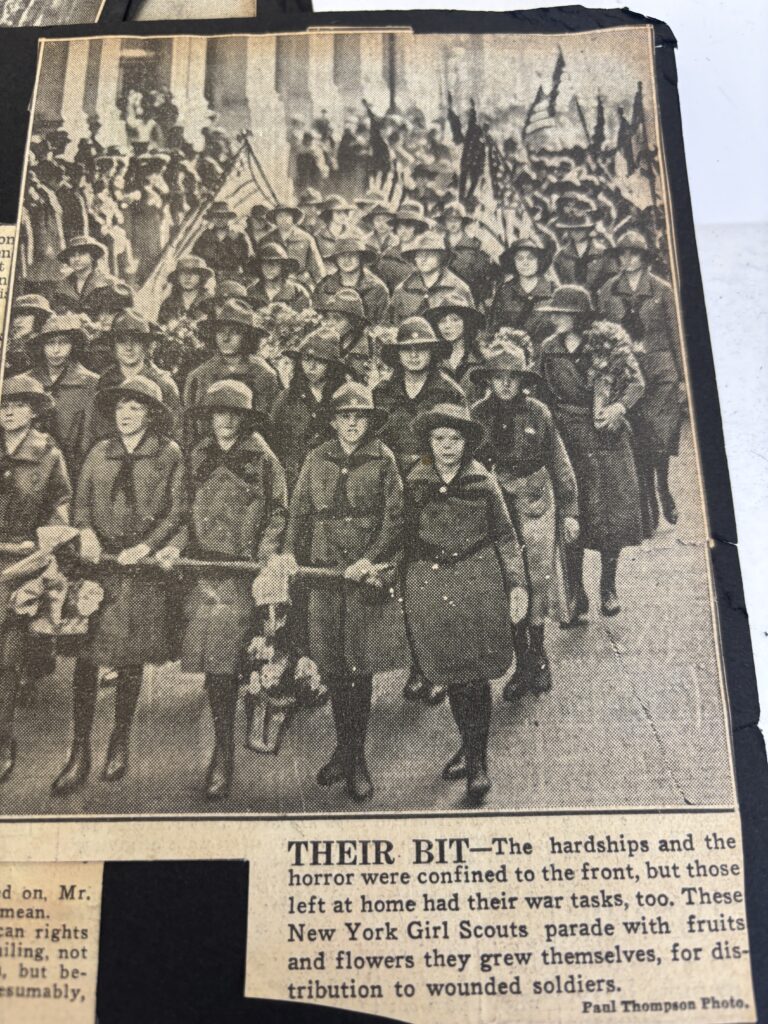
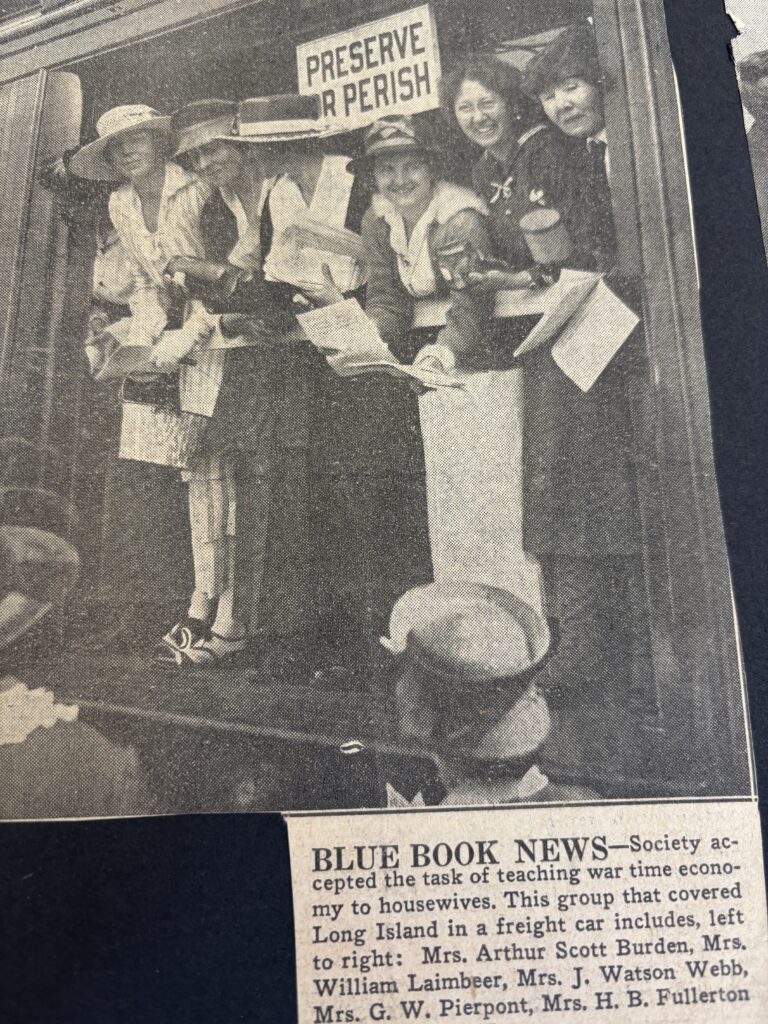
Food security was also an issue during the war, so people started their own gardens, including a children’s garden in the Brooklyn Botanic Garden. There were also incidents of women overturning vegetable carts when prices rose during the winter. Once the U.S. entered World War I, the government created propaganda posters to convince its citizens to join the war effort as both soldiers and workers on the home front.
Military Experience
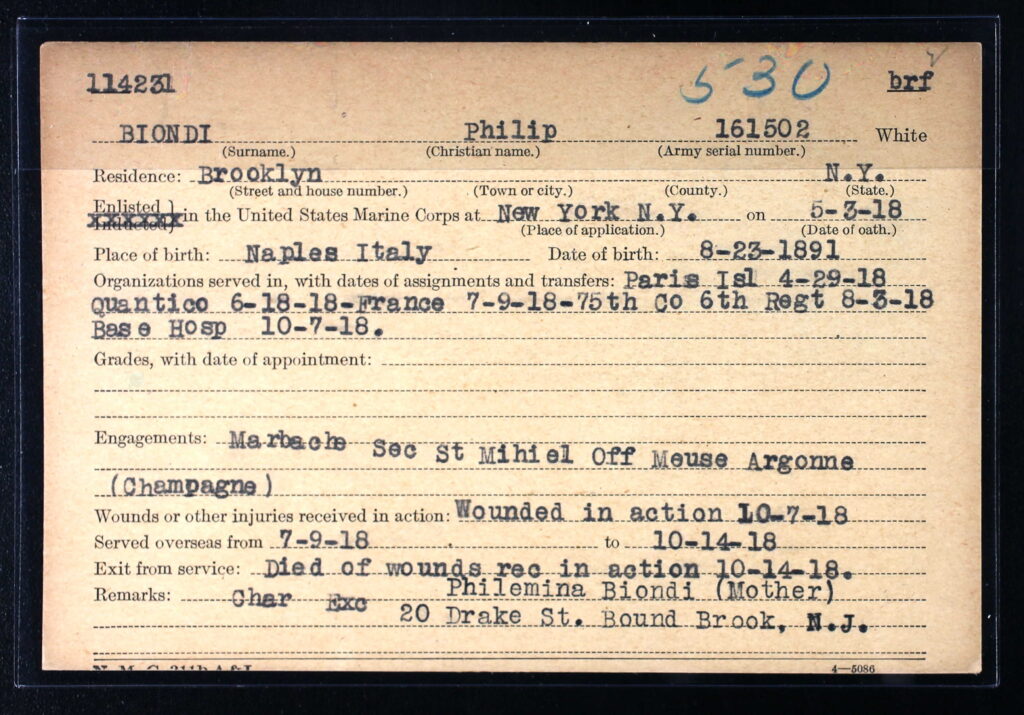
Philip Biondi enlisted in the U.S. Marine Corps in the spring of 1918 in Yaphank, Long Island, New York. He was then sent to boot camp at Parris Island, South Carolina, on April 29, 1918, and further training in Quantico, Virginia, on June 18, 1918. He was assigned to the 75th Company, 6th Marine Regiment, 2nd Division. During his training, he received his marksman badge, and his character was described as excellent. Following training, he embarked for France on June 30, 1918, aboard USS Henderson.
Records compiled from another World War I Marine, Arthur Liesegang, indicate that USS Henderson, a Marine transport ship, departed Navy Pier #2 in Brooklyn. On July 2, out on the Atlantic, a fire started in the ship’s oil bunkers. The Marines were transferred at sea to other ships late at night by descending rope ladders. The next morning, they were picked up by USS Von Steuben. Many of the men were forced to leave their kits on the Henderson and were crowded on the Von Steuben. Arthur Leisegang wrote, “The rest of the trip was very inconvenient owing to the loss of our equipment. Ate soup with forks.” The 6th Marines landed at Brest, France, on July 9, 1918.
Biondi’s unit saw action in the Battle of St. Mihiel from September 12 to September 15, 1918. On October 1, they were on the move again with the 4th French Army as part of the Meuse-Argonne offensive.
On October 7, 1918, Biondi was shot in the left leg. On October 10, he was evacuated to a base hospital. On October 13, the medical team was forced to amputate his left leg. He died the next morning.
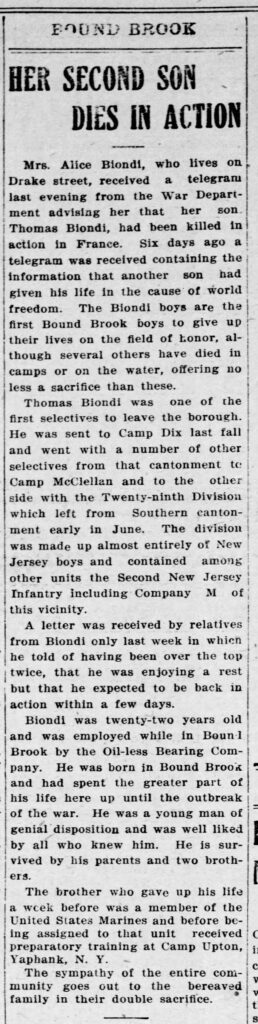
On October 20, less than one week later, his brother Donato (known as Thomas) was killed in service with the U.S. Army’s Company D, 310th Infantry Regiment, 78th Infantry Division.
Philomenia Biondi (now known as Alice) received telegrams about the death of her two sons just six days apart.
Commemoration
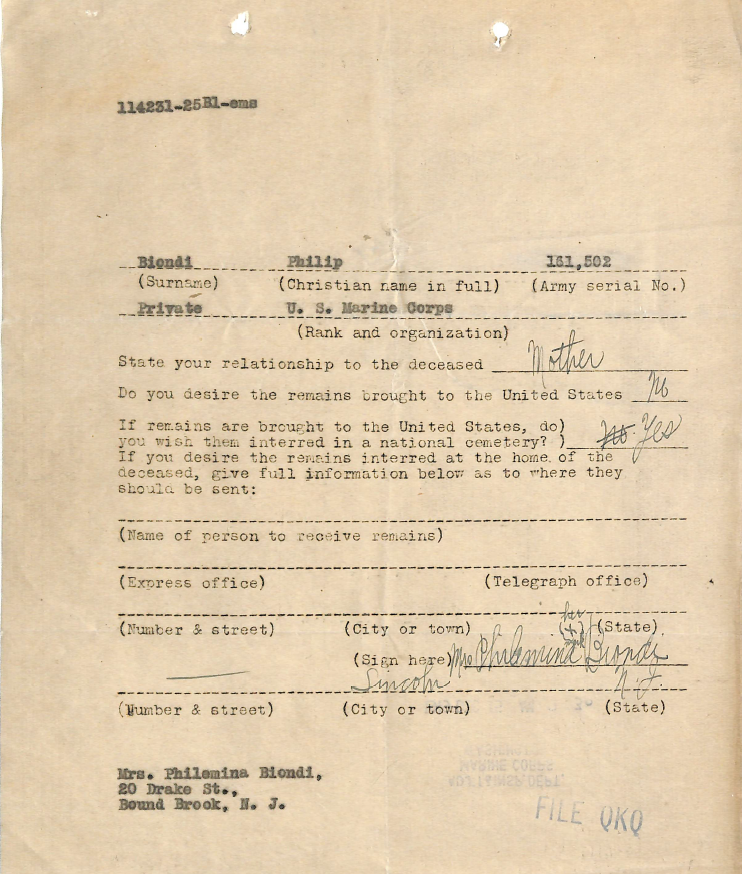
After World War I, Philip Biondi’s mother chose not to have his remains returned to the United States. In 1921, he was permanently interred at Suresnes American Cemetery near Paris. His brother, Thomas, was buried at Meuse-Argonne American Cemetery in Romagne-sous-Montfaucon, France.
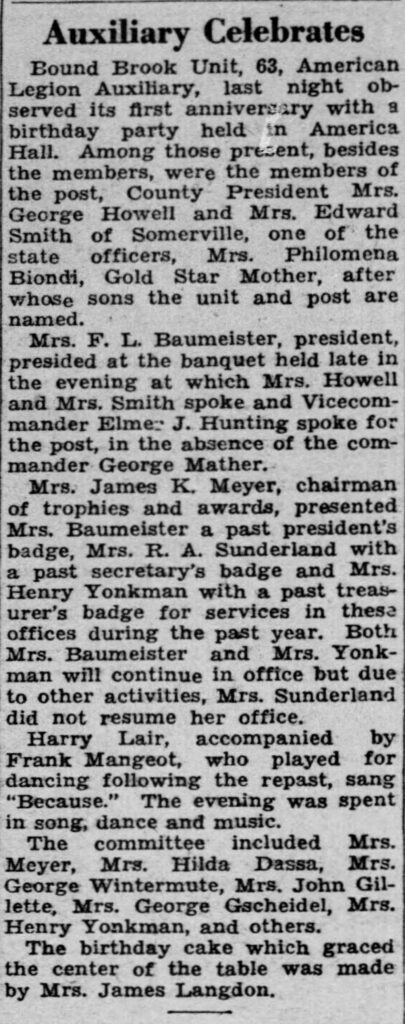
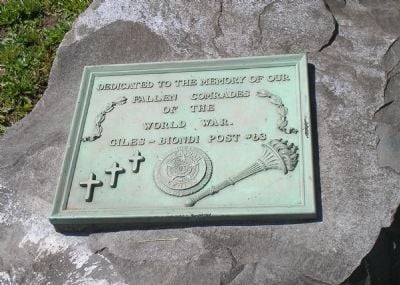
His mother, Philomena, was instrumental in starting American Legion Post 63 in Bound Brook, New Jersey. This post honors both of her sons, Philip and Thomas, along with Benjamin Giles, who was also killed in action in France. Post 63 is still an active chapter.
The Biondi family still lives in New Jersey and runs Biondi’s Florist and Greenhouses in Middlesex, New Jersey.
We salute all the fallen heroes of World War I, Requiescat In Pace.
Bibliography
Primary Sources
“Auxiliary Celebrates.” The Courier-News [Bridgewater, NJ], July 16, 1932. Newspapers.com (220953974).
Bound Brook, The Place to Dwell. New Jersey Board of Trade: 1909. https://archive.org/details/boundbrookplacet00boun/page/n11/mode/2up.
“Bound Brook Woman Loses Two Sons in World War.” The Central New Jersey Home News [New Brunswick, NJ], November 22, 1918. Newspapers.com (314567117).
Electrical Merchandising. Advertisement. December 1920. Shapiro & Aronson Company. https://mycompanies.fandom.com/wiki/Shapiro_%26_Aronson,_Inc.
Evening Hours: When Soft Glowing Lights Illuminate the Charm and Comfort of Home. Advertisement. 1920. Shapiro & Aronson Company. https://babel.hathitrust.org/cgi/pt?id=nnc2.ark:/13960/t15n5vf9k&seq=1.
“Her Second Don Dies in Action.” The Courier-News [Bridgewater, NJ], November 20, 1918. Newspapers.com (220759569).
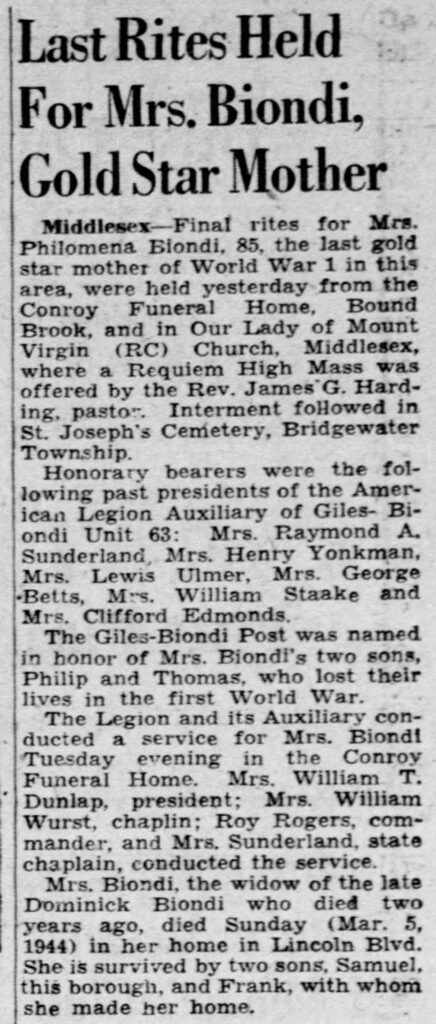
“Last Rites Held For Mrs. Biondi, Gold Star Mother.” The Courier-News [Bridgewater, NJ], March 9, 1944. Newspapers.com (220039879).
Leisegang Family Collection, 1917-1919. Courtesy of Christopher Doyle.
“Mrs. Philomena Biondi.” The Courier-News [Bridgewater, NJ], March 6, 1944. Newspapers.com (220037504).
Philip Biondi. New York, U.S., Abstracts of World War I Military Service, 1917-1919. Digital images. https://ancestry.com.
Philip Biondi, World War I Burial Case File, Department of the Navy, National Archives and Records Administration – St. Louis.
Philip Biondi. World War I Draft Registration Cards, 1917-1918. Digital Images. https://ancestry.com.
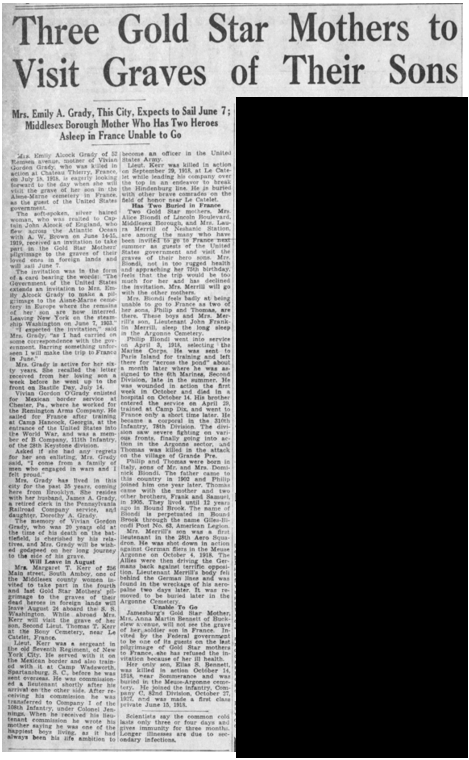
“Three Gold Star Mothers to Visit Graves of Their Sons.” The Central New Jersey Home News [New Brunswick, NJ], January 22, 1933. Newspapers.com (314991677).
Secondary Sources
Bone, Muirhead. The Western Front Drawings Part I Volume 2. Doubleday, Page & Company, 1917.
Boyce, Burke. Devil Dogs and Doughboys Script. A Broadcast prepared and presented by the National Broadcasting Company, On the Occasion of the 16th Annual Meeting of the Second Division Association, New York, June 8, 1934. Arthur C. Liesegang Family Collection.
Cansière, Romain, and Ed Gilbert. Blanc Mont Ridge 1918 America’s forgotten Victory. Osprey Publishing, 2018.
Halsey, Francis Whiting. The Literary Digest History of the World War Volume Six. Funk and Wagnalls Company, 1919.
Mackin, Elton E. Suddenly We Didn’t Want to Die: Memoirs of a World War I Marine. Presidio Press, 1993.
Melfi, Mary. Italy Revisited. Accessed February 20, 2026. http://www.italyrevisited.org/.
“Philip Biondi.” American Battle Monuments Commission. Accessed October 10, 2025. https://weremember.abmc.gov/s?q=Biondi&type=0&v=G.
“Philip Biondi.” Veterans Legacy Memorial, National Cemetery Administration. Accessed February 20, 2026. https://www.vlm.cem.va.gov/PhilipBiondi/9011.
“Post 63.” American Legion. Accessed February 20, 2026. https://centennial.legion.org/new-jersey/post63?p=about.
“Pvt. Philip Biondi.” Find a Grave. Updated August 5, 2010. Accessed October 10, 2025. https://www.findagrave.com/memorial/55952252/philip-biondi.
“S. Aronsohn Mill.” Patterson, NJ. Accessed February 20, 2026. https://www.patersonnj.gov/egov/apps/document/center.egov?view=item&id=970.
“USS Arizona (BB 39).” Naval History and Heritage Command. Accessed February 20, 2026. https://www.history.navy.mil/our-collections/photography/us-navy-ships/battleships/arizona-bb-39.html.
“USS Henderson (AP-1).” Naval History and Heritage Command. Accessed February 20, 2026. https://www.history.navy.mil/our-collections/photography/us-navy-ships/alphabetical-listing/h/uss-henderson–ap-1-0.html.
“USS Von Steuben (ID #3017), 1917-1919.” Ship Scribe. Accessed February 20, 2026. https://shipscribe.com/usnaux/ww1/ships/id3017.htm.
This profile was researched and created through the Researching Silent Heroes program, sponsored by the American Battle Monuments Commission.