

Captain Richard Carolinus Yeend, Jr.
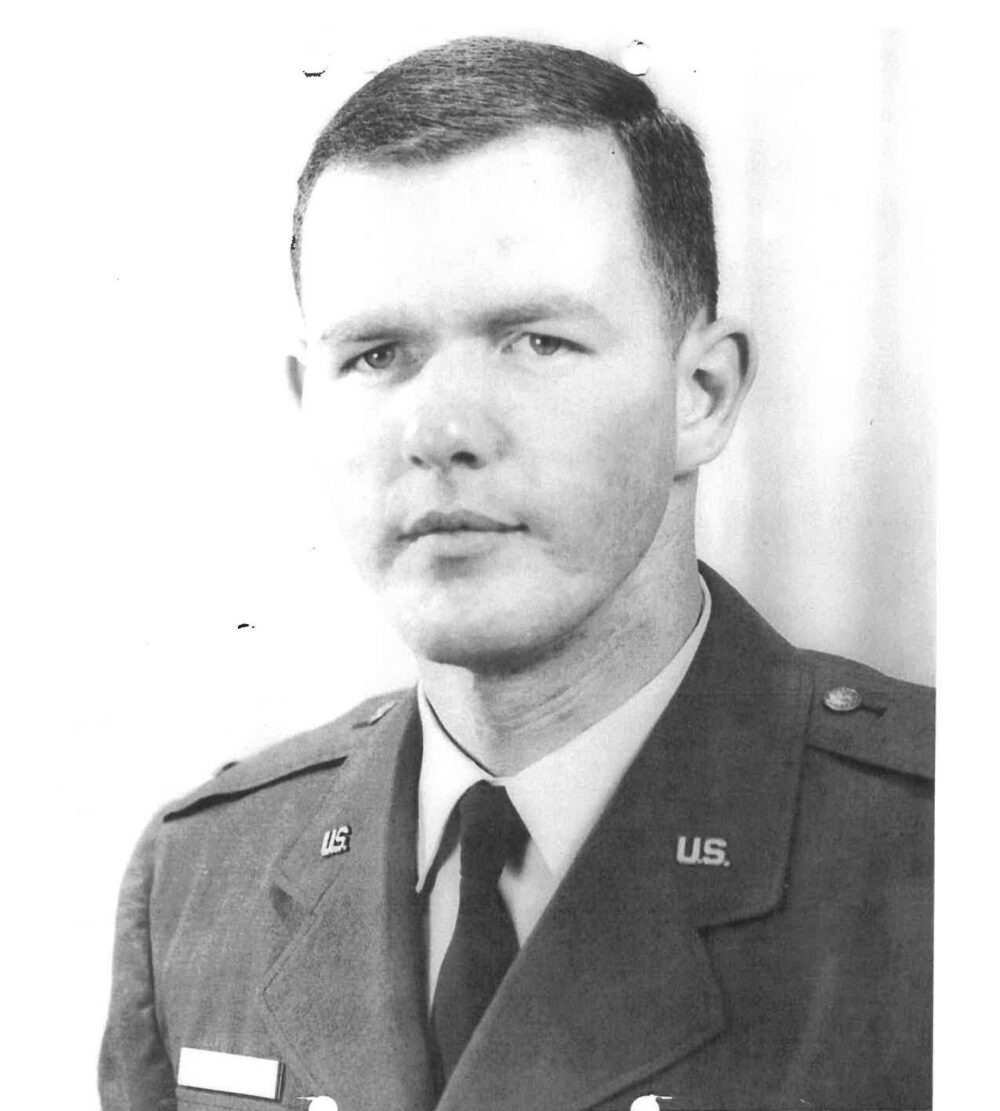
- Unit: 37ᵗʰ Aerospace Rescue and Recovery Squadron, 3ʳᵈ Air Rescue Group, 7ᵗʰ Air Force
- Service Number: 3119544
- Date of Birth: October 11, 1938
- Entered the Military: March 5, 1963
- Hometown: Mobile, Alabama
- Place of Death: Salavan Province, Laos
- Award(s): Silver Star, Distinguished Flying Cross with two oak leaf clusters, Air Medal with four oak leaf clusters, National Defense Service Medal, Purple Heart
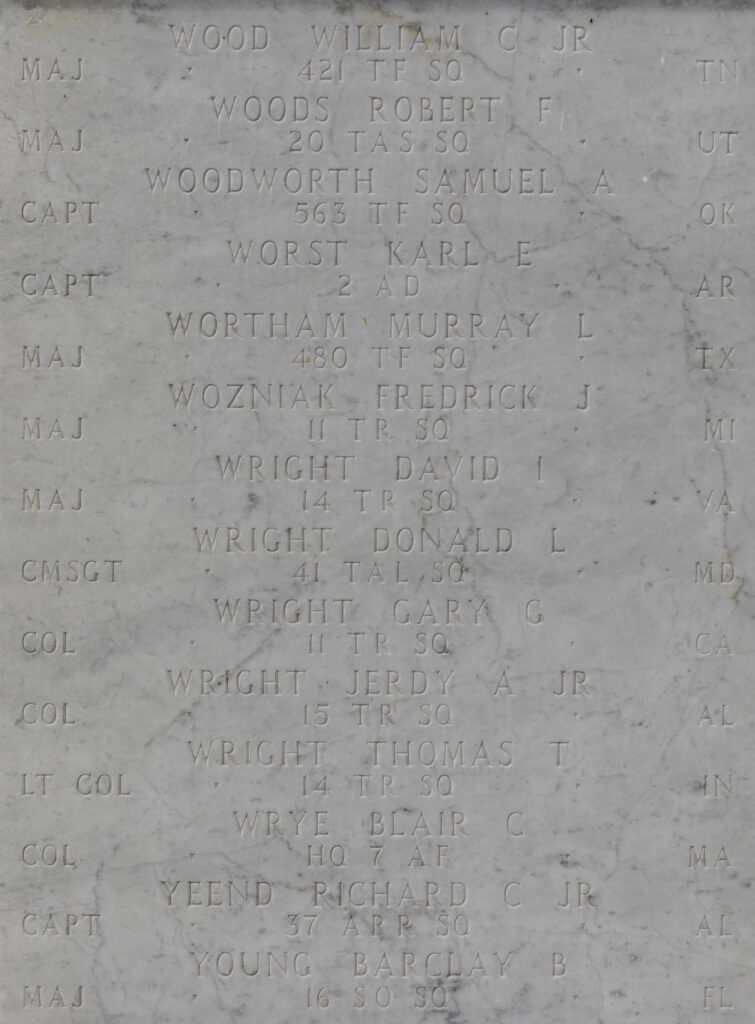
- Cemetery: Court A, Courts of the Missing, Panel 32, Honolulu Memorial, National Memorial Cemetery of the Pacific, Honolulu, Hawaiʻi. Memorial Marker at Section MA, Site 3, Mobile National Cemetery, Mobile, Alabama; Catholic Cemetery, Mobile, Alabama
Pascagoula High School, Pascagoula, Mississippi
2025/2026
Early Life
Richard Carolinus Yeend, Jr. was born on October 11, 1938, in Mobile, Alabama. At home, he was known as “Dickie,” the second of five children in a close-knit Catholic family. He grew up alongside his siblings, Lynn, Thomas, Patrick, and Michael.
His father worked for the U.S. Army Corps of Engineers, first as a surveyor and later in the dredging department. The job meant moving where the work was, and for a time, the family lived in Panama City and Carrabelle, Florida, before settling again in Mobile. Money was sometimes tight, so they rented out a room in their house to help make ends meet. The family were members of Little Flower Catholic Church.
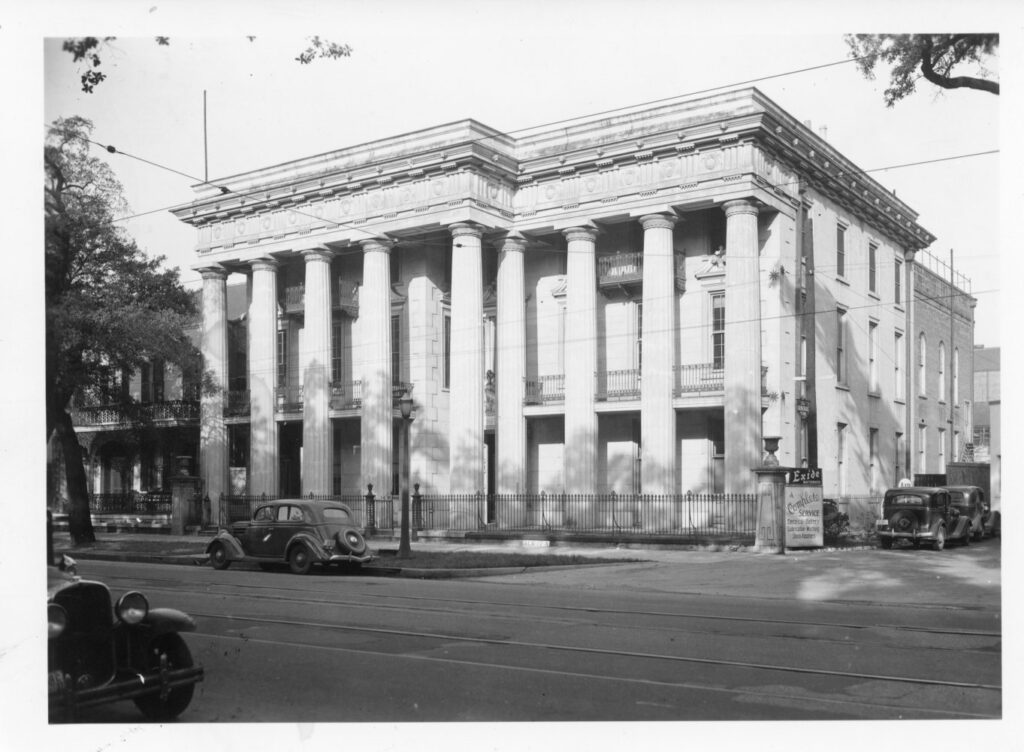
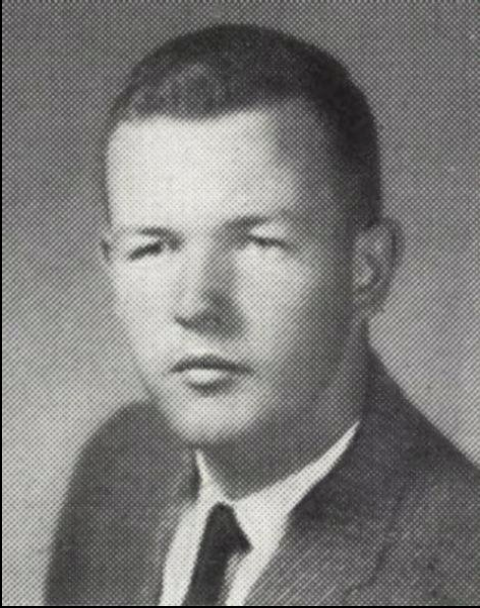
Yeend attended Little Flower School and later the McGill Institute in Mobile. After graduation, he enrolled at Auburn University, where he joined the Sigma Chi fraternity and entered the Air Force Reserve Officers’ Training Corps (ROTC). Through ROTC, his interest in aviation turned into a career path.

Homefront
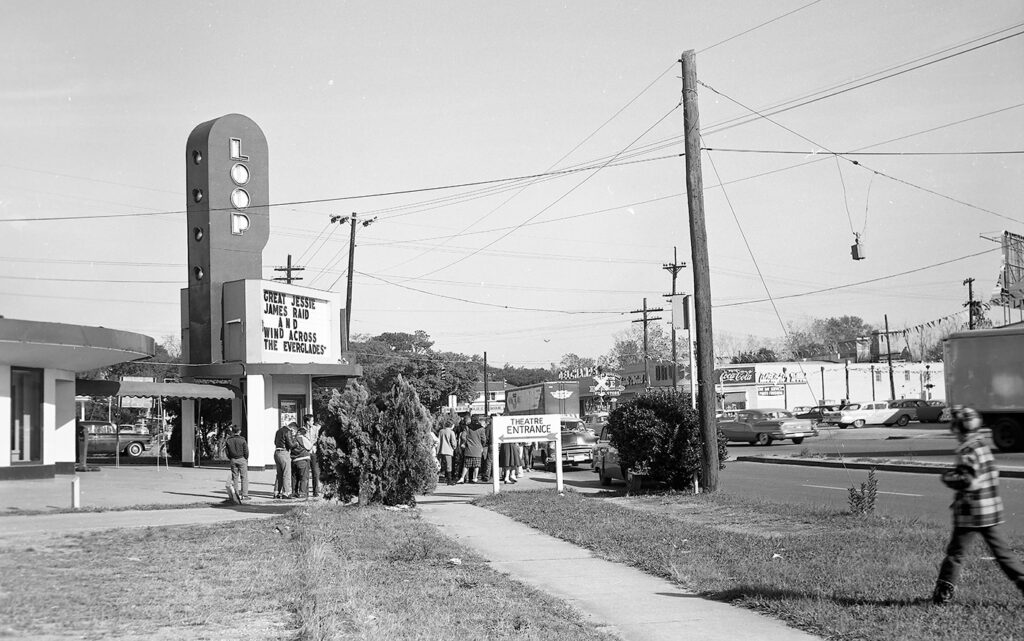
Richard Yeend grew up in Mobile, Alabama, a port city along Mobile Bay where much of daily life revolved around the water and the work it provided. Government Street ran through the center of town past schools, churches, and modest homes, connecting neighborhoods to downtown and the waterfront.
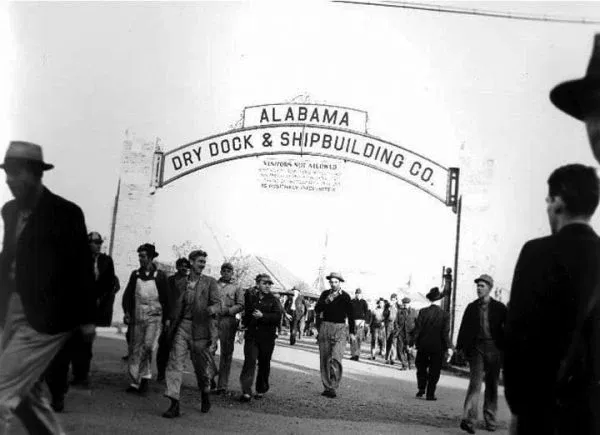
Shipbuilding remained steady work for many families. The Alabama Dry Dock and Shipbuilding Company repaired both commercial ships and Navy vessels, and the Port of Mobile handled a constant stream of cargo. Even after the surge of World War II production ended, maritime jobs and defense contracts continued to tie the city to the military.
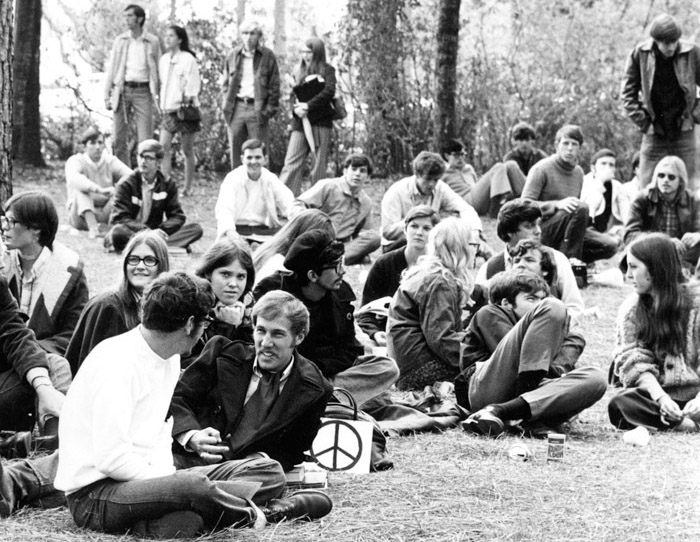
During the Vietnam era, young men in Mobile County registered with the Selective Service System. Draft notices arrived by mail, and families followed the news closely. Public protest was not common. When demonstrations did occur, they were usually limited to college campuses such as the University of South Alabama. For most people, the war was something discussed at home rather than in the streets.
Vietnam veterans from Mobile returned to work or school with little fanfare, leaning on family and friends rather than public ceremonies.
The city itself was also changing. Brookley Air Force Base closed in 1969, which meant the loss of many jobs. Schools and public facilities were adjusting to new civil rights laws, and the University of South Alabama was expanding. Through it all, the harbor and shipyards continued to shape Mobile’s character.
Military Experience
Commission and Training
Yeend entered active duty with the United States Air Force on March 5, 1963. He earned his commission through the Reserve Officers’ Training Corps and went on to flight training at Moody Air Force Base near Valdosta, Georgia, where he qualified as a pilot.
In the years that followed, he flew large aircraft, including B-52 bombers, building experience as a Strategic Air Command pilot before his career shifted toward rescue work. In November 1967, Yeend completed the helicopter conversion pilot course at Eglin Air Force Base in Florida.
Rescue Squadron Assignment
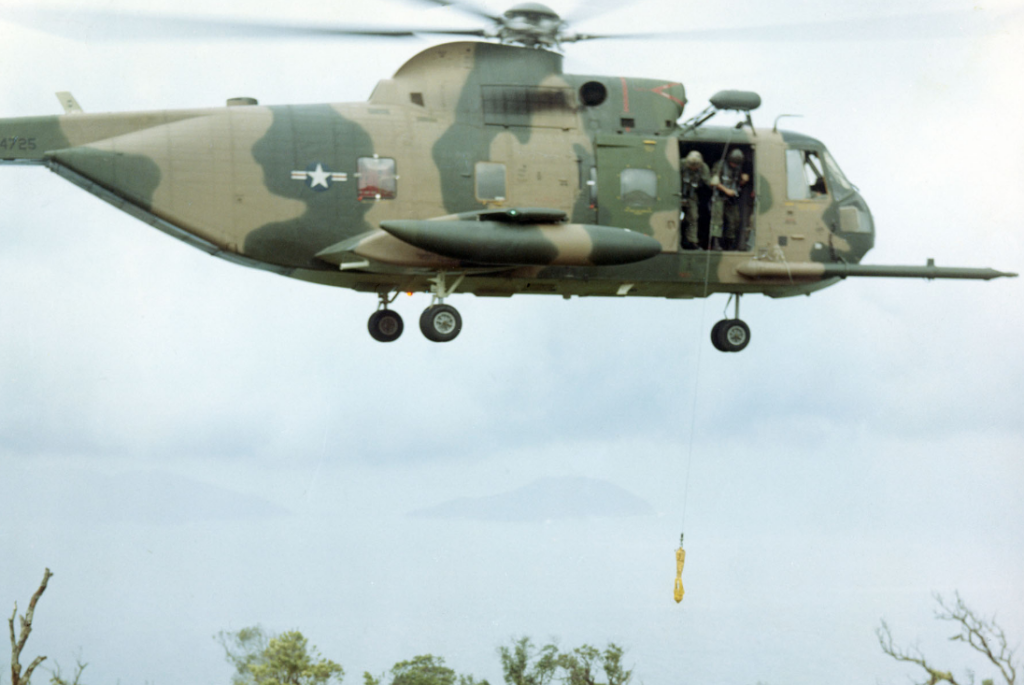
Yeend deployed to Southeast Asia in February 1968. After attending Jungle Survival School at Clark Air Force Base in the Philippines, he was based at Da Nang Air Base in Vietnam. There, he was assigned to the 7th Air Force’s 3rd Air Rescue Group, 37th Aerospace Rescue and Recovery Squadron. This unit flew Sikorsky HH-3E “Jolly Green Giant” helicopters and specialized in combat search-and-rescue missions. Their job was to rescue downed airmen and bring them home, often flying into dangerous conditions to do so.
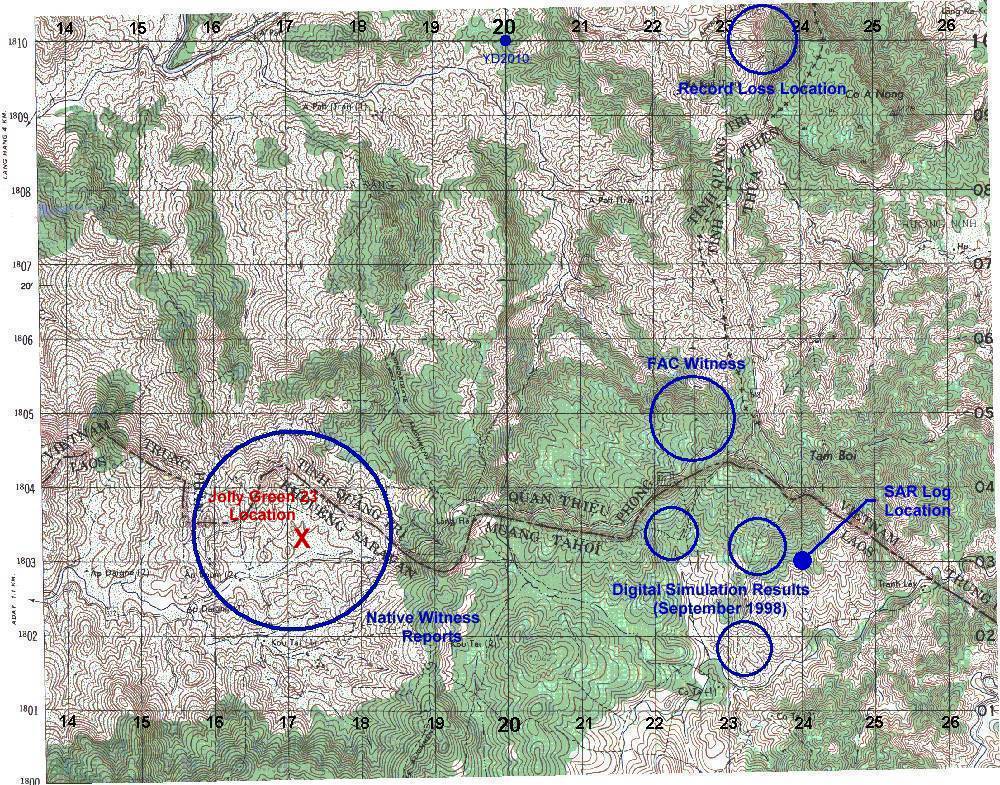
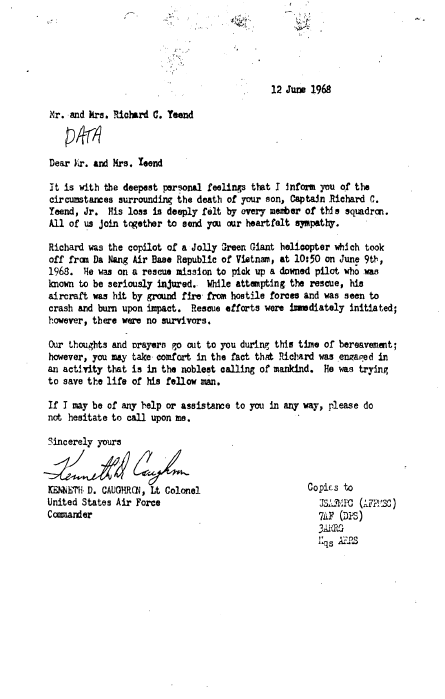
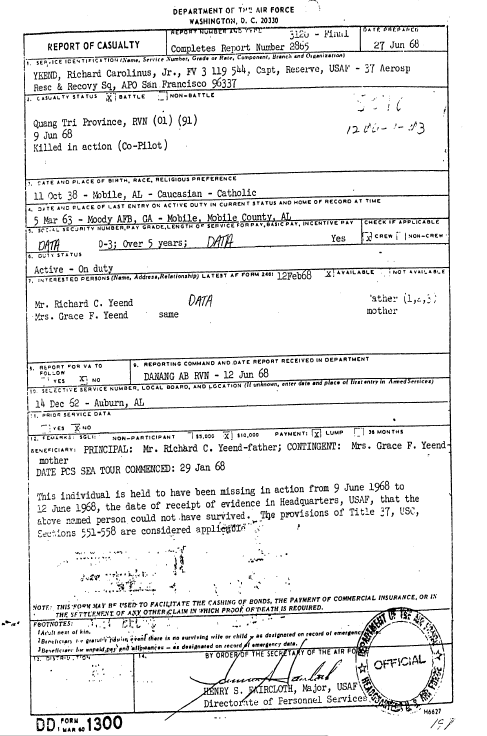
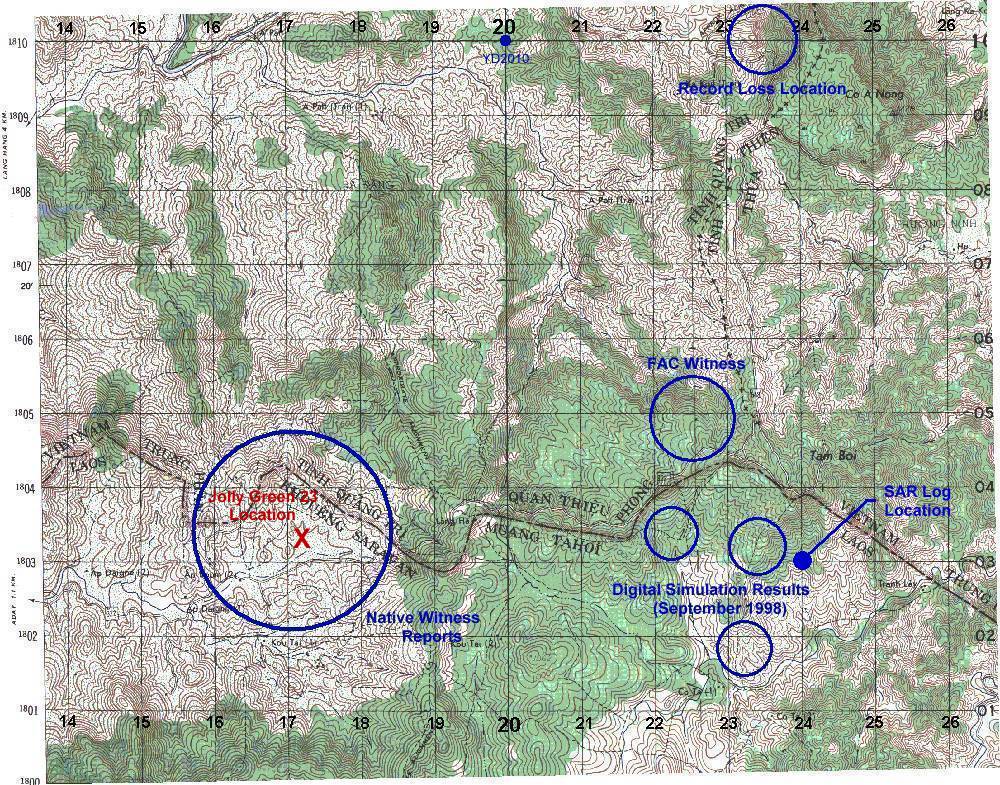
On June 9, 1968, Captain Richard Carolinus Yeend, Jr., co-piloted “Jolly Green” 23 over Thua Thien in Laos to rescue First Lieutenant Walter R. Schmidt. Schmidt, a Marine pilot, had been shot down by enemy fire on the Ho Chi Minh Trail. They were met by intense ground fire. The helicopter crashed, killing all aboard. Hostile conditions at the crash site made an immediate recovery impossible, and all four crew members were listed as “killed in action, body not recovered.”
Commemoration
Loss and Recovery
For years, there were few answers about what had happened.
In March 1969, Yeend was posthumously awarded the Silver Star Medal for “conspicuous gallantry and intrepidity in action against a hostile force during an air mission in the Republic of Vietnam.” He was also awarded the Distinguished Flying Cross with two oak leaf clusters, the Air Medal with four oak leaf clusters, and a Purple Heart.
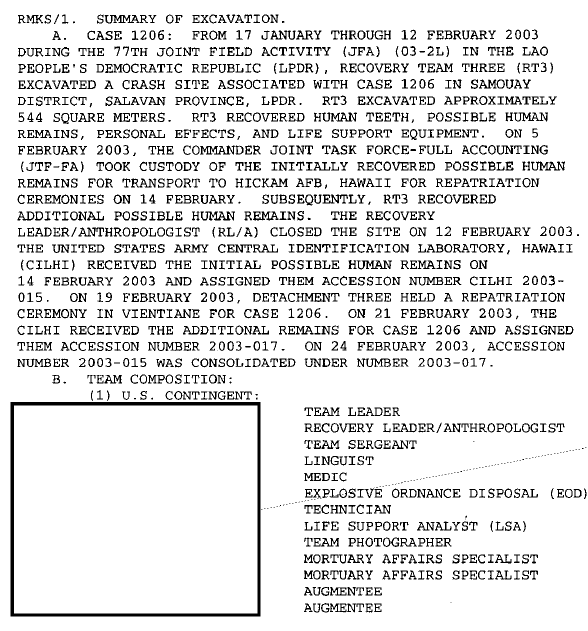
However, efforts to locate the crash site continued, led by investigative teams from the Joint Task Force-Full Accounting (JTF-FA), who remained committed to bringing missing service members home. The team conducted investigations in 1975 and received additional information about one of the crew members in October 1989.
In January 2003, teams returned to the remote area and recovered human remains. Specialists confirmed Yeend’s identity through laboratory testing. More than three decades after his loss, he was finally accounted for and returned to Alabama on September 20, 2003.
Memorials and Burial
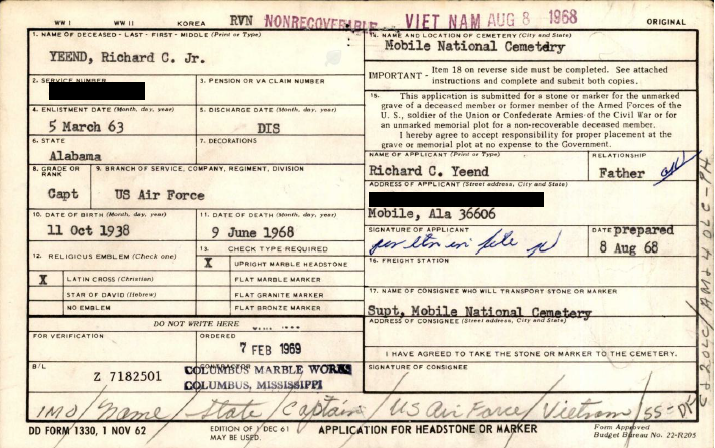
In August 1968, Yeend’s father requested that a memorial marker be placed at Mobile National Cemetery in Mobile, Alabama.
Richard C. Yeend’s name is engraved on the Vietnam Veterans Memorial in Washington, D.C., honoring those who were killed or remain missing in the Vietnam War. He is also listed on the Courts of the Missing at the National Memorial Cemetery of the Pacific in Honolulu, Hawaiʻi.
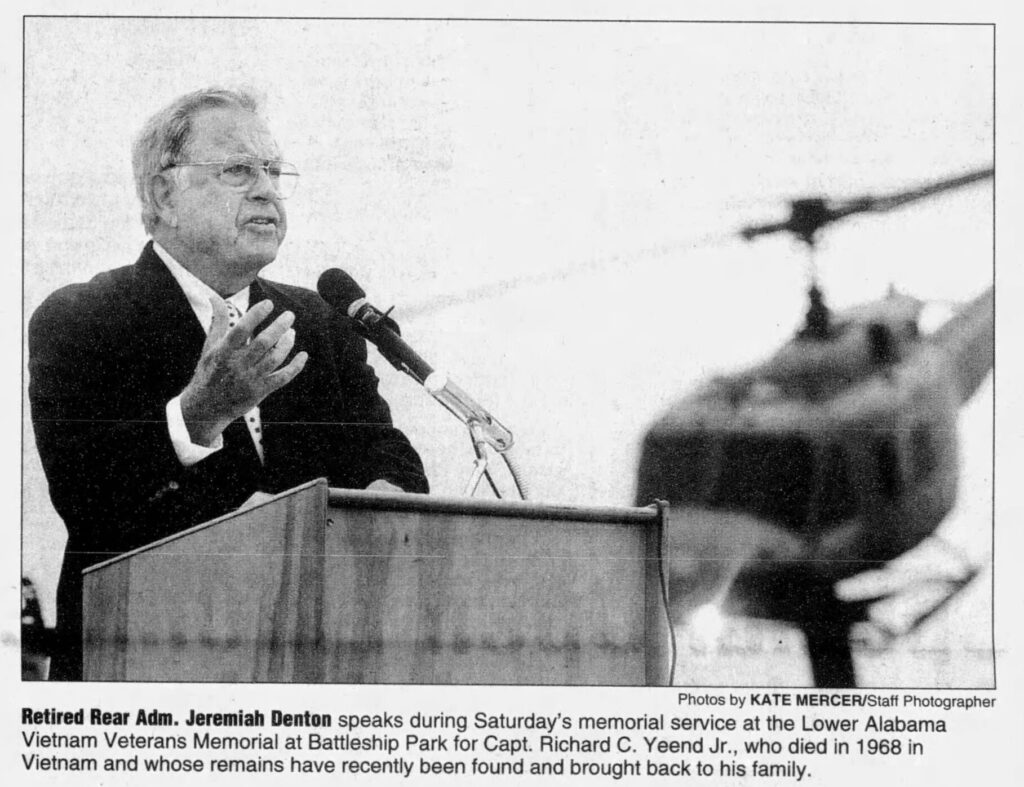
After his remains were identified in 2003, they were returned to his family in Alabama for burial. The Mobile community held memorial services in his honor. Newspaper coverage from the time describes neighbors and fellow veterans gathering quietly to remember him. His return marked the end of a long wait for his family and gave the community a place to pause and reflect on his life and service.
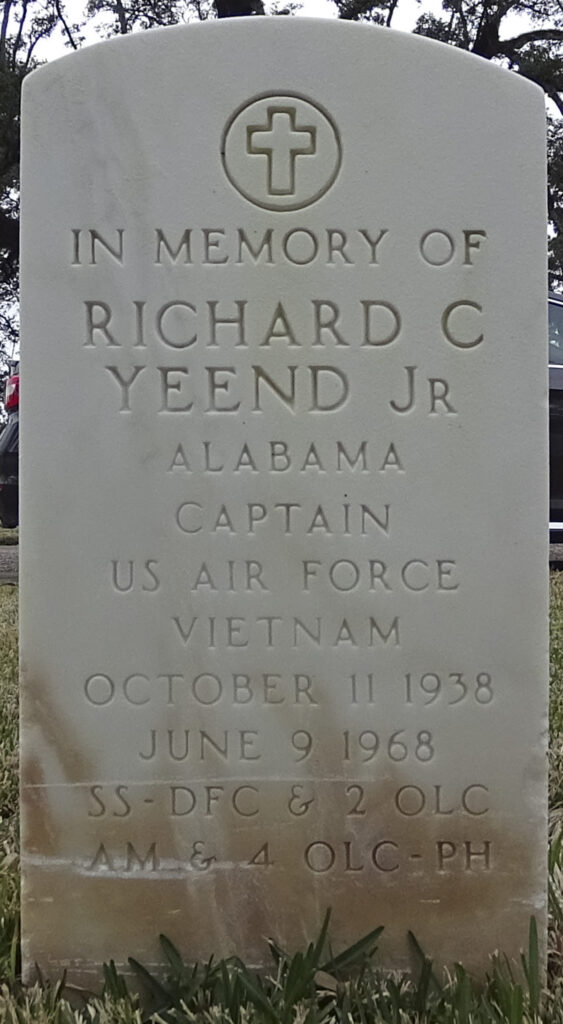
His family placed a memorial marker at Mobile National Cemetery and buried his remains with those of his parents at Catholic Cemetery in Mobile.
Bibliography
Primary Sources
1957 Glomerata. The Glomerta Collection, Auburn University Digital Library. https://content.lib.auburn.edu/digital/collection/gloms/id/46141/rec/25.
Alabama, Mobile County. 1940 United States Census. Digital Images. https://ancestry.com/.
Alabama, Mobile County. 1950 United States Census. Digital Images. https://ancestry.com/.
“Captain Coming Home.” The Mobile Register [Mobile, Alabama], September 9, 2003. Newspapers.com (1167177789).
McGill Institute, 252 Government Street. Photograph. c.1934-1936. Historic American Buildings Survey, Mobile Public Library Digital Archives (NH-McGill-252-Government). https://digital.mobilepubliclibrary.org/items/show/2771.
“Our Challenge is Brutal and Deadly.” The Opelika-Auburn News [Opelika, Alabama], September 11, 2003. Newspapers.com (983561786).
“Remembering a Lost Brother.” The Mobile Register [Mobile, Alabama], September 1, 1993. Newspapers.com (1166531535).
Richard C. Yeend, Jr. U.S., City Directories, 1822-1995. Digital Images. https://ancestry.com/.
Richard C. Yeend, Jr. U.S., Headstone Applications for Military Veterans, 1861-1985. Digital Images. https://ancestry.com/.
Richard Carolinius J. Yeend Collection. Manuscript/Mixed Materials Collection. Library of Congress (PWMASTER_36437). https://www.loc.gov/search/?in=&q=yeend%2C+richard&new=true.
Richard Carolinus Yeend. Freedom of Information Act Military Personnel Record. National Archives and Records Administration, St. Louis.
Sikorski HH-3. Photograph. 477th Fighter Group, U.S. Air Force. Accessed March 11, 2026. https://www.477fg.afrc.af.mil/News/Photos/igphoto/2002297797/.
[Topographic map of Jolly Green 23 crashsite]. Map. Air Operations History Project, Georgia Institute of Technology. https://faculty.cc.gatech.edu/~tpilsch/AirOps/Maps/JG23LocationMap.jpg.
“Tribute for a Fallen Hero.” The Mobile Register [Mobile, Alabama], October 12, 2003. Newspapers.com (1166786107).
“Vietnam-era Pilot’s Remains Identified.” The Birmingham News [Birmingham, Alabama], September 10, 2003. Newspapers.com (1158599114).
“Yeend Remembered as Brother, Hero.” The Mobile Register [Mobile, Alabama], October 29, 2025. Newspapers.com (1166785811).
Secondary Sources
“Alabama Dry Dock and Shipbuilding Company.” Encyclopedia of Alabama. Accessed March 11, 2026. https://encyclopediaofalabama.org/article/alabama-dry-dock-and-shipbuilding-company-addsco/.
“Alabama’s 44 MIAs: The Search for the Sons Continues.” The Mobile Register [Mobile, Alabama], October 29, 2025. Newspapers.com (1165768623).
Burnett, Emmett. “The Sixties,” Mobile Bay, January 6, 2014. https://mobilebaymag.com/the-sixties/.
“Cpt Richard Carolinus Yeend, Jr.” Find a Grave. Updated August 19, 2014. Accessed October 30, 2025. https://www.findagrave.com/memorial/134573467/richard-carolinus-yeend.
“Cpt Richard Carolinus Yeend, Jr.” Find a Grave. Updated May 31, 2006. Accessed October 30, 2025. https://www.findagrave.com/memorial/134573467/richard-carolinus-yeend.
“Government Street.” Government Street Collaborative. Accessed October 31, 2025. https://www.govstmobile.org/government-street.
“Grace Flynn Yeend.” Find a Grave. Updated July 5, 2017. Accessed March 11, 2026. https://www.findagrave.com/memorial/181025064/grace-yeend.
Kirkland, Scotty E. “Mobile.” Encyclopedia of Alabama. Last modified October 22, 2025. Accessed March 11, 2026. https://encyclopediaofalabama.org/article/mobile/.
“Richard C. Yeend Jr.” Veterans Legacy Memorial, National Cemetery Administration. Accessed March 11, 2026. https://www.vlm.cem.va.gov/RICHARDCYEENDJR/1B4A73D.
“Richard C. Yeend Jr.” Wall of Faces, Vietnam Veterans Memorial Fund. Accessed October 30, 2025. https://www.vvmf.org/Wall-of-Faces/57746/RICHARD-C-YEEND-JR/.
“Richard Carolinus ‘Bud’ Yeend, Sr.” Find a Grave. Updated July 5, 2017. Accessed March 11, 2026. https://www.findagrave.com/memorial/181035724/richard_carolinus-yeend.
“Richard Carolinus Yeend, Jr.” American Battle Monuments Commission. Accessed October 30, 2025. https://weremember.abmc.gov/s?q=yeend&v=G&type=16.
“Richard Carolinus Yeend, Jr.” Defense POW/MIA Accounting Agency. Accessed October 30, 2025. https://dpaa-mil.sites.crmforce.mil/dpaaProfile?id=a0Jt000000toktgEAA.
Zimlich, Amelia Rose. “The Loop Theatre.” Mobile Bay [Mobile, Alabama], October 17, 2022.https://mobilebaymag.com/the-loop-theatre.
This profile was researched and created through the Researching Silent Heroes program, sponsored by the American Battle Monuments Commission.