
Private First Class Richard Eugene Irvin
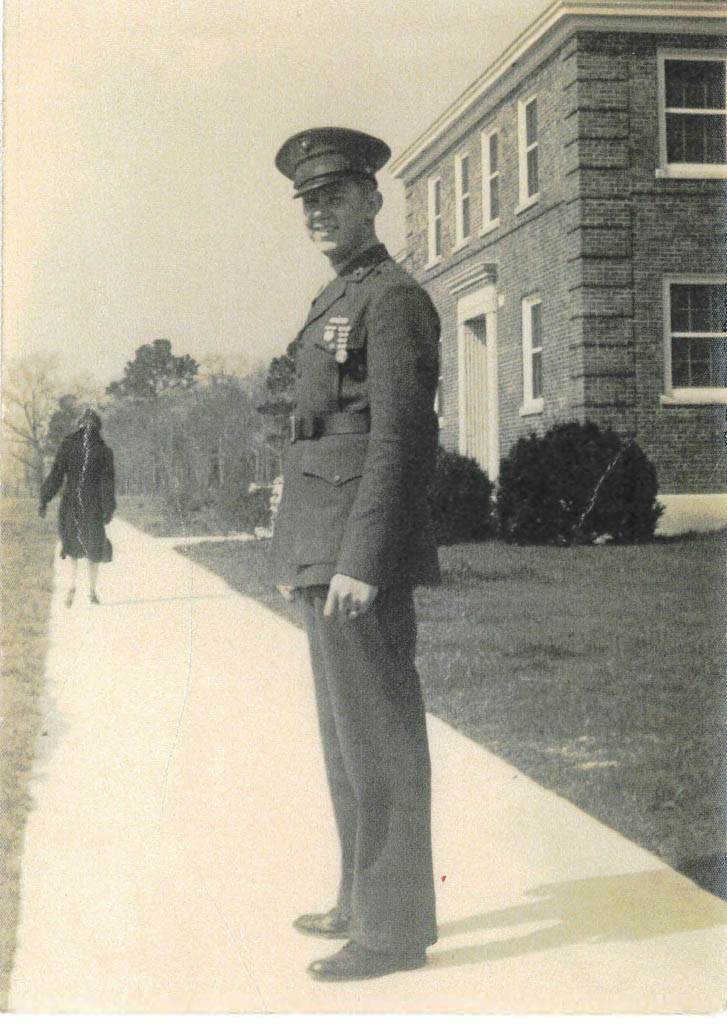
- Unit: III Marine Amphibious Corps, 4th Anti-Aircraft Battalion
- Date of Birth: November 25, 1923
- Entered the Military: June 30, 1942
- Date of Death: April 2, 2017
- Hometown: Altoona, Pennsylvania
- Place of Death: Greer, South Carolina
- Cemetery: Section J, Row 6, Site 497. MJ “Dolly” Cooper Veterans Cemetery, Anderson, South Carolina
Mentored by Mrs. Kim Guthrie
Palmetto Christian Academy of Gaffney
2025/2026
Early Life
Richard Irvin was born in Altoona, Pennsylvania, on November 25, 1923, to Beulah and Samuel Irvin. Samuel, a U.S. Army Air Forces World War veteran, worked in Altoona as a railroad inspector. His grandfather had also retired from the Altoona Railroad. Richard had a sister, Lorainne, who was a year older. His summers were spent living with his grandparents during the Great Depression.
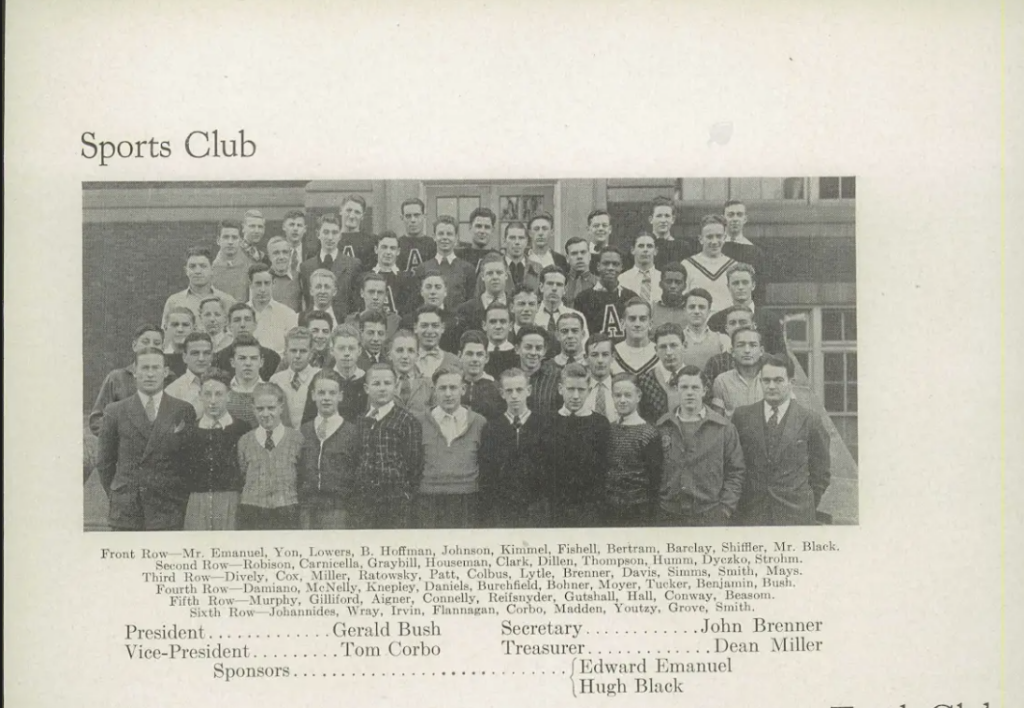
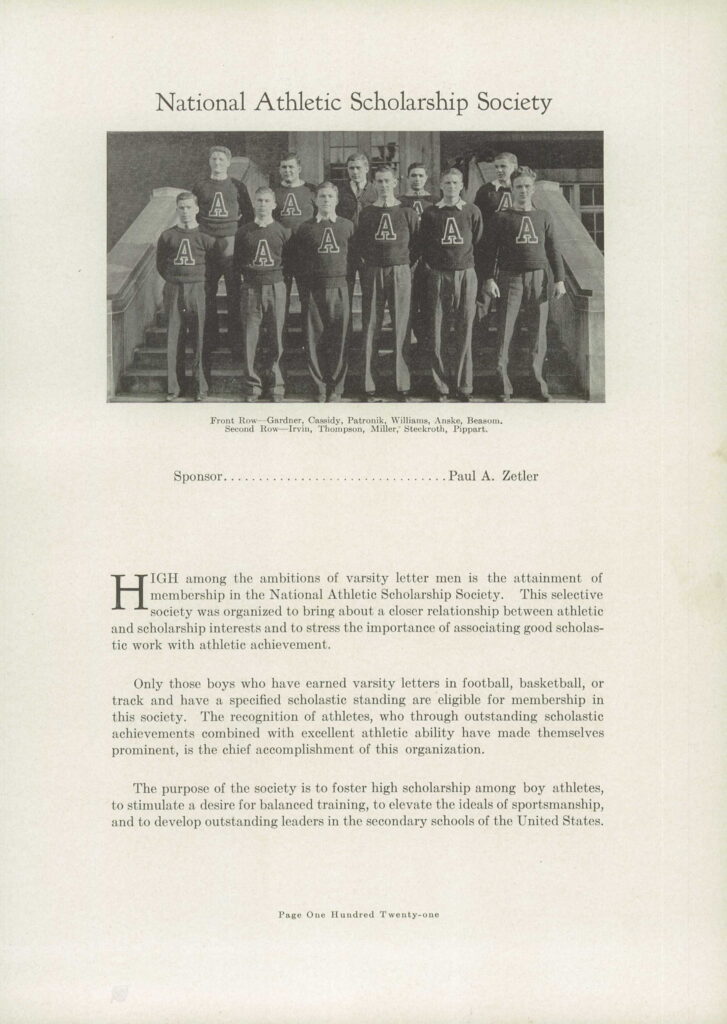
Both Richard and Lorraine attended Altoona High School. He took wood, sheet-metal, and mechanical-drawing vocational classes in high school. He was active in high school sports, including track and football, the sports club, and the scholar-athlete society.
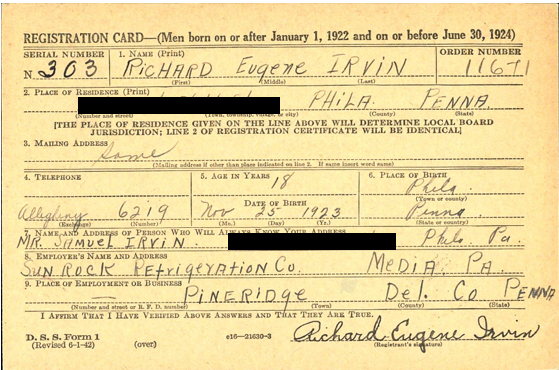
In 1940, Richard’s father worked as a salesman in Altoona. He left high school in his junior year and was employed by the Sunroc Refrigeration Company, installing, maintaining, and repairing their equipment, until he enlisted in the U.S. Marine Corps on November 24, 1942.

Homefront
The city of Altoona in Blair County, Pennsylvania, was founded as a railroad town that built large steel locomotives. The town became a critical rail hub and supplier, serving trains that transported military supplies and troops from the Midwest to the East Coast during the 1930s and 1940s. The city’s diverse population reached 80,000, its highest level, during World War II. There were three public high schools and a Catholic school. There were over 25 religious denominations and more than 150 church buildings in 1945. Newspaper articles highlight Chinese-American business owners’ purchase of war bonds, who did their part to support the war effort at home.
The majority of jobs were either with the Pennsylvania Railroad or the Altoona Works (which built railroad cars), or in other businesses connected to the railroad industry. Men who listed themselves as being employed as blacksmiths were most often not smiting horseshoes for horses, but for the ‘iron horse,’ making train parts. Because of the war and the draft, Altoona Works needed employees and began hiring women. With a huge influx of troops arriving through the city, the town transformed an old school building into a canteen for military members changing trains in Altoona.
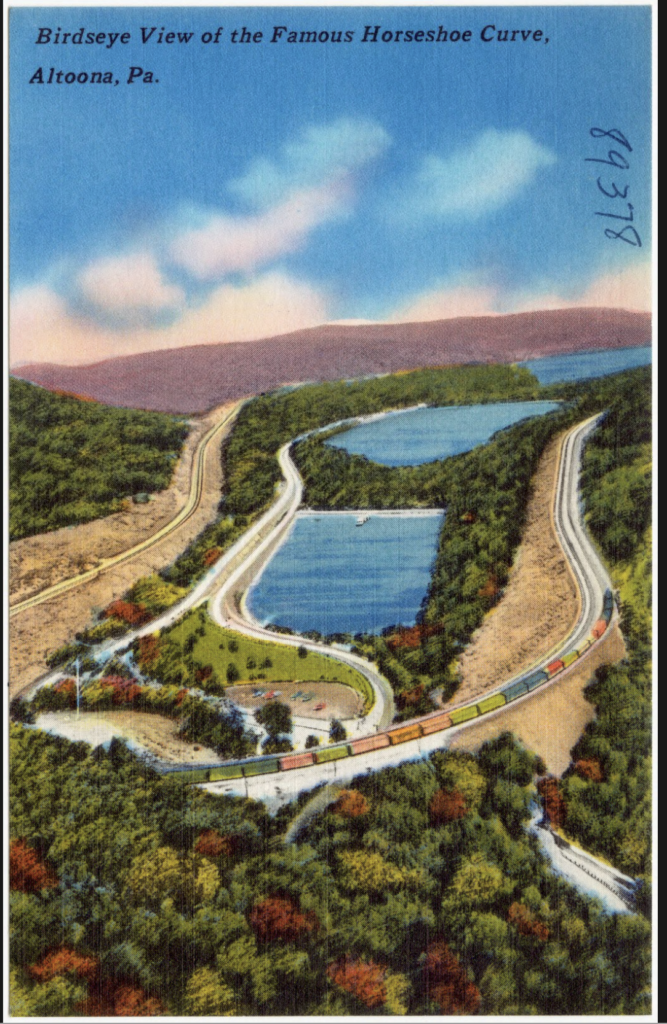
Altoona’s railroad connection is also remembered for what almost happened in June of 1942. Because of its location as a key hub, the rail line section known as the “Altoona Horseshoe” became part of Hitler’s plans to sabotage America’s infrastructure. Six Nazi saboteurs arrived by U-Boat onto Long Island, New York, with the means and plan to blow up the “Horseshoe” to halt rail traffic coming and going from Altoona. Luckily, one of the Nazi saboteurs turned themselves in to the FBI, and the plot was stopped before the saboteurs arrived in Altoona.

Military Experience
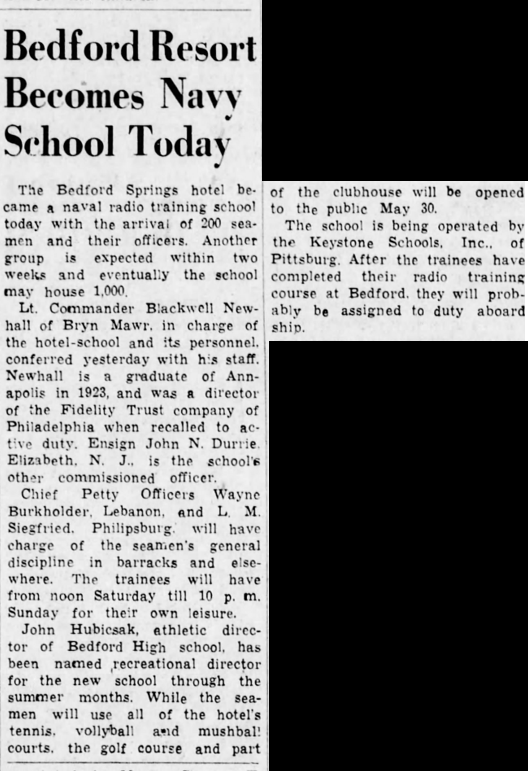
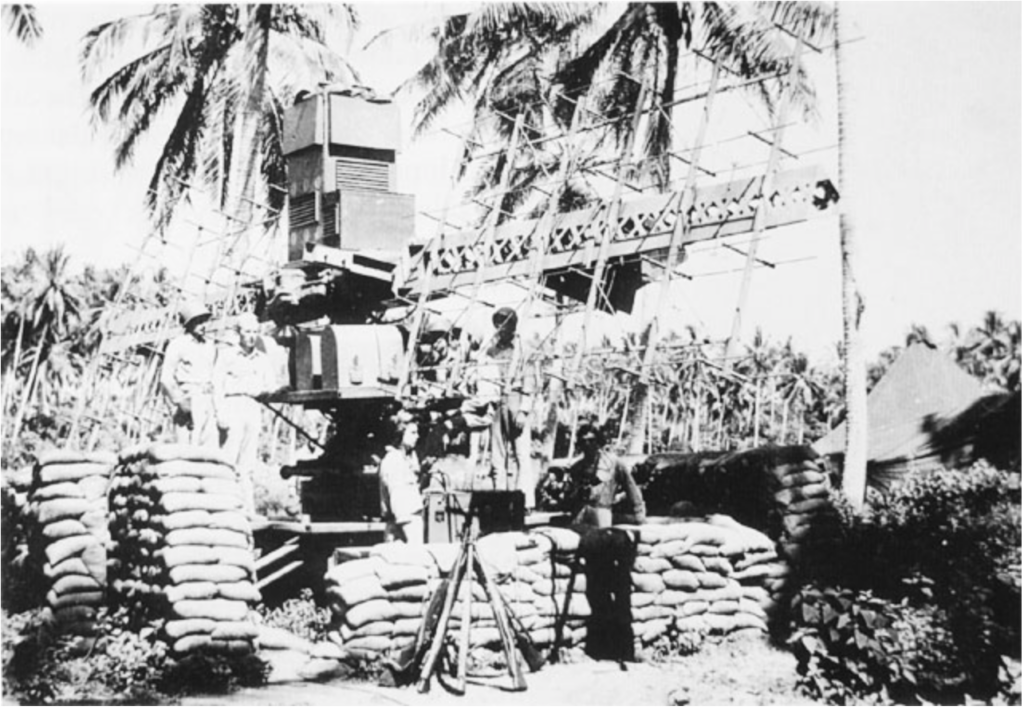
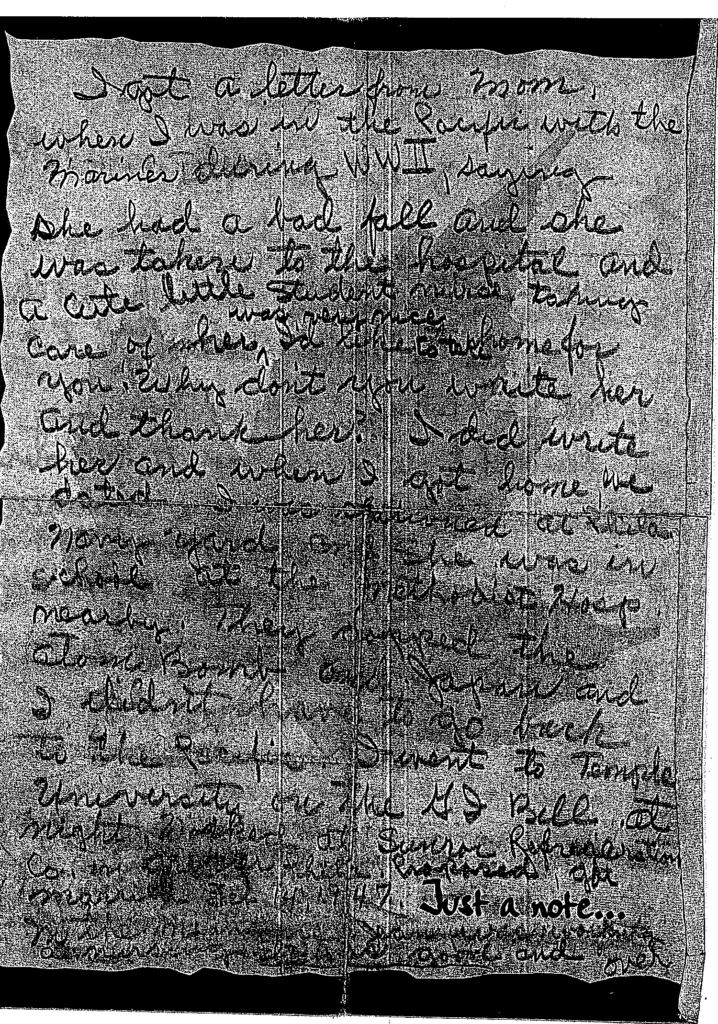
Richard Irvin enlisted in the U.S. Marine Corps on November 29, 1942, just four days after he turned 19. He completed boot camp at Parris Island, South Carolina, in December, earning several marksmanship medals. He was selected to train on the latest military technology, anti-aircraft radar (SCR-268), at New River, South Carolina.
Anti-aircraft radar required a three-man team and four trucks of equipment. This would typically be set up on a beachhead, where it could best use high-powered lights and later artillery to track and shoot down enemy planes. Irvin was promoted from private to private first class on April 3, 1943, and left San Diego, California, on June 5, 1943. He embarked on USS Rochambeau for training in New Zealand.
Private First Class Irvin arrived in Wellington, New Zealand, where he was attached to Company C, 13th Replacement Battalion, Fleet Marine Force on June 26, 1943. On July 3, 1943, he was transferred to the 4th Defense Battalion, which was renamed the 4th Anti-Aircraft Artillery Battalion on May 15, 1944. On July 13, 1943, he left Wellington on SS Del Brasil, a former passenger liner, heading to Kokumbona, Guadalcanal. His ship stopped at Auckland, New Zealand, for three days, then Noumea, New Caledonia, for one day, before he disembarked on Guadalcanal.
On August 13, 1943, he sailed from Guadalcanal and arrived at Vella LaVella one day later. He participated in the first day landings and occupation operations in the Battle of Vella Lavella as part of Operation Stalemate II. There is a report of an intense battle with enemy forces that occurred as the Marines worked to clear a site for the anti-aircraft radar equipment to be configured on the beachhead. Heavy fighting continued into October. A naval battle allowed the Marine forces to take control of the island and build the intended airstrip. Irvin remained stationed there for the next 11 months, as it was an important base for the famed “Black Sheep” Marine air squadron.
On June 27, 1944, Irvin sailed back to Guadalcanal. Records show that he left Guadalcanal on September 24, 1944, for the Palau Islands. He first arrived at the Admiralty Islands six days later and later sailed to the Kossol Passage in the Palau Islands on October 31, 1944, where the U.S. Navy anchored a large portion of its Pacific Fleet.
The U.S. Navy used the Kossol Passage to keep ships safely anchored and to repair and ready them for staging. It also served as a convoy assembly area. The Kossol Passage is roughly 62 miles north of Pelileiu Island, where many naval hospital ships were anchored.
The Battle of Peleliu had begun on September 5, and Irvin arrived at Peleliu Island on November 28. As a seasoned battle veteran, he would have known how fierce the battle was and realized the dangers he would face when he arrived. Peleliu was a coral island with dense jungle and an enemy that would not be easily defeated. While the Battle of Peleliu, on paper, was fought from September 5 to November 27, 1944, organized Japanese resistance continued through January 1945, and it is remembered as some of the fiercest fighting the Marines faced in the Pacific.
Records do not specify a date, but Irvin became an official “Shellback” in accordance with naval tradition, under the order of Neptune Rex, as he crossed the equator. Irvin flew home from Pearl Harbor, Hawaii, to San Francisco, California, on April 17, 1945. He was stationed at the Philadelphia Naval Yard until he was discharged from the Marine Corps on October 9, 1945.
Veteran Experience
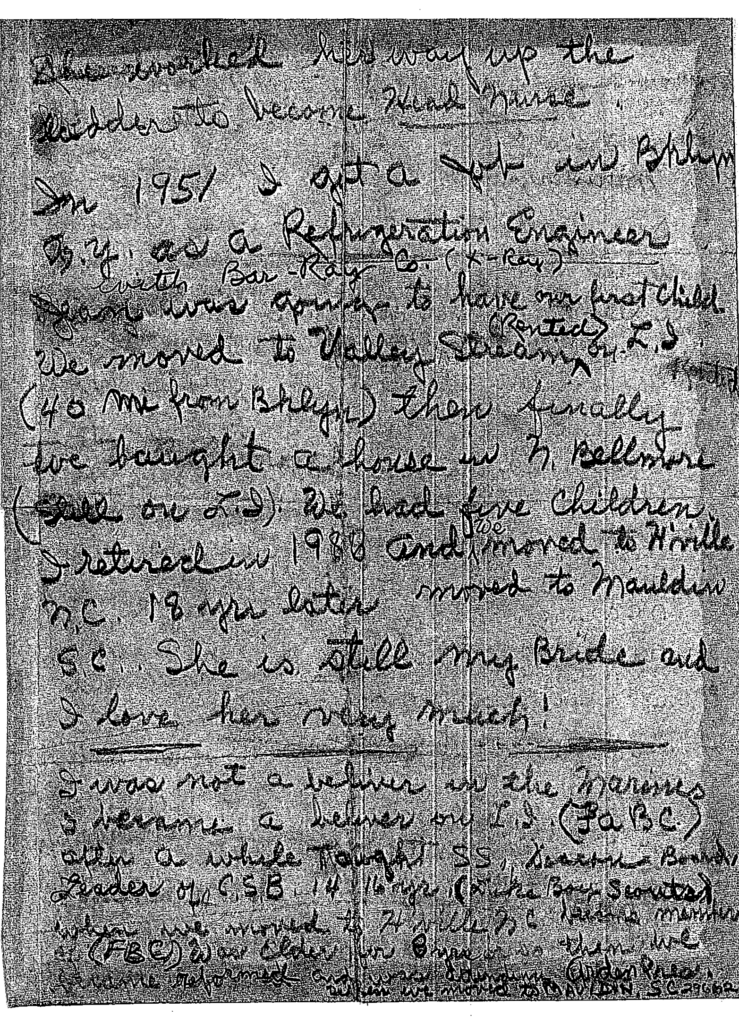
In 1945, Irvin returned to Philadelphia, Pennsylvania, where his parents lived. He originally returned to the Sunroc Company. He graduated from Temple University and financed his education using his GI Bill benefits.
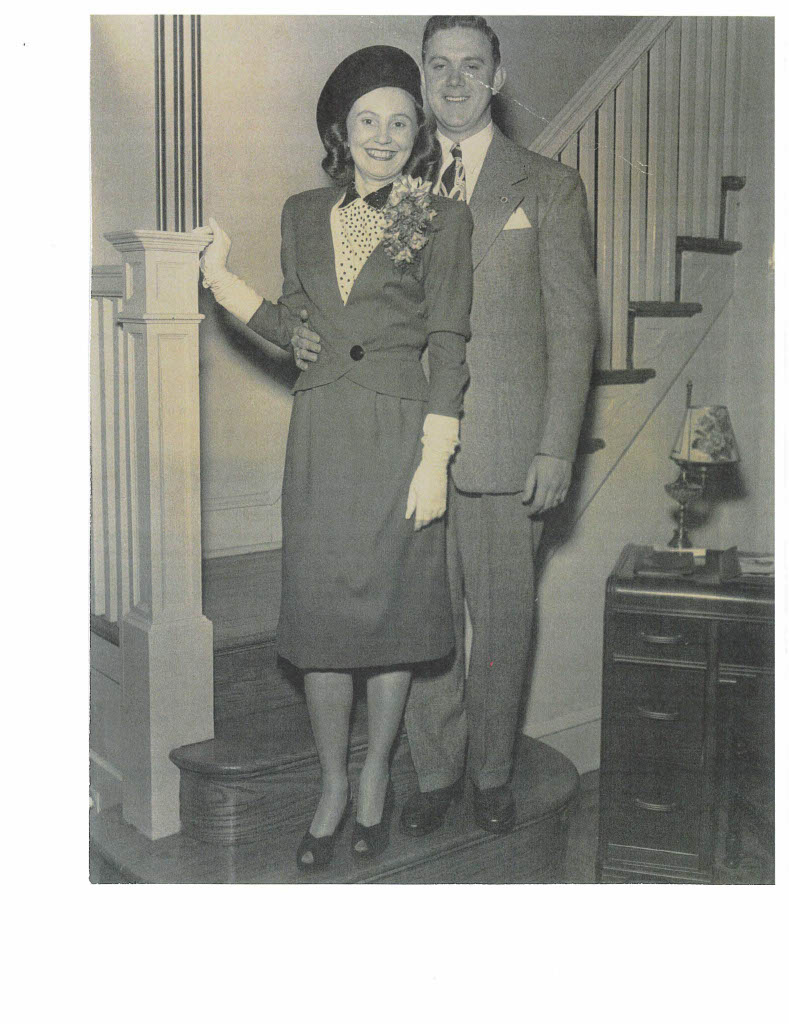
Irvin had sent letters to his future wife, Hazel Jean Myers, a nurse, after his mother, hospitalized in Philadelphia, suggested he write to her “nice” student nurse. They corresponded while he was in the Pacific and dated when he returned. They married on February 14, 1947, and lived with his parents in Philadelphia.
In 1951, Richard and Jean moved to Brooklyn, New York, where he worked as a product engineer for the Bar-Ray Company. They later moved to the town of Valley Stream, New York, further east on Long Island and 40 miles from his office, before settling in North Bellmore, New York. The Irvins raised two sons, Richard and Scott, and three daughters, Christa, Lauren, and Beth. He volunteered as a brigade leader with the Christian Service Brigade for 14 years, teaching teen boys about both his Christian faith and his love of the outdoors. He retired from Bar-Ray in 1986.
In 1988, Richard and Jean Irvin moved to Hendersonville, North Carolina, where he volunteered as a church deacon and for the local business organization. In 2006, they moved to Mauldin, South Carolina, where he lived until he died on April 2, 2017.

Commemoration
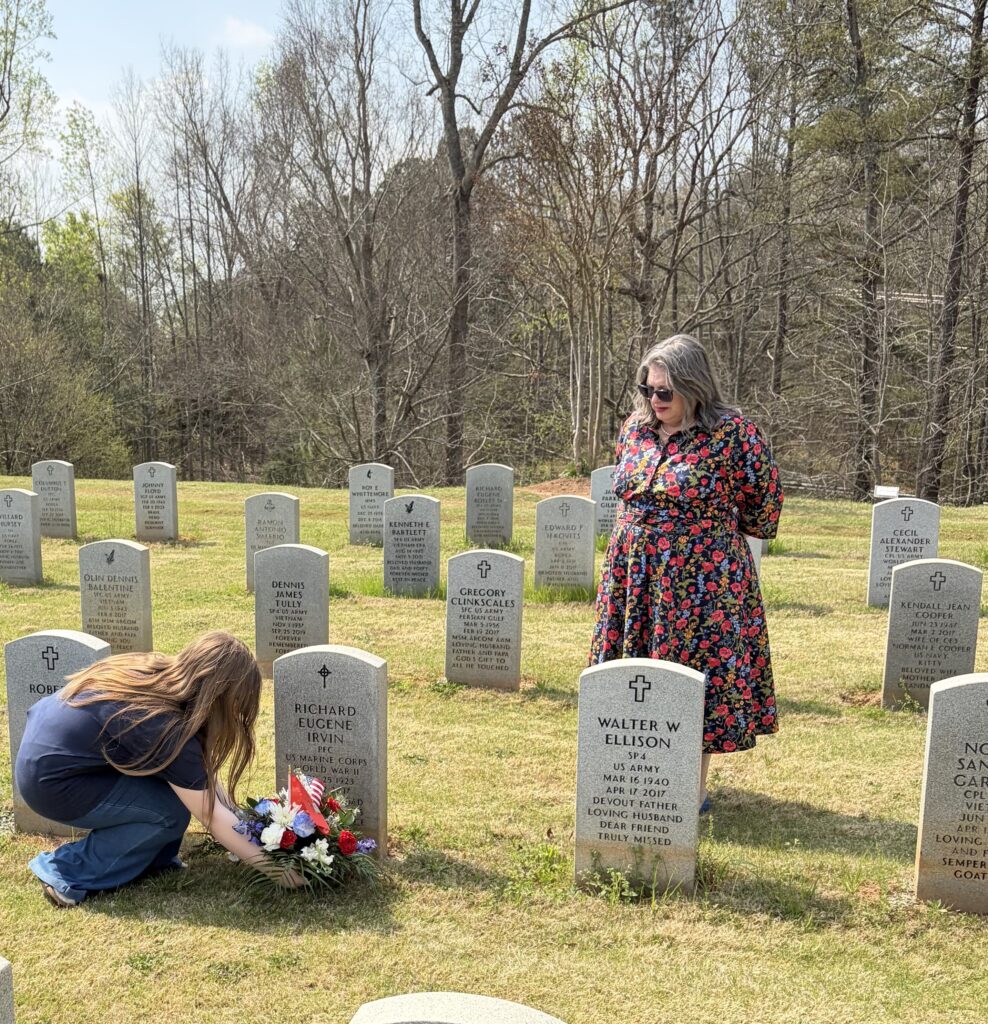
Mr. Irvin will be forever remembered for his love and loyalty. When Mr. Richard Irvin died on April 2, 2017, he was interred at the MJ “Dolly” Cooper Veterans Cemetery in Anderson, South Carolina. His wife, Jean, died a few months later, on January 25, 2018. They are buried together.
Richard Irvin left behind a wife, whom he loved and was loyal to for more than 70 years. He left behind his five children, grandchildren, and great-grandchildren, whom he loved dearly. He is remembered by his children and grandchildren for his love of the outdoors and his yearly family camping trips. Irvin taught his love of the outdoors not only to his family, but to numerous boys whom he mentored as a leader of a Christian Service Brigade unit. He was a loyal employee for over 36 years. After he retired, he shared his business knowledge with businessmen. What his family says he is best known for is his loyalty as a churchgoer, with a deep faith and love for God.
Bibliography
Primary Sources
The 3d Defense Battalion operated this SCR-268, the first search radar established on Guadalcanal after the 1st Marine Division landed there on 7 August 1942. Photograph. August 7, 1942. Department of Defense, U.S. Marine Corps (62095). Wikimedia Commons. https://commons.wikimedia.org/wiki/File:SCR268-radar-guadalcanal-19420807.jpg.

Altoona High School Yearbook. Altoona Public Schools, 1937. Digital Images. https://ancestryclassroom.com.
“Altoona P.R.R. Women Workers on the Job.” Altoona Tribune [Altoona, Pennsylvania], December 30, 1942. Newspapers.com (57222310).
“Bedford Resort Becomes Navy School Today.” Altoona Tribune [Altoona, Pennsylvania], May 1, 1942. Newspapers.com (57163191).
Birdseye view of the famous Altoona Horseshoe Curve, Altoona, Pa. Postcard. c.1930-1945. Boston Public Library (06_10_017128). https://ark.digitalcommonwealth.org/ark:/50959/4b29b7526.
“Buses Will Serve You Better.” Altoona Tribune [Altoona, Pennsylvania], March 31, 1943. Newspapers.com (57738399).
“Chicago Shows the Way for City Slicker Gardens.” Altoona Tribune [Altoona, Pennsylvania], March 31, 1943. Newspapers.com (57738399).
“Crowds Hear Movie Actors, War Hero at Bond Rally.” Altoona Tribune [Altoona, Pennsylvania], September 21, 1942. Newspapers.com (57137740).
“Engagement of Juniata Girl Is Made Known.” Altoona Tribune [Altoona, Pennsylvania], April 18, 1946. Newspapers.com (57220941).
“European Events Held American Spotlight.” Altoona Tribune [Altoona, Pennsylvania], December 27, 1938. Newspapers.com (57222310).
Irvin Family Records. 1942-2000. Courtesy of Lauren Irvin Foster.
“Jean Irvin.” Palmetto Mortuary. Accessed December 1, 2025. https://www.thepalmettomortuary.com/memorials/Irvin-Jean/3061920.
“Junior Victory Garden Set Up Under P.T.A. Outlined.” Altoona Tribune [Altoona, Pennsylvania], May 01, 1942. Newspapers.com (57137740).
“A Locomotive Gets the Feminine Touch.” Altoona Tribune [Altoona, Pennsylvania], December 30, 1942. Newspapers.com (57640640).
Pennsylvania. Blair County. 1940 U.S. Census. Digital Images. https://www.ancestryclassroom.com/.
Pennsylvania. Delaware County. 1930 U.S. Census. Digital Images. https://www.ancestryclassroom.com/.
Pennsylvania. Philadelphia County. 1950 U.S. Census. Digital Images. https://www.ancestryclassroom.com/.
Richard Eugene Irvin. Official Military Personnel File, Department of the Navy, National Archives and Records Administration – St. Louis.
Richard Eugene Irvin. Pennsylvania, U.S. Veteran Compensation Application Files, WWII, 1950-1966. Digital Images. https://ancestryclassroom.com.
Richard Eugene Irvin. Report of Separation, Department of the Navy, National Archives and Records Administration – St. Louis.
Richard Eugene Irvin. U.S., Presbyterian Church Records, 1701-1970. Digital Images. https://ancestryclassroom.com.
Richard Eugene Irvin. World War II Draft Cards Young Men, 1940-1947. Digital Images. https://ancestryclassroom.com.
Richard Irvin. U.S., Phone and Address Directories. Digital Images. https://ancestryclassroom.com.
S. Irvin. U.S., Railroad Retirement Pension Index, 1934-1987. Digital Images. https://ancestryclassroom.com.
Samuel Christopher Irvin. Pennsylvania, U. S. World War I Veterans Service and Compensation Files, 1917-1919, 1934-1948. Digital Images. https://ancestryclassroom.com.
USS Rochambeau. Photograph. October 5, 1942. Wikimedia Commons. https://en.wikipedia.org/wiki/USS_Rochambeau#/media/File:USS_Rochambeau-OCT,_5_1942.jpg.

“Women Train for Defense at A.H.S.” Altoona Tribune [Altoona, Pennsylvania], September 21, 1942. Newspapers.com (57137740).
Secondary Sources
“The Battle of Peleliu: The Forgotten Hell.” The National WWII Museum. Updated September 13, 2024. Accessed December 14, 2025. https://www.nationalww2museum.org/war/articles/battle-peleliu-forgotten-hell.
“Event to revisit Nazi plot that ratcheted up security at Horseshoe Curve.” Altoona Mirror [Altoona, Pennsylvania], August 9, 2014. https://www.altoonamirror.com/news/local-news/2014/08/event-to-revisit-nazi-plot-that-ratcheted-up-security-at-horseshoe-curve/.
“Hazel Jean Myers Irvin.” Find a Grave. Updated February 28, 2019. Accessed April 20, 2026. https://www.findagrave.com/memorial/197192253/hazel_jean-irvin.
“History of Altoona.” City of Altoona. Accessed November 17, 2025. https://www.altoonapa.gov/history-of-altoona.
Keel, Michael. “Historians recall Hitler’s foiled attack on Altoona.” WJAC, June 14, 2019. https://wjactv.com/news/local/historians-recall-hitlers-foiled-attack-on-altoona.
Hoenstine, Floyd G., Virginia Krick, W. Ray Metz, Ella Snowberger, and George A. Wolf, Ed. Blair County’s First Hundred Years. Mirror Press. 1945. https://www.blairhistory.org/uploads/1/2/7/6/127649614/blair_countys_first_hundred_years.pdf.
“Nazi Saboteurs at Horsheshoe Curve During WWII.” Cranberry Public Library. September 14, 2024. Accessed October 20, 2025. https://cranberry.librarycalendar.com/event/nazi-saboteurs-horseshoe-curve-during-wwii-19538.
“Richard Eugene Irvin.” Find a Grave. Updated April 4, 2017. Accessed April 20, 2026. https://www.findagrave.com/memorial/178091709/richard_eugene-irvinRichard Eugene Irvin,
“Richard Eugene Irvin.” Veterans Legacy Memorial, National Cemetery Administration. Accessed April 20, 2026. https://www.vlm.cem.va.gov/RICHARDEUGENEIRVIN/90a758.
“Richard Irvin.” Palmetto Mortuary. Accessed September 30, 2025. https://www.tributearchive.com/obituaries/11007934.
“The SCR-268 Radar.” Electronics, September 1945. Radar Tutorial. Accessed December 14, 2025. https://www.radartutorial.eu/19.kartei/11.ancient/pubs/elec-09-1945-scr-270.pdf.
“United States Marine Corps 4th Defense Battalion.” Naval Cover Museum. Last modified December 31, 2021. Accessed January 23, 2026. https://www.navalcovermuseum.org/wiki/United_States_Marine_Corps_4th_Defense_Battalion.
This profile was funded by a grant from the United States Department of Veterans Affairs. The opinions, findings, and conclusions stated herein are those of the author and do not necessarily reflect those of the United States Department of Veterans Affairs.