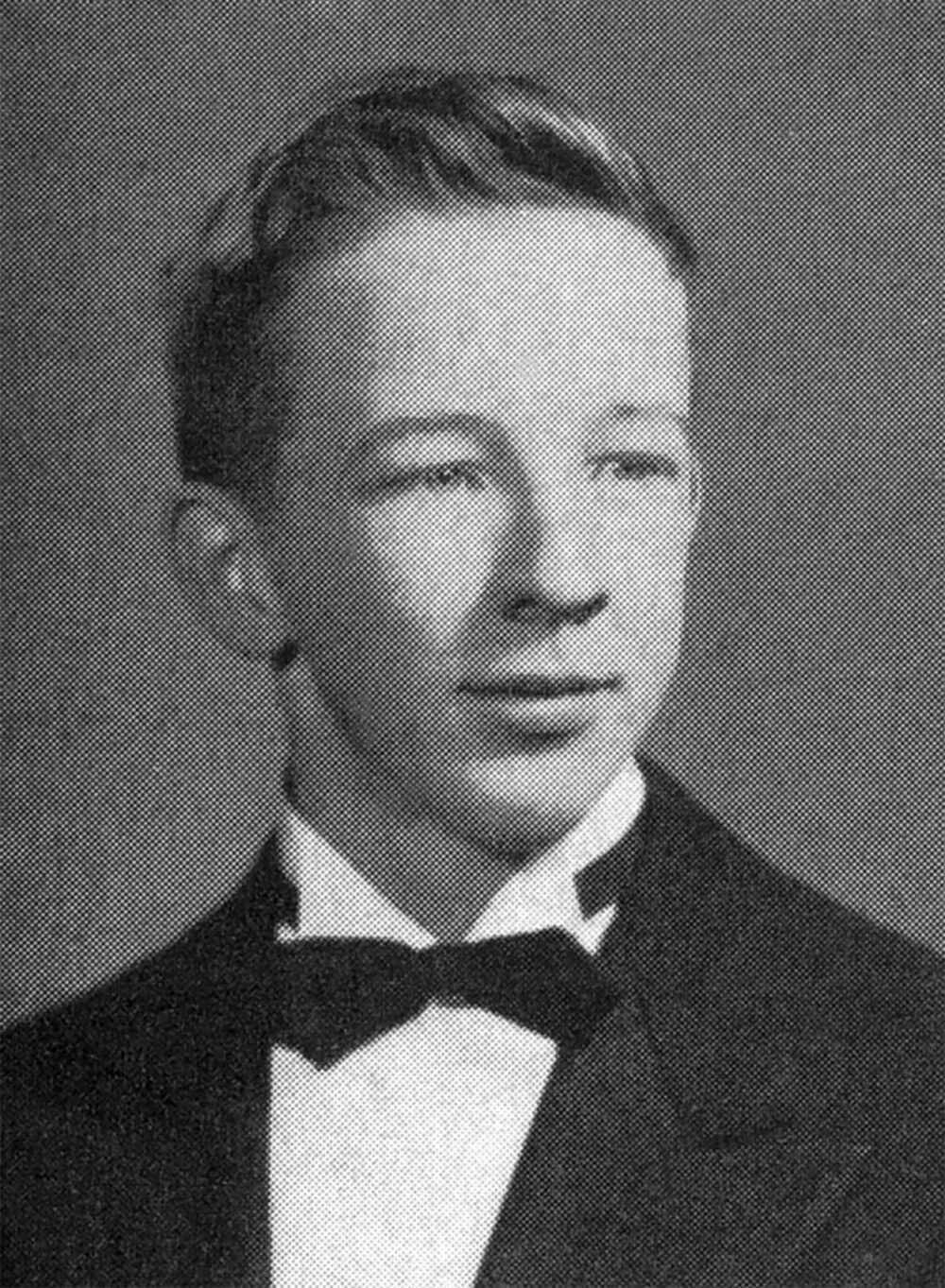
Master Sergeant Robert Leonard McCole
- Unit: 7th Infantry Division, 1st Battalion, 31st Infantry Regiment, Company A
- Service Number: 33741893
- Date of Birth: November 20, 1924
- Entered the Military: May 19, 1943
- Date of Death: December 31, 1953
- Hometown: Wilkes-Barre, Pennsylvania and Washington, D.C.
- Place of Death: area around Hill 400, Korea
- Award(s): Purple Heart, Combat Medical Badge, Korean Service Medal, United Nations Service Medal, National Defense Service Medal, Korean Presidential Unit Citation, Republic of Korea War Service Medal
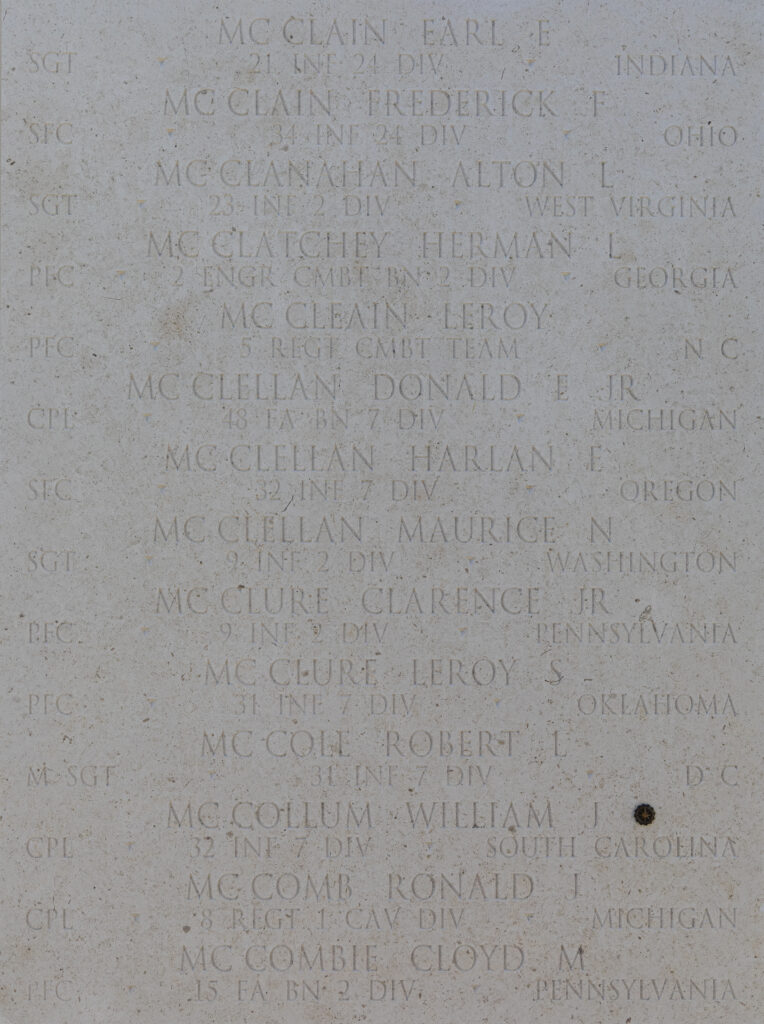
- Cemetery: Courts of the Missing, Court Five, National Memorial Cemetery of the Pacific, Honolulu, Hawaiʻi . Memorial marker at Arlington National Cemetery, Arlington, Virginia
Luke C. Moore Opportunity Academy, Bard High School Early College DC, and Garnet-Patterson STAY High School, Washington, D.C.
2025/2026
Early Life
Robert Leonard McCole was born on November 20, 1924, in Wilkes‑Barre, Pennsylvania, to Dr. Patrick Aloysius McCole and Elizabeth “Bessie” Leonard McCole, both second‑generation Irish Americans. The McCole household blended the stability of middle‑class life with a deep commitment to Catholic faith and public service.
Growing Up in a Navy Household
By 1930, the McCole family was living in the suburban neighborhood of Chevy Chase near Washington, D.C. His father served as a dentist for the U.S. Navy, and his mother cared for the home. In May 1931, his name appeared in the society pages of a local newspaper, listed among the children attending a neighborhood birthday party.
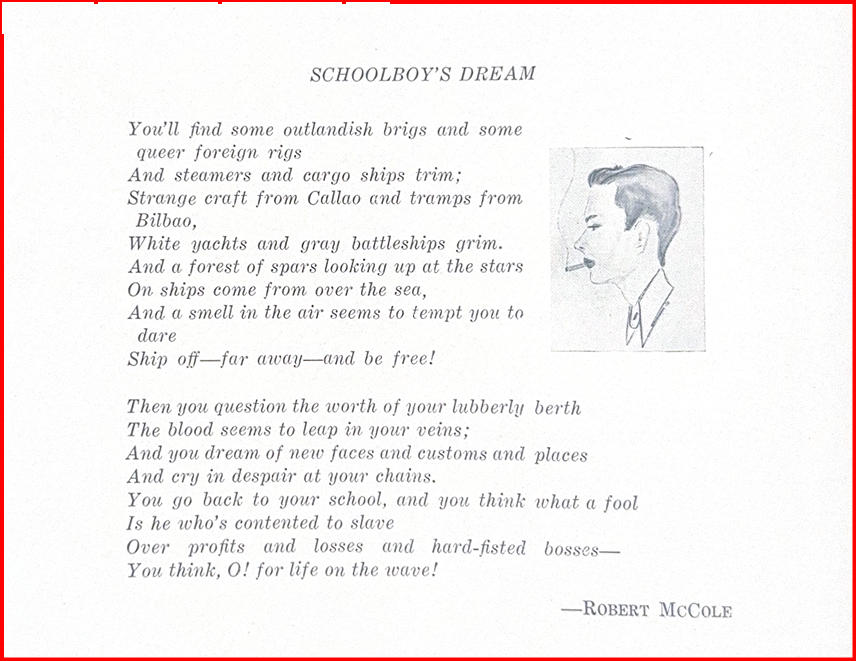
McCole attended Blessed Sacrament School, the parish school connected to the Shrine of the Most Blessed Sacrament near his home in Chevy Chase. By 1940, he joined the Young People’s Club and appeared as a cast member in its production of New Fires.
Formed at Gonzaga
As a student at Gonzaga College High School, McCole entered a Jesuit environment that emphasized academics, discipline, service, and character. He was part of the Class of 1942 and was featured in the school’s first printed yearbook. McCole played intramural sports and earned a bronze medal for second place in touch football during the school’s Christmas athletic program.
In December 1942, McCole survived a serious car accident that flung him through a windshield. Local newspapers reported that he suffered minor injuries.
After completing his career in the U.S. Navy, Robert’s father began teaching at Georgetown University Dental School.
Georgetown University
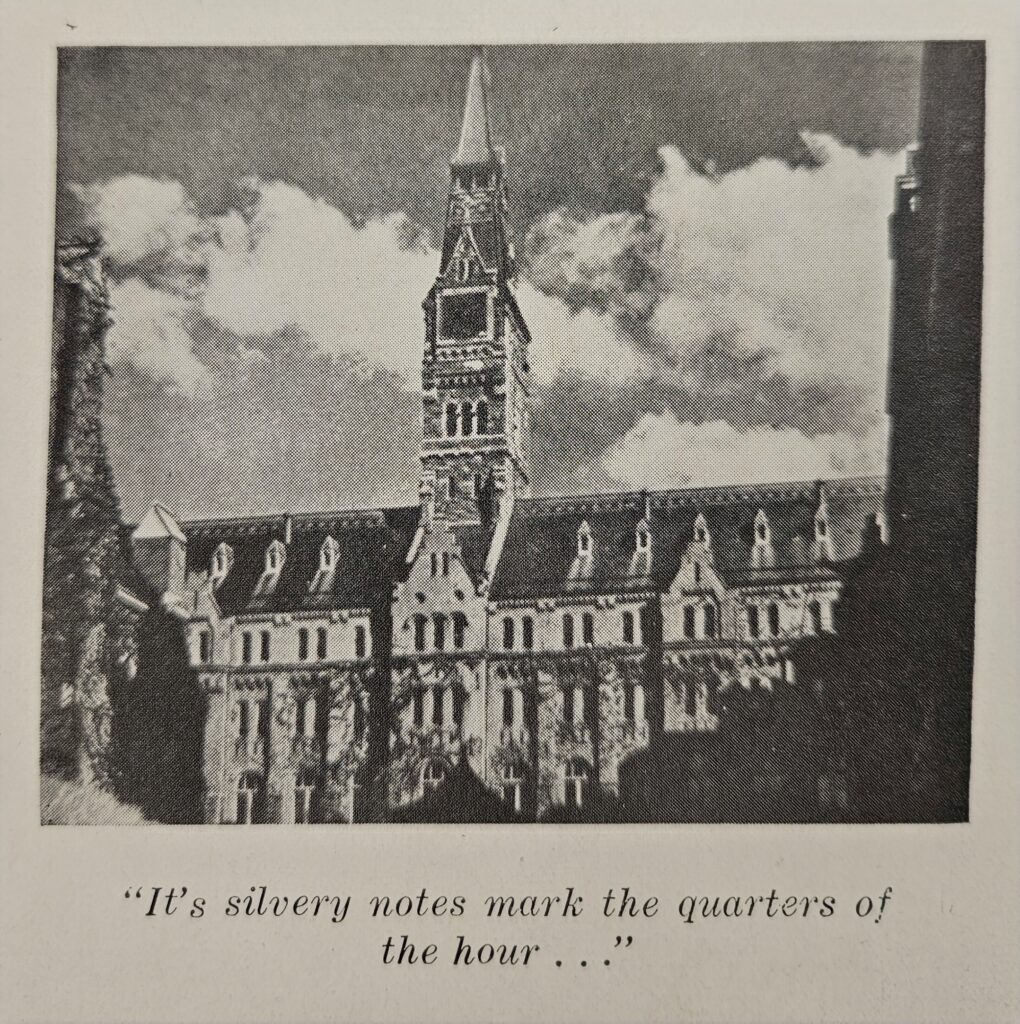
In the fall of 1942, McCole entered Georgetown University. His name appears in the university’s 1943 freshman register and yearbook. During his time on campus, he served as the art editor for the Georgetown College Journal and was mentioned in several issues of The Hoya, the student newspaper. Yet college life in Washington, D.C., unfolded under the growing pressures of World War II. Many campuses, including Georgetown, hosted military training programs such as the Navy V‑12 Program and the Army Specialized Training Program (ASTP), which brought uniforms, drills, and military routines into the same spaces where students studied, ate, and walked to class.
Answering the First Call to Serve
McCole registered for military service on December 29, 1942, shortly after turning 18. Records show he continued his studies at Georgetown through April 1943.
On May 19, 1943, McCole entered active duty in the U.S. Army. For nearly three years, until his discharge on January 25, 1946, he served in the Pacific Theater as part of America’s war effort.
Between Wars: A Young Veteran at Home
After his discharge on January 25, 1946, McCole returned to Washington, D.C. to resume his studies at Georgetown University. In June 1947, his name appeared in multiple newspapers after an incident at a local tavern led to charges of disorderly conduct and drunkenness, charges dismissed by Judge Walter J. Casey. The reports highlighted that McCole was a Georgetown student and an Army veteran who had served in the Pacific during World War II. In one newspaper article, the judge openly questioned the actions of the arresting officers, noting inconsistencies in their testimony and clearing McCole of wrongdoing.
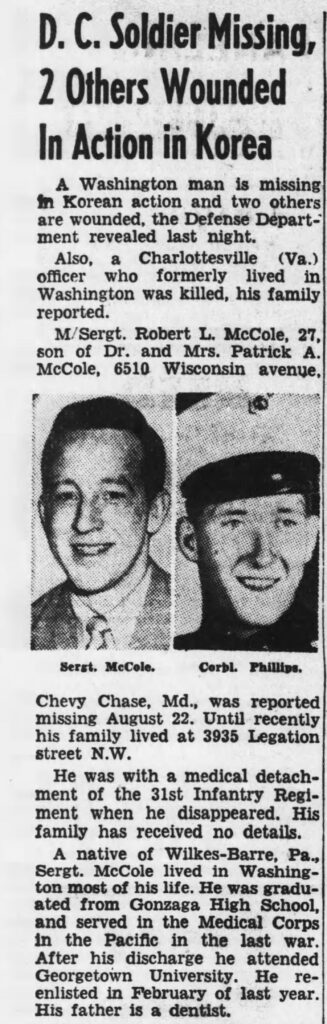
By 1950, McCole was living with his parents and his younger brother Patrick at their home on Legation Street in Northwest Washington. No evidence was found confirming whether he ever completed his degree at Georgetown University. Still, his Korean War draft registration card, completed on September 2, 1948, listed his occupation as “student.” The card also recorded vivid details: five feet ten inches tall, 135 pounds, with red hair, blue eyes, a light complexion, and a noticeable scar across his face and the back of his neck.
In April 1950, for example, city newspapers reported that he served as best man at the wedding of Harriet Barbara McCormick and Dr. Seamus Patrick Nunan at St. Peter’s Roman Catholic Church in New Brunswick, New Jersey; a ceremony linked to a prominent diplomatic family.
A Second Call: The Korean War
In 1950, war broke out on the Korean Peninsula. Once again, the United States needed trained soldiers and leaders. Unlike World War II, there was no massive emergency program that placed enlisted men in universities. Instead, the military relied heavily on ROTC and officer training programs that had quietly continued after the war.
Robert McCole returned to service, this time as a seasoned veteran. He was no longer just a former student; he was Sergeant Robert L. McCole, carrying experience from one war into another.

Homefront
Chevy Chase: A Neighborhood in Transition
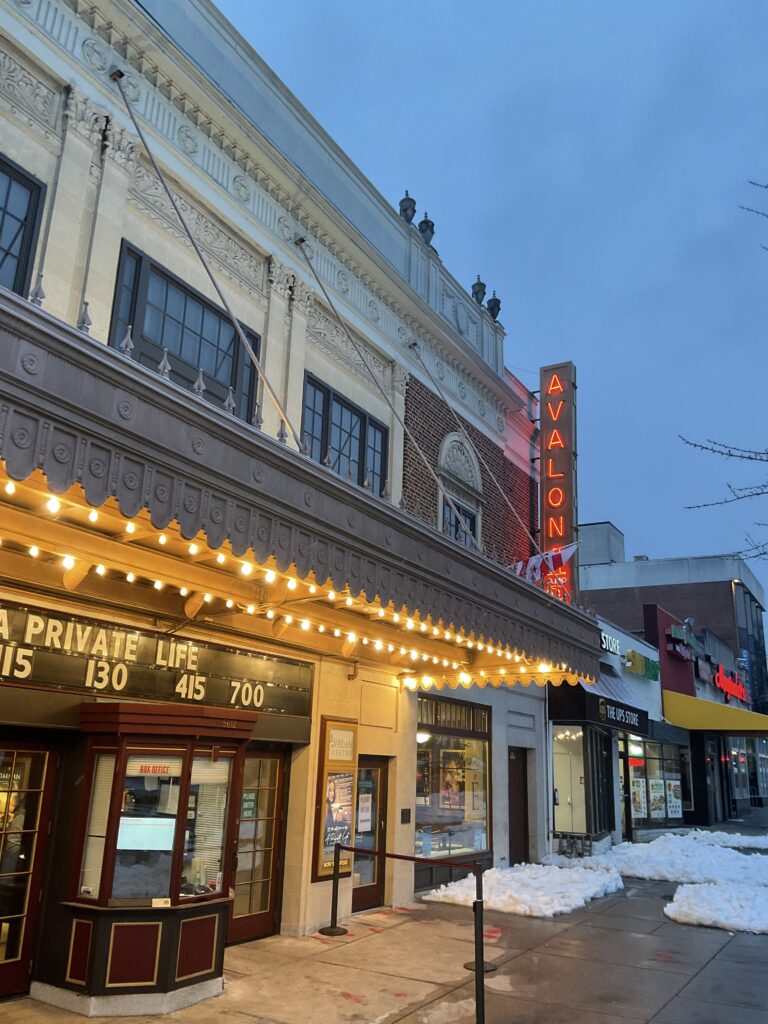
Chevy Chase, a neighborhood in northwest D.C. bordering Chevy Chase, Maryland, began as a streetcar suburb, valued for its quiet streets and historic architecture. Many residents resisted commercial development and worked to maintain a small, tight‑knit, upper-middle-class community. The Chevy Chase Branch Library reflected the neighborhood’s stable, family‑centered identity. Local landmarks such as the Avalon Theater and the Chevy Chase Ice Palace shaped the neighborhood’s culture.
The Avalon Theatre has remained one of the most recognizable landmarks in Chevy Chase. Families in the 1950s gathered there for newsreels, films, and a sense of connection during uneasy times.
Washington, D.C.
Washington, D.C., in the early 1950s, was a city shaped by federal work, government agencies, and national security responsibilities. It was not an industrial city filled with factories, but a federal center where thousands of civil service workers carried out administrative tasks that influenced every part of American life. Federal agencies issued regulations, allocated materials, and guided the nation’s wartime production. Official memos from these offices managed budgets, supplies, and logistics needed to support the Korean War effort. Their work ensured that materials reached military bases, factories, and shipping centers.
The population of Washington, D.C., grew to more than 800,000 residents by 1950, and new federal jobs brought a steady stream of workers into the capital. This rapid growth created pressure on housing, transportation, and neighborhoods, pushing city leaders to release a major Comprehensive Plan. The plan called for new highways, expanded federal office areas, and large‑scale rebuilding projects.
Community Acts of Service and Support
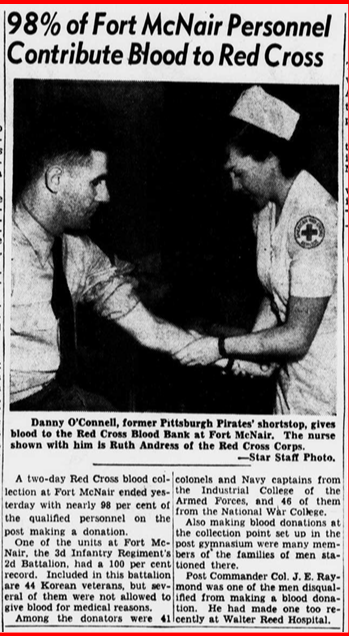
The people of Washington supported service members through many community efforts. The Red Cross Center in D.C. became a major hub for blood donations, and Evening Star articles from April 15 and November 15, 1951, described repeat calls for donors and honored citizens who contributed large numbers of pints. Groups such as the United Service Organizations (USO) and the Junior Red Cross sent gifts, letters, and care packages overseas. The international relief group CARE, working from Washington, led the “CARE‑for‑Korea” campaign promoted by President Harry Truman. Newspapers listed casualties, urged support, and encouraged residents to help families of prisoners of war.
Cold War Fear and Civil Defense
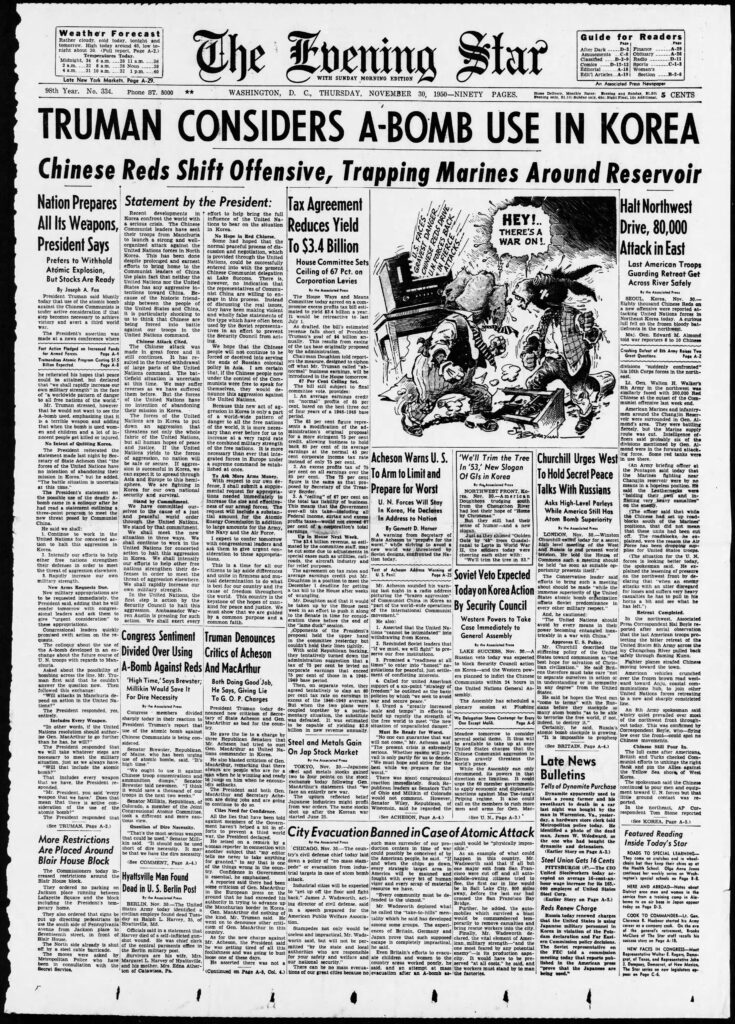
D.C. schools and neighborhoods practiced air‑raid drills as newspapers warned residents to learn evacuation routes and shelter locations. Local newspaper articles tied the Korean War to rising concerns about atomic attack. Washington’s status as the nation’s capital made it feel especially vulnerable.
Military Experience
Robert McCole registered for the Korean War draft on September 2, 1948, in Monmouth County, New Jersey. On February 8, 1951, Robert McCole returned to active duty as the Korean War escalated. His rank eventually rose to master sergeant, a senior enlisted grade that reflected his experience and repeated reenlistments.
Training for Medical Duty
McCole was stationed at Fort Jackson, South Carolina, and trained to be a medic within an infantry regiment. Serving in a medical company meant providing emergency treatment under fire, stabilizing wounds, and reaching the injured even in the most dangerous conditions. He was stationed at Camp Stoneman, California, before he was deployed to the Pacific to serve in the Korean War.
The 31st Infantry Regiment in Korea
McCole was assigned to the Medical Company of the 7th Infantry Division, 31st Infantry Regiment. The regiment operated along the central Korean peninsula, where terrain, weather, and enemy fortifications made every patrol hazardous. As a medic, McCole moved with Infantry Company A. Command reports from August and September 1952 describe the 31st Infantry Regiment operating near Kyong‑dong, conducting reconnaissance and night patrols.
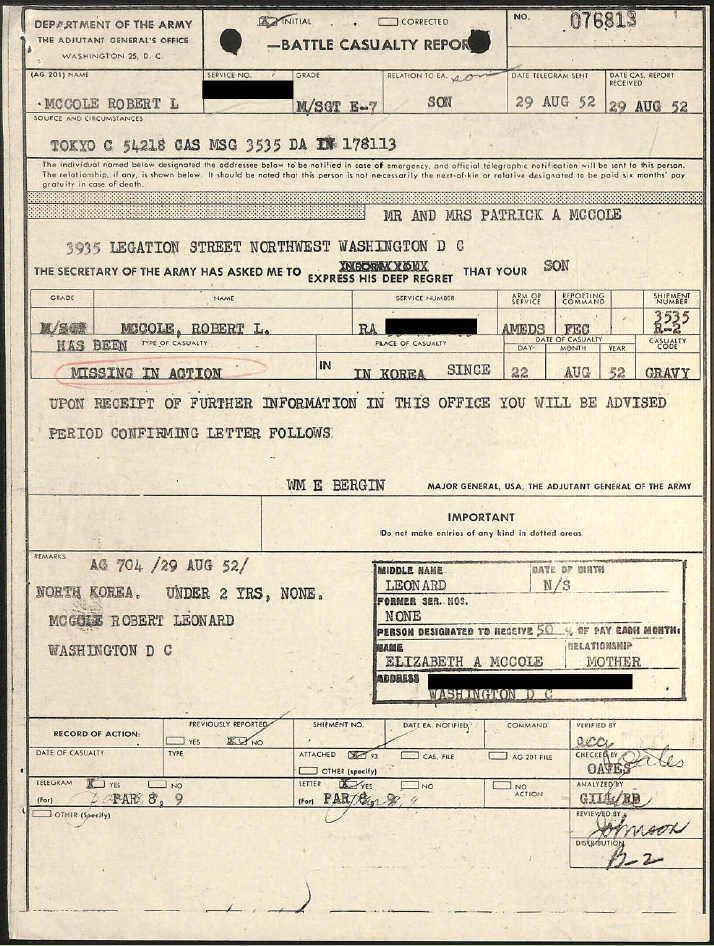
On August 22, 1952, McCole joined a patrol tasked with raiding enemy-held bunkers on Hill 400. The patrol encountered fierce resistance, and a firefight followed. During the engagement on Hill 400, McCole was last seen tending to wounded soldiers under enemy fire. Witnesses told investigators that he had been injured but refused evacuation until the other wounded were safely removed. When Company A withdrew, McCole and two other soldiers, Corporal Joseph Pope and Private Ernest James Stiefel, did not return. The battle casualty report dated August 29, 1952, notified Mr. and Mrs. McCole that their son was missing in action in Korea as of August 22, 1952. Subsequent searches were unable to recover him, and no record ever identified him as a Prisoner of War.
Commemoration
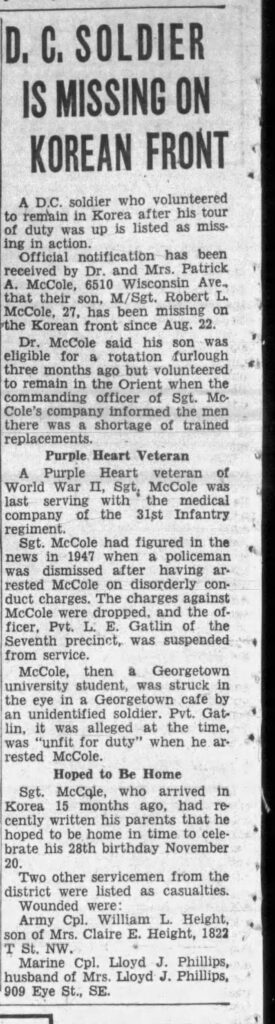
The first public notice of Master Sergeant Robert Leonard McCole’s disappearance appeared in the Times Herald and The Evening Star on September 7, 1952. One article noted that McCole had voluntarily remained in Korea even after his tour of duty ended. The Georgetown University Alumni Magazine listed him among alumni reported as Missing in Action in November 1952.
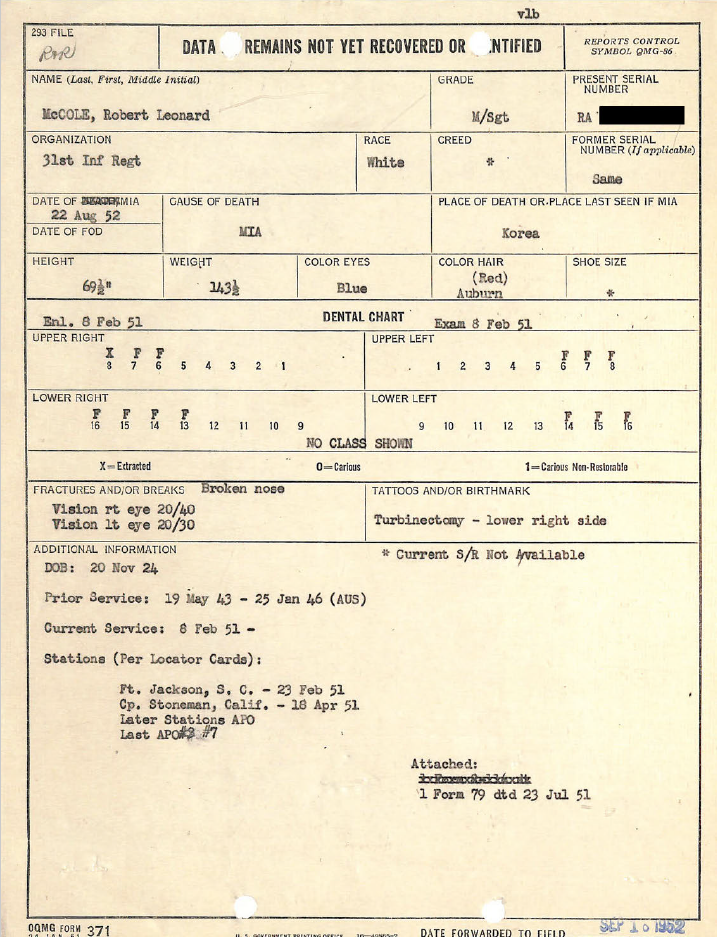
In the months following his disappearance, the Army worked steadily to determine what had happened on Hill 400. General Mark W. Clark wrote directly to McCole’s father, Dr. Patrick McCole, explaining the circumstances of the raid and Robert’s final known actions. Investigators reviewed medical files, requested dental charts, examined command reports, and mapped the grid coordinates of the patrol’s last position. McCole’s father sent the Army detailed dental records for his son. Despite these efforts, no remains or conclusive evidence emerged.
After more than a year with no new information, the Army issued a Presumptive Finding of Death on December 31, 1953. The official notice emphasized that this decision did not determine the exact moment or cause of death. Instead, it recognized that recovery was unlikely due to the dangerous and restricted nature of the area where he was lost.
Operation Glory
In 1954, Operation Glory was an effort to repatriate the remains of UN service members from North Korea at the end of the Korean War. The operation brought thousands of American remains home. Many families received long-awaited answers, but not all. None of the remains returned during or after the exchange matched McCole’s dental or medical characteristics. Large areas of North Korea and the Demilitarized Zone were inaccessible to U.S. recovery teams.
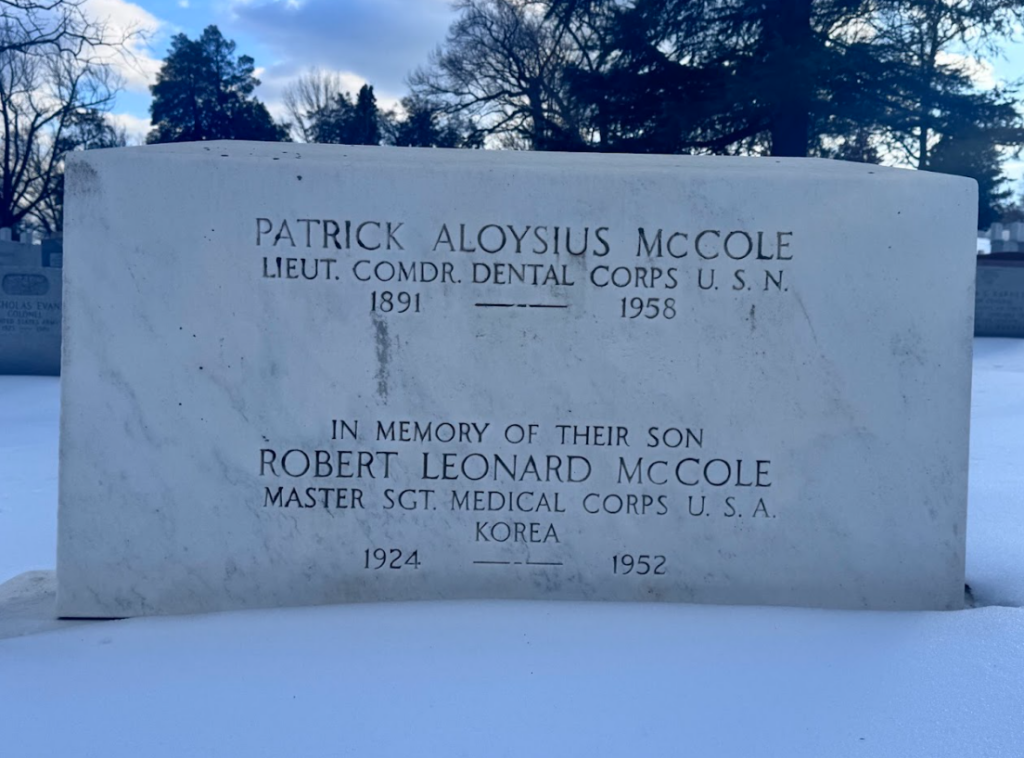
Because his remains were never recovered, McCole is memorialized at several national sites dedicated to honoring missing service members. His name is engraved on the Courts of the Missing at the Honolulu Memorial in Hawaiʻi, on the Wall of Remembrance at the Korean War Veterans Memorial in Washington, D.C., and on his father’s headstone at Arlington National Cemetery.
Bibliography
7th Infantry Division Command Report, 31st Infantry Regiment. July to August 1952. Korean War Project. https://www.koreanwar2.org/kwp2/ftbenning/DS84_I201.pdf.
“16 Area Students Receive Degrees at Georgetown.” The Sunday Star [Washington, D.C.], August 30, 1953. Newspapers.com (869816591).
“98% of Fort McNair Personnel Contribute Blood to Red Cross.” The Evening Star [Washington, D.C.], November 15, 1951. Newspapers.com (869859013).
“Blood Donor Center Issues Repeat Call.” The Evening Star [Washington, D.C.], April 15, 1951. Newspapers.com (869819065).
“Colleges in D.C. Prepare to Open in D.C. for New Year.” The Evening Star [Washington, D.C], September 16, 1940. Newspapers.com (865895799).
District of Columbia. 1930 U.S. Census. Digital images. https://ancestrclassroom.com.
District of Columbia. 1940 U.S. Census. Digital images. https://ancestrclassroom.com.
District of Columbia. 1950 U.S. Census. Digital images. https://ancestrclassroom.com.
“D.C. Soldier Is Missing on Korean Front.” Times Herald [Washington, D.C.], September 7, 1952. Newspapers.com (1038483431).
“D.C. Soldier Is Missing, On Korean War 2 Others Wounded in Action in Korea.” The Evening Star, September 7, 1952. Newspapers.com (038483431).
Federal White-Collar Workers: Occupations and Salaries, June 1951. The United States Bureau of Labor Statistics, 1951. https://fraser.stlouisfed.org/title/federal-white-collar-workers-occupations-salaries-june-1951-4447.
“Flung through Windshield.” Times Herald, December 7, 1942. Newspapers.com (1038077477).
Georgetown University College Journals. February–April 1943. Booth Family Center for Special Collections, Georgetown University.
Georgetown University Yearbook. Georgetown University Press, 1943.
Gonzaga High School Yearbook. Gonzaga High School Press, 1949.
“Gonzaga Athletes to Receive Grid Letters at Party.” Times Herald [Washington, D.C.], June 17, 1942.
The Hoya, August 4, 1943. Booth Family Center for Special Collections, Georgetown University. https://repository.digital.georgetown.edu/handle/10822/1064326.
Kangsŏ, Korea: Sheet 6230. Map. 1950. U.S. Army Corps of Engineers, University of Texas Libraries. https://maps.lib.utexas.edu/maps/ams/korea_50k/txu-pclmaps-oclc-6612107-kangso-6230-1.jpg.

“Korea: Early Test for Eisenhower.” The Evening Star [Washington, D.C.], November 18, 1952. Newspapers.com (815167895).
McCole, Robert Leonard. Individual Deceased Personnel File. Department of the Army. National Archives and Records Administration, St. Louis.
“Nine D.C. Men, 3 Marylanders on Casualty List.” The Evening Star [Washington, D.C.], November 3, 1952. Newspapers.com (815158289).
Robert McCole. Academic Transcript, Gonzaga High School, 1942.
Robert McCole. U.S. Korean War Draft Card, 1948–1959. Digital images. https://ancestrclassroom.com.
Robert McCole. World War II Draft Cards: Young Men, 1940–1947. Digital images. https://ancestrclassroom.com.
“Society.” The Evening Star [Washington, D.C.], May 25, 1931.
“Speaking of Pictures.” Life, November 27, 1950.
“Streets Boost D.C. Traffic Toll.” The Evening Star [Washington, D.C.], December 7, 1942. Newspapers.com (868285703).
“To Stage Comedy.” The Evening Star [Washington, D.C.], November 21, 1940. Newspapers.com (865976909).
“Trial Friday for Cops in Georgetown Case.” The Washington Daily News, June 10, 1947. Newspapers.com (1042341710).
“Truman Considers A-Bomb Use in Korea.” The Evening Star [Washington, D.C.], November 30, 1950. Newspapers.com (868275030).
“Youth Group to Give Comedy as Debut Play Effort.” The Washington Daily News [Washington, D.C], November 21, 1940. Newspapers.com (1039985672).
Secondary Sources
An Act to Amend the National Capital Park and Planning Commission, Public Law 592, 1952.
Bell, Douglas I. A Little-Known Bill of Great National Significance: The Uses and Evolution of the Defense Production Act, 1950. U.S. Army War College, 2020.
“CARE’s History: A Timeline.” CARE. Accessed December 2, 2025. https://www.care.org/about-us/our-history/.
Historic Preservation Office. Historic Preservation Review Board Application for Historic Landmark Designation. Washington, D.C., 2023.
“Journal to Feature Much New Talent in Coming April Issue.” The Hoya, April 14, 1943. https://repository.digital.georgetown.edu/handle/10822/1064329.
“Master Sgt. Robert Leonard McCole.” Defense POW/MIA Accounting Agency. Accessed November 1, 2025. https://dpaa-mil.sites.crmforce.mil/dpaaProfile?id=a0Jt0000011I55xEAC.
“McCole, Robert Leonard.” Korean War Project.Accessed March 12, 2026. https://www.koreanwar.org/html/finding-the-families.html?key=19241.
“MSGT Robert Leonard McCole.” Find a Grave. Updated June 8, 2020. Accessed November 1, 2025. https://www.findagrave.com/memorial/211068813/robert-leonard-mccole.
“MSGT Robert Leonard McCole.” Find a Grave. Updated October 27, 2017. Accessed November 1, 2025. https://www.findagrave.com/memorial/184670734/robert-leonard-mccole.
National Capital Park and Planning Commission. Washington Present and Future. Washington, D.C., April 1950.
“Planning History.” National Capital Planning Commission. Accessed December 1, 2025. https://www.ncpc.gov/about/history/.
“Red Cross Timeline.” American Red Cross. Accessed December 2, 2025. https://www.redcross.org/about-us/who-we-are/history/significant-dates.html.
“Robert L. McCole.” American Battle Monuments Commission. Accessed November 1, 2025.https://weremember.abmc.gov/s?q=McCole&v=G&type=16.
“Robert L. McCole.” Veterans Legacy Memorial, National Cemetery Administration. Accessed March 12, 2026.https://www.vlm.cem.va.gov/RobertLMcCole/1DB38.
This profile was researched and created through the Researching Silent Heroes program, sponsored by the American Battle Monuments Commission.