

First Lieutenant Roger “Bill” Baron Beem
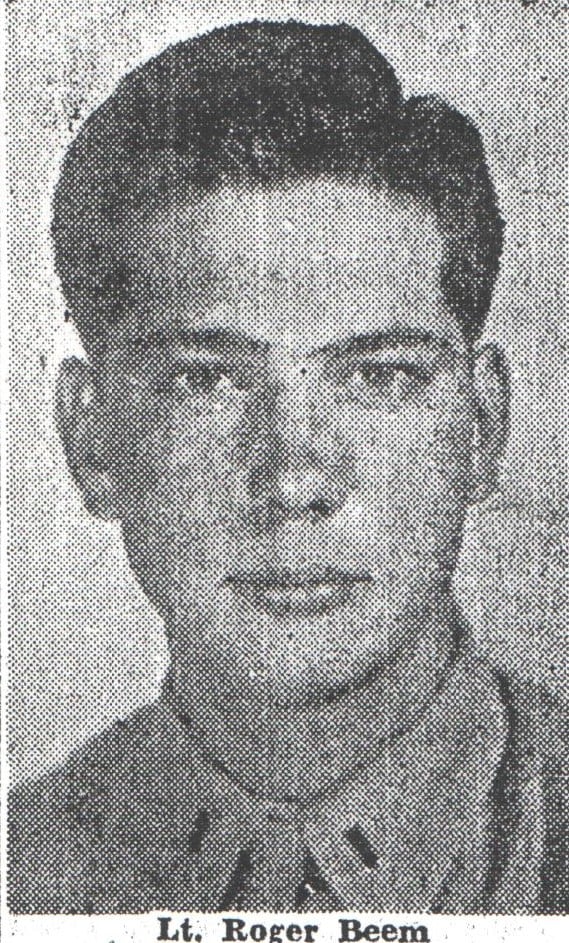
- Unit: Company C, 1st Battalion, 1st Marine Division, 7th Marines
- Service Number: 054249
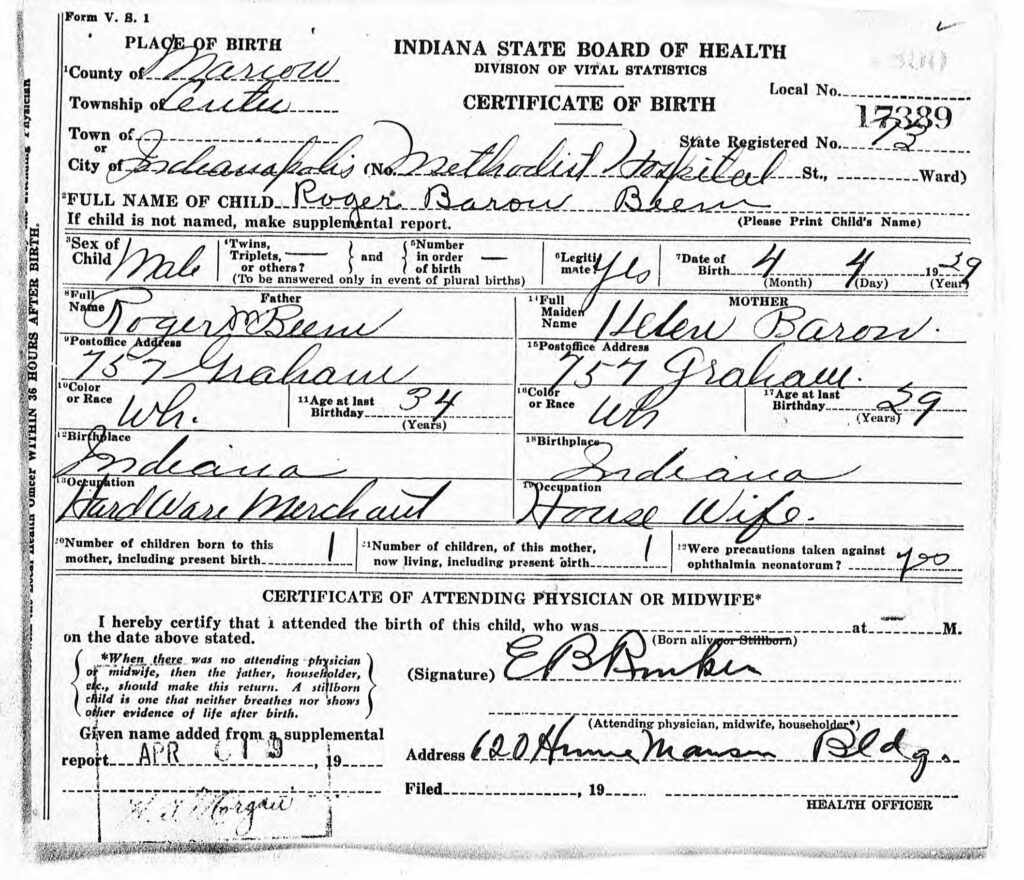
- Date of Birth: April 4, 1929
- Entered the Military: June 2, 1951
- Date of Death: July 7, 1952
- Hometown: Indianapolis, Indiana, and Tiffin, Ohio
- Place of Death: Korea, North of the Demarcation Line
- Award(s): National Defense Service Medal, Korean Service Medal, Purple Heart, Republic of Korea Presidential Citation, Republic of Korea War Service Medal, United Nations Service Medal
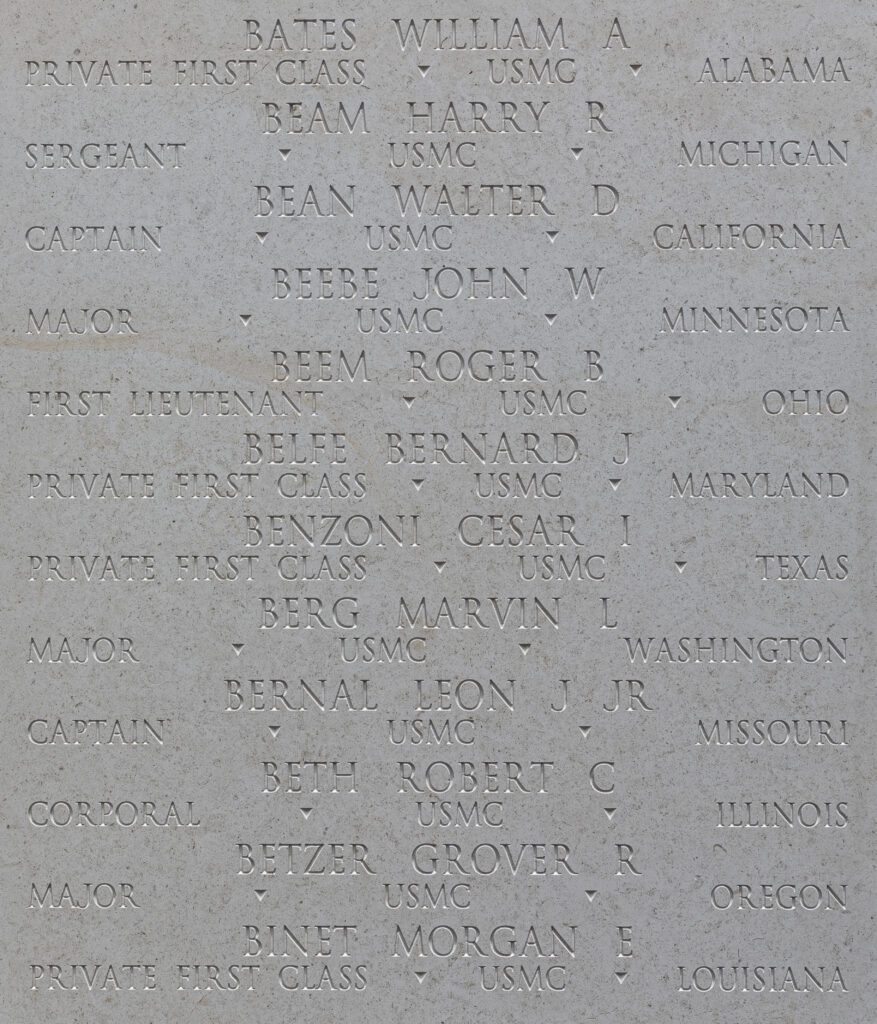
- Cemetery: Court 8, Courts of the Missing, Honolulu Memorial. National Memorial Cemetery of the Pacific, Honolulu, Hawaiʻi
Ohio Virtual Academy, Maumee, Ohio
2025/2026
Early Life
Roger Baron Beem, known as Bill to family and friends, was born on April 4, 1929, in Indianapolis, Indiana. Bill was the second-youngest and only male child of parents Roger Maxwell Beem and Helen (Baron) Beem. His sisters Betty, Mary, and Dorothy ranged in age from seven to ten years older, with his sister Nancy being four years younger.
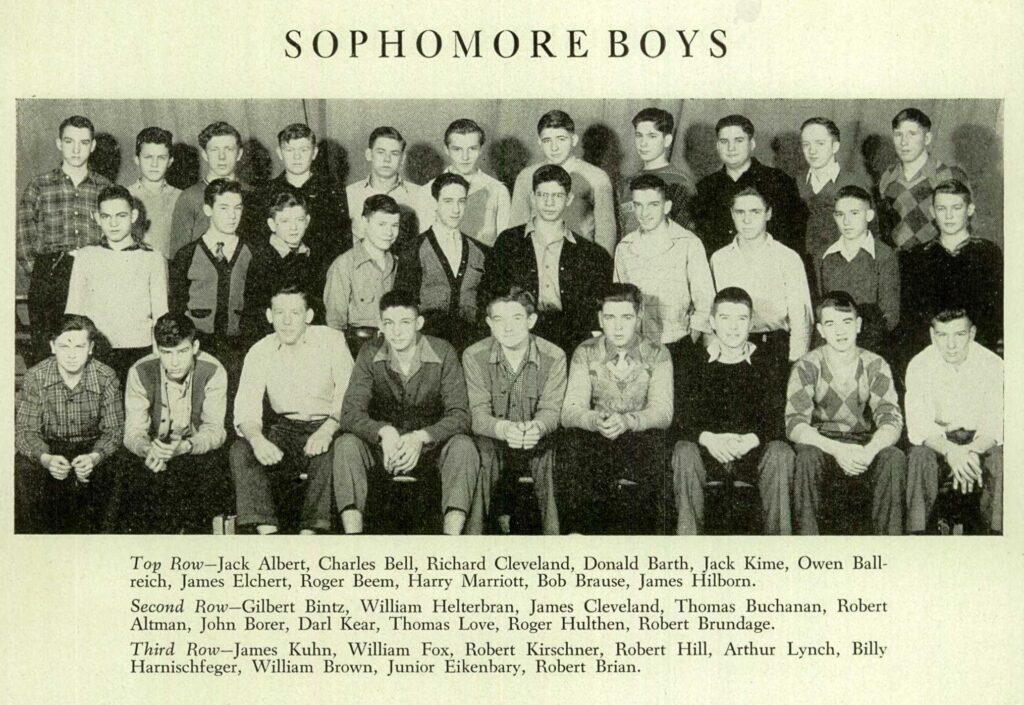
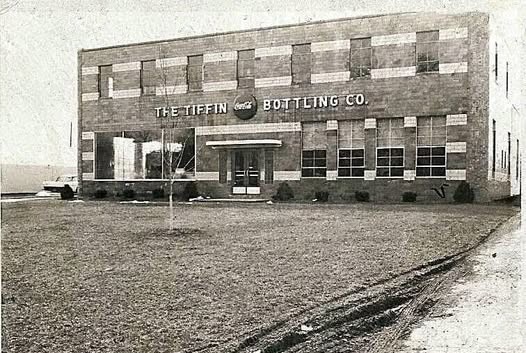
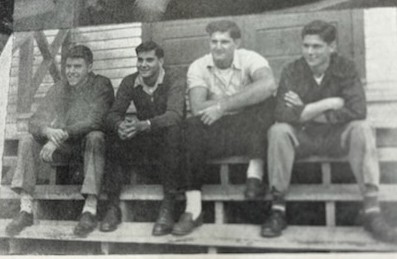
Around 1945, Beem moved with his parents and youngest sister to Tiffin, Ohio, when his father became president of the local Coca-Cola bottling plant. Beem attended Tiffin Columbian High School for his sophomore year. He was a member of the Hi-Y Club and played on the Reserve Basketball Team.
School
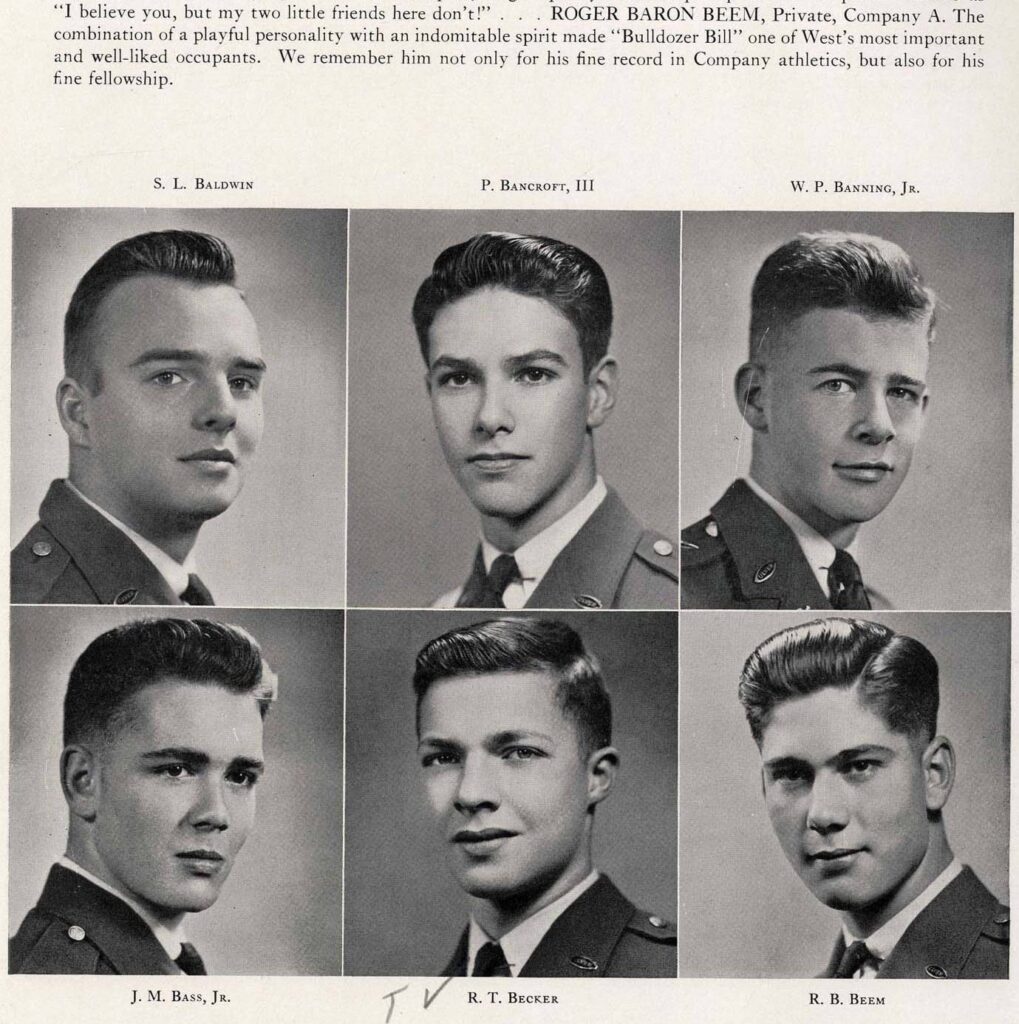
Beem returned to Indiana in 1946 to attend his former school, Culver Military Academy. He graduated in 1947 with this description in his Senior yearbook, “The Combination of a playful personality with an indomitable spirit made ‘Bulldozer Bill’ one of West’s most important and well-liked occupants. We remember him not only for his fine record in Company athletics, but also for his fine fellowship.”
After spending one year at DePauw University in Greencastle, Indiana, Beem moved back to his parents’ home in Tiffin, Ohio, where he attended Heidelberg College. There, he majored in Economics and was a member of the Excelsior Literary Society. He graduated with the class of 1951. While in college, he also worked for his father at the Coca-Cola Bottling Company. In his position as a Route Supervisor, Beem “checked orders and supervised routemen; trained and selected workers, solicited new patronage.”
Homefront
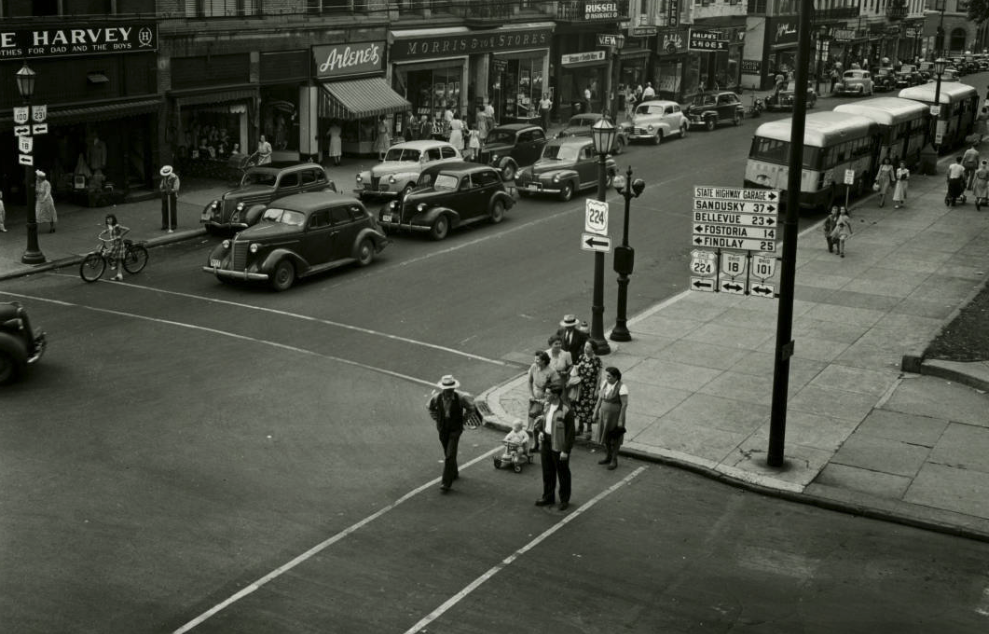
Tiffin is a small rural city in Northwest Ohio. It was established in 1822 and named after Ohio’s first governor. In the late nineteenth and early twentieth centuries, the discovery of natural gas nearby helped attract industries to the area. In 1950, Tiffin’s population was just under 19,000. In addition to manufacturing, the city boasted two universities, Heidelberg and Tiffin. According to a 1950 newspaper article, income and spending levels in Tiffin were above the national and state averages.
Tiffin was also a patriotic city. The Tiffin Art Metal Company was contracted by the federal government to manufacture bomb casings during World War II. In 1943, four Tiffin companies were awarded Army-Navy “E” Awards for excellence in production. One of the companies, National Machinery, forged jet engine blades for the Korean War effort. Post-World War II, local newspaper articles and advertisements touted loyalty pledges, patriotic events, and tips on how to properly display the flag.

Military Experience
On April 14, 1951, Beem completed his medical examination to join the U.S. Marine Corps. He reported for basic training at Parris Island, South Carolina, on June 2, 1951. He also trained in Quantico, Virginia, as part of the 10th Special Basic Class from September 1951 through February 1952. From there, he was ordered to Camp Pendleton in Oceanside, California, where he was part of the Marine Corps’ 21st Replacement Draft for service in the Korean War.
Deployment to Korea
Second Lieutenant Beem arrived in Korea on June 3, 1952, and was assigned to 1st Battalion, 7th Marines, 1st Marine Division, C Company. A week later, he was appointed Assault Rifle Platoon Commander for C Company.
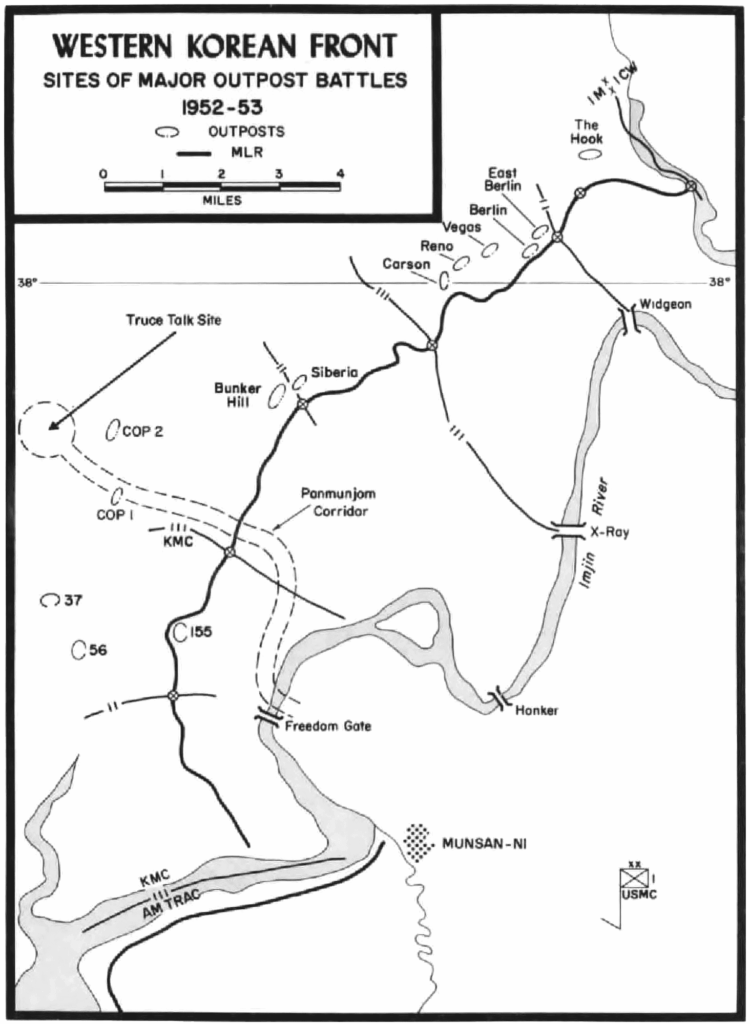
The Korean War was nearing the end of its second year. Truce talks were ongoing. Fighting in the spring and summer of 1952 was largely along the Jamestown Line or 38th Parallel. This area, near Panmunjom and North of the Demarcation Line, was defined by its hilly and mountainous terrain.
In early June 1952, Marines in the area received orders to conduct additional combat raids to gather intelligence. These operations met with minimal success. An attack order, code-named Operation Buckshot 2B, was issued to be carried out no later than July 7. Despite misgivings about the time allotted for proper preparation, the operation was set for the late night of July 6, 1952.
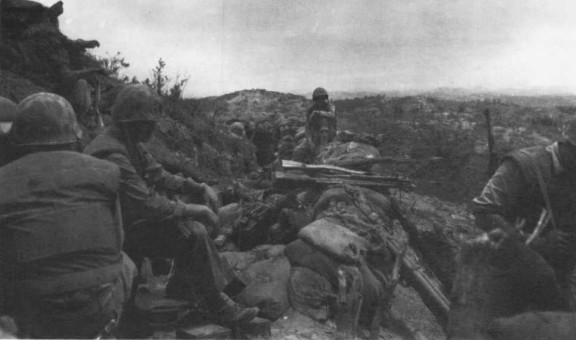
Second Lieutenant Beem and C Company set out, spearheading the main attack force. They were flanked to their right by Company B and to their left by Company A. About 450 yards from Hill 159 (Yoke), Company C was ambushed by the enemy.
Second Lieutenant Beem would never be seen again after the early morning of July 7, 1952. With Company C taking heavy fire from Chinese troops, the rest of the platoon was forced to retreat, leaving the whereabouts of Beem and four others unknown.
Commemoration
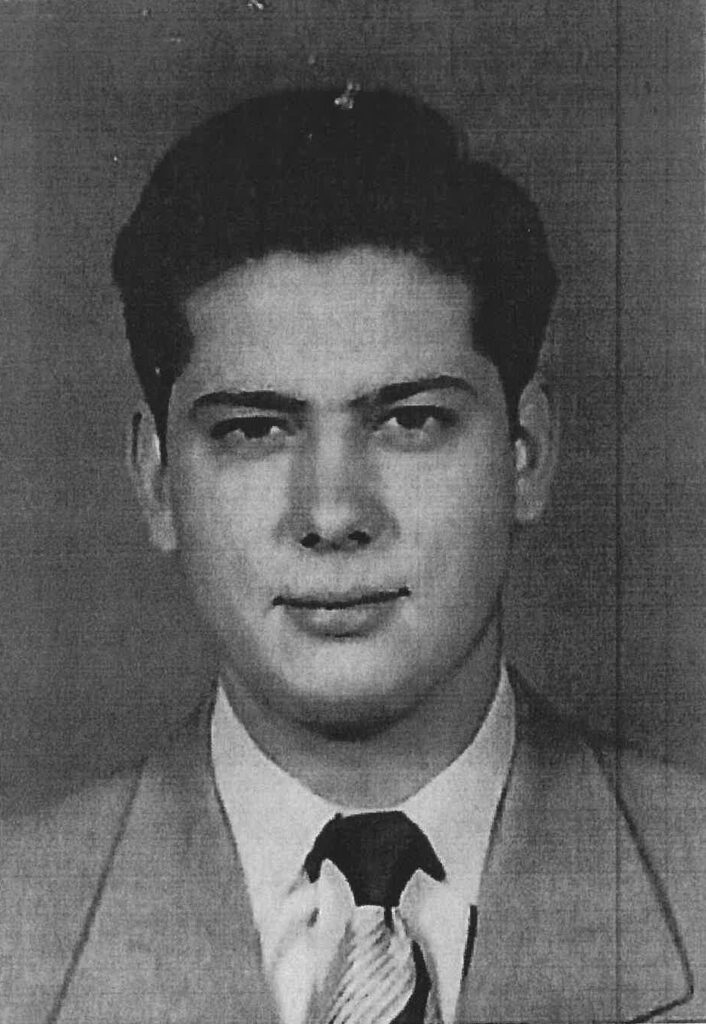
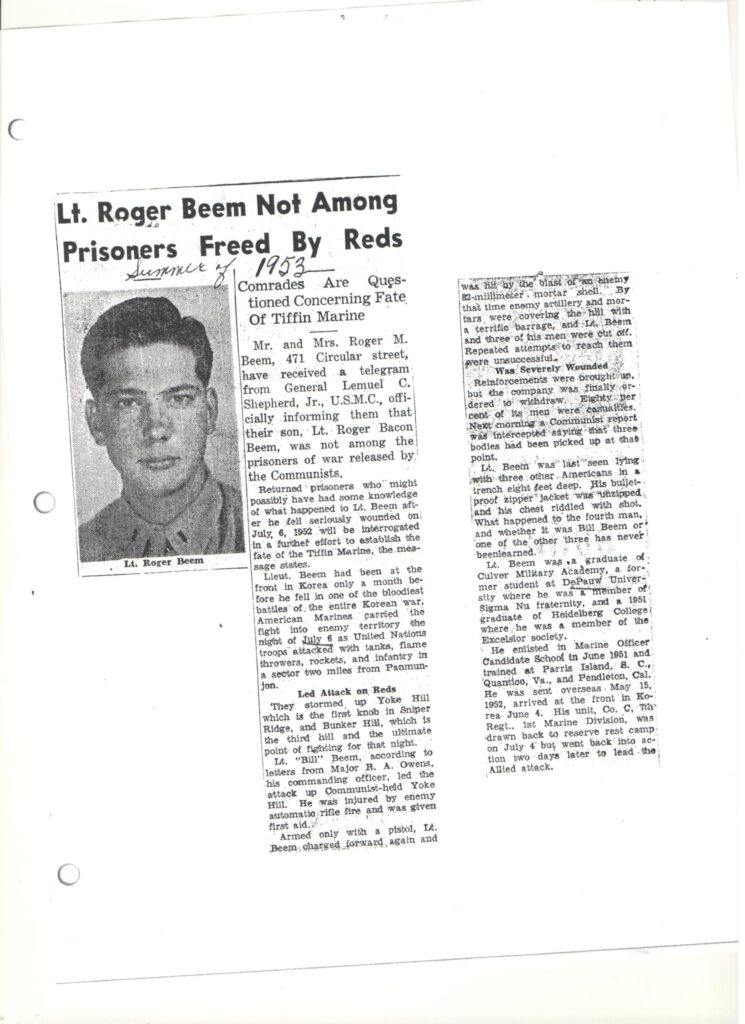
There are mixed accounts of what happened to Beem that night. The initial investigation of the five soldiers missing in action (MIA) reported that Beem was leading the assaulting platoon and was hit with burp gun fire as he entered a trench. Then, as he was falling into the trench, a grenade landed on him.
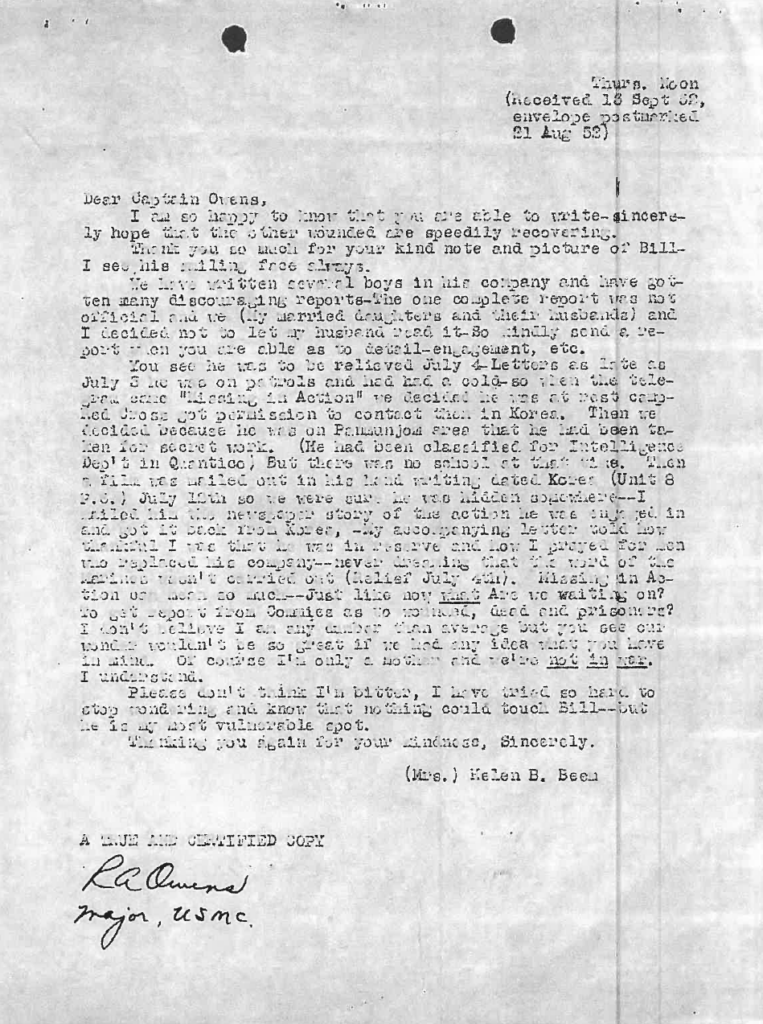
A letter from Major Robert Owens, Company Commander of C Company, to Mrs. Helen Beem tells a slightly different story. He explained that Lieutenant Beem was charging up the enemy hill when he was hit by automatic weapon fire in the hip. He received first aid, stood up, and then an enemy 82 millimeter mortar shell exploded near him. Because of the terrain and heavy fire, Major Owens described that they were unable to evacuate Beem.
Official Status
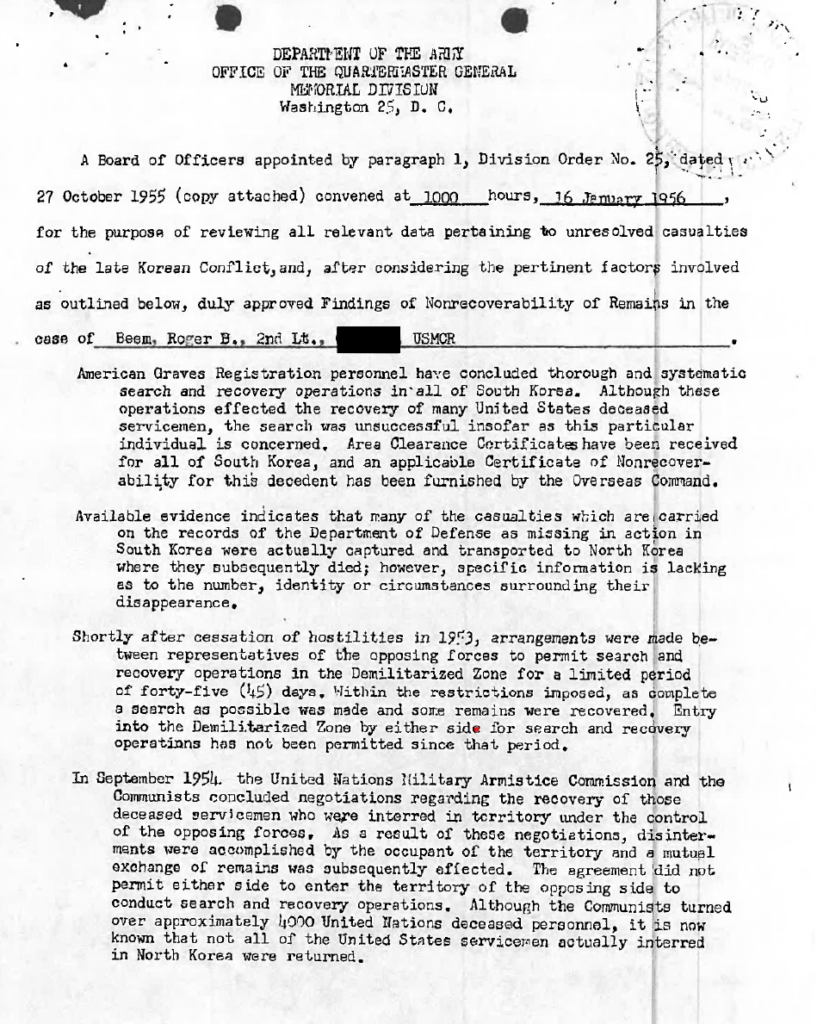
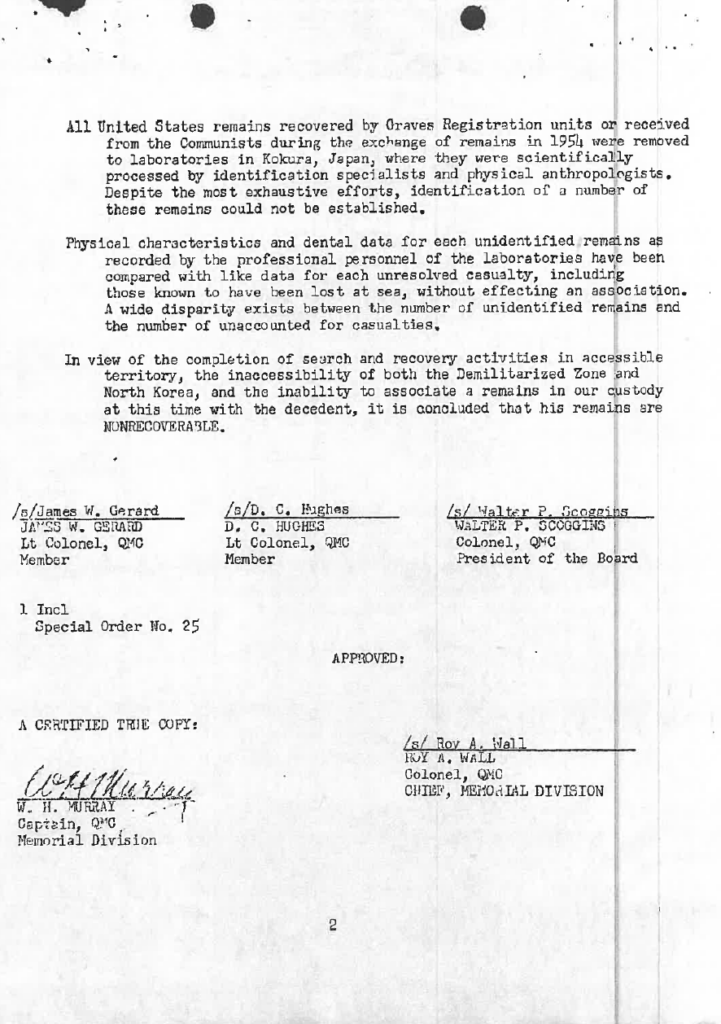
Beem was listed as Missing in Action on July 7, 1952. His status was changed to Killed in Action (KIA) on December 18, 1953. In late January 1956, the Beem family received notification that the remains of their son had been deemed “nonrecoverable.” The four other men who went MIA along with him were also deemed “nonrecoverable.”
“I see his smiling face always.” – Mrs. Helen Beem
Beem’s legacy is best memorialized by his mother, Mrs. Helen Beem, who worked to find answers about her son’s fate. She wrote letters to the men who fought in Operation Buckshot 2B, his Company Commander, those in charge of investigating his status, and even to U.S. Senator Thomas H. Kuchel. These letters, and their responses, give a glimpse into the pain and heartache the family was going through. They also highlight how loved and respected Lieutenant Beem was by his peers and his family.
Lieutenant Beem posthumously received the Purple Heart, National Defense Service Medal, Korean Service Medal, and Korean Presidential Unit Citation. He is memorialized on Court 8 of the Courts of the Missing, National Memorial Cemetery of the Pacific, Honolulu, Hawaiʻi. His name is also inscribed on the Korean War Veterans Memorial Wall in Washington, D.C. He is also remembered on the 10th Special Basic Class marker in Stafford, Virginia, and the Seneca County Korean War Memorial in Tiffin, Ohio.
Bibliography
Primary Sources
“After One Month of War.” Advertiser-Tribune [Tiffin, Ohio], July 27, 1950.
“As Free Men We Proclaim.” Advertiser-Tribune [Tiffin, Ohio], July 3, 1950.
The Aurora. Heidelberg University, 1950.
The Aurora. Heidelberg University, 1951.
Blue and Gold. Columbian High School, 1945.
“Income, Spending Level Above Most U.S. Cities.” Advertiser-Tribune [Tiffin, Ohio], June 22, 1950.
Indiana. Marion County. 1930 U.S. Census. Digital Images. https://ancestry.com.
Indiana. Marion County. 1940 U.S. Census. Digital Images. https://ancestry.com.
Indiana. Seneca County. 1950 U.S. Census. Digital Images. https://ancestry.com.
“Lieut. R.B. Beem Missing in Korea.” Advertiser-Tribune [Tiffin, Ohio], July 11, 1952.
“Lt. Roger Beem Not Among Prisoners Freed By Reds.” Advertiser-Tribune [Tiffin, Ohio], July 13, 1953.
“Long May It Wave – Correctly.” Advertiser-Tribune [Tiffin, Ohio], June 29, 1950.
“Marine Corps Now Lists Lieut. Beem As Dead In Korea.” Advertiser-Tribune [Tiffin, Ohio], January 8, 1954.
Mirage Yearbook. DePauw University, 1948.
Ohio. Seneca County. 1950 U.S. Census. Digital Images. https://ancestry.com.
Roger B. Beem. U.S., Marine Corps Muster Rolls, 1789-1958. Digital Images. https://ancestry.com.
Roger Baron Beem. Indiana, U.S., Birth Certificates, 1907-1944. Digital Images. https://ancestry.com.
Roger Baron Beem, Certificate of Death, Department of the Navy, National Archives and Records Administration – St. Louis
Roger Baron Beem, Official Military Personnel File, Department of the Navy, National Archives and Records Administration – St. Louis.
Roll Call Yearbook. Culver Military Academy, 1946.
Roll Call Yearbook. Culver Military Academy, 1947.
South Washington Street 1948 Picture. Photograph. 1948. Tiffin-Seneca Public Library. https://www.ohiomemory.org/digital/collection/p15005coll27/id/30610/rec/125.
The Tiffin Art Metal Company. Photograph. Seneca County Historical Society.
The Tiffin Coca-Cola Bottling Company. Photograph. Seneca County Historical Society.
“Wake Up America.” Advertiser-Tribune [Tiffin, Ohio], May 25, 1950.
Secondary Sources
“1LT Roger Baron Beem.” Find a Grave. Updated November 27, 2015. Accessed April 5, 2026. https://www.findagrave.com/memorial/155428526/roger-baron-beem.
“2nd Lt. Roger Baron Beem.” Defense POW/MIA Accounting Agency. Accessed January 15, 2026. https://dpaa-mil.sites.crmforce.mil/dpaaProfile?id=a0Jt000000eX5V0EAK.
Meid, Lieutenant Colonel Pat, and Major James Yingling. U.S. Marine Operations in Korea, 1950-1953. Project Gutenberg. Accessed April 5, 2026. https://www.gutenberg.org/ebooks/65011.
Nalty, Bernard C. Stalemate: U.S. Marines from Bunker Hill to the Hook. CreateSpace Independent Publishing Platform, 2014.
“Roger Baron Beem.” American Battle Monuments Commission. Accessed April 5, 2026. https://weremember.abmc.gov/s?q=*&type=16&criteria=title%3Dbeem&b=0&a=c&v=G.
“Roger Baron Beem.” Veterans Legacy Memorial, National Cemetery Administration. Accessed April 5, 2026. https://www.vlm.cem.va.gov/RogerBaronBeem/21D92.
This profile was researched and created through the Researching Silent Heroes program, sponsored by the American Battle Monuments Commission.