

Sergeant Rufus Buster Pitts
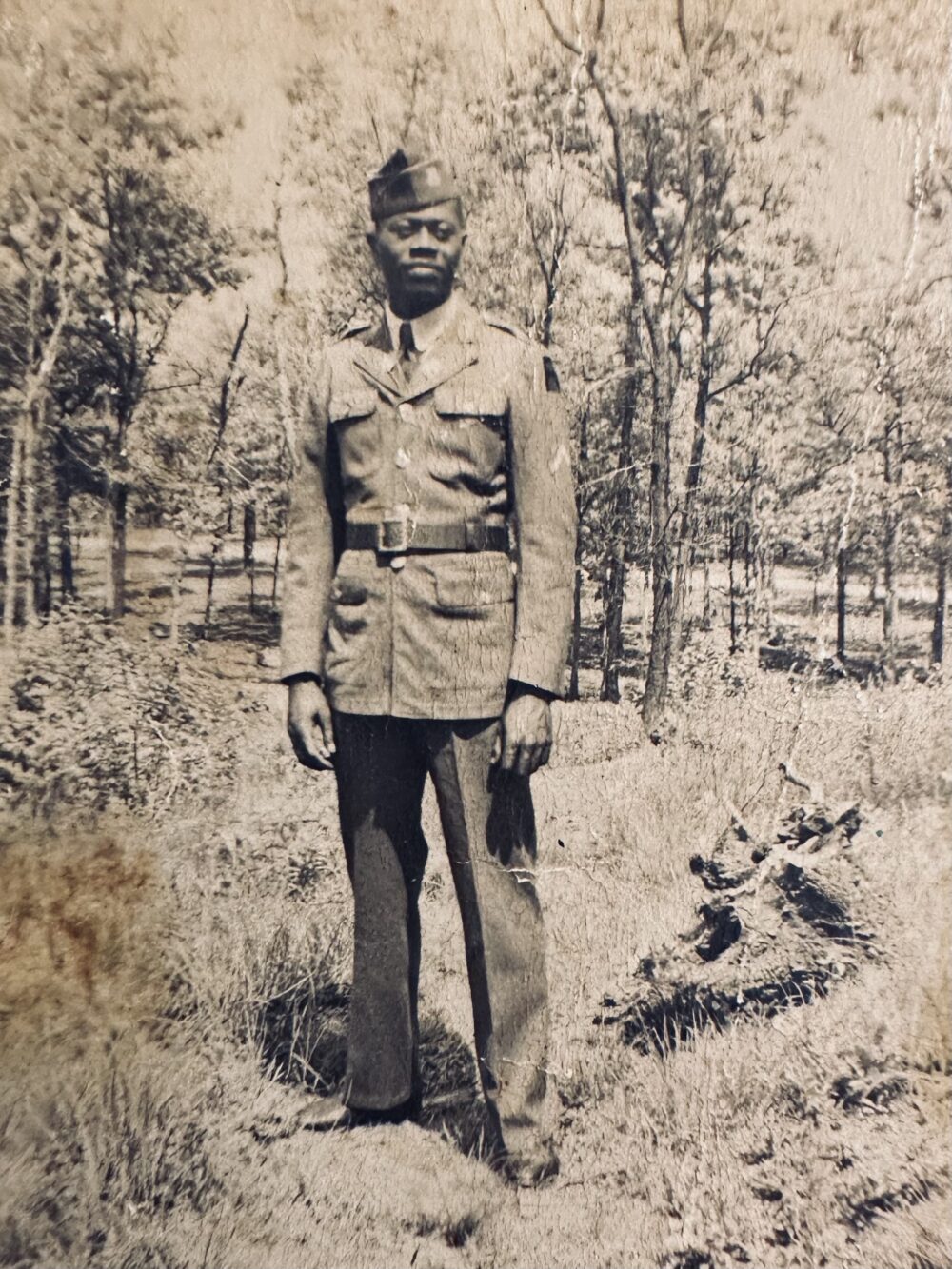
- Unit: Company I, 3rd Battalion, 366th Infantry Regiment
- Service Number: 34096857
- Date of Birth: February 22, 1919
- Entered the Military: August 27, 1941
- Date of Death: December 29, 1944
- Hometown: Inman, South Carolina
- Place of Death: Near Viareggio, Italy
- Award(s): Purple Heart and Bronze Star
- Cemetery: Tablets of the Missing. Florence American Cemetery, Florence, Italy
Landrum High School, Campobello, South Carolina
2025/2026
Early Life
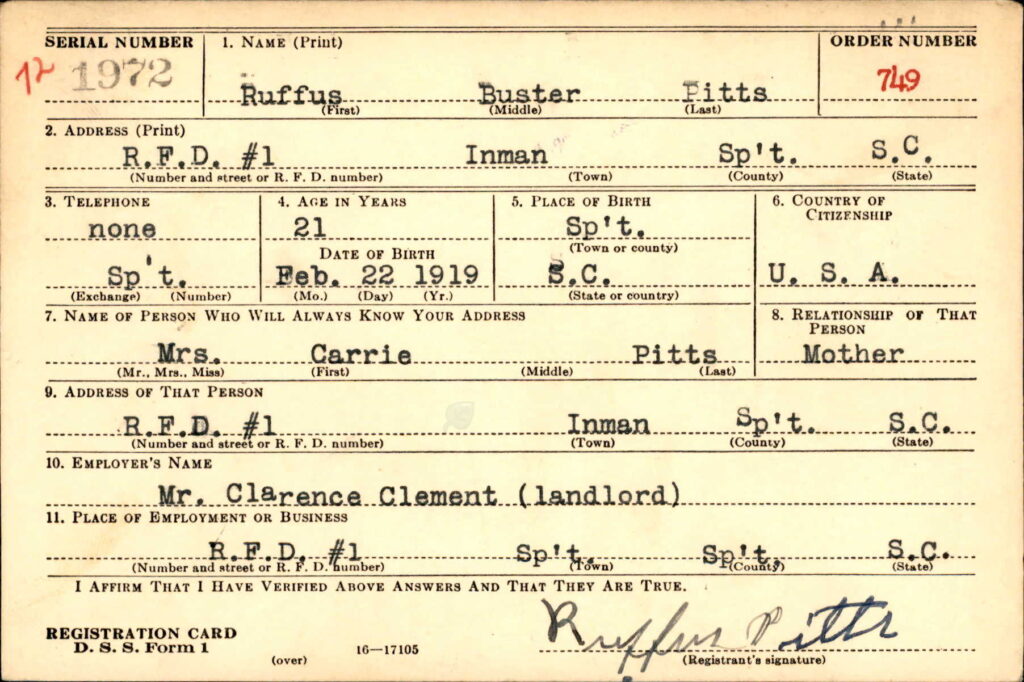
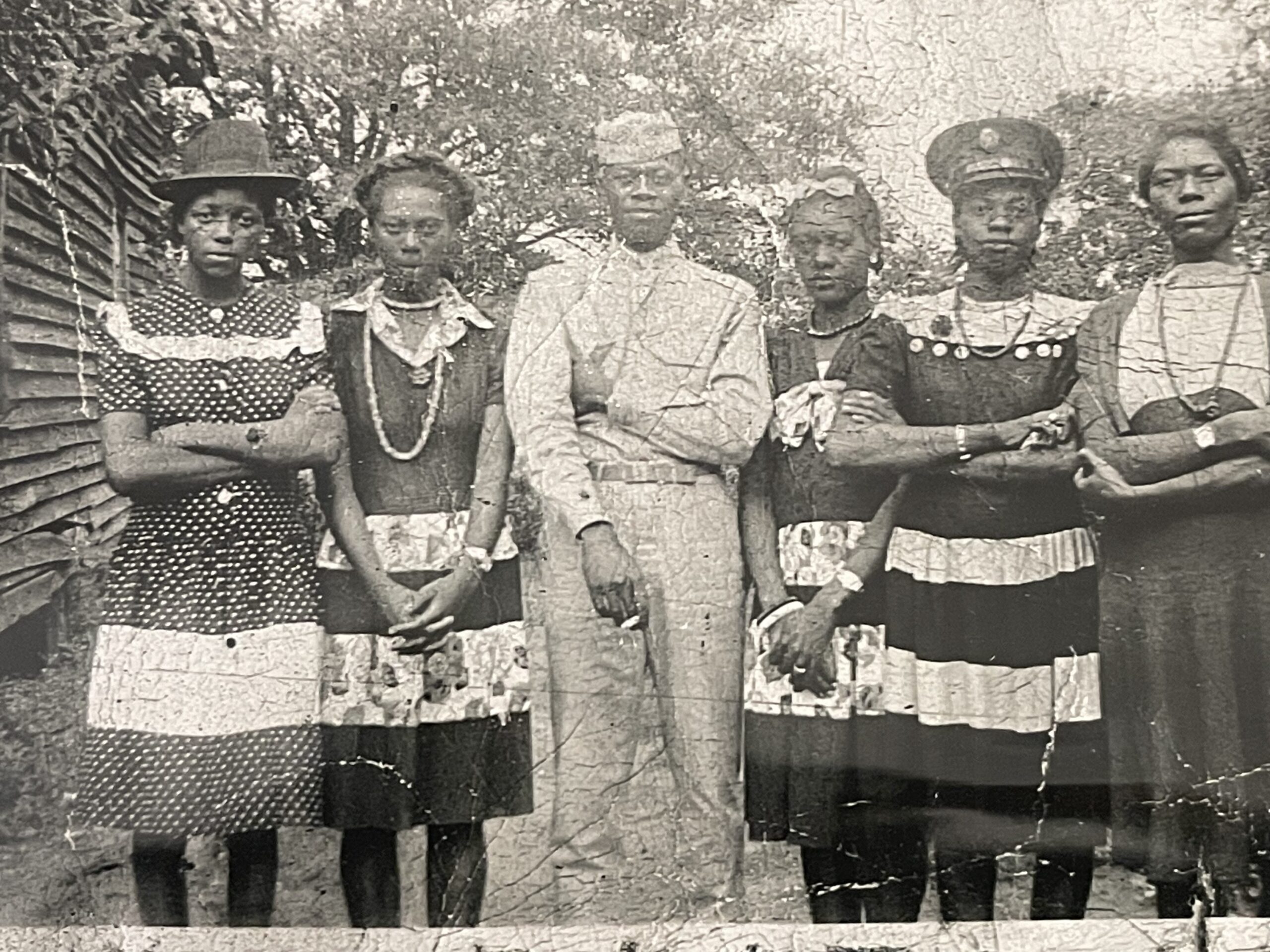
Rufus (written as Ruffus on military records) Buster Pitts was born on February 22, 1919, in Spartanburg County, South Carolina, to Rufus and Carrie Watson Pitts. Known by the family as “Buster,” he was the second son and fifth of 13 siblings: Amos, Cora Lee, Bessie, John Henry, Jessie Mae, Agnes, Wallace, James, Thelma, L.C., Robert, and Lewis. His maternal grandparents were Edward and Parlie Pilgrim Watson, and his paternal grandparents were Rufus and Fannie Smith Pitts.
Around the time of Pitts’s birth, several of his paternal uncles and aunts joined the mass migration of Black Southerners to the North in the early twentieth century. Northern urban areas such as New York, Chicago, Philadelphia, and Washington, D.C., offered economic opportunities and an escape from the de jure segregation baked into the Jim Crow South. Pitts’s relatives chose Chicago as their destination.
Pitts’s father chose to stay in South Carolina, however, and by the time of the Great Depression, the Pitts family had settled in the northwestern portion of Spartanburg County. They lived and farmed on rented land near Inman, South Carolina.
As was common in rural areas of South Carolina at the time, educational opportunities were limited, especially beyond the elementary grades. According to the 1940 census, Pitts and several of his siblings attended school through the fifth grade. During an interview, Pitts’s niece, Maggie Gist Butler, noted that her mother, Bessie, loved school and cried when she could not attend due to the demands of farm life. Educational opportunities of the time were also limited due to segregation. There was no secondary school for Black students in the area until the opening of Bethune High School, named for South Carolina native, educator, and civil rights advocate Mary McLeod Bethune, in 1952.
Priscilla Ellison-Taylor, daughter of Thelma Pitts, recalled her Aunt Agnes describing her brother Buster as always smiling, with an infectious laugh, and as the life of the party. When called to military service in late August 1941, just a few short months before the attack on Pearl Harbor, he embraced the opportunity to leave the farm and serve his country.

Homefront
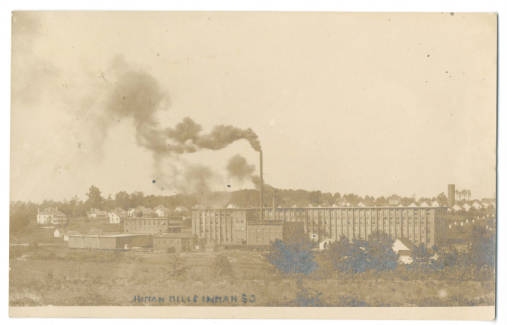
By 1930 and throughout World War II, the Pitts family resided in the Inman area of Campobello Township, Spartanburg County, South Carolina. The towns of Campobello and Inman began to thrive as a rail line between Spartanburg, South Carolina, and Asheville, North Carolina, developed in the 1870s. While agriculture remained the primary economic venture in Campobello, the Inman Mills opened in 1902. It contained 15,000 spindles and 400 looms. Widespread cotton farming fueled the area’s growing textile industry.
Inman Mills
The textile industry was deeply involved in wartime manufacturing during World War II. The U.S. Navy awarded Inman Mills a $147,000 contract for cotton bunting as early as April 1941. In the Daily Herald’s report on the “Cotton Goes to War” celebration, it was noted that Spartanburg County produced more cotton used in the war than any other county in the nation. Cotton mills produced cloth used for netting, shirting, airplane cloth, duck cloth, raincoats, and life preservers. While the textile industry supported numerous wartime initiatives and thrived economically, workers’ grievances related to workloads, pay, and other conditions that had surfaced in the 1920s and 1930s did not entirely disappear during World War II. Labor tensions at Inman Mills resulted in multiple strikes in 1943 and 1944.
Civilian Support for the War
Cotton mill workers, as well as other local residents, were encouraged to buy war bonds, plant victory gardens, prepare for rationing, and form civilian defense committees. Women were recognized for their work with the American Red Cross, the Army Nurses Corps, the Women’s Auxiliary Army Corps, and for learning new skills such as welding and converting reconnaissance photos to military maps. Area farmers were encouraged to learn about soil conservation and participate in the Farm Security Administration’s “Acre for a Soldier” program.
Camp Croft
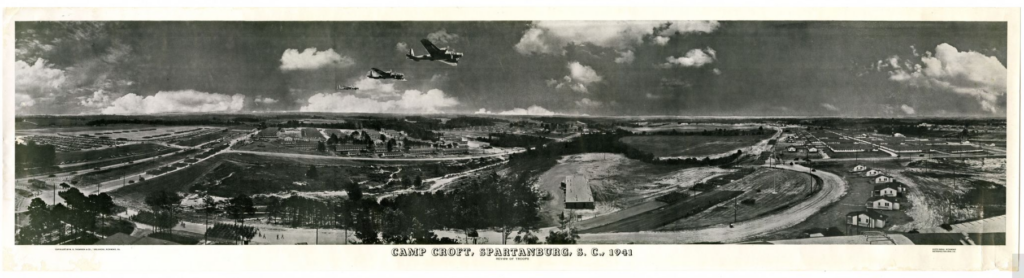
One of the biggest population shifts in the county involved the building of a Replacement Training Center (RTC), known as Camp Croft, by the War Department. The training camp covered about 20,000 acres. Over 260 families, both landowners and sharecroppers, were displaced to make way for the facility. Six months after being relocated, however, the majority of those landowners had yet to be compensated by the government.
Despite this displacement, the establishment and operation of Camp Croft boosted many parts of the local economy: entertainment, rent, transportation, dining, and commerce. Between 65,000 and 75,000 troops, predominantly from New England, New York, and Pennsylvania, moved through the camp every year.
A Women’s Army Corps (WAC) detachment first arrived in January 1944. The training camp was segregated with separate housing and social venues for Black and White troops. Buster Pitts was stationed at Camp Croft in the fall of 1941 until his transfer to Fort Devens, Massachusetts, in December 1941.
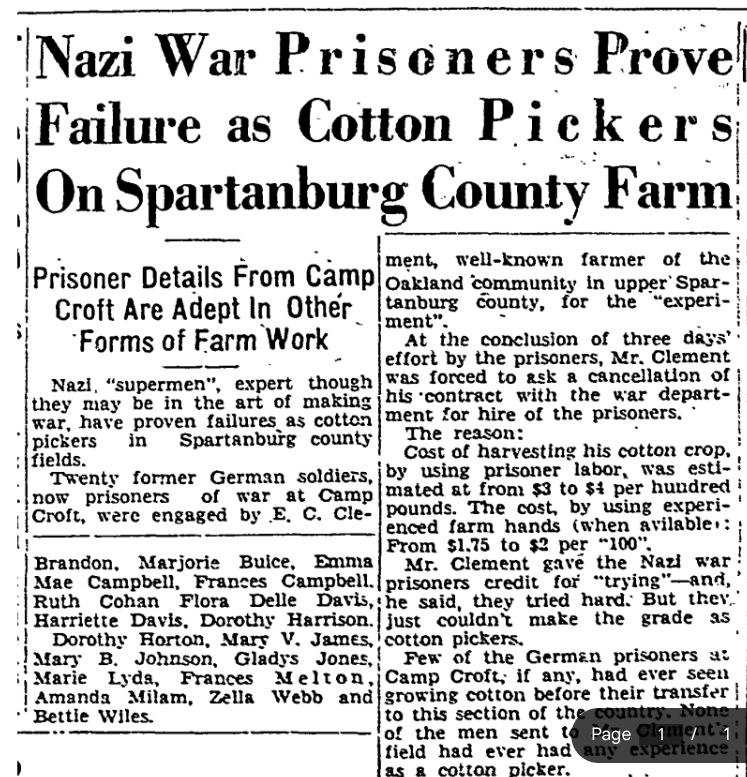
In addition, just under 1,000 German prisoners of war were housed at Camp Croft. According to a November 1944 news article, these German POWs were hired out by the War Department to work on local cotton, peach, and dairy farms. One of the farms that contracted POWs was the same family cotton farm where the Pitts family lived and worked while Pitts and his brother, John Henry, were fighting in Europe.
Military Experience
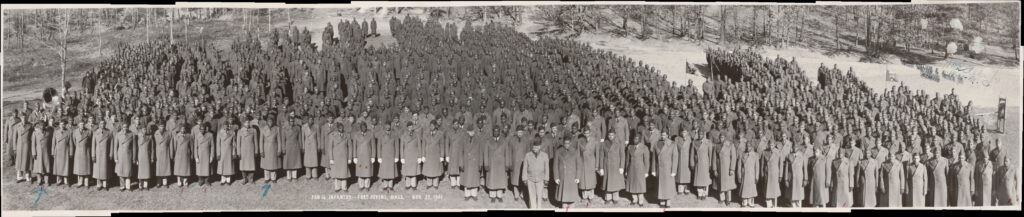
Buster Pitts enlisted in the U.S. Army on August 27, 1941, at Fort Jackson in Columbia, South Carolina. He served in Company I of the 366th Infantry Regiment. Created during World War I, the 366th Infantry Regiment was reactivated in February 1941 at Fort Devens, Massachusetts, about ten months before the U.S. entry into World War II. While most segregated, all-Black units of the time were commanded mainly by White officers, the 366th Infantry Regiment was unique in that it was made up entirely of soldiers of color, including its officers.
The 366th Infantry Regiment was assigned to the Eastern Defense Command in April 1942. The regiment completed field training at A.P. Hill Military Reservation in Virginia and was then sent to Camp Atterbury in Indiana at the end of 1943. The 366th Infantry Regiment qualified as combat-ready at all three training locations before being sent overseas.
North Africa and Italy
In late March 1944, the entire 366th Infantry Regiment was sent to Hampton Roads, the port of embarkation in Newport News, Virginia. Their ten-day journey across the Atlantic was aboard the almost-new ship, USS General William Mitchell. They arrived in North Africa (Casablanca) in April 1944. Less than 48 hours later, they were bound by rail for Oran, Algeria. After several weeks, the unit departed Algeria on April 29 and arrived at Naples, Italy, on May 3, 1944. They were bivouacked, or temporarily encamped, at Bagnoli, north of Naples. About a week later, the unit was sent to Foggia, Italy, where they were split into battalions and assigned to various locations for service or guard duty – not the combat duty they had trained for and were eager to demonstrate they were prepared for.
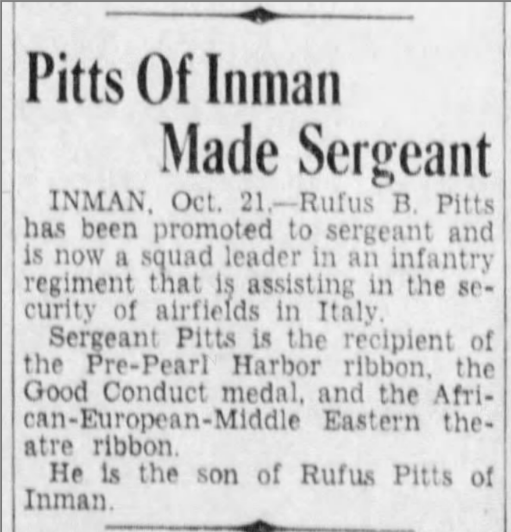
The 366th Infantry Regiment was attached to the 15th Air Force Service Command for airfield security duties from Sardinia to the Adriatic coast. Those duties involved guarding ammunition depots and gasoline storage tanks. Buster Pitts was assigned to the Pantanella Airfield about 30 miles west of Barletta near the Gulf of Manfredonia. While stationed there, he was promoted to sergeant in September 1944.
A Segregated Army
The 366th Infantry Regiment was assigned to the Fifth Army as combat troops on November 4, 1944, and sent to the area of Coltano, just south of Pisa. They arrived at the front in Livorno, Italy, on November 26, 1944. While not part of the famed 92nd Division (the Buffalo Soldiers), the 366th was attached to the 92nd Infantry Division for 90 days to break through German control of the Gothic Line in Italy.
Unlike the 366th Infantry Regiment, the officers in the 92nd Infantry Division were White and mostly from the South. When the regiment was attached to the 92nd Infantry Division, their new commander was General Edward Almond. His address on the evening of December 1, 1944, was anything but welcoming: “I did not send for you…Your Negro newspapers, Negro politicians, and White friends have insisted on your seeing combat, and I shall see that you get combat and your share of the casualties.”
The commanding officer of the 366th Infantry Regiment, Colonel Howard Queen, requested that the regiment remain together once they were reassembled near the Gothic Line. He also asked that they receive 30 days of training since they had not had combat training for six months. Neither request was met, and the various units were sent to the front without adequate supplies or recent training.
Edward Brooke, who later became the first African American elected to the U.S. Senate since Reconstruction, noted in his memoir that “the prejudice Negro soldiers faced in the Army was underscored by the friendliness of the Italians, who were colorblind with regard to race . . . It was maddening to be given lectures on the evils of Nazi racial theories and then be told that we should not associate with White soldiers or White civilians.” Indeed, as members of the 366th Infantry Division returned to the United States in November 1945, they disembarked in Virginia and were loaded onto buses. The bus operators sent the Black Veterans to the back of the bus to make way for German POWs to sit in the front of the bus.
The Gothic Line and Operation Wintergewitter
The 92nd Infantry Division (including the attached 366th Infantry Regiment) fought along the western portion of the Gothic Line in the Serchio River valley. The area was extremely mountainous, and the Germans used the landscape to their advantage and forced labor to create concrete bunkers, machine gun nests, anti-tank ditches, dugouts, and observation points. According to morning reports, Company I was located a few miles southwest of Pisa, Italy, engaged in company training and usual bivouac duties in early December 1944.
A week later, the company was positioned in the vicinity of Azzano and Giustagnana for reconnaissance and combat duties. Just before Christmas, the company moved to Forte Dei Marmi, a seaside town in the province of Lucca along the western end of the Gothic Line. Around 8:00 pm on Christmas Eve, the company moved to the front lines to support battalion maneuvers.
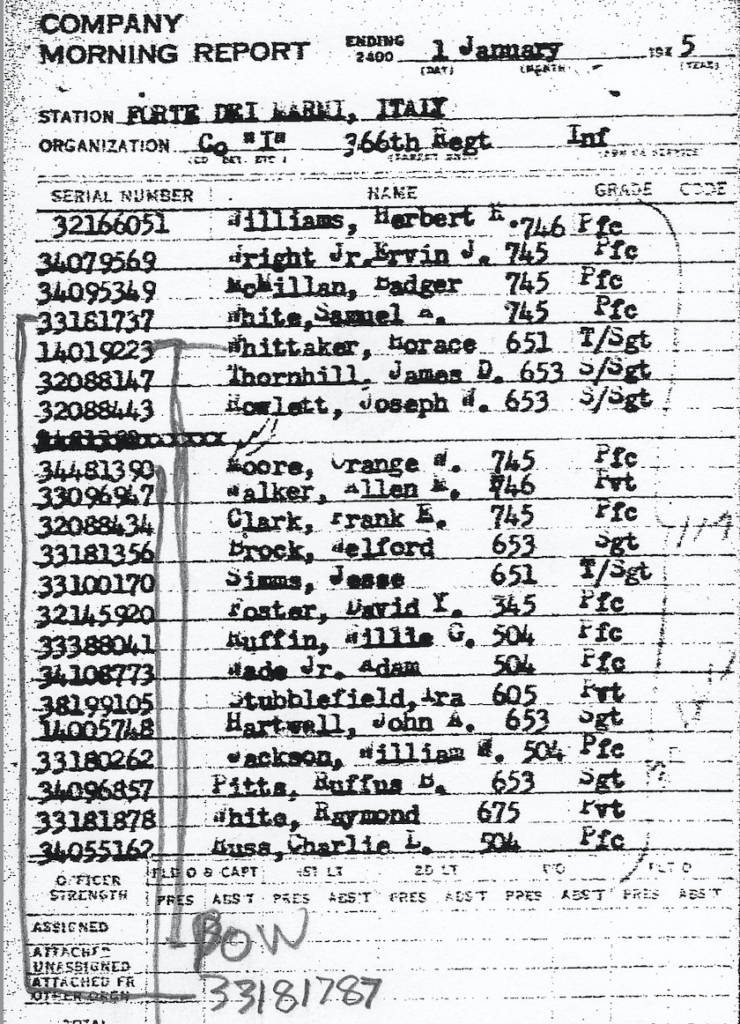
Company I was designated as the battalion’s tactical reserve on December 26, when the Germans launched Operation Wintergewitter. The operation was an attempt to push back Allied forces along the western segment of the Gothic Line. Indeed, the 366th Infantry Regiment was involved in guarding bridges and river crossings in the front-line sector. The morning report for December 28 notes that Company I was used to strengthen defensive positions along the front with barbed wire and mines.
On December 29, 1944, a night raiding party of about a hundred enlisted men and a few officers from Company I engaged with enemy forces near the Cinquale Canal in Montignoso, Italy. According to a report of missing personnel, Sergeant Buster Pitts went missing at a point just north of Forte Dei Marmi in enemy territory near Viareggio. The company commander’s opinion was that he had been captured.
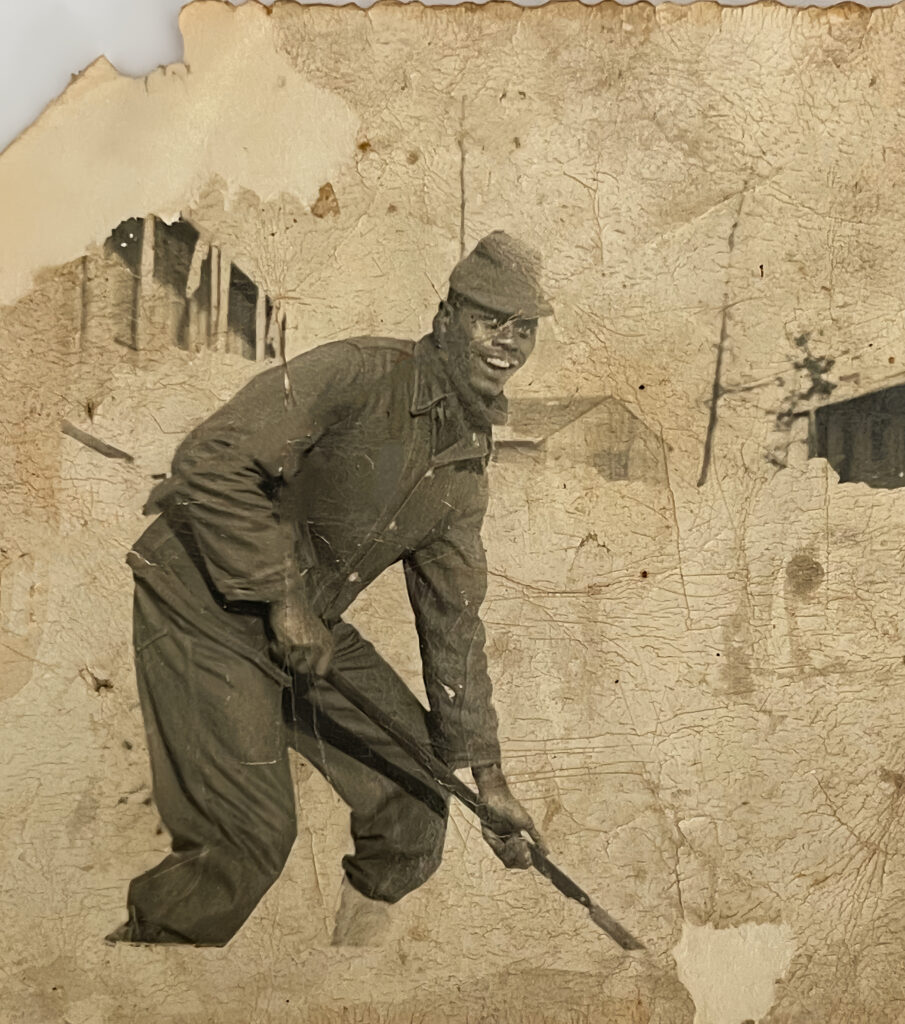
Commemoration
The Defense POW/MIA Accounting Agency’s 92nd Infantry Identification Project lists Sergeant Buster Pitts, age 25, and five other soldiers as unaccounted for on December 29, 1944, in the aftermath of Operation Wintergewitter. The Army officially declared Pitts missing in action, “non-recoverable” a year later, on December 30, 1945.
Pitts’s niece, Priscilla Ellison-Taylor, later recalled hearing from family members about the moment they learned Buster was missing in action. They received a “knock at the door” and were “devastated” by the news. The family received no identification tags or sense of closure.
A September 1949 memorandum reported that Army investigators searched the area around Viareggio, Italy, and found no trace of Sergeant Pitts. Furthermore, the report indicates that captured German records revealed no information regarding Sergeant Pitts.
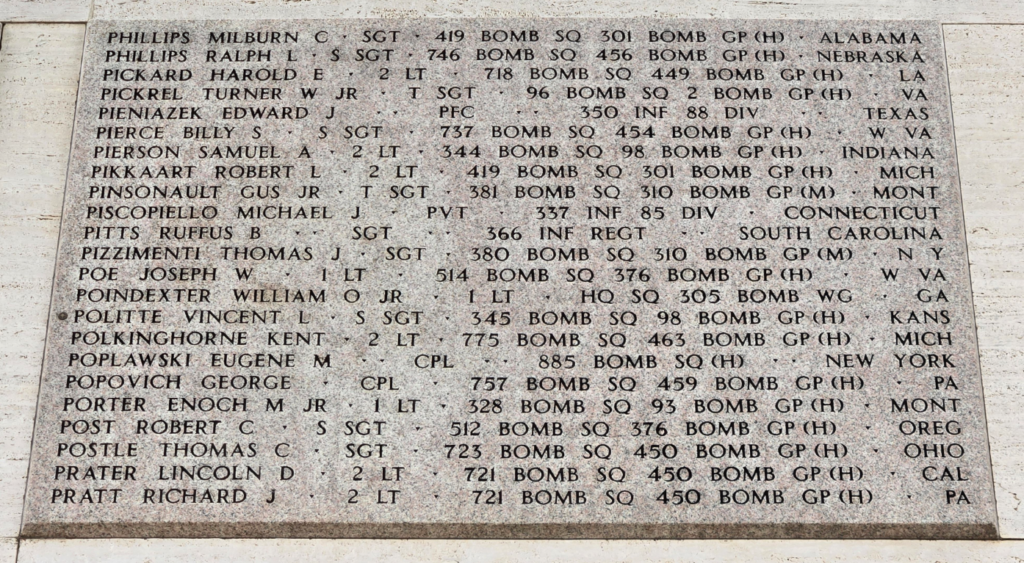
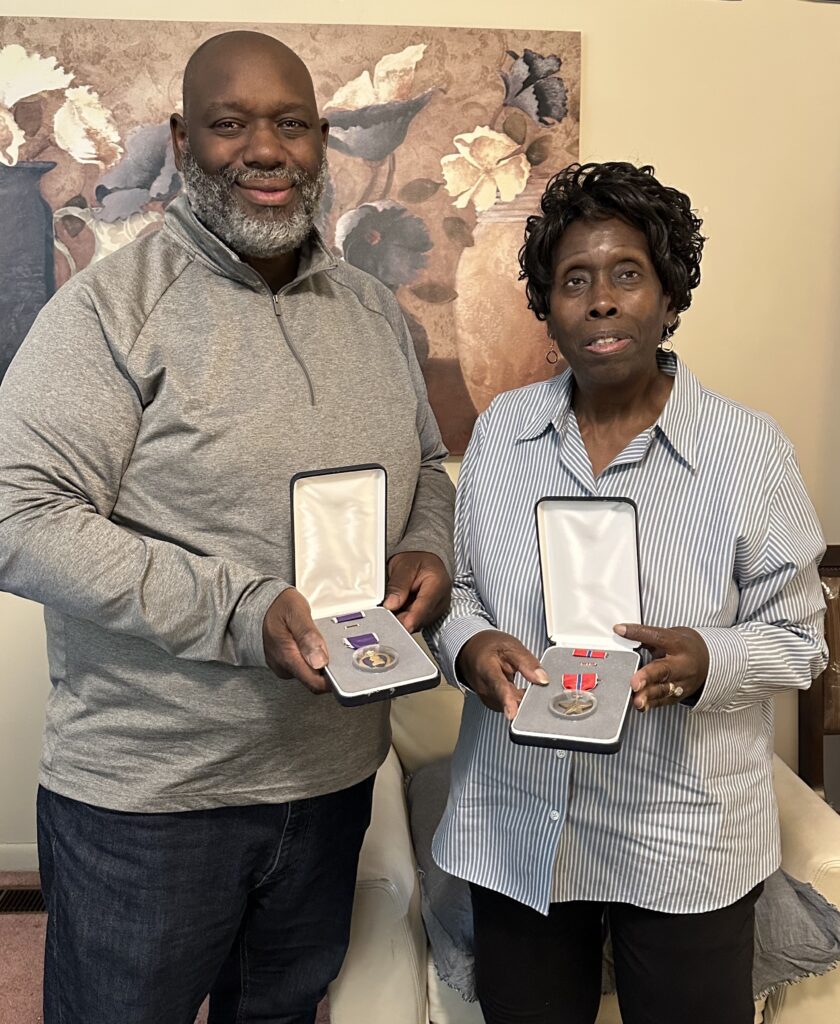
Sergeant Buster Pitts is memorialized on the Tablets of the Missing at the Florence American Cemetery in Italy. He was awarded the Purple Heart, a Bronze Star, the American Defense Service Medal (pre-Pearl Harbor), the European-African-Middle Eastern Campaign Medal, and the World War II Victory Medal. Buster Pitts’s family did not receive his medals until 2006, through the efforts of his niece, Priscilla Ellison-Taylor, and the assistance of Senator Jim DeMint of South Carolina’s 4th Congressional District.
Bibliography
Primary Sources
“14 Men Selected For Induction By Draft Board Here.” Daily Herald [Spartanburg, South Carolina], August 2, 1941. https://infoweb.newsbank.com/.
“366th at Camp Atterbury; Wins High Praise.” Chicago Bee [Chicago, Illinois], January 2, 1944. https://infoweb.newsbank.com/.
The 366th Infantry Regiment, Ft. Devens, MA. Photograph. 1942. Courtesy of James Pratt.
“$147,000 Defense Job Given Inman; $29,940 for Lyman.”Spartanburg Journal and the Carolina Spartan [Spartanburg, South Carolina], April 19, 1941. https://infoweb.newsbank.com/.
“‘Acre for a Soldier’ on Spartanburg Area Farms Urged by FSA Official.” Daily Herald [Spartanburg, South Carolina], April 13, 1942. https://infoweb.newsbank.com/.
“Are You Planning a Victory Garden?” Daily Herald [Spartanburg, South Carolina], March 23, 1944. https://infoweb.newsbank.com/.
Butler, Marjorie Gist. Interview with the author. November 14, 2025.
Carrie Pitts. South Carolina, U.S., Death Records, 1821-1972. Digital Images. https://www.ancestry.com.
“Civilian Defense Committees Organized by Inman Legion.” Daily Herald [Spartanburg, South Carolina], January 11, 1942. https://infoweb.newsbank.com/.
Department of Commerce, Bureau of the Census. 1940s Census Enumeration District Maps – South Carolina (SC) – Spartanburg County. Office of the Associate Director for Decennial Census, 1940. Map. Records of the Bureau of the Census Collection, National Archives. https://catalog.archives.gov/id/373959854.
Department of Defense, and Department of the Army. List of Companies in 366th Infantry Regiment. Army General Orders, December 13, 1944. https://catalog.archives.gov/id/483358239?objectPage=11.
“Doffers Strike at Inman Mills; Plant Shut Down.”Spartanburg Journal and the Carolina Spartan [Spartanburg, South Carolina], April 17, 1943. https://infoweb.newsbank.com/.
“Doffers Strike at Inman Mills.”Spartanburg Journal and the Carolina Spartan [Spartanburg, South Carolina], June 2, 1943. https://infoweb.newsbank.com/.
Ellison-Taylor, Priscilla. Telephone interview with the author. February 9, 2026.
“Fashions for Women at War on the Home Front.” Daily Herald [Spartanburg, South Carolina], January 24, 1943. https://infoweb.newsbank.com.
Illinois. Lake County. 1950 U.S. Census. Digital Images. http://ancestry.com.
“Inman Mills is Still Closed by Week-old Strike.” Daily Herald [Spartanburg, South Carolina], April 18, 1943. https://infoweb.newsbank.com/.
“Inman Workers Invest Heavy in War Bonds.” Daily Herald [Spartanburg, South Carolina], September 18, 1942. https://infoweb.newsbank.com/.
Jeter, Joann Pitts. Telephone interview with the author. October 24, 2025.
“Nazi War Prisoners Prove Failure as Cotton Pickers on Spartanburg County Farm.” Daily Herald [Spartanburg, South Carolina], November 3, 1944. https://infoweb.newsbank.com/.
Pitts Family Records, undated. Courtesy of Marjorie Gist Butler.
Pitts Family Records, undated. Courtesy of Priscilla Ellison-Taylor.
“Pitts of Inman Made Sergeant.” The Greenville News [Greenville, South Carolina], October 22, 1944. Newspapers.com (188098947).
Pope, Michelle. Maggie Gist Butler and her son, Darren, with medals. Photograph. November 14, 2025.
“Rotarians Hear Importance of Textiles Cited.” Daily Herald [Spartanburg, South Carolina], May 18, 1943. https://infoweb.newsbank.com/.
Ruffus B Pitts. U.S., Defense POW/MIA Accounting Agency, Unaccounted-for Remains, Group B (Unrecoverable), 1941-1975. Digital Images. https://ancestry.com.
Ruffus B Pitts. U.S., Headstone and Interment Records for U.S., Military Cemeteries on Foreign Soil, 1942-1949. Digital Images. https://ancestry.com.
Ruffus B Pitts. U.S., Rosters of World War II Dead, 1939-1945. Digital Images. https://ancestry.com
Ruffus B Pitts. U.S., World War II and Korean Conflict Veterans Interred Overseas. Digital Images. https://ancestry.com.
Ruffus B Pitts. U.S., World War II Military Personnel Missing in Action or Lost at Sea, 1941-1946. https://ancestry.com.
Ruffus Buster Pitts. World War II Draft Cards Young Men, 1940-1947. Digital Images. https://ancestry.com.
Ruffus Pitts. Individual Deceased Personnel File, Department of the Army. National Archives and Records Administration – St. Louis. Courtesy of Priscilla Ellison-Taylor and James Pratt.
Rufus Pitts. U.S., Social Security Applications and Claims Index, 1936-2007. Digital images. https://www.ancestry.com.
“Soil Meeting at Campobello.” Daily Herald [Spartanburg, South Carolina], March 23, 1942. https://infoweb.newsbank.com/.
South Carolina. Spartanburg County. 1910 U.S. Census. Digital Images. http://ancestry.com.
South Carolina. Spartanburg County. 1920 U.S. Census. Digital Images. http://ancestry.com.
South Carolina. Spartanburg County. 1930 U.S. Census. Digital Images. http://ancestry.com.
South Carolina. Spartanburg County. 1940 U.S. Census. Digital Images. http://ancestry.com.
South Carolina. Spartanburg County. 1950 U.S. Census. Digital Images. http://ancestry.com.
Spartanburg Co. Map ca.1869. 1869. Map. Cobb Collection, Other Side of the River Museum. https://www.rootsandrecall.com/spartanburg/buildings/spartanburg-county-township-map-3/?hilite=%22mills%20gap%20road%22.
Spartanburg County in World War II. Kennedy Room of Local History and Genealogy: Spartanburg County Public Libraries. https://cdm17281.contentdm.oclc.org/digital/collection/WWII_11_14.
“Wage Increases Asked for Mill Workers in Area.” Daily Herald [Spartanburg, South Carolina], April 26, 1943. https://infoweb.newsbank.com/.
War Department. “Morning Reports.” 1941-1945. Personal collection of James Pratt.
War Department. “Morning Reports for December 1944: Roll 550.” December 1944. https://catalog.archives.gov/id/578966397?objectPage=2662.
Secondary Sources
“92nd Infantry Identification Project Information.” Defense POW/MIA Accounting Agency. Accessed December 30, 2025. https://dpaa-mil.experience.crmforce.mil/Projects/s/wwii/92ndinfantry.
“The 366th Infantry Regiment is Formed.” African American Registry. Accessed December 31, 2025. https://aaregistry.org/story/the-366th-infantry-regiment-is-formed/.
Brown, Dudley. “Missing in Action, Not in Mind.” Herald-Journal [Spartanburg, South Carolina], December 5, 2006. https://infoweb.newsbank.com/.
Carlton, David L. Mill and Town in South Carolina, 1880-1920. Baton Rouge: Louisiana State University Press, 1982.
“Carrie Wattson Pitts.” Find a Grave. Accessed October 30, 2025. https://www.findagrave.com/memorial/135505271/carrie-pitts.
“Etching a Place in History.” Herald-Journal [Spartanburg, South Carolina], February 2, 2002. https://infoweb.newsbank.com/.
Foster, Vernon, and Walter S. Montgomery. Spartanburg: Facts, Reminiscences, Folklore. Reprint, 1998.
“Gothic Line.” In The Hutchinson Unabridged Encyclopedia with Atlas and Weather Guide. Helicon, 2018.
Houston, Ivan J. Black Warriors: The Buffalo Soldiers of World War II: Memories of the Only Negro Infantry Division to Fight in World War II. Bloomington, IN: iUniverse, 2011.
Hub City Writers Project. Textile Town: Spartanburg County, South Carolina. Edited by Betsy Wakefield Teter. Hub City Writers Project, 2002.
Leonard, Michael. Our Heritage: A Community History of Spartanburg County, S.C. Band & White, 1983.
Neumann, Caryn E. “Inman Mills.” South Carolina Encyclopedia. Accessed January 31, 2026. https://www.scencyclopedia.org/sce/entries/inman-mills/.
“Ruffus B. Pitts.” American Battle Monuments Commission. Accessed October 4, 2025. https://weremember.abmc.gov/s?q=pitts&criteria=cemetery%3DFlorence%20American%20Cemetery&type=16&v=G.
“Rufus Pitts.” Find a Grave. Accessed October 30, 2025. https://www.findagrave.com/memorial/266051524/rufus-pitts.
“Rufus B. Pitts.” Veterans Legacy Memorial, National Cemetery Administration. Accessed March 27, 2026. https://www.vlm.cem.va.gov/RuffusBPitts/404EC.
Scott, William B., and Peter M. Rutkoff. “Great Migration.” In South Carolina Encyclopedia. Last modified August 4, 2022. https://www.scencyclopedia.org/sce/entries/great-migration/.
“Service Member: PFC. Alfred L Sutton.” Defense POW/MIA Accounting Agency. Accessed December 30, 2025. https://dpaa-mil.sites.crmforce.mil/dpaaProfile?id=a0Jt000001nzZroEAE.
“Sgt Ruffus Buster Pitts.” Find a Grave. Accessed October 4, 2025. https://www.findagrave.com/memorial/56366022/ruffus-buster-pitts.
State Historic Preservation Office, and South Carolina Department of Archives and History. African American Historic Places in South Carolina. 2021. https://scdah.sc.gov/sites/scdah/files/Documents/Historic%20Preservation%20(SHPO)/Publications/AAHPinSC-Addendum2021-2022.pdf.
Tollison, Courtney L. World War II and Upcountry South Carolina: ‘We Just Did Everything We Could’. History Press, 2009.
Turpin, Susan, Carolyn Creal, Ron Crawley, and James Crocker, eds. When the Soldiers Came to Town. Hub City Press, 2001.
Vernon, Orville Burton, Beatrice Burton, and Matthew Cheney. “Tenantry.” In South Carolina Encyclopedia. Last modified August 25, 2022. https://www.scencyclopedia.org/sce/entries/tenantry/.
Wales, Solace. Braided in Fire: Black GIs and Tuscan Villagers on the Gothic Line. Knox Press, 2020.
Wasniewski, Matthew. “Keeping the Faith: African Americans Return to Congress.” in African Americans Return to Congress, 1929-1970, edited by the Office of History and Preservation Office of the Clerk U.S. House of Representatives. U.S. Government Printing Office, Washington, D.C., 2008. https://www.govinfo.gov/content/pkg/GPO-CDOC-108hdoc224/pdf/GPO-CDOC-108hdoc224.pdf.
This profile was researched and created through the Researching Silent Heroes program, sponsored by the American Battle Monuments Commission.