
Lieutenant Colonel Russell John McCurdy
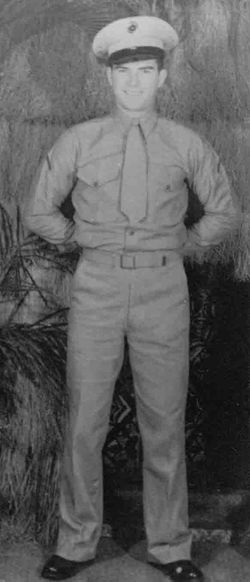
- Unit: USS Arizona; 1st Marine Division, 1st Marines, 1st Tank Battalion, Company B
- Date of Birth: July 14, 1917
- Entered the Military: March 18, 1941
- Date of Death: June 17, 2005
- Hometown: Chief Lake, Michigan
- Place of Death: Huntington, Indiana
- Award(s): Bronze Star, Purple Heart, Presidential Unit Citation, Asiatic Pacific Campaign Medal with three stars, Marine Corps Good Conduct Medal, World War II Victory Medal, China Service Medal
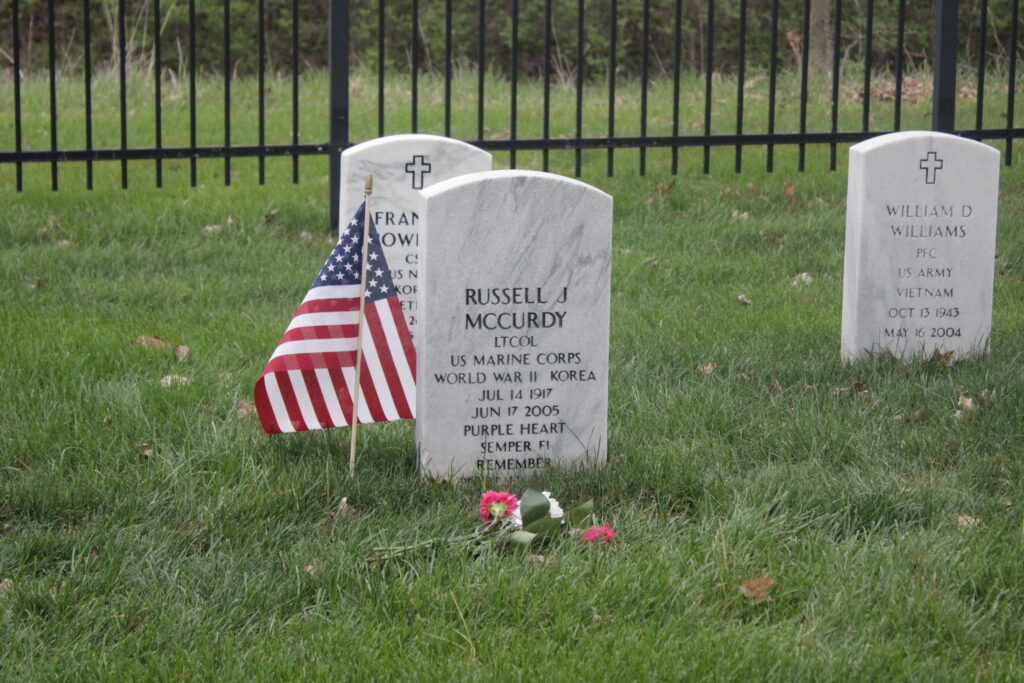
- Cemetery: Section CS-1, Site 123. Marion National Cemetery, Marion, Indiana
Mentored by Mrs. Kristin Rentschler
Columbia City High School
2025/2026
Early Life
Russell John McCurdy was born on July 14, 1917, in Chief, Michigan. He grew up in a large family with his parents, Thomas and Esther, along with his siblings, Arthur, Evelyn, and Lorraine. He was baptized in 1918 at Messiah Lutheran Church in Manistee.
His family lived on his grandparents’ farm, which covered over 360 acres of woods and fields. Growing up, he often helped his grandparents with planting and harvesting, specifically recalling picking potatoes, apples, raspberries, and cucumbers. In the winter, he worked as an iceman, part of a team that sawed 300-pound chunks of ice, hooked them to a sleigh, and dragged them to the local icehouse. Despite the Great Depression, McCurdy’s family stayed pretty successful through their hard work on his grandparent’s farm and really did not lack in most necessities.
Education
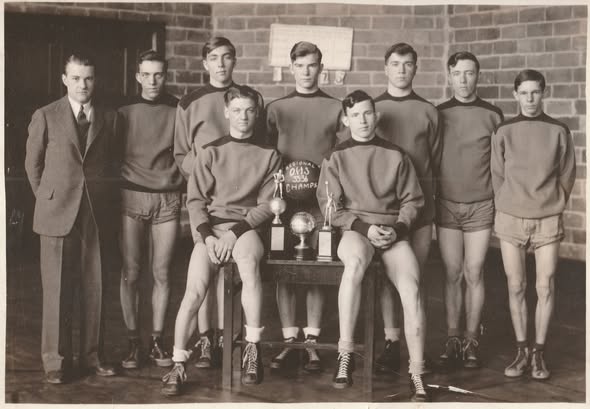
McCurdy had to travel to reach his high school in Onekama, Michigan, near Lake Michigan. He paid another student 25 cents a week to drive him round-trip to and from school. At Onekama High School, McCurdy stood out as an athlete. McCurdy made the varsity basketball team all four years, reaching the state championship twice in Lansing, though never winning. He also made it to state in track twice, winning a state championship his senior year. He graduated in 1936.
Employment
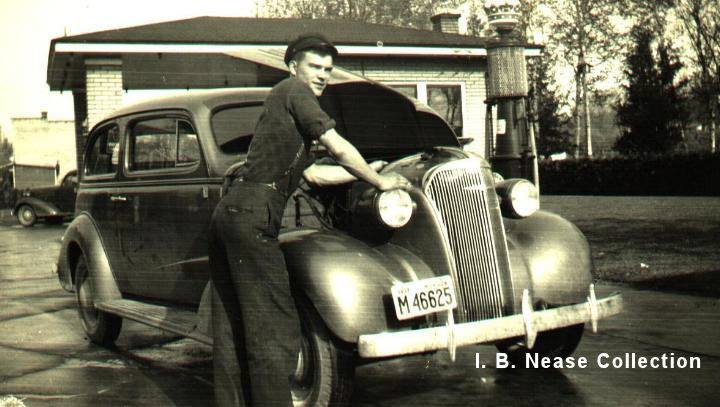
After high school, McCurdy got a job at the Ford Motor Company plant in Dearborn, Michigan, where he worked on the assembly line of the new 1936 V8 Ford Sedan. He was laid off in the summer of 1938 and then asked to join the Merchant Marines as a part of the Great Lakes Fleet for Bethlehem Steel. He worked on the ship fleet until 1941. In winter, the ships were kept in New York because the frozen lakes were impassable. That winter, he took a train back to Dearborn and was hired again at the Ford plant.
Enlistment
Once McCurdy left the Merchant Marine, which gave him an exemption from being drafted, he knew his draft number was going to be called. He decided to take charge of his future and enlisted in the U.S. Marine Corps at the federal building in Detroit on March 18, 1941.

Homefront
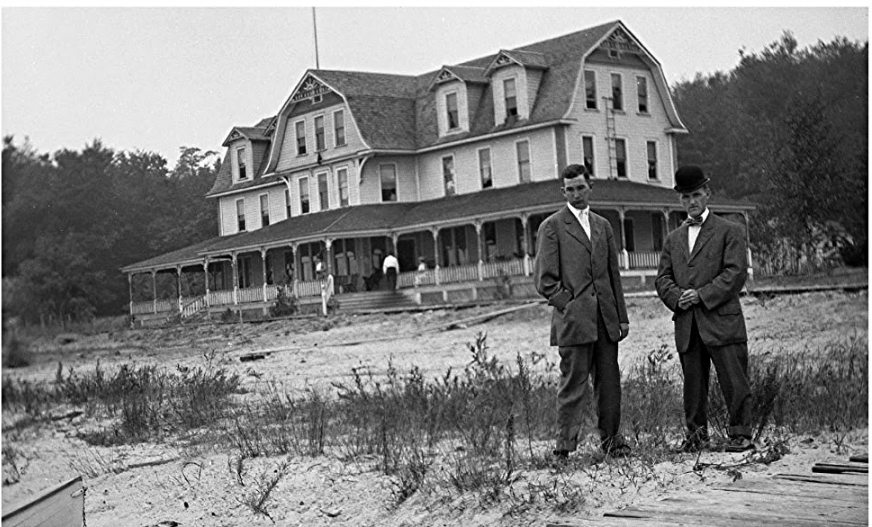
Chief in Manistee County, Michigan, is a small rural village centered around Lake Portage. This region mostly focused on fishing, farming, and lumber. At the turn of the century, Lake Portage became a resort area for the elite group called “The Lumbermen Millionaires” from Chicago who built their summer homes in Manistee County. The most famous was Portage Point Resort, built between Portage Lake and Lake Michigan.
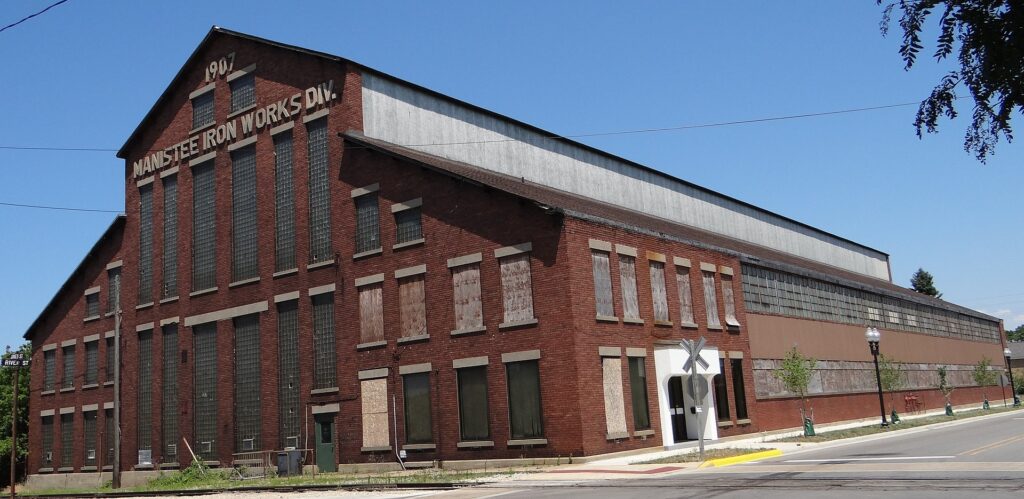
World War II had little impact on Chief’s economy due to the lack of major manufacturing. The nearby city of Manistee, though, had an Iron Works Factory that helped build ships and served as the primary industrial manufacturing and repair shop during the 1940s. The factory specialized in machinery, casting, and fitting. It also operated a dry dock during the war to repair ships.
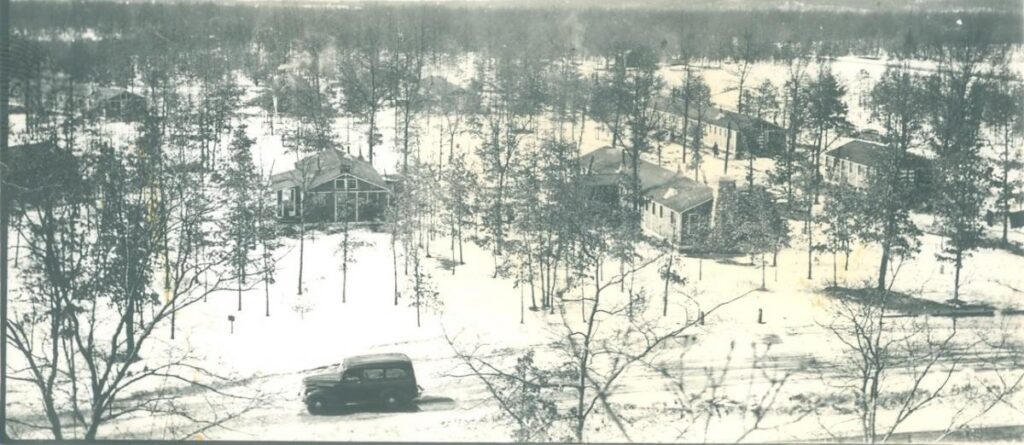
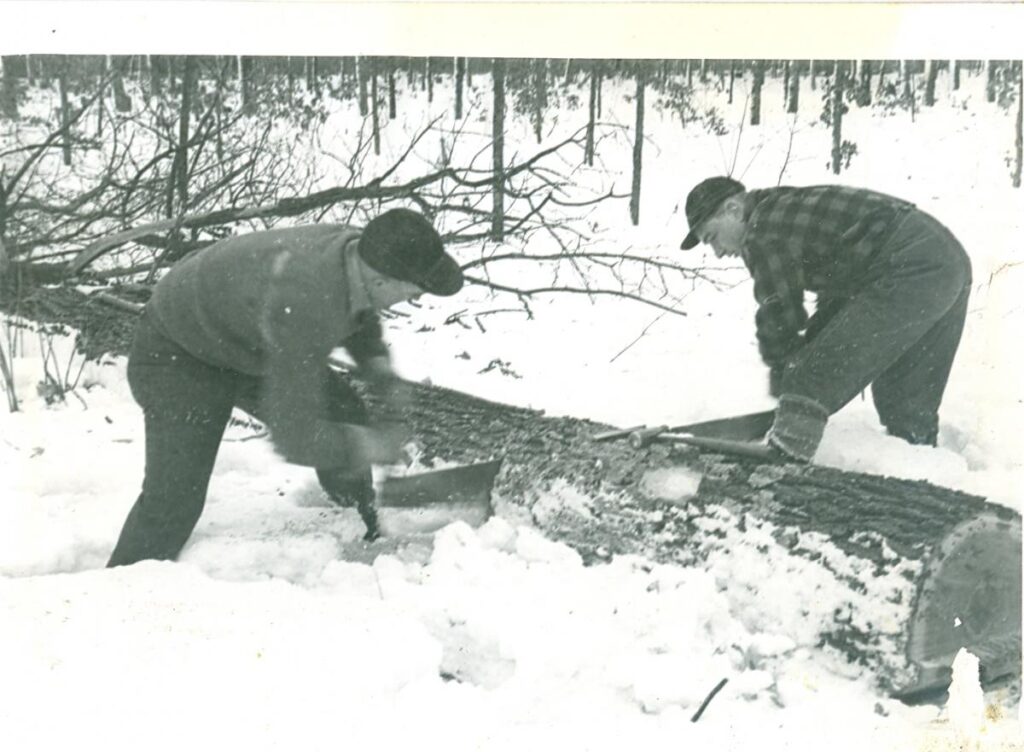
In 1942, the War Production Board classified lumber as a critical resource, yet with labor shortages, not enough was being harvested or replanted. The Forest Service established a Civilian Public Service camp in the Manistee National Forest in Michigan called Camp Wellston. Conscientious Objectors were sent to places like Camp Wellston, where they could still serve their country through a labor program in fields crucial to the war effort.
Manistee County, like the rest of the nation, was involved in the War Loan drives. By February 1944, Manistee had participated in four loan drives, and on February 16, it was announced that the city had surpassed its quota by $173,000. Because of these efforts, Captain A.B. Horner of the U.S. Army Air Corps announced that a B-24 Liberator Bomber would be named in honor of Manistee County. The plane flew over Manistee County on February 24, 1944, with the name Manistee clearly visible on its side before it was sent to Europe for action. It was reported that the Manistee participated in over 40 missions and always returned safely to England.
Military Experience
“I liked the water and I liked the uniform.” McCurdy had many reasons for choosing the Marine Corps over other branches, but he knew he wanted to be around water and men who demonstrated discipline when he enlisted. He completed his boot camp in San Diego, California, then attended Sea School for another six weeks before he was assigned duty on USS Arizona. McCurdy, along with many others on our battleships, would spend all of his time before the war in the Pacific, serving as a naval deterrent to the Japanese.
USS Arizona
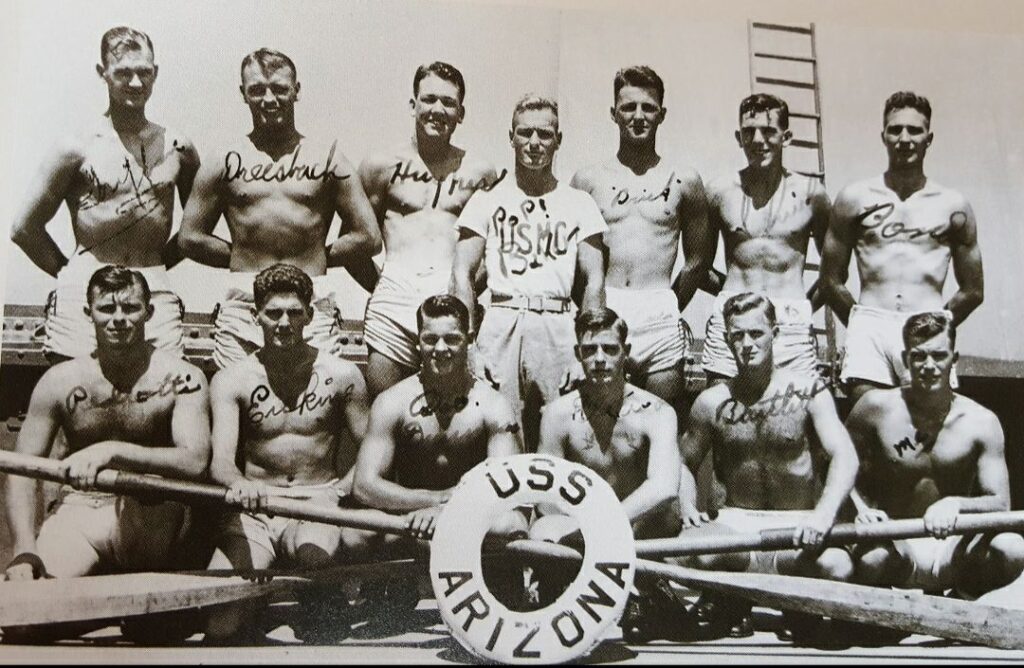
Aboard Arizona, McCurdy worked as a gun director on the main mast. From there, he directed three broadside guns on the port side of the ship. In addition, he was an orderly for Admiral Isaac C. Kidd. Admiral Kidd was the commander of Arizona and the commander of Battleship Division One. McCurdy was tasked not only with serving as a liaison between the Admiral and the ship’s captain, but also with providing security for the Admiral. McCurdy helped start the ship’s rowing team, or “Whale Boat” team. After beating all the other divisions from Arizona, his team was chosen to compete against the best boats from the other ships in the Fleet Champions race. His team placed second, losing by two feet to the crew from USS Pennsylvania.
The Attack
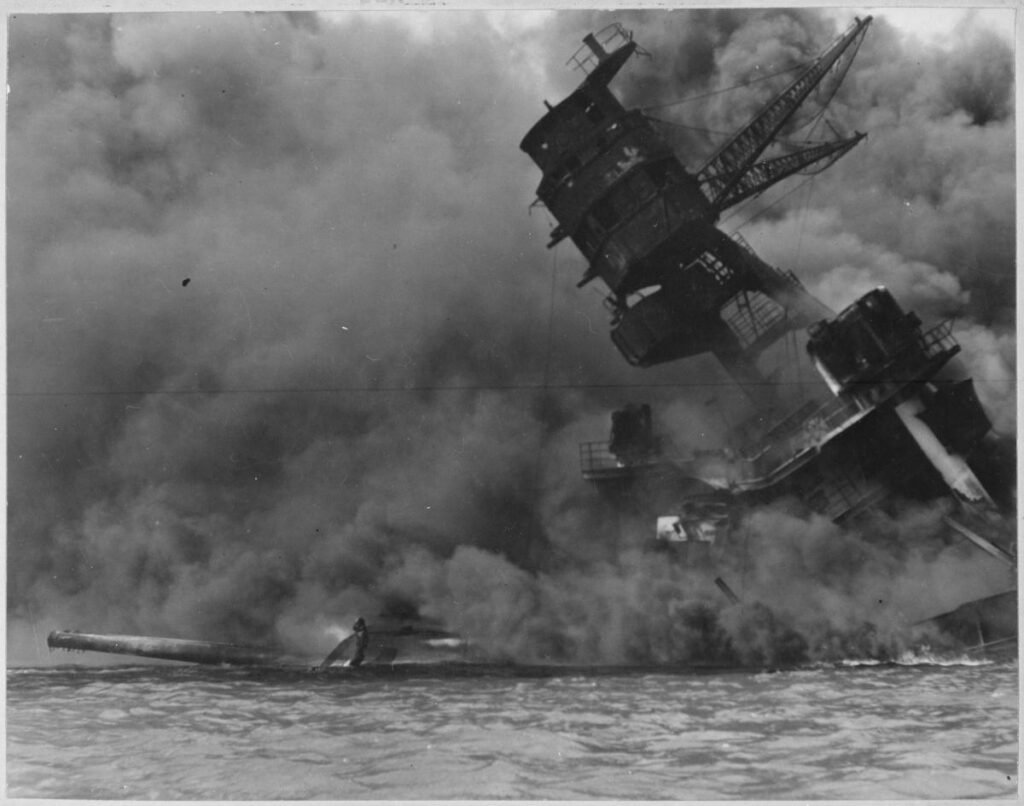
On the morning of December 7, 1941, McCurdy had just come off orderly duty when the alarm sounded for the incoming Japanese attack. McCurdy started for his battle station on the main mast. After dodging flying fragments and seeing others killed by shrapnel, McCurdy reached his station, where he was able to have a bird’s-eye view of the onslaught. He saw the planes so close that he said they felt like they were just an arm’s length away. He saw USS Oklahoma hit by four torpedoes and begin to roll over. He then witnessed the giant explosion tearing open the Arizona when one of the Japanese bombs hit the storage area full of explosives, shaking the mast and knocking him off his feet.
He and the men at his station made their way down the ladder to the boat deck, burning their hands, but witnessing many others whose whole bodies were burned beyond recognition. McCurdy and his fellow Marines dove into the oil-covered, fire-scarred water and began swimming to safety on Ford Island. There was no time to recover, as McCurdy was put to work assembling weapons that were still in storage. That night, he helped man anti-aircraft guns on the roof of a building on Ford Island. It was not until December 8 that he finally got a ride back to Oahu, where he could shower and get clean clothes.
Out of the 88 Marines stationed on the Arizona, 15 survived. McCurdy and the others were given a choice of service, and when McCurdy stated he could ride a motorcycle, he was assigned to courier duty between Naval Intelligence and the office of Admiral Chester W. Nimitz for the next few years. It was during this time that he was recommended for officer training.
He returned to Quantico, Virginia, in 1943 with about 200 other enlisted men for officer training and was commissioned as a Second Lieutenant. Once in California again, he helped train men who would be replacements in the Pacific and then traveled with them to join the Marines already in action. McCurdy then became the ordnance officer of the 1st Tank Battalion of the 1st Marines and joined his new division on Pavuvu for more training.
Peleliu
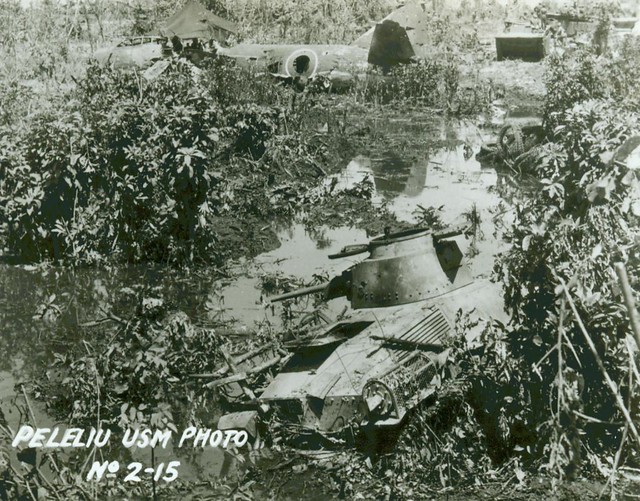
On September 15, 1944, McCurdy and the 1st Marines were sent to the island of Peleliu with the mission of taking the island and its airfields. The tanks landed as part of the eighth landing wave. One of McCurdy’s jobs was to ride in with the 4th wave to measure the shell holes so that the tanks would not sink into them. He would then pick the best path to the island. He also set up the tank battalion headquarters and operated the telephone. As the ordinance officer, his main duty was to keep the tanks stocked with ammunition, so McCurdy spent a lot of time picking up supplies on the beach and then transporting them to the tanks in action, often dodging mortars and sniper fire. McCurdy was given a citation for his actions on the first day of Peleliu in helping repair a tank and get it back into action while under fire.
Okinawa
After Peleliu, the 1st Marines were sent back to Pavuvu for more training and rest. McCurdy recalled gunnery training in a coconut grove, swimming on the beaches, and playing catch. But his favorite memory was the land crab races they orchestrated that involved a little bit of betting and a little bit of lighter fluid. He also recalled Bob Hope and a USO troupe visiting Pavuvu on August 7, 1944, to entertain the troops.
About two months after arriving on Pavuvu, the 1st Marines were once again sent into action on Okinawa on April 1, 1945. Though the landing was easy, the fighting was intense, lasting for nearly three months. McCurdy reported seeing hundreds of planes from Japan sent to dive bomb the U.S. Navy ships off the island’s coast. His duties on Okinawa were the same as on Peleliu, fighting the Japanese in the oppressive heat, mud, and rain.
McCurdy was still on Okinawa when word came of the atomic bombs and the Japanese surrender. McCurdy and the 1st Marines were then stationed in China to round up remaining Japanese and aid Chinese reconstruction.
While on Okinawa, McCurdy was notified that his brother, Arthur, who was serving in the U.S. Army as a tank commander on the European Front, had been killed on April 15, 1945, a few weeks before V-E Day. His death meant that Russell was a “soul survivor,” so once his duties in World War II were over, the rest of McCurdy’s Marine Corps duties would be stateside, keeping him out of Korea and Vietnam. He arrived home at Christmas time in 1945 and stayed in the states, including in North Carolina, Detroit, Chicago, and Kansas City, when he suffered from a heart attack, leading to his retirement in 1965.

Veteran Experience
While on a recruiting trip in 1951, McCurdy met his wife, Pearl. They married that same year and raised two children, Alan and Sandra. In 1961, after McCurdy’s heart attack, the family moved to Mount Etna, Indiana, Pearl’s hometown, and carefully remodeled a historic home that the town’s founder originally built.
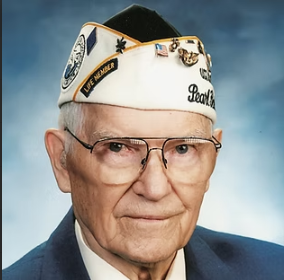
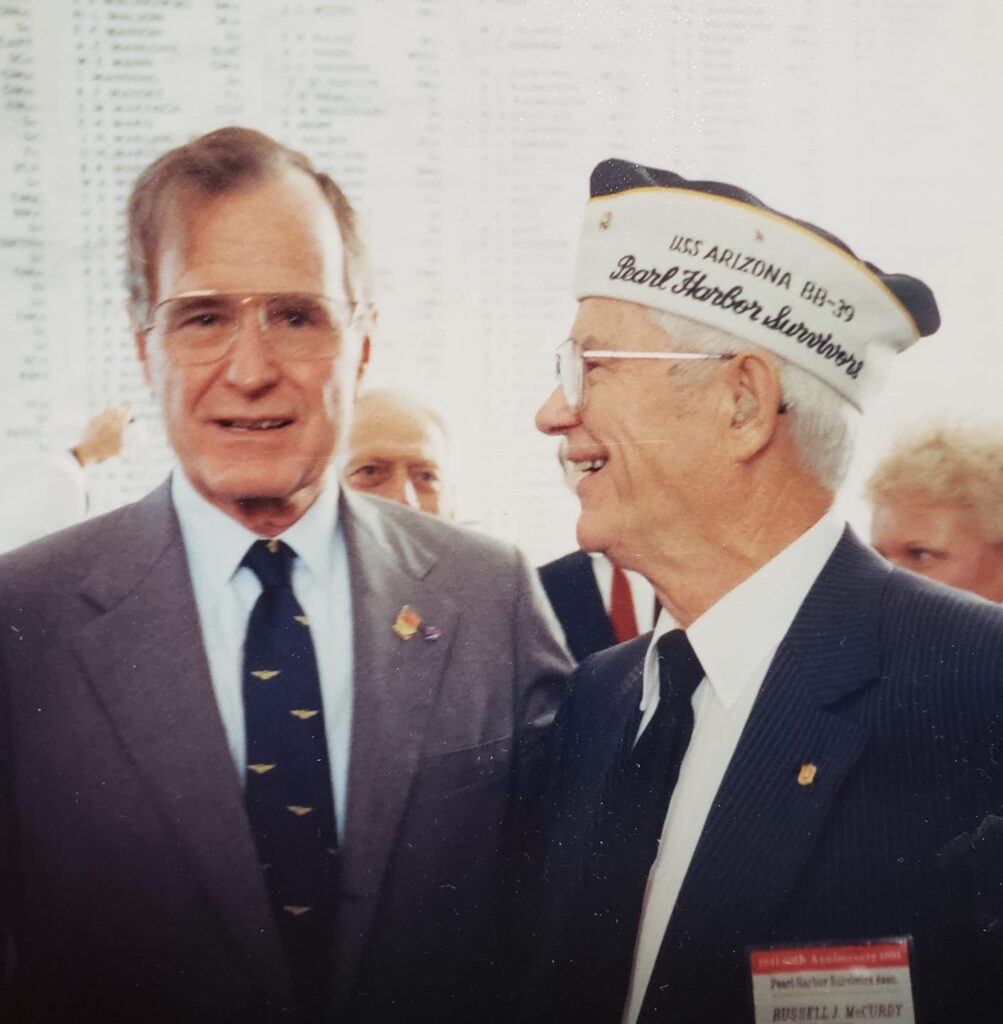
After leaving the military, McCurdy worked for over 20 years at Breedlove & Sons Appliance store in Marion, Indiana. In his later years, McCurdy became a committed community figure and educator. He traveled across Indiana, sharing his experiences from USS Arizona, and stayed active in Veterans’ memorial groups. In 1999, his wife, Pearl, passed away. He received a Purple Heart for injuries he sustained to his hands during the attack on Pearl Harbor in 2002.
Commemoration
Russell McCurdy documented and retold the story of USS Arizona to preserve and honor history as one of the 15 of 88 Marines who survived the attack on Arizona. McCurdy made it his duty to continue to honor the Marines who lost their lives on the Arizona and their work by telling their story. His grandson followed in his grandfather’s footsteps, serving in the Marines. He was awarded a posthumous award in Huntington called “Huntington Honors.” He also received a commemorative bronze medal in Indianapolis as a survivor of the attack.
Russell McCurdy passed away in 2005 at the age of 87. He is interred with his wife, Pearl, at Marion National Cemetery in Marion, Indiana.
Bibliography
Primary Sources
Caylor, Tanya. “They Were There.” The News Sentinel [Fort Wayne, Indiana]. http://egen.fortwayne.com/ns/projects/history/2000/1940/120591.php
CPS Camp No. 42. Photograph. c.1942-1946. Brethren Historical Library and Archives. https://stcpsarchive.z9.web.core.windows.net/cpsarchive/camps/42/1.html.
CPS Camp No. 42. Two CPS men cutting wood. Photograph. c.1942-1946. Brethren Historical Library and Archives. https://stcpsarchive.z9.web.core.windows.net/cpsarchive/camps/42/1.html.
Indiana. Huntington County. 1950 U.S. Census. Digital Images. https://ancestryclassroom.com.
McCurdy, Alan. Telephone interview with Kristin Rentschler. December 1, 2025.
McCurdy, Russell J. Audio recording. CD. Courtesy of the McCurdy Family.
Michigan. Manistee County. 1920 U.S. Census. Digital Images. https://www.ancestryclassroom.com.
Michigan. Manistee County. 1930 U.S. Census. Digital Images. https://www.ancestryclassroom.com.
Michigan. Manistee County. 1940 U.S. Census. Digital Images. https://www.ancestryclassroom.com.
“Photo Pack Images, Peleliu.” Archives Branch, USMC History Division. Accessed January 13, 2026. https://www.flickr.com/photos/usmcarchives/albums/72157658370874529/.
Russell J. McCurdy Collection. Personal Narrative. Veterans History Project, Library of Congress (AFC/2001/001/24813). https://www.loc.gov/item/afc2001001.42813/
Russell J. McCurdy. U.S., Marine Corps Muster Rolls, 1798-1958. Digital images. https://ancestryclasroom.com.
Russell John McCurdy. U.S., Evangelical Lutheran Church in America, Swedish American Church Records, 1800-1952. Digital images. https://ancestryclasroom.com.
The USS Arizona burning after the Japanese attack on Pearl Harbor. Photograph. December 7, 1941. National Archives and Records Administration (NAID: 520601). https://www.archives.gov/research/still-pictures/highlights/uss-arizona-burning.
Secondary Sources
“Battle of Okinawa.” The National World War II Museum. Accessed January 15, 2026. https://www.nationalww2museum.org/war/topics/battle-of-okinawa.
Clay, Frank. “Fallen Champions: USS Arizona’s Marine Detachment.” The National World War II Museum. Updated November 10, 2021. Accessed December 5, 2026. https://www.nationalww2museum.org/war/articles/uss-arizona-marines-pearl-harbor.
Curatola, John. “The Battle of Peleliu: The Forgotten Hell.” The National World War II Museum. Updated September 13, 2024. Accessed December 10, 2025. https://www.nationalww2museum.org/war/articles/battle-peleliu-forgotten-hell.
Fedder, Mark. “Plane dubbed the Manistee flies over its namesake.” Manistee News Advocate [Manistee, Michigan], February 27, 2024. https://www.manisteenews.com/local-history/article/plane-dubbed-manistee-flies-manistee-county-18688513.php.
Fedder, Michelle. “Sharing a Story of Pearl Harbor.”The Manistee News Advocate [Manistee, Michigan], December 7, 2016. https://www.manisteenews.com/local-news/article/Sharing-a-story-of-Pearl-Harbor-14267233.php.
Ferguson, Jody. “Bob Hope.” Blog Post. https://www.jodyferguson.com/post/bob-hope.
“History.” Manistee Township. Accessed November 8, 2025. https://www.manisteetownship.com/history.
“Kidd, Isaac C.” Naval History and Heritage Command. Accessed January 15, 2026. www.history.navy.mil/our-collections/photography/us-people/k/kidd-isaac-c.html
“LTC Russell John McCurdy.” Find a Grave. Updated June 23, 2005. Accessed November 11, 2025. www.findagrave.com/memorial/11224800/russell-john-mccurdy.
Manistee Historical Tour – Iron Works. Video [3:24]. Mainstee Tourism. August 22, 2017. https://www.youtube.com/watch?v=h8aaYf46fQo.
“Manistee Iron Works.” Manistee Tourism. Accessed April 16, 2026. https://www.visitmanisteecounty.com/web-2-0-directory/manistee-iron-works.
Mansavage, Jean. “Doing Valuable Work: A Conscientious Objector’s Wartime Service on the Manistee National Forest.” Forest History Today, spring/fall 2019. https://foresthistory.org/wp-content/uploads/2020/08/FHT_2019_Mansavage_Doing_Valuable_Work.pdf.
Pearl Harbor, Oral Histories, Part 2. C-SPAN, June 1, 2009. https://www.c-span.org/program/american-history-tv/pearl-harbor-oral-histories-part-2/216383.
“Pearl P. Shipbaugh McCurdy.” Find a Grave. Updated October 7, 2011. Accessed April 16, 2026. https://www.findagrave.com/memorial/77767711/pearl_p-mccurdy.
Price, Robert. “‘He saw terrible things’: Pearl Harbor survivors’ kin keep their memories alive.” KGET-NBC, December 7, 2021. https://www.kget.com/news/local-news/he-saw-terrible-things-pearl-harbor-survivors-kin-keep-their-memories-alive/.
“Rich History.” Portage Point Resort. Accessed November 11, 2025. https://www.portagepointresort.com/history.
“Russell McCurdy.” Huntington County Honors. Updated 2025. Accessed April 16, 2026. https://www.huntingtoncountyhonors.org/Honorees/russell-mccurdy.
“Russell J. McCurdy.” The United States Navy Memorial. Accessed April 16, 2026. https://navylog.navymemorial.org/mccurdy-russell.
“Russell J. McCardy.” Veterans Legacy Memorial, National Cemetery Administration. Accessed April 16, 2026. https://www.vlm.cem.va.gov/RUSSELLJMCCURDY/0ECD6B5.
“Sewer Grant May Make Town Grow.” Journal Gazette [Fort Wayne, IN], February 23, 1997.
“Why did Japan attack Pearl Harbor?” Imperial War Museum. Accessed December 12, 2025. https://www.iwm.org.uk/history/why-did-japan-attack-pearl-harbor.
“USS Arizona (BB 39).” Naval History and Heritage Command. Accessed December 9, 2025. www.history.navy.mil/our-collections/photography/us-navy-ships/battleships/arizona-bb-39.html.
Yoshonis, Scott. “The echoes of history.” Mainsee News Advocate [Mainsee, MI], June 29, 2016. https://www.manisteenews.com/sports/article/The-echoes-of-history-14267982.php.
This profile was funded by a grant from the United States Department of Veterans Affairs. The opinions, findings, and conclusions stated herein are those of the author and do not necessarily reflect those of the United States Department of Veterans Affairs.