

Corporal Samuel Harold Oser
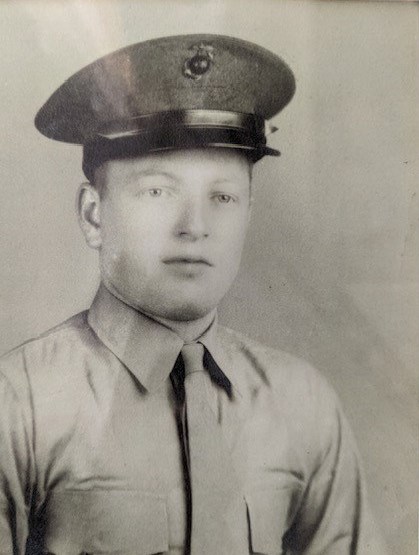
- Unit: Headquarters Squadron
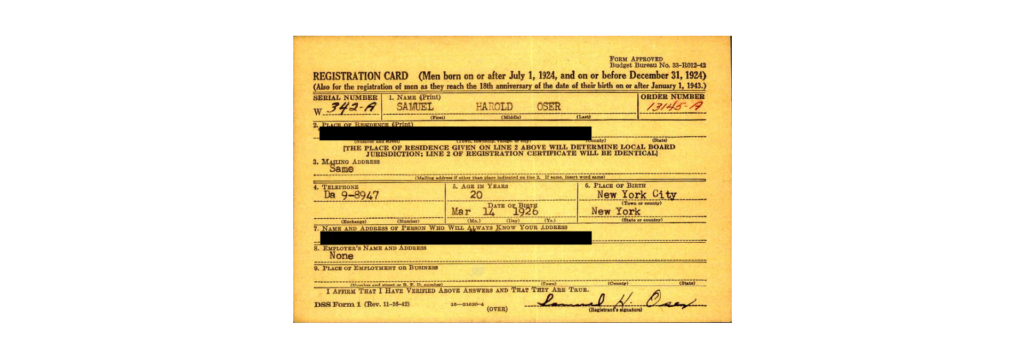
- Date of Birth: March 14, 1926
- Entered the Military: April 6, 1944
- Date of Death: February 10, 2022
- Hometown: New York, New York
- Place of Death: Florida
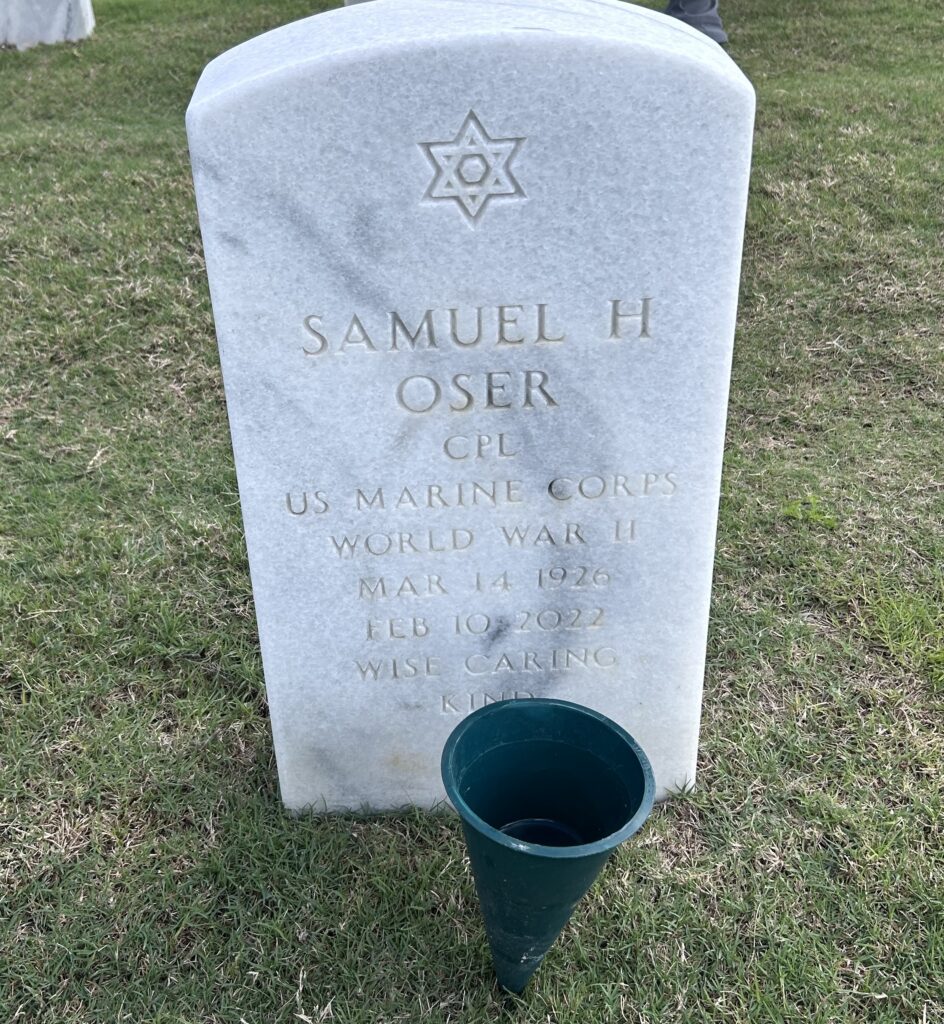
- Cemetery: Section 38, site 1932. South Florida National Cemetery, Lake Worth Beach, Florida
Mentored by Mrs. Mercedes Cortes
Pembroke Pines Charter West Middle School, Pembroke Pines, Florida
2025/2026
Early Life
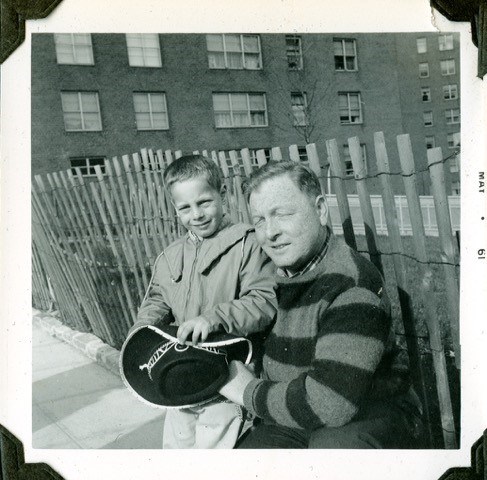
Samuel Oser was born on March 14, 1926, in the Bronx, New York. His parents, Abraham and Esther, emigrated to New York from Russia in 1911. Samuel was the third of four children, three sons and one daughter. Life was not easy, as he grew up during the Great Depression. Oser began working to help provide for his family at only sixteen years old.
As a young man, Oser felt he understood what was going on in Europe. When the Japanese bombed U.S. territory, he felt the Japanese were united with the Nazis. He felt scared because, as a Jewish man, he understood he and all of his family were at risk. During this time, Oser encountered a man in a German neighborhood in New York who openly supported the Nazi Party. The man wore a swastika, which deeply alarmed Oser. This experience caused Oser to fear that Nazi influence could spread to the United States, as it had in Europe.
Oser graduated from high school at the young age of sixteen and a half. He then secured employment at a television manufacturing company, as televisions were an emerging technology in American homes at the time.
The month after he turned eighteen, Oser enlisted in the military, believing this was his way of fighting the Nazis. Oser decided to join the U.S. Marine Corps. He felt that “in fighting the Japanese, he was fighting the Nazis also.”

Homefront
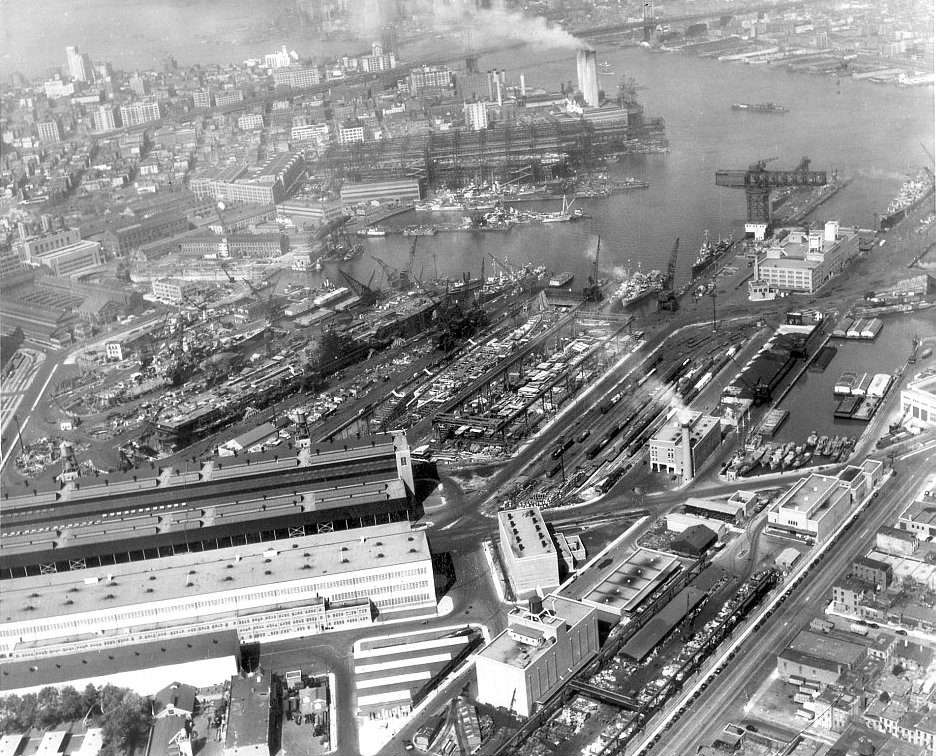
When World War II began, New York City became one of the most important places in America for the war effort. The city’s factories, workers, and citizens collaborated to produce weapons, supplies, and materials soldiers needed.
The Brooklyn Navy Yard was one of the world’s largest shipbuilding centers, producing battleships, aircraft carriers, and landing ships. Factories across the city made military uniforms, rifles, hand grenades, and bombsights that pilots used to aim accurately.
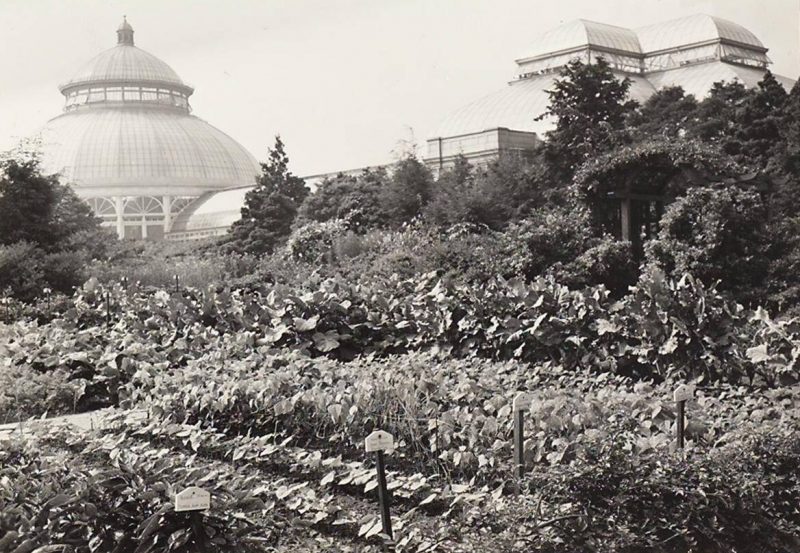
New Yorkers also contributed to the war effort in creative ways, helping address food and other supply shortages. The city encouraged residents to plant Victory Gardens anywhere they could find the space. Residents used ration books to carefully track how much sugar, meat, and gasoline they could buy, and they collected and recycled materials like old rubber, metal, and cooking fat for the war effort.
Military Experience
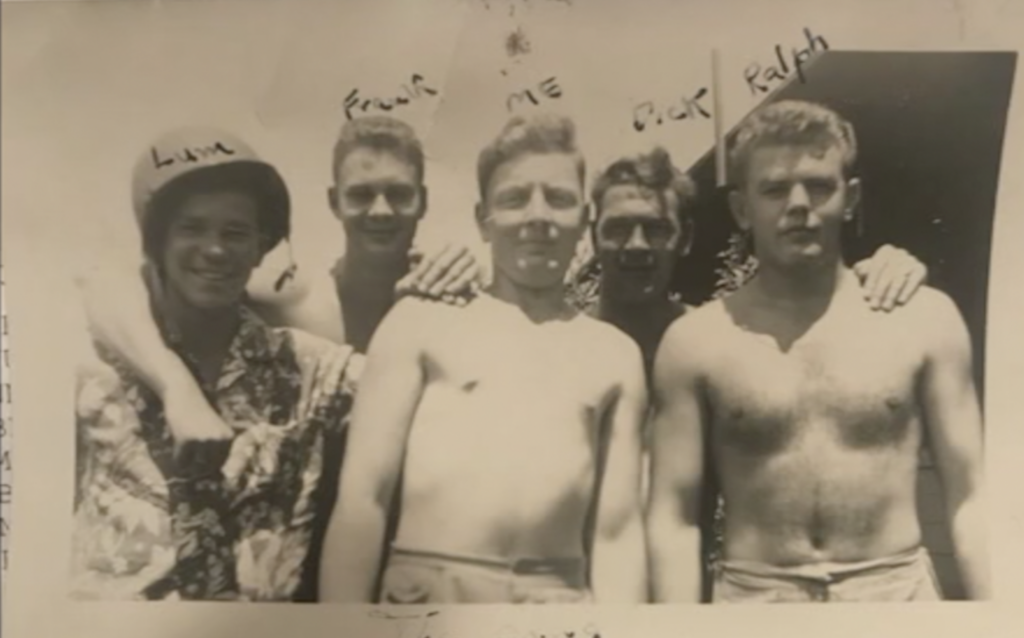
On April 6, 1944, Oser joined the U.S. Marine Corps. He completed boot camp in Parris Island, South Carolina. After boot camp, he was stationed at Cherry Point, North Carolina, as part of the Headquarters Squadron. Then, he trained as a radioman in Sampson, New York, for six months.
Oser was then sent to Oahu, Hawai’i, to serve with Headquarters Squadron, where he served as a radio operator. All of the communication was done in Morse code. He went up in a B-26 to look for submarines and to make sure there were no further attacks on Hawai’i.
Some of the most memorable times Oser had were toward the end of his time. In an oral history interview, he told of a time when a fellow radio operator in his group sent him a message that his plane was coming in from New Zealand. He made arrangements to meet him and go into town. He remembered that that was the last alcoholic drink he ever took because he got so sick.
In 1946, Oser was sent back to San Diego at the end of the year. From there, he was discharged in Chicago and given train tickets to return to New York.
Veteran Experience
Upon returning home in 1946, Oser resumed work at the same company he had left before the war, managing a television set stock room. Around this time, he married Eleanor Oser and began a family. Though he later viewed his decision not to use the G.I. Bill for education or a home as one of his greatest mistakes, his natural ambition drove him forward. After advocating for himself to his manager, he was promoted to sales within a month and eventually climbed the corporate ladder to become the head purchaser for a vending machine manufacturer in Long Island. Even after separating from his wife, Samuel’s integrity remained a defining trait; he was meticulous in caring for his children and ensured his ex-wife “never missed a check.”
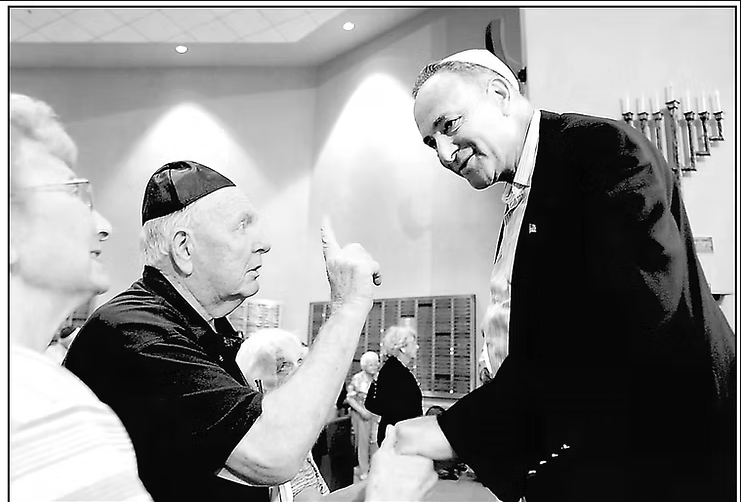
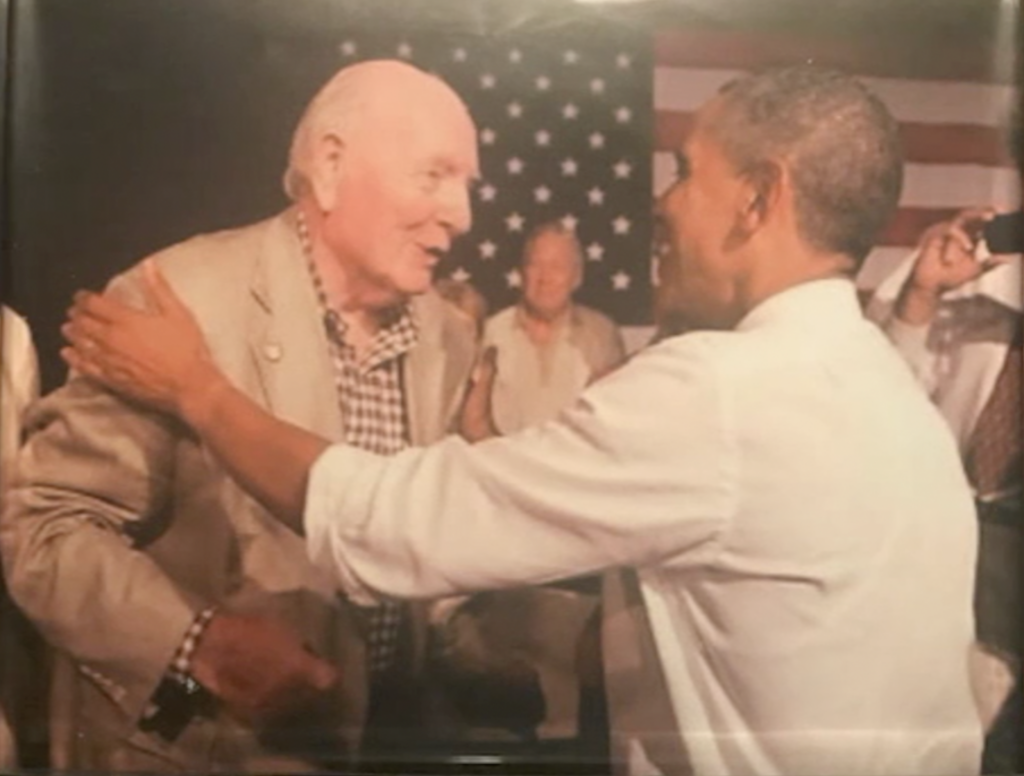
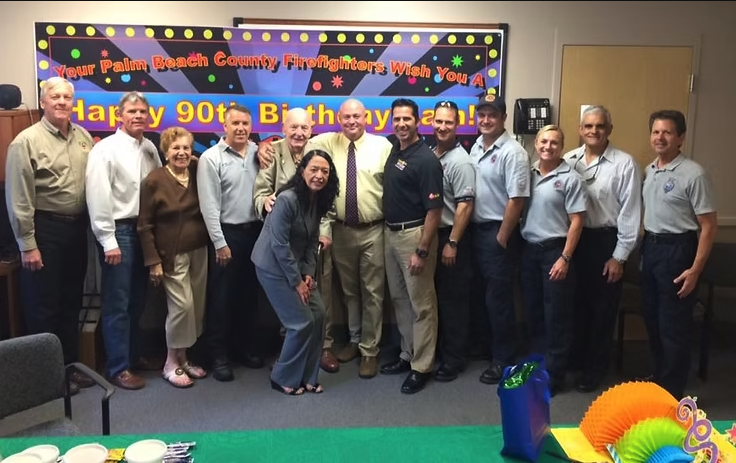
In his later years, Samuel relocated to the Century Village community in West Palm Beach, Florida, where he transitioned from a businessman to a local community leader. He became a prominent figure in the Democratic Party, engaging with high-profile leaders such as Senator Charles Schumer and President Barack Obama, with whom he shared stories of Hawaii. Known as a staple at the local Dunkin’ Donuts, he spent his days in dialogue with neighbors, using his sharp humor and storytelling to bridge gaps between people. His ninetieth birthday was a community celebration attended by local dignitaries, honoring his lifetime of service and status as a neighborhood icon.
Toward the end of his journey, Samuel faced health challenges with the same wit that defined his youth. During a six-month stay at the VA hospital, he joked about proposing to his nurses and gave his son humorous, cost-saving instructions for his burial. He viewed his military service as a final blessing, grateful for the medical care he received at the VA hospital. In his final reflections, he offered a profound piece of wisdom: “Everyone is carrying a hurt that they cannot tell anyone else about.”
Commemoration
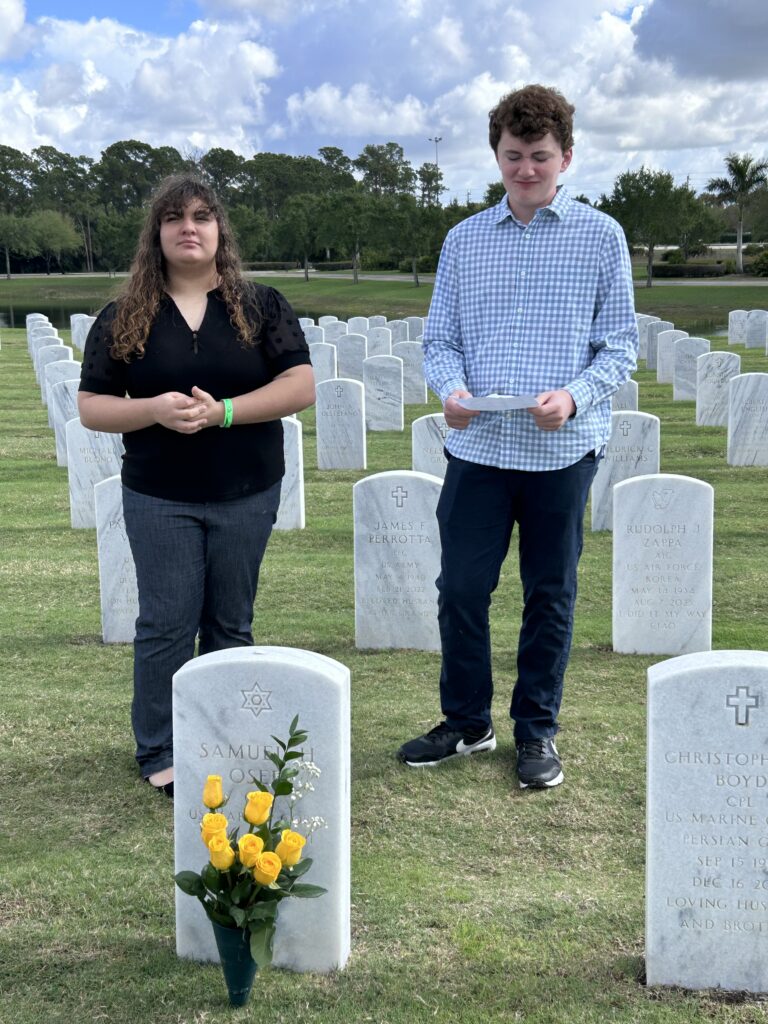
Samuel Oser passed away on February 10, 2022, leaving behind a legacy of empathy, service, and the simple, enduring wish to leave every person he met with a smile. Corporal Oser was laid to rest at the South Florida National Cemetery. Following his passing, numerous political leaders expressed their condolences and recognized the impact of his lifelong civic engagement. As a dedicated Democrat, he was known for his willingness to engage in open dialogue and his genuine respect for others. He actively supported candidates he believed would serve the interests of the people and the nation.
His family remembers him as a man who put others first. He is remembered as a great father, uncle, and overall great human who lived.
Bibliography
Primary Sources
New York. Bronx County. 1940 U.S. Census. Digital Images. https://www.ancestryclassroom.com/.
New York. Bronx County. 1950 U.S. Census. Digital Images. https://www.ancestryclassroom.com/.
New York, New York, U.S., Marriage License Indexes, 1907-2018. Digital Images. https://ancestry.com.
Oser, Samuel. “Interview with Samuel Oser.” Interview by Carlton G. Cartwright, Veterans Memorial & Multicultural Histories. https://www.loc.gov/item/afc2001001.116208/.
Samuel H. Oser. Marriage Licenses Indexes, 1907-2018. Digital Images. https://ancestry.com.
Samuel H. Oser. New York, U.S., Arriving Passenger and Crew Lists (including Castle Garden and Ellis Island), 1820-1957. Digital Images. https://ancestry.com.
Samuel H. Oser. U.S., Public Records Index, 1950-1993, Volume 1. Digital Images. https://ancestry.com.
Samuel H. Oser. U.S. Marine Corps Muster Rolls, 1798-1958. Digital Images. http://ancestry.com.
Samuel H. Oser. World War II Draft Cards Young Men, 1940-1947. Digital Images. https://ancestry.com.
“Schumer Rallies Jews for Obama in Boca, says Palin’s star ‘Fading’.” The Palm Beach Post [West Palm Beach, Florida], September 8, 2008. Newspapers.com (206794056).
Secondary Sources
Capozzi, Joe. “Remembering Sam Oser, the ‘Brad Pitt’ of Local Democratic Politics Who Held Court at Dunkin Donuts.” ByJoeCapozzi (blog), February 11, 2022. Accessed November 1, 2025. https://www.byjoecapozzi.com/post/remembering-sam-oser-the-brad-pitt-of-local-democratic-politics-who-held-court-at-dunkin-donuts.
“NYS Historic Preservation Awards Announced.” New York Almanack. Accessed April 7, 2026. https://www.newyorkalmanack.com/2021/12/nys-historic-preservation-awards-announced/#more-69603.
Ottman, Tod M. “World War 2, 1939-1945.” New York State Military Museum. Accessed November 11, 2025. https://museum.dmna.ny.gov/unit-history/conflict/world-war-2-1939-1945.
“Samuel Harold Oser.” Find a Grave. Accessed December 9, 2025. https://www.findagrave.com/memorial/236947328/samuel_harold-oser.
“Samuel Harold Oser.” Veterans Legacy Memorial. Accessed December 9, 2025. https://www.vlm.cem.va.gov/SAMUELHAROLDOSER/9f8b5c.
“Samuel Harold Oser Obituary.” Dignity Memorial. February 10, 2022. Accessed November 1, 2025. https://www.dignitymemorial.com/obituaries/palm-beach-gardens-fl/samuel-oser-10583336.
Slonevsky, Barbara. “New York City During World War Two.” New York Almanack. January 5, 2024. Accessed November 10, 2025. https://www.newyorkalmanack.com/2024/01/new-york-city-during-world-war-two/.
Springate, Megan E. “Victory Gardens on the World War II Home Front.” National Park Service. Accessed November 12, 2025. https://www.nps.gov/articles/000/victory-gardens-on-the-world-war-ii-home-front.htm.
Swanson, Stephenson. “Victory Gardens Make a Comeback.” New York Botanical Garden. April 15, 2020. Accessed November 11, 2025. https://www.nybg.org/planttalk/victory-gardens-make-a-comeback/
This profile was funded by a grant from the United States Department of Veterans Affairs. The opinions, findings, and conclusions stated herein are those of the author and do not necessarily reflect those of the United States Department of Veterans Affairs.