
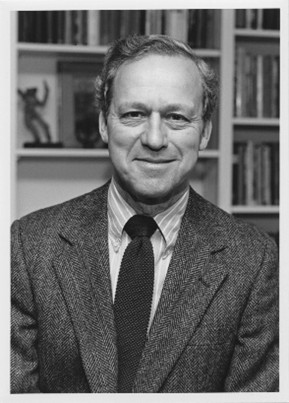
Major Samuel Lynn Hynes, Jr.
- Unit: Marine Torpedo Bombing Squadrons 943 and 232
- Date of Birth: August 29, 1924
- Entered the Military: March 10, 1943
- Date of Death: October 10, 2019
- Hometown: Minneapolis, Minnesota
- Place of Death: Princeton, New Jersey
- Award(s): Distinguished Flying Cross with one gold star and the Air Medal with five gold stars
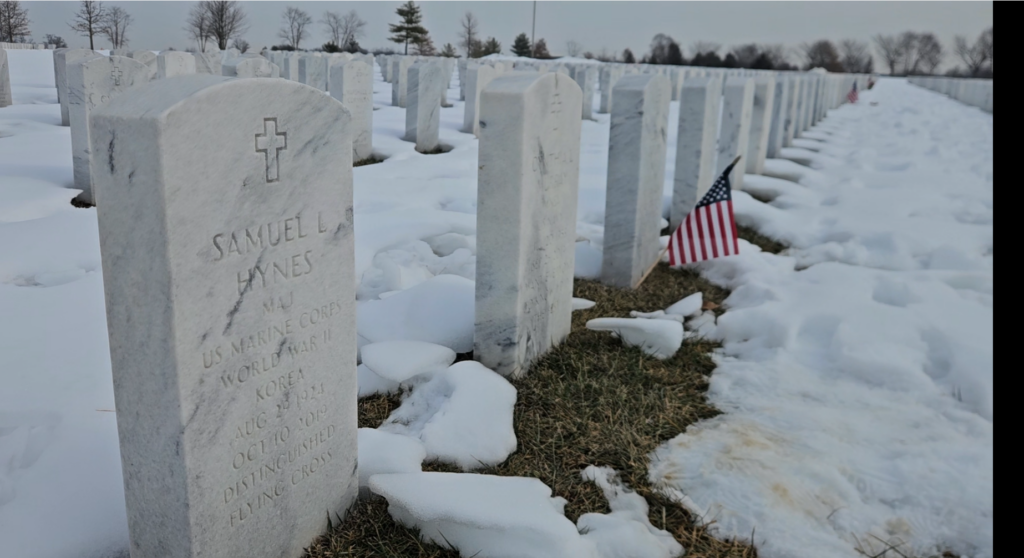
- Cemetery: Section 34, Site 900. Washington Crossing National Cemetery, Newtown, Pennsylvania
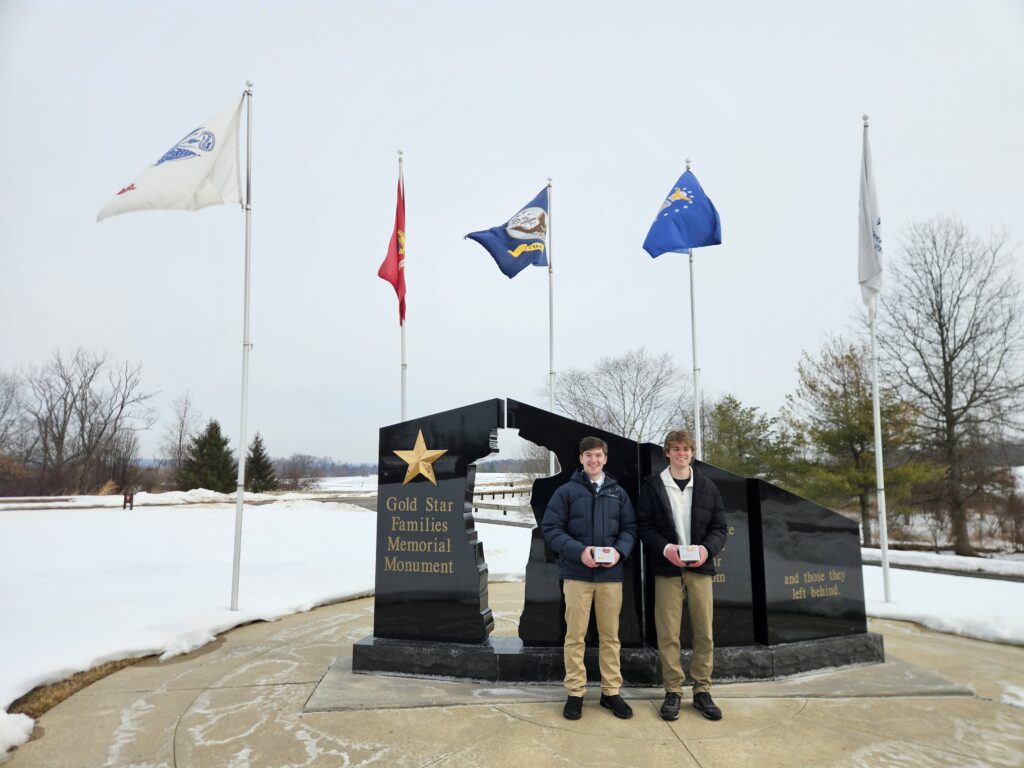
Mentored by Mr. Brian Weaver
Central Bucks West High School, Doylestown, Pennsylvania
2025/2026
Early Life
Samuel Lynn Hynes, Jr. was born on August 29, 1924, in Cook County, Illinois. His father, Samuel Hynes, Sr., moved from Indiana to Illinois after marrying Margaret Isabelle Wait Turner.
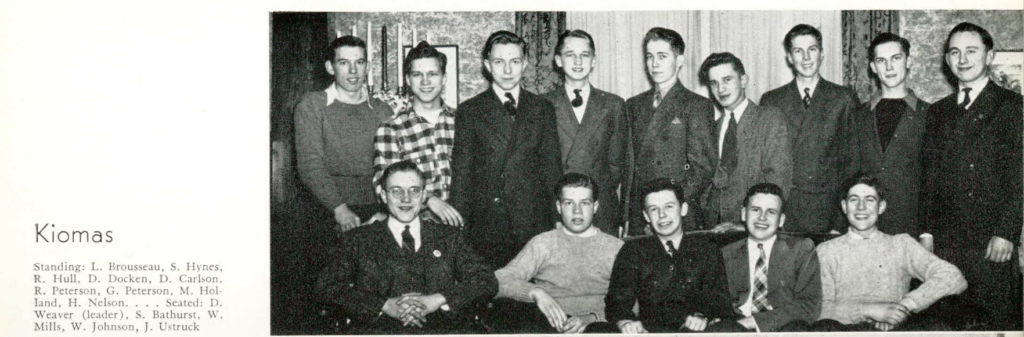
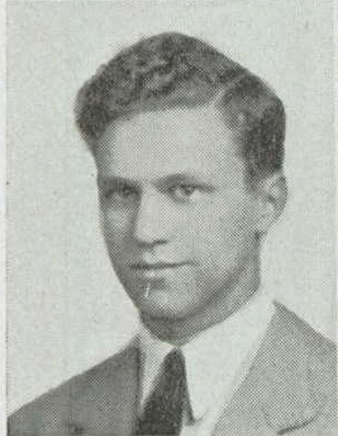
Samuel Hynes attended Central High School in Minneapolis, Minnesota, where he was a member of the Hi-Y Club, as well as editor-in-chief of the school newspaper. After school, he worked at the National Tea Grocery. Hynes graduated in June of 1941.
Hynes had one brother named Charles Turner Hynes, who enlisted in the U.S. Army on March 4, 1942.
After Samuel Hynes graduated from high school, he worked many jobs, including a delivery boy and shipping clerk at the C. F. Anderson Company, a YMCA camp counselor, a messenger for the First National Bank of Minneapolis, and a freight handler for Janney, Semple, and Hill Company. He even briefly worked in Seattle, Washington, as a messenger and performed clerical duties for the U.S. Army Corps of Engineers.
In 1942, he enrolled at the University of Minnesota in Minneapolis, where he majored in English. While at school, he worked part-time for Janney, Semple, Hill, and Company, Zinsmaster Baking Company, and the Dayton Company.

Homefront
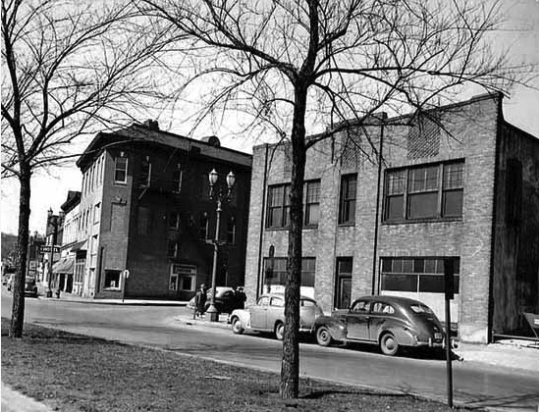
By the 1940s, Minneapolis was a bustling industrial city with a population of nearly 500,000. The Twin Cities were major manufacturing hubs during the Second World War, producing vast quantities of war materiel.
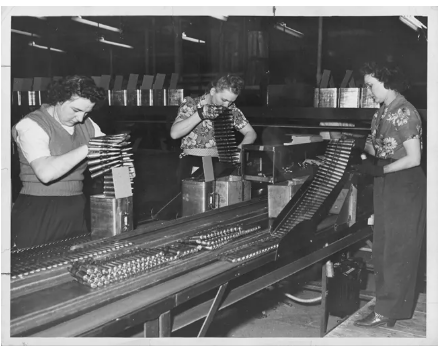
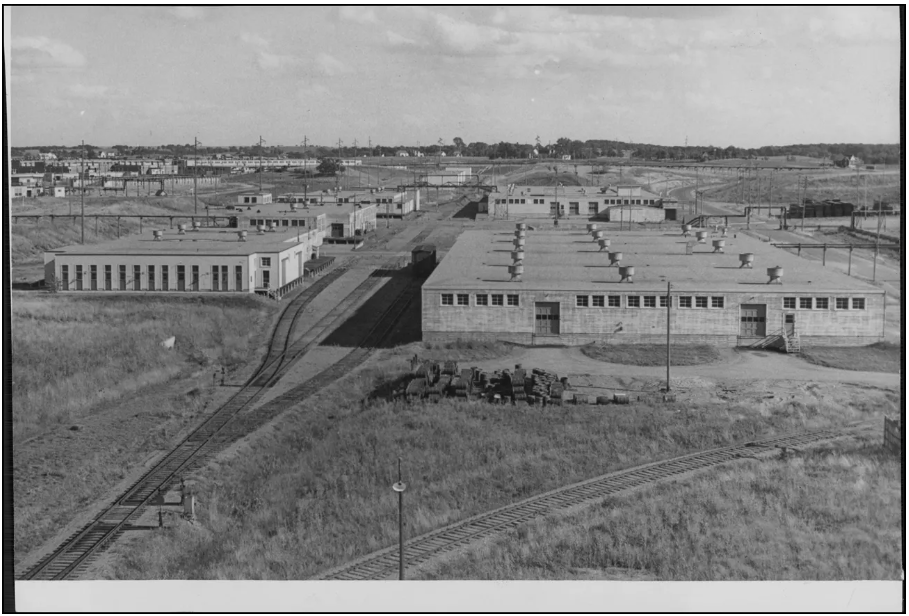
The most significant of these operations was the Twin Cities Ordnance Plant, a government-owned, contractor-operated facility located in New Brighton, about ten miles from Minneapolis. The plant ran twenty-four hours a day at its peak, employing approximately 26,000 workers, more than half of them women, known as Women Ordnance Workers, or WOWs. Between 1942 and 1945, they produced more than four billion rounds of .30 and .50-caliber machine-gun ammunition. The facility was later renamed the Twin Cities Arsenal in 1946 and the Twin Cities Army Ammunition Plant in 1963.
Fort Snelling, just south of Minneapolis, was home to the Military Intelligence Service Language School, which trained Japanese American soldiers as interpreters and translators for the Pacific theater—one of the Twin Cities’ most significant contributions to the war effort.
The St. Paul Resettlement Committee was formed in October 1942 to help provide homes, work, and social services to Japanese Americans who were removed from the West Coast. Supported by local community members and churches, the committee helped coordinate housing and employment for those leaving the incarceration camps. Future Supreme Court Chief Justice Warren E. Burger served as a legal counsel, assisting with the establishment of a resettlement hostel in 1945.
Military Experience
Training with the U.S. Naval Reserve
Samuel Hynes enlisted in the U.S. Naval Reserve in November 1942. In December, he entered the Naval Aviation Cadet program. In March 1943, he left from a train station in Minneapolis and headed south. Hynes got off the train in Denton, Texas, and got on a bus to North Texas State Teachers College, where the campus had been converted into a makeshift boot camp. This is where Samuel Hynes’s military training began.
All aviation training was completed under the Navy system. At the end of training, cadets could take their commission as either a Navy ensign or a Marine Corps second lieutenant. Hynes chose the U.S. Marine Corps Reserve. He was simultaneously appointed a Naval aviator (Heavier-than-Air) and assigned to duty involving actual flying in and control of aircraft.
Advanced Training
Following his commissioning, Hynes underwent advanced training in Florida and California, qualifying on the Grumman TBM Avenger torpedo bomber. He trained with Marine Scout Bombing Squadron 943 at MCAS Santa Barbara, California, and continued training with the same unit after it was redesignated Marine Torpedo Bombing Squadron 943 at MCAS El Toro, Santa Ana, California. During this time, Hynes married Elizabeth Igleheart, the sister of a fellow pilot.
The Pacific Theater
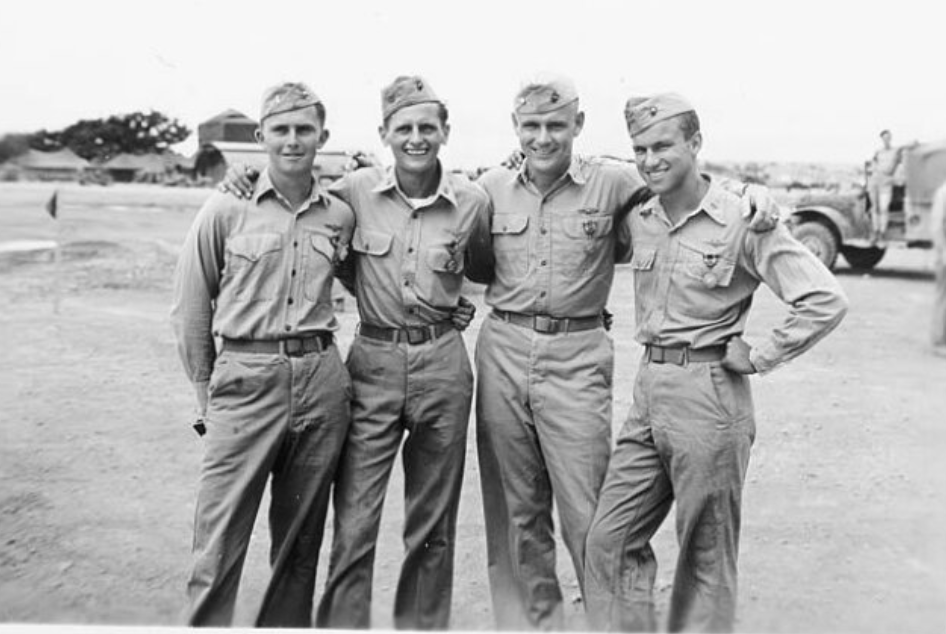
In February 1945, Hynes sailed from San Diego to the Pacific theater, via Pearl Harbor, then through the Marshall Islands, with stops at Majuro, Kwajalein, and Eniwetok. From there, he went on to Guam, and finally to Falalop Island, Ulithi Atoll, in the Western Carolines. Here, in early March 1945, he joined Marine Torpedo Bomber Squadron 232, part of Marine Aircraft Group 45, 4th Marine Aircraft Wing. In April, the squadron moved north to Okinawa Shima, Ryukyu Islands, where he flew the majority of his combat missions. By the end of the war, he flew over a hundred combat missions.
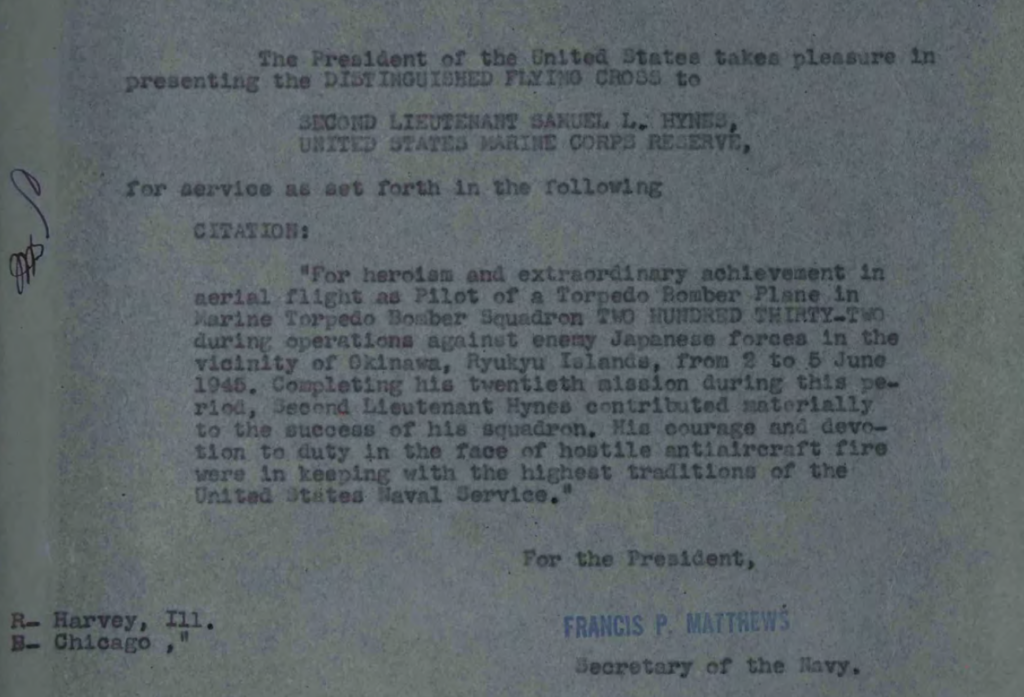
For his service, Hynes was awarded the Distinguished Flying Cross with one gold star and the Air Medal with five gold stars.
U.S. Marine Corps Reserve
Hynes separated from active duty on January 19, 1946, at Naval Air Technical Training Center, Pensacola, Florida. He was a second lieutenant. He completed his bachelor’s degree at the University of Minnesota in 1947 and later earned his master’s degree at Columbia. From there, he joined the English faculty at Swarthmore College in Pennsylvania. While there, he remained a member of the U.S. Marine Corps Reserve in Philadelphia, Pennsylvania.
Korean War Service
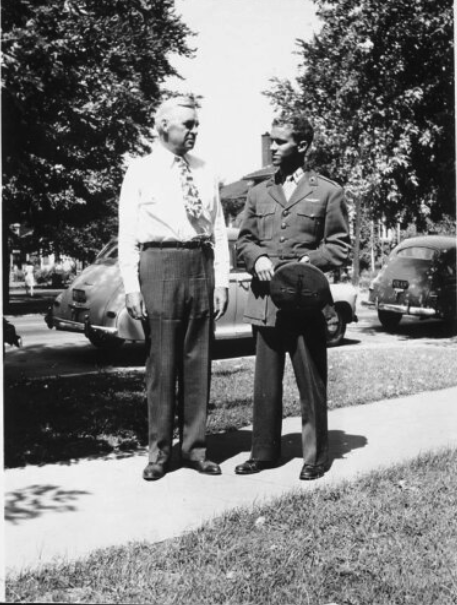
During the Korean War, Hynes was recalled to active duty as a captain. He was assigned to Marine Corps Air Station at Cherry Point, North Carolina, where he trained new ROTC lieutenants on how to fly. During this period, he also worked as an air control officer.
Hynes did not resign from the Marine Corps Reserve until November 30, 1956, at the rank of major.
Veteran Experience
After the war, Hynes and his wife, Elizabeth, had two daughters, Miranda and Joanna. They also had three grandchildren: Alex, Sam, and Lucy, and three great-grandchildren: Alastair, Aurelia, and Elias.
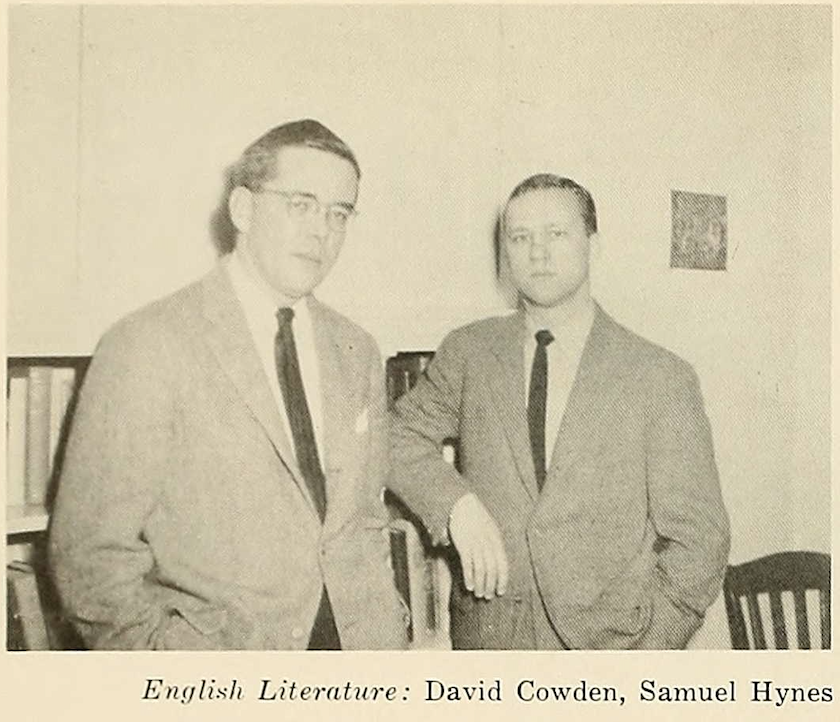
Hynes continued his career in higher education. He earned his Ph.D. from Columbia University in 1956. He taught at Swarthmore College and Northwestern University before becoming a professor at Princeton University in 1976. Hynes taught eighteenth-century literature, modern British poetry, and war literature until 1990.
Hynes was a beloved and respected member of the Princeton community. He could be seen every day riding his bike from his home to the University library or his office. He was awarded the Howard T. Behrman Award for Distinguished Achievement in the Humanities in 1990 and, in 2004, received the Arts and Letters award for literature from the American Academy of Arts and Letters. Hynes also held the title of “Woodrow Wilson Professor of Literature, Emeritus.”
Hynes also had an impact on the literary community. In addition to being a professor at one of the top institutions in America, Hynes was a key contributor in many literary circles on both sides of the Atlantic. He was a Fellow of the Royal Society of Literature and a contributor to The London Review of Books.
Hynes had a significant impact not only on his community but also on his nation, as he became a highly respected scholar and literary critic of modern British literature and an influential voice on the human experience of war. Hynes was a prolific author and prominent critic.
Hynes wrote a memoir, Flights of Passage, about his time as a pilot, and a study of memoirs, diaries, and other war writing, The Soldiers’ Tale: Bearing Witness to Modern War, which earned the Robert F. Kennedy Book Award. He wrote frequently for The New Yorker, The New York Times, The Times Literary Supplement, The London Review of Books, The Sunday Times, and The Princeton Alumni Weekly.
Hynes was also a central commentator in the Ken Burns documentary, The War. He also appeared in the Ken Burns documentary, The Vietnam War, where he discussed his experiences at Northwestern University during its anti-Vietnam War protests.
Commemoration
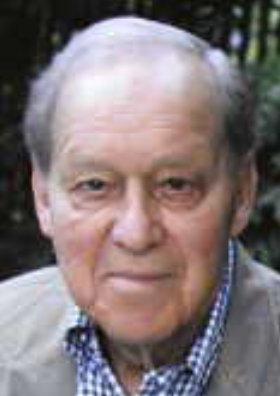
Hynes passed away on October 10, 2019, in Princeton, New Jersey. He is buried at Washington Crossing National Cemetery, Washington Crossing, Pennsylvania. Samuel Hynes’s legacy endures through his writing, teaching, and the honest way he helped later generations understand the experience of war.
Bibliography
Primary Sources
Charles T. Hynes. U.S., World War II Army Enlistment Records, 1938-1947. Digital Images. https://ancestryclassroom.com.
Doe, John. Sam Hynes Period 8 2014. Video [34:05]. April 26, 2014. https://www.youtube.com/watch?v=Yv4_j0jJJjw.
Hynes, Samuel. Flights of Passage: Reflections of a World War II Aviator. Naval Institute Press, 1988.
Hynes, Samuel. The Growing Seasons: American Boyhood Before the War. Viking Adult, 2003.
Hynes, Samuel. “Verdun and Back: A Pilot’s Log.” Princeton Alumni Weekly, October 27, 2018. Accessed December 11, 2025. https://paw.princeton.edu/article/verdun-and-back-pilots-log.
International Institute, St. Paul. Photograph. St. Paul Resettlement Committee Collection, Minnesota Historical Society. https://www.mnhs.org/mnopedia/search/index/group/st-paul-resettlement-committee.
Minnesota. Ramsey County. 1930 U.S. Census. Digital Images. https://ancestryclassroom.com.com
Minnesota. St. Louis County. 1940 U. S. Census. Digital Images. https://ancestryclassroom.com.
Samuel Hynes. Cook County, Illinois Birth Index, 1916-1935. Digital Images. https://ancestryclassroom.com.
Samuel Hynes, U.S., School Yearbooks, 1900-2016. Digital Images. https://ancestryclassroom.com.
Samuel L. Hynes. Alabama, U.S., County Marriage Records, 1805-1967. Digital Images. https://ancestryclassroom.com.
Samuel Lynn Hynes, Official Military Personnel File, Department of the Navy, National Archives and Records Administration – St. Louis.
Samuel Lynn Hynes, Report of Separation, Department of the Navy, National Archives and Records Administration – St. Louis.
Samuel Lynn Hynes. U.S., World War II Navy Muster Rolls, 1938-1949. Digital Images. https://ancestryclassroom.com.
“We are Determined to Pay the Price- To Preserve our Way of Life.” The Minneapolis Star [Minneapolis, Minnesota], January 7, 1942. Newspapers.com (178710344).
Wood, Dave. “Sam Hynes: From Our Pastures and Piloting to Publishing and PBS.” Minnesota Post [Minneapolis, Minnesota], August 28, 2008. https://www.minnpost.com/politics-policy/2008/01/sam-hynes-our-pastures-and-piloting-publishing-and-pbs/.
Secondary Sources
“Battle of Okinawa.” Encyclopædia Britannica, Inc. Accessed January 14, 2026. https://www.britannica.com/event/Battle-of-Okinawa.
Beer, Tom. “Neighborhood Resistance to I-94, 1953–1965.” Minnesota Historical Society. September 16, 2025. www.mnhs.org/mnopedia/search/index/event/neighborhood-resistance-i-94-1953-1965.
“Bombsight, Norden, M-9.” Air and Space Museum. Accessed November 11, 2025. https://airandspace.si.edu/collection-objects/bombsight-norden-m-9/nasm_A19601945000.
Brown, Gretcha. “Riot guns and revolution: How a bloody 1934 workers’ strike in Minneapolis catalyzed the nation.” Minnesota Public Radio News, August 5, 2025. www.mprnews.org/story/2025/07/22/how-a-1934-minneapolis-workers-strike-shaped-history.
Burns, Ken. “The War.” Accessed October 14, 2025. https://www.pbs.org/kenburns/the-war/#watch.
Ellis, William. “One Minnesota contribution to the war effort in World War II: 22 navy ships built in Savage.” MinnPost. January 15, 2018. Accessed November 1, 2025. www.minnpost.com/mnopedia/2018/01/one-minnesota-contribution-war-effort-world-war-ii-22-navy-ships-built-savage/.
“Gold Medal Flour’s History Of Quality.” General Mills. Accessed Nov. 11, 2025. www.goldmedalflour.com/our-story.
“(H)our History Lesson: The Dowling Victory Garden.” National Park Service. August 3, 2023. Accessed November 1, 2025. www.nps.gov/articles/000/-h-our-history-lesson-the-dowling-victory-garden.htm.
“Hynes Family Tree.” https://ancestryclassroom.com.
Johnston, Louis D. “Exchange, Industry, and Adaptation: Economics in Minnesota.” Minnesota Historical Society. Accessed November 1, 2025. www.mnhs.org/mnopedia/search/index/exchange-industry-and-adaptation-economics-minnesota.
Mazan, Joe. “So Minnesota: Top secret World War II project happened in a Northeast Minneapolis building.” KSTP News. January 29, 2021. kstp.com/kstp-news/top-news/so-minnesota-top-secret-world-war-ii-project-happened-in-northeast-minneapolis-building/.
Meyers, Jeffrey. “Samuel Hynes.” The Royal Society of Literature. Accessed October 12, 2025. https://rsliterature.org/fellows/samuel-hynes/.
“Minnesota Population, 1910-1920.” Minnesota IT Services Geophysical Information Office. Accessed November 11, 2025.https://www.mngeo.state.mn.us/maps/growth/.
“Person: Samuel Hynes.” Robert and Ethel Kennedy Center for Human Rights. Accessed December 11, 2025. https://rfkhumanrights.org/person/samuel-hynes/.
Roberts, Sam. “The Professor Wrote Books That Taught Lessons of War.” Honolulu Star Advertiser [Honolulu, Hawaii], Oct. 20, 2019. Newspapers.com (609991825).
Roberts, Sam. “Samuel Hynes, Professor Whose Books Taught Lessons of War, Dies at 95.” The New York Times. [New York, New York], October 18, 2019. https://www.nytimes.com/2019/10/18/books/samuel-hynes-dead.html.
Ryerson, Jane. “Twin Cities Ordnance Plant: Integrating the WWII Workforce.” National Park Service. October 12, 2022. Accessed November 11, 2025. www.nps.gov/articles/000/twin-cities-ordnance-plant-integrating-the-wwii-workforce.htm.
“Samuel Hynes, ‘highly respected scholar-critic’ of British literature and World War II Veteran, dies at 95.” Princeton University. Accessed November 1, 2025. https://www.princeton.edu/news/2019/10/21/samuel-hynes-highly-respected-scholar-critic-british-literature-and-world-war-ii.
“Samuel Hynes.” The London Review of Books. Last Modified 2025. Accessed December 7, 2025. https://www.lrb.co.uk/contributors/samuel-hynes.
“Samuel Hynes Obituary.” The Times UK [London, England], November 11, 2019. https://www.thetimes.com/uk/article/samuel-hynes-obituary-0fbhmdt3z.
Spring, Kelly. “On the Home Front During World War II.” National Women’s History Museum. Accessed November 1, 2025. www.womenshistory.org/resources/general/home-front.
“U.S. Censorship and War Propaganda During World War II.” EBSCO Knowledge Advantage Research Starters. Accessed November 11, 2025. www.ebsco.com/research-starters/military-history-and-science/us-censorship-and-war-propaganda-during-world-war-ii.
“Women in World War II.” National Park Service. February, 14 2025. Accessed November 11, 2025.www.nps.gov/articles/000/women-in-world-war-ii.htm.
“World War II (1941-1945).” Minnesota Historical Society. Accessed Nov. 12, 2025. www.mnhs.org/fortsnelling/learn/military-history/world-war-ii.
This profile was funded by a grant from the United States Department of Veterans Affairs. The opinions, findings, and conclusions stated herein are those of the author and do not necessarily reflect those of the United States Department of Veterans Affairs.