
Private First Class Vaughn Brown Russell
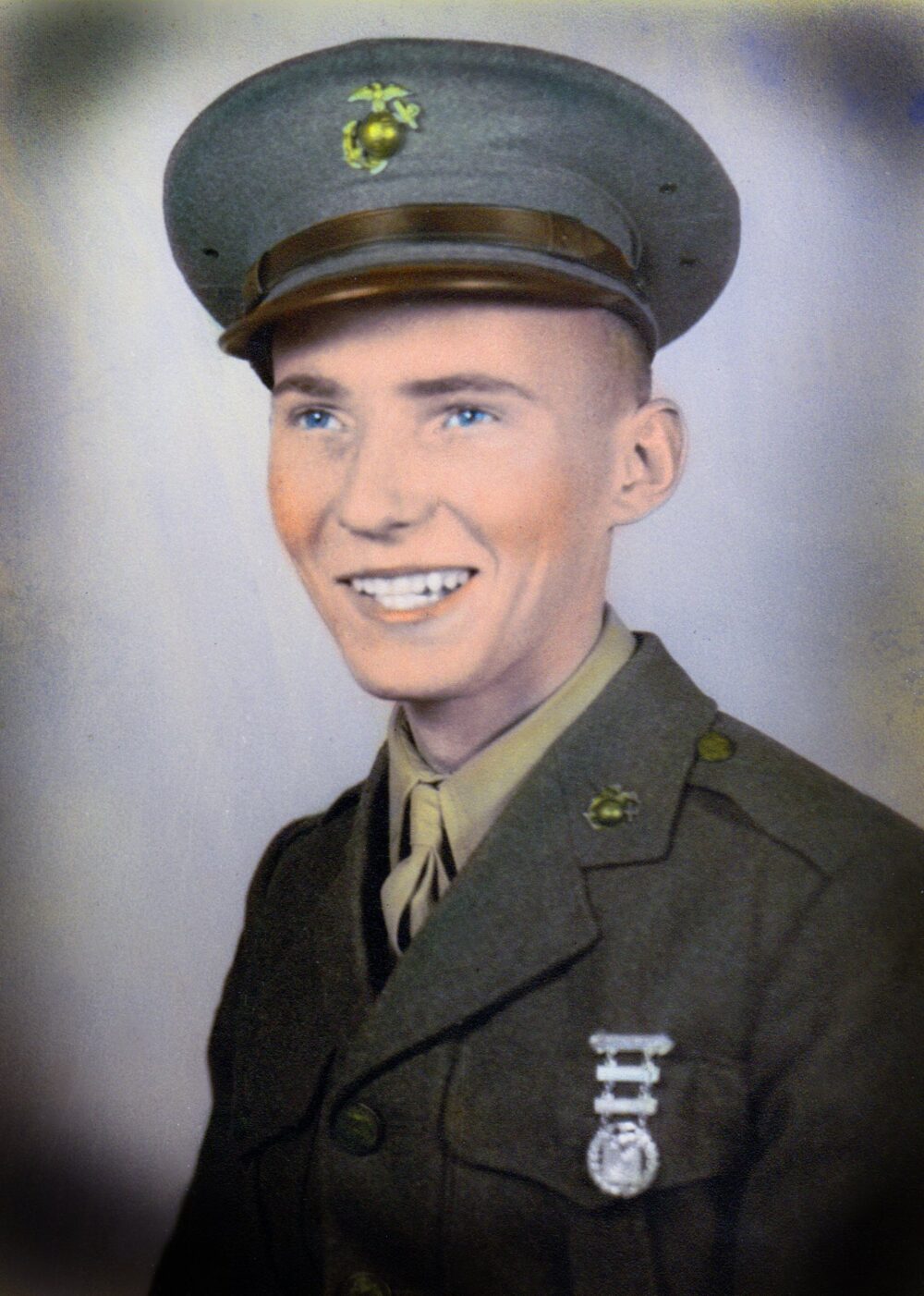
- Unit: 3rd Marine Division, 9th Marines, 3rd Battalion, Company I
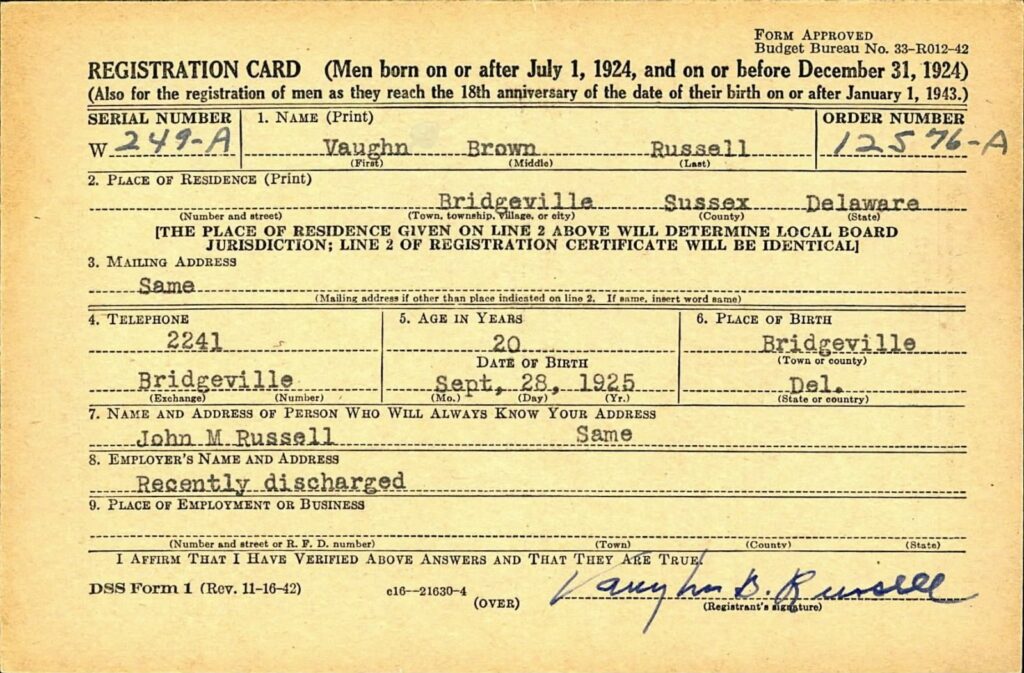
- Date of Birth: September 28, 1925
- Entered the Military: February 11, 1943
- Date of Death: March 30, 2016
- Hometown: Bridgeville, Delaware
- Place of Death: Delaware
- Award(s): Presidential Unit Citation, American Theater Medal, and the Asiatic-Pacific Campaign Medal
- Cemetery: Section H, Grave P, Site 17. Delaware Veterans Memorial Cemetery, Millsboro, Delaware
Mentored by Mrs. Jennifer Harris
Salisbury Christian School, Salisbury, Maryland
2025/2026
Early Life
Vaughn Brown Russell was born in Bridgeville, Delaware, on September 28, 1925, to John Milton Russell, a truckman for an Auto Express company, and Ruth Brown Russell, a telephone operator for Bell Telephone Company. He had an older sister, Marilee, and two younger brothers, James and John.
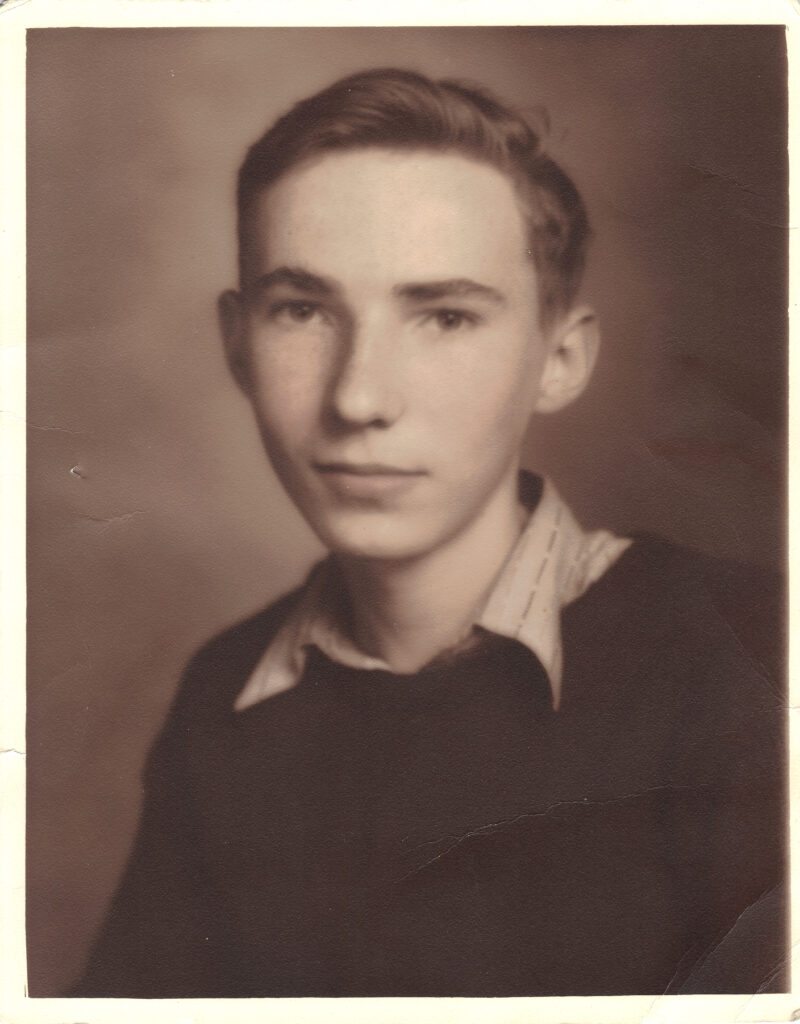
Vaughn Russell attended Bridgeville High School up to eleventh grade before enlisting in the United States Marine Corps. His father gave him permission to enlist at 17.

Homefront
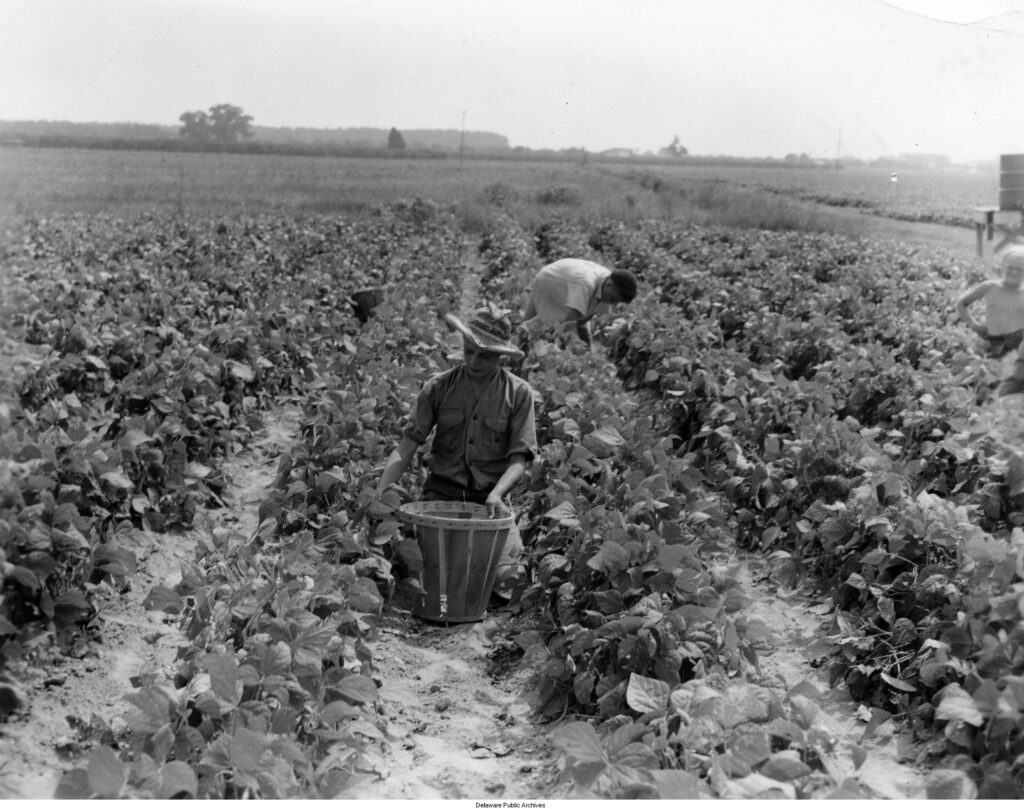
Bridgeville is a small agricultural town in Sussex County, Delaware. In 1940, the population was 1,180 residents.
The War Effort
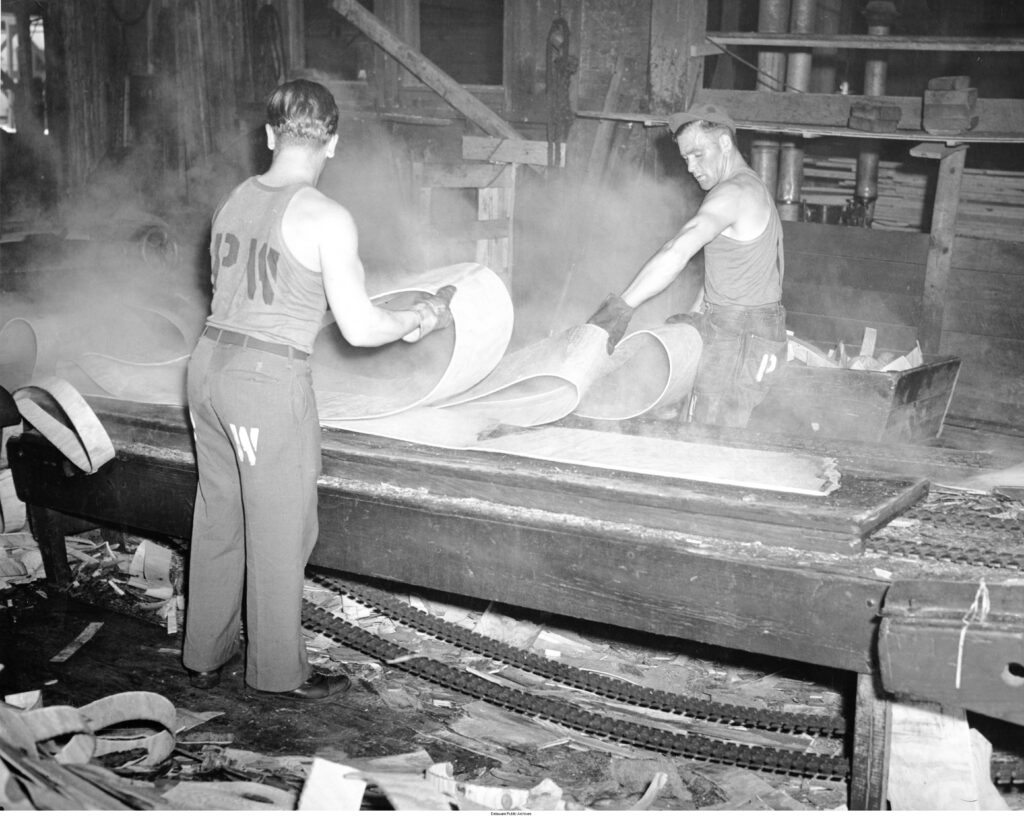
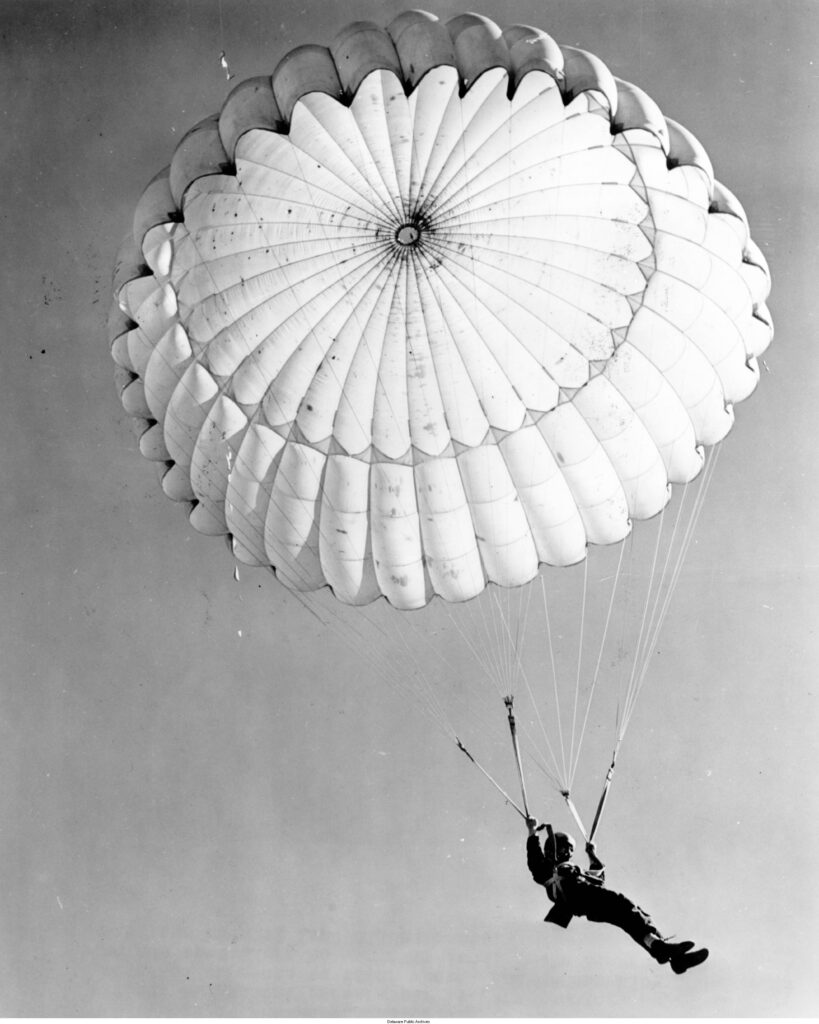
In 1938, DuPont began building a nylon plant in the neighboring town of Seaford. Over the next year, hundreds of people came to the area in search of work. The plant opened in 1939, making Seaford “the Nylon Capital of the World”. During World War II, nylon from the plant was used to make parachutes.
Other manufacturing throughout neighboring towns in Delmarva (the name for the large peninsula on the East Coast of the United States shared by Delaware, Maryland, and Virginia) also began production for the war effort. These industries included canneries, chicken factories, a munitions plant, and a fireworks company. Residents of the area began boarding workers and sometimes the workers’ children in their homes.
People in the community volunteered in many capacities. One opportunity a local mentioned was volunteering to spot airplanes while she was in high school. In 1941, radar was extremely limited, so the best way to know if enemy planes were coming was to watch the coast. As a result, the Aircraft Warning Service (AWS) was formed.
AWS was a group of mostly women volunteers who watched the skies at observation posts. By 1941, there were seventy observation posts and 1,400 volunteers watching for planes in Delaware. When an enemy plane was spotted, the volunteers would immediately telephone army filter stations in Philadelphia and Baltimore to report the number and types of planes, as well as their direction of flight.
Other ways that people in the area contributed to the war effort included collecting scrap metal, purchasing war bonds, and raising money for and volunteering at the Red Cross. Local newspapers ran ads about the opportunities, encouraging the community to participate.
Prisoner of War Camps
There were several Prisoner of War (POW) camps on Delmarva, and one of them was in Bridgeville. These camps housed German and Italian prisoners. The POWs were expected to work, but they were treated well. They worked in canneries, on farms, in poultry processing plants, in lumber mills, and in farm fields. They also did local repairs and heavy labor.
POWs helped construct the airport in Georgetown in 1943. It was used as a training facility for the Naval Air Station in Wildwood, New Jersey.
Fort Miles
Fort Miles in Lewes helped defend the coast from enemy ships and submarines by controlling access to Delaware Bay. Fort Miles was an impressive United States Army installation at the time. There were 2,500 soldiers and civilians who lived at Fort Miles, making it larger than almost every city in Delmarva. There were numerous buildings both above and below ground.
Fort Miles had two 16-inch guns in Battery Smith that could fire more than 20 miles. These guns were not effective against submarines, though, so the Mine Command was created in 1942 to place mines in Delaware Bay. This was necessary because German U-boats were near the coast and disrupting shipping.
Soldiers from Fort Miles also helped keep agriculture alive throughout Sussex County by working on farms when needed.
Military Experience
Enlisting the United States Marines
On his seventeenth birthday, September 28, 1942, Vaughn Russell skipped school and went to Philadelphia to enlist in the United States Marine Corps. When his mother found out, she refused to sign the papers allowing him to enlist before his eighteenth birthday.
Instead of going to school for the next month, Vaughn worked with someone he knew, taking 80-foot-long piling to the Baltimore shipyard during school hours. One day, he was caught by his father after getting lost in Baltimore and arriving home late. Vaughn knew he could not lie to his father, so he told him the truth. His father agreed to sign for him if Vaughn would agree to finish his education when he got back.
They went to Philadelphia together, and Vaughn remembers his father having a long talk with the doctor. He found out years later that the doctor was an acquaintance of his father. The doctor told his father that he could keep Vaughn from going overseas until he was eighteen. On February 11, 1943, Vaughn finally enlisted in the U.S. Marine Corps. He underwent basic and weapons training at Parris Island, South Carolina, and Camp Lejeune, North Carolina.
Vaughn tried to volunteer for everything he could to serve his country overseas, but only found out later why he was never chosen. While he was waiting to be sent overseas, one of the jobs Vaughn was assigned to was the honor guard for President Roosevelt, James Cagney, and the Duke and Duchess of Windsor. During this period, he was promoted to private first class with the military specialty of automatic rifleman.
Vaughn Russell’s colonel wanted to make sure the men under his command were highly trained. The colonel’s son was recently killed in action after serving for only 90 days. He was adamant about his men being prepared for whatever they would face. The training included learning the “fine points” of the Marine Corps. There were classes like map reading, which Vaughn did not enjoy, according to his interview for the Veterans History Project.
En Route to the Pacific
When Vaughn Russell was eighteen-and-a-half, he was transferred from Camp Lejeune to the Pacific. His journey began in a freight car that traveled through Arizona en route to Camp Pendleton, California. While they were in Arizona, they ran out of food except for butter. Another Marine bet Vaughn five dollars to eat a pound of butter. He said that five dollars was a lot of money, so he did it.
At Camp Pendleton, California, the men were assigned to the casual company while they waited to go overseas. During his last weekend there, Vaughn and another man snuck out to see Kay Kyser. They were caught and confined to the barracks. Even then, he was playing games and trying to win money. The men were finally let out to head to town to enjoy the last few hours in the States before they shipped out.
Vaughn was assigned to Company I, 3rd Battalion, 9th Marine Regiment, 3rd Marine Division. En route to Guam, he volunteered to man the secondary batteries on the ship because someone told him he could eat first and skip the line. He did not know how to do that specific job, but he learned, and he did not have to wait in line to eat.
The ship went through a hurricane between San Diego and Hawaii. Most of the men got seasick, and Vaughn eventually did too, but he claimed he was among the last.
In the Pacific
The ship first went to Aguigan, and from there the men were divided between Guam and Saipan. Vaughn Russell was sent to Guam. He was told that the jungles there were the thickest in the world. They went out on patrols through the dense jungle, often encountering Japanese soldiers who had been separated from their units or hiding in caves.
His unit was training for Iwo Jima, even though they thought they would be sent to Rota at that time. Many of the men had already been there for thirty-three months at this time. Those men were expecting to go home soon because of victories in Europe.
Vaughn often got himself in trouble with his smart remarks. On the day his unit was sent to the ship bound for Iwo Jima, he had to stay behind to clean up the camp. He had to move quickly to catch up with the rest of the unit on the other side of the island before dark because, as he said, “the Japs owned the darkness.”
While on the ship on the way to Iwo Jima, Vaughn overheard some radio reports saying the troops on Iwo Jima were begging for fire support. He mentioned that he noticed planes constantly diving over the island and the black smoke he could see. That day, Vaughn spoke to a man in his unit who asked Vaughn to take a note home to his fiancée because he didn’t think he would make it. Vaughn refused, insisting that the man would survive.
They rode on a landing boat on rough seas to get to the island. Once there, they were told to dig foxholes where they were supposed to be on watch for the night, fifteen minutes on, fifteen minutes off. Vaughn was so tired that he slept through his first night there in the foxhole with shells flying around him. He woke up in the morning to the man in the foxhole next to him throwing stones at him to wake him up.
That morning, they went up to the line, and he watched the man who had asked him to take a note to his fiancée be killed by a sniper. He said that was something that he always had to live with.
There was firing back and forth. In his interview, Vaughn said, “So we took cover and it — it would — when they got quiet, it would get eerie quiet. So much is made of war and movies and all but they don’t get in some of the things that actually happen like the smell of war, the smell of dying and burning flesh.”
He spoke of seeing a tank explode right in front of him and of the gruesome casualties in his unit. A bullet grazed his body as he dove for cover. He mentioned diving into foxholes. He said he strangely felt no emotion as the ear of a man near him flew off and hit him in the face.
He spoke about helping men carry a stretcher and applying a tourniquet to a man’s leg. He saw a man from his unit jump on a mine and die. He said that night was the worst time because he could hear the cries of the people who were injured, but he couldn’t do anything to help them. Vaughn’s unit was hit hard. Out of the approximately 250 men who went to Iwo Jima in that unit, only twenty-seven made it out alive.
Going Home
Then Vaughn got hurt, possibly by a grenade, but he couldn’t remember the details. In an interview, he said, “The only thing, I get vague on things after this, because something big hit and I was just about ear level because they had this mound of dirt in the airfield and I’m walking along there and the last thing that I remember is I wake up in a hospital, in a tent.” He doesn’t remember the details of what happened after that. He knew he had been sent back to Guam and that the casualties from Okinawa had been sent there as well.
Vaughn was sent back to Pearl Harbor because both of his eardrums were ruptured. He was given ninety days’ leave and returned to the East Coast to spend time at home. He gave his mom his papers so he wouldn’t lose them while he was on leave. When the time came to report back for duty, he met a friend on the way who asked him where his papers were. He realized he didn’t have them. Instead of reporting on time without his papers or going back to Delaware for them, he decided to go to New York to have a good time with his friend and to face the inevitable consequences later.
He was expecting the war to end, but when it didn’t, he decided to take responsibility even if it was a little late. He went to Philadelphia without his papers to check in with his corporal. The corporal told Vaughn that he was a “prisoner at large”. The war ended that night. Vaughn’s corporal told him that because he was at Iwo Jima, he could choose what he wanted to do next. He decided to finish high school and pursue further education.
Vaughn Russell was honorably discharged on October 26, 1945.
The Reserves
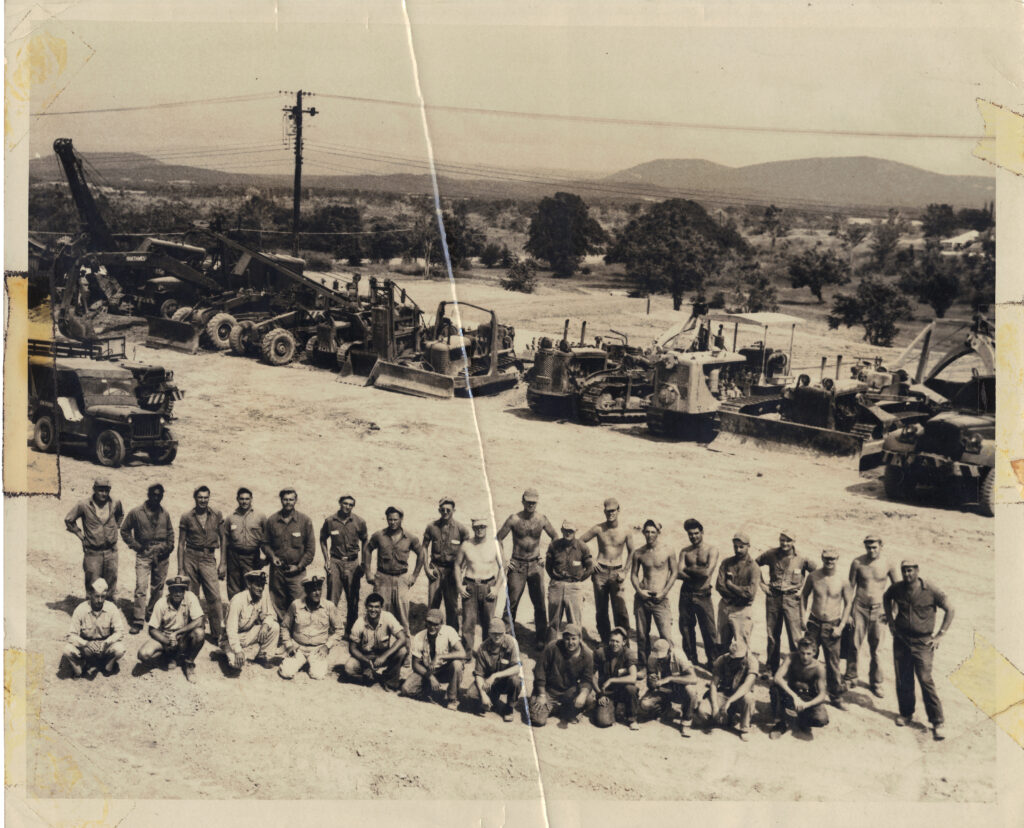
Vaughn Brown Russell rejoined the Marine Reserves in 1947 and served on the Border Patrol. He was discharged for good in 1949.

Veteran Experience
Back in Delaware
After the war, Vaughn Russell went back to school and graduated from Bridgeville High School in 1947. He pursued further education by taking college classes in many different subjects. Even though he took numerous classes, he did not earn a degree because he studied across multiple subjects. He lived with his parents and younger brother until he got married.
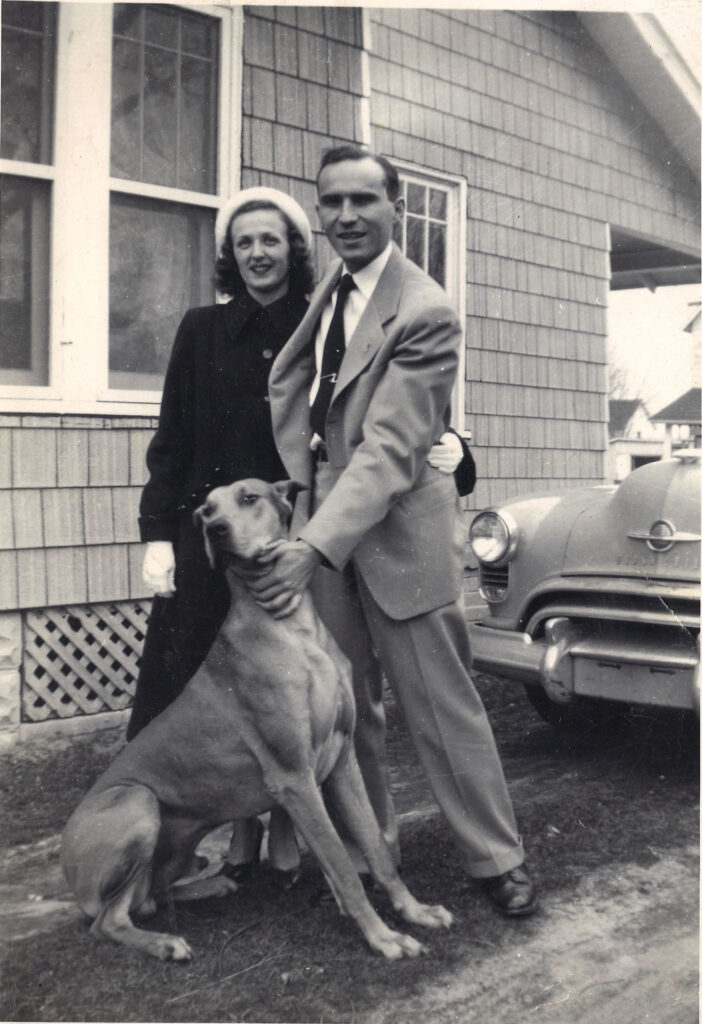
He married Helen Marie Brumbley, whom he met through a friend, on May 5, 1951. She lived in nearby Middletown, Delaware, where she was employed as a clerical worker. After they married, they moved to New Castle County, Delaware, where he worked for the Getty Refinery. They had one daughter, Karen.
Community Involvement
In the 1970s, the Russells moved back to Sussex County, to Seaford. Vaughn opened an auto parts store in Seaford, which he operated for several years until he sold it in the 1980s. He almost always had his big Great Dane with him at the store and around town. If he went to get an ice cream cone, the dog went and got one too.
Russell never lost his youthful spirit, playful demeanor, or sense of humor. One time, he put a big fan from the auto parts store on his head. It got stuck there, and when he finally got it off, it left a huge mark on his head for a few weeks. Another time, instead of buying a new toilet seat for the store, he decided to paint it, but didn’t tell his wife. She sat on it and got stuck. He had to come help her get up.
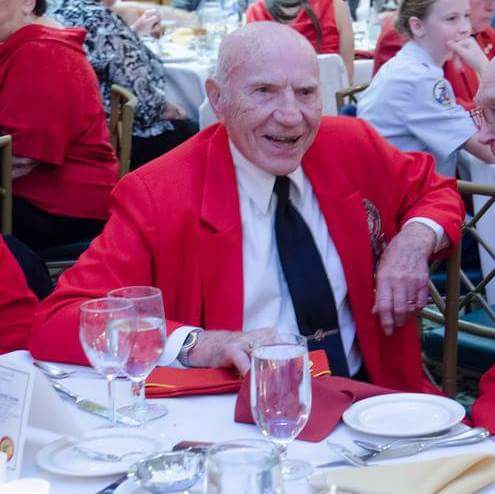
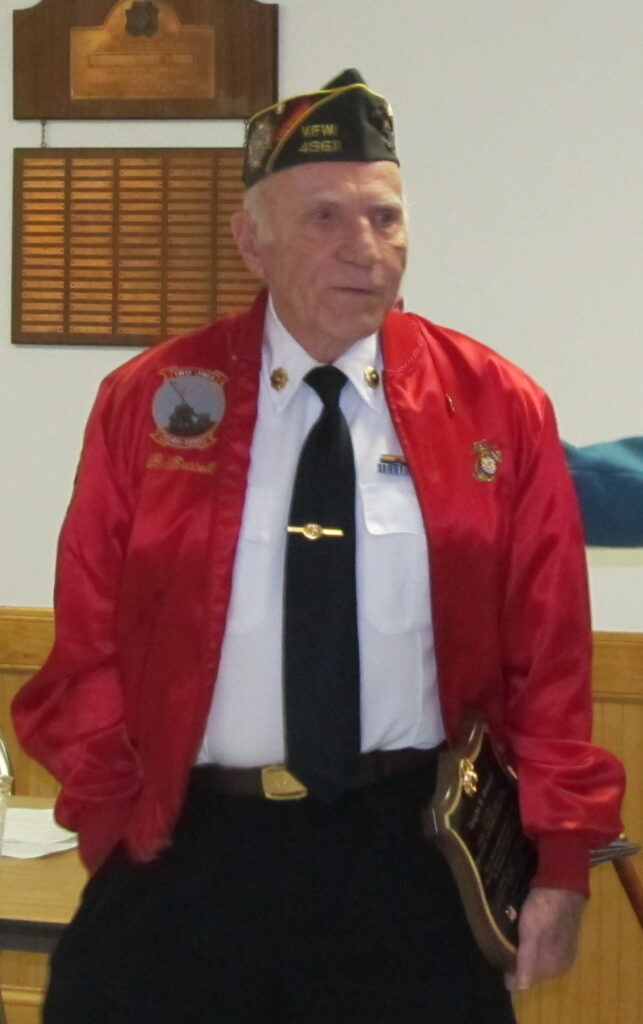
Russell was very involved in a long list of local organizations. He was a member of Hiram Lodge #21, the local Amateur Radio Club, Sons of the American Revolution, the National Rifle Association, the Veterans of Foreign Wars in Seaford, the American Legion in Seaford, and the Marine Corps League (Devil Dogs) in Seaford.
Russell was known in the community as someone who would help those in need, especially veterans. He helped people who needed work by hiring them at his auto parts store. He fought for Veterans to get the awards that they had earned. For instance, he helped one Veteran get the Purple Heart that he deserved.
Russell was also a ham radio operator. He had a ham radio tower in his backyard that was over 100 feet tall. On his 80th birthday, he decided to climb the tower to the top just because he could. He also used the radio to help those serving in the military. On every holiday, he spent thousands of dollars of his own money to patch into Navy ships so that servicemen and their families could talk to each other.

Commemoration
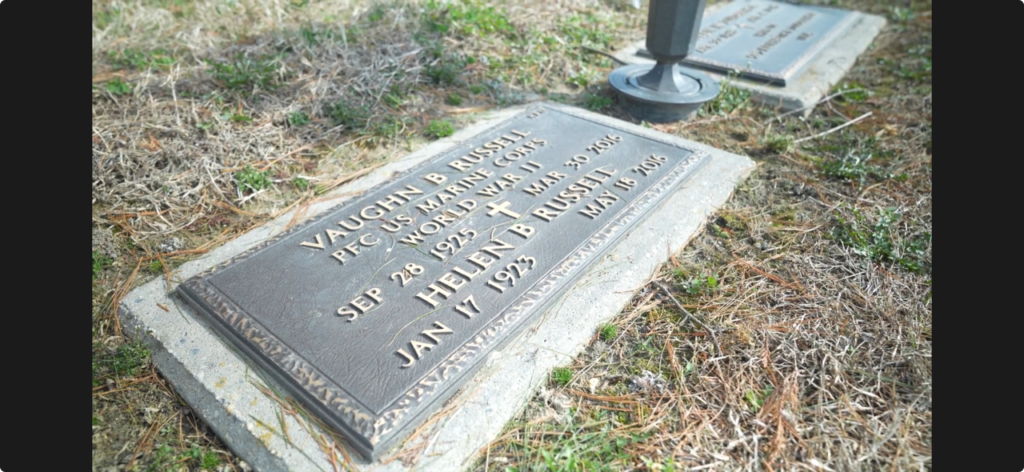
Mr. Vaughn Russell passed away on March 30, 2016. A couple of months later, Helen passed away as well. They are buried together at the Delaware Veterans Memorial Cemetery in Millsboro, Delaware.
Bibliography
Primary Sources
“Delaware in World War II.” Delaware Public Archives. RG 1325-003-206. https://cdm16397.contentdm.oclc.org/digital/collection/p15323coll6.
Delaware. Sussex County. 1930 U.S. Census. Digital Images. http://ancestryclassroom.com.
Delaware. Sussex County. 1940 U.S. Census. Digital Images. http://ancestryclassroom.com.
Delaware. Sussex County. 1950 U.S. Census. Digital Images. http://ancestryclassroom.com.
“Red Cross Needs Additional Funds for War Purposes” The Seaford News [Seaford, Delaware], December 26, 1941. https://www.seafordhistoricalsociety.com/visit/newspaper-archive/?q=world%20war%20ii&catid=0&show_pagination=1&paged=1&limit=5&wpfd_search_nonce=e0046b020c#100-181-wpfd-1941.
Russell Family Records. 1925-2016. Courtesy of Jason Spohn.
Russell, Vaugh Brown. “Vaughn Brown Russell Collection.” Interview by Thomas J. Healy, Delaware Project- Voices Of World War II. https://www.loc.gov/item/afc2001001.52895/.
Spohn, Jason. Telephone interview with the author. December 17, 2025.
Tobey, James A, Dr. “Good Health on Rationed Food.” The Seaford News [Seaford, Delaware], May 7, 1943. https://www.seafordhistoricalsociety.com/wp-admin/admin-ajax.php?juwpfisadmin=false&action=wpfd&task=file.download&wpfd_category_id=269&wpfd_file_id=16661&token=341dc3552623988d6e6cad8414777bbd&preview=1.
Vaughn B. Russell. U.S., Marine Corps Muster Rolls, 1798-1958. Digital Images. https://ancestryclassroom.com.
Vaughn B. Russell. U.S., World War II Draft Cards Young Men, 1940-1947. https://ancestryclassroom.com.
Vaughn Brown Russell. Delaware, U.S., Sussex County Marriage Records, 1865-1972. Digital Images. https://ancestryclassroom.com.
Vaughn Brown Russell, Official Military Personnel File (partial), Department of the Navy, National Archives and Records Administration – St. Louis.
Vaughn Brown Russell, Report of Separation, Department of the Navy, National Archives and Records Administration – St. Louis.
Secondary Sources
“Battle of Iwo Jima.” The National WWII Museum. Accessed January 14, 2026. https://www.nationalww2museum.org/war/topics/battle-iwo-jima.
“Close-Knit Communities.” National Home Front Project. Last modified 2019. Accessed November 14, 2025. https://nationalhomefrontproject.org/close-knit-communities/.
Delmarva Almanac. “Delmarva’s World War II POW Camps,” posted July 22, 2016. YouTube, 7:30, https://www.youtube.com/watch?v=luvdawr1k1Y.
“A Look Back in Time.” Seaford Historical Society. Accessed November 6, 2025. https://www.seafordhistoricalsociety.com/wp-content/uploads/2020/04/Lesson-Secondary-1.2-B-Look-Back-in-Time-Nylon-Capital-of-the-World.pdf.
MacArthur, Ron. “Fort Miles’ defenses were underground and underwater.” Cape Gazette [Lewes, Delaware], November 24, 2023. https://fortmilesmuseum.org/wp-content/uploads/2023/11/Mines_Article_CG_11-24-23.pdf.
MacArthur, Ron. “Sussex County’s little-known connections to World War II.” Cape Gazette [Lewes, Delaware], June 3, 2022. https://www.capegazette.com/article/sussex-county%E2%80%99s-little-known-connections-world-war-ii/240723.
“Mobilized for War.” National Home Front Project. Last modified 2019. Accessed November 14, 2025. https://nationalhomefrontproject.org/mobilized-for-war/.
Morgan, Michael. “Enemy aliens on Delmarva: How World War II stoked FBI raids and fears.” Delmarva Now [Salisbury, Maryland], May 12, 2023. https://www.delmarvanow.com/story/news/local/delaware/2023/05/12/enemy-aliens-on-delmarva-how-world-war-ii-stoked-fbi-raids-and-fears/70199392007/.
Morgan, Michael. “How amateur plane spotters kept Delaware safe with eyes on the sky during World War II.” Delmarva Now [Salisbury, Maryland], April 14, 2023. https://www.delmarvanow.com/story/news/local/delaware/2023/04/14/how-amateur-plane-spotters-once-kept-delaware-safe-with-eyes-on-sky/70100739007/.
Price, Betsy. “Feeding world: Women, soldiers, prisoners, students turn farm workers during World War II.” Delaware Online [Salisbury, Maryland], November 7, 2018. https://www.delawareonline.com/picture-gallery/life/2018/11/07/women-prisoners-students-soldiers-work-delaware-farms-during-wwii/1922664002/.
“Tale of Oil Strike Starts Land Boom.” Bridgeville Historical Society. Last modified May 2013. Accessed November 6, 2025. https://www.bridgevillehistoricalsocietyde.org/wp-content/uploads/2020/12/May-2013-Newsletter.pdf.
“Vaughn B. Russell.” Veterans Legacy Memorial, National Cemetery Administration. Accessed April 14, 2026. https://www.vlm.cem.va.gov/VAUGHNBRUSSELL/8dc52e.
“Vaughn Brown Russell.” Find a Grave. Updated April 1, 2016. Accessed January 8, 2026. https://www.findagrave.com/memorial/160346434/vaughn-brown-russell.
This profile was funded by a grant from the United States Department of Veterans Affairs. The opinions, findings, and conclusions stated herein are those of the author and do not necessarily reflect those of the United States Department of Veterans Affairs.