
Captain Vincent Joseph Hickman
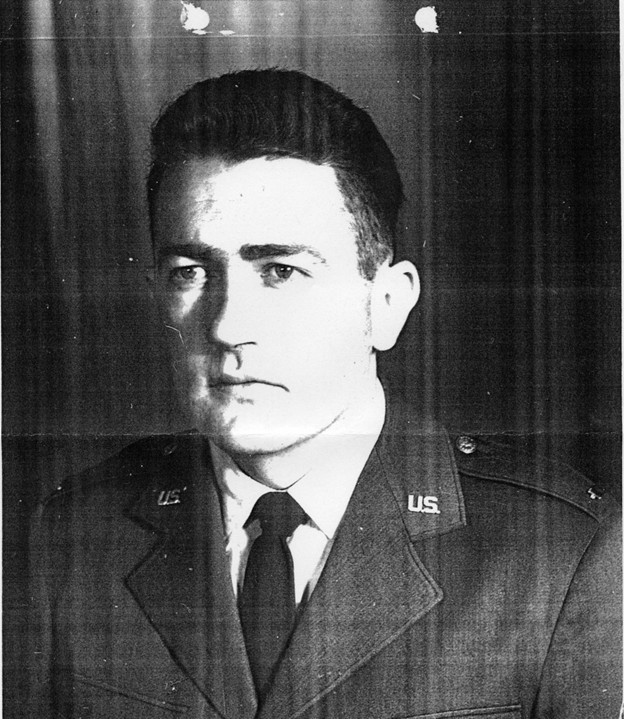
- Unit: 1st Air Commando Squadron, 34th Tactical Group, Seventh Air Force
- Service Number: 58450
- Date of Birth: March 20, 1933
- Date of Death: January 14, 1964
- Hometown: Brooklyn, New York
- Place of Death: Northeast of Bien Hoa, South Vietnam
- Award(s): Air Force Cross, Purple Heart, Air Medal, National Defense Service Medal, Air Force Longevity Service Award, Good Conduct Medal
- Cemetery: Court A, Courts of the Missing. Honolulu Memorial, National Memorial Cemetery of the Pacific, Honolulu, Hawaiʻi
Jericho Middle School, Jericho, New York
2025/2026
Early Life
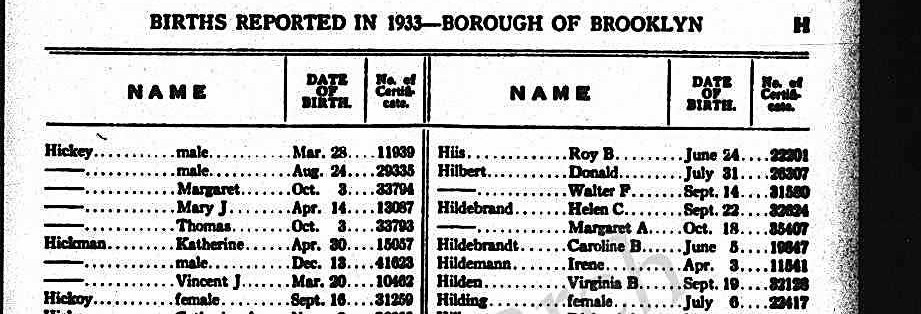
Vincent Joseph Hickman was born on March 20, 1933, in Brooklyn, New York. He grew up in a close-knit family with strong roots in New York. His father, Arthur A. Hickman, was born around 1900, and his mother, Marie C. Hickman, was born around 1903. Vincent had several siblings — brothers Thomas, Arthur Jr., and Eugene, and a younger sister, Miriam, affectionately known as the baby of the family. His paternal grandparents, Henry and Jennie Hickman, were also born in New York, continuing a long family presence in the state.
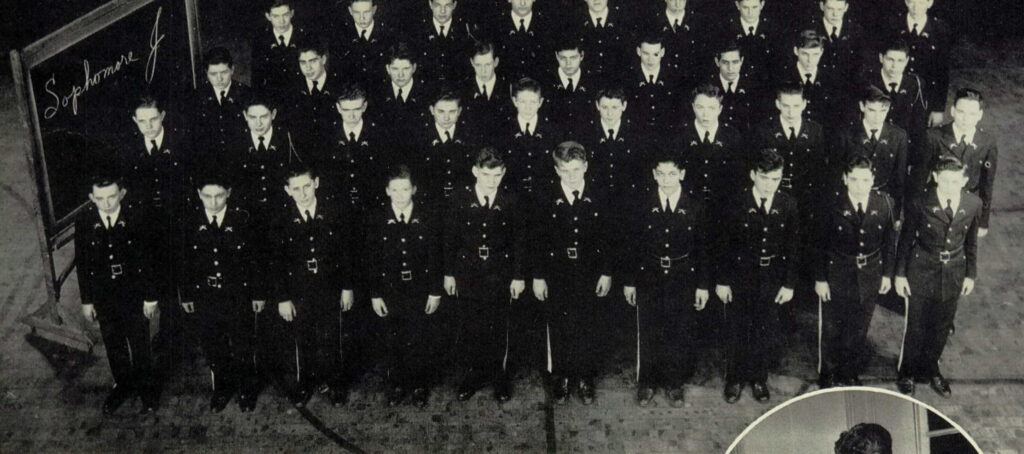
Vincent’s father, Arthur, had a steady career in banking. In 1940, he was employed as a bank clerk, and by 1950, he had advanced to the position of supervisor at a reserve bank, where he worked 40 hours a week. Marie, his wife, managed the household and did not work outside the home. The Hickmans lived in Brooklyn, and their occupations and lifestyle placed them within the middle to upper-middle class. This status is reflected in Vincent’s education. He attended St. Francis Xavier High School, a prestigious independent preparatory school in Manhattan. After graduating in 1951, he continued his education at Fordham University, earning a Bachelor of Arts in History in 1956.
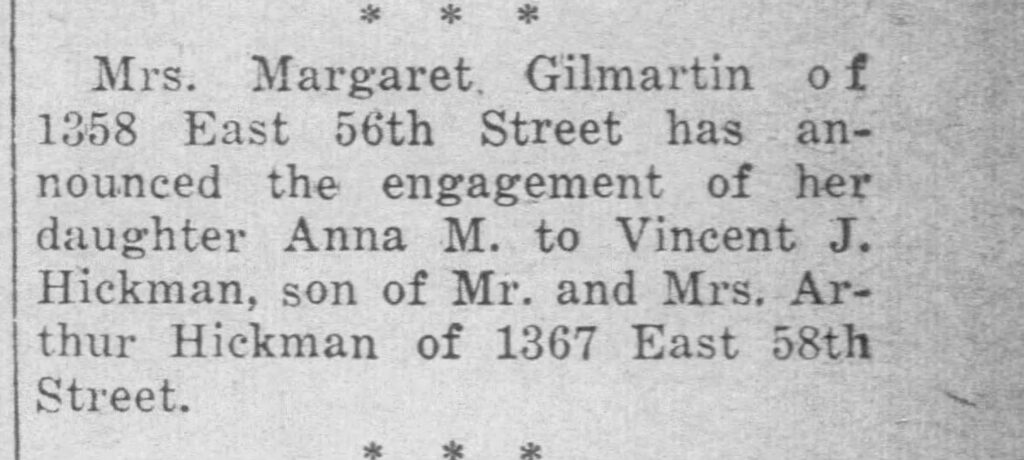
Vincent married Anna Gilmartin in 1957 in Brooklyn, New York. Together, they had four daughters: Eileen, Maureen, Margaret, and Patricia.
Before his military service, there is no record of Vincent holding a full-time job. At age 17, he enlisted in the New York National Guard.

Homefront
Vincent Joseph Hickman lived in the Flatlands section of Brooklyn, located in the southeastern part of the borough. Flatlands was primarily a residential neighborhood, with one- and two-family homes, mid-rise apartment buildings, and commercial areas. The neighborhood also included Glenwood Houses, a large New York City Housing Authority (NYCHA) housing development built in the early 1950s.
During the mid-twentieth century, Flatlands did not have direct access to the New York City subway system; however, many residents walked to the nearby IRT Nostrand Avenue Line, served by the 2 and 5 trains, which terminated at Flatbush and Nostrand Avenues. According to the 1950 U.S. Census, the neighborhood was predominantly White.
While Flatlands itself was not a major center of wartime manufacturing during the Vietnam War, nearby facilities contributed to military efforts. Floyd Bennett Field and a United States Coast Guard station were located in the Flatlands area, supporting military operations. Additionally, the Brooklyn Army Terminal served as a military depot and supply base until its closure in 1966, supporting wartime logistics in the broader Brooklyn area.
Vietnam Draft
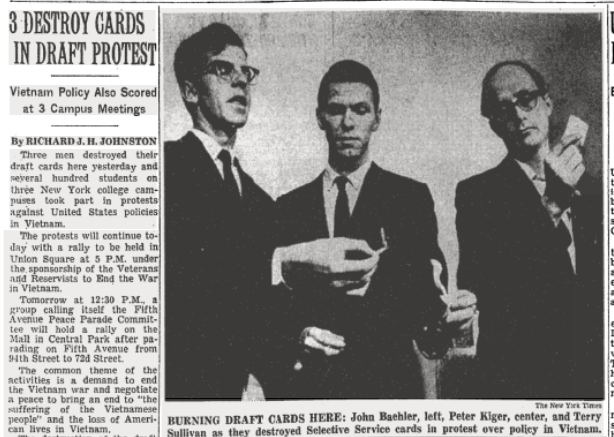
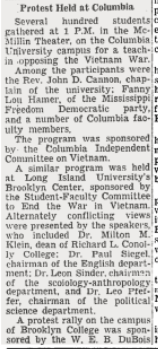
The draft had a noticeable impact on the larger New York City community, including Brooklyn. Although there is no specific record of draft boards or protests located directly in Flatlands, widespread opposition to the draft occurred throughout the city. High school students across New York City participated in walkouts to protest conscription, reflecting growing youth opposition to the war. Demonstrations, protests, and public debates about the Vietnam War were common throughout Brooklyn and the greater New York City area.
Vietnam Veterans
Returning Vietnam War veterans experienced mixed treatment within the community. Many veterans struggled with unemployment, poverty, and substance abuse, with some relying on welfare assistance. In response to these challenges, Vietnam War Veterans Centers were established to provide support services, including one located at Brooklyn Borough Hall in 1973. Despite these efforts, some veterans reported that welfare assistance was insufficient, leading them to seek employment opportunities and drug treatment services elsewhere when needed.
Civil Rights
Civil rights activism in New York City during the 1960s intersected with and influenced anti-war sentiment. In 1967, approximately 400,000 protesters marched from Central Park to the United Nations, demanding an end to U.S. involvement in Vietnam. That same year, Dr. Martin Luther King, Jr. delivered his influential “Beyond Vietnam” speech at Riverside Church in Manhattan, linking the civil rights movement with opposition to the war.
Changing Demographics
During the 1960s and early 1970s, Flatlands underwent notable demographic changes. Many European-American families moved out of the neighborhood to suburban areas of Long Island or Queens, while African American and Caribbean families moved in from nearby neighborhoods such as East Flatbush and Canarsie. Although New York City experienced rising crime rates during the 1970s, Flatlands remained relatively stable compared to other areas of the city.

Military Experience
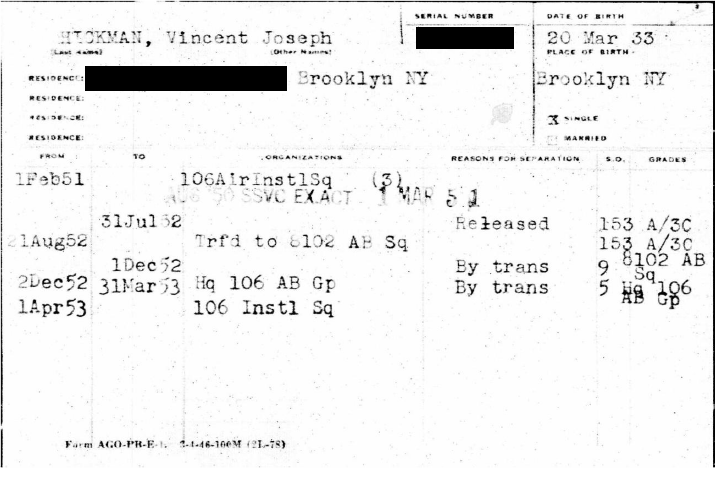
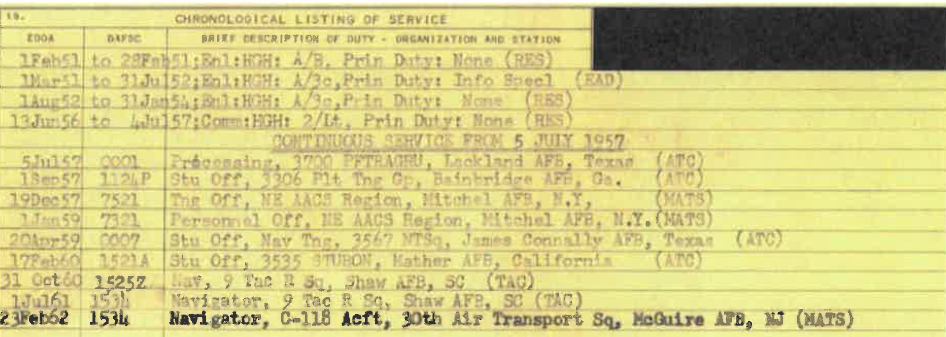
Vincent Joseph Hickman was not drafted into military service; instead, he chose to enlist. He began his military career by enlisting in the New York Air National Guard on February 1, 1951, serving until January 31, 1954. From March 1951 to July 31, 1953, his unit was activated.
He later pursued a commission through the Air Force Reserve Officers Training Corps (ROTC) program at Fordham University and was commissioned as a second lieutenant in the U.S. Air Force on June 13, 1956. Hickman entered active duty on July 5, 1957, marking the start of his career as an Air Force officer.
Following his commissioning, Hickman attended Undergraduate Pilot Training but did not complete the program. He was subsequently assigned as a personnel officer at Mitchel Air Force Base in New York, where he served from December 1957 to April 1959.
Seeking a more operational role, Hickman entered Undergraduate Navigator Training and earned his Navigator Wings at James Connally Air Force Base in Texas in February 1960. After completing Combat Crew Training, he served as an RB-66 Destroyer Navigator with the 9th Tactical Reconnaissance Squadron at Shaw Air Force Base, South Carolina, from October 1960 to February 1962. He then served as a C-118 Liftmaster Navigator with the 30th Air Transport Squadron at McGuire Air Force Base, New Jersey, from February 1962 to November 1963. Over the course of his service, Hickman earned the rank of captain.
In November 1963, Captain Hickman was deployed overseas to the Republic of Vietnam, where he was assigned to the Seventh Air Force, 34th Tactical Group, 1st Air Commando Squadron, stationed at Bien Hoa Air Base. He served as an Advisor-Navigator aboard a B-26B Invader, a role that placed him directly in combat. As part of the aircrew, his responsibilities extended beyond navigation and included serving as copilot, flight engineer, and radio operator. One of his most critical duties was maintaining constant visual surveillance during missions to identify enemy positions or threats the pilot might not immediately see.
The 1st Air Commando Squadron played a key role in the early years of the Vietnam conflict. Reactivated as part of President John F. Kennedy’s counterinsurgency strategy, the unit provided air support, training, and advisory assistance to allied forces fighting communist guerrillas. The squadron was composed entirely of volunteers and operated largely in secrecy, often carrying out missions on the edge of combat. During this period, Bien Hoa Air Base was one of the primary operating locations for U.S. Air Force advisors in South Vietnam, along with Da Nang and Tan Son Nhut.
Captain Hickman’s final duty station was Bien Hoa Air Base. On January 14, 1964, he was killed in action while serving as a Navigator-Bombardier on a combat support mission. Captain Hickman, Major Carl Mitchell (the pilot), and a Vietnamese Air Force observer took off from Bien Hoa at approximately 6:00 p.m. During the mission, after completing the first napalm drop on the target, their aircraft came under heavy ground fire. The B-26B crashed and burned around 6:15 p.m., and a wingman later confirmed the aircraft had been shot down by enemy forces.
A medical evacuation helicopter was immediately dispatched to the crash site, located approximately 30 kilometers northeast of Bien Hoa in Dong Nai Province. Intense hostile activity prevented the rescuers from accessing the area until January 19, 1964. When ground forces secured the site, no evidence of survivors was found. Based on eyewitness accounts, it was determined that the crew was killed at the time of the crash.
Captain Hickman’s status was officially changed from Missing in Action to Killed in Action on January 21, 1964. Because the United States had not formally declared war, his death was initially classified by the Department of Defense as non-combat, as Air Force personnel were officially serving as advisors at the time.

Commemoration
Captain Vincent Joseph Hickman’s courage, dedication, and sacrifice left a lasting legacy within the United States Air Force and the broader history of the Vietnam War. His actions on January 14, 1964, exemplified extraordinary heroism, as he continued his mission under intense enemy fire to protect fellow airmen and support allied ground forces. The Air Force Cross awarded to Captain Hickman stands as a testament to his selflessness, professionalism, and unwavering commitment to duty. In addition to his military decorations, his service highlights the often-overlooked contributions of early Air Force advisors who operated in dangerous, uncertain conditions before the Vietnam War officially began. Captain Hickman’s legacy endures as a reminder of the sacrifices made by service members who served quietly, bravely, and with honor, even when their efforts were largely unseen or unrecognized at the time.
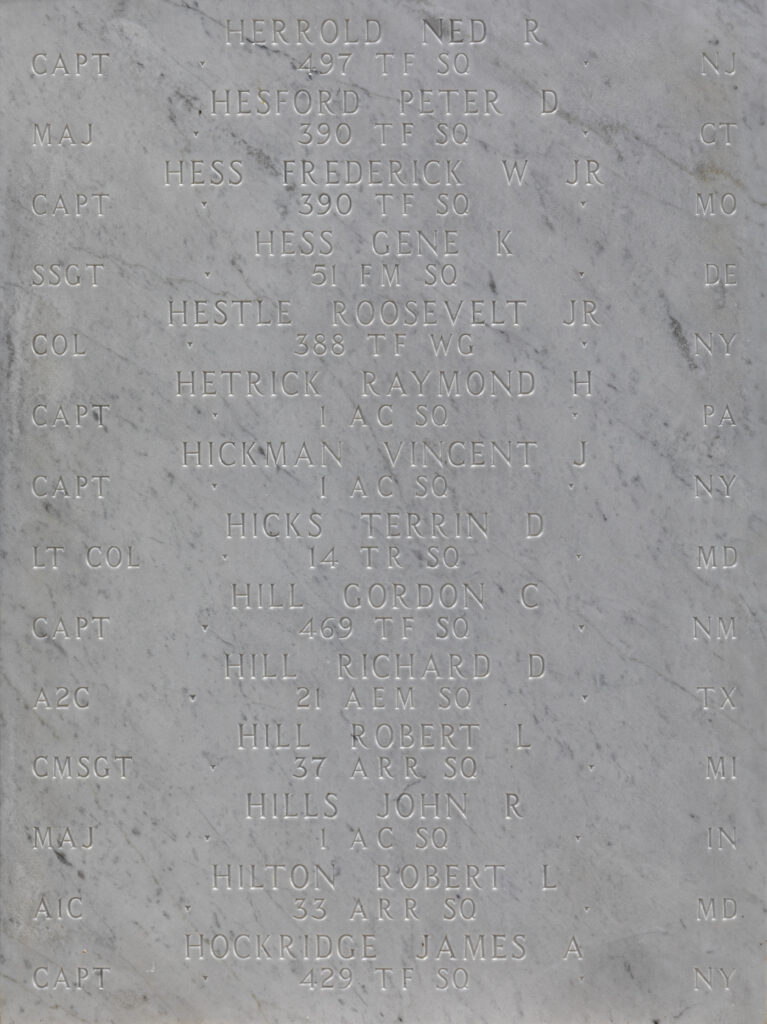
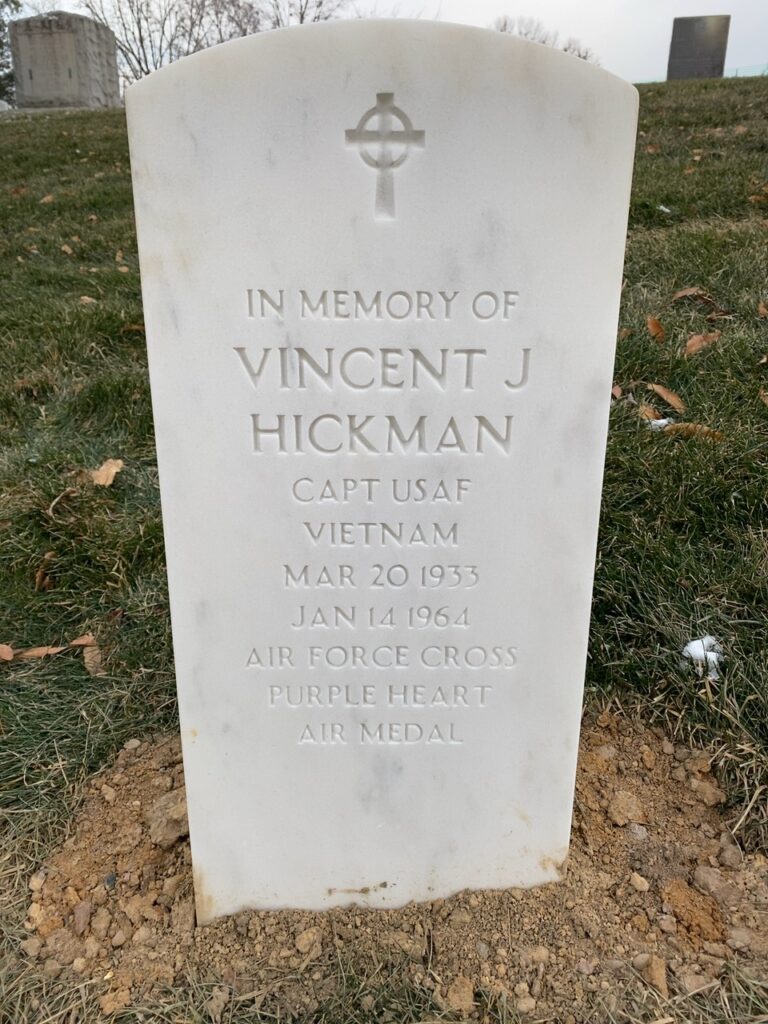
Vincent Joseph Hickman is memorialized on Court A of the Honolulu Memorial at the National Memorial Cemetery of the Pacific, Honolulu, Hawaiʻi. His family placed a memorial marker at Arlington National Cemetery in Arlington, Virginia.
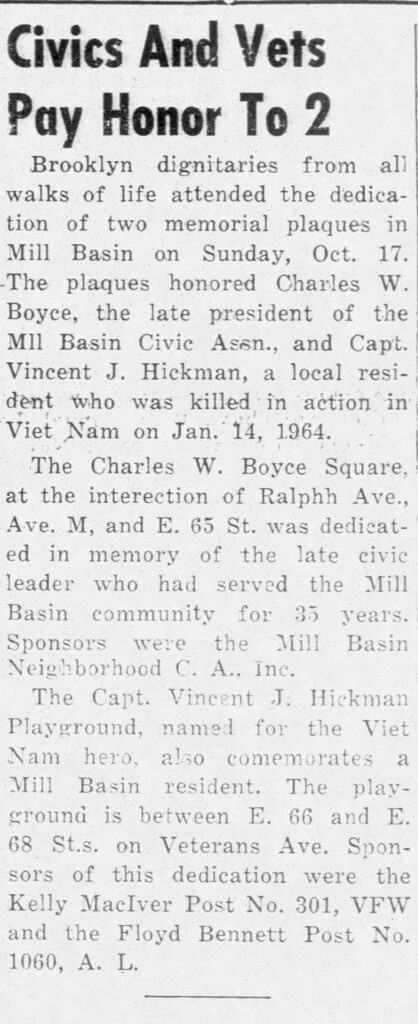
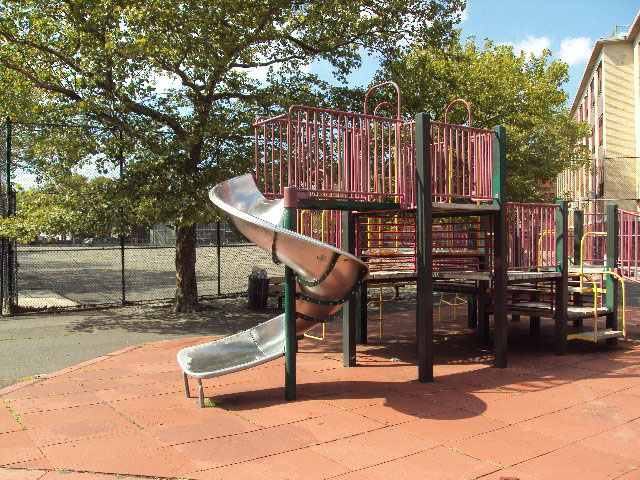
In 1965, a newly opened playground located off Veterans Avenue in Brooklyn was named the Hickman Playground. It was refurbished in 1996.
Bibliography
Primary Sources
“3 Destroy Cards in Draft Protest.” The New York Times [New York, New York], March 25, 1966. https://timesmachine.nytimes.com/timesmachine/1966/03/25/461077792.html.
“Civics and Vets Pay Honor to 2.” Canarsie Courier [Brooklyn, New York], October 21, 1965. Newspapers.com (555721199).
Dixon, Katharine S. “Personals.” Brooklyn Record [Brooklyn, New York], July 6, 1956. Newspapers.com (576110617).
New York. King’s County. 1940 U.S. Federal Census. Digital Images. https://ancestry.com.
New York. King’s County. 1950 U.S. Federal Census. Digital Images. https://ancestry.com.
St. Francis Xavier High School Yearbook. 1948. Digital Images. https://ancestry.com.
“Veterans of Vietnam Getting Welfare Here.” The New York Times [New York, New York], March 14, 1973. https://timesmachine.nytimes.com/timesmachine/1973/03/14/issue.html.
Vincent Hickman and Anna Gilmartin. New York, New York, U.S., Marriage License Index, 1907-2018. https://ancestry.com.
Vincent J. Hickman. Manuscript/Mixed Materials. Library of Congress. https://www.loc.gov/search/?in=&q=hickman%2C+vincent&new=true.
Vincent J. Hickman. New York, New York, U.S., Birth Index, 1910-1965. Digital Images. https://ancestry.com.
Vincent Joseph Hickman, Freedom of Information Act Record, Department of the Navy, National Archives and Records Administration – St. Louis.
Vincent Joseph Hickman. Military Photograph. Department of the Navy, National Archives and Records Administration – St. Louis.
Vincent Joseph Hickman. New York, U.S., New York National Guard Service Cards, 1917-1954. Digital Images. https://ancestry.com.
Vincent Joseph Hickman. U.S., Vietnam War Casualties, 1956-1998. Digital Images. https://ancestry.com.
Secondary Sources
“About Us.” Brooklyn Army Terminal. Accessed November 11, 2025. https://brooklynarmyterminal.com/about.
Bourne, Maurice. “Farm Gate: B-26s in South Vietnam.” Air Commando Journal vol 4(1): 20-25. https://aircommando.org/b-26s-in-south-vietnam.
“Capt. Vincent Joseph Hickman.” Defense POW/MIA Accounting Agency. Accessed October 20, 2025. https://dpaa-mil.sites.crmforce.mil/dpaaProfile?id=a0Jt0000000KY8FEAW.
“Capt Vincent Joseph ‘Vince and Vinny’ Hickman.” Updated October 20, 2012. Accessed October 13, 2025. https://www.findagrave.com/memorial/99293930/vincent-joseph-hickman.
“Cpt. Vincent Joseph Hickman.” Find a Grave. Updated June 18, 2021. Accessed December 30, 2025. https://www.findagrave.com/memorial/228640125/vincent-joseph-hickman.
“Flatlands.” City Neighborhoods NYC. Accessed December 1, 2025. https://www.cityneighborhoods.nyc/flatlands.
Fox, Roger P. Air Base Defense in the Republic of Vietnam. Office of Air Force History, 1979. https://media.defense.gov/2010/Sep/21/2001330253/-1/-1/0/air_base_defense_in_the_republic_of_vietnam.pdf.
“Hickman Playground.” New York City Department of Parks & Recreation. Accessed October 28, 2025. https://www.nycgovparks.org/parks/hickman-playground/history.
Take New York City Out of the War: Protesting Vietnam 1965-1975. Online Exhibition. Museum of the City of New York. Accessed December 1, 2025. https://www.mcny.org/exhibition/take-new-york-city-out-war.
“Vincent Hickman – Captain.” New Jersey Vietnam Veterans’ Memorial & Museum. Accessed January 3, 2026. https://njvvmf.org/face/hickman-vincent/.
“Vincent J. Hickman.” Veterans Tributes. Accessed December 30, 2025. http://www.veterantributes.org/TributeDetail.php?recordID=489.
“Vincent J. Hickman.” Wall of Faces, Vietnam Veterans Memorial Fund. Accessed October 20, 2025. https://www.vvmf.org/Wall-of-Faces/22995/VINCENT-J-HICKMAN/.
“Vincent Joseph Hickman.” American Battle Monuments Commission. Accessed October 20, 2025. https://weremember.abmc.gov/sq=*&criteria=title%3DHickman~first_name%3DVincent~war%3DVietnam%20War&type=16&v=G.
“Vincent Joseph Hickman.” Veterans Legacy Memorial, National Cemetery Administration. Accessed March 16, 2026. https://www.vlm.cem.va.gov/VINCENTJOSEPHHICKMAN/6C3C1.
This profile was researched and created through the Researching Silent Heroes program, sponsored by the American Battle Monuments Commission.