Private First Class Walter Edgar “Walt” Cranor
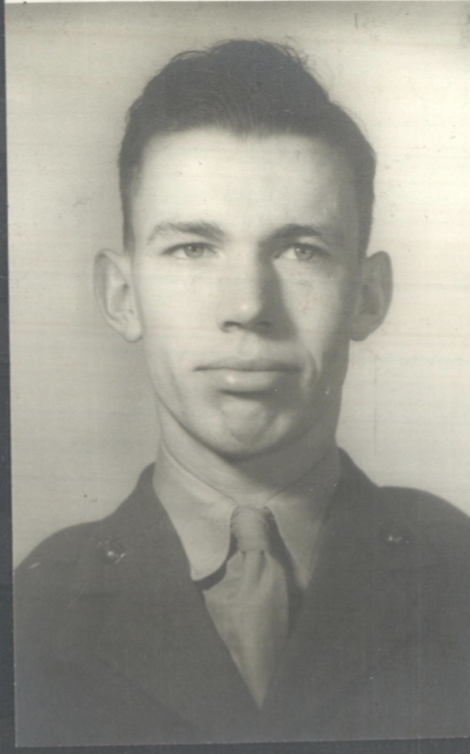
- Unit: USS Phoenix
- Date of Birth: July 8, 1923
- Entered the Military: December 11, 1942
- Date of Death: March 14, 2016
- Hometown: Menlo Park, California
- Place of Death: Lemay Township, Missouri
- Award(s): Asiatic-Pacific Campaign Medal, Philippine Liberation Ribbon, World War II Victory Medal
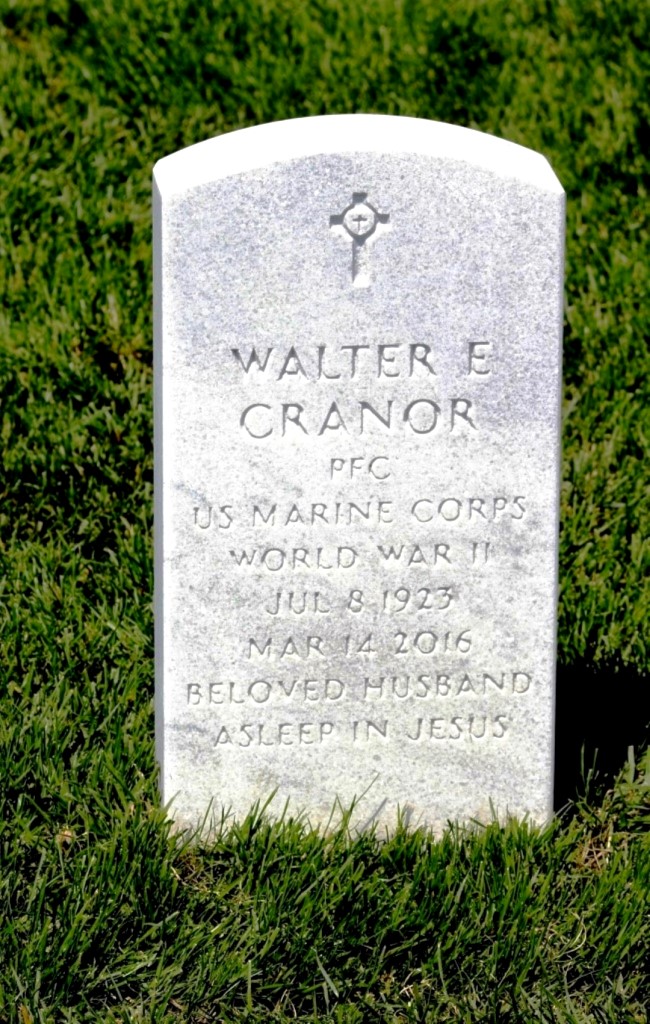
- Cemetery: Section 1MM, Grave 236. Jefferson Barracks National Cemetery, St. Louis, Missouri
Early Life
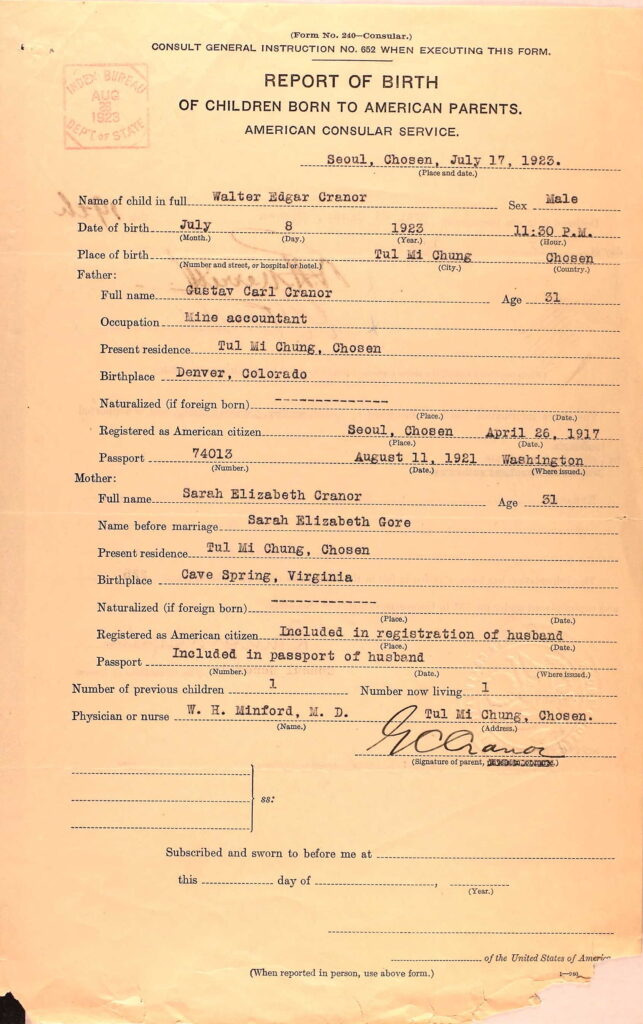
Walter Cranor was born on July 8, 1923, in Tui Mi Chung, Chōsen, in current South Korea, to Gustav and Sarah Cranor. Gustav was from Denver, Colorado, and his mother was from Cave Spring, Virginia. Gustav worked as a mine accountant and got a job with the Seoul Mining Company in Korea. While living in Korea, the couple had two children: Gustav Jr. and Walter. On May 22, 1926, Sarah died while giving birth to a third child. The child also died. They are both buried at Pyongyang Foreigners’ Cemetery in North Korea.
On March 19, 1930, Gustav, Sr. married Mae McCune after the family moved back to Denver, Colorado. Mae had three children of her own: William, John, and Mary.
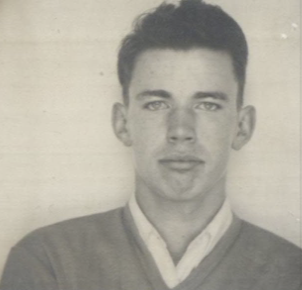
Walter graduated from Sequoia High School in Redwood City, California, in 1941. While in high school, he played football, baseball, basketball, and swam. He was also musical, playing the accordion and the harmonica. Walter was also active in the theater department.
Homefront
Menlo Park, California, about an hour from San Francisco, lies in San Mateo County, which borders the Pacific Ocean and the San Francisco Bay. It was incorporated in 1927 with a population of approximately 2,000. By the end of World War II, Menlo Park’s population had more than tripled.
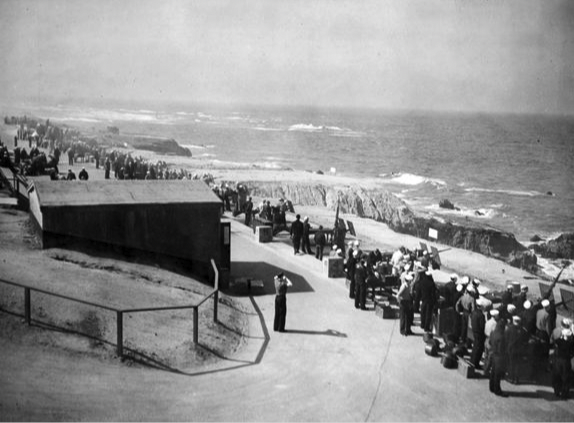
The San Mateo Peninsula was heavily involved in military training and troop transportation. Concrete military defensive installations were built along the county’s Pacific coastline, with the threat of an attack by the Japanese looming. In fact, only weeks after the attack on Pearl Harbor, a Japanese submarine exchanged fire with a Standard Oil tanker less than twenty-four miles from Menlo Park. It is estimated that roughly 320,000 military personnel trained or passed through the county during the war.
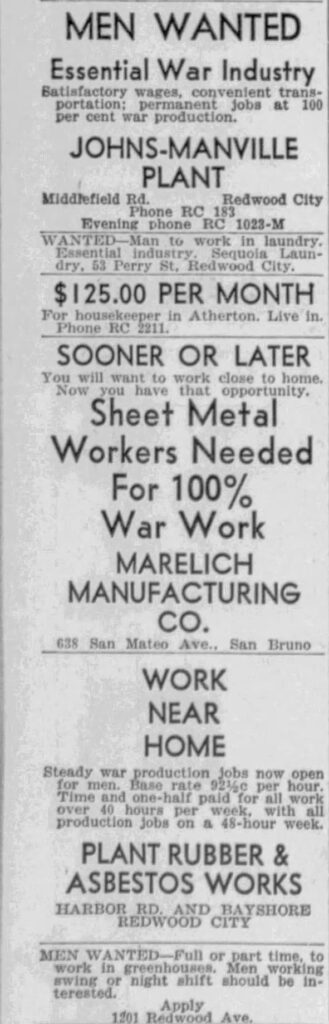
The war also touched the daily lives of ordinary citizens of San Mateo County. Local factories recruited workers for rubber, asbestos, and steel production to support the war effort. Farms throughout California ramped up production of fruits, vegetables, and cotton. Residents planted Victory Gardens. Students at San Mateo Junior College read to blind servicemen recovering at a nearby military hospital. They also knitted and folded surgical dressings. Civilians also served as air raid wardens and plane spotters, donated blood, and bought war bonds and stamps.
Military Experience
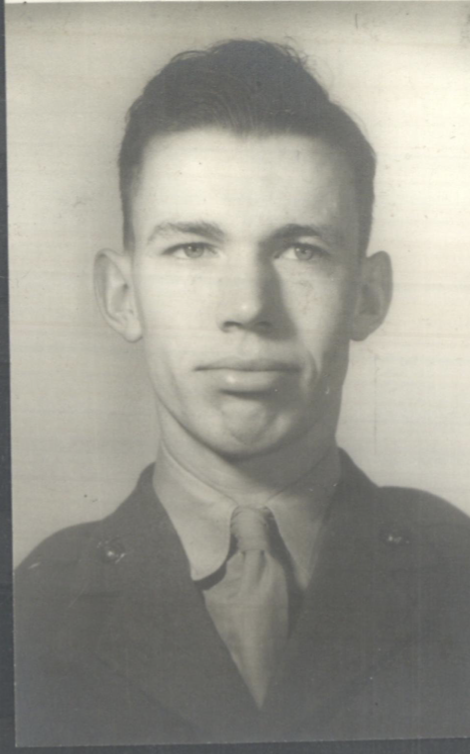
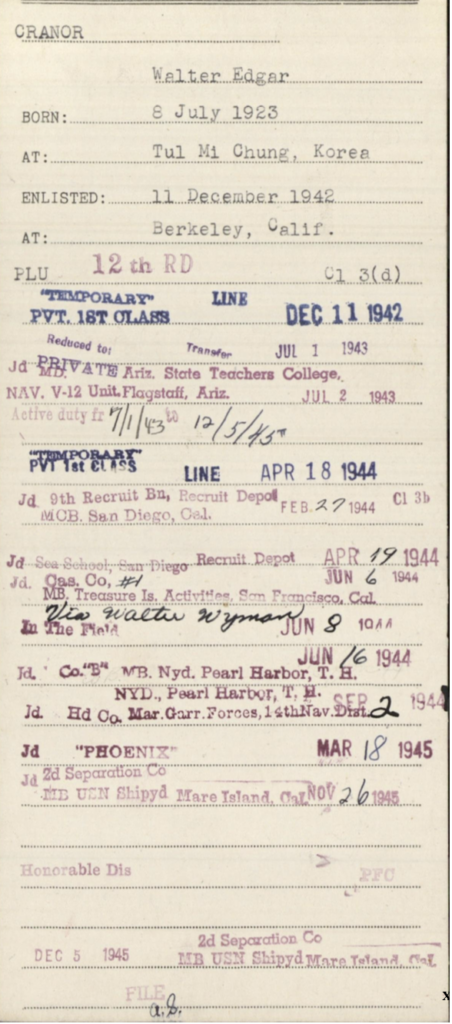
Walter Cranor formally enlisted on December 11, 1942, at the Recruiting Station, Berkeley, California, as a private in the Marine Corps Reserve, Candidates’ Class. He was immediately appointed to private first class and assigned to the 12th Reserve District on Mare Island to await assignment to the Candidates’ Class.
On July 1, 1943, he enrolled in the Marine Detachment of Arizona State Teachers College – the V-12 Navy College Training Program that fed officer candidates into the United States Navy and Marine Corps. Once students finished these programs, they reported to boot camp, followed by a three-month officer candidate course. Upon successful completion, the graduates were commissioned as second lieutenants. His written recommendations for this program call him “cooperative, dependable, pleasant, and good-natured. He is loyal, courteous, and shows a fine spirit.”
On July 2, 1943, Cranor reported to Arizona State Teachers College in Flagstaff, Arizona, where he pursued a journalism degree. While attending classes, he worked as a night sleeper in the fire department, and trained in using the respirator and first aid. On February 26, 1944, Cranor was academically dismissed from this program, reduced to private, and sent to San Diego, California, to attend recruit training.
On February 27, 1944, Cranor reported to the 9th Recruit Battalion. On April 18, 1944, he was promoted to private first class. On April 19, 1944, he started a five-week course in “Sea Duty” as well as training on the 20mm and 40mm anti-aircraft weapons.
On June 8, 1944, Cranor left for Pearl Harbor, Hawaii. At Pearl Harbor, he joined Company B, Marine Barracks, Navy Yard as a guard. From September 1944 to March 1945, Cranor served with Headquarters Company, Marine Garrison Forces, 14th Naval District in Pearl Harbor as an orderly. As an orderly, Cranor was responsible for handling messages, files, and other administrative duties.
On March 18, 1945, Cranor embarked aboard USS Phoenix as a light AA gun crewman. In this role, Cranor would have been in charge of loading ammunition clips, tracking and engaging with aircraft, and maintaining weapons. While aboard Phoenix, Cranor participated in five combat missions. In March, Cranor took part in the bombardment of Japanese positions at Cebu Island, Philippines, supporting troop landings.
From April 11 to 16, 1945, Cranor participated in the bombardment of Fort Drum and Carabao Island, Manila Bay, Philippines, in support of troop landings there. Fort Drum, also known as the “concrete battleship,” and Carabao Island were both Japanese-held fortifications guarding the entrance to Manila Bay. Fort Drum was a reinforced concrete sea fort shaped like a battleship, built by the United States from 1909 to 1914.
Cranor also took part in the bombardment of Tarakan Island, Dutch Borneo; Brunei Bay, British North Borneo; and Balikpapan, Dutch Borneo, all in support of troop landings.
By November 26, 1945, Cranor was back in California. He was honorably discharged on December 5, 1945, as a private first class.
Veteran Experience
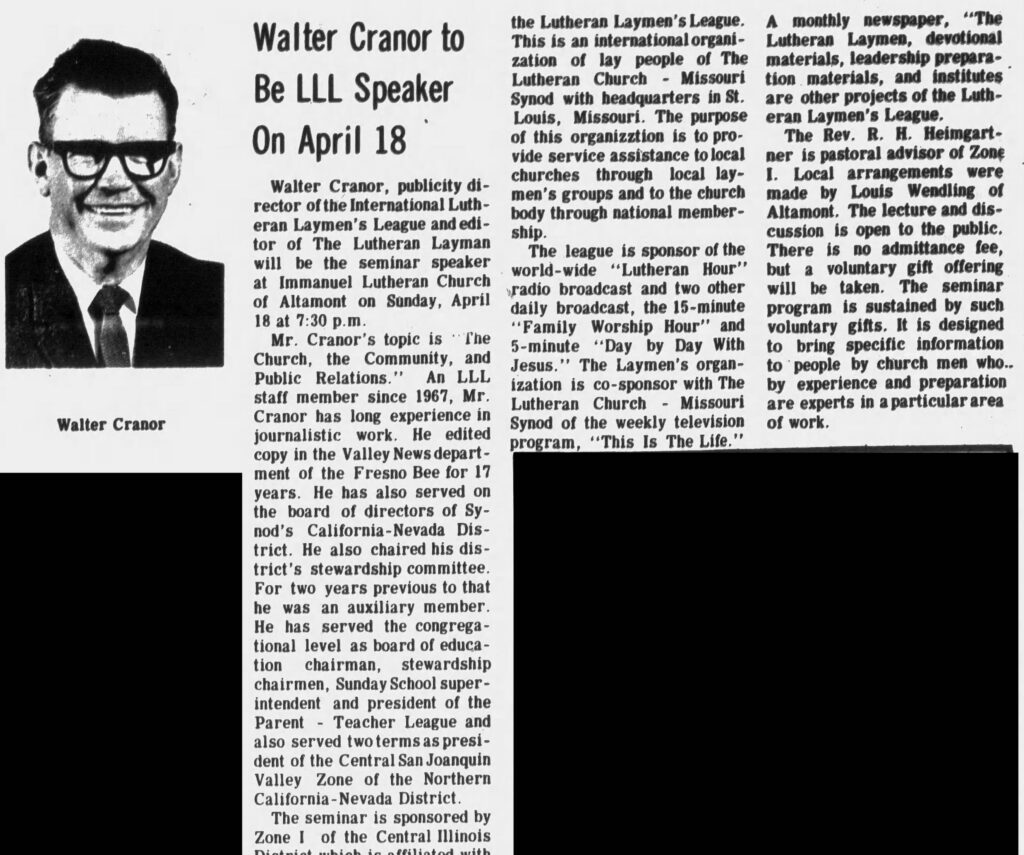
Cranor graduated from San Jose State in 1947 with a bachelor’s degree in journalism. In 1949, he worked as a sports bureau manager for the United Press in Fresno, California. He also worked as a copy editor for the Valley News department of the Fresno Bee for seventeen years. Cranor married Virginia M. Wilcoxson Prior shortly before 1949, when their first child, Walter III, was born. Cranor and Virginia later had four more children: Randall Charles, Stuart, Lizbeth, and Kate Marie. As a young parent, Cranor actively participated in his children’s PTO.
In the 1960s, the couple moved to Missouri, where Cranor worked as President of the Lutheran League, Administrator of public relations for the Lutheran Laymen’s League, and editor of Lutheran Layman.
At some point, Walter and Virginia divorced, and Walter married Laura Doss Bachman in 1976. The couple was married for 40 years, until Cranor passed away.
Commemoration
Walter Cranor passed away on March 14, 2016. He was buried at the Jefferson Barracks National Cemetery in St. Louis, Missouri.
Bibliography
Primary Sources
“AWVS Seeking Blood Donors.” Half Moon Bay Review and Pescadero Pebble [Half Moon Bay, California], Oct 15, 1942. Newspapers.com (997208565).
“Birth of Son.” The Fresno Bee [Fresno, California], October 27, 1949. Newspapers.com (707821040).
California. Fresno County. 1950 U.S. Census. Digital Images. https://ancestry.com.
California. San Mateo County. 1940 U.S. Census. Digital Images. https://ancestry.com.
“Call for Farm Workers.” The Times [San Mateo, California] Dec. 21, 1942. Newspapers.com (51854599).
Colorado. Arapaho County. 1940 U.S. Census. Digital Images. https://ancestry.com.
“Cranor, Laura.” Kutis Funeral Home Online Obituaries. Accessed November 12, 2025. https://kutisfuneralhomes.com/cranor-laura/.
“Cranor, Virginia M.” St. Louis Dispatch-Post [St. Louis, Missouri], December 7, 1982. Newspapers.com (139982594).
Cranor, Walter. “Where World Track Records are Broken.” Alameda Times [Alameda, California], March 4, 1949. Newspapers.com (1097583077).
“Deaths-Cranor.” Redwood City Tribute [Redwood City, California], October 9, 1945, Newspapers.com (842002921).
“Food Fights for Freedom in Our Victory Gardens.” The Times [San Mateo, California], April 21, 1944. Newspapers.com (38866491).
La Torre. San Jose, California: San Jose State, 1947.
“Lutheran Convention to Draw 500 Laymen.” Roselle Register [Roselle, Illinois], April 24, 1968. Newspapers.com (72124651).
“Lutheran Laymen’s Convention To Hear Public Relations Director.” Hickory Daily Record [Hickory, ND], March 28, 1957. Newspapers.com (1006190865).
“Lutheran Layman Editor guest speaker at meeting.” The Times [Trenton, New Jersey], April 14, 1981. Newspapers.com (1195099693).
“Men Wanted Ads.” Redwood City Tribune [Redwood City, California], March 18, 1944. Newspapers.com (841988889).
“PTO News.” Daily News-Post [Monrovia, California], February 17, 1960. Newspapers.com (606695752).
“To Auction Toys for War Stamps.” Redwood City Tribune [Redwood City, California], June 30, 1944. Newspapers.com (842200978).
“Walter Cranor to Be LLL Speaker on April 18.” The Altamont News [Altamont, Illinois], April 8, 1971. Newspapers.com (864991607).
Walter E. Cranor. California, U.S., Arriving Passenger and Crew Lists, 1882-1959. Digital Images. https://ancestry.com.
Walter E. Cranor. U.S., City Directories, 1822-1995. Digital Images. https://ancestry.com.
Walter E. Cranor. U.S., Department of Veterans Affairs BIRLS Death Files, 1850-2020. Digital Images. https://ancestry.com.
Walter Edgar Cranor, Official Military Personnel File, Department of the Navy, National Archives and Records Administration – St. Louis.
Walter Edgar Cranor, Report of Separation, Department of the Navy, National Archives and Records Administration – St. Louis.
Walter Edgar Cranor. U.S. Consular Reports of Births, 1910-1949. Digital Images. https://ancestry.com.
Walter Edgar Cranor. World War II Draft Cards Young Men, 1940-1947. Digital Images. https://ancestry.com.
“Wild Rose PTO.” Daily News-Post [Monrovia, California], February 22, 1962. Newspapers.com (606661030).
Wood, Dallas E. “The Prolwer.” Redwood City Tribune [Redwood City, California], August 30, 1943. Newspapers.com (8419583480).
Secondary Sources
Postel, Mitchell P. “San Mateo Junior College Supports the War Effort.” La Peninsula, the Journal of the San Mateo County Historical Association, Vol. xliv, No. 2 (Fall 2016): 20. https://historysmc.org/wp-content/uploads/2020/08/La-Peninsula-World-War-II-Part-I-Fall-2016.pdf.
“Post-Fort Drum, Philippines.” The Army Historical Foundation. Accessed May 14, 2026. https://armyhistory.org/post-fort-drum-philippines/.
“The San Mateo County Coast’s Role in WWII.” The Daily Journal, March 30, 2020. https://www.smdailyjournal.com/news/local/the-san-mateo-county-coast-s-role-in-wwii/article_25a4242e-7221-11ea-80a9-33b0d6069e19.html.
“Timeline of Menlo Park.” Menlo Park Historical Association. Accessed November 12, 2025. https://www.mphistory.org/exhibits/timeline-of-menlo-park.
“Walter Edgar Cranor.” Veterans Legacy Memorial. National Cemetery Administration. https://www.vlm.cem.va.gov/WALTEREDGARCRANOR/3FE429E.
“Walter Edgar ‘Walt’ Cranor.” Find a Grave. Accessed November 1, 2025. https://www.findagrave.com/memorial/159486436/walter-edgar-cranor.
This profile was funded by a grant from the United States Department of Veterans Affairs. The opinions, findings, and conclusions stated herein are those of the author and do not necessarily reflect those of the United States Department of Veterans Affairs.