

Corporal Walter Shirley Pfister
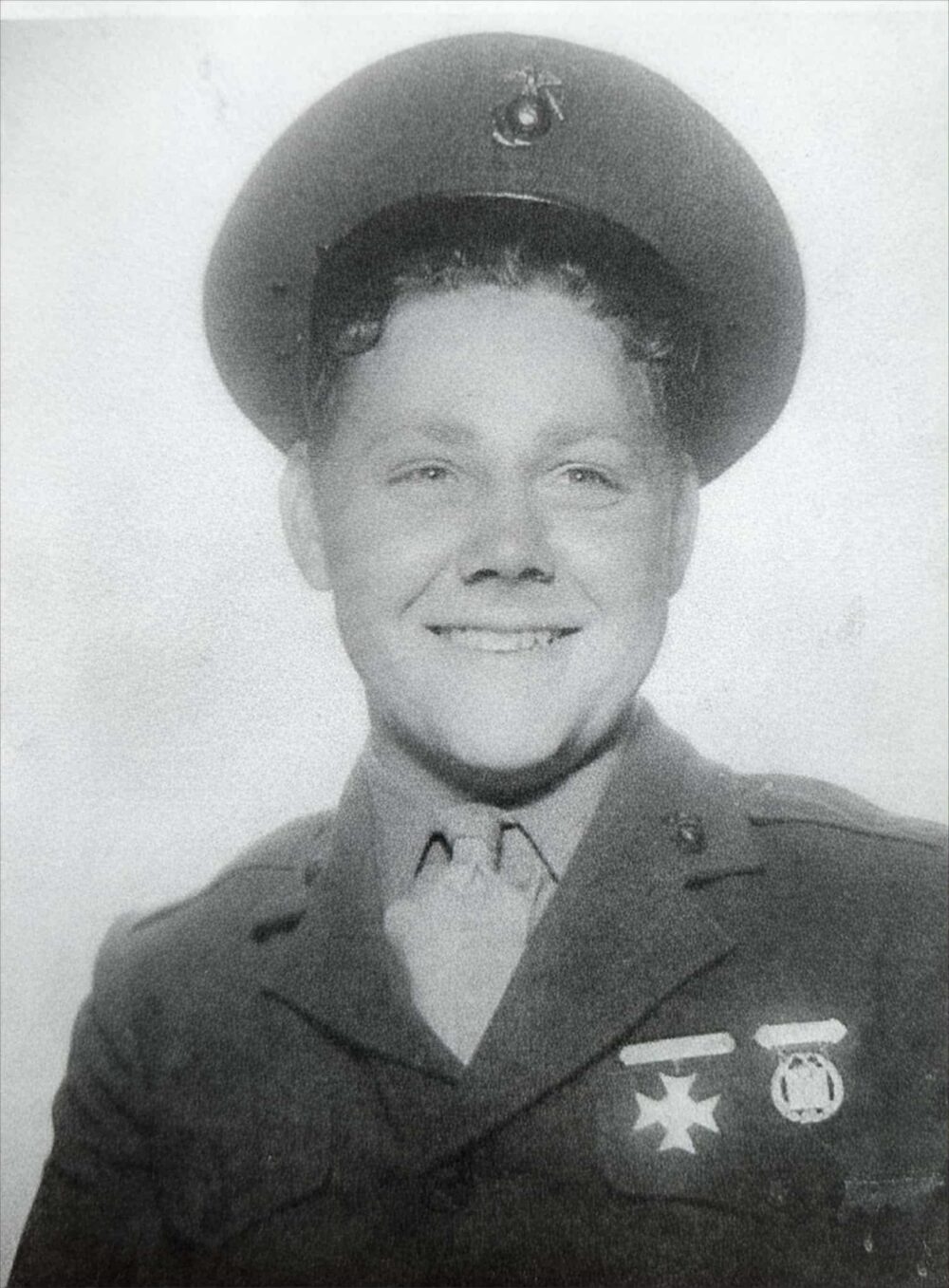
- Unit: First Amphibian Tractor Group, Fifth Amphibian Tractor Battalion, Company C
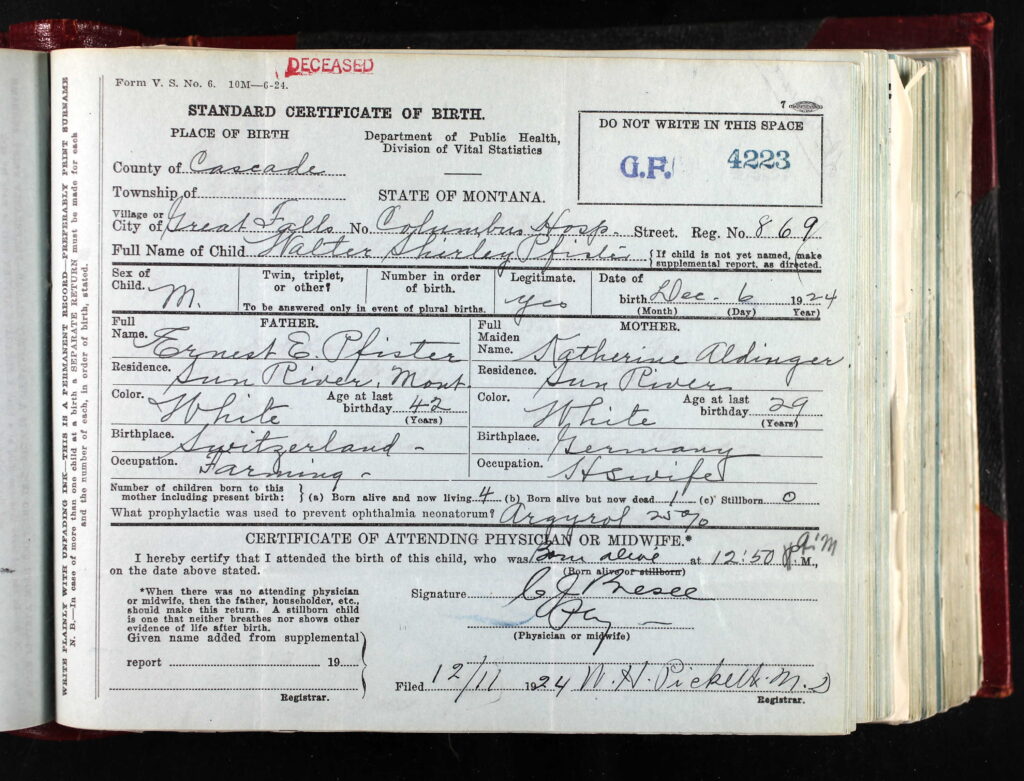
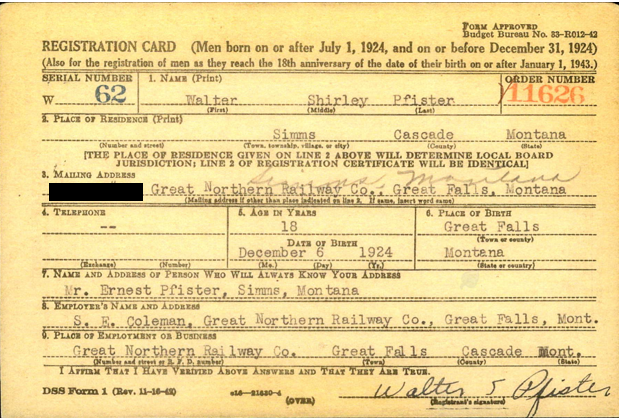
- Date of Birth: December 6, 1924
- Date of Death: August 4, 2013
- Hometown: Great Falls and Simms, Montana
- Place of Death: Roundup, Montana
- Award(s): Presidential Unit Citation
- Cemetery: Section A, Row 3, Site 44. Yellowstone National Cemetery, Laurel, Montana
Mentored by Mrs. Taylor Olsen
Harlowton High School
2025/2026
Early Life
Walter “Walt” Pfister was born on December 6, 1924, in Great Falls, Montana. He grew up in the agricultural Sun River Valley near Simms, Montana, where family farms and irrigation systems shaped the rhythm of daily life. As the son of Ernest and Katherine Pfister, Walter was one of seven children. From a young age, he contributed to farm work and also assisted a local veterinarian, building work habits rooted in responsibility, resilience, and cooperation.
Pfister attended Fort Shaw High School in nearby Fort Shaw, Montana. His adolescence was marked by the social and economic pressures of the late 1930s and early 1940s. Growing up in rural Montana fostered in him a strong sense of self-reliance and a commitment to community. He did not attend college prior to military service.


Homefront
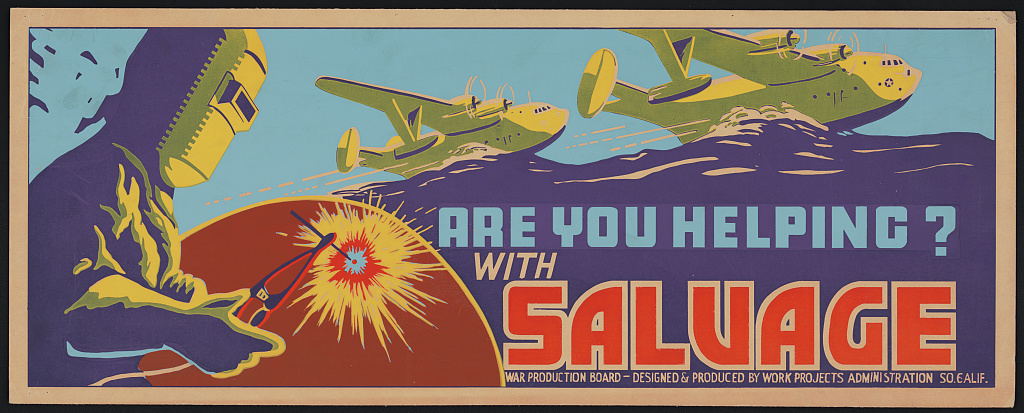
Walter Pfister’s home front experience reflects the realities of rural Montana communities during World War II. Although the Sun River Valley was not a center of wartime manufacturing, it contributed to the national war effort through agricultural production. Established irrigation systems and farming operations supported food production, which was critical to sustaining both civilian populations and military forces.
Life in the Sun River Valley was shaped by rationing, conservation, and economic hardship. Families relied on ration books to manage limited supplies, including food, gasoline, and tires. These restrictions affected daily routines and required constant adaptation. Oral histories from the region highlight the financial strain on farming families and the strong sense of cooperation that defined small rural communities.
Labor responsibilities also shifted during the war years. With many men serving in the armed forces, women assumed greater roles in farm work and household management. This transition mirrored national patterns while emphasizing the resilience and flexibility of rural families.
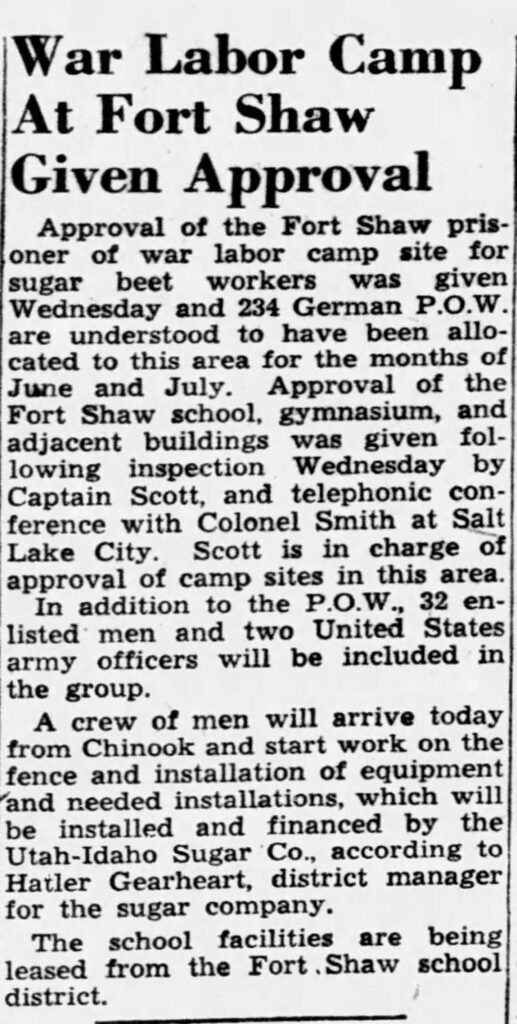
One of the most distinctive aspects of the local home front was the presence of a German Prisoner of War camp near Fort Shaw. Prisoners worked in regional sugar beet fields, creating a direct connection between global conflict and local agricultural labor. This unique feature demonstrates how international events shaped even remote Montana communities.
Military Experience
On December 8, 1941, the day after the attack on Pearl Harbor, the United States formally entered World War II. Pfister turned 18 the following day and chose to enlist in the United States Marine Corps rather than wait for the draft so he could select his branch of service. He completed boot camp at the Marine Corps Recruit Depot in San Diego, California, and received specialized training for amphibious tractor operations.
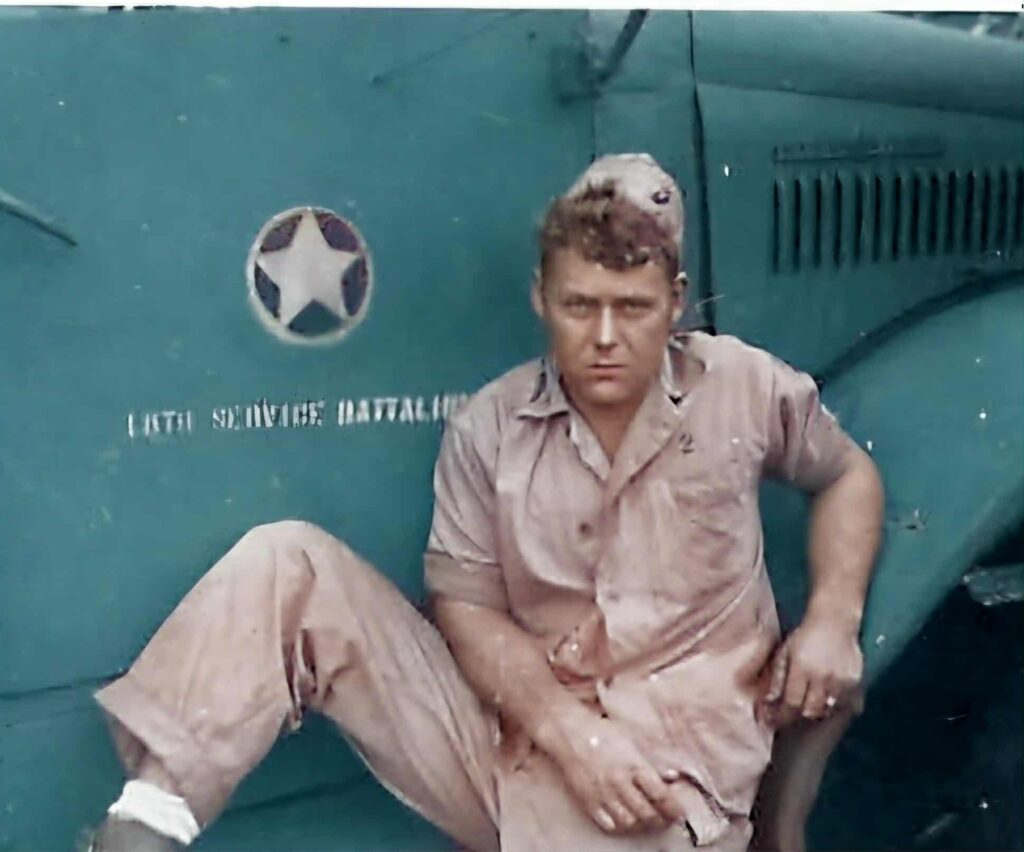
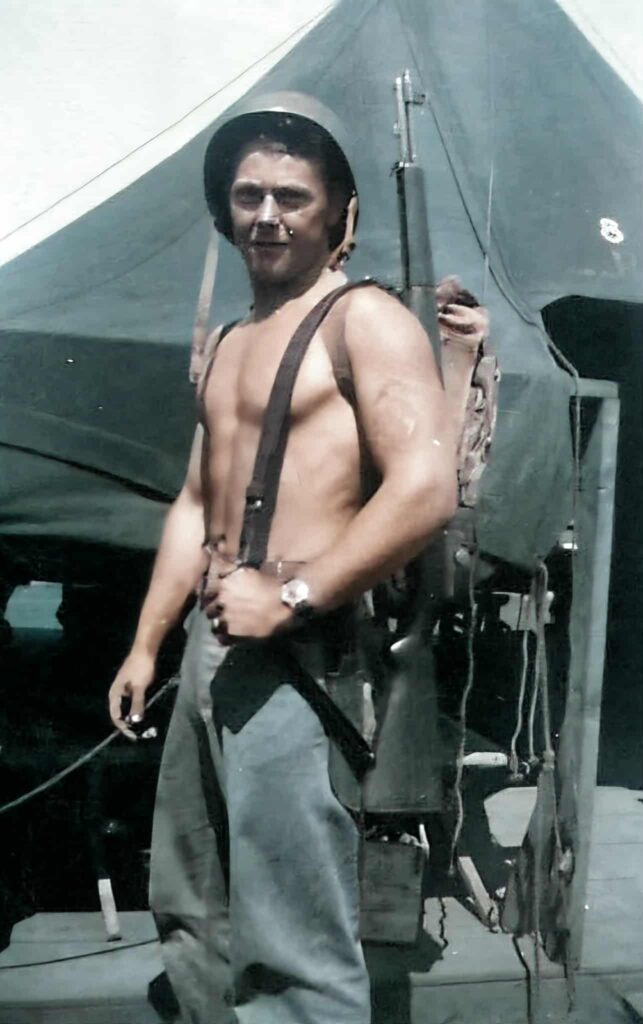
He was assigned to Company C, Fifth Amphibian Tractor Battalion, First Amphibian Tractor Group, Fleet Marine Force, Pacific. As a Corporal and LVT (Landing Vehicle, Tracked) crew chief, Pfister guided and maintained amphibious vehicles in combat environments. His duties included navigating dangerous surf and reefs, transporting troops and supplies, and evacuating wounded Marines under enemy fire.
Pfister’s unit deployed to several major Pacific campaigns, including the Battle of Saipan (June 1944), the Battle of Tinian (July 1944), and the Battle of Iwo Jima (February to March 1945). At Iwo Jima, his battalion played a crucial role in evacuating over 1,100 casualties despite heavy artillery and hazardous conditions.
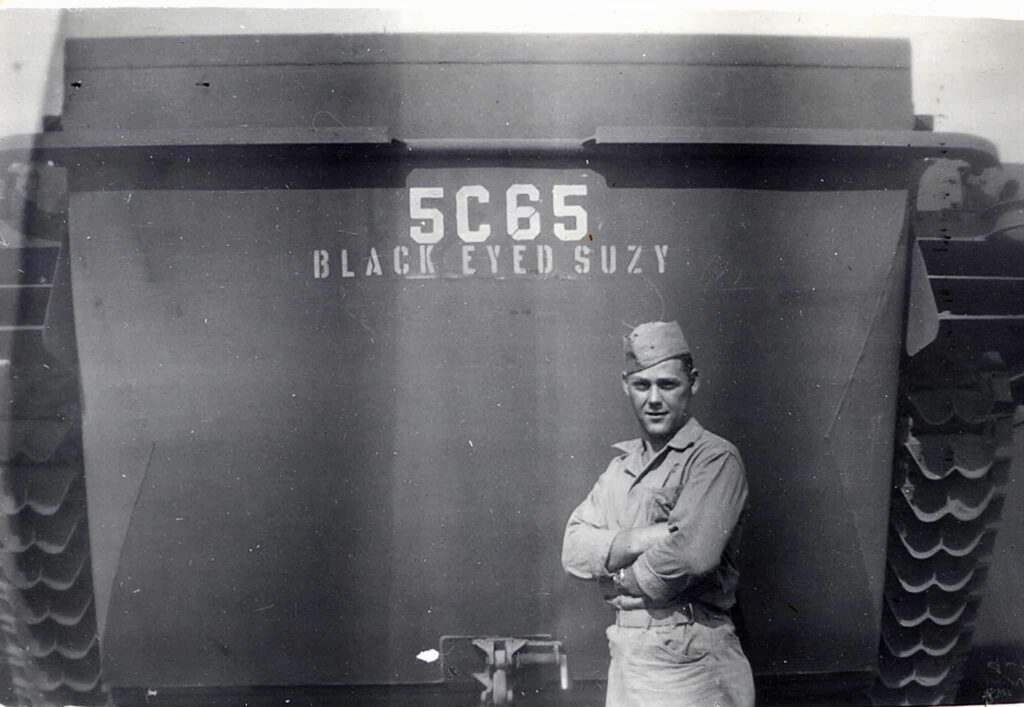
During his service as a crew chief in the Fifth Amphibian Tractor Battalion, Walter Pfister operated a Landing Vehicle, Tracked (LVT) nicknamed Black-Eyed Suzy. Like many Marines, Pfister and his crew gave their vehicle a name, transforming an essential piece of military equipment into something that carried identity, familiarity, and morale.
The LVT served as both transport and lifeline. It carried troops, supplies, and wounded Marines between ships and contested shorelines. In combat environments defined by artillery fire, minefields, and hazardous surf, the crew’s survival often depended on the vehicle’s reliability.
Maintaining Black-Eyed Suzy required constant mechanical attention under extreme conditions. Damage from surf, terrain, and enemy fire was a persistent threat. The crew chief’s role demanded technical skill, calm decision-making, and situational awareness.
Walter Pfister’s service aboard Black-Eyed Suzy illustrates the lived realities of amphibious warfare, where vehicles were not simply equipment but critical instruments of survival and mission success.
For extraordinary heroism and outstanding service, the Fifth Amphibian Tractor Battalion was awarded the Presidential Unit Citation. During the assault on Iwo Jima in World War II, the battalion transported the first waves of Marines to heavily defended beaches under intense enemy fire and continued operating despite severe casualties, delivering reinforcements and evacuating wounded soldiers. Walter Pfister was discharged during the postwar demobilization in January 1946.
Veteran Experience
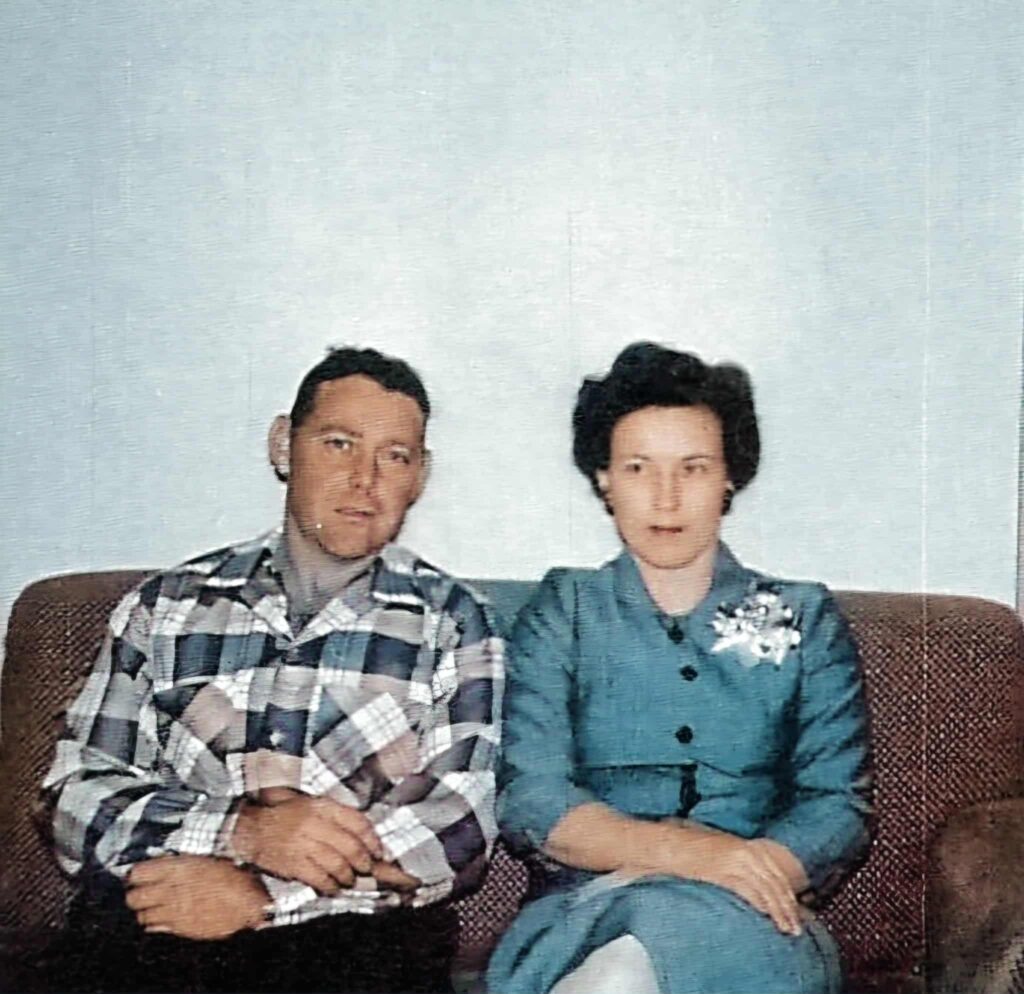
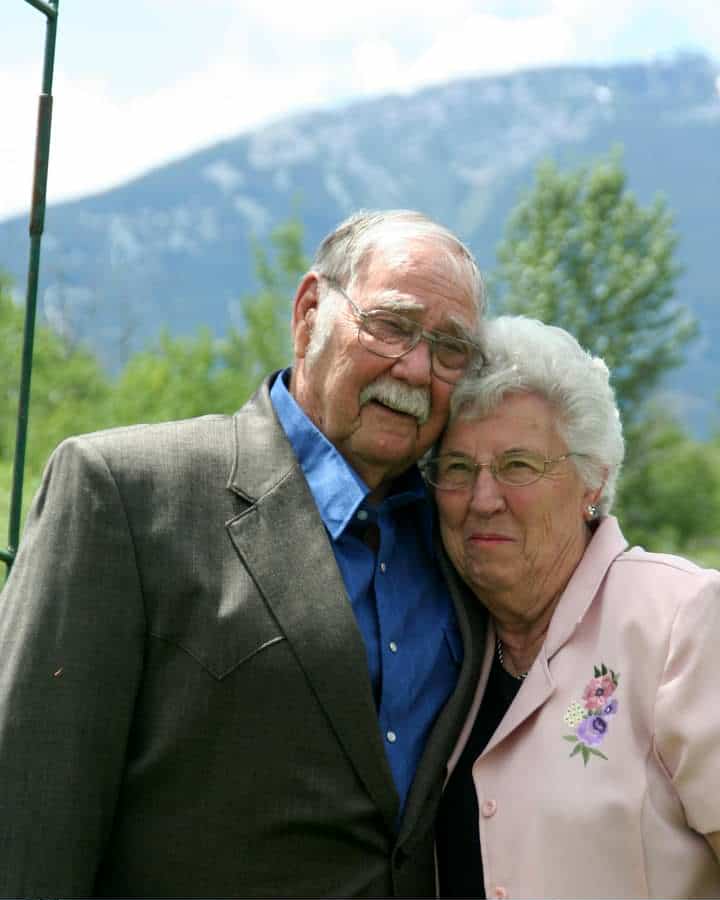
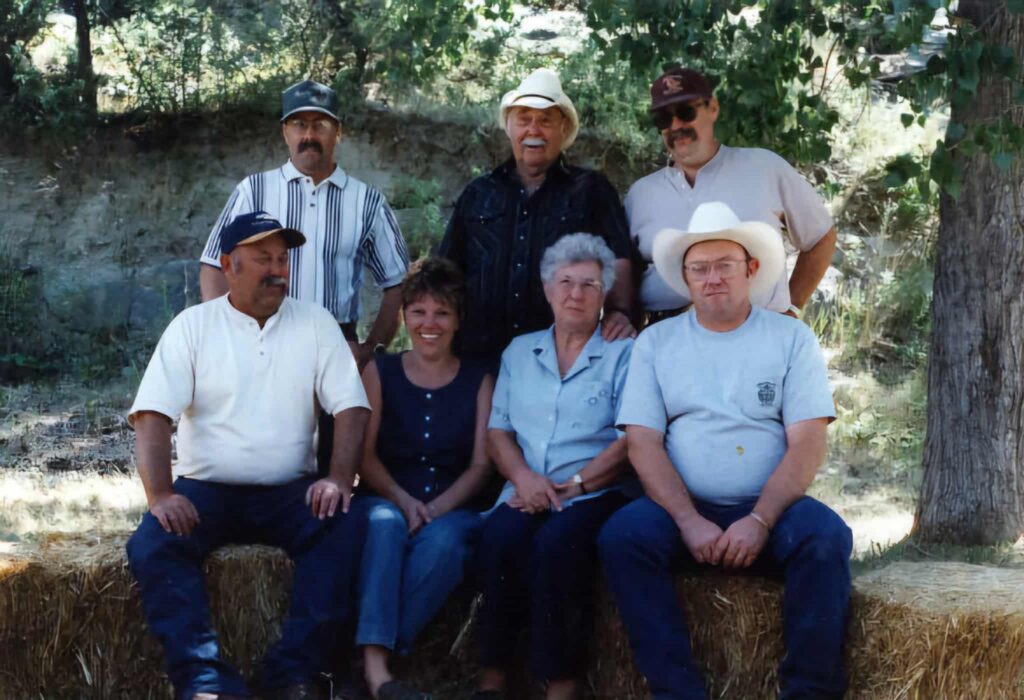
Following his discharge from the United States Marine Corps in January 1946, Walter Pfister returned to Montana and began building his civilian life. He married Ida Jane Menghini on September 5, 1946, in Hamilton, Montana. Together, they raised five children and established deep roots in Roundup, Montana, where they lived for more than six decades.
Pfister began a long career with Fergus Electric Cooperative, retiring in 1988. His postwar life was defined by steady employment, family commitment, and continued service to his community. In the early 1970s, Walter helped establish Roundup Emergency Medical Services, an organization that continues to serve the region today.
Pfister remained actively involved in civic and youth programs, including service as a Boy Scout leader. His dedication reflected a lifelong pattern of leadership and community engagement.
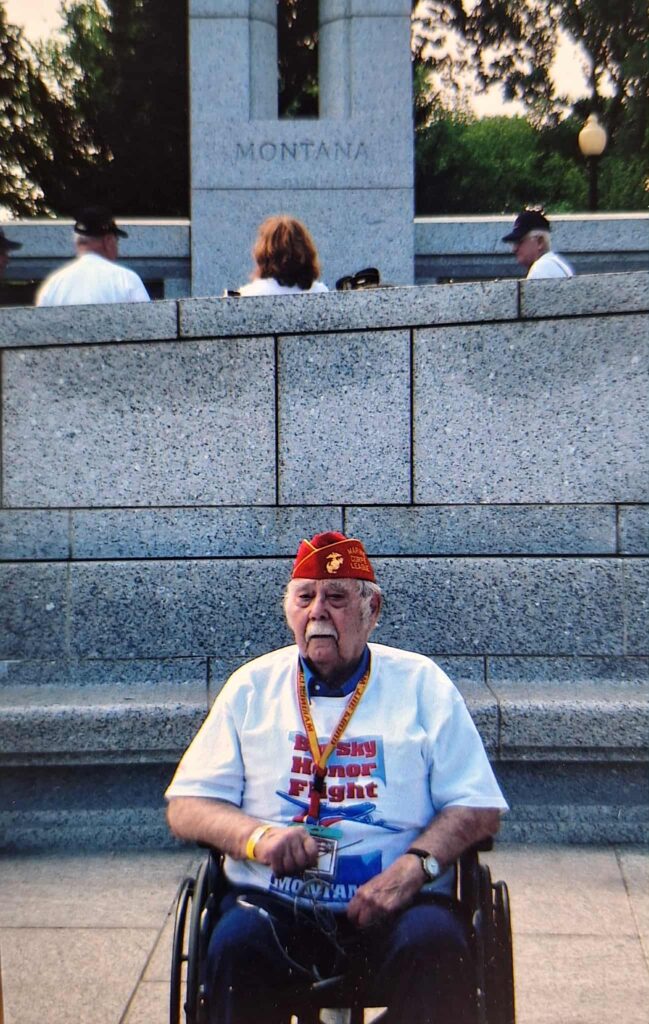
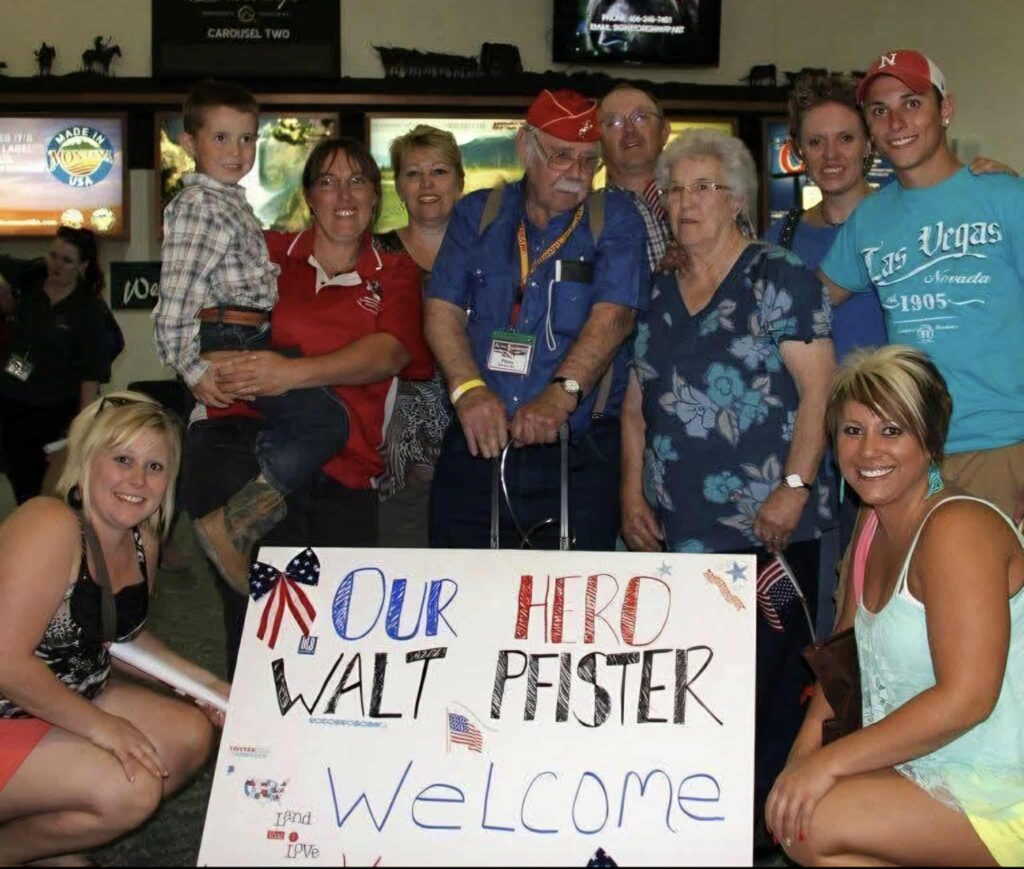
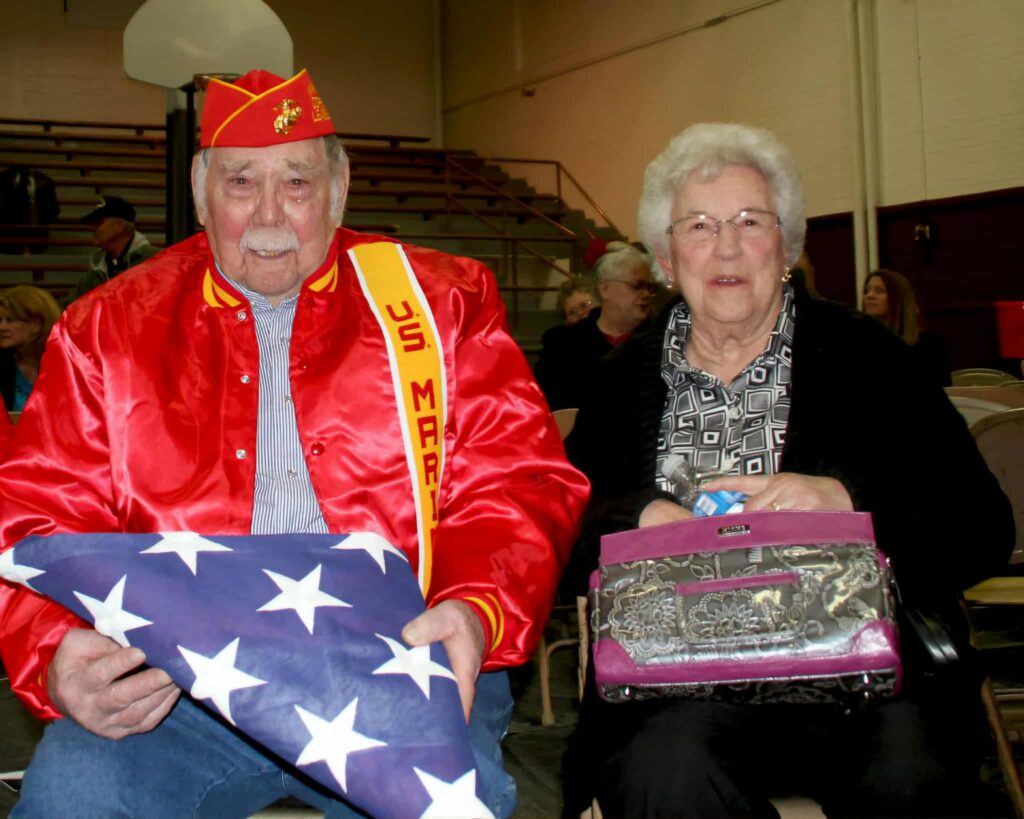
Later in life, he participated in the Big Sky Honor Flight, an experience that formally recognized his World War II service. The flight honored his military contributions and connected him with fellow veterans. Family members recall that this experience was one of the highlights of his life, offering both reflection and appreciation for a generation’s sacrifices.
Walter Pfister’s life after military service illustrates how veterans continued to shape their communities long after wartime service ended.
Commemoration
Walter S. Pfister passed away on August 4, 2013, in Billings, Montana. On that Sunday morning, the world lost not only a beloved husband, father, and valued member of his community, but also a man whose life reflected a deep commitment to service. As a young man, Pfister answered the call to serve his country during a time of great need, demonstrating courage and sacrifice that would define his legacy.
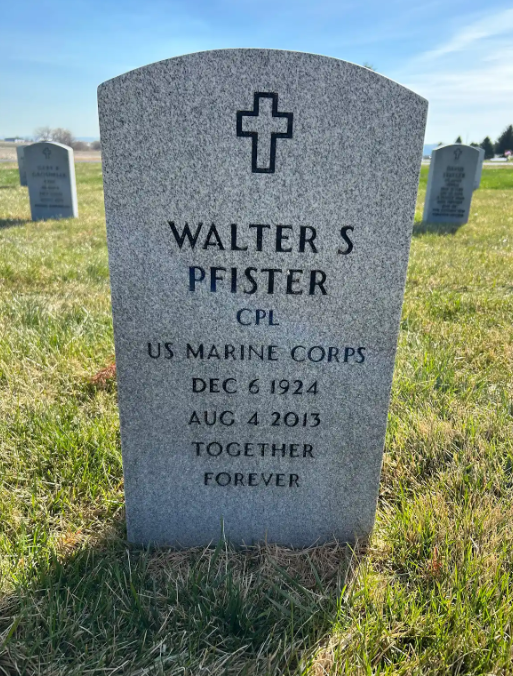
Today, Walter Pfister is buried at Yellowstone National Cemetery in Laurel, Montana, where his service to the United States is honored among fellow veterans. His legacy lives on through the historical record of his military service and through the memories of those who knew him, ensuring that his contributions and sacrifice will not be forgotten.
Bibliography
Primary Sources
Are you helping? with salvage. Poster. c.1941-1943. Federal Art Project, Library of Congress (98518981). https://www.loc.gov/item/98518981/.
Hollaway, Grace. Interview. July 22, 1981. Montana Women’s Oral History Project, University of Montana. https://scholarworks.umt.edu/mtwomen_oralhistory/16/.
“Ida Pfister.” Billings Gazette [Billings, Montana], October 28, 1919. https://billingsgazette.com/news/local/collection_cf8ce904-7f89-5d95-a755-e848eff492e2.html.
“Ida Pfister.” Smith Funeral Chapels. Accessed April 14, 2026. https://billingsgazette.com/news/local/collection_cf8ce904-7f89-5d95-a755-e848eff492e2.html.
LVTs [Landing Vehicle Tracked] or amphibious tanks moving toward Iwo Jima beaches on 19 February 1945. Photograph. February 19, 1945. Gift of Julian Dean, The Digital Collections of The National WWII Museum (2010.523.061). https://www.ww2online.org/image/lvts-landing-vehicle-tracked-or-amphibious-tanks-moving-toward-iwo-jima-beaches-19-february.
Montana. Cascade County. 1930 U.S. Census. Digital Images. https://ancestry.com.
Montana. Cascade County. 1940 U.S. Census. Digital Images. https://ancestry.com.
Noyes, Lori Pfister. Email message to Azaria Beley-Davis and Reese Cooney. November 1, 2025.
Pfister Family Photographs. Courtesy of Lori Pfister Noyes.
Pfister, Lori. Telephone interview by Azaria Beley-Davis and Reese Cooney. October 10, 2025.
Pfister, Walter. Interview by Jessie Crane. Tape recording, January 14, 2005.
Walter Pfister and Ida Menghini. Montana, U.S. Marriage Records, 1943-1988. Digital Images. https://ancestry.com.
“Walter S. Pfister.” Billings Gazette [Billings, Montana], August 6, 2013. https://www.legacy.com/person/Walter-S.-Pfister-51764593.
Walter S. Pfister. U.S., Marine Corps Muster Rolls, 1789-1958. Digital Images. https://ancestry.com.
Walter S. Pfister. U.S., World War II Draft Registration Cards Young Men, 1940-1947. Digital Images. https://ancestry.com.
“War Labor Camp At Fort Shaw Given Approval.” Great Falls Tribune [Great Falls, MT], May 24, 1945. Newspapers.com (238260502).
Secondary Sources
“Appendix IX: Navy Unit Commendation.” In Iwo Jima: Amphibious Epic. HyperWar. Accessed January 1, 2026. https://www.ibiblio.org/hyperwar/USMC/USMC-M-IwoJima/USMC-M-IwoJima-IX.html.
Batista, Brunette. Email message to the authors. November 5, 2025.
Fabry, Judith. “Enlightened Selfishness: Great Falls and the Sun River Project.” Montana: The Magazine of Western History 44, no. 1 (Winter 1994): 14–24. https://assets.gid-mt.org/wp-content/uploads/2016/02/enlightened-selfishness-judity-fabry.pdf.
“Fort Shaw Indian School.” Lost Colleges. Accessed November 13, 2025. https://www.lostcolleges.com/fort-shaw-indian-school.
“History – Sun River Project.” Greenfields Irrigation District. Accessed November 8, 2025. https://gid-mt.org/about/history/.
Homefront: United or Divided. Documentary. Montana PBS. October 2, 2007. Accessed November 13, 2025. https://www.pbs.org/video/montanapbs-presents-homefront-united-or-divided/.
“(H)our History Lesson: Civilian Volunteerism and Contributions on the Home Front in Lewistown, Montana, World War II Heritage City.” National Park Service. Accessed April 14, 2026. https://www.nps.gov/articles/000/h-our-history-lesson-civilian-volunteerism-and-contributions-on-the-home-front-in-lewistown-montana-world-war-ii-heritage-city.htm.
“Ida Jane Meghini Pfister.” Find a Grave. Updated November 3, 2019. Accessed April 14, 2026. https://www.findagrave.com/memorial/204399494/ida_jane-pfister.
Roundup (Mont.) High School Veterans Project Records, 2004–2005. Archives West, Orbis Cascade Alliance. Accessed December 2025.
Skovlund, Joshua. “The Presidential Unit Citation’s History of Heroism.” Task & Purpose. Updated September 1, 2023. Accessed January 1, 2026. https://taskandpurpose.com/news/presidential-unit-citation/.
“Sheldon’s World War II Posters.” Nebraska State Historical Society. Accessed November 13, 2025. https://history.nebraska.gov/sheldons-world-war-ii-posters/.
“Walter S. Pfister.” Veterans Legacy Memorial, National Cemetery Administration. Accessed April 14, 2026. https://www.vlm.cem.va.gov/WALTERPFISTER/B6DFCE0.
“Walter S. ‘Walt’ Pfister.” Find a Grave. Updated August 3, 2013. Accessed April 14, 2026. https://www.findagrave.com/memorial/114998229/walter_s-pfister.
This profile was funded by a grant from the United States Department of Veterans Affairs. The opinions, findings, and conclusions stated herein are those of the author and do not necessarily reflect those of the United States Department of Veterans Affairs.