
Private First Class Wesley Neil Lambert
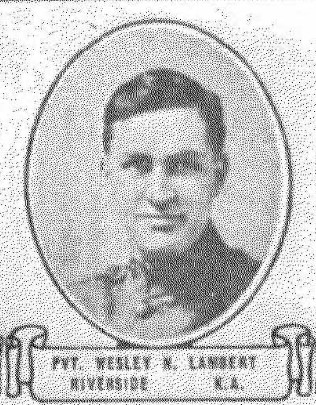
- Unit: 91st Division, 182nd Brigade, 364th Infantry Regiment, Company M
- Service Number: 2267962
- Date of Birth: November 5, 1895
- Entered the Military: June 5, 1917
- Date of Death: October 30, 1918
- Hometown: Riverside, California
- Place of Death: West Flanders, Belgium
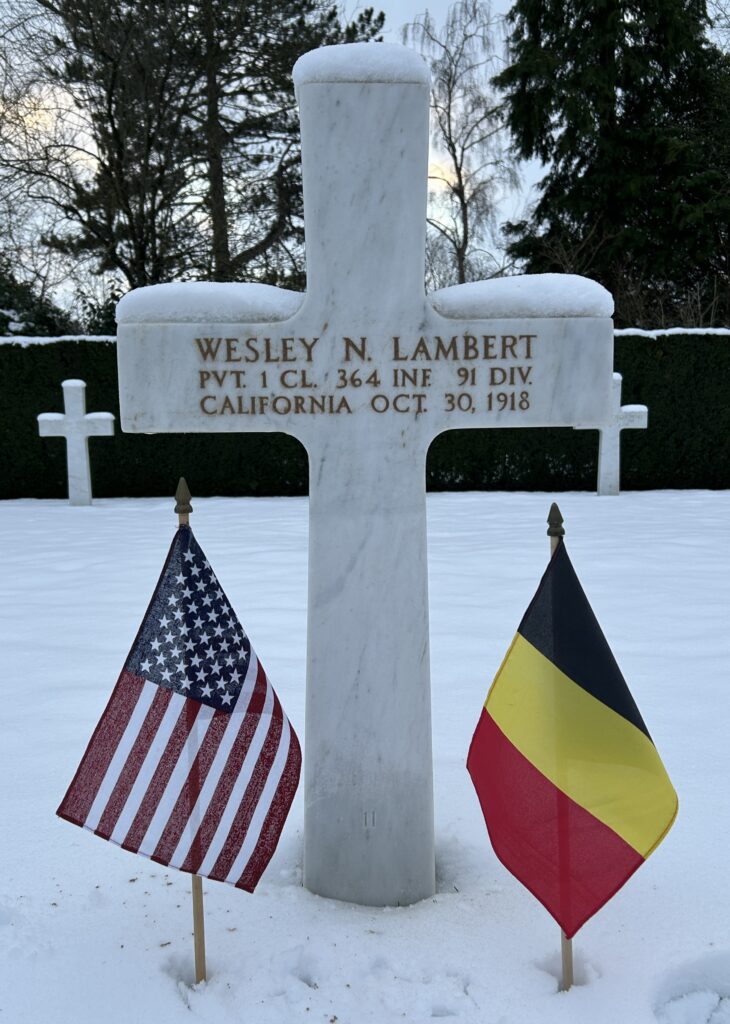
- Cemetery: Plot D, row 2, grave 11, . Flanders Field American Cemetery, Waregem, Belgium
Cordova High School, Rancho Cordova, California
2025/2026
Early Life
The Other California Gold Rush
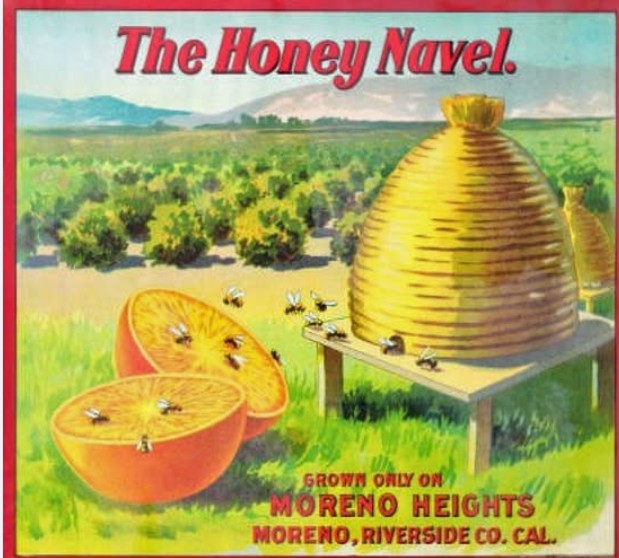
There were actually two gold rushes in California. Most are familiar with the first Gold Rush, when gold nuggets were discovered at Sutter’s Mill near Sacramento in 1848, attracting thousands of fortune-seekers. The “second gold rush” began in the 1870s in southern California, but its “gold” was citrus, namely, oranges. The Citrus Gold Rush, or Citrus Boom, attracted midwesterners and easterners in droves with captivating advertisements and travelers’ tales that enticed families from colder climates to balmy Southern California for the good life, sweet and ripe with opportunity.
First-hand accounts by midwestern families who relocated out west were printed in newspapers across the heartland, including Nebraska, where Wesley Lambert’s parents and grandparents lived. Reading about fellow midwesterners’ travels out west during the winter citrus harvest season inspired thousands of families, like the Lamberts, to move west:
As we arrive at the heights we look down on a city almost completely hidden in a forest of orange groves loaded with the golden fruit, as this is the height of the harvest season . . . The oranges are very fine, they bring them in to us faster than we can eat them and we feel sorry because we can’t eat more
A.L. Barrows, writing from Riverside, California, December 1902. Published in The Republican in Hastings, Nebraska.
Wesley Neil Lambert’s family was among the many who left Nebraska for California.
Riverside or Bust!
By 1895, Riverside, California, boasted the nation’s highest per capita income. Around 1890, Lambert’s maternal grandparents and great-grandparents, the Parkinsons, moved here. The Parkinson family was a farming family from Ohio who relocated to Illinois and then to Nebraska in the mid-1800s to take advantage of homesteading opportunities.
Lambert’s father’s family chose to stay behind in Nebraska after immigrating from Canada in the mid-1800s. In Nebraska, Eva Parkinson and Neil Lambert fell in love and married in 1887. Neil and Eva had three sons–Guy, Harold, and Raymond–in Nebraska before they moved to Riverside to settle near the Parkinsons (Eva’s family) between 1892 and 1895.
Once in California, the Lamberts had two more children: Wesley in 1895 and his younger sister Gladys in 1898. According to Riverside city directories and voter rolls, Lambert’s grandfather, T.K. Parkinson, was a rancher in Riverside. But his father, Neil, worked as an ice truck driver, a cement plant foreman, and a street inspector. Lambert’s mother, Eva, was a wife and mother who tended to her home and family.
He Made No Enemies
Young Wesley Lambert enjoyed a lively childhood. He was popular with his family, friends, co-workers, and neighbors. His family attended the Riverside First Methodist Episcopal Church, and they enjoyed church socials, lectures, and other events which the local newspapers regularly covered.
In May 1910, Lambert ran in a YMCA relay race on the El Camino Real spanning more than 257 miles between Santa Barbara and Redlands. Lambert ran his mile of the race swiftly, contributing to the Riverside team’s overall time of 19 miles in one hour, 22 minutes.
When Lambert was 12 years old, he was hit by a car that “had no lights and was speeding up Main Street” while riding his bicycle. He “was thrown heavily to the pavement” and suffered a broken collarbone and a demolished bicycle.
Lambert’s name often appeared in the local newspapers’ society sections. In December 1910, the local paper reported on a camping trip 15-year-old Lambert took with the Young Men’s Christian Association (YMCA) to the local mountains. There, the boys went duck hunting for the evening meal, told ghost stories and funny tales, and participated in a snowball fight. The papers reported that Lambert’s group of friends often enjoyed picnics at Riverside’s lovely Fairmount Park.
In November 1913, his friend Dorothy held a masquerade party for her sixteenth birthday. He dressed as Mephistopheles, a comical Faustian trickster, and received the award for best-disguised guest.
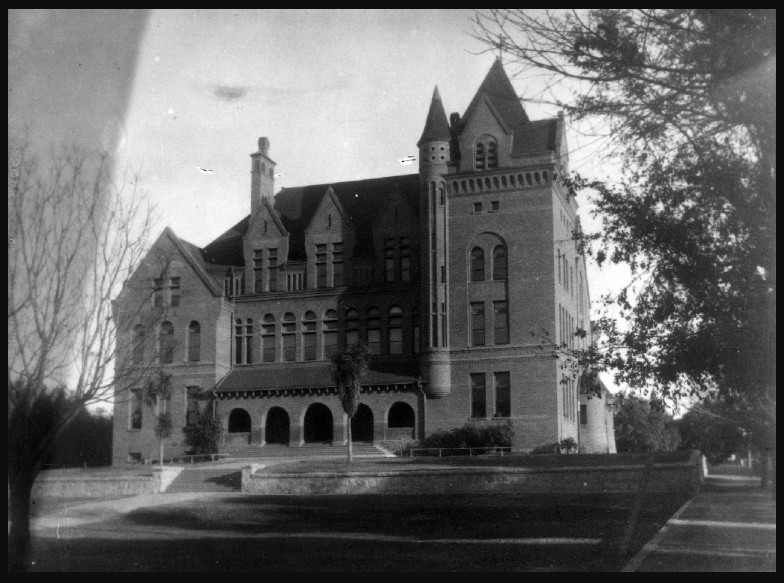
Wesley Lambert attended Grant School through grade eight, and he graduated from Riverside Polytechnic High School in 1913. Lambert was athletic, enthusiastically enjoyed sports, and relished being outdoors. His favorite activities included baseball, camping, hunting, fishing, basketball, and hiking.
Where There’s a Will, There’s a Way
During high school, Lambert worked as a newsboy delivering papers. After high school, he joined his older brother Raymond, a linotypist and pressman, at the Riverside Independent Enterprise newspaper office. By his early 20s, Lambert advanced to the paper’s Circulation Manager, ensuring the newspaper was delivered to subscribers on time and managing the newsboys and delivery routes.
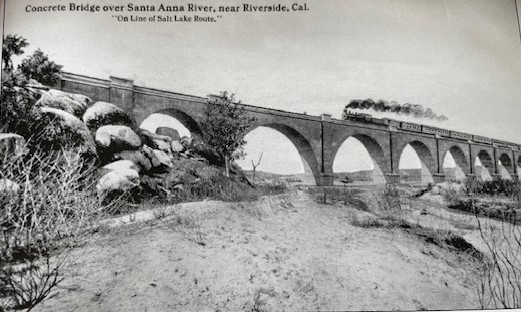
On January 19, 1916, during a catastrophic flood, Lambert and a co-worker attempted to deliver newspapers in a “little Saxon” automobile. They drove over the rails of the Salt Lake Line railroad bridge across the flooded Santa Ana River when the car got stuck. A train backed down the tracks toward them. In the pouring rain, they managed to get the engineer’s attention, and the train stopped just in time. Every customer received the newspaper.
As the Circulation Manager for the Riverside Independent Enterprise, Lambert was responsible for ensuring newspaper delivery rain or shine. Each summer, the paper’s owner and publisher, J. R. Gabbert, sponsored a summer camp in the mountains for its newsboys. Lambert was integral to organizing and facilitating the camp experience. In 2006, Judge John Gabbert, the publisher’s son, recalled attending the camp at age seven. He remembered that Lambert was an “upbeat young man” and a “nice guy.” He participated in the boxing activity, and the other boy beat him handily. He remembered that Wesley Lambert patted his shoulder afterward, saying that it was okay, and “[I’d] do better next time after [I’d] had a little more experience.”
Just before Lambert joined the military, he was promoted to Advertising Manager.
The Great War and Cupid’s Arrow
Frequently appearing with Wesley Lambert’s name on the social pages was Celestine Friend. On June 4, 1917, Riverside Daily Press published details of their engagement party. The announcement was made by distributing handmade cards that resembled the front page of a tiny newspaper to guests. When opened, there was a photograph of Wesley Lambert and Celestine Friend with “their names found within a heart supported by Cupid.”
Homefront
Riverside, California’s efforts to support the Great War centered on food and coal conservation and raising money for war bonds.
Yes, We Can
During World War I, the U.S. government asked families to conserve and preserve food to maintain the food supply at home and to send food abroad. Women like Miss L. Orrie Groce, domestic science teacher at Riverside High School, taught the first in a series of canning classes to show women how to can asparagus, summer squash, and beets in June 1917. By May 1918, the U.S. government asked women to can 20 additional quarts of fruit and vegetables. The appeal asked, “Will Riverside county women go ‘over the top’ in the canning campaign?”
Planning Ahead to Support the War Effort
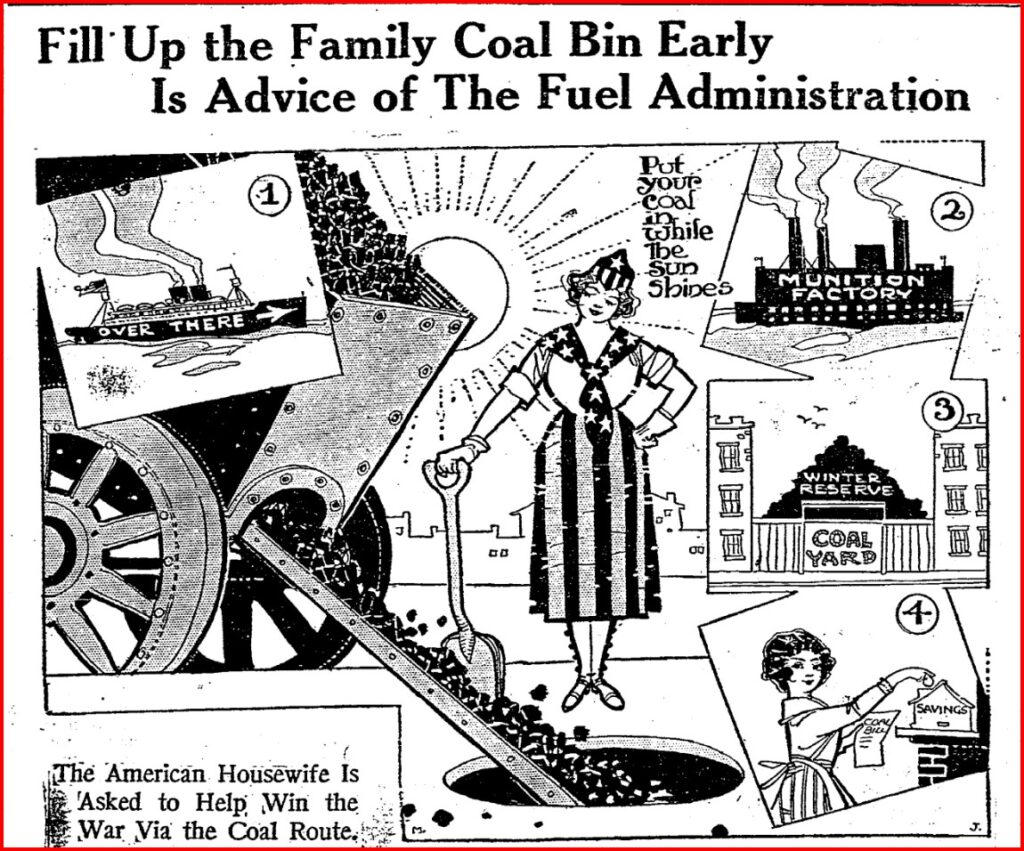
Before central heating was common, people heated their homes with wood- or coal-burning furnaces. Coal also fueled steam locomotives that pulled trains loaded with cargo and passengers.
In June 1918, the Riverside Independent Enterprise asked whether “the American housewife [would] help win the war via the coal route.” The U.S. Fuel Administration urged filling the family coal bin earlier than usual. The article explained that planning ahead would free up coal for the war effort later, provide for war needs, and set reserves aside for weather emergencies. In addition, housewives would save at least 30 cents on every ton purchased in the summer months.
Everyone Can Do Their Bit
Liberty Loan campaigns urged people to invest every spare penny in bonds to help fund the war. The Riverside Independent Enterprise reported on April 16, 1918, that the city raised more than $540,000 in their third Liberty Loan campaign. Riverside rose to the challenge and exceeded their expected apportionment, going well “over the top.” In this drive, children who attended the Grant School saved $200 to buy new playground equipment. Instead, they used the money to buy four $50 Liberty Bonds.
A few boys voted against buying the bonds in favor of the playground equipment. The Daily Press reported that these boys “were made the targets for a so-called patriotic demonstration, and some of them were ‘ducked’ in the fountain . . . There is no pro-Germanism in Grant School as the record made by the pupils buying [bonds] proves.”
The Glenwood Mission Inn
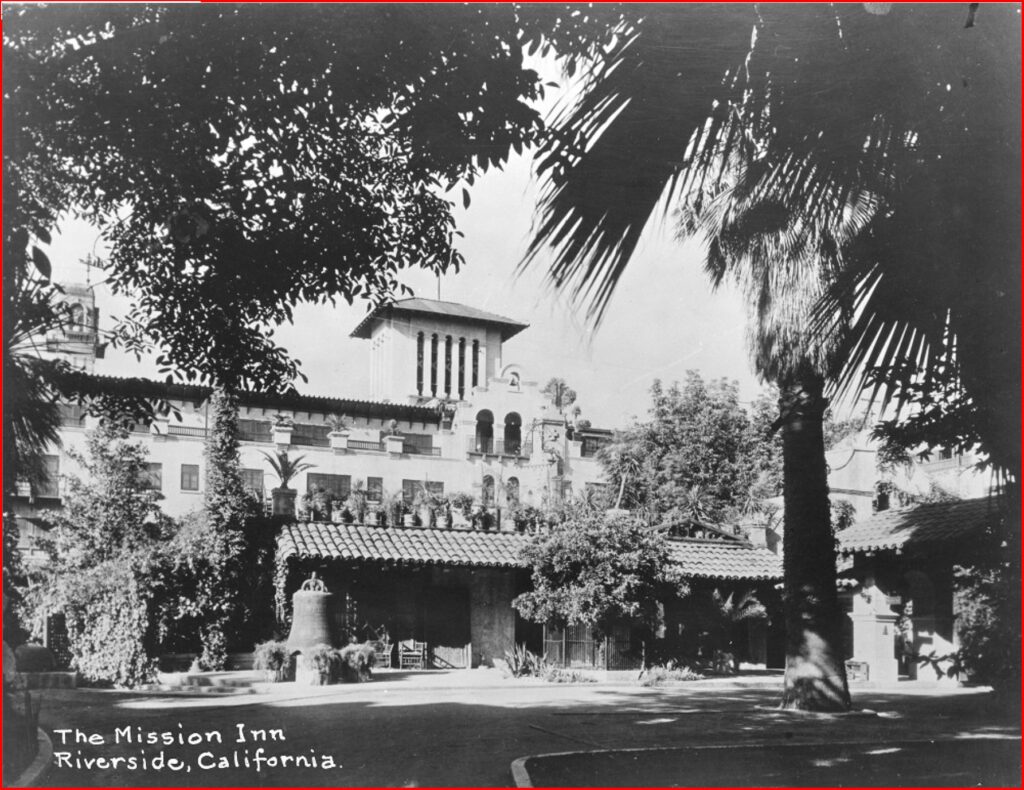
One of Riverside’s most famous landmarks is the Mission Inn Hotel and Spa. It has hosted presidents, royalty, and celebrities for more than 100 years. During World War I, hotel owner Frank Miller hosted lavish war chest fundraisers. The hotel attracted wealthy patrons with its unique architecture, appointed with treasures from Miller’s travels around the world.
When March Air Field was being constructed in 1918, Miller quartered officers at the Glenwood Mission Inn. Airplanes at March Field featured nose artwork commemorating the Mission Inn during both the Great War and World War II.
“Freedom Forever For All!”
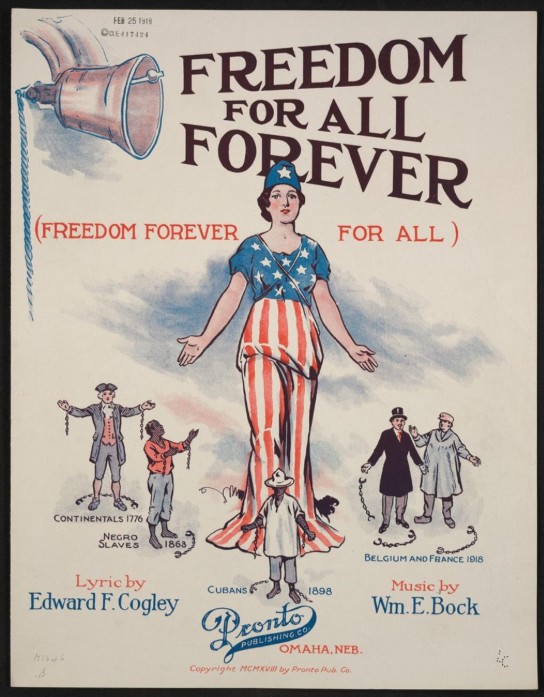
Meanwhile, the Newspaper Enterprise Association sponsored a nationwide contest inviting readers to create a national war slogan. The winner was announced on December 6, 1917. Marion I. Coop, from Riverside’s winning slogan was “Freedom Forever For All!” The slogan was expanded into a popular song.
Military Experience
On June 5, 1917, Wesley Lambert registered to fight in the Great War. In so doing, he also continued the legacy of his grandfather, Parkinson, who had served in the Union Army during the Civil War.
The Wild West Division
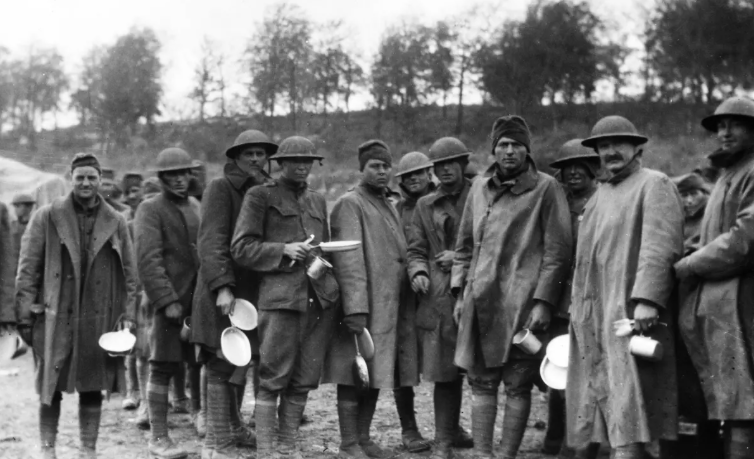
Wesley Lambert was assigned to the 91st Infantry Division, known as the “Wild West Division,” because the men were from California and the western states. He was part of the 182nd Brigade, 364th Infantry Regiment, Company M, which arrived at Camp Lewis, Washington, on September 26, 1917.
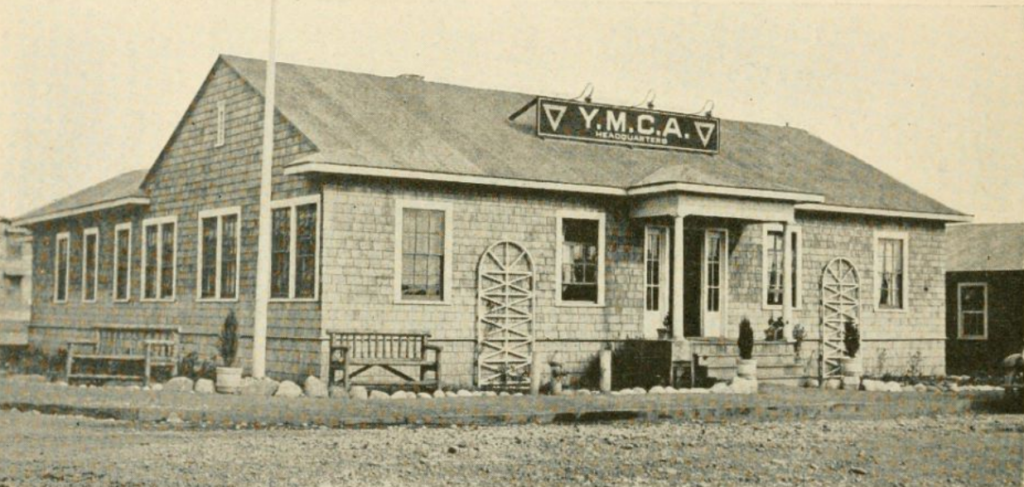
Lambert wrote, “We arrived at 4 a.m. Saturday and were at once inspected and issued [supplies] . . .” He and some pals went to the YMCA building, where “the talks were very good” and paper, stamps, ink, gum, candy, and cards were available. He complained that the building was crowded, and it was challenging to find a place to write letters. He enjoyed the pianos. Camp Lewis “looked beautiful as it is all covered with snow and the sun turned the whole horizon into pink and red.” He described getting a physical and vaccines, and preparing for weekly inspections. He signed off his letter, adding that he would be enrolling in French lessons.
By January 1918, Lambert wrote that Company M learned to shoot and use their bayonets. Training became more rigorous. In February, the Lambert family had a scare when someone named Leslie Lambert, of San Bernardino, was reported missing in action and mistaken for their son. The family was relieved when the error came to light.
In April 1918, Private First Class Wesley Lambert was promoted to corporal. Training at Camp Lewis continued until summer, when Company M was transported by train to New Jersey. In July, Company M crossed the ocean to Southampton, England, where they changed ships and sailed on to Le Havre, France.
Send the Word, Send the Word Over There
Once in France, Company M spent the last part of July and August in training and billeted in French villages. On July 29, 1918, Lambert wrote a letter home. It arrived in September. In his letter, Lambert wrote about his experience in the French village:
My Dear Mother. Well, mother mine, we are here because we’re here and have all been assigned to billets and made as comfortable as possible . . . We came inland and the country is as old and just as far behind the times as my little old green backed history told me it was . . . The homes are built of stone and as you know the hay and implements are kept upstairs and the livestock and families downstairs . . . Everyone here is as busy as can be, [even] the children and old folks doing it all. The wine here is of very poor quality and very little temptation to the fellows . . . We get the Paris newspapers regularly and so keep up with the news. . . Well, mother dear, don’t worry about me at all as I never felt better in my life and if you don’t receive mail regularly from me blame old Kaiser Bill and his practically useless subs . . . Everyone is anxious to get to the front as this seems more like a resting place than a training field.” Lambert closed the letter by writing that the man of the house where he is billeted said the village lost 15 of 17 boys who went to fight. “Now that the Boches [Germans] are on the run, everyone is just that much more anxious to ‘have-at’ them and get a look at Berlin . . . Wesle
Meuse Argonne Offensive
The Enterprise printed Lambert’s letter on September 14, 1918. Eleven days later, Lambert’s unit moved to Mont des Allieux near Vauquois, France, as part of the Meuse-Argonne Offensive. The 364th Infantry Regiment steadily pushed forward from the trenches, over the top, and across No Man’s Land again and again. By October 3, they achieved their objective.
The 91st Infantry Division was moved to the rear with a letter of commendation from General George H. Cameron, which said, “At a time when the divisions on its flanks were faltering and even falling back, the 91st pushed ahead and steadfastly clung to every yard gained.”
Ypres-Lys, the Final Offensive and Armistice
At Ypres-Lys, Belgium, the 364th Infantry Regiment moved into position on the night of October 30. They faced heavy bombardment and high casualty rates. In this barrage, Wesley Neil Lambert was killed in action.
By November 2, the Americans liberated the area, just nine days before the Armistice. Alva J. Cole was there when Wesley Lambert and many others were killed on October 30. On December 3, 1918, the Riverside Independent Enterprise published a letter that Cole wrote to his parents:
About 50 were killed one night when we were marching in. A German airplane dropped a star shell over our column as we marched along the road. It was as bright as day and the big guns started shelling our line with direct fire. They hit four times before we could scatter . . . [A medic] was killed by concussion and Wesley Lambert of Riverside and a boy by the name of Nabors [were hit] . . . The night before, I had promised to cut Wesley’s hair the first chance we had. We ate supper together and had quite a visit. They were all buried by the side of the road the next morning by [our] chaplain.
Commemoration
The Lambert family was notified of Wesley’s death on November 29, 1918. Details from his last letters, written on October 29, were shared by his parents and fiancée to be published on December 1, 1918.
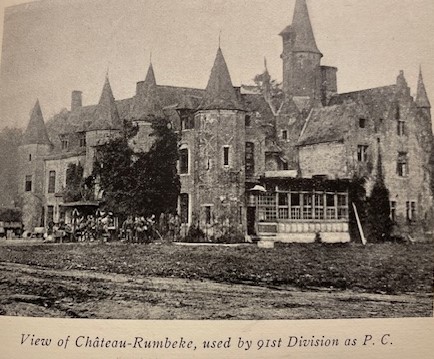
Lambert explained that he was working as a clerk away from the battlefield in an old Belgian château. The 91st Infantry Division had a command post at Château-Rumbeke near Ypres-Lys. From there, Lambert wrote:
On the 29th of last month I was lying in a muddy, leaf moulded ditch at the edge of the woods looking out over No Man’s Land, when the thought of Mother’s birthday came to me and we all exchanged thoughts of home and our mothers. I hope that you had a pleasant time and that the fact that we boys were away has not made you change from that 25-year-old look of last year. . . .On the 12th of October, Dad’s birthday, we had one of the longest and hardest hikes we’ve had. It was the middle day of a three-day hike and was a life shortener. Of course, we got our laughs out of it. The pessimists said that if they couldn’t kill us in battle, we would be walked to death. The optimists said: ‘Hell, we can walk a million kilometers a day, so long as we are going back to baths, shaves and eats . . . ‘ I have been acting corporal in gas work for some time. I should have been the new ranking non-com in gas work at the company but was not appointed before a chance came in for a few days’ special work at the personnel office as a clerk, recommended by Captain Humphreys my old commander, who was made a major only yesterday. I do not know my status or just what the work will be or how long I’ll be here, but keep my mail going as it was, for now . . .
He wrote about how beautiful the autumn colors were around the château:
The forest quite suddenly the other day flung forth its autumn colors. Indeed, those watching from the nearby hillsides, it seemed as if it was that one day that the forest blazed all about at once into russets and gold and purples, with here and there a scarlet tree, as though its roots had drunk deeply of young American blood spent freely for an eternal cause. It was my first experience, as you know, of real autumn effects and was certainly beautiful among the French gardens . . . From the sublime to the ridiculous. That is our life exactly.
Wesley Neil Lambert was buried in a temporary roadside grave the next morning, five days before his twenty-third birthday and 11 days before the Armistice was declared on November 11, 1918.
The newspaper where he worked described him as one of the
cleanest, squarest, and finest young men . . . We who knew him best could count on his sunny good nature and his absolute reliability. When he was circulation manager, he endeared himself to all of the carrier boys on the force and all others with whom he worked. . . He made no enemies for the people he was serving, and he developed new friendships for them and himself . . . Wesley was true as steel and faithful unto death.
Lambert’s remains were re-interred at the Flanders Field American Cemetery and Memorial in 1922. In 1929, the U.S. government invited the widows and mothers of soldiers buried abroad during the Great War to participate in a Gold Star Pilgrimage, all expenses paid, to see their Silent Hero’s final resting place. It is not known whether Eva Lambert decided to take the voyage.
Final Farewell
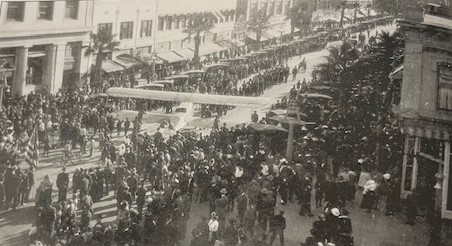
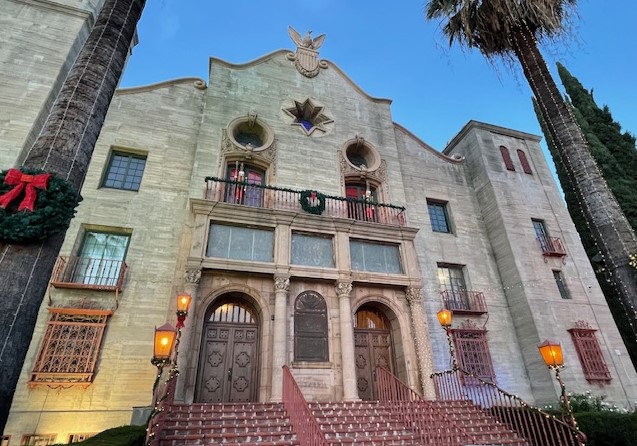
In Riverside, memorials were held in honor of all who died in the Great War. Judge Gabbert recalled a memorial service for Lambert. An auditorium was opened in 1928, dedicated to all of the fallen soldiers from Riverside who died in the Great War.
Bibliography
Primary Sources
“The American Housewife is Asked to Help Win the War Via the Coal Route.” Riverside Independent Enterprise [Riverside, California], June 6, 1918. https://drive.google.com/file/d/1CGaQapf_WewwBWx_Uk5CcdzZm3jKQS36/view?usp=sharing
“Another Local Boy Reported Killed.” The Riverside Independent Enterprise [Riverside, California], December 1, 1918. https://drive.google.com/file/d/1Vo8Nz-aj4uGBMq-sX7wpS2JZOxe8uQ9S/view?usp=sharing
California. Riverside County. 1900 U.S. Census. Digital images. https://ancestry.com
California. Riverside County. 1910 U.S. Census. Digital images. https://ancestry.com
“Camp Lewis Life Described by Riverside Boy.” The Riverside Independent Enterprise [Riverside, California]. October 4, 1917.
Casa Blanca Brand. California Citrus Box Label. C.1918-1930. Collection of Melissa Lawson.
“Company M Sees Wonders of East.” The Riverside Independent Enterprise [Riverside, California], August 11, 1918.
“County Women Learn Canning: Under the Auspices of County Farm Bureau Lessons in Preparing Vegetables.” Riverside Daily Press [Riverside, California]. June 22, 1917.
“The Editor Still Coasting: Long Beach to Los Angeles.” Grand Island Independent [Grand Island, Nebraska], May 15, 1886. Newspapers.com (693099833).
“Eighth Grade Examinations Held Yesterday.” The Riverside Independent Enterprise [Riverside, California], June 19, 1909.
“Enjoy Trip to Pine Crest.” The Riverside Daily Press [Riverside, California], December 30, 1910.
“Freedom for All Forever.” Sheet Music. 1917. James Edward Myers World War I Sheet Music Collection, Sousa Archives and Center for American Music, University of Illinois at Urbana-Champaign Library. https://digital.library.illinois.edu/items/f7336150-c556-0134-2373-0050569601ca-6.
“From California.” The Republican. [Hastings, Nebraska], March 7, 1902. Newspapers.com (701374101)
Mission Inn. Photograph. c.1880-1910.” Special Collections and University Archives, University of California, Riverside. https://calisphere.org/item/ark:/86086/n2js9qhp/.
“Grant School to Buy Liberty Bonds.” Riverside Daily Press [Riverside, California], May 2, 1918.
Harrison, Scott. “From the Archives: The 91st ‘Wild West’ Division in World War I” Photograph (reprint). The Los Angeles Times [Los Angeles, California]. November 8, 2018. https://www.latimes.com/visuals/photography/la-me-fw-archives-the-91st-wild-west-division-in-world-war-i-20181030-htmlstory.html.
Henderson, Alice Palmer. The ninety-first, the first at Camp Lewis. J. C. Barr, 1918. Library of Congress (18022272). https://www.loc.gov/item/18022272/
The Honey Navel. California Citrus Box Label. c.1890-1900. Collection of Jay T. Last, Huntington Digital Library. https://hdl.huntington.org/digital/collection/p16003coll4/id/2734/.
“Hurt by Automobile.” The Los Angeles Daily Times [Los Angeles, California], December 9, 1907.
“Last Bond Rally Friday.” Riverside Independent Enterprise [Riverside, California]. April 16, 1918.
“Lifters Meet at Fairmount Park.” The Riverside Independent Enterprise [Riverside, California], May 17, 1910.
“Masquerade Party Honors Birthday.” The Riverside Daily Press [Riverside, California], November 8, 1913.
“Methodist Young People in Happy Frolics.” The Riverside Independent Enterprise [Riverside, California], October 31, 1914.
“Monday Parade is Largest of Drive.” Riverside Independent Enterprise [Riverside, California]. April 16, 1918.
Nebraska. Howard County. 1880 U.S. Census. Digital images. https://ancestry.com
Nebraska. Howard County. 1900 U.S. Census. Digital images. https://ancestry.com
“Neil Lambert.” California, U.S., City Directories, 1822-1995. Digital images. https://ancestry.com.
“Notice of Final Proof.” The St. Paul Press [St. Paul, Nebraska], November 5, 1884. Newspapers.com (750516505).
Ontario. Bruce District, Southampton. 1871 Canada Census. Digital images. https://ancestry.com
Original Grant School, 14th and Brockton Street. Photograph. c.1880-1910. Avery E. Field Collection, Special Collections and University Archives, University of California Riverside. https://calisphere.org/item/ark:/86086/n2m90839/.
“Pensions and Postoffices: Applications of Pacific Coast People Granted.” San Francisco Chronicle [San Francisco, California], August 7, 1890. Newspapers.com (1236130738)
“Pretty Party Tells Betrothal: Miss Celestine Friend Announces Approaching Marriage to Wesley Lambert.” The Riverside Daily Press [Riverside, California], June 4, 1917.
“Results from the Religious Revival.” The Riverside Independent Enterprise [Riverside, California], April 28, 1907.
“Riverside Boy Dies in Action.” The Riverside Daily Press [Riverside, California], November 29, 1918.
“Riverside Boys Acquit Themselves With Credit in Big Relay Race: Cover Their Part of the Course, Nineteen Miles, in One Hour and Twenty-Two Minutes.” The Riverside Independent Enterprise [Riverside, California], May 29, 1910.
“Second Annual Enterprise Camp to Open.” The Riverside Independent Enterprise [Riverside, California], July 24, 1917.
“Surviving Riverside Boy Gives Details of Company M Casualties of the 364th.” The Riverside Independent Enterprise [Riverside, California], December 3, 1918. https://drive.google.com/file/d/1l30C-RaJuHVzVyV5-T54f2kbqh9Rf1ZW/view?usp=sharing
T. K. Parkinson. California, U.S., Voter Registers, 1866-1898. Digital images. https://ancestry.com
Thomas K. and Joseph Parkinson. Family photograph. c.1860-1864. Digital images. https://ancestry.com.
Thomas K. Parkinson, Illinois, U.S., Databases of Illinois Veterans Index, 1775-1995. https://ancestry.com.
“Seedless Washington Navel Oranges.” Crate label. c.1893. Riverside Public Library. https://calisphere.org/item/ark:/13030/kt838nd4cs/.
“Wesley Lambert Made a Corporal.” The Riverside Independent Enterprise [Riverside, California], April 4, 1918.
Wesley N. Lambert. Card Register of Burials of Deceased American Soldiers, 1917 – 1922. Digital images. https://fold3.com.
Wesley N. Lambert. U.S. Army Transport Service Arriving and Departing Passenger Lists, 1910-1939. Digital images. https://ancestry.com.
Wesley N. Lambert. U.S. Army Transport Service Arriving and Departing Passenger Lists, 1918-1919. Digital images. http://www.fold3.com.
Wesley Neil Lambert. World War I Draft Registration Cards, 1917-1918. Digital images. https://ancestry.com.
“Wesley Lambert Writes From France.”The Riverside Independent Enterprise [Riverside, California], September 14, 1918.
Word to the Wise. Illustration. Riverside Independent Enterprise [Riverside, California]. August 31, 1917.
“Y.M.C.A. Relay Race Along El Camino Real, Santa Barbara to Redlands, Will Start Friday, May 27.” The Riverside Independent Enterprise [Riverside, California], May 21, 1910.
Secondary Sources
“Americans in Flanders During World War I.” Flanders in the USA. Accessed February 2, 2026. https://flandersintheusa.org/americans-flanders-during-world-war-i.
“At Riverside’s Mission Inn Museum, Visitors Reflect on Peace, War.” San Bernardino County Sun [San Bernardino, California]. March 17, 2022. https://www.sbsun.com/2022/03/17/at-riversides-mission-inn-museum-visitors-reflect-on-peace-war/?clearUserState=true
“Citrus History Articles.” The Mission Inn Foundation. Accessed November 1, 2025. https://www.missioninnmuseum.org/riverside-citrus-history-2/.
“Community Profile.” The City of Riverside. Accessed December 1, 2025. https://riversideca.gov/finance/PDF/budget-0809/SECTION%20B%20-%20Community%20Profile.pdf.
“The History of Riverside.” The City of Riverside. Accessed November 15, 2025. https://www.riversideca.gov/visiting-aboutriv.asp.
Lech, Steve. Images of America: Riverside 1870-1940. Arcadia Publishing, 2007.
Lech, Steve. Riverside in Vintage Postcards. Arcadia Publishing, 2005.
“The March Field Story.” March Air Reserve Base. Accessed November 15, 2025. https://www.march.afrc.af.mil/About-Us/Fact-Sheets/Display/Article/167413/the-march-field-story/.
Masters, Nathan. “When Oranges Ruled the Inland Empire.” PBSSoCal. Updated March 11, 2016. Accessed September 23, 2015. https://www.pbssocal.org/shows/lost-la/when-oranges-ruled-the-inland-empire.
“Our Heroes.” Inland Civil Rights Institute of Inland Southern California. Accessed November 30, 2025. https://www.inlandcivilrights.org/our-heroes/.
“Parent Orange Tree.” Atlas Obscura. Updated 2020. Accessed January 29, 2026. https://www.atlasobscura.com/places/the-parent-washington-navel-tree-riverside-california.
“The Parent Washington navel orange tree. Its decline and recovery.” Blog. June 5, 2013. University of California Agriculture and Natural Resources. https://ucanr.edu/blog/topics-subtropics/article/parent-washington-navel-orange-tree-its-decline-and-recovery.
“Pvt Wesley N. Lambert.” Find a Grave. Updated August 5, 2010. Accessed October 29, 2025. https://www.findagrave.com/memorial/55963767/wesley-n-lambert.
The Story of the 91st Division. 91st Division Publication Committee, 1919.
Swatt, Steve, and Susie. “The Savior of California’s Suffrage Movement.” The California State Library. Accessed December 1, 2025. https://celebratecalifornia.library.ca.gov/the-savior-of-californias-suffrage-movement/.
Wagner, Rob Leicester. Sleeping Giant: An Illustrated History of Southern California’s Inland Empire. Stephens Press, LLC., 2003.
“Wesley N. Lambert.” American Battle Monuments Commission. Accessed October 15, 2025. https://weremember.abmc.gov/s?q=Lambert&criteria=cemetery%3DFlanders%20Field%20American%20Cemetery&type=16&v=G.
“Wesley N. Lambert.” Veterans Legacy Memorial, National Cemetery Administration. Accessed March 10, 2026. https://www.vlm.cem.va.gov/WesleyNLambert/60e1.
Widdis, Randy William. “Anglo Canadians.” Encyclopedia of the Great Plains, The University of Nebraska – Lincoln. Accessed October 15, 2025. https://plainshumanities.unl.edu/encyclopedia/doc/egp.ea.002.html.
This profile was researched and created through the Researching Silent Heroes program, sponsored by the American Battle Monuments Commission.