
Private William Alford Yates, Jr.
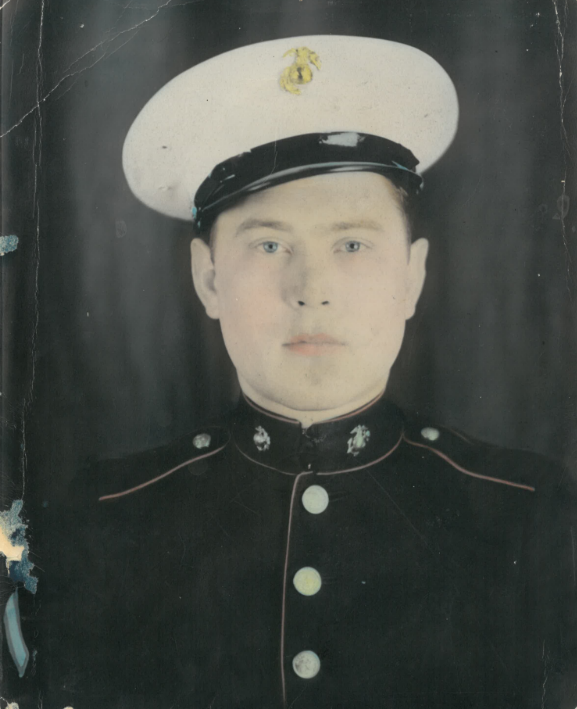
- Unit: 4th Defense Battalion
- Date of Birth: April 20, 1921
- Entered the Military: January 20, 1942
- Date of Death: September 13, 2006
- Hometown: Bluffton, Indiana
- Place of Death: Wabash, Indiana
- Award(s): American Campaign Medal, World War II Victory Medal
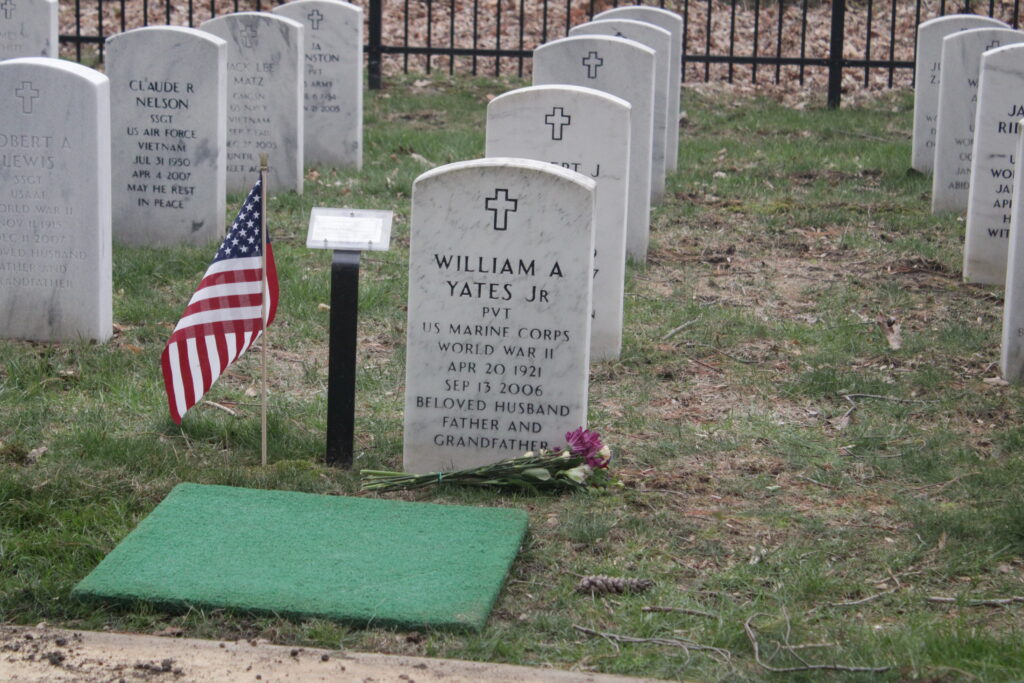
- Cemetery: Section CS-1, Site 6. Marion National Cemetery, Marion, Indiana
Mentored by Mrs. Kristin Rentschler
Columbia City High School
2025/2026
Early Life
William Alford Yates, Jr. was born April 20, 1921, to William Yates, Sr. and Belva Yates in Bluffton, Indiana. He was the third of four children, with two older sisters, Lucille and Louise, and one younger brother, Charles. His father worked as a coal miner, while his mother worked as a maid and housekeeper for affluent families in Bluffton. Yates grew up in a small family home in town in Bluffton.
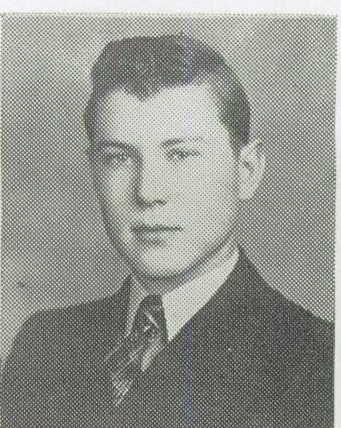
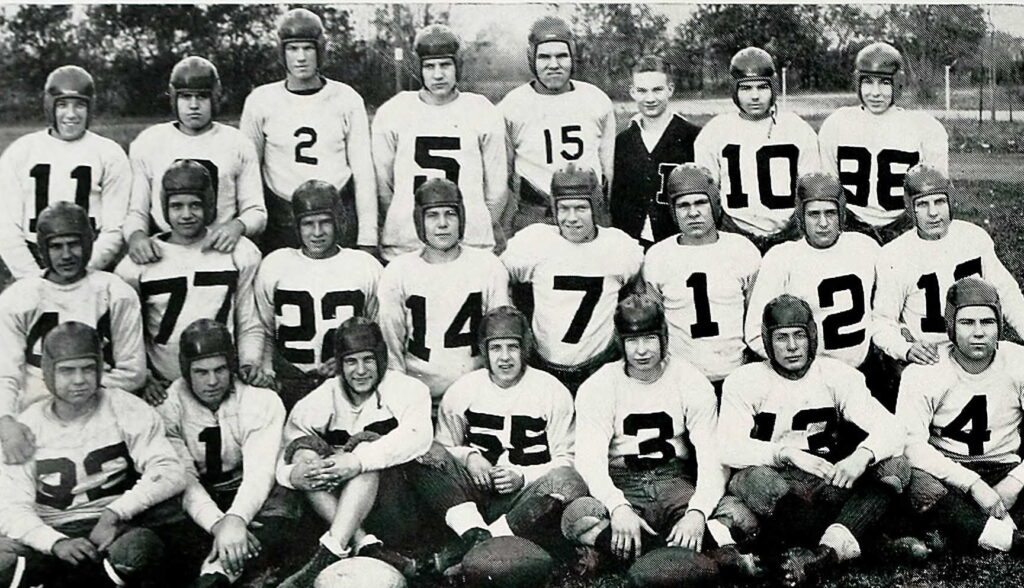
Yates was very active in school, showing a passion for sports and for leadership. While attending P.A. Allen High School, Yates was involved in football, intramural basketball, and baseball. Yates also had a job shoveling coal, most likely to earn some extra money for the household. While in school, Yates already had a dream for his future; when asked in his yearbook what he wanted to be when he grew up, he responded, ” a coach.” He was also voted “Most Talkative” out of his senior class. Yates completed high school in 1939, and needing money to attend college, decided to get a job.
After graduating from high school, Yates began working for Estey Piano Company, which had been in business since 1869. He made pianos and church organs. His enlistment record also showed he worked as a park and wildlife protection officer for the State of Indiana. However, following the attack on Pearl Harbor, Yates made the decision to leave his job and enlist in the United States Marine Corps on January 20, 1942.
Homefront
Bluffton, Indiana, located along the Wabash River, was a small agricultural community during Yates’s youth. Like many towns across the United States, Bluffton experienced significant economic hardship during the Great Depression. Businesses struggled to survive, and many families relied on agriculture and trade to sustain themselves, often using barter rather than currency.
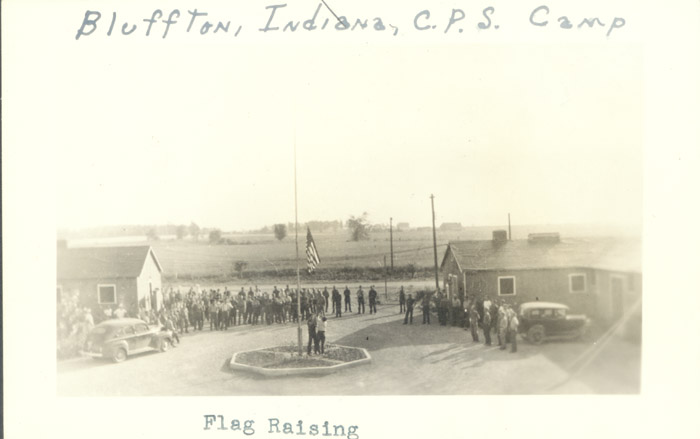
Government programs such as the Civilian Conservation Corps (CCC), established under President Franklin D. Roosevelt’s New Deal, played a vital role in keeping younger men employed in jobs that would develop and benefit America’s natural resources. The CCC contributed to infrastructure and environmental projects, including the development of Ouabache State Park, where workers built facilities and improved the land. During the war, the CCC camp at Ouabache State Park was converted into a work camp for conscientious objectors.
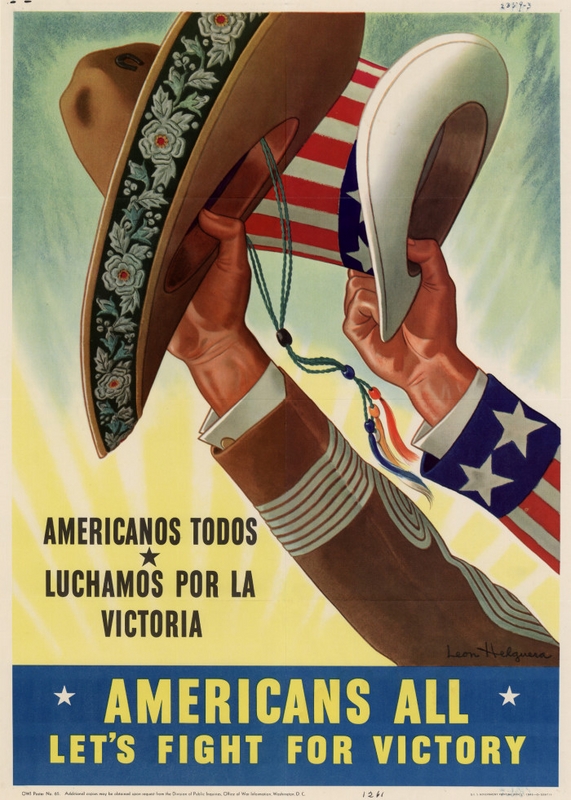
The war, which led many young working men to leave Bluffton, also brought new groups into service in Bluffton, including women and migrants. The local women’s group took up farming and food conservation. Some would establish clubs or groups to promote rationing or the creation of victory gardens to support the war effort. Migrant workers from Mexico also traveled to Bluffton as part of the Bracero Program to work legally on farms and railroads.
The people of Bluffton supported the war effort by rationing, so any extra materials they could find were shipped overseas. At this time, ration stamps were created. Farmers also primarily switched their crops to soybeans during this time, so any surplus food could be sent to soldiers overseas. Anything that could be recycled, even if it was small, was used to benefit the military, not the community. Books were collected to mail to servicemen overseas.
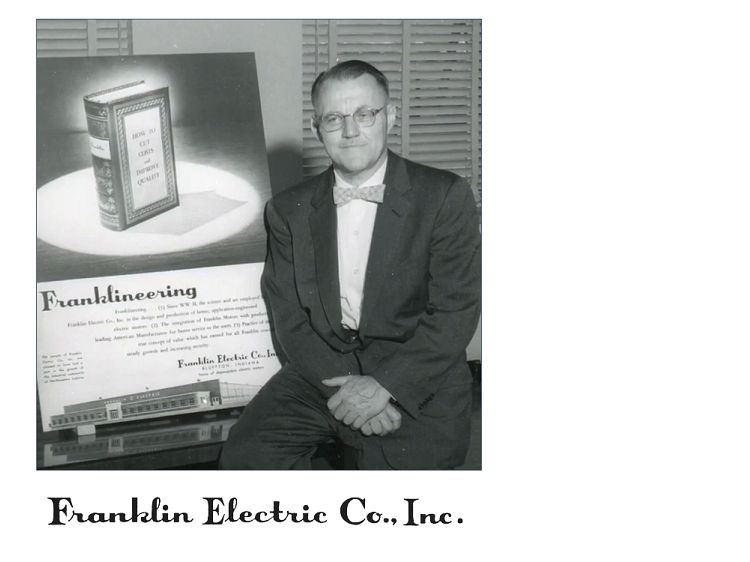
In 1944, Franklin Electric was founded in Bluffton by E.J. Schaefer and T.W. Kehoe, and began manufacturing electrical products, including small engines. Their first major product was a backpack generator that paratroopers carried.
Military Experience
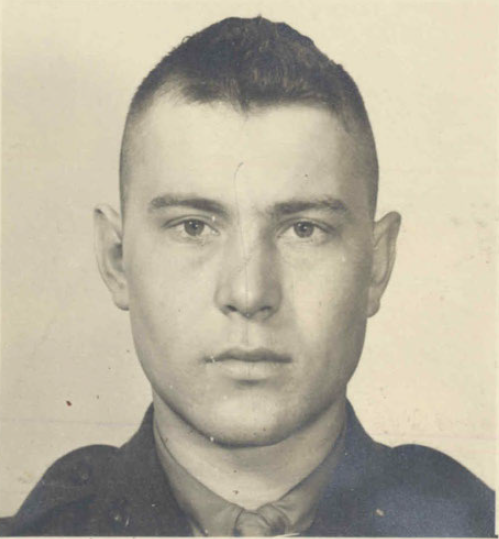
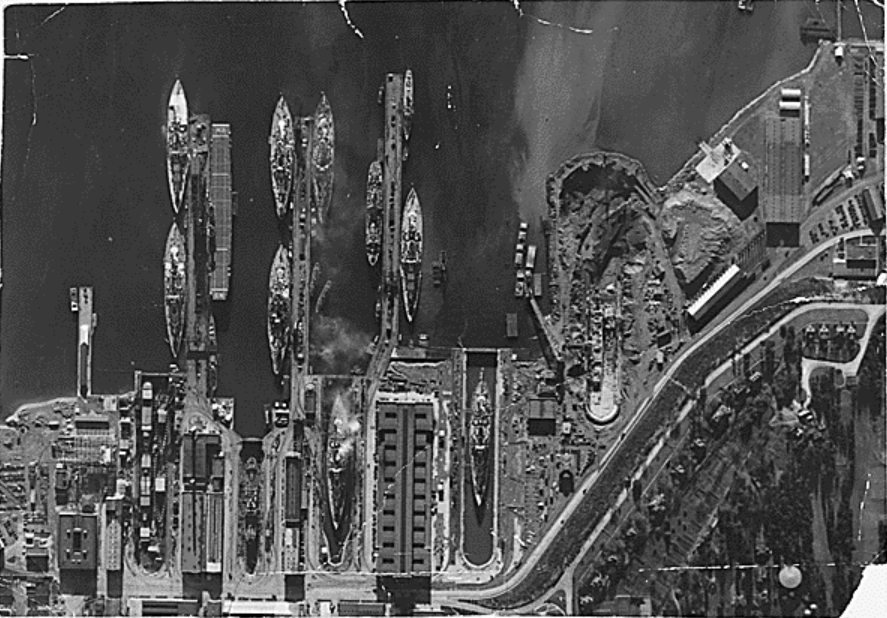
Yates enlisted in the United States Marine Corps in Indianapolis on January 20, 1942. Following his enlistment, he completed basic training in San Diego, California. Yates was then stationed at Bremerton, Washington, where he served for nearly five months, guarding the Puget Sound Naval Yard, serving with Company 1 of the Marine Guard. This shipyard played an important role for the Allies’ Navies, handling the repair and maintenance of battle-damaged ships in its dry docks.
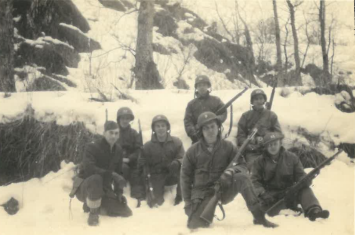
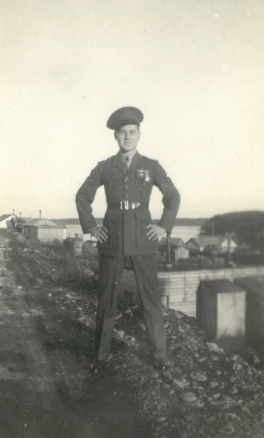
In August 1942, Yates was stationed on the ship William L. Thompson, a cargo ship, en route to Kodiak, Alaska, where he remained until 1944. Kodiak is an island located off the easter shore of Alaska in the Gulf of Alaska, about 25 miles off the mainland. It is often called the “Emerald Isle” for its temperate weather and plentiful rainfall. He was trained on Anti-Aircraft guns and became a field artillery specialist, specifically a light artillery gunner, and served as a guard.
During World War II, Kodiak Island became an important U.S. military outpost because of its location in the Gulf of Alaska, close to two powers that posed a threat to the United States: Japan and the Soviet Union. The U.S. Navy established Naval Air Station Kodiak in 1941 to patrol the North Pacific, protect shipping lanes, and monitor Japanese naval and air activity. Then the U.S. Army also built Fort Greely on the island, adding coastal artillery, anti-aircraft guns, radar stations, and lookout posts to guard against possible attack. After Japan invaded the Aleutian Islands of Attu and Kiska in 1942, Kodiak became a vital base for the Aleutian Campaign. Although Kodiak was never directly attacked, aircraft and personnel based there conducted patrols, escorted ships, trained troops, and supported operations that led to the recapture of Attu and the evacuation of Kiska in 1943.
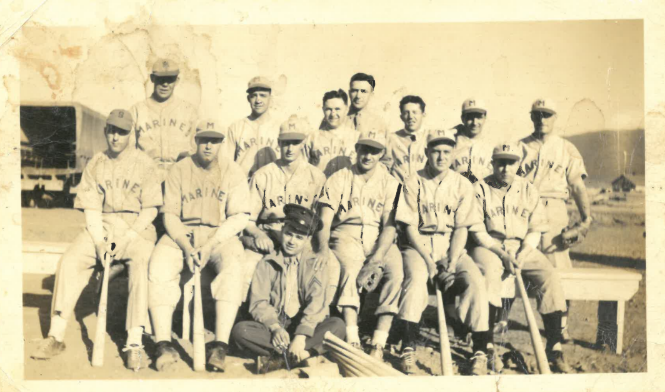
Yates served in Kodiak, Alaska, until February 1944, when he returned to San Diego to serve as a guard. In March 1944, he moved to El Toro, California, to guard the Air base located there. Throughout his service, Yates still found time to enjoy the sports he loved, playing baseball, basketball, and football in the Marine leagues. Finally, he ended his service in San Diego in January 1946, was honorably discharged, and returned home to Bluffton, Indiana.
Veteran Experience
After completing his military service, William Yates returned home to Bluffton, Indiana, where he pursued his higher education dreams. Back home, Yates met and later married Ramona Jean Oliver on May 18, 1946. Yates then used the GI Bill to attend Ball State Teachers College in Muncie, Indiana.
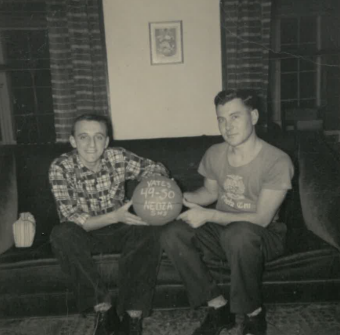
Yates graduated in August 1949 with a bachelor’s degree in teaching industrial arts and physical education and secured his first job at Springfield Township, where he led the boys’ basketball team to claim the LaPorte County Conference Championship. His early success led to a new opportunity, and he was hired in 1951 as a teacher and a coach at Union Township High School.
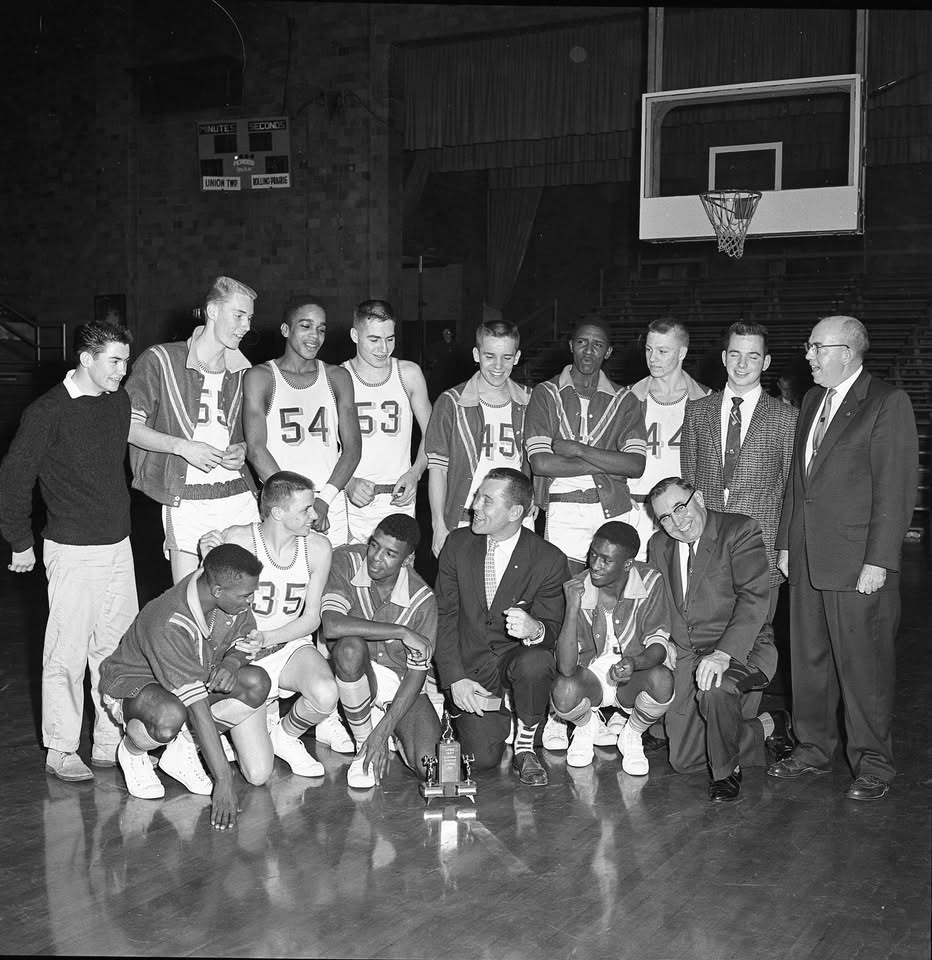
He immediately made an impact on Union Township for his competitive spirit, discipline, and sense of fairness. The 1950s were a time of rising racial tensions in the United States, and Union Township had both White and Black students. Yates would not stand for discrimination. When a new teacher insulted Black students, Yates stepped in to help assure the student that he would take care of it. The teacher never returned. He also placed a Black freshman on his varsity team, making him only the fourth Black player to suit up in all of LaPorte County. Yates did not care about a player’s skin color, only the work ethic they demonstrated in practice.
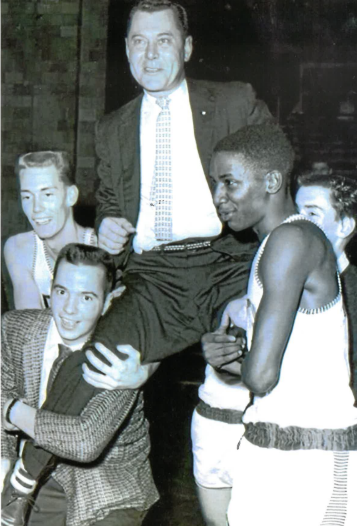
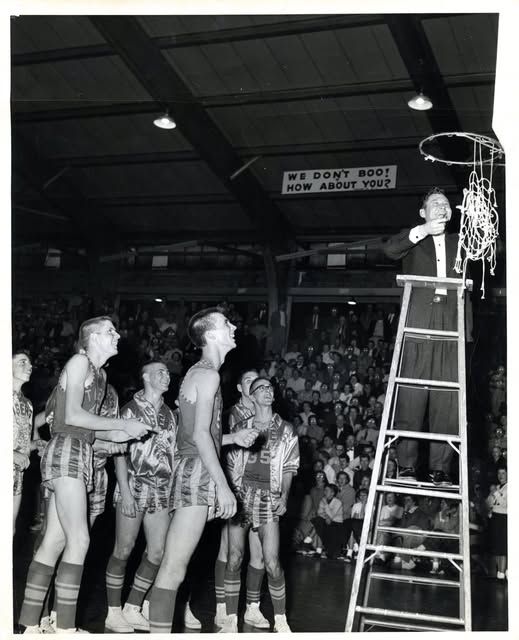
His first two years were rough, as Union Township lost most of its games, but by 1953, the program started posting winning seasons. By 1956, Yates had led the Union Township team to claim the same trophy he won earlier, the LaPorte County Conference Championship. His success would continue, winning more county championships. Yates’s enthusiastic and relentless coaching would also earn him the nickname “Wild Bill.” Yates started an all-Black starting line-up numerous times in the 1958-59 season, and again in the 1959-60 season. At one school, the opposing team refused to play them until the referees insisted. He also refused to follow the rules at segregated restaurants, walking all of his players in despite protests.
In 1964, Union Township and the other tiny county schools were consolidated into a single school for LaPorte County. Yates gave up coaching and then became the principal of Boston Junior High School in LaPorte, where he retired in 1983. He and his wife eventually moved to Mission, Texas, where they enjoyed time with their kids and grandchildren, as well as the outdoors.
Commemoration
Bill Yates passed away on September 13, 2006, and was interred in the Marion National Cemetery in Marion, Indiana. Yate’s legacy is defined by measurable contributions to educational leadership and racial integration in Indiana during the early 1960’s. As the basketball coach of the Union Township Tigers, Yates built an inclusive, interracial team during segregation, insisting on equality and respect on and off the court. Coach Yates’s team won multiple county championships and an undefeated regular season.
His leadership extended into administration as a principal, where his impact on school culture and student development was evident. William Alford Yates Jr.’s impact has been formally recognized through a memorial in Union Township that commemorates both his athletic achievements and his years of institutional leadership.
Bill Yates took a tiny school from out in the sticks of cornfield country Indiana and just didn’t win, but dominated LaPorte county in all sports playing black players. Sticking his neck out, taking heat from so many directions, Bill Yates did what he believed was right. There were no small schools where hallways were mixing pots of ethnicities and basketball starting line-ups were composed of five black players. There were no communities where white and black kids sat at a soda fountain sharing a burger and fries. Not too many had a twenty-five game home winning streak in basketball or went perfect in conference for multiple years in a row.
Christian Porter, Those Were The Days: The Story Of a Small Town, A Wild Coach, and Indiana Basketball.
Bibliography
Primary Sources
Ball State Teachers College Board of Trustees Minutes. September 21, 1949. Ball State University Digital Media Repository. https://dmr.bsu.edu/digital/collection/BSUBoT/id/63416/rec/5.
Civilian Public Service camp #13, Bluffton, Indiana, flag raising; postcard. Postcard. https://stcpsarchive.z9.web.core.windows.net/cpsarchive/camps/13/1.html.
Denney, Terri. Email correspondence. January 13, 2026.
Dry Dock No. 5. Photograph. 1942. National Archives and Records Administration (NAID 299592). https://catalog.archives.gov/id/299592.
Helguera, Leon. Americans all, let’s fight for victory: Americanos todos, luchamos por la victoria. Poster. 1943. University of North Texas Digital Library (b2908797). http://digital.library.unt.edu/ark:/67531/metadc426/
Indiana. LaPorte County. 1950 U.S. Census. Digital Images. https://ancestryclassroom.com.
Indiana. Wells County. 1900 U.S. Census. Digital Images. https://ancestryclassroom.com.
Indiana. Wells County. 1910 U.S. Census. Digital Images. https://ancestryclassroom.com.
Indiana. Wells County. 1920 U.S. Census. Digital Images. https://ancestryclassroom.com.
Indiana. Wells County. 1930 U.S. Census. Digital Images. https://ancestryclassroom.com.
Indiana. Wells County. 1940 U.S. Census. Digital Images. https://ancestryclassroom.com.
P.A. Allen High School Yearbook. 1937. https://www.classmates.com/siteui/yearbooks/54346.
P.A. Allen High School Yearbook. 1938. https://www.classmates.com/siteui/yearbooks/72302.
P.A. Allen High School Yearbook. 1939. https://www.classmates.com/siteui/yearbooks/53582.
William A. Yates. Indiana, U.S., Marriage Certificates, 1960-2012. Digital Images. https://ancestryclassroom.com.
William A. Yates. Official Military Personnel File, Department of the Navy. National Archives and Records Administration – St. Louis.
William A. Yates. Report of Separation, Department of the Navy. National Archives and Records Administration – St. Louis.
“William L. Thompson.” Maritime Administration, U.S. Department of Transportation. Accessed January 14, 2026. https://vesselhistory.marad.dot.gov/ShipHistory/Detail/6359.
William Yates. World War II Draft Cards Young Men, 1940-1947. Digital Images. https://ancestryclassroom.com.
Yates Family Photographs. Courtesy of Terri Denney.
Secondary Sources
“Estey Piano Corporation.” Lindeblad Piano Restoration. Accessed November 3, 2025. https://www.lindebladpiano.com/library/estey-piano-corporation.
Franklin Electric Company History. Video [3:17]. Franklin Electric. April 23, 2025. https://www.youtube.com/watch?v=qn9j6exd2dI&t=6s.
Johnson, Frank. “Kodiak Military History Museum: Unearthing Alaska’s WWII Frontier & Cold War Legacy on Kodiak Island.” Wonderful Museums. Updated November 27, 2025. Accessed April 16, 2026. https://www.wonderfulmuseums.com/museum/kodiak-military-history-museum.
“Kodiak Naval Operating Base and Forts Greely and Abercrombie National Historic Landmark.” National Park Service. Accessed December 17, 2026. https://www.nps.gov/places/kodiak-naval-operating-base-and-forts-greely-and-abercrombie.htm.
“Kodiak Navy Air Stn.” Western Regional Climate Center Accessed January 15, 2026. https://wrcc.dri.edu/cgi-bin/cliMAIN.pl?ak4986.
“Military Occupational Specialty.” U.S. Marine Corps. Accessed January 14, 2026. https://www.marines.com/about-the-marine-corps/roles/military-occupational-specialty.html.
“PNW Undergrad Writes Book About Indiana High School Basketball.” Purdue University Northwest. Updated April 16, 2019. Accessed April 16, 2026. https://www.pnw.edu/pnw-undergrad-writes-book-about-indiana-high-school-basketball/
Porter, Christian. Those Were The Days: The Story Of a Small Town, A Wild Coach, and Indiana Basketball. Blurb Press, 2017.
“Ramona Jean Oliver Yates.” Find a Grave. Updated February 24, 2025. Accessed January 14, 2026. https://www.findagrave.com/memorial/280133288/ramona_jean-yates.
Rose, D. and J. Buckner. History of Wells County Wells County Bicentennial Historical Publication Committee, 1975.
“Southwest Region: Kodiak.” Alaska Department of Natural Resources. Accessed January 15, 2026. https://dnr.alaska.gov/parks/aspunits/kodiak/kodiakindex.htm.
“USMC MOS Codes, WWII Era.” Military Yearbook Project. Last modified 2021. Accessed January 14, 2026. https://militaryyearbookproject.org/references/old-mos-codes/wwii-era/usmc-wwii-codes/usmc-codes-wwii-era.
“We Are Franklin Electric.” Franklin Electric. Accessed November 17, 2025. https://www.franklin-electric.com/company/about-franklin-electric/.
“William A. Yates, Jr.” Veterans Legacy Memorial, National Cemetery Administration. Accessed April 16, 2026. https://www.vlm.cem.va.gov/WILLIAMAYATESJR/BDFF5FE.
“William Alford Yates, Jr.” Find a Grave. Updated June 6, 2010. Accessed April 16, 2026. https://www.findagrave.com/memorial/53342623/william_alford-yates.
“World War II National Historic Landmarks: The Aleutian Campaign.” National Park Service. Accessed December 20, 2026. https://www.nps.gov/articles/wwii-nhl-aleu-campaign.htm.
This profile was funded by a grant from the United States Department of Veterans Affairs. The opinions, findings, and conclusions stated herein are those of the author and do not necessarily reflect those of the United States Department of Veterans Affairs.